Passive speakers

Passive Speakers – Professional Sound Reinforcement for Events and Installations: Passive speakers form the backbone of professional sound reinforcement systems worldwide. As a specialist for event technology, LTT offers you an extensive range of passive PA speakers from leading manufacturers including JBL, RCF, dB Technologies, Wharfedale and many more. Whether you're equipping a touring production, installing a permanent venue system or building a flexible event rig, passive speakers deliver the...
Read more »
Passive speakers
Close window
Passive speakers

Passive Speakers – Professional Sound Reinforcement for Events and Installations

Passive speakers form the backbone of professional sound reinforcement systems worldwide. As a specialist for event technology, LTT offers you an extensive range of passive PA speakers from leading manufacturers including JBL, RCF, dB Technologies, Wharfedale and many more. Whether you're equipping a touring production, installing a permanent venue system or building a flexible event rig, passive speakers deliver the flexibility, power handling and sonic performance that professionals demand. With external amplification, you maintain complete control over your signal chain and can scale your system precisely to match any application.

What Are Passive Speakers? Understanding Professional PA Technology

Passive speakers are loudspeakers that require an external power amplifier to operate. Unlike active speakers with built-in amplification, passive systems separate the amplification stage from the transducer enclosure. The audio signal flows from your mixer to a dedicated power amplifier, which then drives the passive speaker via speaker cable.

How Passive Speakers Work

Inside a passive speaker cabinet, the amplified signal passes through a passive crossover network. This crossover divides the frequency spectrum and routes appropriate frequency ranges to the correct drivers – typically a woofer for low frequencies and a compression driver with horn for mid and high frequencies. The crossover uses inductors, capacitors and resistors to create filter slopes, usually 12 dB/octave or steeper, ensuring each driver operates within its optimal frequency range.

Passive speakers are characterised by their impedance rating (typically 4 or 8 Ohms) and power handling capacity measured in watts RMS. A typical professional passive full-range speaker might handle 400–800 watts RMS with peak power ratings of 1,600–3,200 watts. Sensitivity ratings, measured in dB SPL at 1 metre with 1 watt input, typically range from 95 to 102 dB for professional PA speakers – significantly higher than domestic hi-fi speakers.

Passive vs Active Speakers: Key Differences

The fundamental difference lies in amplification placement. Active speakers integrate amplifier modules, power supplies and often DSP processing within the cabinet. Passive speakers externalise all amplification, requiring separate rack-mounted power amplifiers. This architectural difference creates distinct advantages: passive systems offer superior flexibility for large-scale installations, easier maintenance (amplifiers can be serviced without moving speakers), and the ability to drive multiple cabinets from a single amplifier channel. For touring professionals and installation engineers, passive systems provide unmatched scalability and the freedom to match amplifier topology to specific acoustic requirements.

Professional Applications: Where Passive Speakers Excel

Passive speakers dominate professional applications where flexibility, scalability and long-term reliability are paramount. In touring production, passive line array systems and point-source cabinets are industry standard. Major concert tours, festivals and corporate events rely on passive PA systems because amplifier racks can be positioned optimally for power distribution and cable runs, while speakers are flown or ground-stacked according to coverage requirements.

Touring and Live Events

For mobile event production, passive speakers offer critical advantages. You can carry spare amplifiers that serve multiple speaker models, reducing inventory complexity. Rigging teams appreciate the reduced weight of passive cabinets compared to equivalent active models – a significant factor when flying large arrays. Passive systems also simplify power distribution: instead of running mains power to every cabinet position, you run speaker cable from centralised amplifier racks.

Fixed Installations and Venues

Theatres, houses of worship, conference centres and clubs frequently specify passive speaker systems for permanent installations. Amplifiers can be located in climate-controlled equipment rooms, extending service life and simplifying maintenance. Installation engineers can design distributed systems with multiple speaker zones driven from a central amplifier rack with sophisticated DSP and routing. This centralised approach simplifies system management and allows non-technical staff to operate complex audio systems via simple wall panels.

Stage Monitoring and Side-Fill Applications

Passive wedge monitors and side-fill speakers remain the professional standard for stage monitoring. Monitor engineers prefer the flexibility to match amplifier power and damping characteristics to specific monitor models and artist requirements. Passive monitors also withstand the physical demands of touring – they're dropped, kicked and subjected to extreme SPL levels night after night. The ability to quickly swap a failed amplifier channel keeps shows running when equipment fails.

Choosing Professional Passive Speakers: Technical Specifications and Quality Standards

Selecting the right passive speakers demands careful evaluation of technical specifications, build quality and application requirements. Professional-grade passive PA speakers are engineered to very different standards than consumer audio products, with specifications that directly impact performance, reliability and total cost of ownership.

Power Handling and Amplifier Matching

Power handling specifications define the amplifier power range a speaker can safely accept. RMS (continuous) power ratings indicate sustained power handling, while programme and peak ratings reflect short-term capabilities. A passive speaker rated for 500 watts RMS typically accepts 1,000 watts programme and 2,000 watts peak. Match your amplifier's output power at the speaker's impedance to these ratings. For an 8-Ohm passive speaker rated 500 watts RMS, an amplifier delivering 500–700 watts into 8 Ohms provides optimal headroom.

Impedance matching is critical. Professional passive speakers are available in 4-Ohm, 8-Ohm and occasionally 16-Ohm variants. Lower impedance allows amplifiers to deliver more power but draws higher current. When wiring multiple passive speakers in parallel, total impedance decreases – two 8-Ohm speakers in parallel present 4 Ohms to the amplifier. Always verify your amplifier can safely drive the resulting load impedance.

SPL, Dispersion and Coverage

Maximum SPL ratings indicate how loud a speaker can play. Professional passive PA speakers typically achieve 125–135 dB SPL at 1 metre. For large venues and outdoor events, higher SPL capability reduces the number of cabinets required for adequate coverage. Dispersion angles – typically 90° × 50° or 60° × 40° for professional boxes – determine coverage pattern. Narrower dispersion focuses energy over longer distances; wider dispersion suits shorter throw applications and provides better horizontal coverage.

Leading Manufacturers and Build Quality

LTT stocks passive speakers from industry-leading brands including JBL Professional, whose touring-grade passive line arrays and point-source systems are specified worldwide; RCF, offering exceptional value with Italian-engineered passive speakers featuring precision transducers and robust plywood enclosures; dB Technologies, known for innovative passive designs with optimised horn geometry; and Wharfedale Pro, delivering reliable passive PA speakers for installation and portable applications. Premium passive speakers feature birch plywood construction, weather-resistant coatings for outdoor use, integrated rigging points certified to professional safety standards, and Neutrik Speakon connectors for secure, high-current connections.

Impedance Matching and Multi-Speaker Arrays: Professional Wiring Strategies

One of passive speakers' greatest strengths is the ability to wire multiple cabinets to a single amplifier channel, creating powerful arrays for large-scale sound reinforcement. Understanding impedance calculations and wiring topologies is essential for safe, effective system design.

Series and Parallel Wiring Fundamentals

When you connect passive speakers in parallel – the most common configuration – total impedance decreases. Two 8-Ohm speakers in parallel present 4 Ohms; four 8-Ohm speakers present 2 Ohms. The formula is: Total Impedance = 1 ÷ (1/Z₁ + 1/Z₂ + 1/Z₃…). Most professional power amplifiers can safely drive 4-Ohm or 2-Ohm loads per channel, but always verify specifications. Lower impedance increases current draw and amplifier heat generation.

Series wiring increases total impedance: two 8-Ohm speakers in series present 16 Ohms. Series connections are less common in professional PA because they reduce amplifier power delivery, but they're useful when you need to increase system impedance to match amplifier capabilities or distribute power across many small speakers.

Practical Array Configurations

For a typical stage side-fill application, you might deploy four passive full-range speakers per side. Using 8-Ohm cabinets wired in two parallel pairs, then connecting those pairs in series, yields 8 Ohms total – allowing a single amplifier channel to drive all four speakers efficiently. For line array applications, manufacturers provide specific wiring diagrams that maintain safe impedance while maximising SPL output.

Cable Gauge and Run Length

Professional passive speaker installations demand appropriate cable gauge. For runs under 15 metres, 2.5 mm² cable suffices for most applications. Longer runs or very high power levels require 4 mm² or even 6 mm² cable to minimise resistive losses and maintain damping factor. Always use Speakon connectors for professional passive PA systems – they lock securely, handle high current safely, and prevent accidental short circuits that can destroy amplifiers.

Weatherproofing and Outdoor Events

For outdoor events and permanent outdoor installations, specify passive speakers with appropriate IP (Ingress Protection) ratings. IP54-rated passive speakers resist water spray and dust ingress, essential for festival stages and outdoor venues. Weather-resistant passive speakers feature powder-coated steel grilles, sealed cabinet joints, and corrosion-resistant hardware. Even with weather-resistant speakers, always protect amplifier racks from moisture and ensure all connections are elevated above potential water pooling.

Rigging, Mounting and Safety: Professional Installation Standards

Professional passive speakers are designed for flexible deployment – flown from truss, pole-mounted, ground-stacked or wall-installed. Each mounting method demands attention to safety standards and proper hardware selection.

Flying and Rigging Certification

When you fly passive speakers above audiences, safety is paramount. Professional passive PA cabinets feature integrated rigging points engineered and certified to specific working load limits (WLL). A typical passive line array element might be certified for 10:1 safety factor rigging with M10 suspension points. Always use rigging hardware that matches or exceeds the speaker manufacturer's specifications. In Germany and throughout Europe, DGUV Vorschrift 17 (formerly BGV C1) governs rigging for events and entertainment venues.

For permanent installations, specify passive speakers with EN 1090 certified mounting brackets and ensure installations are inspected by qualified engineers. LTT's rigging specialists can advise on appropriate hardware from our Riggatec range, including shackles, spansets and flying frames designed specifically for professional audio applications.

Pole Mounting and Portable Applications

Most professional passive full-range speakers include a 35 mm pole socket, allowing you to mount them on standard speaker poles atop passive subwoofers or dedicated speaker stands. Pole-mounted passive speakers suit corporate events, weddings and smaller concerts where flying isn't practical. Always ensure the pole mount is secure and the speaker is positioned for optimal coverage and stability. For outdoor events, use weighted bases or sandbags to prevent wind-induced toppling.

Wall and Ceiling Installation

Fixed installations in conference rooms, houses of worship and hospitality venues often require wall or ceiling mounting. Professional passive speakers designed for installation include threaded M8 or M10 mounting points and are supplied with or compatible with certified mounting brackets. Calculate load-bearing requirements carefully – a passive speaker weighing 25 kg generates significant moment forces when wall-mounted on an extended bracket. Use appropriate fixings for the substrate material and always install to manufacturer specifications.

LTT – Your Specialist for Professional Event Technology

As your specialist for event technology, LTT combines over 25 years of experience in professional audio, lighting and staging with comprehensive product knowledge and technical expertise. Our passive speaker range encompasses everything from compact passive monitors for small stages to touring-grade line array systems for major productions. We stock leading brands including JBL, RCF, dB Technologies, Wharfedale and many more, ensuring you find the optimal solution for your specific application.

Every passive speaker system we supply is backed by our 3-year LTT warranty, and we offer free shipping from €69 throughout Germany and internationally. Our technical specialists understand the demands of professional event production and permanent installations – we can advise on amplifier matching, system design, rigging requirements and acoustic optimisation. Whether you're building a touring inventory, upgrading a venue installation or specifying a conference system, LTT provides the products, expertise and support you need to achieve outstanding results.

Discover our complete range of professional audio solutions, and experience the difference that specialist knowledge and quality products make to your events and installations.

FAQ – Questions & Answers

Do passive speakers need an amplifier?

Yes, passive speakers require an external power amplifier to operate. Unlike active speakers with built-in amplification, passive speakers contain only the transducers (drivers) and a passive crossover network. The audio signal must be amplified by a separate power amplifier before it reaches the passive speaker via speaker cable. This separation of amplification and transduction is fundamental to passive speaker design and offers significant advantages in professional applications, including flexibility in amplifier selection, easier maintenance, and the ability to drive multiple passive speakers from a single amplifier channel.

Which is better, passive or active speakers?

Neither passive nor active speakers are inherently "better" – the optimal choice depends on your specific application. Passive speakers excel in touring production, large-scale installations and applications requiring multiple speakers driven from centralised amplification. They offer superior flexibility, easier maintenance (amplifiers can be serviced separately), reduced cabinet weight for flying, and the ability to match amplifier characteristics to specific requirements. Active speakers are advantageous for smaller portable systems, applications where minimising cable runs is critical, and situations where integrated DSP processing is beneficial. For professional event production and permanent installations, passive speakers remain the industry standard due to their scalability and long-term reliability.

What are the disadvantages of passive speakers?

Passive speakers require additional equipment and setup compared to active systems. You must purchase, transport and rack-mount separate power amplifiers, increasing initial cost and system complexity. Passive speakers require speaker cable runs from amplifiers to each cabinet position, which can be cumbersome in some installations. Impedance matching becomes critical when wiring multiple passive speakers to a single amplifier channel – incorrect configurations can damage amplifiers or reduce performance. Passive speakers also lack the integrated DSP processing found in many active systems, requiring external processors for advanced system tuning. However, for professional applications, these "disadvantages" are often advantages in disguise, offering flexibility and control that active systems cannot match.

What is an example of a passive speaker?

Professional passive speakers include models like the JBL SRX series, RCF ART passive range, and dB Technologies Opera passive systems. A typical example is a passive full-range PA speaker with a 12-inch or 15-inch woofer and a 1.4-inch compression driver on a horn, rated for 500–800 watts RMS power handling, 8-Ohm impedance, and achieving 128–132 dB maximum SPL. These passive speakers feature birch plywood construction, integrated rigging points for flying, 90° × 50° dispersion patterns, and Speakon connectors. They're designed for touring production, festival stages, corporate events and permanent installations where external amplification provides optimal flexibility and performance.

How do I connect passive speakers to my system?

To connect passive speakers, run an audio signal from your mixing console to the input of a power amplifier. Connect the amplifier's output to your passive speaker using appropriate gauge speaker cable terminated with Speakon or professional-grade connectors. Ensure the amplifier's power output matches the passive speaker's RMS rating and that impedance is correctly matched – typically 4 or 8 Ohms. If connecting multiple passive speakers to one amplifier channel, calculate total impedance carefully (parallel wiring decreases impedance) and verify your amplifier can safely drive the resulting load. Always use adequate cable gauge for the run length and power level, and secure all connections properly before applying power.

What impedance should my passive speakers have?

Professional passive PA speakers are typically available in 4-Ohm or 8-Ohm variants. The optimal impedance depends on your amplifier and system configuration. Eight-Ohm passive speakers are most common and work with virtually all professional power amplifiers. Four-Ohm passive speakers allow amplifiers to deliver more power (typically 1.5–2× the 8-Ohm rating) but draw higher current and generate more amplifier heat. When wiring multiple passive speakers in parallel, total impedance decreases – two 8-Ohm speakers become 4 Ohms, four become 2 Ohms. Always verify your amplifier's specifications support the final load impedance. Most professional amplifiers safely drive 4-Ohm or 2-Ohm loads per channel, but always confirm before connecting.

Can I use passive speakers for outdoor events?

Yes, passive speakers are ideal for outdoor events, and many professional models are specifically designed for outdoor use. Specify passive speakers with weather-resistant features including IP54 or higher ingress protection ratings, powder-coated steel grilles, sealed cabinet joints, and corrosion-resistant hardware. Weather-resistant passive speakers withstand rain, dust and temperature extremes typical of festival stages and outdoor venues. Even with weather-resistant passive speakers, protect amplifier racks from moisture and ensure all cable connections are elevated above potential water pooling. The ability to position amplifiers in protected locations while deploying passive speakers in exposed positions is a significant advantage for outdoor event production.

What cable do I need for passive speakers?

Professional passive speakers require dedicated speaker cable – never use microphone cable or instrument cable, which cannot handle the high current levels. For runs under 15 metres, use 2.5 mm² (13 AWG) speaker cable. Longer runs or very high power applications require 4 mm² (11 AWG) or 6 mm² (9 AWG) cable to minimise resistive losses and maintain amplifier damping factor. Always terminate speaker cables with professional Speakon connectors for passive PA applications – they lock securely, handle high current safely, and prevent accidental short circuits. For permanent installations, use fire-rated cable that meets local building codes. Quality speaker cable is essential for reliable passive speaker performance and system safety.

Categories
227 Articles
Close filters
 
  •  
  •  
  •  
  •  
  •  
  •  
  •  
  •  
  •  
  •  
  •  
  •  
from to
1 From 10 pages
No results were found for the filter!
OMNITRONIC DX-1222 3-Wege Box 600 W
OMNITRONIC DX-1222 3-Way Speaker 600 W
High performance at a low price: the OMNITRONIC DX-series! Available in five differently powered versions, the DX-series provides the right speaker-system for almost every need. The housing with...
€99.00 *
incl. tax, free shipping to Germany
[International shipping costs]
Availability:
Delivery time: 3-5 days
OMNITRONIC M-1230 Monitorbox 600W
OMNITRONIC M-1230 Monitor 600W
2-way stage monitor with 12" woofers and 600 W power Rugged 2-way speaker-system in a stable wooden housing • Large mid-range horn with coil-driver for balanced mids • With passive...
€126.67 *
incl. tax, plus forwarding agency costs
Availability:
Delivery time: 3-5 days

Bulky goods

OMNITRONIC C-40 weiß 2x
OMNITRONIC C-40 white 2x
Passive 2-way speaker pair with mountThe passive 2-way speaker pair C-40 by OMNITRONIC is ideal for sound reinforcement in restaurants, bars, discotheques, in your shop or conference areas.The...
€54.90 *
incl. tax, plus shipping costs
Availability:
Delivery time: 3-5 days
OMNITRONIC M-1220 Monitorbox 600W
OMNITRONIC M-1220 Monitor 600W
2-way stage monitor with 12" woofers and 600 W power Rugged 2-way speaker-system in a stable wooden housing • Large mid-range horn with coil-driver for balanced mids • With passive...
€95.59 *
incl. tax, plus forwarding agency costs
Availability:
Delivery time: 3-5 days

Bulky goods

OMNITRONIC C-50 weiß 2x
OMNITRONIC C-50 white 2x
Passive 2-way speaker pair with mountThe passive 2-way speaker pair C-50 by OMNITRONIC are powerful sound reinforcement speakers for permanent installation. Because of their clear, powerful sound...
€74.90 *
incl. tax, free shipping to Germany
[International shipping costs]
Availability:
Delivery time: 3-5 days
OMNITRONIC DX-822 3-Wege Box 300 W
OMNITRONIC DX-822 3-Way Speaker 300 W
Rugged full-range speaker-system with 8" woofer and 300 watts powerThe DX-822 3-way-box by OMNITRONIC with 300 Watt power is perfectly suited for mobile use, like for mobile DJs, solo...
€59.90 *
incl. tax, plus shipping costs
Availability:
Delivery time: 3-5 days
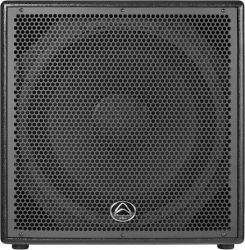
Wharfedale DELTA X -218 B Doppel 18" Subwoofer, 3200 Watt, 4 Ohm
Wharfedale Delta-218 B Doppel 18" Subwoofer,
Delta 218B The Delta 218B is a passive subwoofer that positively stands out from many competing products due to its extensive features and enormous power. It combines high power with low...
€1,019.00 *
incl. tax, plus forwarding agency costs
Availability:
Delivery time: 3-5 days

Bulky goods

MONACOR MKS-48/WS Lautsprecherboxen-Paar
MONACOR MKS-48/WS Pair of wall/ceiling/corner mount speaker systems, 15 W, 8 O
Pair of wall/ceiling/corner mount speaker systems, 15 W, 8 O These really universally mountable speakers allow a perfect integration into most versatile indoor mounting positions. Interesting...
€94.00 *
incl. tax, free shipping to Germany
[International shipping costs]
Availability:
Delivery time: 3-5 days
OMNITRONIC C-50 schwarz 2x
OMNITRONIC C-50 black 2x
Passive 2-way speaker pair with mountThe passive 2-way speaker pair C-50 by OMNITRONIC are powerful sound reinforcement speakers for permanent installation. Because of their clear, powerful sound...
€74.90 *
incl. tax, free shipping to Germany
[International shipping costs]
Availability:
Delivery time: 3-5 days
LD Systems SUB 88 2 x 8" Subwoofer passiv
LD Systems SUB 88 - 2 x 8" Subwoofer passive
2 x 8" Subwoofer passive Powerful, dynamic 2 x 8" Bandpass Subwoofer. Its compact dimensions permit unobtrusive placement of the subbass anywhere, either vertically or horizontally. A...
€189.20 *
incl. tax, free shipping to Germany
[International shipping costs]
Availability:
Near-term available
Delivery time: approx. 1 week
OMNITRONIC DX-1522 3-Wege Box 800 W
OMNITRONIC DX-1522 3-Way Speaker 800 W
High performance at a low price: the OMNITRONIC DX-series! Available in five differently powered versions, the DX-series provides the right speaker-system for almost every need. The housing with...
€158.98 *
incl. tax, free shipping to Germany
[International shipping costs]
Availability:
Delivery time: 3-5 days
OMNITRONIC C-60 schwarz 2x
OMNITRONIC C-60 black 2x
Passive 2-way loudspeaker pair with mountingThe C-60 speakers in black are designed for permanent installation in your restaurant, bar, discotheque or shop, as well as in conference areas. The...
€97.81 *
incl. tax, free shipping to Germany
[International shipping costs]
Availability:
Delivery time: 3-5 days
OMNITRONIC C-40 schwarz 2x
OMNITRONIC C-40 black 2x
Passive 2-way speaker pair with mountThe passive 2-way speaker pair C-40 by OMNITRONIC is ideal for sound reinforcement in restaurants, bars, discotheques, in your shop or conference areas.The...
€54.90 *
incl. tax, plus shipping costs
Availability:
Delivery time: 3-5 days
OMNITRONIC OD-22T Wandlautsprecher 100V schwarz
OMNITRONIC OD-22T Wall Speaker 100V black
Universal wall speaker systemUse the OD-22T 100 V PA speaker by OMNITRONIC for sound reinforcement in restaurants, bars, shops or in your conference or recreation area.The 2 x 6 cm full-range...
€38.26 *
incl. tax, plus shipping costs
Availability:
Delivery time: 3-5 days
OMNITRONIC DX-1022 3-Wege Box 400 W
OMNITRONIC DX-1022 3-Way Speaker 400 W
High performance at a low price: the OMNITRONIC DX-series! Available in five differently powered versions, the DX-series provides the right speaker-system for almost every need. The housing with...
€79.90 *
incl. tax, free shipping to Germany
[International shipping costs]
Availability:
Delivery time: 3-5 days
OMNITRONIC BX-2550 Subwoofer 1200W
Enormous performance at an excellent sound: this is one feature of the BX-series of OMNITRONIC's speaker series. The mounting of the subwoofer is very hard and convinces even under hard usage with...
€269.00 *
incl. tax, plus forwarding agency costs
Availability:
Delivery time: 3-5 days

Bulky goods

IMG STAGE LINE CLUB-1SUB PA-Subwoofer
MONACOR CLUB-1SUB Professional subwoofer, 600 W/8 O or 2 O or 2 x 300 W/4 O
The CLUB System: Compact full range speaker, subwoofer and amplifier perfectly matched to each other and in combination provide a top-quality performance. Considering the dimensions and price, they...
€593.00 *
incl. tax, plus forwarding agency costs
Availability:
Delivery time: 3-5 days

Bulky goods

LD Systems STINGER SUB 15 G3 Passiver 15 2-Weg Bassreflex PA-Lautsprecher
LD Systems STINGER SUB 15 G3 - Passive 15” Bass Reflex PA Subwoofer
Passive 15” Bass Reflex PA Subwoofer Passive 15" bass-reflex PA subwoofer • 600 watts RMS • 127 dB maximum sound pressure level • Deep basses down to 40 Hz, thanks to...
€593.80 *
incl. tax, plus forwarding agency costs
Availability:
Near-term available
Delivery time: approx. 1 week

Bulky goods

LD Systems STINGER SUB 18 G3 Passiver 18" Bassreflex PA Subwoofer
LD Systems STINGER SUB 18 G3 - 18” Passive Bass Reflex PA Subwoofer
18” Passive Bass Reflex PA Subwoofer Passive 18" bass-reflex PA subwoofer • 800 watts RMS power capacity • 126 dB maximum sound pressure level • Deep basses down to 35 Hz,...
€669.00 *
incl. tax, plus forwarding agency costs
Availability:
Near-term available
Delivery time: approx. 1 week

Bulky goods

OMNITRONIC OD-22T Wandlautsprecher 100V weiß
OMNITRONIC OD-22T Wall Speaker 100V white
Universal wall speaker systemUse the OD-22T 100 V PA speaker by OMNITRONIC for sound reinforcement in restaurants, bars, shops or in your conference or recreation area.The 2 x 6 cm full-range...
€44.90 *
incl. tax, plus shipping costs
Availability:
Delivery time: 3-5 days
OMNITRONIC OD-5T Wandlautsprecher 100V schwarz 2x
OMNITRONIC OD-5T Wall Speaker 100V black 2x
Weatherproof wall speaker pairThe weatherproof pair of OD-5T wall speakers has a excellent sound image and is ideal for your indoor and outdoor use.The 2-way system is equipped with a 13.5 cm...
€99.00 *
incl. tax, free shipping to Germany
[International shipping costs]
Availability:
Delivery time: 3-5 days
OMNITRONIC OD-6 Wandlautsprecher 8Ohm weiß 2x
OMNITRONIC OD-6 Wall Speaker 8Ohm white 2x
2 weather-proof speakers with mount, 6,5" woofer, 1" tweeter, 50 W RMS 8-ohm PA speaker system for general applications • 2-way system with 16.5 cm woofer (6.5") and 2.5 cm silk...
€119.00 *
incl. tax, free shipping to Germany
[International shipping costs]
Availability:
Delivery time: 3-5 days
OMNITRONIC BX-2250 Subwoofer 800W
2x12" subwoofer with 800 W power High-pressure bass support for all top speakers • Powerful, dry bass via voluminous housing and bass-reflex tubes • Passive crossover, switchable...
€169.00 *
incl. tax, free shipping to Germany
[International shipping costs]
Availability:
Delivery time: 3-5 days
IMG Stageline CLUB-1TOP PA-Lautsprecherboxen-Paar
MONACOR CLUB-1TOP Pair of professional PA speaker systems, 2 x 100 W/8 O
The CLUB System: Compact full range speaker, subwoofer and amplifier perfectly matched to each other and in combination provide a top-quality performance. Considering the dimensions and price, they...
€355.00 *
incl. tax, free shipping to Germany
[International shipping costs]
Availability:
Delivery time: 3-5 days
1 From 10 pages
Facts
Passive Speakers – Professional Sound Reinforcement for Events and Installations: Passive speakers form the backbone of professional sound reinforcement systems worldwide. As a specialist for event technology, LTT offers you an extensive range of passive PA speakers from leading manufacturers including JBL, RCF, dB Technologies, Wharfedale and many more. Whether you're equipping a touring production, installing a permanent venue system or... Read more »
Viewed
Facts

Passive Speakers – Professional Sound Reinforcement for Events and Installations

Passive speakers form the backbone of professional sound reinforcement systems worldwide. As a specialist for event technology, LTT offers you an extensive range of passive PA speakers from leading manufacturers including JBL, RCF, dB Technologies, Wharfedale and many more. Whether you're equipping a touring production, installing a permanent venue system or building a flexible event rig, passive speakers deliver the flexibility, power handling and sonic performance that professionals demand. With external amplification, you maintain complete control over your signal chain and can scale your system precisely to match any application.

What Are Passive Speakers? Understanding Professional PA Technology

Passive speakers are loudspeakers that require an external power amplifier to operate. Unlike active speakers with built-in amplification, passive systems separate the amplification stage from the transducer enclosure. The audio signal flows from your mixer to a dedicated power amplifier, which then drives the passive speaker via speaker cable.

How Passive Speakers Work

Inside a passive speaker cabinet, the amplified signal passes through a passive crossover network. This crossover divides the frequency spectrum and routes appropriate frequency ranges to the correct drivers – typically a woofer for low frequencies and a compression driver with horn for mid and high frequencies. The crossover uses inductors, capacitors and resistors to create filter slopes, usually 12 dB/octave or steeper, ensuring each driver operates within its optimal frequency range.

Passive speakers are characterised by their impedance rating (typically 4 or 8 Ohms) and power handling capacity measured in watts RMS. A typical professional passive full-range speaker might handle 400–800 watts RMS with peak power ratings of 1,600–3,200 watts. Sensitivity ratings, measured in dB SPL at 1 metre with 1 watt input, typically range from 95 to 102 dB for professional PA speakers – significantly higher than domestic hi-fi speakers.

Passive vs Active Speakers: Key Differences

The fundamental difference lies in amplification placement. Active speakers integrate amplifier modules, power supplies and often DSP processing within the cabinet. Passive speakers externalise all amplification, requiring separate rack-mounted power amplifiers. This architectural difference creates distinct advantages: passive systems offer superior flexibility for large-scale installations, easier maintenance (amplifiers can be serviced without moving speakers), and the ability to drive multiple cabinets from a single amplifier channel. For touring professionals and installation engineers, passive systems provide unmatched scalability and the freedom to match amplifier topology to specific acoustic requirements.

Professional Applications: Where Passive Speakers Excel

Passive speakers dominate professional applications where flexibility, scalability and long-term reliability are paramount. In touring production, passive line array systems and point-source cabinets are industry standard. Major concert tours, festivals and corporate events rely on passive PA systems because amplifier racks can be positioned optimally for power distribution and cable runs, while speakers are flown or ground-stacked according to coverage requirements.

Touring and Live Events

For mobile event production, passive speakers offer critical advantages. You can carry spare amplifiers that serve multiple speaker models, reducing inventory complexity. Rigging teams appreciate the reduced weight of passive cabinets compared to equivalent active models – a significant factor when flying large arrays. Passive systems also simplify power distribution: instead of running mains power to every cabinet position, you run speaker cable from centralised amplifier racks.

Fixed Installations and Venues

Theatres, houses of worship, conference centres and clubs frequently specify passive speaker systems for permanent installations. Amplifiers can be located in climate-controlled equipment rooms, extending service life and simplifying maintenance. Installation engineers can design distributed systems with multiple speaker zones driven from a central amplifier rack with sophisticated DSP and routing. This centralised approach simplifies system management and allows non-technical staff to operate complex audio systems via simple wall panels.

Stage Monitoring and Side-Fill Applications

Passive wedge monitors and side-fill speakers remain the professional standard for stage monitoring. Monitor engineers prefer the flexibility to match amplifier power and damping characteristics to specific monitor models and artist requirements. Passive monitors also withstand the physical demands of touring – they're dropped, kicked and subjected to extreme SPL levels night after night. The ability to quickly swap a failed amplifier channel keeps shows running when equipment fails.

Choosing Professional Passive Speakers: Technical Specifications and Quality Standards

Selecting the right passive speakers demands careful evaluation of technical specifications, build quality and application requirements. Professional-grade passive PA speakers are engineered to very different standards than consumer audio products, with specifications that directly impact performance, reliability and total cost of ownership.

Power Handling and Amplifier Matching

Power handling specifications define the amplifier power range a speaker can safely accept. RMS (continuous) power ratings indicate sustained power handling, while programme and peak ratings reflect short-term capabilities. A passive speaker rated for 500 watts RMS typically accepts 1,000 watts programme and 2,000 watts peak. Match your amplifier's output power at the speaker's impedance to these ratings. For an 8-Ohm passive speaker rated 500 watts RMS, an amplifier delivering 500–700 watts into 8 Ohms provides optimal headroom.

Impedance matching is critical. Professional passive speakers are available in 4-Ohm, 8-Ohm and occasionally 16-Ohm variants. Lower impedance allows amplifiers to deliver more power but draws higher current. When wiring multiple passive speakers in parallel, total impedance decreases – two 8-Ohm speakers in parallel present 4 Ohms to the amplifier. Always verify your amplifier can safely drive the resulting load impedance.

SPL, Dispersion and Coverage

Maximum SPL ratings indicate how loud a speaker can play. Professional passive PA speakers typically achieve 125–135 dB SPL at 1 metre. For large venues and outdoor events, higher SPL capability reduces the number of cabinets required for adequate coverage. Dispersion angles – typically 90° × 50° or 60° × 40° for professional boxes – determine coverage pattern. Narrower dispersion focuses energy over longer distances; wider dispersion suits shorter throw applications and provides better horizontal coverage.

Leading Manufacturers and Build Quality

LTT stocks passive speakers from industry-leading brands including JBL Professional, whose touring-grade passive line arrays and point-source systems are specified worldwide; RCF, offering exceptional value with Italian-engineered passive speakers featuring precision transducers and robust plywood enclosures; dB Technologies, known for innovative passive designs with optimised horn geometry; and Wharfedale Pro, delivering reliable passive PA speakers for installation and portable applications. Premium passive speakers feature birch plywood construction, weather-resistant coatings for outdoor use, integrated rigging points certified to professional safety standards, and Neutrik Speakon connectors for secure, high-current connections.

Impedance Matching and Multi-Speaker Arrays: Professional Wiring Strategies

One of passive speakers' greatest strengths is the ability to wire multiple cabinets to a single amplifier channel, creating powerful arrays for large-scale sound reinforcement. Understanding impedance calculations and wiring topologies is essential for safe, effective system design.

Series and Parallel Wiring Fundamentals

When you connect passive speakers in parallel – the most common configuration – total impedance decreases. Two 8-Ohm speakers in parallel present 4 Ohms; four 8-Ohm speakers present 2 Ohms. The formula is: Total Impedance = 1 ÷ (1/Z₁ + 1/Z₂ + 1/Z₃…). Most professional power amplifiers can safely drive 4-Ohm or 2-Ohm loads per channel, but always verify specifications. Lower impedance increases current draw and amplifier heat generation.

Series wiring increases total impedance: two 8-Ohm speakers in series present 16 Ohms. Series connections are less common in professional PA because they reduce amplifier power delivery, but they're useful when you need to increase system impedance to match amplifier capabilities or distribute power across many small speakers.

Practical Array Configurations

For a typical stage side-fill application, you might deploy four passive full-range speakers per side. Using 8-Ohm cabinets wired in two parallel pairs, then connecting those pairs in series, yields 8 Ohms total – allowing a single amplifier channel to drive all four speakers efficiently. For line array applications, manufacturers provide specific wiring diagrams that maintain safe impedance while maximising SPL output.

Cable Gauge and Run Length

Professional passive speaker installations demand appropriate cable gauge. For runs under 15 metres, 2.5 mm² cable suffices for most applications. Longer runs or very high power levels require 4 mm² or even 6 mm² cable to minimise resistive losses and maintain damping factor. Always use Speakon connectors for professional passive PA systems – they lock securely, handle high current safely, and prevent accidental short circuits that can destroy amplifiers.

Weatherproofing and Outdoor Events

For outdoor events and permanent outdoor installations, specify passive speakers with appropriate IP (Ingress Protection) ratings. IP54-rated passive speakers resist water spray and dust ingress, essential for festival stages and outdoor venues. Weather-resistant passive speakers feature powder-coated steel grilles, sealed cabinet joints, and corrosion-resistant hardware. Even with weather-resistant speakers, always protect amplifier racks from moisture and ensure all connections are elevated above potential water pooling.

Rigging, Mounting and Safety: Professional Installation Standards

Professional passive speakers are designed for flexible deployment – flown from truss, pole-mounted, ground-stacked or wall-installed. Each mounting method demands attention to safety standards and proper hardware selection.

Flying and Rigging Certification

When you fly passive speakers above audiences, safety is paramount. Professional passive PA cabinets feature integrated rigging points engineered and certified to specific working load limits (WLL). A typical passive line array element might be certified for 10:1 safety factor rigging with M10 suspension points. Always use rigging hardware that matches or exceeds the speaker manufacturer's specifications. In Germany and throughout Europe, DGUV Vorschrift 17 (formerly BGV C1) governs rigging for events and entertainment venues.

For permanent installations, specify passive speakers with EN 1090 certified mounting brackets and ensure installations are inspected by qualified engineers. LTT's rigging specialists can advise on appropriate hardware from our Riggatec range, including shackles, spansets and flying frames designed specifically for professional audio applications.

Pole Mounting and Portable Applications

Most professional passive full-range speakers include a 35 mm pole socket, allowing you to mount them on standard speaker poles atop passive subwoofers or dedicated speaker stands. Pole-mounted passive speakers suit corporate events, weddings and smaller concerts where flying isn't practical. Always ensure the pole mount is secure and the speaker is positioned for optimal coverage and stability. For outdoor events, use weighted bases or sandbags to prevent wind-induced toppling.

Wall and Ceiling Installation

Fixed installations in conference rooms, houses of worship and hospitality venues often require wall or ceiling mounting. Professional passive speakers designed for installation include threaded M8 or M10 mounting points and are supplied with or compatible with certified mounting brackets. Calculate load-bearing requirements carefully – a passive speaker weighing 25 kg generates significant moment forces when wall-mounted on an extended bracket. Use appropriate fixings for the substrate material and always install to manufacturer specifications.

LTT – Your Specialist for Professional Event Technology

As your specialist for event technology, LTT combines over 25 years of experience in professional audio, lighting and staging with comprehensive product knowledge and technical expertise. Our passive speaker range encompasses everything from compact passive monitors for small stages to touring-grade line array systems for major productions. We stock leading brands including JBL, RCF, dB Technologies, Wharfedale and many more, ensuring you find the optimal solution for your specific application.

Every passive speaker system we supply is backed by our 3-year LTT warranty, and we offer free shipping from €69 throughout Germany and internationally. Our technical specialists understand the demands of professional event production and permanent installations – we can advise on amplifier matching, system design, rigging requirements and acoustic optimisation. Whether you're building a touring inventory, upgrading a venue installation or specifying a conference system, LTT provides the products, expertise and support you need to achieve outstanding results.

Discover our complete range of professional audio solutions, and experience the difference that specialist knowledge and quality products make to your events and installations.

FAQ – Questions & Answers

Do passive speakers need an amplifier?

Yes, passive speakers require an external power amplifier to operate. Unlike active speakers with built-in amplification, passive speakers contain only the transducers (drivers) and a passive crossover network. The audio signal must be amplified by a separate power amplifier before it reaches the passive speaker via speaker cable. This separation of amplification and transduction is fundamental to passive speaker design and offers significant advantages in professional applications, including flexibility in amplifier selection, easier maintenance, and the ability to drive multiple passive speakers from a single amplifier channel.

Which is better, passive or active speakers?

Neither passive nor active speakers are inherently "better" – the optimal choice depends on your specific application. Passive speakers excel in touring production, large-scale installations and applications requiring multiple speakers driven from centralised amplification. They offer superior flexibility, easier maintenance (amplifiers can be serviced separately), reduced cabinet weight for flying, and the ability to match amplifier characteristics to specific requirements. Active speakers are advantageous for smaller portable systems, applications where minimising cable runs is critical, and situations where integrated DSP processing is beneficial. For professional event production and permanent installations, passive speakers remain the industry standard due to their scalability and long-term reliability.

What are the disadvantages of passive speakers?

Passive speakers require additional equipment and setup compared to active systems. You must purchase, transport and rack-mount separate power amplifiers, increasing initial cost and system complexity. Passive speakers require speaker cable runs from amplifiers to each cabinet position, which can be cumbersome in some installations. Impedance matching becomes critical when wiring multiple passive speakers to a single amplifier channel – incorrect configurations can damage amplifiers or reduce performance. Passive speakers also lack the integrated DSP processing found in many active systems, requiring external processors for advanced system tuning. However, for professional applications, these "disadvantages" are often advantages in disguise, offering flexibility and control that active systems cannot match.

What is an example of a passive speaker?

Professional passive speakers include models like the JBL SRX series, RCF ART passive range, and dB Technologies Opera passive systems. A typical example is a passive full-range PA speaker with a 12-inch or 15-inch woofer and a 1.4-inch compression driver on a horn, rated for 500–800 watts RMS power handling, 8-Ohm impedance, and achieving 128–132 dB maximum SPL. These passive speakers feature birch plywood construction, integrated rigging points for flying, 90° × 50° dispersion patterns, and Speakon connectors. They're designed for touring production, festival stages, corporate events and permanent installations where external amplification provides optimal flexibility and performance.

How do I connect passive speakers to my system?

To connect passive speakers, run an audio signal from your mixing console to the input of a power amplifier. Connect the amplifier's output to your passive speaker using appropriate gauge speaker cable terminated with Speakon or professional-grade connectors. Ensure the amplifier's power output matches the passive speaker's RMS rating and that impedance is correctly matched – typically 4 or 8 Ohms. If connecting multiple passive speakers to one amplifier channel, calculate total impedance carefully (parallel wiring decreases impedance) and verify your amplifier can safely drive the resulting load. Always use adequate cable gauge for the run length and power level, and secure all connections properly before applying power.

What impedance should my passive speakers have?

Professional passive PA speakers are typically available in 4-Ohm or 8-Ohm variants. The optimal impedance depends on your amplifier and system configuration. Eight-Ohm passive speakers are most common and work with virtually all professional power amplifiers. Four-Ohm passive speakers allow amplifiers to deliver more power (typically 1.5–2× the 8-Ohm rating) but draw higher current and generate more amplifier heat. When wiring multiple passive speakers in parallel, total impedance decreases – two 8-Ohm speakers become 4 Ohms, four become 2 Ohms. Always verify your amplifier's specifications support the final load impedance. Most professional amplifiers safely drive 4-Ohm or 2-Ohm loads per channel, but always confirm before connecting.

Can I use passive speakers for outdoor events?

Yes, passive speakers are ideal for outdoor events, and many professional models are specifically designed for outdoor use. Specify passive speakers with weather-resistant features including IP54 or higher ingress protection ratings, powder-coated steel grilles, sealed cabinet joints, and corrosion-resistant hardware. Weather-resistant passive speakers withstand rain, dust and temperature extremes typical of festival stages and outdoor venues. Even with weather-resistant passive speakers, protect amplifier racks from moisture and ensure all cable connections are elevated above potential water pooling. The ability to position amplifiers in protected locations while deploying passive speakers in exposed positions is a significant advantage for outdoor event production.

What cable do I need for passive speakers?

Professional passive speakers require dedicated speaker cable – never use microphone cable or instrument cable, which cannot handle the high current levels. For runs under 15 metres, use 2.5 mm² (13 AWG) speaker cable. Longer runs or very high power applications require 4 mm² (11 AWG) or 6 mm² (9 AWG) cable to minimise resistive losses and maintain amplifier damping factor. Always terminate speaker cables with professional Speakon connectors for passive PA applications – they lock securely, handle high current safely, and prevent accidental short circuits. For permanent installations, use fire-rated cable that meets local building codes. Quality speaker cable is essential for reliable passive speaker performance and system safety.

// Countdown for Black Deals