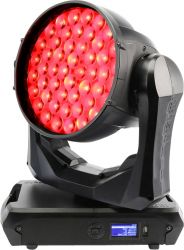
Moving lights

Moving Lights: Dynamic Lighting for Stage, Show and Event: Moving lights are the beating heart of every professional light show. Whether you run a club, tour with a band or design lighting for corporate events, dynamic fixtures like Moving Heads, scanners and moving effects turn a plain room into a spectacular stage. With sweeping beams, saturated colours and razor-sharp gobo projections, you set the mood and create the wow-effect your audience remembers. At LTT you find a broad selection of moving lights...
Read more »
Moving lights
Close window
Moving lights

Moving Lights: Dynamic Lighting for Stage, Show and Event

Moving lights are the beating heart of every professional light show. Whether you run a club, tour with a band or design lighting for corporate events, dynamic fixtures like Moving Heads, scanners and moving effects turn a plain room into a spectacular stage. With sweeping beams, saturated colours and razor-sharp gobo projections, you set the mood and create the wow-effect your audience remembers.

At LTT you find a broad selection of moving lights for every budget and every venue size — from compact LED effects for mobile DJs to high-output professional Moving Heads for large stages. As your specialist for event technology, we help you build the optimal lighting solution.

What Are Moving Lights? Fundamentals and Function

Moving lights are motorised, remotely controllable fixtures that redirect their light beam in real time across a room or stage. Unlike static spotlights or PAR cans, which point in a fixed direction, moving lights change position, colour, shape and beam width dynamically — usually via the DMX protocol. This makes them the most versatile tool in modern lighting design.

The two movement axes are called pan (horizontal rotation, often up to 540°) and tilt (vertical movement, typically up to 270°). A single moving fixture can replace several conventional spotlights, illuminating different zones, objects or performers in sequence.

How moving lights differ from static fixtures

Static fixtures such as LED PAR cans provide constant wash or accent light and are cheaper per unit. Moving lights cost more initially but deliver far greater flexibility: you program entire light scenes and cues instead of manually re-aiming lamps.

Within the moving-light family there are three core designs — Moving Heads, scanners and moving effects — each with distinct optics and use cases. Modern models rely almost entirely on LED technology, offering long lamp life, low heat and rich colour mixing from RGB up to RGBWA+UV. Understanding these differences is the foundation for choosing the right equipment for your show.

Types and Variants of Moving Lights: Moving Heads, Scanners and Moving Effects

Moving lights come in three main types, each solving a different lighting task. Knowing the variants helps you build a balanced rig.

Moving Heads

A Moving Head moves its entire projection head on pan and tilt motors, giving a large action radius and smooth, natural beam movement. Moving Heads are the most popular category and split further into Spot, Wash and Beam optics (compared in detail below). They suit stages, clubs, concerts and theatre alike.

Scanners

A scanner keeps its housing fixed and steers the beam via an electromechanically driven mirror. Because the mirror has very low mass compared with a full head, a scanner repositions its beam extremely fast — ideal for rapid, punchy strobe-style movements and tight rhythmic effects on the dancefloor. Scanners often carry gobo wheels for distinctive patterns.

Moving effects

Moving effects are multi-beam fixtures that create rotating beam patterns, derby-style colour rays or moving-bar effects with several LED heads or lenses at once. They deliver strong visual impact with minimal programming, making them a favourite for mobile DJs and smaller parties where a full DMX console is impractical.

Combining Moving Heads for versatile main effects, scanners for fast accents and moving effects for easy dancefloor coverage gives you a complete, layered show.

Spot vs. Wash vs. Beam: Comparison of Moving Head Optics

The three Moving Head optics differ mainly in beam angle, hardness of the beam edge and typical application. Choosing the right mix is the single most important decision when planning a rig.

  • Spot: Tightly focused, cone-shaped beam, usually 10°–25°. Carries gobos, prisms, iris and focus for sharp-edged projections on floors, walls and objects. Think of it as the modern, programmable followspot.
  • Wash: Wide beam via Fresnel or diffuser lens with a soft, feathered edge, often 15°–60° with zoom. Provides the coloured base wash for stages and dancefloors.
  • Beam: Very narrow, razor-sharp parallel beam of a few degrees. Creates dramatic aerial "light sabres" that come alive with haze — perfect for rock stages and concerts.
Criterion Spot Wash Beam
Typical beam angle 10°–25° 15°–60° (zoom) 2°–6°
Beam edge Sharp, defined Soft, feathered Ultra-sharp, narrow
Gobos / prisms Yes Rarely Sometimes
Main use Object & gobo projection Base colour wash Aerial concert effects
Best partner Stage sets Dancefloor mood Haze machine

For most setups a combination works best: Wash heads for atmosphere, Spot heads for detail and Beam heads for the big wow-effect.

LED Technology, Colour Mixing and Effects

Modern moving lights are dominated by LED technology, which has largely replaced discharge lamps in the entry and mid-range segment. LEDs run cooler, last longer, draw less power and switch colours instantly.

Colour mixing

Many fixtures offer RGB, RGBW or full RGBWA+UV colour ranges, letting you blend virtually any hue including warm white, amber and ultraviolet. Higher-end Moving Heads use CMY colour mixing (Cyan, Magenta, Yellow subtractive mixing) plus a CTO filter for precise, gradient-free colour fades — the standard for professional theatre and touring rigs.

COB and single-source LEDs

Wash fixtures often use COB (Chip-on-Board) LEDs, available in power classes from roughly 30 W up to 400 W, delivering a homogeneous colour field. Spot and Beam heads typically use a single powerful white LED source combined with colour and gobo wheels. Premium fixtures may use Osram Ostar RGBW LED engines for high output and consistent colour.

Built-in effects

Beyond simple colour, moving lights integrate gobos, rotating prisms, frost filters, animation wheels and pixel control for individually addressable LED rings. These features let you create depth, texture and beam-splitting effects that captivate an audience and achieve impressive results with a single fixture.

Control and Handling: DMX, Consoles and Music Control

Controlling moving lights well is what separates a chaotic light show from a polished one. The industry standard is the DMX512 protocol, which addresses fixtures over a daisy-chained cable.

DMX addressing basics

Each fixture occupies a block of DMX channels — a simple LED effect might use 4–8 channels, a full-feature Moving Head 16–32 channels or more. You assign a unique start address to every fixture so the console can control pan, tilt, colour, gobo, dimmer and shutter independently. Plan your addressing so blocks do not overlap; a 16-channel head starting at address 1 leaves the next fixture free from address 17.

Consoles and controllers

For programmable shows you use a dedicated DMX lighting console or software controller that stores scenes, chases and cues. Wireless control via CRMX or comparable radio receivers removes the need for signal cabling to flown fixtures.

Music and standalone modes

Many entry-level moving lights include built-in music control via an integrated microphone, plus master/slave and auto modes. This lets a mobile DJ run beat-reactive lighting without a console — perfect for weddings and private parties where a full programming setup would be overkill.

Rigging and Safe Suspension on Truss: WLL and Load Limits

Whenever you fly moving lights overhead, safety is non-negotiable. As a manufacturer of truss and rigging equipment, LTT can guide you where general lighting shops stop.

Understanding WLL and load capacity

The Working Load Limit (WLL) states the maximum load a component may carry in normal use, always well below its breaking point. Every clamp, truss and hoist has a rated WLL that you must respect for the total suspended weight — fixture, clamp, cable and safety steel. In Germany the DGUV Vorschrift 17 (formerly BGV C1) governs suspension of loads above people; plan your rig accordingly and use a second independent safety attachment (safety cable) on every flown fixture.

Matching fixtures to truss

Heavy Moving Heads impose point loads on truss. Distribute weight evenly and stay within the truss manufacturer's span and load tables. LTT truss systems cover different tube dimensions — Naxpro-Truss FD31/FD34 with 50 mm tube and 2 mm wall, HD31/HD34 with 50 mm tube and 3 mm wall for heavier duty, and GS94 with a 60 mm tube and 5 mm wall for high-load applications.

Explore our truss systems and rigging accessories to build a safe, load-rated suspension for your moving lights.

Technical Buying Criteria and Features to Compare

When comparing moving lights, focus on concrete technical values rather than marketing terms. The following criteria decide whether a fixture fits your venue.

  • Power and light source: LED wattage classes range from around 30 W COB for small effects up to 400 W and beyond for professional Spot heads. More watts generally mean more brightness — and higher power draw.
  • Beam angle and zoom: Fixed narrow angles (Beam, 2°–6°) versus wide zoomable angles (Wash, up to 60°). Zoom range adds flexibility.
  • Pan and tilt range: Look for pan up to 540° and tilt up to 270° for full coverage, plus adjustable movement speed.
  • Colour system: RGB, RGBW, RGBWA+UV or CMY colour mixing for professional gradients.
  • DMX channels: More channels mean finer control; check console capacity.
  • IP protection class: IP20 for indoor use, IP65 for weatherproof outdoor fixtures.
  • Weight: Critical for flown rigs and for transport.

IP protection classes for outdoor moving lights

If you light outdoor stages or open-air events, the IP rating is decisive. IP65 fixtures are dust-tight and protected against water jets, allowing safe operation in rain. Standard IP20 fixtures must stay indoors or under cover. Always match the IP class to the environment to avoid fixture failure and safety hazards.

Buying Guide: Choosing Moving Lights by Venue and Application

The right moving light depends less on the highest spec sheet and more on your venue size, budget and how often you use it. Use this buying guide to match fixtures to your needs.

Mobile DJ and small parties

For rooms up to about 100 people, compact LED Moving Heads (30–60 W) or moving effects with built-in music control offer strong impact without a console. Two to four fixtures usually suffice, and easy setup matters more than raw output.

Clubs and mid-size stages

Here you want programmable Moving Heads on DMX. A mix of Wash heads (100–200 W) for base colour and Spot or Beam heads for effects works well. Plan for six to twelve fixtures and a dedicated controller.

Large stages, concerts and touring

Professional venues call for high-output heads (250–400 W and above) with CMY colour mixing, wide zoom and robust build quality for repeated rigging. Budget for spare fixtures and consider IP65 models for outdoor legs.

Application Fixture type Typical wattage Suggested count
Mobile DJ / small party LED effect / mini Moving Head 30–60 W 2–4
Club / mid-size stage Wash + Spot Moving Heads 100–200 W 6–12
Concert / large stage Beam + Spot + Wash pro heads 250–400 W+ 12+

Still unsure? As your reliable partner, LTT helps you pick fixtures that match your room size, power supply and truss capacity.

Popular Brands and Manufacturers of Moving Lights

The moving-light market is shaped by a handful of well-established manufacturers whose fixtures have proven themselves in daily practice. At LTT you rely on high-quality branded products with solid support and spare-part availability.

Among the most popular brands for moving lights are EUROLITE, whose broad range covers entry to semi-pro; FUTURELIGHT, known for versatile Moving Heads and Beams; Cameo, offering feature-rich professional fixtures; Showtec, a reliable choice for rental and installation; and Elation for the higher professional segment. For mobile and budget setups, brands like Eurolite and American DJ deliver strong value.

Choosing an established brand pays off through consistent DMX behaviour, documented channel layouts and long-term availability of gobos, lamps and mechanical spares — essential if you build a rig you intend to expand over time.

Accessories and Clamp Compatibility for Moving Lights

The right accessories round off your moving-light setup and keep it safe and flexible. It is often the small parts that make a big impact.

Mounting and clamps

Moving lights attach to truss with clamps and omega brackets. Match the clamp to your truss tube diameter — 35 mm tube (Naxpro-Truss FD21/FD24), 50 mm tube (FD31/FD34, HD31/HD34) or 60 mm tube (GS94). Riggatec clamps and half-couplers are available for these common diameters, ensuring a secure mechanical connection.

Essential add-ons

  • Gobos for custom Spot projections
  • Safety cables as a mandatory second attachment on flown fixtures
  • DMX cables and terminators for reliable signal chains
  • Wireless DMX receivers for cable-free flown positions
  • Flightcases to protect fixtures in transit

Browse our lighting effects and rigging accessories to complete your rig with matching hardware.

Care, Maintenance and Common Problems with Moving Lights

Moving lights are precision instruments with motors, optics and electronics. Regular care extends their life and prevents show-stopping failures.

Care and maintenance

Dust is the biggest enemy of moving lights. Clean lenses and reflectors gently with a soft, lint-free cloth, and blow dust out of vents and fans regularly so LEDs stay cool. Check pan and tilt movement for smooth operation and re-tighten clamps and safety cables before every use. Store fixtures in flightcases to protect the mechanics during transport.

Problems and solutions

  • Fixture does not respond to DMX: Check the start address, cable polarity and that a DMX terminator sits at the end of the line.
  • Erratic pan/tilt movement: Often a loose data connection or a fixture needing a motor reset (power cycle).
  • Colour or gobo wheel sticks: Usually dust or a mechanical jam — reset and clean; if it persists, service is needed.
  • Overheating shutdown: Clean the fans and ensure adequate airflow around the fixture.

Addressing these issues early keeps your show running and protects your investment.

LTT – Your Specialist for Event Technology

Whether you equip a club, a touring stage or a mobile DJ setup, LTT gives you the moving lights and the rigging know-how to stage every event impressively. As a manufacturer with our own production in Germany and more than 25 years of experience in event technology, we combine high-quality branded products with genuine engineering expertise — from the fixture right up to the truss it hangs on.

You benefit from shipping out of Bocholt, Germany, a 3-year LTT warranty and free shipping from €69, with express delivery available when you need your gear fast. For resellers and rental companies we offer dedicated wholesale conditions.

Complete your lighting concept with our lighting effects and safe truss systems — and rely on LTT as your reliable partner for beam, wash and spot.

FAQ – Questions & Answers

What is moving light and how does it work?

Moving light describes motorised, remotely controllable stage fixtures that redirect their beam in real time across a room or stage. Moving lights work by driving pan and tilt motors — pan rotates the beam horizontally (often up to 540°), tilt moves it vertically (up to 270°) — while simultaneously changing colour, gobo, dimmer and beam width. Control usually runs over the DMX512 protocol from a lighting console or, on simpler models, via built-in music control. This dynamic behaviour lets a single moving light replace several static spotlights and create constantly changing, atmospheric effects.

What is a Moving Head?

A Moving Head is the most common type of moving light, in which the entire projection head — lamp, lens and effects — moves on motorised pan and tilt axes. This gives a Moving Head a large action radius and smooth, natural beam movement, allowing it to light different zones, objects or performers in sequence. Moving Heads come in three optical variants: Spot for sharp gobo projection, Wash for soft area coverage and Beam for narrow aerial effects. They are controlled via DMX and are the backbone of professional stage, club and concert lighting.

What is a light scanner?

A light scanner is a moving-light fixture that keeps its housing stationary and steers the beam using an electromechanically driven mirror. Because the mirror has far lower mass than a full moving head, a scanner can reposition its beam extremely quickly, making it ideal for fast, rhythmic and punchy dancefloor effects. Scanners typically include gobo wheels and colour options to create distinctive patterns. Their rapid movement gives a different visual character from Moving Heads, which is why many lighting designers combine scanners for fast accents with Moving Heads for versatile main effects.

What types of moving lights are there?

There are three main types of moving lights. Moving Heads move their entire head on pan and tilt motors and split into Spot, Wash and Beam optics. Scanners keep the body fixed and steer the beam with a fast-moving mirror, ideal for quick effects. Moving effects are multi-beam fixtures that produce rotating beam patterns and colour rays with minimal programming, popular with mobile DJs. Combining all three — Moving Heads for flexibility, scanners for speed and moving effects for easy dancefloor coverage — gives you a complete, layered light show for any venue.

What is the difference between Spot, Wash and Beam moving heads?

The difference between Spot, Wash and Beam Moving Heads lies in beam angle and edge quality. A Spot Moving Head produces a tight, sharp-edged cone (roughly 10°–25°) and carries gobos and prisms for object and pattern projection. A Wash Moving Head uses a Fresnel or diffuser lens for a wide, soft-edged beam (up to about 60°), providing coloured base light for stages and dancefloors. A Beam Moving Head emits an ultra-narrow, razor-sharp parallel beam of just a few degrees, creating dramatic aerial effects that come alive with haze. Most rigs combine all three.

What are LED moving lights and what advantages do they offer?

LED moving lights are fixtures that use LED light sources instead of traditional discharge lamps. Their advantages are significant: LEDs run much cooler, last far longer, draw less power and switch colours instantly. LED moving lights offer rich colour mixing from RGB up to RGBWA+UV, and COB LEDs are available in power classes from around 30 W to 400 W. They require little maintenance because there is no lamp to replace, and lower heat output makes them safer near performers and easier to fly on truss. This makes LED moving lights the standard choice for modern event lighting.

What does a moving light cost and which one should I buy?

Moving light prices span a wide range depending on type and power. Compact LED moving effects and mini Moving Heads for mobile DJs start in the low three-figure range, mid-size club Moving Heads (100–200 W) sit in the mid three figures, and professional heads with CMY colour mixing and high output reach four figures. Which moving light you should buy depends on your venue: choose small LED effects with music control for private parties, DMX-controlled Wash and Spot heads for clubs, and high-output professional fixtures for large stages. At LTT you get free shipping from €69 and a 3-year warranty.

How do I safely fly moving lights on truss?

To fly moving lights safely, you must respect the Working Load Limit (WLL) of every component — clamp, truss and hoist — and never exceed the combined weight of fixture, clamp, cable and safety steel. Attach each fixture with a clamp matched to the truss tube diameter (35 mm, 50 mm or 60 mm) and always add a second independent safety cable. In Germany, DGUV Vorschrift 17 governs loads suspended above people, so plan your rig within the truss manufacturer's span and load tables. As a truss and rigging manufacturer, LTT supplies load-rated Naxpro-Truss systems and Riggatec clamps for secure suspension.

Categories
280 Articles
Close filters
 
  •  
  •  
  •  
  •  
  •  
  •  
  •  
  •  
  •  
  •  
  •  
  •  
  •  
  •  
  •  
from to
1 From 12 pages
No results were found for the filter!
Showtec Phantom 65 Spot
SHOWTEC Phantom 65 Spot Compact 65 W LED Spot Moving Head - black
Compact 65 W LED Spot Moving Head • 7 bi-rotating interchangeable gobos + open • 8 colours + white • 3-facet prism • Manually adjustable focus • Compact, lightweight design...
€585.00 *
incl. tax, free shipping to Germany
[International shipping costs]
Availability:
Delivery time: 3-5 days
EUROLITE LED TMH-46 Moving-Head Wash
Compact moving washlight with 6in1 LEDs 4 powerful LEDs 10 W high-power 6in1 HCL RGBWA/UV (homogenous color mix) • Positioning within 540° PAN, 220° TILT • Exact positioning (16...
€149.00 *
incl. tax, free shipping to Germany
[International shipping costs]
Availability:
Delivery time: 3-5 days
FUTURELIGHT OC-7 Omega-Halter
FUTURELIGHT OC-7 Omega Clamp
Fitting Omega bracket for EYE-60 and EYE-108 Camlock system with horizontal bolt • Distance bolt-bolt 110 mm • Package contents 1 x omega bracket • Dimensions: Length: 13,80 cm...
€29.90 *
incl. tax, plus shipping costs
Availability:
Delivery time: 3-5 days
Showtec Kanjo Spot 60
SHOWTEC Kanjo Spot 60 60 W LED Spot Moving Head
60 W LED Moving Head • 7 fixed gobos + open • 7 colours + white • Dimmer and strobe function • DMX and Master/Slave control • Manual focus • Compact, one-clamp-mount...
€319.00 * €274.00 *
incl. tax, free shipping to Germany
[International shipping costs]
Availability:
Delivery time: 3-5 days
Showtec Shark Wash One - 7x 12 W Q6
SHOWTEC Shark Wash One 7x 12 W RGBWA-UV LED Wash Moving Head
7x 12 W RGBWA+UV LED Wash Moving Head • 25° fixed beam angle suitable for low ceiling venues • Compact, one-clamp-mount design • Dimmer and strobe function • DMX, IR and...
€319.00 *
incl. tax, free shipping to Germany
[International shipping costs]
Availability:
Delivery time: 3-5 days
Cameo HYDRABEAM 400 RGBW Lichtanlage mit 4 ultraschnellen 10 W CREE RGBW Q
Cameo HYDRABEAM 400 RGBW - Lighting set with 4 ultra-fast 10 W CREE RGBW Quad LED Moving Heads
Lighting set with 4 ultra-fast 10 W CREE RGBW Quad LED Moving Heads Bar with 4 ultra-fast moving heads • Each moving head can be controlled individually • Powerful 10W Cree RGBW quad-LEDs...
€389.00 *
incl. tax, free shipping to Germany
[International shipping costs]
Availability:
Near-term available
Delivery time: approx. 1 week
Showtec Shark Spot One
SHOWTEC Shark Spot One Compact 60 W LED Spot Moving Head
60 W Spot Moving Head with 15° fixed beam angle • 5 gobos + open & 7 colours + white • 3-facet prism & motorised focus • Infrared remote included • Compact,...
€409.00 *
incl. tax, free shipping to Germany
[International shipping costs]
Availability:
Delivery time: 3-5 days
EUROLITE Omega-Bügel 23
EUROLITE Omega Holder 23
Package contents 1 x omega bracket, 2 x screw, 4 x washer • Dimensions: Length: 10,2 cm Width: 2,5 cm Height: 2,3 cm • Weight: 0,05 kg •
€13.16 *
incl. tax, plus shipping costs
Availability:
Delivery time: 1-3 days
Showtec Shark Combi Spot One - 30 W + 6xRGBW
SHOWTEC Shark Combi Spot One 6x 8 W RGBW LED Wash and Spot Moving Head
30 W 13° Spot and 6x 8 W 25° Wash Moving Head • 7 gobos + open • 7 colours + white • Motorised focus • Infrared remote included • Compact, one-clamp-mound design...
€419.00 *
incl. tax, free shipping to Germany
[International shipping costs]
Availability:
Delivery time: 3-5 days
EUROLITE LED TSL-150 Scan COB
Handy scanner with 30 W COB LED, gobo and color wheel Compact design • Fuzzy sound control: program continues automatically during periods without music or bass-beat • 1 powerful LED 30 W...
€229.00 *
incl. tax, free shipping to Germany
[International shipping costs]
Availability:
Delivery time: 1-3 days
EUROLITE Omega-Bügel 24
EUROLITE Omega Holder 24
Package contents 1 x omega bracket, 2 x screw • Material thickness: 2,5 mm • Dimensions: Length: 13,20 cm Width: 3 cm Height: 3,3 cm • Weight: 0,10 kg •
€13.21 *
incl. tax, plus shipping costs
Availability:
Delivery time: 3-5 days
Cameo HYDRABEAM 4000 RGBW Lichtsystem mit 4 ultraschnellen 32 W RGBW Quad
Cameo HYDRABEAM 4000 RGBW - Lighting System with 4 Ultra-fast 32 W RGBW Quad LED Moving Heads
Lighting System with 4 Ultra-fast 32 W RGBW Quad LED Moving Heads Lighting system with 4 individually controllable moving heads • Ultra fast 540° pan and 270° tilt • Powerful 32 W...
€659.46 *
incl. tax, free shipping to Germany
[International shipping costs]
Availability:
Near-term available
Delivery time: approx. 1 week
Showtec Shark Zoom Wash One - 7xRGBW
SHOWTEC Shark Wash Zoom One 7x 15 W RGBW LED Wash Moving Head
7x 15 W RGBW LED Wash Moving Head • Wide motorised zoom • Compact, one-clamp-mount design • Dimmer and strobe function • DMX, IR and Master/Slave control • Infrared remote...
€435.00 *
incl. tax, free shipping to Germany
[International shipping costs]
Availability:
Delivery time: 3-5 days
FUTURELIGHT OC-8 Omega-Halter
FUTURELIGHT OC-8 Omega Clamp
Dimensions: Length: 22 cm Width: 6,60 cm Height: 6,90 cm • Weight: 0,49 kg •
€29.90 *
incl. tax, plus shipping costs
Availability:
Delivery time: 3-5 days
EUROLITE LED TMH-17 Moving-Head Spot
EUROLITE LED TMH-17 Moving Head Spot
Compact moving head Spot with 30 W LED, gobos and color wheel Compact lightweight • 1 powerful LED 30 W COB (chip-on-board) color wheel • Positioning within 540° PAN, 200° TILT...
€194.90 *
incl. tax, free shipping to Germany
[International shipping costs]
Availability:
Delivery time: 3-5 days
FUTURELIGHT OC-9 Omega-Halter
FUTURELIGHT OC-9 Omega Clamp
€29.90 *
incl. tax, plus shipping costs
Availability:
Delivery time: 1-3 days
FUTURELIGHT MP-8 Adapterplatte
FUTURELIGHT MP-8 Mounting Plate
Fitting mounting plate Package contents 1 x mounting bracket • Weight: 1,14 kg •
€49.90 *
incl. tax, plus shipping costs
Availability:
Low stock; Delivery time: 1-3 days
Delivery time: 1-3 days
Showtec Phantom 130 Spot
SHOWTEC Phantom 130 Spot 130 W LED Spot Moving Head - black
130 W LED Spot Moving Head • 6-facet circular & 5-facet linear rotating prism • 7 fixed and 7 bi-rotating interchangeable gobos + open • 7 colours + white • Motorised zoom...
€959.00 *
incl. tax, free shipping to Germany
[International shipping costs]
Availability:
Delivery time: 3-5 days
FUTURELIGHT Omega-Bügel 30
FUTURELIGHT Omega Holder 30
Weight: 0,04 kg •
€9.90 *
incl. tax, plus shipping costs
Availability:
Delivery time: 3-5 days
INVOLIGHT Liberty Core10Ah - Externer Akkupack für MH Liberty Serie, 10Ah
INVOLIGHT Liberty Core10Ah - Internal battery pack for MH Liberty series
Internal battery pack for MH Liberty series, 10Ah Specifikationen Nominal voltage: 22,2V • Nominal capacity: 10Ah • Minimum capacity: 222Wh •
€229.00 *
incl. tax, free shipping to Germany
[International shipping costs]
Availability:
Low stock; Delivery time: 1-3 days
Delivery time: 1-3 days
Cameo AURO® SPOT 200 LED Moving Head
Cameo AURO® SPOT 200 - LED Moving Head
RDM enabled moving head • 130,000 lx @ 1 m • High speed 3-phase motors • 16-bit resolution • Motor Focus • Automated positioning correction • Battery powered display...
€845.00 *
incl. tax, free shipping to Germany
[International shipping costs]
Availability:
Near-term available
Delivery time: approx. 1 week
Cameo MOVO® BEAM Z 100 Beam Moving Head mit LED-Ring
Cameo MOVO BEAM Z100 - Unlimited Rotation Beam Moving Head with LED Ring and Zoom
Unlimited Rotation Beam Moving Head with LED Ring and Zoom Ultra-bright 60 W OSRAM RGBW LED for saturated primary colours, subtle pastel hues and natural shades of white • Individually...
€629.00 *
incl. tax, free shipping to Germany
[International shipping costs]
Availability:
Near-term available
Delivery time: approx. 1 week
Cameo AURO® SPOT Z300 LED Spot Moving Head
Cameo AURO® SPOT Z300 - LED Spot Moving Head
Compact spot moving head with 7,500 lm luminous flux • 10° to 25° zoom range • Extremely even light dispersion free of hotspots • Automatic position correction...
€1,130.00 *
incl. tax, free shipping to Germany
[International shipping costs]
Availability:
Near-term available
Delivery time: approx. 1 week
EUROLITE LED TMH-X1 Moving-Head Beam
EUROLITE LED TMH-X1 Moving Head Beam
60 W beam, compact, narrow angle, beautiful RGBW colors Compact lightweight • 1 powerful LED 60 W COB (chip-on-board) 4in1 QCL RGBW (homogenous color mix) • Positioning within 540°...
€329.00 *
incl. tax, free shipping to Germany
[International shipping costs]
Availability:
Delivery time: 3-5 days
1 From 12 pages
Facts
Moving Lights: Dynamic Lighting for Stage, Show and Event: Moving lights are the beating heart of every professional light show. Whether you run a club, tour with a band or design lighting for corporate events, dynamic fixtures like Moving Heads, scanners and moving effects turn a plain room into a spectacular stage. With sweeping beams, saturated colours and razor-sharp gobo projections, you set the mood and create the wow-effect your... Read more »
Viewed
Facts

Moving Lights: Dynamic Lighting for Stage, Show and Event

Moving lights are the beating heart of every professional light show. Whether you run a club, tour with a band or design lighting for corporate events, dynamic fixtures like Moving Heads, scanners and moving effects turn a plain room into a spectacular stage. With sweeping beams, saturated colours and razor-sharp gobo projections, you set the mood and create the wow-effect your audience remembers.

At LTT you find a broad selection of moving lights for every budget and every venue size — from compact LED effects for mobile DJs to high-output professional Moving Heads for large stages. As your specialist for event technology, we help you build the optimal lighting solution.

What Are Moving Lights? Fundamentals and Function

Moving lights are motorised, remotely controllable fixtures that redirect their light beam in real time across a room or stage. Unlike static spotlights or PAR cans, which point in a fixed direction, moving lights change position, colour, shape and beam width dynamically — usually via the DMX protocol. This makes them the most versatile tool in modern lighting design.

The two movement axes are called pan (horizontal rotation, often up to 540°) and tilt (vertical movement, typically up to 270°). A single moving fixture can replace several conventional spotlights, illuminating different zones, objects or performers in sequence.

How moving lights differ from static fixtures

Static fixtures such as LED PAR cans provide constant wash or accent light and are cheaper per unit. Moving lights cost more initially but deliver far greater flexibility: you program entire light scenes and cues instead of manually re-aiming lamps.

Within the moving-light family there are three core designs — Moving Heads, scanners and moving effects — each with distinct optics and use cases. Modern models rely almost entirely on LED technology, offering long lamp life, low heat and rich colour mixing from RGB up to RGBWA+UV. Understanding these differences is the foundation for choosing the right equipment for your show.

Types and Variants of Moving Lights: Moving Heads, Scanners and Moving Effects

Moving lights come in three main types, each solving a different lighting task. Knowing the variants helps you build a balanced rig.

Moving Heads

A Moving Head moves its entire projection head on pan and tilt motors, giving a large action radius and smooth, natural beam movement. Moving Heads are the most popular category and split further into Spot, Wash and Beam optics (compared in detail below). They suit stages, clubs, concerts and theatre alike.

Scanners

A scanner keeps its housing fixed and steers the beam via an electromechanically driven mirror. Because the mirror has very low mass compared with a full head, a scanner repositions its beam extremely fast — ideal for rapid, punchy strobe-style movements and tight rhythmic effects on the dancefloor. Scanners often carry gobo wheels for distinctive patterns.

Moving effects

Moving effects are multi-beam fixtures that create rotating beam patterns, derby-style colour rays or moving-bar effects with several LED heads or lenses at once. They deliver strong visual impact with minimal programming, making them a favourite for mobile DJs and smaller parties where a full DMX console is impractical.

Combining Moving Heads for versatile main effects, scanners for fast accents and moving effects for easy dancefloor coverage gives you a complete, layered show.

Spot vs. Wash vs. Beam: Comparison of Moving Head Optics

The three Moving Head optics differ mainly in beam angle, hardness of the beam edge and typical application. Choosing the right mix is the single most important decision when planning a rig.

  • Spot: Tightly focused, cone-shaped beam, usually 10°–25°. Carries gobos, prisms, iris and focus for sharp-edged projections on floors, walls and objects. Think of it as the modern, programmable followspot.
  • Wash: Wide beam via Fresnel or diffuser lens with a soft, feathered edge, often 15°–60° with zoom. Provides the coloured base wash for stages and dancefloors.
  • Beam: Very narrow, razor-sharp parallel beam of a few degrees. Creates dramatic aerial "light sabres" that come alive with haze — perfect for rock stages and concerts.
Criterion Spot Wash Beam
Typical beam angle 10°–25° 15°–60° (zoom) 2°–6°
Beam edge Sharp, defined Soft, feathered Ultra-sharp, narrow
Gobos / prisms Yes Rarely Sometimes
Main use Object & gobo projection Base colour wash Aerial concert effects
Best partner Stage sets Dancefloor mood Haze machine

For most setups a combination works best: Wash heads for atmosphere, Spot heads for detail and Beam heads for the big wow-effect.

LED Technology, Colour Mixing and Effects

Modern moving lights are dominated by LED technology, which has largely replaced discharge lamps in the entry and mid-range segment. LEDs run cooler, last longer, draw less power and switch colours instantly.

Colour mixing

Many fixtures offer RGB, RGBW or full RGBWA+UV colour ranges, letting you blend virtually any hue including warm white, amber and ultraviolet. Higher-end Moving Heads use CMY colour mixing (Cyan, Magenta, Yellow subtractive mixing) plus a CTO filter for precise, gradient-free colour fades — the standard for professional theatre and touring rigs.

COB and single-source LEDs

Wash fixtures often use COB (Chip-on-Board) LEDs, available in power classes from roughly 30 W up to 400 W, delivering a homogeneous colour field. Spot and Beam heads typically use a single powerful white LED source combined with colour and gobo wheels. Premium fixtures may use Osram Ostar RGBW LED engines for high output and consistent colour.

Built-in effects

Beyond simple colour, moving lights integrate gobos, rotating prisms, frost filters, animation wheels and pixel control for individually addressable LED rings. These features let you create depth, texture and beam-splitting effects that captivate an audience and achieve impressive results with a single fixture.

Control and Handling: DMX, Consoles and Music Control

Controlling moving lights well is what separates a chaotic light show from a polished one. The industry standard is the DMX512 protocol, which addresses fixtures over a daisy-chained cable.

DMX addressing basics

Each fixture occupies a block of DMX channels — a simple LED effect might use 4–8 channels, a full-feature Moving Head 16–32 channels or more. You assign a unique start address to every fixture so the console can control pan, tilt, colour, gobo, dimmer and shutter independently. Plan your addressing so blocks do not overlap; a 16-channel head starting at address 1 leaves the next fixture free from address 17.

Consoles and controllers

For programmable shows you use a dedicated DMX lighting console or software controller that stores scenes, chases and cues. Wireless control via CRMX or comparable radio receivers removes the need for signal cabling to flown fixtures.

Music and standalone modes

Many entry-level moving lights include built-in music control via an integrated microphone, plus master/slave and auto modes. This lets a mobile DJ run beat-reactive lighting without a console — perfect for weddings and private parties where a full programming setup would be overkill.

Rigging and Safe Suspension on Truss: WLL and Load Limits

Whenever you fly moving lights overhead, safety is non-negotiable. As a manufacturer of truss and rigging equipment, LTT can guide you where general lighting shops stop.

Understanding WLL and load capacity

The Working Load Limit (WLL) states the maximum load a component may carry in normal use, always well below its breaking point. Every clamp, truss and hoist has a rated WLL that you must respect for the total suspended weight — fixture, clamp, cable and safety steel. In Germany the DGUV Vorschrift 17 (formerly BGV C1) governs suspension of loads above people; plan your rig accordingly and use a second independent safety attachment (safety cable) on every flown fixture.

Matching fixtures to truss

Heavy Moving Heads impose point loads on truss. Distribute weight evenly and stay within the truss manufacturer's span and load tables. LTT truss systems cover different tube dimensions — Naxpro-Truss FD31/FD34 with 50 mm tube and 2 mm wall, HD31/HD34 with 50 mm tube and 3 mm wall for heavier duty, and GS94 with a 60 mm tube and 5 mm wall for high-load applications.

Explore our truss systems and rigging accessories to build a safe, load-rated suspension for your moving lights.

Technical Buying Criteria and Features to Compare

When comparing moving lights, focus on concrete technical values rather than marketing terms. The following criteria decide whether a fixture fits your venue.

  • Power and light source: LED wattage classes range from around 30 W COB for small effects up to 400 W and beyond for professional Spot heads. More watts generally mean more brightness — and higher power draw.
  • Beam angle and zoom: Fixed narrow angles (Beam, 2°–6°) versus wide zoomable angles (Wash, up to 60°). Zoom range adds flexibility.
  • Pan and tilt range: Look for pan up to 540° and tilt up to 270° for full coverage, plus adjustable movement speed.
  • Colour system: RGB, RGBW, RGBWA+UV or CMY colour mixing for professional gradients.
  • DMX channels: More channels mean finer control; check console capacity.
  • IP protection class: IP20 for indoor use, IP65 for weatherproof outdoor fixtures.
  • Weight: Critical for flown rigs and for transport.

IP protection classes for outdoor moving lights

If you light outdoor stages or open-air events, the IP rating is decisive. IP65 fixtures are dust-tight and protected against water jets, allowing safe operation in rain. Standard IP20 fixtures must stay indoors or under cover. Always match the IP class to the environment to avoid fixture failure and safety hazards.

Buying Guide: Choosing Moving Lights by Venue and Application

The right moving light depends less on the highest spec sheet and more on your venue size, budget and how often you use it. Use this buying guide to match fixtures to your needs.

Mobile DJ and small parties

For rooms up to about 100 people, compact LED Moving Heads (30–60 W) or moving effects with built-in music control offer strong impact without a console. Two to four fixtures usually suffice, and easy setup matters more than raw output.

Clubs and mid-size stages

Here you want programmable Moving Heads on DMX. A mix of Wash heads (100–200 W) for base colour and Spot or Beam heads for effects works well. Plan for six to twelve fixtures and a dedicated controller.

Large stages, concerts and touring

Professional venues call for high-output heads (250–400 W and above) with CMY colour mixing, wide zoom and robust build quality for repeated rigging. Budget for spare fixtures and consider IP65 models for outdoor legs.

Application Fixture type Typical wattage Suggested count
Mobile DJ / small party LED effect / mini Moving Head 30–60 W 2–4
Club / mid-size stage Wash + Spot Moving Heads 100–200 W 6–12
Concert / large stage Beam + Spot + Wash pro heads 250–400 W+ 12+

Still unsure? As your reliable partner, LTT helps you pick fixtures that match your room size, power supply and truss capacity.

Popular Brands and Manufacturers of Moving Lights

The moving-light market is shaped by a handful of well-established manufacturers whose fixtures have proven themselves in daily practice. At LTT you rely on high-quality branded products with solid support and spare-part availability.

Among the most popular brands for moving lights are EUROLITE, whose broad range covers entry to semi-pro; FUTURELIGHT, known for versatile Moving Heads and Beams; Cameo, offering feature-rich professional fixtures; Showtec, a reliable choice for rental and installation; and Elation for the higher professional segment. For mobile and budget setups, brands like Eurolite and American DJ deliver strong value.

Choosing an established brand pays off through consistent DMX behaviour, documented channel layouts and long-term availability of gobos, lamps and mechanical spares — essential if you build a rig you intend to expand over time.

Accessories and Clamp Compatibility for Moving Lights

The right accessories round off your moving-light setup and keep it safe and flexible. It is often the small parts that make a big impact.

Mounting and clamps

Moving lights attach to truss with clamps and omega brackets. Match the clamp to your truss tube diameter — 35 mm tube (Naxpro-Truss FD21/FD24), 50 mm tube (FD31/FD34, HD31/HD34) or 60 mm tube (GS94). Riggatec clamps and half-couplers are available for these common diameters, ensuring a secure mechanical connection.

Essential add-ons

  • Gobos for custom Spot projections
  • Safety cables as a mandatory second attachment on flown fixtures
  • DMX cables and terminators for reliable signal chains
  • Wireless DMX receivers for cable-free flown positions
  • Flightcases to protect fixtures in transit

Browse our lighting effects and rigging accessories to complete your rig with matching hardware.

Care, Maintenance and Common Problems with Moving Lights

Moving lights are precision instruments with motors, optics and electronics. Regular care extends their life and prevents show-stopping failures.

Care and maintenance

Dust is the biggest enemy of moving lights. Clean lenses and reflectors gently with a soft, lint-free cloth, and blow dust out of vents and fans regularly so LEDs stay cool. Check pan and tilt movement for smooth operation and re-tighten clamps and safety cables before every use. Store fixtures in flightcases to protect the mechanics during transport.

Problems and solutions

  • Fixture does not respond to DMX: Check the start address, cable polarity and that a DMX terminator sits at the end of the line.
  • Erratic pan/tilt movement: Often a loose data connection or a fixture needing a motor reset (power cycle).
  • Colour or gobo wheel sticks: Usually dust or a mechanical jam — reset and clean; if it persists, service is needed.
  • Overheating shutdown: Clean the fans and ensure adequate airflow around the fixture.

Addressing these issues early keeps your show running and protects your investment.

LTT – Your Specialist for Event Technology

Whether you equip a club, a touring stage or a mobile DJ setup, LTT gives you the moving lights and the rigging know-how to stage every event impressively. As a manufacturer with our own production in Germany and more than 25 years of experience in event technology, we combine high-quality branded products with genuine engineering expertise — from the fixture right up to the truss it hangs on.

You benefit from shipping out of Bocholt, Germany, a 3-year LTT warranty and free shipping from €69, with express delivery available when you need your gear fast. For resellers and rental companies we offer dedicated wholesale conditions.

Complete your lighting concept with our lighting effects and safe truss systems — and rely on LTT as your reliable partner for beam, wash and spot.

FAQ – Questions & Answers

What is moving light and how does it work?

Moving light describes motorised, remotely controllable stage fixtures that redirect their beam in real time across a room or stage. Moving lights work by driving pan and tilt motors — pan rotates the beam horizontally (often up to 540°), tilt moves it vertically (up to 270°) — while simultaneously changing colour, gobo, dimmer and beam width. Control usually runs over the DMX512 protocol from a lighting console or, on simpler models, via built-in music control. This dynamic behaviour lets a single moving light replace several static spotlights and create constantly changing, atmospheric effects.

What is a Moving Head?

A Moving Head is the most common type of moving light, in which the entire projection head — lamp, lens and effects — moves on motorised pan and tilt axes. This gives a Moving Head a large action radius and smooth, natural beam movement, allowing it to light different zones, objects or performers in sequence. Moving Heads come in three optical variants: Spot for sharp gobo projection, Wash for soft area coverage and Beam for narrow aerial effects. They are controlled via DMX and are the backbone of professional stage, club and concert lighting.

What is a light scanner?

A light scanner is a moving-light fixture that keeps its housing stationary and steers the beam using an electromechanically driven mirror. Because the mirror has far lower mass than a full moving head, a scanner can reposition its beam extremely quickly, making it ideal for fast, rhythmic and punchy dancefloor effects. Scanners typically include gobo wheels and colour options to create distinctive patterns. Their rapid movement gives a different visual character from Moving Heads, which is why many lighting designers combine scanners for fast accents with Moving Heads for versatile main effects.

What types of moving lights are there?

There are three main types of moving lights. Moving Heads move their entire head on pan and tilt motors and split into Spot, Wash and Beam optics. Scanners keep the body fixed and steer the beam with a fast-moving mirror, ideal for quick effects. Moving effects are multi-beam fixtures that produce rotating beam patterns and colour rays with minimal programming, popular with mobile DJs. Combining all three — Moving Heads for flexibility, scanners for speed and moving effects for easy dancefloor coverage — gives you a complete, layered light show for any venue.

What is the difference between Spot, Wash and Beam moving heads?

The difference between Spot, Wash and Beam Moving Heads lies in beam angle and edge quality. A Spot Moving Head produces a tight, sharp-edged cone (roughly 10°–25°) and carries gobos and prisms for object and pattern projection. A Wash Moving Head uses a Fresnel or diffuser lens for a wide, soft-edged beam (up to about 60°), providing coloured base light for stages and dancefloors. A Beam Moving Head emits an ultra-narrow, razor-sharp parallel beam of just a few degrees, creating dramatic aerial effects that come alive with haze. Most rigs combine all three.

What are LED moving lights and what advantages do they offer?

LED moving lights are fixtures that use LED light sources instead of traditional discharge lamps. Their advantages are significant: LEDs run much cooler, last far longer, draw less power and switch colours instantly. LED moving lights offer rich colour mixing from RGB up to RGBWA+UV, and COB LEDs are available in power classes from around 30 W to 400 W. They require little maintenance because there is no lamp to replace, and lower heat output makes them safer near performers and easier to fly on truss. This makes LED moving lights the standard choice for modern event lighting.

What does a moving light cost and which one should I buy?

Moving light prices span a wide range depending on type and power. Compact LED moving effects and mini Moving Heads for mobile DJs start in the low three-figure range, mid-size club Moving Heads (100–200 W) sit in the mid three figures, and professional heads with CMY colour mixing and high output reach four figures. Which moving light you should buy depends on your venue: choose small LED effects with music control for private parties, DMX-controlled Wash and Spot heads for clubs, and high-output professional fixtures for large stages. At LTT you get free shipping from €69 and a 3-year warranty.

How do I safely fly moving lights on truss?

To fly moving lights safely, you must respect the Working Load Limit (WLL) of every component — clamp, truss and hoist — and never exceed the combined weight of fixture, clamp, cable and safety steel. Attach each fixture with a clamp matched to the truss tube diameter (35 mm, 50 mm or 60 mm) and always add a second independent safety cable. In Germany, DGUV Vorschrift 17 governs loads suspended above people, so plan your rig within the truss manufacturer's span and load tables. As a truss and rigging manufacturer, LTT supplies load-rated Naxpro-Truss systems and Riggatec clamps for secure suspension.