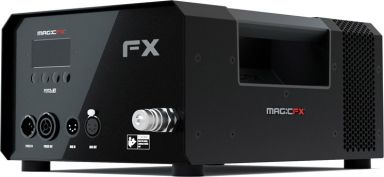
CO2 effect devices
Professional CO2 Effect Machines – Create Spectacular Smoke Columns for Your Events
CO2 effect machines deliver some of the most impressive visual moments in modern event production. Whether you're staging a festival, nightclub performance, theatre production or corporate event, professional CO2 jets and CO2 guns create dramatic white smoke columns that captivate audiences instantly. At LTT, you'll find a comprehensive range of CO2 effect equipment from leading manufacturers, designed for reliable performance in demanding professional applications. From compact handheld CO2 guns for DJ booths to powerful multi-jet systems for large-scale productions, our selection covers every requirement in the event technology sector.
How CO2 Effect Systems Work – The Technology Behind the Spectacle
CO2 effect machines operate on a fundamentally different principle from conventional fog machines or hazers. Instead of heating fluid to create vapour, CO2 systems use liquid carbon dioxide stored under high pressure in special bottles. When released through the jet nozzle, the liquid CO2 undergoes rapid expansion and phase transition, creating dense white smoke columns that shoot upward with considerable force.
A typical professional CO2 jet system consists of three main components: the CO2 bottle (usually 10kg, 20kg or 30kg capacity), a high-pressure hose rated for CO2 service, and the jet unit itself. The bottle contains liquid CO2 at approximately 50–60 bar pressure. When you trigger the effect, a solenoid valve opens, allowing the pressurised liquid to rush through the hose and exit via the jet nozzle.
The output distance varies by model and pressure, with standard CO2 jets achieving 6–8 metres, whilst high-performance units like the MagicFX Power Jet can reach up to 10 metres or more. Consumption rates typically range from 0.3kg to 0.5kg of liquid CO2 per second of operation, meaning a 10kg bottle provides approximately 20–30 seconds of total effect time when used continuously.
Unlike traditional fog that lingers and gradually fills a space, CO2 smoke dissipates rapidly – usually within 10–15 seconds – leaving no residue and minimal impact on visibility. This makes CO2 effects ideal for creating dramatic punctuation moments without obscuring the stage or affecting lighting visibility for extended periods. The effect also produces a noticeable cooling sensation in the immediate vicinity, adding a refreshing physical dimension that audiences often find exhilarating, particularly in warm club environments.
Types of CO2 Effect Equipment – From Handheld Guns to Multi-Jet Systems
The CO2 effect equipment category encompasses several distinct product types, each suited to different applications and production scales.
CO2 Guns – Handheld Impact for DJs and Performers
CO2 guns represent the most portable and interactive format. These handheld devices connect to a CO2 bottle via a flexible high-pressure hose, allowing performers or DJs to aim and trigger the effect manually. The MagicFX CO2 Gun II, for example, delivers an 8-metre jet whilst consuming approximately 0.5kg of CO2 per second. CO2 guns have become essential equipment in DJ booths worldwide, offering instant crowd engagement and a cooling blast that energises dance floors. They're particularly popular in nightclubs, mobile DJ setups and smaller festival stages where direct performer control creates spontaneous moments of excitement.
Fixed CO2 Jets – Precision Placement for Stage Design
Fixed CO2 jets are designed for permanent or semi-permanent installation, typically mounted on the stage floor, truss systems or integrated into set pieces. These units range from compact single-nozzle jets suitable for truss mounting to larger floor-standing models. Most professional fixed jets feature DMX control capability, allowing integration with lighting desks and show control systems for precisely timed effects synchronised with music, lighting cues and other production elements. Models like the Showtec CO2 Jet and Eurolite CO2 Jet Pro offer reliable performance in touring and installation contexts.
Multi-Jet and Dominator Systems – Maximum Visual Impact
For large-scale productions, multi-jet systems like the MagicFX Dominator provide exceptional impact. These units feature multiple nozzles – typically five or more – that can be triggered independently or simultaneously, creating complex patterns of smoke columns. Some advanced models incorporate motorised pan/tilt mechanisms, enabling dynamic sweeping effects that add movement and choreography to the CO2 blast. These systems are the choice for major festivals, arena concerts and high-budget theatrical productions where visual spectacle is paramount.
Swivel and Wave Jets – Dynamic Movement Effects
The latest generation of CO2 equipment includes swivel-capable jets that can rotate through 180 degrees or more, creating wave-like patterns as the smoke column sweeps across the stage. The Explo CO2 Wave Jet exemplifies this category, combining substantial output (up to 10 metres) with DMX-controlled rotation, enabling choreographed effects that follow performers or sweep across crowds in synchronised waves.
Safety Standards and Professional Specifications – What Matters When Choosing CO2 Equipment
Selecting professional CO2 effect equipment requires attention to several critical factors that determine both performance quality and operational safety.
Pressure Ratings and Hose Specifications
CO2 systems operate at significantly higher pressures than conventional fog machines. Professional high-pressure hoses must be rated for CO2 service, typically with a working pressure of 200 bar or higher and a burst pressure well above that threshold. Standard fog machine hoses are completely unsuitable and dangerous for CO2 applications. Always verify that hoses carry appropriate certification markings and replace them according to manufacturer schedules, as UV exposure and mechanical wear can compromise pressure integrity.
Control Systems and Integration
For professional applications, DMX control is virtually essential. DMX-enabled CO2 jets integrate seamlessly with lighting consoles, allowing operators to programme effects as part of comprehensive show sequences. Look for units offering both DMX and manual trigger options, providing flexibility for both programmed shows and spontaneous operator control. Some advanced systems also support wireless DMX protocols, eliminating cable runs in complex stage setups.
Output Performance and Consumption
Manufacturers specify output distance (typically 6–10 metres for professional units) and consumption rates (usually 0.3–0.5kg per second). These figures directly impact both visual impact and operational costs. A high-consumption jet creates more dramatic effects but requires larger CO2 bottles and more frequent refills. For touring productions, calculate total CO2 requirements based on the number of effects per show and bottle availability at venues.
Build Quality and Manufacturer Reputation
Leading manufacturers in the CO2 effect sector include MagicFX, Showtec, Eurolite and Explo, all of whom maintain rigorous quality standards and provide comprehensive technical documentation. Professional-grade units feature robust solenoid valves, reinforced nozzle assemblies and weather-resistant housings suitable for outdoor festival use. Budget units may save initial costs but often suffer from inconsistent output, valve failures and shorter service life.
Price Positioning and Investment Considerations
Entry-level CO2 guns typically start around £150–£250, suitable for mobile DJs and smaller club installations. Professional fixed jets range from £400–£800, whilst high-end multi-jet and swivel systems command £1,500–£4,000 or more. When evaluating costs, factor in ongoing CO2 supply expenses – a 10kg bottle typically costs £40–£60 to refill, and active productions may consume multiple bottles per event.
CO2 Bottle Management and Supply Logistics – Essential Knowledge for Operators
Successful CO2 effect operation depends heavily on proper bottle management, a topic often overlooked until production day reveals supply shortages or compatibility issues.
Bottle Sizes and Capacity Planning
CO2 bottles for effect systems typically come in three standard sizes: 10kg, 20kg and 30kg. The 10kg format offers maximum portability and is popular for mobile DJ applications, whilst 20kg and 30kg bottles suit fixed installations and productions with higher consumption. When planning bottle requirements, calculate total effect duration across your show, add a 30% safety margin, and ensure you have backup bottles on-site. A common mistake is underestimating consumption – a single 10kg bottle provides only 20–30 seconds of continuous operation at typical consumption rates.
Siphon vs. Standard Bottles – Critical Compatibility
CO2 effect systems require siphon bottles (also called dip-tube bottles), which draw liquid CO2 from the bottom of the container. Standard CO2 bottles without siphon tubes deliver gaseous CO2 from the top, which will not produce the effect. Always verify bottle type before accepting delivery, as standard and siphon bottles are often visually identical except for valve markings. Using a standard bottle in a CO2 jet system results in weak, inconsistent output or complete failure.
Pressure Regulators and Adapters
Most professional CO2 jets connect directly to bottles via high-pressure hoses with appropriate fittings. However, some systems require pressure regulators to ensure consistent output across varying bottle pressures. Bottle valve standards vary by region – UK and European bottles typically use different thread types than North American bottles. Ensure you have the correct adapters for your bottle supply, and carry spares for touring productions that may encounter different bottle types at various venues.
Transport Regulations and Venue Restrictions
CO2 bottles are classified as compressed gases and subject to transport regulations. In the UK, ADR (Agreement concerning the International Carriage of Dangerous Goods by Road) regulations apply to commercial transport of CO2 bottles. Most production companies maintain their own bottle stocks or work with local suppliers who deliver to venue loading docks. Be aware that some venues impose restrictions on CO2 quantities or storage locations due to confined space regulations – always confirm with venue management during technical planning.
Refill Networks and Supply Reliability
Establish relationships with CO2 suppliers in your primary operating regions. Industrial gas suppliers, beverage industry distributors and specialist event technology companies all offer CO2 refill services, but availability and pricing vary significantly. For international touring, research local suppliers at each venue location well in advance, as CO2 bottles cannot be transported across many international borders. Some production companies ship empty bottles ahead and arrange local fills, whilst others rent bottles at each location.
LTT – Your Specialist for Professional Event Technology
At LTT, we've been supporting event professionals with high-quality equipment and expert knowledge for over 25 years. Our CO2 effect machine range includes proven systems from leading manufacturers, all backed by our comprehensive 3-year LTT warranty. Whether you're equipping a permanent club installation, building a touring production package or adding impact to mobile DJ services, our team provides the technical guidance you need to make informed decisions.
We ship worldwide from our facility in Bocholt, Germany, with free shipping on orders over €69 within Germany and competitive international rates. Express delivery options ensure you receive equipment when production schedules demand it. As both a specialist retailer and manufacturer with our own production facilities, we understand the technical requirements and operational realities of professional event production. Our B2B customers benefit from wholesale pricing and dedicated account management, whilst individual professionals receive the same expert service and product quality.
Explore our complete range of stage effect equipment to create truly memorable events. Discover how the right equipment, expert support and reliable service combine to help you achieve impressive results, every time.
Integration with Lighting and Show Control Systems – Maximising Creative Potential
Professional CO2 effects reach their full potential when integrated into comprehensive show control systems, synchronised with lighting, audio and video elements.
DMX Programming and Cue Structure
Most professional CO2 jets occupy a single DMX channel, with valve control typically mapped to channel values above a threshold (often 128 or higher triggers the effect). More sophisticated units may use additional channels for features like nozzle rotation, effect intensity or pre-programmed patterns. When programming CO2 cues, consider the dissipation time – effects triggered too frequently can create overlapping smoke that obscures rather than enhances visibility. Spacing cues 15–20 seconds apart typically allows each effect to make full visual impact before the next trigger.
Lighting Synchronisation Techniques
CO2 smoke columns become dramatically more visible when illuminated. Position LED wash fixtures, beam lights or strobes to backlight or sidelight the CO2 plume, creating defined columns of light-filled smoke. Colour temperature matters – cool whites and blues emphasise the cold, crisp nature of CO2, whilst warm ambers and reds create contrasting warmth. Programme lighting cues to trigger simultaneously with or slightly before CO2 release, ensuring illumination is already in place as the smoke column rises.
Audio Triggering and Musical Synchronisation
For live performances, audio-triggered CO2 effects create powerful moments of synchronisation between sound and visual impact. Some advanced show control systems analyse audio input in real-time, triggering effects on beat drops, vocal peaks or specific frequency thresholds. For programmed shows with pre-recorded music, timecode synchronisation ensures frame-accurate coordination between audio, lighting and CO2 effects, creating the seamless integration that defines professional production.
Safety Interlocks and Failsafe Systems
Professional installations should incorporate safety interlocks that prevent accidental CO2 discharge. Key-switch controls, two-button trigger systems (requiring simultaneous activation) and emergency stop circuits all contribute to safe operation. For systems with multiple jets, consider implementing zone controls that prevent simultaneous discharge of all units, managing both CO2 consumption and avoiding excessive cooling in performer areas.
FAQ – Questions & Answers
A CO2 gun is a handheld effect device that releases liquid carbon dioxide under high pressure to create dramatic white smoke columns. The CO2 gun connects to a pressurised CO2 bottle via a high-pressure hose, allowing performers or DJs to aim and trigger the effect manually. Professional CO2 guns like the MagicFX CO2 Gun II deliver output distances of up to 8 metres whilst consuming approximately 0.5kg of liquid CO2 per second. CO2 guns have become essential equipment in DJ booths and nightclubs worldwide, offering instant visual impact and a refreshing cooling effect that energises dance floors. The handheld format provides direct performer control, enabling spontaneous moments of crowd engagement that fixed CO2 jets cannot match.
Professional CO2 jets typically achieve output distances between 6 and 10 metres, depending on the model and operating pressure. Standard CO2 jets like the Showtec CO2 Jet deliver 6–8 metre columns, suitable for most club and theatre applications. High-performance models such as the MagicFX Power Jet can reach 10 metres or more, making them ideal for large festival stages and arena productions. Output distance depends on several factors including bottle pressure (which decreases as the bottle empties), ambient temperature, humidity levels and nozzle design. For accurate planning, always test equipment under conditions similar to your actual performance environment, as outdoor wind and temperature variations can significantly affect effective range.
Professional CO2 effect machines typically consume between 0.3kg and 0.5kg of liquid CO2 per second of operation. Standard CO2 jets and handheld CO2 guns usually consume approximately 0.5kg per second, meaning a 10kg CO2 bottle provides roughly 20 seconds of continuous effect time. High-output systems and multi-jet units may consume more, whilst some compact models use slightly less. This consumption rate has direct cost implications – at typical refill prices of £40–£60 per 10kg bottle, each second of CO2 effect costs approximately £2–£3. For productions with multiple effects throughout a show, calculate total consumption carefully and ensure adequate bottle supply, always maintaining backup bottles on-site to avoid running out during critical moments.
CO2 jets and fog machines create fundamentally different effects using completely different technologies. CO2 jets use pressurised liquid carbon dioxide that expands rapidly when released, creating dense white smoke columns that shoot upward with considerable force (6–10 metres) and dissipate quickly within 10–15 seconds. Fog machines heat special fog fluid to create vapour that spreads gradually, fills spaces evenly and lingers for several minutes. CO2 effects provide dramatic punctuation moments with instant visual impact and a cooling sensation, whilst fog machines create atmospheric haze that enhances lighting beams and maintains consistent ambience. CO2 systems require high-pressure bottles and specialised hoses, consume expensive liquid CO2 and cannot run continuously, whereas fog machines use inexpensive fluid, operate continuously and require only standard electrical power. Professional productions often use both technologies for different creative purposes.
Yes, most professional CO2 jets feature DMX control capability, allowing integration with lighting consoles and show control systems. DMX-enabled CO2 jets typically occupy one or more DMX channels, with the primary channel controlling the solenoid valve that releases the CO2. Channel values above a threshold (commonly 128 or higher) trigger the effect, whilst values below that threshold keep the valve closed. Advanced CO2 systems may use additional DMX channels for features like motorised nozzle rotation, effect intensity adjustment or selection of pre-programmed patterns. DMX control enables precise synchronisation with lighting cues, audio triggers and other production elements, essential for professional touring productions and permanent installations. Most units also provide manual trigger options via wired or wireless remote controls, offering flexibility for both programmed shows and spontaneous operator control during live performances.
CO2 effect machines require several important safety precautions for professional operation. First, ensure adequate ventilation, as CO2 displaces oxygen in confined spaces – never use CO2 effects in small, poorly ventilated rooms or areas where CO2 could accumulate. Second, use only high-pressure hoses specifically rated for CO2 service with appropriate pressure certifications; standard fog machine hoses will fail catastrophically under CO2 pressure. Third, maintain safe distances from performers and audience members, as the intense cooling effect can cause discomfort or cold burns if directed at close range onto skin. Fourth, secure CO2 bottles properly in upright positions using appropriate restraints to prevent tipping. Fifth, verify that all connections are tight and leak-free before pressurising the system. Finally, ensure operators receive proper training on emergency shutdown procedures and understand the location of ventilation controls and emergency exits in the event of excessive CO2 release.
For mobile DJ applications, a handheld CO2 gun system offers the best combination of portability, visual impact and operational flexibility. The MagicFX CO2 Gun II or similar models from Showtec or Eurolite provide excellent performance in the £150–£300 price range. A complete mobile DJ CO2 setup should include the CO2 gun itself, a 5-metre high-pressure hose (longer hoses reduce pressure and output distance), a bottle adapter compatible with your local CO2 supply, and at least two 10kg siphon CO2 bottles. The 10kg bottle size balances portability with adequate capacity for typical mobile events – each bottle provides approximately 20–30 seconds of total effect time. Consider adding a small equipment case to protect the gun and hose during transport. For venues with truss systems, you might also invest in a compact fixed CO2 jet with DMX control, expanding your creative options for larger productions whilst maintaining the handheld gun for direct crowd interaction.
CO2 bottles for effect systems can be refilled or exchanged through several sources. Industrial gas suppliers like BOC, Air Products or local welding supply companies offer CO2 refill services, typically charging £40–£60 per 10kg bottle. Beverage industry suppliers who service pubs and restaurants also provide CO2, though verify they can supply siphon bottles specifically, as standard beverage bottles lack the dip tube required for effect systems. Some event technology rental companies offer bottle exchange programmes where you swap empty bottles for full ones, eliminating refill waiting time. When arranging refills, always specify that you require siphon bottles (also called dip-tube bottles) for special effects use, as standard CO2 bottles will not work in effect systems. Establish accounts with suppliers in your primary operating regions, and for touring productions, research local CO2 sources at each venue location well in advance, as transporting pressurised bottles across borders often faces regulatory restrictions.