Flame effect devices

Professional Flame Effect Equipment for Events & Shows: Flame effect equipment delivers the ultimate "wow effect" for concerts, festivals, theatre productions and corporate events. Whether you need dramatic fire columns reaching 8 metres or precisely timed fireballs synchronised to music, professional flame projectors set your event in motion with unforgettable visual impact. LTT supplies CE-certified flame effect systems from leading manufacturers including MagicFX, Eurolite and Showtec — engineered for...
Read more »
Flame effect devices
Close window
Flame effect devices

Professional Flame Effect Equipment for Events & Shows

Flame effect equipment delivers the ultimate "wow effect" for concerts, festivals, theatre productions and corporate events. Whether you need dramatic fire columns reaching 8 metres or precisely timed fireballs synchronised to music, professional flame projectors set your event in motion with unforgettable visual impact. LTT supplies CE-certified flame effect systems from leading manufacturers including MagicFX, Eurolite and Showtec — engineered for both indoor and outdoor applications. From compact aerosol-powered units to high-output liquid-fuel systems, you'll find the optimal solution for every staging requirement and budget.

What Is a Flame Projector and How Does It Work?

A flame projector is a controlled pyrotechnic effect device that produces vertical flame columns, fireballs or sweeping flame patterns on demand. Unlike traditional pyrotechnics that rely on combustible compositions, flame projectors use pressurised fuel — either aerosol cartridges, propane/butane gas bottles or liquid fuels such as bio-ethanol and isopropanol — ignited by an electric spark or pilot flame.

Core operating principle: The device meters fuel into a combustion chamber where an ignition source creates a controlled flame. The fuel flow rate, ignition timing and nozzle design determine flame height, duration and shape. Modern flame projectors integrate safety sensors (tilt detection, flame monitoring, temperature cut-offs) and professional control interfaces (DMX-512, wireless remote, manual trigger).

Flame Projectors vs. Traditional Pyrotechnics

Traditional stage pyrotechnics use single-use cartridges containing chemical compositions that burn once and require replacement. Flame projectors, by contrast, draw from a refillable fuel reservoir, enabling hundreds of flame bursts from a single aerosol cartridge (typically 100+ shots from a 400 ml canister) or continuous operation from gas bottles. This makes flame projectors more economical for rehearsals, extended shows and touring productions.

Another key distinction: flame projectors produce "clean" flames with minimal smoke and residue when operated with high-purity fuels, whereas pyrotechnic cartridges often generate visible smoke and particulate matter. For indoor venues with sensitive smoke detection systems, flame projectors offer a safer, more controllable alternative — though you must still coordinate with venue management and local fire authorities before deployment.

Applications: Where Flame Effects Create Unforgettable Moments

Flame effect equipment is the go-to choice for event producers who demand dramatic visual punctuation. Concert stages use flame columns to accentuate musical climaxes — rock, metal and EDM acts frequently deploy synchronised flame bursts timed to bass drops and crescendos. Corporate product launches leverage flame effects to frame vehicle reveals or technology unveilings with theatrical flair.

Festival main stages integrate truss-mounted flame projectors to create "fire walls" spanning the entire stage width, while theatre productions use smaller, precisely aimed units for storytelling moments — dragon breath, forge scenes or supernatural apparitions. Outdoor events benefit from high-output gas systems that remain visible even in daylight, with flame heights reaching 15–20 metres for maximum impact.

Integration with Lighting and Rigging Systems

Flame projectors are rarely deployed in isolation. Professional installations combine flame effects with intelligent lighting, hazers and video screens to build layered visual narratives. When you mount flame units on aluminium truss structures — such as Naxpro-Truss FD31 or HD31 systems — you gain precise positioning control and can create multi-level flame choreography. Always verify the working load limit (WLL) of your truss and rigging points; a typical aerosol-powered flame projector weighs 7–13 kg, while liquid-fuel systems with pump stations can exceed 30 kg.

For maximum creative flexibility, consider pairing flame effects with moving-head spotlights and LED wash fixtures to illuminate the flame plumes from below or behind, intensifying colour saturation and creating dramatic silhouettes.

Buying Criteria: What Defines a Professional Flame Projector

Selecting the right flame effect equipment requires balancing technical specifications, safety certifications and operational requirements. Here are the critical factors:

Fuel Type and Consumption

Aerosol cartridge systems (400 ml canisters) are compact, portable and ideal for mobile DJs and small-to-medium stages. A single cartridge delivers 100–150 flame bursts of 0.3–3 seconds each, with flame heights of 3–4 metres. Cartridges are available in clear (natural yellow-orange flame) or coloured formulations (green, red, blue) — though coloured aerosols require regular purging with clear fluid to prevent nozzle clogging.

Propane/butane gas systems connect to standard gas bottles (5–11 kg) via pressure regulators and offer significantly higher output — flame heights of 5–8 metres are standard, with specialist units reaching 15–20 metres. Gas systems are more economical for extended shows but require proper ventilation and gas-handling protocols.

Liquid-fuel projectors use bio-ethanol or isopropanol pumped from external reservoirs (10–250 litres). These systems support the longest continuous operation and enable moving-head designs that sweep flames through 240° arcs. Liquid fuels burn cleaner than gas and produce minimal smoke, making them the preferred choice for indoor venues.

Control Interfaces and Safety Features

All professional flame projectors support DMX-512 protocol for integration with lighting consoles. Entry-level models offer 1–2 DMX channels (ignition trigger + flame duration), while advanced units provide 4+ channels controlling ignition, duration, intensity and pan/tilt (for moving-head designs). Wireless control via proprietary radio systems (range up to 2,000 metres) is standard on battery-powered outdoor units.

Mandatory safety features include tilt sensors (automatic shutdown if the unit tips beyond 45°), flame-detection circuits (shutdown if ignition fails), temperature monitoring and emergency stop inputs. Look for CE certification and compliance with German DGUV Vorschrift 17 (formerly BGV C1) if you operate in professional event environments.

Price Brackets and Rental vs. Purchase

Entry-level aerosol flame projectors start at approximately €800–1,200 for purchase, with daily rental rates of €90–150 plus fuel consumption. Mid-range gas systems (5–8 m flame height) cost €1,500–3,000 to buy or €150–250 per day to rent. High-output liquid-fuel systems with moving-head technology command €4,000–8,000 purchase prices or €250–650 daily rental fees. For one-off events, rental is almost always more economical; for touring productions or permanent installations, ownership pays off after 15–25 rental days.

Leading manufacturers in the LTT range include MagicFX (Flamaniac multi-directional systems), Eurolite (compact aerosol units) and Showtec (mid-range gas projectors). All models ship with user manuals, safety data sheets and spare parts availability.

DMX Control and Wireless Operation: Precision Flame Choreography

Modern flame projectors are designed for seamless integration into automated show control systems. DMX-512 protocol — the industry standard for lighting and effects control — allows you to trigger flame bursts with frame-accurate precision, synchronise multiple units and program complex sequences.

DMX Channel Assignment

A basic flame projector uses two DMX channels: Channel 1 controls ignition (0 = off, 1–255 = fire), while Channel 2 sets flame duration (typically mapped to 0.3–3.0 seconds). Advanced models add channels for intensity modulation (fuel flow rate), pre-ignition purge cycles and diagnostic feedback. You assign the starting DMX address via DIP switches on the device housing — a 10-position DIP switch bank supports addresses 1–512.

When you operate multiple flame projectors, assign consecutive addresses (e.g. unit 1 = address 10, unit 2 = address 12, unit 3 = address 14) to simplify programming. Most lighting consoles allow you to group fixtures into "flame banks" for simultaneous triggering or create chase patterns that ripple flames across the stage.

Wireless Control for Outdoor and Mobile Applications

Battery-powered flame projectors integrate wireless receivers operating on license-free radio frequencies (typically 2.4 GHz or proprietary sub-GHz bands). Professional systems offer bi-directional communication, transmitting battery status, fuel level and fault codes back to the control station. Wireless range varies by model — compact units achieve 200–500 metres line-of-sight, while high-power outdoor systems reach 1,500–2,000 metres.

For maximum reliability, always perform a wireless range test at the venue before the show. Metal truss structures, video walls and dense crowds can attenuate radio signals; in challenging RF environments, consider hybrid setups with wired DMX for critical cues and wireless for secondary effects.

Safety Interlocks and Emergency Stop

All LTT-supplied flame projectors feature hardware safety interlocks: a dedicated DMX channel or physical input that must be actively enabled before ignition is possible. This "arm" signal prevents accidental triggering during setup or maintenance. Additionally, wired emergency-stop buttons (connected via XLR or terminal block) provide instant shutdown capability — essential for compliance with venue safety protocols and insurance requirements.

Rigging Integration: Mounting Flame Projectors on Truss Structures

While floor-standing flame projectors are common, truss-mounted installations unlock far greater creative possibilities. Elevating flame units to 3–6 metres creates dramatic overhead fire columns, allows flames to clear stage scenery and improves audience sightlines.

Load Calculations and Truss Selection

Before you mount any flame projector, verify the working load limit (WLL) of your truss and rigging points. A typical aerosol-powered unit weighs 7–10 kg; add 2–3 kg for mounting hardware (half-couplers, safety cables) and allow a 5:1 safety factor. For a 10 kg total load, your truss must support at least 50 kg at that point.

Naxpro-Truss FD31 (50 mm diameter tubes, 2 mm wall thickness) offers a distributed load capacity of 250 kg per metre span when rigged as a simple beam — more than adequate for flame projector arrays. For heavier liquid-fuel systems or long unsupported spans, upgrade to Naxpro-Truss HD31 (50 mm tubes, 3 mm walls) or GS94 (60 mm tubes, 5 mm walls, 40 × 3 mm diagonal bracing) for maximum structural integrity.

Always use Riggatec half-couplers (rated to 500 kg) with secondary safety cables (rated to at least 10× the device weight). Never rely solely on clamps — safety cables are mandatory under DGUV Vorschrift 17.

Flame Direction and Clearance Zones

Most flame projectors allow tilt adjustment of ±45° from vertical. When you angle a unit, the flame plume shifts accordingly — a 5-metre vertical flame becomes a 7-metre diagonal reach when tilted 45°. Maintain minimum clearance distances: 3 metres horizontal from flammable materials (drapes, banners, scenery), 5 metres vertical to ceilings or roof structures, and 8 metres from audience areas for units producing flames above 5 metres.

For indoor venues, consult the fire safety officer and provide technical data sheets for all flame equipment. Many venues require a "hot work permit" even for controlled flame effects, and some mandate a fire safety attendant with extinguisher during operation.

Power and DMX Distribution

Truss-mounted flame projectors require mains power (230 V AC, typically via PowerCON connectors) and DMX signal. Plan cable runs carefully: use PowerCON TRUE1 locking connectors to prevent accidental disconnection, and run DMX via shielded 3-pin or 5-pin XLR cables. For long truss runs (>50 metres), insert DMX splitter/boosters every 30–40 metres to maintain signal integrity.

Battery-powered units eliminate mains cabling but require pre-show charging and mid-show battery swaps for events exceeding 4–6 hours. Always carry spare batteries and test charge cycles during technical rehearsals.

LTT – Your Specialist for Event Technology

LTT combines over 25 years of experience in professional event technology with in-house manufacturing expertise. As both a full-service distributor and producer of premium truss systems (Naxpro-Truss, Litetruss, Junior-Truss) and rigging accessories (Riggatec), LTT understands the complete technical ecosystem of live events — from structural engineering to creative effect design.

When you source flame effect equipment from LTT, you benefit from expert consultation that considers not just the flame projector itself, but its integration with your existing truss, lighting and control infrastructure. Our team can advise on load calculations, DMX addressing schemes and safety compliance, ensuring your flame effects deliver impressive results without compromising structural integrity or regulatory compliance.

Every flame projector ships from our Bocholt, Germany facility with free shipping on orders over €69 and express delivery options for time-critical productions. LTT's 3-year warranty on selected equipment and access to wholesale pricing for resellers make us a reliable partner for touring companies, rental houses and permanent installations worldwide. With over 100,000 positive customer reviews and an international dealer network, LTT is your trusted source for innovative solutions for professionals in the event technology sector.

FAQ – Questions & Answers

How do you create a flame effect?

You create a flame effect by using a flame projector — a device that meters pressurised fuel (aerosol cartridges, propane/butane gas or liquid bio-ethanol/isopropanol) into a combustion chamber where an electric ignition source produces a controlled flame. The operator triggers the effect via DMX-512 protocol, wireless remote or manual button, with flame duration and height determined by fuel flow rate and nozzle design. Professional flame projectors integrate safety sensors (tilt detection, flame monitoring, temperature cut-offs) and support precise timing for music-synchronised shows. For indoor applications, always coordinate with venue management and fire authorities, as most jurisdictions require permits and safety attendants even for controlled flame effects.

What is a flame projector?

A flame projector is a professional stage effect device that produces controlled vertical flame columns, fireballs or sweeping flame patterns on demand. Unlike single-use pyrotechnic cartridges, flame projectors draw fuel from refillable reservoirs — aerosol canisters (400 ml), gas bottles (5–11 kg propane/butane) or liquid tanks (10–250 litres bio-ethanol/isopropanol) — enabling hundreds of flame bursts from one fuel source. Modern units support DMX-512 control for integration with lighting consoles, wireless operation for outdoor events and moving-head designs that sweep flames through 240° arcs. Flame projectors are the preferred choice for concerts, festivals, theatre and corporate events requiring repeatable, precisely timed fire effects.

What device creates flames for stage shows?

Stage shows use flame projectors (also called flame throwers or fire projectors) to create controlled flame effects. These devices ignite pressurised fuel — aerosol cartridges, propane/butane gas or liquid bio-ethanol — via electric spark or pilot flame, producing flame columns from 3 to 20 metres depending on fuel type and nozzle configuration. Professional models integrate DMX-512 control interfaces, wireless remote operation and safety sensors (tilt detection, flame monitoring, emergency stop inputs). Leading manufacturers include MagicFX, Eurolite and Showtec, with models ranging from compact aerosol units (€800–1,200) to high-output liquid-fuel systems with moving-head technology (€4,000–8,000). All units require CE certification and compliance with local fire safety regulations.

Can flame projectors be used indoors?

Yes, flame projectors can be used indoors, but you must obtain venue approval and often a "hot work permit" from local fire authorities. Indoor flame effects require clean-burning fuels — bio-ethanol or isopropanol for liquid systems, or high-purity aerosol cartridges — to minimise smoke and residue that might trigger smoke detectors. Maintain minimum clearance distances: 3 metres horizontal from flammable materials (drapes, scenery), 5 metres vertical to ceilings and 8 metres from audience areas for units producing flames above 5 metres. Many venues mandate a fire safety attendant with extinguisher during operation and require detailed technical data sheets (fuel type, consumption rate, ignition method) submitted 2–4 weeks before the event. Always test flame effects during technical rehearsals to verify smoke detector compatibility.

What is the difference between gas and liquid flame projectors?

Gas flame projectors use propane or butane from standard gas bottles (5–11 kg), producing flame heights of 5–8 metres (specialist models reach 15–20 metres) with high visibility in outdoor daylight conditions. Gas systems are economical for extended shows and simple to refuel, but generate more heat and require proper ventilation. Liquid flame projectors use bio-ethanol or isopropanol pumped from external tanks (10–250 litres), burning cleaner with minimal smoke — ideal for indoor venues with sensitive smoke detection. Liquid systems support moving-head designs that sweep flames through 240° arcs and offer the longest continuous operation, but cost more (€4,000–8,000 vs. €1,500–3,000 for gas units) and require pump stations and pressure regulation. Choose gas for outdoor festivals and large stages; choose liquid for indoor theatres, corporate events and applications requiring precise flame choreography.

How much does a flame projector cost?

Flame projector prices vary by fuel type, output and control features. Entry-level aerosol-powered units (3–4 m flame height, DMX control, 400 ml cartridges) cost €800–1,200 to purchase or €90–150 per day to rent. Mid-range gas systems (5–8 m flames, propane/butane bottles, wireless control) range from €1,500–3,000 to buy or €150–250 daily rental. High-output liquid-fuel projectors with moving-head technology (10–20 m flames, bio-ethanol/isopropanol, 240° pan range) command €4,000–8,000 purchase prices or €250–650 per day rental fees. Fuel consumption adds €30–80 per show depending on usage intensity. For one-off events, rental is more economical; for touring productions or permanent installations, ownership pays off after 15–25 rental days.

What maintenance is required for coloured aerosol flame projectors?

Coloured aerosol flame projectors require regular purging with clear (uncoloured) aerosol fluid to prevent nozzle clogging and maintain ignition reliability. After every 20–30 coloured flame bursts, fire 5–10 clear shots to flush pigment residue from the fuel lines and combustion chamber. Inspect the ignition electrode weekly for carbon buildup; clean with a soft brass brush and isopropanol if necessary. Check aerosol cartridge seals before each show — damaged O-rings cause fuel leaks and inconsistent flame height. Replace cartridges when pressure drops below operational threshold (typically indicated by flame height reduction of 30% or more). Store unused coloured cartridges upright in a cool, dry location away from direct sunlight; shelf life is 18–24 months. Always consult the manufacturer's maintenance schedule and keep service records for insurance and safety compliance.

Which flame projector is best for truss-mounted stage installations?

For truss-mounted installations, choose compact aerosol or liquid-fuel flame projectors weighing under 15 kg to simplify rigging and reduce structural load. The MagicFX Flamaniac (liquid fuel, 5-direction output, 13.5 kg) and Eurolite aerosol models (7–10 kg) are popular choices. Verify that your truss system — such as Naxpro-Truss FD31 (50 mm tubes, 2 mm walls) or HD31 (50 mm tubes, 3 mm walls) — supports the combined weight of flame units, mounting hardware and safety cables with a 5:1 safety factor. Use Riggatec half-couplers (rated 500 kg) with secondary safety cables rated to 10× device weight. Battery-powered units eliminate mains cabling but require mid-show battery swaps for events exceeding 4–6 hours. Always maintain 3 metres horizontal clearance from flammable materials and 5 metres vertical clearance to ceilings or roof structures.

Top seller
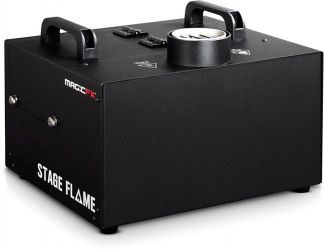
Magic FX Stage Flame
Sale to reseller only
Availability:
Low stock; Delivery time: 3-5 days
Delivery time: 3-5 days
Magic FX FLAMEBLAZER
Sale to reseller only
Availability:
Delivery time: 3-5 days
Magic FX FLAMEBLAZER 5-WEGE
Magic FX FLAMEBLAZER 5-WAY
Sale to reseller only
Availability:
Delivery time: 3-5 days
3 Articles
Close filters
  •  
from to
No results were found for the filter!
Magic FX Stage Flame
Magic FX STAGE FLAME The STAGE FLAME is a gas powered flame head. It's a 2-in-1 flamethrower which can be used with propane gas bottles or aerosol spray cans. With double valves, tilt, ionisation...
Sale to reseller only
Availability:
Low stock; Delivery time: 3-5 days
Delivery time: 3-5 days
Magic FX FLAMEBLAZER
MAGIC FX® FLAMEBLAZER® – Professional standalone liquid flame system The MAGIC FX® FLAMEBLAZER® is a state-of-the-art standalone flame projector designed for heavy-duty use at...
Sale to reseller only
Availability:
Delivery time: 3-5 days
Magic FX FLAMEBLAZER 5-WEGE
Magic FX FLAMEBLAZER 5-WAY
MAGIC FX® FLAMEBLAZER® 5-Way – Professional standalone liquid flame system The MAGIC FX® FLAMEBLAZER® 5-Way is a technological powerhouse for controlled flame bursts in five...
Sale to reseller only
Availability:
Delivery time: 3-5 days
Facts
Professional Flame Effect Equipment for Events & Shows: Flame effect equipment delivers the ultimate "wow effect" for concerts, festivals, theatre productions and corporate events. Whether you need dramatic fire columns reaching 8 metres or precisely timed fireballs synchronised to music, professional flame projectors set your event in motion with unforgettable visual impact. LTT supplies CE-certified flame effect systems from leading... Read more »
Viewed
Facts

Professional Flame Effect Equipment for Events & Shows

Flame effect equipment delivers the ultimate "wow effect" for concerts, festivals, theatre productions and corporate events. Whether you need dramatic fire columns reaching 8 metres or precisely timed fireballs synchronised to music, professional flame projectors set your event in motion with unforgettable visual impact. LTT supplies CE-certified flame effect systems from leading manufacturers including MagicFX, Eurolite and Showtec — engineered for both indoor and outdoor applications. From compact aerosol-powered units to high-output liquid-fuel systems, you'll find the optimal solution for every staging requirement and budget.

What Is a Flame Projector and How Does It Work?

A flame projector is a controlled pyrotechnic effect device that produces vertical flame columns, fireballs or sweeping flame patterns on demand. Unlike traditional pyrotechnics that rely on combustible compositions, flame projectors use pressurised fuel — either aerosol cartridges, propane/butane gas bottles or liquid fuels such as bio-ethanol and isopropanol — ignited by an electric spark or pilot flame.

Core operating principle: The device meters fuel into a combustion chamber where an ignition source creates a controlled flame. The fuel flow rate, ignition timing and nozzle design determine flame height, duration and shape. Modern flame projectors integrate safety sensors (tilt detection, flame monitoring, temperature cut-offs) and professional control interfaces (DMX-512, wireless remote, manual trigger).

Flame Projectors vs. Traditional Pyrotechnics

Traditional stage pyrotechnics use single-use cartridges containing chemical compositions that burn once and require replacement. Flame projectors, by contrast, draw from a refillable fuel reservoir, enabling hundreds of flame bursts from a single aerosol cartridge (typically 100+ shots from a 400 ml canister) or continuous operation from gas bottles. This makes flame projectors more economical for rehearsals, extended shows and touring productions.

Another key distinction: flame projectors produce "clean" flames with minimal smoke and residue when operated with high-purity fuels, whereas pyrotechnic cartridges often generate visible smoke and particulate matter. For indoor venues with sensitive smoke detection systems, flame projectors offer a safer, more controllable alternative — though you must still coordinate with venue management and local fire authorities before deployment.

Applications: Where Flame Effects Create Unforgettable Moments

Flame effect equipment is the go-to choice for event producers who demand dramatic visual punctuation. Concert stages use flame columns to accentuate musical climaxes — rock, metal and EDM acts frequently deploy synchronised flame bursts timed to bass drops and crescendos. Corporate product launches leverage flame effects to frame vehicle reveals or technology unveilings with theatrical flair.

Festival main stages integrate truss-mounted flame projectors to create "fire walls" spanning the entire stage width, while theatre productions use smaller, precisely aimed units for storytelling moments — dragon breath, forge scenes or supernatural apparitions. Outdoor events benefit from high-output gas systems that remain visible even in daylight, with flame heights reaching 15–20 metres for maximum impact.

Integration with Lighting and Rigging Systems

Flame projectors are rarely deployed in isolation. Professional installations combine flame effects with intelligent lighting, hazers and video screens to build layered visual narratives. When you mount flame units on aluminium truss structures — such as Naxpro-Truss FD31 or HD31 systems — you gain precise positioning control and can create multi-level flame choreography. Always verify the working load limit (WLL) of your truss and rigging points; a typical aerosol-powered flame projector weighs 7–13 kg, while liquid-fuel systems with pump stations can exceed 30 kg.

For maximum creative flexibility, consider pairing flame effects with moving-head spotlights and LED wash fixtures to illuminate the flame plumes from below or behind, intensifying colour saturation and creating dramatic silhouettes.

Buying Criteria: What Defines a Professional Flame Projector

Selecting the right flame effect equipment requires balancing technical specifications, safety certifications and operational requirements. Here are the critical factors:

Fuel Type and Consumption

Aerosol cartridge systems (400 ml canisters) are compact, portable and ideal for mobile DJs and small-to-medium stages. A single cartridge delivers 100–150 flame bursts of 0.3–3 seconds each, with flame heights of 3–4 metres. Cartridges are available in clear (natural yellow-orange flame) or coloured formulations (green, red, blue) — though coloured aerosols require regular purging with clear fluid to prevent nozzle clogging.

Propane/butane gas systems connect to standard gas bottles (5–11 kg) via pressure regulators and offer significantly higher output — flame heights of 5–8 metres are standard, with specialist units reaching 15–20 metres. Gas systems are more economical for extended shows but require proper ventilation and gas-handling protocols.

Liquid-fuel projectors use bio-ethanol or isopropanol pumped from external reservoirs (10–250 litres). These systems support the longest continuous operation and enable moving-head designs that sweep flames through 240° arcs. Liquid fuels burn cleaner than gas and produce minimal smoke, making them the preferred choice for indoor venues.

Control Interfaces and Safety Features

All professional flame projectors support DMX-512 protocol for integration with lighting consoles. Entry-level models offer 1–2 DMX channels (ignition trigger + flame duration), while advanced units provide 4+ channels controlling ignition, duration, intensity and pan/tilt (for moving-head designs). Wireless control via proprietary radio systems (range up to 2,000 metres) is standard on battery-powered outdoor units.

Mandatory safety features include tilt sensors (automatic shutdown if the unit tips beyond 45°), flame-detection circuits (shutdown if ignition fails), temperature monitoring and emergency stop inputs. Look for CE certification and compliance with German DGUV Vorschrift 17 (formerly BGV C1) if you operate in professional event environments.

Price Brackets and Rental vs. Purchase

Entry-level aerosol flame projectors start at approximately €800–1,200 for purchase, with daily rental rates of €90–150 plus fuel consumption. Mid-range gas systems (5–8 m flame height) cost €1,500–3,000 to buy or €150–250 per day to rent. High-output liquid-fuel systems with moving-head technology command €4,000–8,000 purchase prices or €250–650 daily rental fees. For one-off events, rental is almost always more economical; for touring productions or permanent installations, ownership pays off after 15–25 rental days.

Leading manufacturers in the LTT range include MagicFX (Flamaniac multi-directional systems), Eurolite (compact aerosol units) and Showtec (mid-range gas projectors). All models ship with user manuals, safety data sheets and spare parts availability.

DMX Control and Wireless Operation: Precision Flame Choreography

Modern flame projectors are designed for seamless integration into automated show control systems. DMX-512 protocol — the industry standard for lighting and effects control — allows you to trigger flame bursts with frame-accurate precision, synchronise multiple units and program complex sequences.

DMX Channel Assignment

A basic flame projector uses two DMX channels: Channel 1 controls ignition (0 = off, 1–255 = fire), while Channel 2 sets flame duration (typically mapped to 0.3–3.0 seconds). Advanced models add channels for intensity modulation (fuel flow rate), pre-ignition purge cycles and diagnostic feedback. You assign the starting DMX address via DIP switches on the device housing — a 10-position DIP switch bank supports addresses 1–512.

When you operate multiple flame projectors, assign consecutive addresses (e.g. unit 1 = address 10, unit 2 = address 12, unit 3 = address 14) to simplify programming. Most lighting consoles allow you to group fixtures into "flame banks" for simultaneous triggering or create chase patterns that ripple flames across the stage.

Wireless Control for Outdoor and Mobile Applications

Battery-powered flame projectors integrate wireless receivers operating on license-free radio frequencies (typically 2.4 GHz or proprietary sub-GHz bands). Professional systems offer bi-directional communication, transmitting battery status, fuel level and fault codes back to the control station. Wireless range varies by model — compact units achieve 200–500 metres line-of-sight, while high-power outdoor systems reach 1,500–2,000 metres.

For maximum reliability, always perform a wireless range test at the venue before the show. Metal truss structures, video walls and dense crowds can attenuate radio signals; in challenging RF environments, consider hybrid setups with wired DMX for critical cues and wireless for secondary effects.

Safety Interlocks and Emergency Stop

All LTT-supplied flame projectors feature hardware safety interlocks: a dedicated DMX channel or physical input that must be actively enabled before ignition is possible. This "arm" signal prevents accidental triggering during setup or maintenance. Additionally, wired emergency-stop buttons (connected via XLR or terminal block) provide instant shutdown capability — essential for compliance with venue safety protocols and insurance requirements.

Rigging Integration: Mounting Flame Projectors on Truss Structures

While floor-standing flame projectors are common, truss-mounted installations unlock far greater creative possibilities. Elevating flame units to 3–6 metres creates dramatic overhead fire columns, allows flames to clear stage scenery and improves audience sightlines.

Load Calculations and Truss Selection

Before you mount any flame projector, verify the working load limit (WLL) of your truss and rigging points. A typical aerosol-powered unit weighs 7–10 kg; add 2–3 kg for mounting hardware (half-couplers, safety cables) and allow a 5:1 safety factor. For a 10 kg total load, your truss must support at least 50 kg at that point.

Naxpro-Truss FD31 (50 mm diameter tubes, 2 mm wall thickness) offers a distributed load capacity of 250 kg per metre span when rigged as a simple beam — more than adequate for flame projector arrays. For heavier liquid-fuel systems or long unsupported spans, upgrade to Naxpro-Truss HD31 (50 mm tubes, 3 mm walls) or GS94 (60 mm tubes, 5 mm walls, 40 × 3 mm diagonal bracing) for maximum structural integrity.

Always use Riggatec half-couplers (rated to 500 kg) with secondary safety cables (rated to at least 10× the device weight). Never rely solely on clamps — safety cables are mandatory under DGUV Vorschrift 17.

Flame Direction and Clearance Zones

Most flame projectors allow tilt adjustment of ±45° from vertical. When you angle a unit, the flame plume shifts accordingly — a 5-metre vertical flame becomes a 7-metre diagonal reach when tilted 45°. Maintain minimum clearance distances: 3 metres horizontal from flammable materials (drapes, banners, scenery), 5 metres vertical to ceilings or roof structures, and 8 metres from audience areas for units producing flames above 5 metres.

For indoor venues, consult the fire safety officer and provide technical data sheets for all flame equipment. Many venues require a "hot work permit" even for controlled flame effects, and some mandate a fire safety attendant with extinguisher during operation.

Power and DMX Distribution

Truss-mounted flame projectors require mains power (230 V AC, typically via PowerCON connectors) and DMX signal. Plan cable runs carefully: use PowerCON TRUE1 locking connectors to prevent accidental disconnection, and run DMX via shielded 3-pin or 5-pin XLR cables. For long truss runs (>50 metres), insert DMX splitter/boosters every 30–40 metres to maintain signal integrity.

Battery-powered units eliminate mains cabling but require pre-show charging and mid-show battery swaps for events exceeding 4–6 hours. Always carry spare batteries and test charge cycles during technical rehearsals.

LTT – Your Specialist for Event Technology

LTT combines over 25 years of experience in professional event technology with in-house manufacturing expertise. As both a full-service distributor and producer of premium truss systems (Naxpro-Truss, Litetruss, Junior-Truss) and rigging accessories (Riggatec), LTT understands the complete technical ecosystem of live events — from structural engineering to creative effect design.

When you source flame effect equipment from LTT, you benefit from expert consultation that considers not just the flame projector itself, but its integration with your existing truss, lighting and control infrastructure. Our team can advise on load calculations, DMX addressing schemes and safety compliance, ensuring your flame effects deliver impressive results without compromising structural integrity or regulatory compliance.

Every flame projector ships from our Bocholt, Germany facility with free shipping on orders over €69 and express delivery options for time-critical productions. LTT's 3-year warranty on selected equipment and access to wholesale pricing for resellers make us a reliable partner for touring companies, rental houses and permanent installations worldwide. With over 100,000 positive customer reviews and an international dealer network, LTT is your trusted source for innovative solutions for professionals in the event technology sector.

FAQ – Questions & Answers

How do you create a flame effect?

You create a flame effect by using a flame projector — a device that meters pressurised fuel (aerosol cartridges, propane/butane gas or liquid bio-ethanol/isopropanol) into a combustion chamber where an electric ignition source produces a controlled flame. The operator triggers the effect via DMX-512 protocol, wireless remote or manual button, with flame duration and height determined by fuel flow rate and nozzle design. Professional flame projectors integrate safety sensors (tilt detection, flame monitoring, temperature cut-offs) and support precise timing for music-synchronised shows. For indoor applications, always coordinate with venue management and fire authorities, as most jurisdictions require permits and safety attendants even for controlled flame effects.

What is a flame projector?

A flame projector is a professional stage effect device that produces controlled vertical flame columns, fireballs or sweeping flame patterns on demand. Unlike single-use pyrotechnic cartridges, flame projectors draw fuel from refillable reservoirs — aerosol canisters (400 ml), gas bottles (5–11 kg propane/butane) or liquid tanks (10–250 litres bio-ethanol/isopropanol) — enabling hundreds of flame bursts from one fuel source. Modern units support DMX-512 control for integration with lighting consoles, wireless operation for outdoor events and moving-head designs that sweep flames through 240° arcs. Flame projectors are the preferred choice for concerts, festivals, theatre and corporate events requiring repeatable, precisely timed fire effects.

What device creates flames for stage shows?

Stage shows use flame projectors (also called flame throwers or fire projectors) to create controlled flame effects. These devices ignite pressurised fuel — aerosol cartridges, propane/butane gas or liquid bio-ethanol — via electric spark or pilot flame, producing flame columns from 3 to 20 metres depending on fuel type and nozzle configuration. Professional models integrate DMX-512 control interfaces, wireless remote operation and safety sensors (tilt detection, flame monitoring, emergency stop inputs). Leading manufacturers include MagicFX, Eurolite and Showtec, with models ranging from compact aerosol units (€800–1,200) to high-output liquid-fuel systems with moving-head technology (€4,000–8,000). All units require CE certification and compliance with local fire safety regulations.

Can flame projectors be used indoors?

Yes, flame projectors can be used indoors, but you must obtain venue approval and often a "hot work permit" from local fire authorities. Indoor flame effects require clean-burning fuels — bio-ethanol or isopropanol for liquid systems, or high-purity aerosol cartridges — to minimise smoke and residue that might trigger smoke detectors. Maintain minimum clearance distances: 3 metres horizontal from flammable materials (drapes, scenery), 5 metres vertical to ceilings and 8 metres from audience areas for units producing flames above 5 metres. Many venues mandate a fire safety attendant with extinguisher during operation and require detailed technical data sheets (fuel type, consumption rate, ignition method) submitted 2–4 weeks before the event. Always test flame effects during technical rehearsals to verify smoke detector compatibility.

What is the difference between gas and liquid flame projectors?

Gas flame projectors use propane or butane from standard gas bottles (5–11 kg), producing flame heights of 5–8 metres (specialist models reach 15–20 metres) with high visibility in outdoor daylight conditions. Gas systems are economical for extended shows and simple to refuel, but generate more heat and require proper ventilation. Liquid flame projectors use bio-ethanol or isopropanol pumped from external tanks (10–250 litres), burning cleaner with minimal smoke — ideal for indoor venues with sensitive smoke detection. Liquid systems support moving-head designs that sweep flames through 240° arcs and offer the longest continuous operation, but cost more (€4,000–8,000 vs. €1,500–3,000 for gas units) and require pump stations and pressure regulation. Choose gas for outdoor festivals and large stages; choose liquid for indoor theatres, corporate events and applications requiring precise flame choreography.

How much does a flame projector cost?

Flame projector prices vary by fuel type, output and control features. Entry-level aerosol-powered units (3–4 m flame height, DMX control, 400 ml cartridges) cost €800–1,200 to purchase or €90–150 per day to rent. Mid-range gas systems (5–8 m flames, propane/butane bottles, wireless control) range from €1,500–3,000 to buy or €150–250 daily rental. High-output liquid-fuel projectors with moving-head technology (10–20 m flames, bio-ethanol/isopropanol, 240° pan range) command €4,000–8,000 purchase prices or €250–650 per day rental fees. Fuel consumption adds €30–80 per show depending on usage intensity. For one-off events, rental is more economical; for touring productions or permanent installations, ownership pays off after 15–25 rental days.

What maintenance is required for coloured aerosol flame projectors?

Coloured aerosol flame projectors require regular purging with clear (uncoloured) aerosol fluid to prevent nozzle clogging and maintain ignition reliability. After every 20–30 coloured flame bursts, fire 5–10 clear shots to flush pigment residue from the fuel lines and combustion chamber. Inspect the ignition electrode weekly for carbon buildup; clean with a soft brass brush and isopropanol if necessary. Check aerosol cartridge seals before each show — damaged O-rings cause fuel leaks and inconsistent flame height. Replace cartridges when pressure drops below operational threshold (typically indicated by flame height reduction of 30% or more). Store unused coloured cartridges upright in a cool, dry location away from direct sunlight; shelf life is 18–24 months. Always consult the manufacturer's maintenance schedule and keep service records for insurance and safety compliance.

Which flame projector is best for truss-mounted stage installations?

For truss-mounted installations, choose compact aerosol or liquid-fuel flame projectors weighing under 15 kg to simplify rigging and reduce structural load. The MagicFX Flamaniac (liquid fuel, 5-direction output, 13.5 kg) and Eurolite aerosol models (7–10 kg) are popular choices. Verify that your truss system — such as Naxpro-Truss FD31 (50 mm tubes, 2 mm walls) or HD31 (50 mm tubes, 3 mm walls) — supports the combined weight of flame units, mounting hardware and safety cables with a 5:1 safety factor. Use Riggatec half-couplers (rated 500 kg) with secondary safety cables rated to 10× device weight. Battery-powered units eliminate mains cabling but require mid-show battery swaps for events exceeding 4–6 hours. Always maintain 3 metres horizontal clearance from flammable materials and 5 metres vertical clearance to ceilings or roof structures.