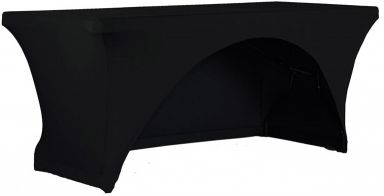
Miscellaneous covers
Diverse Cover – Professional Protection for Your Event Technology
When it comes to protecting your valuable stage equipment, truss systems and event technology from the elements, diverse cover solutions are essential. Whether You're setting up an outdoor festival stage, protecting equipment during transport, or creating weather-resistant structures for temporary events, the right cover makes all the difference. At LTT, You'll find a comprehensive range of professional cover solutions designed specifically for the demanding requirements of the event technology industry – from compact protective covers for individual components to large-scale roofing systems for complete stage setups.
What Are Diverse Cover Solutions in Event Technology?
Diverse cover solutions in the event technology sector encompass a wide range of protective systems designed to shield equipment, structures and personnel from weather conditions, UV radiation and environmental factors. Unlike simple tarpaulins or generic covers, professional event covers are engineered to meet specific technical requirements including flame retardancy standards, load capacity ratings and compatibility with standard rigging systems.
Material Specifications and Construction
Professional event covers are typically manufactured from heavy-duty PVC-coated polyester fabrics with weights ranging from 450 g/m² to 900 g/m², depending on the application. These materials combine high tensile strength (typically 2,800–4,200 N/5cm in warp and weft directions) with excellent weather resistance. The PVC coating provides waterproofing with hydrostatic head values exceeding 3,000 mm, whilst maintaining flexibility even at temperatures down to -30°C. UV stabilisation ensures long-term durability, with quality covers maintaining their structural integrity for 5–8 years of outdoor use.
Flame retardancy is a critical specification for event applications. Professional covers meet DIN 4102-B1 (Germany), BS 5867 Part 2 Type B (UK) or equivalent international standards, ensuring they are classified as flame-retardant and self-extinguishing. This is particularly important when covers are used near lighting equipment, pyrotechnic effects or in venues where fire safety regulations apply.
Types and Applications
Stage roofing systems represent the largest category, designed to protect entire performance areas. These modular systems typically integrate with standard truss profiles and can span areas from 6×6 metres up to 20×30 metres or larger. Truss covers are tailored to fit specific profiles – for example, covers designed for Naxpro-Truss FD31-44 systems (50⌀ tubes with 2 mm wall thickness) differ from those for HD31-44 profiles (50⌀ tubes with 3 mm wall thickness) due to dimensional variations and mounting requirements.
Equipment covers protect individual components such as speaker arrays, lighting fixtures, fog machines and control desks during transport and storage. Transport covers for flight cases and road cases add an extra layer of protection against moisture and impact damage. Temporary shelter systems create protected work areas for technical crews during setup and breakdown, particularly valuable during adverse weather conditions.
Applications and Use Cases for Event Covers
Professional cover solutions serve multiple critical functions across the event technology spectrum. Understanding where and how to deploy these systems ensures optimal protection and operational efficiency.
Outdoor Events and Festival Applications
Outdoor festivals and concerts represent the most demanding environment for cover systems. Stage roofing must withstand wind loads (typically designed for wind speeds up to Beaufort 6–7, or 50–60 km/h), whilst maintaining complete waterproofing to protect sensitive electronic equipment. Large-scale systems often incorporate drainage channels and reinforced stress points at mounting locations. For multi-day festivals, UV resistance becomes crucial as continuous sun exposure can degrade inferior materials within 48–72 hours.
Temporary event structures for corporate events, product launches and outdoor exhibitions require covers that combine functional protection with aesthetic appeal. Many professional covers are available in custom colours or can be printed with branding, transforming a purely functional element into part of the event design. These applications often demand covers with high light transmission (translucent materials allowing 30–50% light transmission) to create bright, welcoming spaces without relying entirely on artificial lighting.
Transport and Storage Protection
During transport, equipment covers protect against road spray, dust ingress and minor impacts. Covers designed for this purpose typically feature reinforced corners, elasticated hems or drawstring closures to ensure secure fitting even during movement. For long-term storage, breathable cover materials prevent condensation buildup that could damage electronic components or promote corrosion on metal parts.
Rigging and Truss System Integration
When covers are integrated with truss systems, compatibility with standard profiles is essential. Covers for triangular truss (such as Litec QX30 or similar 290 mm systems) require different mounting solutions than those for box truss or ladder truss configurations. Professional systems use keder rails, velcro strips or snap-fastener systems that allow quick installation without compromising the structural integrity of the truss. Load calculations must account for the additional weight and wind load introduced by the cover – a 10×10 metre roof cover can add 80–120 kg to the rigging load, plus significant wind loading that can exceed 500 kg under storm conditions.
Quality Standards and Professional Buying Criteria
Selecting the right cover solution requires understanding the technical specifications that separate professional-grade products from consumer-level alternatives. The event technology industry demands equipment that meets stringent safety and performance standards.
Material Quality and Durability Indicators
Fabric weight provides the first indicator of quality, but it must be balanced against application requirements. A 650 g/m² PVC-coated polyester offers an excellent balance for most stage applications – heavy enough for durability and weather resistance, yet light enough for practical handling and reduced rigging loads. Heavier 900 g/m² materials suit permanent or semi-permanent installations where maximum longevity justifies the additional weight.
Tensile strength specifications indicate how much force the material can withstand before tearing. Professional covers typically specify values of 3,000 N/5cm or higher in both warp and weft directions. This ensures the cover can handle the stress of wind loading, snow accumulation and the dynamic forces created during installation and removal. Tear propagation resistance is equally important – quality materials resist tear propagation even if punctured, preventing small damage from cascading into complete failure.
Fire Safety and Regulatory Compliance
Flame retardancy certification is non-negotiable for professional applications. In the UK, covers used in public venues must meet BS 5867 Part 2 Type B or BS EN 13501-1 classification. German regulations require DIN 4102-B1 certification. These standards ensure materials are inherently flame-retardant (not just surface-treated, which can wash out) and self-extinguishing. Always verify that certification documents are current and apply to the specific product batch – certificates should be no more than 12–24 months old.
Manufacturers such as Showtec, Eurolite and Riggatec offer comprehensive ranges of certified cover solutions specifically designed for event applications. Premium suppliers provide detailed technical documentation including material specifications, test certificates and load calculation data. This documentation is essential for compliance with DGUV Vorschrift 17 (formerly BGV C1) in Germany or equivalent health and safety regulations in other jurisdictions.
Price Positioning and Value Assessment
Professional event covers range from approximately €80–150 for basic equipment covers (2×2 metres) to €800–2,500 for modular stage roofing sections (4×4 metres). Complete stage roofing systems for 10×10 metre stages typically cost €3,500–8,000 depending on specification and mounting hardware included. Whilst these prices exceed consumer-grade tarpaulins by a factor of 5–10, the difference in durability, safety compliance and functional performance justifies the investment for professional applications.
When evaluating value, consider the total cost of ownership: a €150 certified cover that lasts 6 years represents better value than a €40 tarpaulin that must be replaced annually and carries no safety certification. Factor in the cost of potential equipment damage from inadequate protection – a single rain-damaged lighting fixture can cost more than a complete set of quality covers.
Technical Deep-Dive: Load Capacity and Wind Resistance
Understanding the structural implications of cover systems is crucial for safe rigging and compliance with engineering standards. Covers are not passive elements – they introduce significant loads and alter the structural behaviour of the systems they protect.
Static and Dynamic Load Calculations
The weight of the cover itself (dead load) is straightforward to calculate: a 10×10 metre cover in 650 g/m² material weighs approximately 65 kg, plus mounting hardware (typically 15–25 kg). However, this represents only the baseline. Water accumulation during rainfall can add substantial weight – a 10 mm depth of water across 100 m² adds 1,000 litres or 1,000 kg. Professional covers incorporate drainage slopes (minimum 5° pitch) and reinforced drainage channels to prevent ponding, but temporary accumulation during heavy rainfall must still be accounted for in load calculations.
Snow loading presents even greater challenges. In regions where outdoor winter events occur, snow loads can reach 75–150 kg/m² depending on altitude and local climate. A 10×10 metre cover under moderate snow conditions (50 kg/m²) carries an additional 5,000 kg – equivalent to the weight of a small truck. This is why winter applications often require upgraded truss systems or reduced span distances.
Wind Loading and Aerodynamic Considerations
Wind creates the most complex loading scenario. A taut cover acts as a sail, generating both uplift forces (attempting to lift the structure) and lateral forces (pushing the structure sideways). Wind pressure is calculated as P = 0.613 × v² (where P is pressure in N/m² and v is wind speed in m/s). At 60 km/h (16.7 m/s), this generates approximately 170 N/m² or 17 kg/m² of pressure. For a 10×10 metre cover, that's 17,000 N or approximately 1,700 kg of force.
The shape coefficient (Cp) modifies this basic calculation based on the cover's geometry. A flat or low-pitched roof has a Cp of approximately 0.8–1.2, whilst steeper pitches can reduce this to 0.5–0.7. This is why professional stage roofs incorporate pitched designs – not just for drainage, but to reduce wind loading.
Mounting Systems and Load Distribution
How covers attach to truss systems critically affects load distribution. Point-loading through individual mounting points creates stress concentrations that can exceed the local strength of both the cover material and the truss. Professional systems distribute loads through continuous keder rails or closely-spaced fasteners (maximum 500 mm spacing). When mounting to Naxpro-Truss systems, verify that mounting points align with truss nodes (connection points) rather than mid-span locations where the truss is weakest.
For a Naxpro-Truss FD31-44 system (50⌀ tubes, 2 mm wall thickness), typical working load limits are 250–300 kg per metre of span under distributed loading. Adding a cover system with wind loading can consume 30–50% of this capacity, significantly reducing the available capacity for lighting, audio and other equipment. Always conduct full load calculations and, for critical applications, engage a qualified structural engineer to verify designs.
Installation, Maintenance and Safety Protocols
Proper installation and ongoing maintenance are essential for safe operation and maximum service life of cover systems. Professional practices separate reliable installations from potentially dangerous improvisation.
Pre-Installation Inspection and Planning
Before every installation, inspect the cover for damage: tears, worn mounting points, degraded stitching or UV damage (indicated by colour fading or material brittleness). Check that all mounting hardware is present and functional – missing fasteners or damaged keder rails must be replaced before installation. Review weather forecasts for the installation period and event duration; installing covers in high winds (above 40 km/h) is dangerous and should be postponed.
Plan the installation sequence to minimise time working at height and to ensure covers can be secured progressively as they're deployed. For large covers, coordinate a team of at least 4–6 people to control the material during installation – covers can act as sails even on the ground, creating hazardous situations in moderate winds.
Installation Procedures and Rigging Safety
When installing covers on elevated truss systems, always work from appropriate access equipment (scaffolding, mobile elevated work platforms or properly secured ladders) – never climb on truss structures themselves unless they are specifically designed and certified for personnel access. Wear appropriate personal protective equipment including harnesses when working at heights above 2 metres.
Secure covers progressively from one end, maintaining tension to prevent flapping that can damage both the cover and the structure. Keder rail systems should be installed with the keder fully seated along the entire length – partial seating creates stress concentrations that can cause failure. Velcro and snap-fastener systems require fastening every attachment point; skipping fasteners to save time compromises the entire installation.
Maintenance and Long-Term Care
After each use, clean covers with mild detergent and water to remove dirt, salt and organic matter that can degrade materials over time. Allow covers to dry completely before storage – folding damp covers promotes mould growth and accelerates material degradation. Store in a cool, dry location away from direct sunlight and away from sharp objects that could cause damage.
Inspect covers regularly (at least annually, or before each use for frequently deployed systems) for UV damage, material fatigue and degradation of flame-retardant properties. Most flame-retardant treatments have a finite service life; re-certification may be required after 3–5 years depending on exposure and use intensity. Maintain records of inspection dates, damage repairs and certification status – these records may be required for insurance purposes or regulatory compliance.
Weather Monitoring and Emergency Procedures
During events, continuously monitor weather conditions. Most professional cover systems are designed for wind speeds up to 60 km/h (Beaufort 7), but this is not a guarantee of safety – it represents the design limit under ideal conditions. If wind speeds approach or exceed this threshold, or if severe weather is forecast, implement emergency procedures: reduce the exposed area by partially retracting covers, lower structures to reduce wind exposure, or completely strike the installation if conditions warrant.
Establish clear responsibility for weather monitoring and decision-making authority to strike installations. Delays in responding to deteriorating conditions have caused numerous structural failures and injuries in the event industry. Your equipment can be replaced; personnel safety cannot be compromised.
LTT – Your Specialist for Event Technology
At LTT, You'll find everything You need to protect Your valuable event technology equipment and create professional outdoor event setups. Our comprehensive range includes certified cover solutions from leading manufacturers such as Riggatec, Showtec and Eurolite, alongside our own premium Naxpro-Truss systems that integrate seamlessly with professional cover installations.
With over 25 years of experience in the event technology industry, we understand the demanding requirements of professional applications. That's why we stock only products that meet stringent safety standards and deliver reliable performance in real-world conditions. Whether You're protecting a festival main stage, creating weather-resistant structures for corporate events, or simply need reliable transport covers for Your equipment, You'll find the optimal solution in our range.
We ship worldwide from our facility in Bocholt, Germany, with free shipping on orders over €69 within Germany and competitive international rates. Express delivery options ensure You receive critical items when You need them. Our B2B customers benefit from wholesale pricing and dedicated account management, whilst all customers enjoy our 3-year LTT warranty on qualifying products – demonstrating our confidence in the quality of what we supply. With over 100,000 positive customer reviews, LTT has established itself as a reliable partner for event professionals across Europe and beyond.
FAQ – Questions & Answers
Diverse cover solutions for event technology provide comprehensive protection against weather conditions including rain, UV radiation and wind, whilst meeting critical safety standards such as flame retardancy (DIN 4102-B1, BS 5867 Part 2 Type B). Professional covers extend equipment lifespan by preventing moisture damage, corrosion and UV degradation of sensitive components. They enable outdoor events to proceed in adverse weather conditions, protecting both equipment and personnel. Quality covers also reduce insurance costs and liability risks by demonstrating compliance with health and safety regulations. Additionally, modular cover systems offer flexibility – the same components can be configured for different stage sizes and applications, providing better return on investment than single-purpose solutions.
In the UK climate, cover systems should be installed whenever valuable equipment will be exposed outdoors for more than 2–3 hours, regardless of the forecast. British weather is notoriously unpredictable, and sudden rain showers can cause thousands of pounds of damage to unprotected lighting, audio and control equipment within minutes. For multi-day events, covers are essential from the moment equipment arrives on site until final load-out. Install stage roofing systems before rigging lighting and audio equipment – retrofitting covers around installed equipment is significantly more difficult and time-consuming. For winter events (November–March), covers should be specified with higher load ratings to account for potential snow accumulation, and drainage systems must be verified before each use.
Diversifying cover solutions in professional event technology means maintaining a range of different cover types, sizes and specifications to address varying protection requirements across different applications. This approach includes having equipment covers for transport and storage, modular stage roofing sections that can be configured for different stage sizes, and specialised covers for specific equipment types such as speaker arrays or lighting trusses. Diversification also means sourcing covers with different material specifications – lighter 450 g/m² materials for indoor or calm-weather applications, heavier 650–900 g/m² materials for demanding outdoor use, and flame-retardant certified materials for public venues. This strategic approach ensures You have the optimal solution for each situation rather than compromising with a one-size-fits-all approach that may be inadequate for critical applications.
The main types of covers in event technology include stage roofing systems (large modular covers designed to protect entire performance areas, typically 6×6 metres to 20×30 metres), truss covers (tailored covers that fit specific truss profiles such as triangular, box or ladder truss configurations), equipment covers (protective covers for individual components including speakers, lighting fixtures, fog machines and control desks), transport covers (reinforced covers designed to protect equipment during road transport, often with elasticated hems or drawstring closures), flight case covers (additional protective layers for flight cases and road cases), and temporary shelter systems (creating protected work areas for technical crews during setup and breakdown). Each type serves specific functions and is manufactured with appropriate materials and specifications for its intended application.
Material specification fundamentally determines cover performance and service life. Fabric weight (measured in g/m²) indicates durability – professional covers range from 450 g/m² for light-duty applications to 900 g/m² for heavy-duty permanent installations, with 650 g/m² offering optimal balance for most stage applications. Tensile strength (typically 2,800–4,200 N/5cm) determines resistance to wind loading and tearing forces. The coating type affects waterproofing and UV resistance – PVC coatings provide excellent waterproofing (hydrostatic head >3,000 mm) and maintain flexibility to -30°C, whilst polyurethane coatings offer superior UV resistance for long-term outdoor exposure. Flame retardancy must be inherent to the material rather than surface-applied, ensuring certification remains valid throughout the product's service life. Quality materials from manufacturers such as Showtec, Eurolite and Riggatec typically deliver 5–8 years of professional use versus 1–2 years for inferior alternatives.
Professional event covers must meet stringent flame retardancy standards including DIN 4102-B1 (Germany), BS 5867 Part 2 Type B (UK) or BS EN 13501-1 (European classification), ensuring materials are inherently flame-retardant and self-extinguishing. These certifications are mandatory for public venues, outdoor festivals and any application where covers are used near heat sources or pyrotechnic effects. Structural design must comply with relevant engineering standards – in Germany, this includes DGUV Vorschrift 17 (formerly BGV C1) for temporary structures and equipment. Load calculations must account for dead loads (cover weight), live loads (snow, water accumulation) and wind loads according to local building codes. Installation must be performed by competent persons with appropriate training in rigging and working at height. Documentation including material certificates, load calculations and inspection records must be maintained and available for regulatory inspection.
Professional stage cover systems vary significantly in price based on size, specification and complexity. Basic equipment covers (2×2 metres) for individual components cost approximately €80–150. Modular stage roofing sections (4×4 metres) suitable for building larger configurations range from €800–2,500 depending on material specification and included mounting hardware. A complete stage roofing system for a 10×10 metre stage typically costs €3,500–8,000 including structural framework, covers, drainage systems and mounting hardware. Custom-sized or printed covers command premium pricing, often 30–50% above standard products. Whilst these prices exceed consumer-grade tarpaulins significantly, professional covers deliver 5–8 years of service life, include essential safety certifications, and prevent equipment damage that can cost thousands of pounds per incident. When evaluating cost, consider total cost of ownership including durability, certification compliance and equipment protection value.
Cover solutions must be matched to specific truss profiles for proper fit and safe load distribution. For Naxpro-Truss FD31-44 systems (50⌀ tubes with 2 mm wall thickness), covers require mounting systems designed for this tube diameter and appropriate load ratings for the truss capacity (typically 250–300 kg/m distributed load). HD31-44 profiles (50⌀ tubes with 3 mm wall thickness) accept the same diameter fittings but support higher loads, allowing larger cover spans. Triangular truss systems such as Litec QX30 or similar 290 mm configurations require different mounting solutions than box truss or ladder truss. Keder rail systems provide the most secure attachment for permanent or frequently-used installations, whilst velcro or snap-fastener systems offer quicker deployment for temporary applications. Always verify that cover mounting points align with truss nodes (connection points) rather than mid-span locations, and ensure total loading including cover weight and wind loads remains within the truss system's rated capacity.