Microphones

Professional Microphones for Stage and Events: Whether you're capturing vocals on stage, recording instruments in the studio, or broadcasting live events — professional microphones are the foundation of exceptional audio quality. At LTT, your specialist for event technology, you'll find a comprehensive range of microphones tailored to every professional application. From robust dynamic handheld models for live performances to sensitive condenser microphones for studio recording and discreet lavalier systems...
Read more »
Microphones
Close window
Microphones

Professional Microphones for Stage and Events

Whether you're capturing vocals on stage, recording instruments in the studio, or broadcasting live events — professional microphones are the foundation of exceptional audio quality. At LTT, your specialist for event technology, you'll find a comprehensive range of microphones tailored to every professional application. From robust dynamic handheld models for live performances to sensitive condenser microphones for studio recording and discreet lavalier systems for conferences, our selection covers the full spectrum of professional audio capture.

With over 25 years of experience in event technology, LTT understands the demands of professional audio environments. Our microphone range includes leading brands like Shure, Sennheiser, AKG, and many more, ensuring you have access to the tools that deliver pristine sound quality night after night. Whether you're equipping a touring production, upgrading your venue's audio system, or building a recording studio, you'll find the optimal solution here — backed by expert advice and reliable service that helps you achieve impressive results in every application.

What Are Professional Microphones and How Do They Work?

A microphone is an electroacoustic transducer that converts acoustic energy (sound waves) into electrical signals. Professional microphones designed for stage, studio, and event applications are engineered to deliver exceptional sound quality, durability, and reliability under demanding conditions. The two primary technologies dominate the professional market: dynamic microphones and condenser microphones.

Dynamic microphones use a moving coil attached to a diaphragm that vibrates within a magnetic field, generating an electrical signal. These models are renowned for their ruggedness, high sound pressure level (SPL) handling — often exceeding 140 dB — and immunity to moisture and temperature fluctuations. They're the workhorses of live sound, requiring no external power and delivering consistent performance in challenging environments. Dynamic microphones typically exhibit a cardioid polar pattern, focusing on sound from the front while rejecting off-axis noise and feedback.

Condenser microphones, by contrast, employ a capacitor-based design where a thin diaphragm and a fixed backplate form a capacitor. Sound waves cause the diaphragm to move, varying the capacitance and generating an electrical signal. Condenser models require phantom power (typically P48, delivering 48 volts via the XLR cable) and offer superior transient response, extended frequency response (often 20 Hz to 20 kHz or beyond), and greater sensitivity. This makes them ideal for studio recording, classical music, and applications where capturing every nuance matters. However, they're more sensitive to handling noise and environmental factors.

Beyond the transducer type, polar patterns define a microphone's directional sensitivity. Omnidirectional patterns capture sound equally from all directions, making them suitable for ambient recording or situations where multiple sound sources must be captured. Cardioid patterns reject sound from the rear, reducing feedback and isolating the desired source. Supercardioid and hypercardioid patterns offer even tighter rejection angles, ideal for stage applications where multiple microphones operate in close proximity. Understanding these fundamentals helps you select the right microphone for your specific application, ensuring optimal sound quality and reliable performance.

Applications: Where Professional Microphones Excel

Professional microphones serve a vast range of applications across the event technology, broadcast, and recording industries. Live sound reinforcement represents one of the most demanding environments: vocalists rely on robust handheld dynamic microphones with cardioid patterns to deliver clear, feedback-resistant sound on stage. Instrument miking — from drum kits to guitar amplifiers and brass sections — requires specialised models with tailored frequency responses and high SPL handling. Dynamic microphones like the industry-standard Shure SM58 and SM57 have become synonymous with live performance, offering reliability and consistent sound quality across thousands of shows.

Studio recording demands the precision and sensitivity of condenser microphones. Large-diaphragm condensers capture vocal performances with warmth and detail, while small-diaphragm pencil condensers excel at recording acoustic instruments, overhead drum miking, and stereo ambient capture. Frequency response specifications such as 30–15,000 Hz, signal-to-noise ratios exceeding 76 dB, and sensitivity ratings around -40 dB ±2 dB ensure that every nuance is preserved. Professional studios often employ matched stereo pairs for accurate spatial imaging.

Broadcast and conference applications require discreet, high-quality audio capture. Lavalier microphones clip to clothing, providing hands-free operation for presenters and interviewees. Gooseneck microphones mount on podiums and conference tables, offering consistent pickup for panel discussions. Headset microphones combine mobility with consistent positioning, ideal for live presentations and theatre productions. Shotgun microphones, with their highly directional supercardioid patterns, capture dialogue on film sets while rejecting ambient noise.

Theatre and house-of-worship installations benefit from wireless microphone systems that provide freedom of movement without sacrificing audio quality. UHF wireless systems with automatic frequency coordination ensure interference-free operation even when multiple channels operate simultaneously. Whether you're equipping a touring production, upgrading a venue's permanent installation, or building a broadcast studio, selecting the right microphone type and polar pattern for each application ensures professional results and reliable performance.

Quality Standards and Buying Criteria for Professional Microphones

Selecting a professional microphone requires understanding the technical specifications that define performance and suitability for your application. Frequency response indicates the range of frequencies a microphone can accurately reproduce, typically measured in Hertz (Hz). Professional vocal microphones often exhibit a tailored response with a presence peak around 3–5 kHz, enhancing intelligibility and clarity in live sound environments. Studio condensers may offer flat response from 20 Hz to 20 kHz, ensuring accurate reproduction across the entire audible spectrum. A frequency response specification of 30–15,000 Hz is common for broadcast and conference microphones, providing clear speech reproduction without unnecessary low-frequency rumble.

Sensitivity measures how efficiently a microphone converts acoustic energy into electrical signal, typically expressed in dB relative to 1 V/Pa at 1 kHz. A sensitivity rating of -40 dB ±2 dB is typical for professional models, indicating strong output that minimises the need for excessive preamp gain. Signal-to-noise ratio (SNR) quantifies the difference between the desired signal and the microphone's self-noise; values exceeding 76 dB are standard for quality condenser microphones, ensuring clean recordings even at moderate sound levels. Maximum sound pressure level (SPL) defines the loudest sound a microphone can handle before distortion occurs; professional models often specify 120 dB SPL or higher, with some dynamic microphones handling 140 dB or more — essential for close-miking loud sources like kick drums or guitar amplifiers.

Output impedance affects compatibility with preamps and mixing consoles. Professional microphones typically exhibit low impedance (≤200 Ω), allowing long cable runs without signal degradation and ensuring compatibility with standard XLR inputs. Phantom power requirements (P48, delivering 48 volts) are standard for condenser microphones; always verify that your mixing console or audio interface provides phantom power before purchasing a condenser model.

Leading manufacturers set the benchmark for professional quality. Shure is synonymous with live sound, with models like the SM58 and Beta 87A trusted by performers worldwide. Sennheiser offers a comprehensive range from rugged stage dynamics to precision studio condensers. AKG is renowned for large-diaphragm condensers favoured in recording studios. DPA Microphones and Schoeps represent the pinnacle of precision engineering, delivering uncoloured, natural sound for classical recording and broadcast applications. Electro-Voice provides robust solutions for live sound and installation. Brands like JTS, Audac, and MONACOR offer reliable performance at accessible price points, making professional audio quality available across all budgets.

When evaluating microphones, consider the polar pattern relative to your application. Cardioid patterns suit most stage and studio scenarios, providing good rejection of off-axis sound. Supercardioid and hypercardioid patterns offer tighter pickup angles, ideal for multi-microphone setups where isolation is critical. Omnidirectional patterns capture ambient sound naturally, suited to orchestral recording and situations where room acoustics contribute to the desired sound. Understanding these specifications and how they relate to your specific application ensures you select a microphone that delivers professional results and represents a sound investment in your audio infrastructure.

Stage Microphone Setup and Placement Guidelines

Proper microphone placement and stage setup are critical to achieving professional sound quality and avoiding common pitfalls like feedback, phase cancellation, and poor isolation. The 3:1 rule is a fundamental principle in multi-microphone setups: when using multiple microphones, the distance between any two microphones should be at least three times the distance from each microphone to its intended sound source. This ratio minimises phase cancellation and comb-filtering effects that occur when the same sound arrives at multiple microphones with slight time delays. For example, if a vocal microphone is positioned 10 cm from the singer's mouth, the nearest microphone should be at least 30 cm away.

Feedback prevention begins with microphone selection and placement. Cardioid and supercardioid patterns naturally reject sound from the rear, so positioning stage monitors (wedges or side-fills) within the microphone's rejection zone — typically 120–180 degrees off-axis — significantly reduces feedback risk. Maintaining proper microphone technique is equally important: vocalists should work close to the microphone (5–10 cm) to maximise direct sound and minimise the gain required, which in turn reduces the likelihood of feedback. Using a high-pass filter (typically 80–100 Hz) on vocal channels removes low-frequency rumble and reduces the energy feeding back through monitors.

Cable management is often overlooked but essential for reliable operation. Professional XLR cables with robust connectors and proper strain relief ensure signal integrity and prevent intermittent faults during performances. Route cables away from power lines to minimise electromagnetic interference, and secure them with gaffer tape or cable ramps to prevent tripping hazards. When rigging overhead microphones or mounting microphones on truss systems, use appropriate mounting hardware such as shock mounts, boom arms, and truss clamps. Brands like König & Meyer, Gravity, and Adam Hall provide professional-grade stands and mounting solutions designed for touring and permanent installations.

Wireless microphone systems introduce additional considerations. Proper antenna placement is critical: position antennas with clear line-of-sight to the performance area, ideally elevated and spaced apart to provide diversity reception. When operating multiple wireless channels, use frequency coordination to avoid intermodulation products and interference. Modern UHF systems often include automatic frequency scanning and coordination features, but understanding the local RF environment — including TV broadcast channels and other wireless systems — ensures reliable operation. Always carry spare batteries and establish a battery-change protocol for long events.

For permanent installations in theatres, houses of worship, and conference venues, consider integrating microphones with architectural elements. Gooseneck microphones mount cleanly on podiums and conference tables, while boundary-layer microphones (PZM-style) provide discreet pickup on stage floors or conference tables. Overhead choir microphones suspended from truss or ceiling mounts capture ensemble sound without visual clutter. Proper gain structure — setting appropriate levels at each stage of the signal chain from microphone to preamp to mixer to power amplifier — ensures clean, distortion-free sound and maximises dynamic range. By applying these professional setup and placement principles, you'll achieve consistent, high-quality audio that showcases your microphones' capabilities and delivers impressive results for every performance.

Wireless Microphone Systems: Technology and Best Practices

Wireless microphone systems have become indispensable in modern event production, offering performers and presenters freedom of movement without compromising audio quality. Professional wireless systems operate in the UHF (Ultra High Frequency) band, typically between 470–900 MHz, providing robust, interference-resistant transmission over distances up to 100 metres or more. Understanding the technology and best practices ensures reliable operation in demanding environments.

A wireless system comprises three main components: the transmitter (either a bodypack for lavalier and headset microphones or an integrated handheld unit), the receiver (typically a rack-mounted unit with diversity antennas), and the microphone capsule itself. High-quality systems offer true diversity reception, employing two independent receiver circuits and antennas that continuously monitor signal strength and automatically switch to the stronger signal. This technology virtually eliminates dropouts caused by multipath interference and ensures consistent audio even as performers move around the stage.

Frequency coordination is critical when operating multiple wireless channels simultaneously. Intermodulation products — spurious frequencies generated when multiple transmitters operate in close proximity — can cause interference and dropouts if frequencies are not carefully selected. Professional systems include frequency-scanning features that analyse the local RF environment and recommend compatible frequency sets. As a rule of thumb, allow at least 250 kHz spacing between adjacent channels, and use pre-calculated frequency groups provided by the manufacturer when operating more than four channels.

Antenna placement and distribution significantly impact system reliability. Position antennas with clear line-of-sight to the performance area, ideally elevated 2–3 metres above the stage and spaced at least 1 metre apart to provide effective diversity reception. For large venues or complex staging, consider using antenna distribution systems that allow multiple receivers to share a common pair of antennas positioned optimally. Remote antennas can be placed closer to the performance area, extending effective range and improving signal quality.

Battery management is a practical concern that can make or break a production. Professional bodypack transmitters typically operate for 6–8 hours on a fresh set of AA batteries, but performance degrades as voltage drops. Establish a protocol of changing batteries before each performance or at scheduled intervals during long events. Rechargeable battery systems with intelligent charging stations streamline this process for touring productions and venues with frequent use. Always carry spare batteries and test transmitters before each show.

Leading wireless system manufacturers include Shure, whose ULX-D and Axient Digital systems set the standard for touring and broadcast applications; Sennheiser, offering the evolution wireless and Digital 6000 series; and AKG, with reliable UHF systems at various price points. Brands like LD Systems and Audac provide accessible entry points for smaller venues and mobile DJs. When selecting a wireless system, consider the number of channels required, the operating environment (including local RF congestion), and whether you need features like networked monitoring and control. By understanding wireless technology and applying professional best practices, you'll achieve the freedom and flexibility of wireless operation with the reliability and audio quality your productions demand.

LTT – Your Specialist for Event Technology

At LTT, we've been your trusted partner for professional event technology for over 25 years. Our microphone range represents just one facet of our comprehensive portfolio, which spans everything from truss systems and rigging hardware to lighting, effects, and complete audio solutions. As both a specialist retailer and a manufacturer with our own production facility in Germany, we understand the demands of professional applications and the importance of reliable, high-quality equipment.

Our commitment to quality is reflected in our 3-year LTT warranty on selected products, giving you peace of mind and protecting your investment. We offer free shipping on orders over €69 within Germany, and our express shipping option ensures you receive critical equipment when you need it. For international customers, we provide worldwide shipping and maintain an extensive dealer network, making LTT your reliable partner wherever your productions take you.

Whether you're a touring sound engineer specifying microphones for a major production, a venue manager upgrading your audio infrastructure, or a content creator building a home studio, our team provides expert advice to help you select the optimal solution for your specific application. With over 100,000 positive customer reviews, LTT has earned a reputation as a reliable partner that delivers professional-grade equipment, competitive pricing, and exceptional service. Explore our complete range of professional microphones and discover why event professionals across Europe trust LTT to help them achieve impressive results, night after night.

FAQ – Questions & Answers

What is the 3:1 rule for microphones?

The 3:1 rule for microphones is a fundamental principle in multi-microphone setups that prevents phase cancellation and comb-filtering effects. The rule states that when using multiple microphones, the distance between any two microphones should be at least three times the distance from each microphone to its intended sound source. For example, if a vocal microphone is positioned 10 centimetres from the singer's mouth, the nearest microphone should be at least 30 centimetres away. This ratio ensures that the sound arriving at the second microphone is at least 9 dB quieter than the direct sound at the first microphone, minimising phase interference. Applying the 3:1 rule is essential for achieving clean, professional sound when miking drum kits, choirs, panel discussions, or any scenario where multiple microphones capture overlapping sound sources.

What are the best brands of professional microphones?

The best professional microphone brands depend on your specific application, but several manufacturers consistently deliver exceptional quality across live sound, studio recording, and broadcast applications. Shure is the industry standard for live performance, with models like the SM58 vocal microphone and SM57 instrument microphone trusted worldwide. Sennheiser offers a comprehensive range from rugged stage dynamics to precision studio condensers, renowned for reliability and sound quality. AKG produces acclaimed large-diaphragm condensers favoured in recording studios. DPA Microphones and Schoeps represent the pinnacle of precision engineering for classical recording and broadcast, delivering uncoloured, natural sound. Electro-Voice provides robust solutions for live sound and permanent installations. For professional applications, these brands offer proven performance, durability, and resale value that justify their investment.

What is the difference between dynamic and condenser microphones?

Dynamic and condenser microphones employ fundamentally different technologies, each suited to specific applications. Dynamic microphones use a moving coil attached to a diaphragm that vibrates within a magnetic field, generating an electrical signal. They are rugged, require no external power, handle high sound pressure levels (often exceeding 140 dB), and are immune to moisture and temperature fluctuations — making them ideal for live sound and stage applications. Condenser microphones use a capacitor-based design where a thin diaphragm and fixed backplate form a capacitor; sound waves vary the capacitance, generating a signal. Condensers require phantom power (typically 48 volts), offer superior transient response, extended frequency range (often 20 Hz to 20 kHz or beyond), and greater sensitivity — making them ideal for studio recording where capturing every nuance matters. Choose dynamic microphones for live performance and harsh environments; choose condensers for studio recording and applications requiring detailed, accurate sound reproduction.

How do I test if my microphone is working?

Testing whether a microphone is working involves several straightforward steps. First, ensure the microphone is properly connected: XLR cables should be firmly seated in both the microphone and the mixer or audio interface input. If using a condenser microphone, verify that phantom power (typically labelled +48V or P48) is enabled on the channel — condensers will not function without it. Set the channel gain to a moderate level (start around 12 o'clock on the gain knob) and ensure the channel fader is raised. Speak or sing into the microphone at normal performance volume while watching the channel meter on your mixer or interface; you should see the meter respond to your voice. If using headphones or monitors, you should hear your voice. If there is no signal, check that the microphone is not muted (some models have physical mute switches), try a different XLR cable to rule out cable faults, and test the microphone on a different channel to determine whether the issue is with the microphone or the mixer channel.

What does a professional stage microphone cost?

Professional stage microphone prices vary widely based on technology, brand, and application. Entry-level dynamic handheld microphones suitable for live vocal performance start around €50–€80, with models from brands like JTS, Audac, and MONACOR offering reliable performance for smaller venues and mobile DJs. Mid-range professional dynamics from established brands like Shure (SM58, Beta 58A) and Sennheiser (e835, e945) typically cost €90–€180 and represent the workhorses of professional touring and venue installations. High-end dynamic and condenser stage microphones from Shure (Beta 87C, KSM9), Sennheiser (e965), and AKG range from €200–€400, offering superior sound quality, refined polar patterns, and exceptional build quality. Specialised microphones for instrument miking, such as drum microphone sets or precision condensers for orchestral applications, can range from €150 to over €1,000 per microphone. Wireless systems add significantly to the cost, with professional UHF systems starting around €300 for a single-channel setup and extending to €1,500 or more for multi-channel systems with advanced features.

Which microphone polar pattern should I choose for stage use?

Selecting the appropriate microphone polar pattern for stage use depends on your specific application and the acoustic environment. Cardioid patterns are the most common choice for stage vocals and instruments, providing good front-facing sensitivity while rejecting sound from the rear (typically 15–20 dB of rear rejection). This makes cardioid microphones effective at reducing feedback from stage monitors and isolating the desired sound source. Supercardioid patterns offer even tighter pickup angles with maximum rejection at approximately 120–150 degrees off-axis, making them ideal for situations where multiple microphones operate in close proximity or where greater isolation is required — such as miking individual instruments in a dense stage setup. However, supercardioid microphones exhibit some rear sensitivity, so monitor placement must account for this. Omnidirectional patterns capture sound equally from all directions and are less prone to proximity effect and handling noise, but they offer no feedback rejection and are generally unsuitable for stage use unless the acoustic environment is highly controlled. For most stage vocal applications, a cardioid pattern provides the best balance of isolation, feedback rejection, and natural sound quality.

Do I need phantom power for my microphone?

Whether you need phantom power depends on the type of microphone you are using. Condenser microphones require phantom power to operate — typically 48 volts delivered via the XLR cable, commonly labelled as P48 or +48V on mixing consoles and audio interfaces. Condenser microphones use this power to polarise the capacitor element and to power the internal preamplifier circuitry. Without phantom power, a condenser microphone will produce no signal. Dynamic microphones, by contrast, generate their own signal through electromagnetic induction and do not require phantom power. Applying phantom power to a dynamic microphone will not damage it (the design is inherently immune), but it serves no purpose. Ribbon microphones are a special case: while modern active ribbon microphones may accept or even require phantom power, older passive ribbon microphones can be damaged by phantom power if the ribbon element is exposed to DC voltage. Always verify the microphone type and manufacturer specifications before enabling phantom power. Most professional mixing consoles and audio interfaces provide switchable phantom power on each channel or in groups, allowing you to power condenser microphones while leaving it disabled for dynamic and ribbon models.

How do I prevent feedback when using stage microphones?

Preventing feedback when using stage microphones requires a combination of proper microphone selection, placement, gain structure, and equalization. Start by choosing microphones with cardioid or supercardioid polar patterns, which naturally reject sound from the rear and sides, reducing the likelihood of monitor sound feeding back into the microphone. Position stage monitors (wedges or side-fills) within the microphone's rejection zone — typically 120–180 degrees off-axis from the front of the microphone. Encourage performers to maintain proper microphone technique: working close to the microphone (5–10 centimetres) maximises direct sound and allows you to use less gain, which reduces feedback risk. Set appropriate gain structure by adjusting channel gain so that the signal peaks around 0 dB on the meter without clipping, then use the fader for final level control — avoid excessive gain that amplifies both the desired signal and potential feedback frequencies. Apply a high-pass filter (typically 80–100 Hz) to vocal channels to remove low-frequency rumble that contributes to feedback. Use a graphic or parametric equalizer to identify and reduce feedback frequencies: gradually increase monitor level until feedback begins (ringing out the system), identify the offending frequency, and apply a narrow cut (3–6 dB) at that frequency. Repeat this process for the most problematic frequencies. Modern digital mixers often include automatic feedback suppression that identifies and notches out feedback frequencies in real time. Finally, ensure that the total system gain — from microphone through mixer to power amplifier to loudspeaker — is set appropriately; excessive gain at any stage increases feedback risk.

Categories
1242 Articles
Close filters
 
  •  
  •  
  •  
  •  
  •  
  •  
  •  
  •  
  •  
  •  
  •  
  •  
  •  
  •  
  •  
  •  
  •  
  •  
  •  
  •  
  •  
  •  
  •  
  •  
  •  
  •  
  •  
  •  
  •  
  •  
  •  
from to
1 From 52 pages
No results were found for the filter!
Power Dynamics PD504B 4x 50-Kanal-UHF-Drahtlosmikrofonset mit 4 Taschensendermikrofonen
Power Dynamics PD504B 4x 50-Channel UHF Wireless Microphone Set with 4 bodypack microphones
This impressive sounding Power Dynamics UHF 4 microphone wireless system allows you to operate 4 microphones at the same time. Each microphone is coded allowing for quick microphone identification...
€399.00 *
incl. tax, free shipping to Germany
[International shipping costs]
Availability:
Delivery time: 1-3 days
Power Dynamics PD528B UHF-Drahtlos-Mikrofonset mit 8 Taschensender-Mikrofonen
Power Dynamics PD528B UHF Wireless Microphone Set with 8 bodypack microphones
The PD528 is a professional wireless microphone system equipped with 8x 100 channels and is designed for larger performances or events. The receiver with clear dynamic LCD displays ensures...
€649.00 *
incl. tax, free shipping to Germany
[International shipping costs]
Availability:
Delivery time: 1-3 days
Power Dynamics PD524B UHF-Drahtlos-Mikrofonset mit 4 Taschensender-Mikrofonen
Power Dynamics PD524B UHF Wireless Microphone Set with 4 bodypack microphones
The PD524 is a professional wireless microphone system equipped with 4x 100 channels and is designed for larger performances or events. The receiver with clear dynamic LCD displays ensures...
€449.00 * €419.00 *
incl. tax, free shipping to Germany
[International shipping costs]
Availability:
Delivery time: 1-3 days
Power Dynamics PD220B 2x 80-Kanal UHF-Drahtlosmikrofon True Diversity System BP
Power Dynamics PD220B 2x 80-Channel UHF Wireless Microphone True Diversity System BP
The PD220 is a professional, reliable UHF wireless microphone system with true diversity reception. True diversity design means interference free reception in high radio frequency environments and...
€249.00 *
incl. tax, free shipping to Germany
[International shipping costs]
Availability:
Delivery time: 1-3 days
ROADINGER Mikrofon-Case Road 7 Mikrofone schwarz
ROADINGER Microphone Case Road 7 Microphones black
Carrying case Portable safe for your precious microphone equipment • With 7 microphone compartments • High-quality workmanship with plywood multi-layer glued 3,5 mm, black, laminated...
€47.90 *
incl. tax, plus shipping costs
Availability:
Delivery time: 1-3 days
OMNITRONIC MCK-25 Mikro-Klemmhalter sw
OMNITRONIC MCK-25 Microphone Clamp sw
Universal microphone clamp With standard 16 mm inside thread (5/8") • Optional adapter screw applicable for stands with 1 cm (3/8") • Type (general stands): Accessory...
€2.90 *
incl. tax, plus shipping costs
Availability:
Delivery time: 3-5 days
DAP CM-67  Studio FET Condenser Mic.
DAP-Audio CM-67 Large-diaphragm FET Condenser Studio Microphone
Cardioid pickup pattern • Low cut filter • Large frequency response (30-20,000 Hz) • Shock mount and leather pouch included • The DAP CM-67 is a large diaphragm FET condenser...
€80.50 *
incl. tax, free shipping to Germany
[International shipping costs]
Availability:
Delivery time: 3-5 days
AKG WMS 40 MINI Vocal Set ISM2 Drahtlos Mikrofonsystem
AKG WMS 40 MINI Vocal Set ISM2 Wireless Microphone System
Small size - big sound for houses of worship, hotels, gyms and band applications The WMS40 Mini Single Vocal Set is a true plug?n?play wireless solution providing crystal clear audio sound. The...
€119.00 *
incl. tax, free shipping to Germany
[International shipping costs]
Availability:
Low stock; Delivery time: 1-3 days
Delivery time: 1-3 days
MONACOR LPC-1 Line-Phono-Konverter
MONACOR LPC-1 Line/phono adapter
Line/phono adapter, a stereo line source (e.g. CD player, tape deck, tuner, etc.) can be connected to an unused phono input (mag.). No power supply required. Input: 2 x RCA, 56 kO/1 kHz...
€37.00 *
incl. tax, plus shipping costs
Availability:
Delivery time: 3-5 days
MONACOR DMG-400 Dyn. Schwanenhals Mikrofon
MONACOR DMG-400 Dynamic gooseneck microphone
Dynamic gooseneck microphone Excellent sound characteristics • Balanced version • Cardioid polar pattern • M10 threaded part (length: 8 mm) • For console and front mounting...
€41.00 *
incl. tax, plus shipping costs
Availability:
Currently not available
MONACOR WS-30 Mikrofon-Windschutz
MONACOR WS-30 Microphone windshield
Microphone windshield, black foam. For microphones with Ø 11-15 mm • Dimensions: Ø 28 mm x 55 mm • Suitable e.g. for ECM-200, PAM-10 • : Description: windshield...
€2.89 *
incl. tax, plus shipping costs
Availability:
Delivery time: 3-5 days
Monacor  GN-500 Schwanenhals
MONACOR GN-500 Gooseneck
Gooseneck, 500 mm (20"). Chromium-plated • Inside thread: 16 mm (?") • Outside thread: 9 mm (?") • Incl. adapter, inside thread: 9 mm (?"), outside thread: 16 mm...
€16.00 *
incl. tax, plus shipping costs
Availability:
Currently not available
IMG STAGE LINE ECM-302B/WS Grenzflaechen-Mikrofon
MONACOR ECM-302B/WS Boundary microphone
Boundary microphone Integrated electronics for the direct connection to a phantom power supply 17-48 V DC • Transformer-balanced AF output • 6 m connection cable with 3-pole mini XLR/XLR...
€109.00 *
incl. tax, free shipping to Germany
[International shipping costs]
Availability:
Delivery time: 3-5 days
MONACOR MCER-5 Mikro-Kapselhalter
MONACOR MCER-5 Microphone cartridge holder
Microphone cartridge holder, rubber, for protection and correct insertion of electret microphone cartridges. Suitable for cartridges with a diameter of 6 mm. : Description: microphone cartridge...
€1.00 *
incl. tax, plus shipping costs
Availability:
Delivery time: 3-5 days
MONACOR MS-12 Mikrofon-Tischstativ
MONACOR MS-12 Desktop microphone stand
Desktop microphone stand Shock-absorbing • Folding • Height: 170 mm • Thread: 16 mm (?") and 9 mm (?") • Weight: 193 g • : Description: desktop microphone stand...
€13.00 *
incl. tax, plus shipping costs
Availability:
Delivery time: 3-5 days
IMG STAGE LINE ECM-500L/SK Elektret-Mikrofon
MONACOR ECM-500L/SK Electret tie clip microphone
Electret tie clip microphone Unobtrusive fit due to beige miniature design • High-quality microphone cartridge with omnidirectional polar pattern • With removable clip and 1.2 m...
€40.77 *
incl. tax, plus shipping costs
Availability:
Delivery time: 3-5 days
HSE-150/SK Ultraleichtes Kopfbügelmikrofon
MONACOR HSE-150/SK Ultra-light headband microphone
Ultra-light headband microphone Suitable for the reproduction of vocals and speech for any kind of audio transmission. A high-quality back electret cartridge with omnidirectional polar pattern...
€55.00 *
incl. tax, plus shipping costs
Availability:
Delivery time: 3-5 days
MONACOR WAP-5 Mobiler Sprachverstaerker
MONACOR WAP-5 Waistband amplifier with line input
Waistband amplifier with line input Supplied with a high-sensitivity electret headband microphone • For general mobile speech applications, e.g. lectures and training sessions, sporting...
€105.00 *
incl. tax, free shipping to Germany
[International shipping costs]
Availability:
Delivery time: 3-5 days
OMNITRONIC LH-045 Mikrofon-Vorverstärker
OMNITRONIC LH-045 Microphone Preamplifier
1-channel microphone preamplifier 1 microphone, XLR (bal.) or 6.3 mm jack (unbal.) • Variable gain control (6-50 dB) • Phantom power can be switched on • Clip LED • 1 line...
€64.90 *
incl. tax, plus shipping costs
Availability:
Delivery time: 3-5 days
OMNITRONIC BHD-02 Gürtelverstärker
OMNITRONIC BHD-02 Waistband Amplifier
Extremely compact 5 W waistband amplifier Waistband amplifier with active speaker and headset microphone • For voice amplification with up to 50 listeners • Adjustable snap-in strap...
€29.32 *
incl. tax, plus shipping costs
Availability:
Delivery time: 3-5 days
OMNITRONIC TNC-Set Rackmontage
OMNITRONIC TNC-Set Rack Mount
TNC mounting set For connecting e.g. offset antennas to respective wireless receivers • Mounting plate with cutouts for the two bushings for rack installation (1 U) • cover (19")...
€29.90 *
incl. tax, plus shipping costs
Availability:
Delivery time: 3-5 days
OMNITRONIC MCK-15 Mikro-Klemmhalter flexibel
OMNITRONIC MCK-15 Microphone-Clamp flexible
Universal microphone clamp Flexible clamp for microphones • Standard 16 mm inside thread • Optional adapter screw applicable for stands with 1 cm (3/8") • Package contents 1 x...
€2.50 *
incl. tax, plus shipping costs
Availability:
Delivery time: 3-5 days
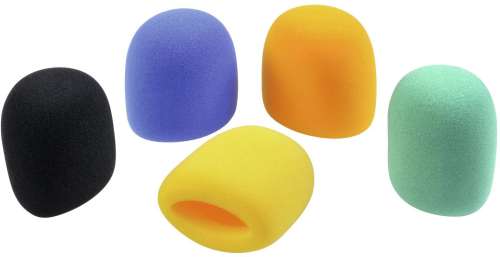
OMNITRONIC Mikrofon-Windschutz-Satz, 5 Farben
OMNITRONIC Microphone Windshield Set, 5 colors
Microphone windshield Windscreen made of plastic foam • Decreases noise interferences • Universally applicable • 5 pieces per set • Type (general stands): Accessory...
€7.90 *
incl. tax, plus shipping costs
Availability:
Delivery time: 3-5 days
OMNITRONIC MIC MM-2USB USB-Kondensator-Messmikrofon
OMNITRONIC MIC MM-2USB USB Condenser Measurement Mic
Precise USB measuring microphone with flat frequency response USB measuring microphone for high-grade audio measurements with a computer • Designed for measuring PA systems, speakers and room...
€54.90 *
incl. tax, plus shipping costs
Availability:
Delivery time: 3-5 days
1 From 52 pages
Facts
Professional Microphones for Stage and Events: Whether you're capturing vocals on stage, recording instruments in the studio, or broadcasting live events — professional microphones are the foundation of exceptional audio quality. At LTT, your specialist for event technology, you'll find a comprehensive range of microphones tailored to every professional application. From robust dynamic handheld models for live performances to sensitive... Read more »
Viewed
Facts

Professional Microphones for Stage and Events

Whether you're capturing vocals on stage, recording instruments in the studio, or broadcasting live events — professional microphones are the foundation of exceptional audio quality. At LTT, your specialist for event technology, you'll find a comprehensive range of microphones tailored to every professional application. From robust dynamic handheld models for live performances to sensitive condenser microphones for studio recording and discreet lavalier systems for conferences, our selection covers the full spectrum of professional audio capture.

With over 25 years of experience in event technology, LTT understands the demands of professional audio environments. Our microphone range includes leading brands like Shure, Sennheiser, AKG, and many more, ensuring you have access to the tools that deliver pristine sound quality night after night. Whether you're equipping a touring production, upgrading your venue's audio system, or building a recording studio, you'll find the optimal solution here — backed by expert advice and reliable service that helps you achieve impressive results in every application.

What Are Professional Microphones and How Do They Work?

A microphone is an electroacoustic transducer that converts acoustic energy (sound waves) into electrical signals. Professional microphones designed for stage, studio, and event applications are engineered to deliver exceptional sound quality, durability, and reliability under demanding conditions. The two primary technologies dominate the professional market: dynamic microphones and condenser microphones.

Dynamic microphones use a moving coil attached to a diaphragm that vibrates within a magnetic field, generating an electrical signal. These models are renowned for their ruggedness, high sound pressure level (SPL) handling — often exceeding 140 dB — and immunity to moisture and temperature fluctuations. They're the workhorses of live sound, requiring no external power and delivering consistent performance in challenging environments. Dynamic microphones typically exhibit a cardioid polar pattern, focusing on sound from the front while rejecting off-axis noise and feedback.

Condenser microphones, by contrast, employ a capacitor-based design where a thin diaphragm and a fixed backplate form a capacitor. Sound waves cause the diaphragm to move, varying the capacitance and generating an electrical signal. Condenser models require phantom power (typically P48, delivering 48 volts via the XLR cable) and offer superior transient response, extended frequency response (often 20 Hz to 20 kHz or beyond), and greater sensitivity. This makes them ideal for studio recording, classical music, and applications where capturing every nuance matters. However, they're more sensitive to handling noise and environmental factors.

Beyond the transducer type, polar patterns define a microphone's directional sensitivity. Omnidirectional patterns capture sound equally from all directions, making them suitable for ambient recording or situations where multiple sound sources must be captured. Cardioid patterns reject sound from the rear, reducing feedback and isolating the desired source. Supercardioid and hypercardioid patterns offer even tighter rejection angles, ideal for stage applications where multiple microphones operate in close proximity. Understanding these fundamentals helps you select the right microphone for your specific application, ensuring optimal sound quality and reliable performance.

Applications: Where Professional Microphones Excel

Professional microphones serve a vast range of applications across the event technology, broadcast, and recording industries. Live sound reinforcement represents one of the most demanding environments: vocalists rely on robust handheld dynamic microphones with cardioid patterns to deliver clear, feedback-resistant sound on stage. Instrument miking — from drum kits to guitar amplifiers and brass sections — requires specialised models with tailored frequency responses and high SPL handling. Dynamic microphones like the industry-standard Shure SM58 and SM57 have become synonymous with live performance, offering reliability and consistent sound quality across thousands of shows.

Studio recording demands the precision and sensitivity of condenser microphones. Large-diaphragm condensers capture vocal performances with warmth and detail, while small-diaphragm pencil condensers excel at recording acoustic instruments, overhead drum miking, and stereo ambient capture. Frequency response specifications such as 30–15,000 Hz, signal-to-noise ratios exceeding 76 dB, and sensitivity ratings around -40 dB ±2 dB ensure that every nuance is preserved. Professional studios often employ matched stereo pairs for accurate spatial imaging.

Broadcast and conference applications require discreet, high-quality audio capture. Lavalier microphones clip to clothing, providing hands-free operation for presenters and interviewees. Gooseneck microphones mount on podiums and conference tables, offering consistent pickup for panel discussions. Headset microphones combine mobility with consistent positioning, ideal for live presentations and theatre productions. Shotgun microphones, with their highly directional supercardioid patterns, capture dialogue on film sets while rejecting ambient noise.

Theatre and house-of-worship installations benefit from wireless microphone systems that provide freedom of movement without sacrificing audio quality. UHF wireless systems with automatic frequency coordination ensure interference-free operation even when multiple channels operate simultaneously. Whether you're equipping a touring production, upgrading a venue's permanent installation, or building a broadcast studio, selecting the right microphone type and polar pattern for each application ensures professional results and reliable performance.

Quality Standards and Buying Criteria for Professional Microphones

Selecting a professional microphone requires understanding the technical specifications that define performance and suitability for your application. Frequency response indicates the range of frequencies a microphone can accurately reproduce, typically measured in Hertz (Hz). Professional vocal microphones often exhibit a tailored response with a presence peak around 3–5 kHz, enhancing intelligibility and clarity in live sound environments. Studio condensers may offer flat response from 20 Hz to 20 kHz, ensuring accurate reproduction across the entire audible spectrum. A frequency response specification of 30–15,000 Hz is common for broadcast and conference microphones, providing clear speech reproduction without unnecessary low-frequency rumble.

Sensitivity measures how efficiently a microphone converts acoustic energy into electrical signal, typically expressed in dB relative to 1 V/Pa at 1 kHz. A sensitivity rating of -40 dB ±2 dB is typical for professional models, indicating strong output that minimises the need for excessive preamp gain. Signal-to-noise ratio (SNR) quantifies the difference between the desired signal and the microphone's self-noise; values exceeding 76 dB are standard for quality condenser microphones, ensuring clean recordings even at moderate sound levels. Maximum sound pressure level (SPL) defines the loudest sound a microphone can handle before distortion occurs; professional models often specify 120 dB SPL or higher, with some dynamic microphones handling 140 dB or more — essential for close-miking loud sources like kick drums or guitar amplifiers.

Output impedance affects compatibility with preamps and mixing consoles. Professional microphones typically exhibit low impedance (≤200 Ω), allowing long cable runs without signal degradation and ensuring compatibility with standard XLR inputs. Phantom power requirements (P48, delivering 48 volts) are standard for condenser microphones; always verify that your mixing console or audio interface provides phantom power before purchasing a condenser model.

Leading manufacturers set the benchmark for professional quality. Shure is synonymous with live sound, with models like the SM58 and Beta 87A trusted by performers worldwide. Sennheiser offers a comprehensive range from rugged stage dynamics to precision studio condensers. AKG is renowned for large-diaphragm condensers favoured in recording studios. DPA Microphones and Schoeps represent the pinnacle of precision engineering, delivering uncoloured, natural sound for classical recording and broadcast applications. Electro-Voice provides robust solutions for live sound and installation. Brands like JTS, Audac, and MONACOR offer reliable performance at accessible price points, making professional audio quality available across all budgets.

When evaluating microphones, consider the polar pattern relative to your application. Cardioid patterns suit most stage and studio scenarios, providing good rejection of off-axis sound. Supercardioid and hypercardioid patterns offer tighter pickup angles, ideal for multi-microphone setups where isolation is critical. Omnidirectional patterns capture ambient sound naturally, suited to orchestral recording and situations where room acoustics contribute to the desired sound. Understanding these specifications and how they relate to your specific application ensures you select a microphone that delivers professional results and represents a sound investment in your audio infrastructure.

Stage Microphone Setup and Placement Guidelines

Proper microphone placement and stage setup are critical to achieving professional sound quality and avoiding common pitfalls like feedback, phase cancellation, and poor isolation. The 3:1 rule is a fundamental principle in multi-microphone setups: when using multiple microphones, the distance between any two microphones should be at least three times the distance from each microphone to its intended sound source. This ratio minimises phase cancellation and comb-filtering effects that occur when the same sound arrives at multiple microphones with slight time delays. For example, if a vocal microphone is positioned 10 cm from the singer's mouth, the nearest microphone should be at least 30 cm away.

Feedback prevention begins with microphone selection and placement. Cardioid and supercardioid patterns naturally reject sound from the rear, so positioning stage monitors (wedges or side-fills) within the microphone's rejection zone — typically 120–180 degrees off-axis — significantly reduces feedback risk. Maintaining proper microphone technique is equally important: vocalists should work close to the microphone (5–10 cm) to maximise direct sound and minimise the gain required, which in turn reduces the likelihood of feedback. Using a high-pass filter (typically 80–100 Hz) on vocal channels removes low-frequency rumble and reduces the energy feeding back through monitors.

Cable management is often overlooked but essential for reliable operation. Professional XLR cables with robust connectors and proper strain relief ensure signal integrity and prevent intermittent faults during performances. Route cables away from power lines to minimise electromagnetic interference, and secure them with gaffer tape or cable ramps to prevent tripping hazards. When rigging overhead microphones or mounting microphones on truss systems, use appropriate mounting hardware such as shock mounts, boom arms, and truss clamps. Brands like König & Meyer, Gravity, and Adam Hall provide professional-grade stands and mounting solutions designed for touring and permanent installations.

Wireless microphone systems introduce additional considerations. Proper antenna placement is critical: position antennas with clear line-of-sight to the performance area, ideally elevated and spaced apart to provide diversity reception. When operating multiple wireless channels, use frequency coordination to avoid intermodulation products and interference. Modern UHF systems often include automatic frequency scanning and coordination features, but understanding the local RF environment — including TV broadcast channels and other wireless systems — ensures reliable operation. Always carry spare batteries and establish a battery-change protocol for long events.

For permanent installations in theatres, houses of worship, and conference venues, consider integrating microphones with architectural elements. Gooseneck microphones mount cleanly on podiums and conference tables, while boundary-layer microphones (PZM-style) provide discreet pickup on stage floors or conference tables. Overhead choir microphones suspended from truss or ceiling mounts capture ensemble sound without visual clutter. Proper gain structure — setting appropriate levels at each stage of the signal chain from microphone to preamp to mixer to power amplifier — ensures clean, distortion-free sound and maximises dynamic range. By applying these professional setup and placement principles, you'll achieve consistent, high-quality audio that showcases your microphones' capabilities and delivers impressive results for every performance.

Wireless Microphone Systems: Technology and Best Practices

Wireless microphone systems have become indispensable in modern event production, offering performers and presenters freedom of movement without compromising audio quality. Professional wireless systems operate in the UHF (Ultra High Frequency) band, typically between 470–900 MHz, providing robust, interference-resistant transmission over distances up to 100 metres or more. Understanding the technology and best practices ensures reliable operation in demanding environments.

A wireless system comprises three main components: the transmitter (either a bodypack for lavalier and headset microphones or an integrated handheld unit), the receiver (typically a rack-mounted unit with diversity antennas), and the microphone capsule itself. High-quality systems offer true diversity reception, employing two independent receiver circuits and antennas that continuously monitor signal strength and automatically switch to the stronger signal. This technology virtually eliminates dropouts caused by multipath interference and ensures consistent audio even as performers move around the stage.

Frequency coordination is critical when operating multiple wireless channels simultaneously. Intermodulation products — spurious frequencies generated when multiple transmitters operate in close proximity — can cause interference and dropouts if frequencies are not carefully selected. Professional systems include frequency-scanning features that analyse the local RF environment and recommend compatible frequency sets. As a rule of thumb, allow at least 250 kHz spacing between adjacent channels, and use pre-calculated frequency groups provided by the manufacturer when operating more than four channels.

Antenna placement and distribution significantly impact system reliability. Position antennas with clear line-of-sight to the performance area, ideally elevated 2–3 metres above the stage and spaced at least 1 metre apart to provide effective diversity reception. For large venues or complex staging, consider using antenna distribution systems that allow multiple receivers to share a common pair of antennas positioned optimally. Remote antennas can be placed closer to the performance area, extending effective range and improving signal quality.

Battery management is a practical concern that can make or break a production. Professional bodypack transmitters typically operate for 6–8 hours on a fresh set of AA batteries, but performance degrades as voltage drops. Establish a protocol of changing batteries before each performance or at scheduled intervals during long events. Rechargeable battery systems with intelligent charging stations streamline this process for touring productions and venues with frequent use. Always carry spare batteries and test transmitters before each show.

Leading wireless system manufacturers include Shure, whose ULX-D and Axient Digital systems set the standard for touring and broadcast applications; Sennheiser, offering the evolution wireless and Digital 6000 series; and AKG, with reliable UHF systems at various price points. Brands like LD Systems and Audac provide accessible entry points for smaller venues and mobile DJs. When selecting a wireless system, consider the number of channels required, the operating environment (including local RF congestion), and whether you need features like networked monitoring and control. By understanding wireless technology and applying professional best practices, you'll achieve the freedom and flexibility of wireless operation with the reliability and audio quality your productions demand.

LTT – Your Specialist for Event Technology

At LTT, we've been your trusted partner for professional event technology for over 25 years. Our microphone range represents just one facet of our comprehensive portfolio, which spans everything from truss systems and rigging hardware to lighting, effects, and complete audio solutions. As both a specialist retailer and a manufacturer with our own production facility in Germany, we understand the demands of professional applications and the importance of reliable, high-quality equipment.

Our commitment to quality is reflected in our 3-year LTT warranty on selected products, giving you peace of mind and protecting your investment. We offer free shipping on orders over €69 within Germany, and our express shipping option ensures you receive critical equipment when you need it. For international customers, we provide worldwide shipping and maintain an extensive dealer network, making LTT your reliable partner wherever your productions take you.

Whether you're a touring sound engineer specifying microphones for a major production, a venue manager upgrading your audio infrastructure, or a content creator building a home studio, our team provides expert advice to help you select the optimal solution for your specific application. With over 100,000 positive customer reviews, LTT has earned a reputation as a reliable partner that delivers professional-grade equipment, competitive pricing, and exceptional service. Explore our complete range of professional microphones and discover why event professionals across Europe trust LTT to help them achieve impressive results, night after night.

FAQ – Questions & Answers

What is the 3:1 rule for microphones?

The 3:1 rule for microphones is a fundamental principle in multi-microphone setups that prevents phase cancellation and comb-filtering effects. The rule states that when using multiple microphones, the distance between any two microphones should be at least three times the distance from each microphone to its intended sound source. For example, if a vocal microphone is positioned 10 centimetres from the singer's mouth, the nearest microphone should be at least 30 centimetres away. This ratio ensures that the sound arriving at the second microphone is at least 9 dB quieter than the direct sound at the first microphone, minimising phase interference. Applying the 3:1 rule is essential for achieving clean, professional sound when miking drum kits, choirs, panel discussions, or any scenario where multiple microphones capture overlapping sound sources.

What are the best brands of professional microphones?

The best professional microphone brands depend on your specific application, but several manufacturers consistently deliver exceptional quality across live sound, studio recording, and broadcast applications. Shure is the industry standard for live performance, with models like the SM58 vocal microphone and SM57 instrument microphone trusted worldwide. Sennheiser offers a comprehensive range from rugged stage dynamics to precision studio condensers, renowned for reliability and sound quality. AKG produces acclaimed large-diaphragm condensers favoured in recording studios. DPA Microphones and Schoeps represent the pinnacle of precision engineering for classical recording and broadcast, delivering uncoloured, natural sound. Electro-Voice provides robust solutions for live sound and permanent installations. For professional applications, these brands offer proven performance, durability, and resale value that justify their investment.

What is the difference between dynamic and condenser microphones?

Dynamic and condenser microphones employ fundamentally different technologies, each suited to specific applications. Dynamic microphones use a moving coil attached to a diaphragm that vibrates within a magnetic field, generating an electrical signal. They are rugged, require no external power, handle high sound pressure levels (often exceeding 140 dB), and are immune to moisture and temperature fluctuations — making them ideal for live sound and stage applications. Condenser microphones use a capacitor-based design where a thin diaphragm and fixed backplate form a capacitor; sound waves vary the capacitance, generating a signal. Condensers require phantom power (typically 48 volts), offer superior transient response, extended frequency range (often 20 Hz to 20 kHz or beyond), and greater sensitivity — making them ideal for studio recording where capturing every nuance matters. Choose dynamic microphones for live performance and harsh environments; choose condensers for studio recording and applications requiring detailed, accurate sound reproduction.

How do I test if my microphone is working?

Testing whether a microphone is working involves several straightforward steps. First, ensure the microphone is properly connected: XLR cables should be firmly seated in both the microphone and the mixer or audio interface input. If using a condenser microphone, verify that phantom power (typically labelled +48V or P48) is enabled on the channel — condensers will not function without it. Set the channel gain to a moderate level (start around 12 o'clock on the gain knob) and ensure the channel fader is raised. Speak or sing into the microphone at normal performance volume while watching the channel meter on your mixer or interface; you should see the meter respond to your voice. If using headphones or monitors, you should hear your voice. If there is no signal, check that the microphone is not muted (some models have physical mute switches), try a different XLR cable to rule out cable faults, and test the microphone on a different channel to determine whether the issue is with the microphone or the mixer channel.

What does a professional stage microphone cost?

Professional stage microphone prices vary widely based on technology, brand, and application. Entry-level dynamic handheld microphones suitable for live vocal performance start around €50–€80, with models from brands like JTS, Audac, and MONACOR offering reliable performance for smaller venues and mobile DJs. Mid-range professional dynamics from established brands like Shure (SM58, Beta 58A) and Sennheiser (e835, e945) typically cost €90–€180 and represent the workhorses of professional touring and venue installations. High-end dynamic and condenser stage microphones from Shure (Beta 87C, KSM9), Sennheiser (e965), and AKG range from €200–€400, offering superior sound quality, refined polar patterns, and exceptional build quality. Specialised microphones for instrument miking, such as drum microphone sets or precision condensers for orchestral applications, can range from €150 to over €1,000 per microphone. Wireless systems add significantly to the cost, with professional UHF systems starting around €300 for a single-channel setup and extending to €1,500 or more for multi-channel systems with advanced features.

Which microphone polar pattern should I choose for stage use?

Selecting the appropriate microphone polar pattern for stage use depends on your specific application and the acoustic environment. Cardioid patterns are the most common choice for stage vocals and instruments, providing good front-facing sensitivity while rejecting sound from the rear (typically 15–20 dB of rear rejection). This makes cardioid microphones effective at reducing feedback from stage monitors and isolating the desired sound source. Supercardioid patterns offer even tighter pickup angles with maximum rejection at approximately 120–150 degrees off-axis, making them ideal for situations where multiple microphones operate in close proximity or where greater isolation is required — such as miking individual instruments in a dense stage setup. However, supercardioid microphones exhibit some rear sensitivity, so monitor placement must account for this. Omnidirectional patterns capture sound equally from all directions and are less prone to proximity effect and handling noise, but they offer no feedback rejection and are generally unsuitable for stage use unless the acoustic environment is highly controlled. For most stage vocal applications, a cardioid pattern provides the best balance of isolation, feedback rejection, and natural sound quality.

Do I need phantom power for my microphone?

Whether you need phantom power depends on the type of microphone you are using. Condenser microphones require phantom power to operate — typically 48 volts delivered via the XLR cable, commonly labelled as P48 or +48V on mixing consoles and audio interfaces. Condenser microphones use this power to polarise the capacitor element and to power the internal preamplifier circuitry. Without phantom power, a condenser microphone will produce no signal. Dynamic microphones, by contrast, generate their own signal through electromagnetic induction and do not require phantom power. Applying phantom power to a dynamic microphone will not damage it (the design is inherently immune), but it serves no purpose. Ribbon microphones are a special case: while modern active ribbon microphones may accept or even require phantom power, older passive ribbon microphones can be damaged by phantom power if the ribbon element is exposed to DC voltage. Always verify the microphone type and manufacturer specifications before enabling phantom power. Most professional mixing consoles and audio interfaces provide switchable phantom power on each channel or in groups, allowing you to power condenser microphones while leaving it disabled for dynamic and ribbon models.

How do I prevent feedback when using stage microphones?

Preventing feedback when using stage microphones requires a combination of proper microphone selection, placement, gain structure, and equalization. Start by choosing microphones with cardioid or supercardioid polar patterns, which naturally reject sound from the rear and sides, reducing the likelihood of monitor sound feeding back into the microphone. Position stage monitors (wedges or side-fills) within the microphone's rejection zone — typically 120–180 degrees off-axis from the front of the microphone. Encourage performers to maintain proper microphone technique: working close to the microphone (5–10 centimetres) maximises direct sound and allows you to use less gain, which reduces feedback risk. Set appropriate gain structure by adjusting channel gain so that the signal peaks around 0 dB on the meter without clipping, then use the fader for final level control — avoid excessive gain that amplifies both the desired signal and potential feedback frequencies. Apply a high-pass filter (typically 80–100 Hz) to vocal channels to remove low-frequency rumble that contributes to feedback. Use a graphic or parametric equalizer to identify and reduce feedback frequencies: gradually increase monitor level until feedback begins (ringing out the system), identify the offending frequency, and apply a narrow cut (3–6 dB) at that frequency. Repeat this process for the most problematic frequencies. Modern digital mixers often include automatic feedback suppression that identifies and notches out feedback frequencies in real time. Finally, ensure that the total system gain — from microphone through mixer to power amplifier to loudspeaker — is set appropriately; excessive gain at any stage increases feedback risk.
// Countdown for Black Deals