
Rigging – stage technology
Rigging - Bühnentechnik: Overview and What You Find in This Shop
Welcome to the rigging and stage-technology world at LTT – your specialist for event technology. Here you find everything you need to build safe, load-bearing structures above stages, audiences and trade fair floors: aluminium trusses, electric chain hoists, Anschlagmittel, shackles, round slings and safety ropes.
Whether you plan a concert stage, a festival roof, a theatre grid or a hanging display at a trade fair, professional rigging equipment is non-negotiable. This category bundles high-quality branded products for every load class and application, so you can put your production in the spotlight and achieve impressive results.
As a manufacturer with our own production in Germany and 25 years of experience, LTT combines expert know-how with a huge selection. Buy your rigging and stage technology at great prices and rely on certified quality from Bocholt, Germany.
What Is Rigging in Event Technology? Fundamentals
Rigging in event technology describes the planning, construction, fastening and securing of loads above the stage area or audience. This includes trusses, moving heads, loudspeaker arrays, LED walls, curtains and special effects – in short, every component mounted overhead.
The term originates from sailing: on ships, the "rigging" was the entire system of ropes and tackle that held the sails. In modern event technology, a clear distinction applies: the rig is the finished suspended structure, while rigging is the process of building, lifting and securing that structure.
Rigging is not improvisation but an engineering discipline. It combines static calculation, material knowledge and safety expertise to create a stable hanging construction that meets the load requirements of the equipment and the venue.
Rigging vs. simple truss assembly
It is important to separate rigging from purely decorative truss builds. A ground support structure standing on the floor still requires correct load distribution, but true rigging means suspending loads from ceiling points, motors or roof systems – where a failure would send equipment falling onto people below. That is why rigging is the safety-critical foundation of every professional event and demands qualified personnel, certified material and documented statics.
Trusses as the Load-Bearing Basis: Single-, Two-, Three- and Four-Point Types and Variants
Aluminium trusses form the backbone of nearly every rigging setup. A truss is essentially a lattice girder (German: Fachwerk) made from lightweight yet extremely strong aluminium tubes welded into a rigid frame. The many types and variants differ in the number of main chord tubes, which directly determines load-bearing capacity and typical use.
The four core truss variants
- Single-point truss (ladder/tube): Straight tubes used as holding, connecting or support elements for light loads.
- Two-point truss: A lattice girder with two aluminium chord tubes for moderate loads – a simple, stable carrier for small stages and displays.
- Three-point truss: Three spatially arranged tubes deliver high stability. Ideal for corners on stands and stages as well as space-saving longitudinal and transverse beams.
- Four-point truss: The maximum load class. Four-chord elements combine high stability, maximum load capacity, easy assembly and low dead weight – the standard for large stage construction.
Concrete Naxpro-Truss data
LTT manufactures Naxpro-Truss with clearly documented specifications, so you know exactly what each system carries:
- FD21-24: 35 mm tube diameter, 2 mm wall thickness – compact and light.
- FD31-44 (F34 class): 50 mm tube diameter, 2 mm wall thickness – the versatile all-rounder.
- HD31-44: 50 mm tube diameter, 3 mm wall thickness – for higher loads and larger spans.
- GS94: 60 mm tube diameter, 5 mm wall thickness with 40 x 3 mm diagonal tubes – the heavy-duty ground support and roof class.
Connectors and accessories are precisely matched to each build line, ensuring fast, safe assembly and full compatibility within a system.
Applications: Where Rigging and Stage Technology Are Used
Rigging is not reserved for arena shows. Wherever technology has to hang safely and precisely above an area, professional rigging comes into play. Typical applications include:
- Concerts and festivals: Suspending line arrays, moving heads and LED walls above the stage for optimal sound distribution and lighting angles.
- Trade fairs and exhibitions: Hanging displays, banners, branded ceilings and structured brand spaces above stands.
- Theatre, churches and clubs: Fixed grids and prospekt-hoist systems for scenery, curtains and lighting changes.
- Open-air events: Weatherproof, self-supporting structures and roof systems where no ceiling points exist.
- TV productions and studios: Grid installations for flexible, repeatable lighting positions.
For a complete production you also need the load itself: browse our matching lighting, sound and video technology to combine your rigging structure with the right equipment and achieve beautiful results on every stage.
Rigging Accessories: Which Equipment You Need for a Safe Build
A stable truss frame is only the beginning – the rigging accessories decide whether a build is safe and efficient. Once the structure stands, you fasten technology, secure loads and finish the look. Use this structured accessory checklist so nothing is missing:
Load-bearing and connecting accessories
- Round slings and steel cables: Flexible Anschlagmittel to connect trusses and hoists to load-bearing points.
- Shackles: Certified connecting links between slings, chains and truss.
- Half couplers and clamps: For fixing lights and fittings to tubes.
- Turnbuckles, wire rope grips and suspension links: For precise adjustment and secure closing of connections.
Safety accessories
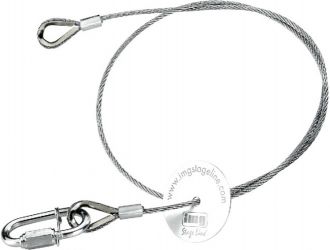
- Safety fall ropes / secondary safeties: Prevent a device from falling if the primary fastening fails.
- Spanning and ratchet straps: Secure loads during transport and fix scenery.
- Ballast weights: Additional stabilisation for ground support and outdoor builds.
Finishing accessories
- Truss covers and stretch skins: Beautify metallic frames and hide hardware.
- Spann-fix and banner clamps: Fasten banners, sheets and fabrics quickly.
Riggatec, our accessory brand for event technology, offers matching spare parts and hardware so you can equip a complete, safe stage from a single source.
Motors, Chain Hoists and Anschlagmittel: A Comparison
To lift trusses, loudspeakers or complete rig systems, you rely on hoists. Manual chain hoists are cost-efficient and independent of power, while electric chain hoists – often with load monitoring – enable fast, precise and repeatable positioning. Anschlagmittel form the connecting layer between the hoist, the truss and the fixed structure.
The comparison below helps you choose the right lifting and connecting components for your setup:
Remember: every connection in a rig is only as strong as its weakest link. All Anschlagmittel must be correctly dimensioned to the working load limit (WLL), certified and regularly inspected. LTT stocks manual and electric hoists alongside a full range of certified slings, shackles and chains.
Technical Buying Criteria: WLL, Tube Diameter, Wall Thickness and Material
Choosing rigging equipment is a question of hard numbers, not gut feeling. The most important technical criteria you should always check:
Working load limit (WLL) and load type
The WLL states the maximum safe load of a component. For trusses, the permissible load depends on the span and whether it is a point load, a distributed load or a bending moment. Longer spans reduce the carrying capacity, so always compare the load table of the specific system rather than a generic figure.
Tube diameter and wall thickness
These two values define a truss's strength. The Naxpro-Truss range illustrates the range: FD21-24 uses a 35 mm tube with 2 mm wall, the popular F34-class FD31-44 uses 50 mm / 2 mm, HD31-44 steps up to 50 mm / 3 mm for higher loads, and GS94 reaches 60 mm / 5 mm with 40 x 3 mm diagonals for heavy ground support and roof systems.
Material and connection system
Event trusses are almost always made from aluminium alloy – light enough to fly, strong enough to carry. Crucially, connectors (conical or fork/spigot) must belong to the same build line to guarantee compatibility and rated load. Anschlagmittel must be selected by WLL, and steel cables, round slings and shackles must each carry the required rating for the intended load.
Buying Guide: Choosing the Right Rigging Setup for Indoor, Outdoor and Ground Support
Before you order, ask the same questions a professional rigger asks: How should the structure look? What loads must it carry? Indoor or outdoor? Are there usable ceiling points, or do you need a self-supporting solution? This buying guide walks you through the decision.
Suspended rigging vs. ground support
The fundamental distinction determines your entire material list:
- Suspended rigging hangs the structure from certified ceiling points via motors and Anschlagmittel – space-saving and clean, but only possible where the venue provides rated load points.
- Ground support builds self-supporting towers and beams that stand on the floor, often with base plates, sleeve blocks and ballast. It is the go-to solution for open-air events, tents and venues without rigging points.
Matching truss to use case
- Light indoor decoration: Two- or three-point trusses are usually sufficient.
- Concert and touring stages: Four-point trusses such as HD31-44 offer maximum load and stability.
- Roof and dome constructions / heavy outdoor: The GS94 class with its 60 mm / 5 mm tubes is designed for the highest demands.
Combining hoists and Anschlagmittel
Match your hoist type to the show: manual for static builds, electric for touring and moving productions. Then dimension every sling, shackle and safety by working load limit, adding secondary safeties for every flown device. Unsure which combination fits your project? As a reliable partner, LTT helps you build the optimal solution.
Safety, Standards and Statics: DGUV V17, EN 1090 and TÜV SÜD
Working overhead means high responsibility. Whoever suspends loads above people must plan precisely, work certified and execute without error – rigging is the safety-critical foundation of every professional event, not decorative improvisation.
Key standards and regulations
- DGUV Vorschrift 17 (formerly BGV C1): The German accident-prevention regulation for stages and production venues, governing safe construction and operation of flown structures.
- EN 1090: The construction standard for load-bearing steel and aluminium components – relevant proof of quality for manufactured trusses and structural parts.
- TÜV SÜD certification: Independent verification of material and production quality, underpinning documented load figures.
- Statics and load planning: Mandatory for professional builds. Point loads, distributed loads and bending moments must be calculated so the structure carries the intended equipment safely.
Qualification of the people
Rigging must be carried out by qualified personnel. In Germany, the IGVW (event-industry association) defines three rigger levels: Level 1 performs simple work under supervision, Level 2 handles standard tasks independently, and Level 3 plans, leads and supervises complex or hazardous constructions. The proof of competence is the rigger certificate SQQ2 (IGVW quality standard).
Safety fundamentals
Always prevent both falls of persons and falling loads. Secondary safeties are an additional protective measure – never a substitute for correct primary mounting. As a manufacturer producing in Germany, LTT supplies equipment built to these standards, giving you a certified basis for a safe show.
Care and Maintenance: Inspection, Lifespan and Documentation of Rigging Equipment
Rigging equipment is safety equipment, so care and maintenance are not optional. Regular inspections of Anschlagmittel, hoists and trusses are mandatory and must be documented to keep every component fit for service.
Practical maintenance guidance
- Visual checks before every use: Inspect trusses for dents, cracks and deformed tubes, and Anschlagmittel for cuts, corrosion, broken wires or worn round slings.
- Periodic expert inspection: Chain hoists, steel cables, shackles and round slings must be checked by a qualified person at defined intervals and after any incident.
- Documentation: Keep an inspection record for each item – it proves compliance and helps you track lifespan.
- Replacement: Retire any Anschlagmittel or hardware showing damage, permanent deformation or missing markings. When in doubt, replace rather than risk.
Clean aluminium trusses with mild agents and dry them after outdoor use to avoid corrosion at connectors. Store hoists and slings dry and protected from mechanical damage. Well-maintained, certified equipment lasts for many productions – and LTT offers spare parts and replacements so you keep your rig safe and operational.
Brands and Manufacturers for Rigging and Stage Technology
The right brands make the difference between a nervous build and a confident one. LTT combines its own premium brands with leading trade brands, so you find both compatible system solutions and specialist hardware.
Premium brands from LTT
- Naxpro-Truss: Our leading aluminium truss system with documented tube diameters, wall thicknesses and load tables – made in Germany.
- Riggatec: Accessories and rigging hardware for event technology, from shackles to clamps.
- Litetruss: Trusses designed for fast, safe assembly with perfectly matched connectors.
Leading trade brands
Alongside our own production, LTT carries renowned manufacturers such as Prolyte, Global Truss, Duratruss, Alutruss and Milos, plus lifting specialists like Lodestar and hardware from Doughty and Admiral Staging. This lets you extend existing setups or standardise on a build line of your choice.
A key advantage of choosing within a single build line is compatibility: connectors, corners and accessories are engineered to work together, guaranteeing the rated load. If you are unsure which brand suits your project, LTT advises you as a reliable partner on the optimal, high-quality solution.
Related and Further Categories
Rigging never stands alone – a finished stage needs the technology it carries and the platforms it stands on. Complete your rigging setup with closely related categories:
- Trusses and connectors: The load-bearing systems and matching hardware that form the frame of every rig.
- Stage podiums and platforms: Bullstage stage decks with low weight and high load capacity to build the performance area itself.
- Lighting, sound and video technology: Moving heads, line arrays and LED walls that you fly from your finished structure.
Browse these categories in our shop to plan a coherent, safe and impressive production from the floor to the topmost hanging point.
LTT – Your Specialist for Event Technology
When it comes to rigging and stage technology, experience and certified quality decide the outcome – and both are exactly what LTT stands for. With 25 years in event technology and our own manufacturing in Germany, we do not just sell rigging equipment, we build it. That means documented load data, standard-compliant production and innovative solutions for professionals who cannot afford to compromise on safety.
You benefit from a huge selection of high-quality branded products, honest advice and dependable service. Enjoy free shipping from €69, express delivery when time is tight, and a 3-year LTT warranty on our own products – shipped from Bocholt, Germany, and worldwide through our international dealer network.
Ready to put your next production in the spotlight? Explore our trusses, hoists, Anschlagmittel and stage podiums, or get in touch for expert guidance. Buy your rigging and stage technology at great prices – with LTT as your specialist for event technology at your side.
FAQ – Questions & Answers
Rigging in event technology is the planning, construction, fastening and securing of loads above a stage or audience. This includes trusses, moving heads, loudspeaker arrays, LED walls, curtains and special effects – every component mounted overhead. Rigging is not improvisation but an engineering discipline that combines static calculation, material knowledge and safety expertise. The goal is a stable, safe hanging construction that meets the load and venue requirements. Because loads hang above people, rigging is the safety-critical foundation of every professional event and demands qualified personnel and certified equipment.
The term "rigging" originates from sailing, where the rigging was the entire system of ropes and tackle holding a ship's sails. In event technology, "rigging" describes the process of building, lifting, positioning and securing suspended loads. A clear distinction applies: the rig is the finished suspended structure, while rigging is the activity of assembling and securing it. Trusses – known in industry jargon as truss (German Fachwerk, meaning lattice) – are central to rigging and are used to fly loudspeakers, moving heads, LED walls and video technology safely above the stage.
Rigging is the fachgerecht (professional) attaching, lifting, positioning and securing of loads above people or in safety-critical areas of an event. It covers aluminium trusses, chain hoists, Anschlagmittel such as round slings, steel cables and shackles, plus safety ropes and secondary safeties. Rigging ensures that technical loads hang in the right place, are correctly aligned and remain permanently secure. It is far more than a practical assembly step – it is a safety-critical field requiring experience, qualification and suitable, certified equipment for a reliable, impressive production.
Yes, rigging is demanding and responsible work. Riggers often work at height and under time pressure, and the main hazards are falls of persons and falling loads. Any small error in material selection, planning or assembly can have serious consequences, because loads hang above people. Rigging therefore requires precise planning, documented statics, correct dimensioning of Anschlagmittel and certified execution. In Germany, three IGVW rigger levels exist, with the SQQ2 rigger certificate as proof of competence. Difficult work, yes – but manageable with proper qualification, quality equipment and strict adherence to standards such as DGUV Vorschrift 17.
Rigging equipment consists of several building blocks that work as a system. It includes load-bearing structures such as single-, two-, three- and four-point aluminium trusses, and lifting gear such as manual and electric chain hoists, often with load monitoring. It also covers Anschlagmittel and connecting elements – round slings, steel cables, chains, shackles, half couplers and turnbuckles – plus safety components like safety fall ropes and secondary safeties. Finishing items such as truss covers, banner clamps and ballast weights complete the picture. Every element must be correctly dimensioned to its working load limit (WLL) and regularly inspected.
Anschlagmittel in event technology are the connecting and fastening elements that securely link trusses, technical devices and other components to load-bearing structures. Typical Anschlagmittel include steel cables, round slings, chains and shackles. In event technology they must be correctly dimensioned for the specific load, comply with applicable standards and safety requirements, and undergo regular mandatory inspections to guarantee ongoing serviceability. A key principle is that every connection is only as strong as its weakest link, so Anschlagmittel must always be selected by working load limit (WLL) and used exactly as intended.
The difference lies in how the structure carries its load. Suspended rigging hangs the truss from certified ceiling points via motors and Anschlagmittel – space-saving and clean, but only possible where the venue offers rated load points. Ground support builds self-supporting towers and beams that stand on the floor, usually with base plates, sleeve blocks and ballast weights. Ground support is the standard solution for open-air events, tents and venues without rigging points. Choosing between suspended rigging and ground support determines your entire material list, so clarify the available load points before you plan the build.
Which truss you should buy depends on load, span and application. For light indoor decoration, two- or three-point trusses are usually sufficient. For concert and touring stages, four-point trusses such as the Naxpro-Truss HD31-44 (50 mm tube, 3 mm wall) offer maximum stability. For roof, dome and heavy outdoor constructions, the GS94 class with its 60 mm / 5 mm tubes and 40 x 3 mm diagonals is designed for the highest demands. Always compare the load table of the specific system and ensure connectors belong to the same build line. LTT advises you on the optimal solution.