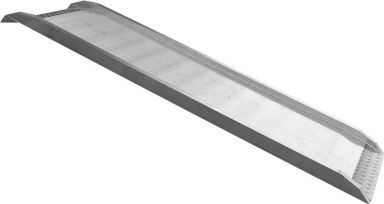
Loading ramps
Professional Loading Ramps for Event Technology – Your Reliable Solution
When you need to move heavy stage equipment, flight cases, truss systems or lighting fixtures efficiently and safely, professional loading ramps are essential. LTT offers you a comprehensive range of loading ramps specifically designed for the demands of event technology, stage production and warehouse logistics. Whether you're loading Naxpro-Truss systems onto transport vehicles, moving Bullstage podiums into venues, or handling flight cases filled with audio and lighting equipment — our loading ramps deliver the stability, safety and reliability you need. With load capacities ranging from 400 kg to 5,000 kg and compliance with DGUV safety standards, you can trust our ramps to handle your most demanding production requirements.
What Are Loading Ramps and How Do They Work?
Loading ramps are inclined platforms or bridging structures designed to overcome height differences between ground level and vehicle loading surfaces, or between fixed warehouse platforms and transport vehicles. In event technology, loading ramps serve as the critical interface between your venue, warehouse or workshop and the transport vehicles that move your equipment to performances, festivals, corporate events and installations.
The fundamental principle is straightforward: a loading ramp creates a safe, stable pathway that allows wheeled equipment — flight cases on castors, hand pallet trucks loaded with audio racks, or even small vehicles carrying stage elements — to be moved between different height levels without lifting. Modern loading ramps achieve this through engineered aluminium or steel construction, anti-slip surfaces, and carefully calculated gradient angles that balance ease of movement with safety.
Unlike simple planks or improvised solutions, professional loading ramps are engineered to specific load capacities and safety standards. They feature reinforced structures that distribute weight evenly, raised edges or safety lips that prevent equipment from rolling off, and surface treatments that maintain grip even in wet conditions. For event technology professionals, this means you can confidently load expensive truss systems, delicate lighting fixtures and heavy audio equipment without risking damage or injury.
Loading ramps differ from dock levellers, which are typically fixed installations that bridge horizontal gaps between warehouse platforms and vehicle beds with minimal height difference. Ramps, by contrast, are designed to overcome significant vertical distances — often 30 cm to 150 cm — and are available in both mobile and permanently installed configurations. This versatility makes them indispensable for touring productions, rental companies and venues that handle diverse vehicle types and loading scenarios.
Applications: Where Loading Ramps Excel in Event Production
Loading ramps are indispensable across the entire event technology workflow. In warehouse and rental company operations, you use them daily to load flight cases containing Cameo moving heads, LD Systems line arrays and Pioneer DJ equipment onto delivery vehicles. The ability to roll heavy cases rather than lift them dramatically reduces physical strain and speeds up load-out times, especially when you're preparing multiple systems for simultaneous events.
At venue loading docks, loading ramps bridge the gap between the building's elevated platform — typically 1.2 to 1.3 metres high to match standard truck bed height — and vehicles of varying sizes. When a delivery arrives with Naxpro-Truss FD31 sections or Riggatec rigging hardware, a properly positioned ramp allows your crew to wheel the equipment directly into the venue's storage area using pallet jacks or hand trucks, maintaining efficiency even during tight changeover windows.
For touring productions and mobile stage operations, folding aluminium ramps travel with the production, providing consistent loading capability regardless of venue infrastructure. You can quickly deploy them at festival sites, temporary event spaces or venues without dedicated loading facilities, ensuring your Bullstage podiums, truss sections and lighting rigs move safely from truck to stage area.
Loading ramps also prove essential when working with containers and portable storage units. Event equipment often ships in standard shipping containers or custom road cases that sit at specific heights; mobile ramps allow you to access these containers with forklifts or pallet jacks, retrieving or storing equipment without requiring permanent infrastructure modifications.
In workshop and maintenance environments, loading ramps facilitate equipment servicing. When you need to move a heavy fog machine, a rack of amplifiers or a pallet of Osram and Philips lamps between floor level and an elevated work platform, a stable ramp provides safe access while keeping your hands free to guide the load.
Quality Standards and Buying Criteria for Professional Loading Ramps
When selecting loading ramps for event technology applications, load capacity is your primary consideration. Ramps are typically rated per pair (for two-piece models) or as a single unit (for wide ramps), with common capacities including 400 kg, 1,000 kg, 2,000 kg, 4,000 kg and 5,000 kg. To determine your requirement, calculate the total weight of your heaviest typical load — for example, a flight case containing four moving heads plus the weight of the hand truck — and select a ramp rated at least 20% above this figure to provide a safety margin.
Material choice significantly impacts performance and handling. Aluminium ramps offer an excellent strength-to-weight ratio, with densities approximately one-third that of steel, making them ideal for mobile applications where your crew must deploy and store ramps frequently. Despite their light weight, aluminium ramps constructed from high-grade alloys can support substantial loads — a 2.5-metre aluminium ramp pair might weigh just 30 kg yet safely carry 1,000 kg. Steel ramps, while heavier, provide maximum durability for permanent installations and applications involving tracked vehicles or concentrated point loads.
Surface design directly affects safety. Look for ramps with perforated or expanded metal surfaces that allow water drainage and maintain grip in wet conditions — essential when loading equipment outdoors or in venues where condensation occurs. Raised side edges (typically 5 to 10 cm high) prevent wheels from slipping off the ramp edge, while curved or bevelled end lips ensure smooth transitions onto and off the ramp without jarring impacts that could damage sensitive equipment.
Manufacturers such as Riggatec, Eurolite and specialist suppliers offer ramps engineered specifically for event industry demands, with features like reinforced cross-bracing, corrosion-resistant finishes and modular designs that allow length adjustment. When you invest in quality ramps from established suppliers, you gain equipment that withstands years of intensive use across diverse environments, from climate-controlled warehouses to outdoor festival sites in variable weather.
DGUV Compliance and Safety Requirements for Loading Ramps
In Germany and across Europe, loading ramps must comply with DGUV (Deutsche Gesetzliche Unfallversicherung) regulations, specifically DGUV 108-006, which establishes safety standards for loading operations. These regulations exist to prevent the accidents that occur when equipment rolls uncontrolled, workers lose footing on steep inclines, or ramps collapse under excessive loads.
The DGUV standard specifies a maximum gradient of 8% (approximately 4.5 degrees) for ramps used with hand-operated transport equipment such as pallet jacks and hand trucks. This relatively gentle slope ensures that workers can maintain control when moving heavy loads uphill and can safely brake when descending. For loading ramps designed to overcome height differences — the type most common in event technology — a steeper maximum gradient of 30% (approximately 16.5 degrees) is permitted, but only when the ramp is used exclusively for wheeled equipment that can safely navigate the incline.
To calculate the minimum ramp length required to meet DGUV standards, use the formula: Length (m) = Height difference (m) × 3.5. For example, if you need to bridge a 60 cm height difference, your ramp must be at least 2.1 metres long (0.6 × 3.5 = 2.1). Using a shorter ramp would create an excessively steep gradient that violates safety standards and increases the risk of equipment tipping or workers losing control.
Minimum width requirements also apply: single-piece ramps must be at least 0.55 metres wide to allow for minor course corrections during loading, while dock levellers and horizontal bridging platforms require a minimum width of 1.25 metres (reducible to 1.0 metre only when structural constraints make wider installation impossible). These width standards ensure that equipment can pass safely even if slightly misaligned, and that workers have adequate space to walk alongside loads when guiding them.
Anti-slip surfaces are mandatory, and ramps must feature warning markings — typically yellow and black striping — at edges and transition points to enhance visibility. When you use loading ramps in your operations, regular inspection for structural damage, surface wear and secure positioning is essential to maintain compliance and protect your crew.
Choosing the Right Ramp Type: Mobile, Folding and Fixed Solutions
Loading ramps for event technology come in several configurations, each optimised for specific scenarios. Understanding these types helps you select the right solution for your operational needs.
Single-piece wide ramps (also called broad ramps) feature a continuous surface, typically 0.8 to 1.5 metres wide, that accommodates hand trucks, pallet jacks and wheeled flight cases. These ramps excel when you're moving multiple smaller items or equipment with wide wheelbases. The uninterrupted surface provides maximum stability and allows you to position loads anywhere across the width, making them ideal for busy loading docks where diverse equipment types pass through continuously.
Two-piece ramp pairs consist of parallel channels or rails designed for vehicles with defined wheel tracks — small tractors, quad bikes, motorcycles or wheeled stage platforms. Each ramp typically measures 25 to 35 cm wide, and the pair is positioned to match the vehicle's track width. This design minimises weight and material while providing full support where it's needed. When you're loading Bullstage podium sections mounted on transport dollies or moving small utility vehicles, two-piece ramps offer an efficient solution.
Folding ramps incorporate a central hinge that allows the ramp to fold in half lengthwise, dramatically reducing storage space and making transport practical. A 2.5-metre folding ramp collapses to just 1.25 metres, fitting easily in a van or truck alongside your equipment. Despite the hinge, well-engineered folding ramps maintain full load capacity when deployed and locked, making them perfect for touring productions and rental companies that need loading capability at multiple venues.
Telescopic and adjustable-length ramps extend or retract to accommodate different height differences, providing versatility when you work with various vehicle types. A single telescopic ramp might adjust from 1.8 to 3.0 metres, eliminating the need to carry multiple fixed-length ramps. The trade-off is slightly higher weight and cost compared to fixed-length equivalents.
Container ramps and dock levellers serve specialised functions: container ramps are short, robust ramps designed specifically to bridge the gap between ground level and shipping container floors (typically 30 to 40 cm high), while dock levellers are horizontal or near-horizontal platforms that bridge the gap between a fixed warehouse platform and vehicle beds of varying heights, often incorporating hydraulic adjustment mechanisms.
LTT – Your Specialist for Event Technology Equipment and Logistics Solutions
At LTT, we understand that efficient equipment handling is fundamental to successful event production. Our loading ramp selection reflects 25 years of experience in event technology, offering solutions that meet the real-world demands of touring productions, rental companies, venues and installation specialists. Whether you need lightweight aluminium folding ramps for mobile applications or heavy-duty steel ramps for permanent warehouse installations, you'll find equipment engineered to professional standards.
When you order from LTT, you benefit from free shipping on orders over €69, with express delivery options available when you need equipment urgently. Our three-year LTT guarantee provides peace of mind, and our expert team is available to advise on ramp selection, load capacity calculations and DGUV compliance. We ship worldwide, supporting international event professionals and our extensive dealer network with the same commitment to quality and service.
Beyond loading ramps, LTT supplies the complete spectrum of event technology equipment — from Naxpro-Truss aluminium truss systems and Riggatec rigging hardware to Bullstage podiums, lighting fixtures from Cameo and Showtec, audio equipment from LD Systems and Pioneer DJ, and flight cases from Roadinger. This comprehensive range means you can source your entire production infrastructure from a single trusted partner, backed by over 100,000 positive customer reviews and quarter-century of industry expertise.
FAQ – Questions & Answers
Loading ramps come in several types suited to different applications. Single-piece wide ramps (broad ramps) feature continuous surfaces 0.8 to 1.5 metres wide, ideal for hand trucks and wheeled flight cases. Two-piece ramp pairs consist of parallel channels for vehicles with defined wheel tracks, such as small tractors or wheeled platforms. Folding ramps incorporate central hinges that allow them to fold in half for compact storage and transport, perfect for touring productions. Telescopic ramps adjust in length to accommodate varying height differences. Container ramps are short, robust ramps specifically designed to access shipping container floors. Dock levellers are horizontal platforms that bridge gaps between fixed warehouse platforms and vehicle beds, often with hydraulic height adjustment.
Loading ramps must comply with DGUV 108-006 regulations in Germany and similar European standards. Key requirements include a maximum gradient of 8% (approximately 4.5 degrees) for ramps used with hand-operated equipment like pallet jacks, and 30% (approximately 16.5 degrees) for ramps used exclusively with wheeled equipment. Minimum width is 0.55 metres for single-piece ramps and 1.25 metres for dock levellers (reducible to 1.0 metre only when structurally necessary). Ramps must feature anti-slip surfaces, warning markings (typically yellow and black striping) at edges, and raised side edges to prevent equipment from rolling off. Regular inspection for structural integrity and surface condition is mandatory to maintain compliance and ensure worker safety.
Loading ramp length depends on the height difference you need to overcome and the maximum permitted gradient. According to DGUV standards, the minimum length is calculated using the formula: Length (metres) = Height difference (metres) × 3.5. For example, to bridge a 60 cm (0.6 m) height difference safely, your ramp must be at least 2.1 metres long (0.6 × 3.5 = 2.1). This calculation ensures the gradient does not exceed 30%, which is the maximum safe angle for loading ramps used with wheeled equipment. Using a shorter ramp creates an excessively steep slope that increases the risk of equipment tipping, workers losing control, and accidents during loading operations. Always select ramp length based on the actual height difference at your specific loading location.
Minimum loading ramp width is specified by DGUV regulations to ensure safe operation. Single-piece ramps (broad ramps) must be at least 0.55 metres wide, allowing operators to make minor course corrections when guiding equipment up or down the ramp. Dock levellers and horizontal bridging platforms require a minimum width of 1.25 metres, though this can be reduced to 1.0 metre when structural or spatial constraints make wider installation impossible. For two-piece ramp pairs (parallel channels), no specific width regulation applies, as these are positioned to match the wheel track of the vehicle being loaded. When selecting ramp width, consider the widest equipment you'll transport — flight cases, hand trucks or pallet jacks — and ensure adequate clearance on both sides for safe passage.
Loading ramp weight capacity varies significantly based on construction, materials and design, with common ratings including 400 kg, 1,000 kg, 2,000 kg, 4,000 kg and 5,000 kg. Capacity ratings typically refer to evenly distributed loads across the ramp's full length and width. For two-piece ramp pairs, the capacity is usually stated per pair rather than per individual ramp. When selecting a loading ramp, calculate the total weight of your heaviest typical load — including the equipment itself plus any transport device such as a hand truck or pallet jack — and choose a ramp rated at least 20% above this figure to provide a safety margin. Concentrated loads (small contact areas) and tracked vehicles with steel tracks require ramps with significantly higher capacity ratings than the vehicle weight alone would suggest.
Aluminium and steel loading ramps differ primarily in weight, durability and application suitability. Aluminium ramps offer excellent strength-to-weight ratios, with aluminium's density approximately one-third that of steel, making them significantly lighter and easier to handle, deploy and store — ideal for mobile applications where crew members frequently move ramps. Despite lower weight, high-grade aluminium alloys provide substantial load capacity suitable for most event technology applications. Aluminium also resists corrosion naturally, requiring minimal maintenance. Steel ramps, while considerably heavier, deliver maximum durability and are preferred for permanent installations, extremely heavy loads, and applications involving tracked vehicles or concentrated point loads. Galvanised steel ramps offer corrosion resistance for outdoor use. For touring productions and rental companies, aluminium typically provides the best balance of capacity, handling convenience and longevity.
Choosing the right loading ramp for stage equipment requires evaluating several factors. First, determine your maximum load weight, including the heaviest flight case, truss section or equipment rack you'll transport, plus the weight of any hand truck or pallet jack, then select a ramp rated at least 20% above this total. Second, measure the height difference you need to overcome and calculate minimum ramp length using the formula: Length = Height × 3.5 to ensure DGUV-compliant gradient. Third, consider mobility requirements: if you load at multiple venues or need to transport ramps with your equipment, choose lightweight folding aluminium ramps; for permanent warehouse installations, fixed steel ramps offer maximum durability. Fourth, evaluate surface width based on your equipment dimensions — flight cases and hand trucks typically require single-piece wide ramps, while wheeled platforms may work with two-piece ramp pairs. Finally, verify that ramps feature anti-slip surfaces, raised edges and comply with DGUV safety standards.
Professional loading ramps must incorporate several critical safety features to protect workers and equipment. Anti-slip surfaces — typically perforated metal, expanded mesh or textured aluminium — maintain grip even in wet conditions and allow water drainage. Raised side edges (usually 5 to 10 cm high) prevent wheels from slipping off the ramp during loading. Bevelled or curved end lips ensure smooth transitions onto and off the ramp without jarring impacts that could damage equipment or cause loads to shift. Warning markings, typically yellow and black striping, must be applied to edges and transition points to enhance visibility, especially in low-light loading dock environments. Structural reinforcement through cross-bracing or ribbed construction prevents flexing under load. Secure positioning features such as rubber feet, anchor points or locking mechanisms prevent ramps from shifting during use. High-quality ramps also include load capacity markings clearly visible to operators, ensuring ramps are not overloaded beyond their engineered limits.