

Top seller

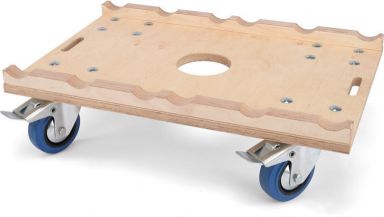
Riggatec Professional Roller Board, 450 kg Load Capacity
€75.00
*
 Express delivery possible
Availability:
Delivery time: 1-3 days
Delivery time: 1-3 days

Riggatec Multiplex Dolly for 2-, 3-, and 4 point 290mm trusses
€99.00
*
€89.00
*
Availability:
Delivery time: 1-3 days
Delivery time: 1-3 days

Riggatec Multiplex Dolly for 2-, 3-, and 4 point 220mm trusses
€99.00
*
€89.00
*
Availability:
Delivery time: 1-3 days
Delivery time: 1-3 days

Riggatec dolly Multiplex for 2 and 4 point 400 mm trusses, double version
€99.00
*
Availability:
Delivery time: 1-3 days
Delivery time: 1-3 days

Riggatec Plastic Dolly for 2-, 3-, and 4 point trusses with a 290mm truss length
€139.00
*
€129.00
*
Availability:
Delivery time: 1-3 days
Delivery time: 1-3 days

Riggatec Truss Dolly for 3-Point-Trusses 290 mm
€109.00
*
Availability:
Delivery time: 1-3 days
Delivery time: 1-3 days

Admiral Strong Boy dolly with castor brake
€246.15
*
€215.38
*
incl. tax,
plus forwarding agency costs
Availability:
Delivery time: 3-5 days
Delivery time: 3-5 days
Bulky goods

Riggatec Truss Dolly for FD/HD 42/44 single version
€79.00
*
€59.00
*
incl. tax,
plus shipping costs
Availability:
Delivery time: 1-3 days
Delivery time: 1-3 days
32
Articles
No results were found for the filter!
Riggatec Professional Roller Board, 450 kg Load Capacity
Riggatec Professional Roller Board, 450 kg Load Capacity
Riggatec Professional Rolling Board – 450 kg Load Capacity with Locking Brakes The Riggatec Professional Rolling Board is a versatile transport aid for heavy loads up to 450 kg. Whether for...
€75.00
*
Availability:
Delivery time: 1-3 days
Delivery time: 1-3 days
Riggatec Multiplex Dolly for 2-, 3-, and 4 point 290mm trusses
Riggatec Multiplex Dolly for 2-, 3-, and 4 point 290mm trusses
Riggatec Multiplex Cart for 290-mm trusses The Riggatec dolly is designed for transporting 2-, 3-, and 4 point trusses with an outer dimension of 290 mm. When used with the optionally available...
€99.00
*
€89.00
*
Availability:
Delivery time: 1-3 days
Delivery time: 1-3 days
Riggatec Multiplex Dolly for 2-, 3-, and 4 point 220mm trusses
Riggatec Multiplex Dolly for 2-, 3-, and 4 point 220mm trusses
Riggatec Multiplex Cart for 220-mm trusses The Riggatec dolly is designed for transporting 2-, 3-, and 4 point trusses with an outer dimension of 220 mm. When used with the optionally available...
€99.00
*
€89.00
*
Availability:
Delivery time: 1-3 days
Delivery time: 1-3 days
Riggatec Plastic Dolly for 2-, 3-, and 4 point trusses with a 290mm truss length
Riggatec Plastic Dolly for 2-, 3-, and 4 point trusses with a 290mm truss length
Riggatec Plastic Dolly for 290-mm trusses – Load Capacity up to 200 kg The Riggatec dolly is designed for transporting 2-, 3-, and 4 point trusses with an outer dimension of 290 mm. The...
€139.00
*
€129.00
*
Availability:
Delivery time: 1-3 days
Delivery time: 1-3 days
Riggatec Truss Dolly for FD/HD 42/44 single version
Riggatec Truss Dolly for FD/HD 42/44 single version
for 2 and 4-point trusses with 400 mm edge dimension • Material: multiplex wood • carry handles for convenient carrying of the trolley • 4 wheels (100 mm), 2 with brakes • with...
€79.00
*
€59.00
*
incl. tax,
plus shipping costs
Availability:
Delivery time: 1-3 days
Delivery time: 1-3 days
Riggatec dolly Multiplex for 2 and 4 point 400 mm trusses, double version
Riggatec dolly Multiplex for 2 and 4 point 400 mm trusses, double version
for 2 and 4 point trusses with 400 mm edge dimensions • Material: multiplex wood • Carrying recesses for convenient transport of the rollers • 4 castors (100 mm), 2 of which have...
€99.00
*
Availability:
Delivery time: 1-3 days
Delivery time: 1-3 days
Riggatec Truss Dolly for 3-Point-Trusses 290 mm
Riggatec Truss Dolly for 3-Point-Trusses 290 mm
Truss Dolly for particularly compact storage and stacking of 3-Point Trusses 287-290 mm • Material: multiplex wood • in combination with the Riggatec stacking bars and straps the trusses...
€109.00
*
Availability:
Delivery time: 1-3 days
Delivery time: 1-3 days

Bullstage SmartDeck transport trolley
Bullstage SmartDeck transport trolley
Bullstage – your solution for stable stage constructions! The Bullstage SmartDeck Transport Trolley is the perfect solution for the safe and convenient transportation of your SmartDeck stage...
€306.73
*
Availability:
Low stock; Delivery time: 1-3 days
Delivery time: 1-3 days

Bullstage StageBarrier Trolley for straight 1m elements
Bullstage StageBarrier Trolley for straight 1m elements
More security for your events! With their focus on safety, Bullstage StageBarrier is essential for every concert or festival where secure areas must be guaranteed. Whether as protection at the...
€1,995.00
*
incl. tax,
plus forwarding agency costs
Availability:
Delivery time: approx. 2-3 weeks
Delivery time: approx. 2-3 weeks
Bulky goods

Bullstage StageBarrier trolley for angular elements
Bullstage StageBarrier trolley for angular elements
More security for your events! With their focus on safety, Bull StageBarrier are essential for any concert or festival where secure areas must be guaranteed. Whether as protection at the front of...
€2,089.00
*
incl. tax,
plus forwarding agency costs
Availability:
Delivery time: approx. 2-3 weeks
Delivery time: approx. 2-3 weeks
Bulky goods

Gravity CART M 01 B - Multifunctional Trolley (Medium)
Gravity CART M 01 B - Multifunctional Trolley (Medium)
Multifunctional Trolley (Medium) 8 in 1 Configuration • Ergonomic design for easy handling • Compact dimensions (670 x 405 x 805 mm) • Easily extends to 0.98 m length • Load...
€103.30
*
Availability:
Near-term available
Delivery time: approx. 1 week
Delivery time: approx. 1 week
Delivery time: approx. 1 week

ROADINGER Stage Donkey XL Transport Cart
ROADINGER Stage Donkey XL Transport Cart
Versatile multifunction transport cart for loads up to 150 kgThe ROADINGER Stage Donkey XL is the perfect companion for your audio systems, guitars, DJ equipment and much more. It is the ideal...
€107.66
*
Availability:
Delivery time: 3-5 days
Delivery time: 3-5 days

Admiral Strong Boy dolly frame
Admiral Strong Boy dolly frame
Our “Strong boy” is a strong cart! Suitable for both 30 and 40 truss, the Strong Boy is the perfect solution for transporting straight truss securely and effortlessly. The cart has a...
€192.17
*
Availability:
Delivery time: 3-5 days
Delivery time: 3-5 days
Admiral Strong Boy dolly with castor brake
Admiral Strong Boy dolly with castor brake
Our “Strong boy” is a strong cart! Suitable for both 30 and 40 truss, the Strong Boy is the perfect solution for transporting straight truss securely and effortlessly. The cart has a...
€246.15
*
€215.38
*
incl. tax,
plus forwarding agency costs
Availability:
Delivery time: 3-5 days
Delivery time: 3-5 days
Bulky goods

Admiral Dolly Strong Boy mini frame
Admiral Dolly Strong Boy mini frame
This lighter and smaller version of the Strong boy will come in handy in many situations. When loading the Strong Boy with truss, use it together with its mini version so you can ride the loaded...
€118.73
*
Availability:
Delivery time: 3-5 days
Delivery time: 3-5 days

Admiral Dolly Strong Boy mini with castor brake
Admiral Dolly Strong Boy mini with castor brake
This lighter and smaller version of the Strong boy will come in handy in many situations. When loading the Strong Boy with truss, use it together with its mini version so you can ride the loaded...
€207.38
*
Availability:
Delivery time: 3-5 days
Delivery time: 3-5 days

Admiral Stage deck dolly 1 mtr assembled 4x castor brake
Admiral Stage deck dolly 1 mtr assembled 4x castor brake
Cost-effective and a time saver, our Stagedeck dolly allows you to efficiently transport up to 6 stage decks at once. Due to its ergonomic design, the stage elements can be easily slid into place,...
€699.00
*
incl. tax,
plus forwarding agency costs
Availability:
Low stock; Delivery time: 3-5 days
Delivery time: 3-5 days
Bulky goods

Admiral Stage deck dolly 1 mtr unassembled 4x castor brake
Admiral Stage deck dolly 1 mtr unassembled 4x castor brake
Cost-effective and a time saver, our Stagedeck dolly allows you to efficiently transport up to 6 stage decks at once. Due to its ergonomic design, the stage elements can be easily slid into place,...
€623.60
*
incl. tax,
plus forwarding agency costs
Availability:
Delivery time: 3-5 days
Delivery time: 3-5 days
Bulky goods

Admiral Stage deck dolly 2 mtr unassembled 4x castor brake
Admiral Stage deck dolly 2 mtr unassembled 4x castor brake
Cost-effective and a time saver, our Stagedeck dolly allows you to efficiently transport up to 6 stage decks at once. Due to its ergonomic design, the stage elements can be easily slid into place,...
€681.82
*
incl. tax,
plus forwarding agency costs
Availability:
Delivery time: 1-3 days
Delivery time: 1-3 days
Bulky goods

Admiral Baseplate dolly frame 73 w. boltset
Admiral Baseplate dolly frame 73 w. boltset
To build a Baseplate dolly that fits the dimensions of your baseplates you have to choose a frame. This frame has the following dimensions: -Length: 77 cm -Width: 59 cm The frame has pre-drilled...
€148.79
*
Availability:
Delivery time: 3-5 days
Delivery time: 3-5 days

Admiral Baseplate dolly frame 80 w. boltset
Admiral Baseplate dolly frame 80 w. boltset
To build a Baseplate dolly that fits the dimensions of your baseplates you have to choose a frame. This frame has the following dimensions: - Length: 84 cm -Width: 59 cm This frame has pre-drilled...
€163.57
*
€98.87
*
Availability:
Delivery time: 1-3 days
Delivery time: 1-3 days

Admiral Baseplate dolly frame 100 w. boltset
Admiral Baseplate dolly frame 100 w. boltset
To build a Baseplate dolly that fits the dimensions of your baseplates you have to choose a frame. This frame has the following dimensions: -Length: 104 cm -Width: 59 cm This frame has pre-drilled...
€170.55
*
Availability:
Delivery time: 3-5 days
Delivery time: 3-5 days

Admiral Boltset dolly Strong Boy (mini) (castor 100/125mm)
Admiral Boltset dolly Strong Boy (mini) (castor 100/125mm)
To help you assemble your own transporter Admiral Staging offers a multitude of individual components to help you build the exact type of cart you want. This boltset is used for assembling the...
€9.20
*
incl. tax,
plus shipping costs
Availability:
Delivery time: 3-5 days
Delivery time: 3-5 days

Admiral Boltset for dolly Strong Girl (castor 100/125mm)
Admiral Boltset for dolly Strong Girl (castor 100/125mm)
To help you assemble your own transporter Admiral Staging offers a multitude of individual components to help you build the exact type of cart you want. This boltset is used for assembling the...
€10.01
*
incl. tax,
plus shipping costs
Availability:
Delivery time: 3-5 days
Delivery time: 3-5 days