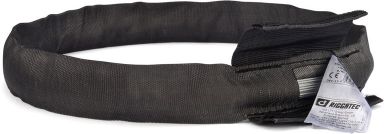

Lifting tackle

Lifting Slings for Professional Event Technology at a Glance: Lifting slings, known in German as Anschlagmittel , are the essential link between the hoisting device and your load — and at LTT they are engineered for the exacting demands of stage, rigging and event technology. Whether you fly truss systems, suspend line arrays or rig moving heads overhead, you need certified round slings, steel wire ropes, chains and shackles that keep every element safely in place. As your specialist for event technology,...
Read more »
Lifting tackle
Close window
Lifting tackle

Lifting Slings for Professional Event Technology at a Glance

Lifting slings, known in German as Anschlagmittel, are the essential link between the hoisting device and your load — and at LTT they are engineered for the exacting demands of stage, rigging and event technology. Whether you fly truss systems, suspend line arrays or rig moving heads overhead, you need certified round slings, steel wire ropes, chains and shackles that keep every element safely in place.

As your specialist for event technology, LTT combines more than 25 years of hands-on experience with its own manufacturing in Germany. That means you get lifting slings that match Naxpro-Truss and Riggatec load points precisely — with fast delivery, expert advice and full compliance with DGUV Vorschrift 17 (formerly BGV C1).

From a single steel safety rope to a complete rigging kit, LTT helps you achieve impressive, safe results on every show.

What Are Lifting Slings and How Do They Differ from Load-Handling Attachments?

A lifting sling (Anschlagmittel) is a device that creates the connection between the hoisting device — typically a crane hook, chain hoist or truss load point — and the load itself. In German trade language lifting slings are also called Gehänge. Crucially, lifting slings are not part of the hoisting device; they are removable, individually certified components that carry the load in the force flow.

Distinction from load-handling attachments

Many users confuse lifting slings with load-handling attachments (Lastaufnahmemittel). The difference lies in their function within the lifting process:

  • Load-handling attachments take up the load directly and transfer its weight to the hoisting device — for example a lifting beam, a spreader or a fork carriage.
  • Lifting slings connect the load to the tackle of the crane or hoist — round slings, steel wire ropes, chains, webbing slings, shackles and connecting components.

Every lifting sling must carry a permanent, legible marking of its maximum working load limit (WLL). Components manufactured to DIN EN 818 are marked with nominal size and grade class instead. In event technology this distinction matters enormously: a steel safety rope securing a moving head overhead is a lifting sling, while the truss adapter carrying the fixture is a load-handling attachment. Choosing and certifying each correctly is fundamental to safe rigging.

Types and Variants of Lifting Slings: Chains, Steel Ropes, Round Slings and Webbing

The right lifting sling depends on load weight, surface sensitivity, environment and the hoisting device. LTT stocks the full range of types and variants used in professional rigging and event technology.

Round slings (polyester, endless)

Round slings are made from an endless bundle of high-tenacity polyester fibres inside a protective cover. They are extremely flexible, lightweight and gentle on surfaces — ideal for suspending painted truss, delicate scenic elements or sensitive equipment. Colour coding to EN 1492 identifies the WLL at a glance and reduces the risk of mix-ups.

Lifting straps / webbing slings

Webbing slings are flat woven polyester straps with reinforced eyes. They combine low weight with easy handling and are well suited to short, flexible lifts and everyday stage tasks.

Steel wire ropes

Steel wire ropes with pressed eyes or thimbles offer high load capacity, abrasion resistance and durability. In event technology, short steel safety ropes (Sicherungsseile) are indispensable for securing textile slings and fixtures rigged overhead.

Lifting chains (grade classes)

Round steel chains are robust, temperature-resistant and built for rough environments. Load capacity depends directly on the grade class (e.g. grade 8, grade 10). Single-leg and multi-leg chain assemblies cover a wide range of loads.

Shackles and connecting components

Shackles, master links and connecting links sit in the force flow and must be dimensioned to match the load. They join slings to truss load points, hoists and anchor points reliably.

Anchor points / eye bolts

Weld-on and screw-in anchor points and eye bolts provide fixed, certified attachment locations on structures and load-bearing elements.

Comparison of Round Slings, Steel Ropes and Chains for Event Rigging

For stage and rigging work the decisive factors are weight, flexibility, surface protection and environment. The comparison table below helps you choose the optimal lifting sling for your application.

Criterion Round sling (polyester) Steel wire rope Lifting chain
Typical use in events Flying painted truss, sensitive loads Steel safety ropes, overhead securing Rough environments, heavy point loads
Weight Very low Medium High
Flexibility Very high Medium Low to medium
Surface protection Excellent (soft cover) Low (needs edge protection) Low
Sharp-edge sensitivity High – requires edge protection Medium Low
Temperature resistance Limited Good Very good
WLL identification Colour code (EN 1492) Marked / rated tag Grade class + rating tag
BGV C1 relevance Max 1/12 of breaking force Required as safety rope overhead Max 0.5 × rated WLL

For most event applications round slings deliver the best balance of low weight and surface protection, while steel wire ropes are mandatory as safety ropes for overhead textile slings. Chains remain the choice for the heaviest, roughest lifts.

Technical Buying Criteria: Working Load Limit (WLL), Inclination Angle and Load Tables

The most important technical value on any lifting sling is its working load limit (WLL) — the maximum permissible load that must never be exceeded. The WLL depends on the sling type, the number of legs and, for multi-leg configurations, the inclination angle.

Inclination angle explained

When a multi-leg sling forms an angle, the individual legs are loaded more heavily than in a straight vertical pull. The angle between a leg and the vertical is the inclination angle; the wider it opens, the greater the loss of capacity. Modern load tables state WLL as a function of the inclination angle, not the spread angle.

WLL vs. angle vs. number of legs

Configuration 0° (vertical) 0–45° 45–60°
1 leg 100%
2 legs 200% 140% 100%
3/4 legs 400% 210% 150%

The percentages express the multiple of a single-leg WLL. Note the safety rule that for slings with more than two legs, only two legs are considered load-bearing unless even load distribution is verified.

Concrete selection values

When dimensioning, first determine the load weight and centre of gravity, then choose a sling whose WLL exceeds the calculated leg force with reserve. Polyester round slings for stage use commonly range from 1,000 kg to 10,000 kg WLL, while chain assemblies reach far higher figures. Always check the marking and rated tag before every lift.

Lifting Slings for Rigging: Truss Systems, Stages and Safety Ropes

Unlike purely industrial crane lifting, event rigging places textile and steel slings around and above people. This is the core niche of LTT — and it demands lifting slings selected specifically for stage and truss applications.

Matching slings to Naxpro-Truss and load points

LTT is a truss manufacturer, so its lifting slings are chosen to suit the FD, HD and GS truss series and their load points. Naxpro-Truss FD31 and HD31 use a 50 mm main chord (2 mm and 3 mm wall thickness respectively), while the heavy GS94 uses a 60 mm chord with 5 mm wall thickness — each with its own permissible point loads. Round slings, shackles and steel safety ropes must be dimensioned to match these values so that the connection, not the truss, defines the limit.

Steel safety ropes for overhead loads

When textile slings, natural-fibre or synthetic ropes are used to rig portable hoists or lattice girders overhead, DGUV Vorschrift 17 (formerly BGV C1) requires an additional steel safety rope as a backup. This niche-critical accessory catches the load should the primary textile sling fail — an essential item for any rigger flying truss above an audience.

Stage scenarios

From flying a lighting truss over a festival stage to securing a single moving head in a theatre, the right combination of round slings, shackles and safety ropes lets you rig safely and repeatably show after show.

Regulations and Standards: DGUV Vorschrift 17 (BGV C1), EN 818 and EN 13414

Lifting slings for event technology must comply with a clear framework of regulations and standards. Understanding them protects both your crew and your audience.

DGUV Vorschrift 17 (formerly BGV C1)

The accident-prevention regulation for venues and production facilities for scenic performance sets stricter limits than general industry. Two rules are decisive:

  • Ropes and straps may be loaded to a maximum of one twelfth (1/12) of their calculated breaking force.
  • Other lifting slings may be loaded to a maximum of 0.5 times the manufacturer's stated WLL.

It also mandates a steel safety rope whenever portable hoists or lattice girders (truss) are rigged with natural- or synthetic-fibre ropes or straps.

Product and equipment standards

  • DIN EN 818 – round steel lifting chains (marked with nominal size and grade class).
  • DIN EN 13414 – steel wire rope slings.
  • DIN EN 1492 – textile round slings and webbing slings, incl. colour coding.
  • DIN EN 1677 – forged connecting components.

Legal basis and marking

The German Occupational Safety Act (ArbSchG), the Product Safety Act (ProdSG) and the Industrial Safety Regulation (BetrSichV) govern how lifting slings are placed on the market and used. Every sling requires a CE marking, manufacturer marking and WLL rating. Practical guidance is found in DGUV Regel 109-004, 109-005, 109-006 and 109-017.

Inspection, Discard Criteria and Correct Care and Maintenance

Regular inspection and correct care keep your lifting slings safe and extend their service life. Damaged or unmarked slings are one of the most common causes of lifting accidents.

Inspection intervals

  • Visual inspection before every use by the rigger, checking for obvious defects.
  • Annual inspection by a competent person (befähigte Person), documented appropriately, in line with DGUV Regel 109-017.
  • Re-inspection is also required after any repair.

Discard criteria (Ablegereife)

A lifting sling has reached its discard state and must be removed from service when it shows, for example:

  • Cracks, deformation or heavy wear on chains and links.
  • Strand breaks, kinks or corrosion on steel wire ropes.
  • Cuts, abrasion or exposed core fibres on round slings and webbing.
  • Missing manufacturer marking or WLL rating.

Care, maintenance and storage

Store lifting slings dry, well ventilated and protected from weather, UV and aggressive substances. Use edge protection to prevent damage during use. Keep chains clean and lightly protected against corrosion, and keep textile slings free of grit that could abrade the fibres. Consistent care and honest discarding of worn slings are the foundation of safe rigging.

Buying Guide: Choosing the Right Lifting Sling for Event Professionals

This buying guide helps DJs, bands, theatres, event agencies and B2B resellers select the optimal lifting sling for stage and rigging work.

Step by step

  1. Determine load weight and centre of gravity — the starting point for every safe lift.
  2. Assess the environment — rough, hot or dirty conditions favour chains; sensitive surfaces and low weight favour round slings.
  3. Check the hoisting device and load point — match the sling and shackle WLL to your truss series (e.g. Naxpro-Truss FD/HD/GS).
  4. Apply the BGV C1 factors — remember the 1/12 rule for textile slings and add a steel safety rope for overhead rigging.
  5. Add reserve — always dimension above the calculated leg force.

Entry-level vs. professional

Entry-level users rigging light truss occasionally are well served by certified polyester round slings, matching shackles and a steel safety rope. Full-time event professionals and touring crews benefit from a graded inventory of round slings, webbing, steel ropes and chains, all clearly marked and inspection-logged. Whatever your level, LTT offers the right combination and expert advice to help you rig safely and efficiently.

Accessories and Related Categories for Lifting Slings

The right accessories complete your rigging kit and keep every load secure.

Essential accessories

  • Shackles and connecting components to join slings to truss load points and hoists.
  • Steel safety ropes for securing textile slings and fixtures overhead, as required by BGV C1.
  • Edge protection — polyurethane sleeves of at least 5 mm to shield slings from sharp edges (a sharp edge is any radius smaller than the sling diameter or strap thickness).
  • Anchor points and eye bolts as fixed, certified attachment locations.
  • Rating tags and documentation cards to keep inspection records complete.

Related categories

Lifting slings work hand in hand with the wider LTT rigging range. Explore our truss systems for flying lighting and sound, our chain hoists and rigging hardware for lifting and securing loads, and our cases and transport solutions for protecting your equipment on the road. Combining certified lifting slings with matching truss and rigging accessories gives you a coherent, compliant system for professional stage work.

LTT – Your Specialist for Event Technology

As your specialist for event technology, LTT is more than a retailer — it is a manufacturer with its own production in Germany and over 25 years of experience in truss, rigging and show technology. That combination lets you buy lifting slings that are matched precisely to Naxpro-Truss and Riggatec load points, backed by real technical know-how instead of generic industrial advice.

Every order ships from Bocholt, Germany, with free shipping from €69, optional express dispatch and worldwide delivery through our international dealer network. You also benefit from the 3-year LTT warranty, purchase on account and dedicated wholesale conditions for resellers.

With more than 100,000 positive customer reviews, LTT is a reliable partner for riggers, technicians and event professionals alike. Trust LTT to help you rig safely, comply with DGUV Vorschrift 17 and achieve impressive results on every show.

FAQ – Questions & Answers

What are lifting slings (Anschlagmittel)?

Lifting slings (Anschlagmittel) are devices that create the connection between a hoisting device — such as a crane hook, chain hoist or truss load point — and the load. Lifting slings are also called Gehänge in German trade language. They are not part of the hoisting device itself but removable, individually certified components that carry the load in the force flow. Typical lifting slings include round slings, steel wire ropes, lifting chains, webbing slings, shackles and connecting components. Every lifting sling must carry a permanent marking of its working load limit (WLL), which must never be exceeded.

What types of lifting slings are there?

There are four main types of lifting slings, each suited to different loads and environments. Round slings made of endless polyester are flexible, lightweight and gentle on surfaces. Webbing slings are flat woven straps for short, flexible lifts. Steel wire ropes offer high capacity, abrasion resistance and serve as steel safety ropes in rigging. Lifting chains in defined grade classes are robust and temperature-resistant for rough environments. In addition, shackles, master links, anchor points and eye bolts complete the range as connecting and attachment components for safe stage and truss rigging.

What is the difference between load-handling attachments and lifting slings?

The difference between load-handling attachments (Lastaufnahmemittel) and lifting slings (Anschlagmittel) lies in their function within the lifting process. Load-handling attachments take up the load directly and transfer its weight to the hoisting device — examples are lifting beams, spreaders and fork carriages. Lifting slings, by contrast, connect the load to the tackle of the crane or hoist and include round slings, steel ropes, chains and shackles. In event technology, a truss adapter carrying a fixture is a load-handling attachment, while a steel safety rope securing that fixture overhead is a lifting sling.

What is classified as a lifting sling?

Classified as lifting slings are all non-integral devices that connect the load to the hoisting device or connect a load-handling attachment to the tackle. This includes steel wire ropes, round steel chains, webbing slings, round slings (also called Schlupf) and detachable connecting components such as shackles and swivels. Every lifting sling must show its maximum permissible working load limit; components to DIN EN 818 are instead marked with nominal size and grade class. In event technology, steel safety ropes securing overhead loads also count as lifting slings under DGUV Vorschrift 17.

How often must lifting slings be inspected?

Lifting slings must be inspected on two levels. Before every single use, the rigger performs a visual inspection for obvious defects such as cuts, cracks, deformation or strand breaks. In addition, a competent person (befähigte Person) must inspect every lifting sling at least once a year, and this inspection must be documented appropriately in line with DGUV Regel 109-017. Re-inspection is also required after any repair. Any lifting sling showing discard criteria — or lacking a manufacturer marking and WLL rating — must be removed from service immediately.

How is the working load limit (WLL) of lifting slings determined?

The working load limit (WLL) of lifting slings depends on the sling type, the number of legs and the inclination angle. As the inclination angle from the vertical increases, each leg carries more force, so the permissible load decreases. Load tables to DGUV Information 209-021 state the WLL for angle ranges such as 0–45° and 45–60°. For slings with more than two legs, only two legs count as load-bearing unless even load distribution is verified. In event technology, the stricter BGV C1 factors apply: textile slings to 1/12 of breaking force, others to 0.5 times the rated WLL.

Why does event rigging require a steel safety rope?

Event rigging requires a steel safety rope because DGUV Vorschrift 17 (formerly BGV C1) mandates it whenever portable hoists or lattice girders (truss) are rigged overhead using natural- or synthetic-fibre ropes or straps. The steel safety rope acts as an independent backup that catches the load should the primary textile sling fail — protecting the crew and audience below. This niche-critical accessory is largely absent from industrial lifting ranges but is essential for stages and shows. At LTT you can select steel safety ropes dimensioned to suit your fixtures and truss load points.

Which lifting sling suits Naxpro-Truss systems?

The lifting sling that suits a Naxpro-Truss system depends on the series and its permissible point loads. Naxpro-Truss FD31 and HD31 use a 50 mm main chord (2 mm and 3 mm wall thickness respectively), while the heavy GS94 uses a 60 mm chord with 5 mm wall thickness — each with its own load limits. Polyester round slings with matching shackles are the common choice for flying truss, complemented by a steel safety rope for overhead rigging. Always match the sling and shackle WLL to the truss load point so the connection, not the truss, defines the limit. LTT advises you on the right combination.

Categories
236 Articles
Close filters
 
  •  
  •  
  •  
  •  
  •  
  •  
  •  
  •  
  •  
  •  
from to
1 From 10 pages
No results were found for the filter!
Riggatec Spannschloss DIN 1478 M8 galv. verz.
Riggatec Turnbuckle DIN 1478 M8
Turnbuckle Jaw/Jaw with Counter nut Version: Electrolytically galvanised • Thread: M8 • Adjustability: 85 • Nut x Bolt: M6 x 35,0 • Bearing capacity: 0,25 t...
€14.90 *
incl. tax, plus shipping costs
Availability:
Delivery time: 1-3 days
Riggatec hochfeste Schäkel 1/4" 0,5 t feuerverzinkt
Riggatec high-strength Shackle 1/4" 0,500 t galvanized
H-shape • With hexagonal-head-pin • Nut and cotter pin • 6 time safety • Material: Steel • Version: Bow galvanized, pin lacquered • Nominal Size: 1/4"...
€1.49 *
incl. tax, plus shipping costs
Availability:
Delivery time: 1-3 days
Riggatec Schnellverbindungsglied 4 mm DIN 56926 verz. Form B
Riggatec Quick-Connect Link, 4 mm, DIN 56927, Galvanized, Type B
Quick-connect coupling Material: Steel • Finish: Electrogalvanized • From: Form B, large opening • Breaking strength: 900 daN • Torque for type: 0.7 Nm • DIN 56927...
€0.99 *
Scale prices: from €0.81
incl. tax, plus shipping costs
Availability:
Delivery time: 1-3 days
Riggatec Spannschloss DIN 1478 M10 galv. verz.
Riggatec Turnbuckle DIN 1478 M10
Turnbuckle Jaw/Jaw with Counter nut Version: Electrolytically galvanised • Thread: M10 • Adjustability: 90 mm • Nut x Bolt: M8 x 40,0 mm • Bearing capacity: 0,30 t...
€18.90 *
incl. tax, plus shipping costs
Availability:
Low stock; Delivery time: 1-3 days
Delivery time: 1-3 days
Riggatec Rundschlinge Schwarz Traglast:1,1t, Nutzlänge:0,5 m -Umfang:1,0 m
Riggatec Round Sling black 1,1t, working length: 0.5 m - perimeter: 1,0 m
Riggatec's double-woven round slings made of high-performance polyester fibers are certified according to DIN EN 1492-2. Their high-quality workmanship and high load-bearing capacity (with...
€4.99 * €3.99 *
incl. tax, plus shipping costs
Availability:
Delivery time: 1-3 days
Riggatec Trägerklammer M12  Flange Clamp
Riggatec M12 Flange Clamp
The Riggatec flange clamp with threaded socket is ideal for easy attachment by clamping to steel girders. For VdS-Systems securing tags are required from DN 65. The hollow ground of the...
€8.90 *
incl. tax, plus shipping costs
Availability:
Delivery time: 1-3 days
Riggatec Schnellverbindungsglied 5 mm DIN 56926 verz. Form B
Riggatec Quick-Connect Link, 5 mm, DIN 56927, Galvanized, Type B
Quick-connect coupling Material: Steel • Finish: Electrogalvanized • From: Form B, large opening • Breaking strength: 1400 daN • Torque for type: 0.8 Nm • DIN 56927...
€1.09 *
Scale prices: from €0.89
incl. tax, plus shipping costs
Availability:
Delivery time: 1-3 days
Riggatec Rundschlinge Schwarz Traglast:2,1t, Nutzlänge:0,5 m -Umfang:1,0 m
Riggatec Round Sling black, 2,1t, working length: 0,5 m - perimeter: 1,0 m
Riggatec's double-woven round slings made of high-performance polyester fibers are certified according to DIN EN 1492-2. Their high-quality workmanship and high load-bearing capacity (with...
€5.99 * €5.49 *
incl. tax, plus shipping costs
Availability:
Delivery time: 1-3 days
Riggatec hochfeste Schäkel 5/16" 0,75 t feuerverzinkt
Riggatec high-strength Shackle 5/16" 0,750 t galvanized
H-shape • With hexagonal-head-pin • Nut and cotter pin • 6 time safety • Material: Steel • Version: Bow galvanized, pin lacquered • Nominal Size: 5/16"...
€1.90 *
incl. tax, plus shipping costs
Availability:
Delivery time: 1-3 days
Riggatec Schnellverbindungsglied 6 mm DIN 56926 verz. Form B
Riggatec Quick-Connect Link, 6 mm, DIN 56927, Galvanized, Type B
Quick-connect coupling Material: Steel • Finish: Electrogalvanized • From: Form B, large opening • Breaking strength: 2000 daN • Torque for type: 1.2 Nm • DIN 56927...
€1.19 *
Scale prices: from €0.97
incl. tax, plus shipping costs
Availability:
Delivery time: 1-3 days
Riggatec Rundschlinge Steelflex Schwarz 1t, Nutzlänge:0,5 m - Umfang:1,0 m
Riggatec Round Sling Steelflex, 1t, working length: 0.5m - perimeter: 1,0m
Riggatec Round Sling Steelflex The Riggatec Steelflex cinsisting of high-performance polyester fibres and galvanized steel cable inserts are manufactured in accordance with DIN EN 1492-2, 13414-1...
€15.99 * €12.90 *
incl. tax, plus shipping costs
Availability:
Delivery time: 1-3 days
Riggatec Spannschloss DIN 1478 M12 galv. verz.
Riggatec Turnbuckle DIN 1478 M12
Turnbuckle Jaw/Jaw with Counter nut Version: Electrolytically galvanised • Thread: M12 • Adjustability: 90 mm • Nut x Bolt: M10 x 45,0 mm • Bearing capacity: 0,60 t...
€23.90 *
incl. tax, plus shipping costs
Availability:
Delivery time: 1-3 days
Riggatec Trägerklammer M10 Flange Clamp
Riggatec M10 Flange Clamp
The Riggatec flange clamp with threaded socket is ideal for easy attachment by clamping to steel girders. For VdS-Systems securing tags are required from DN 65. The hollow ground of the...
€7.90 *
incl. tax, plus shipping costs
Availability:
Delivery time: 1-3 days
Riggatec hochfeste Schäkel 3/8" 1,0 t feuerverzinkt
Riggatec high-strength Shackle 3/8" 1,0 t galvanized
H-shape • With hexagonal-head-pin • Nut and cotter pin • 6 time safety • Material: Steel • Version: Bow galvanized, pin lacquered • Nominal Size: 3/8"...
€2.50 *
incl. tax, plus shipping costs
Availability:
Delivery time: 1-3 days
Riggatec Rundschlinge Steelflex Schwarz 2t. Nutzlänge:0,5 m - Umfang:1,0 m
Riggatec Round Sling Steelflex, 2t, working length: 0.5m - perimeter: 1,0m
Riggatec Round Sling Steelflex The Riggatec Steelflex cinsisting of high-performance polyester fibres and galvanized steel cable inserts are manufactured in accordance with DIN EN 1492-2, 13414-1...
€21.99 * €19.49 *
incl. tax, plus shipping costs
Availability:
Delivery time: 1-3 days
Riggatec hochfeste Schäkel 7/16" 1,5 t feuerverzinkt
Riggatec high-strength Shackle 7/16" 1,5 t galvanized
H-shape • With hexagonal-head-pin • Nut and cotter pin • 6 time safety • Material: Steel • Version: Bow galvanized, pin lacquered • Nominal Size: 7/16"...
€2.90 *
incl. tax, plus shipping costs
Availability:
Delivery time: 1-3 days
Riggatec hochfeste Schäkel 1/2" 2,0 t feuerverzinkt
Riggatec high-strength Shackle 1/2" 2,0 t galvanized
H-shape • With hexagonal-head-pin • Nut and cotter pin • 6 time safety • Material: Steel • Version: Bow galvanized, pin lacquered • Nominal Size: 1/2"...
€3.90 *
incl. tax, plus shipping costs
Availability:
Delivery time: 1-3 days
Riggatec hochfeste Schäkel 5/8" 3,25 t feuerverzinkt
Riggatec high-strength Shackle 5/8" 3,25 t galvanized
H-shape • With hexagonal-head-pin • Nut and cotter pin • 6 time safety • Material: Steel • Version: Bow galvanized, pin lacquered • Nominal Size: 5/8"...
€6.90 *
incl. tax, plus shipping costs
Availability:
Delivery time: 1-3 days
Riggatec Schnellverbindungsglied 7 mm DIN 56926 verz. Form B
Riggatec Quick-Connect Link, 7 mm, DIN 56927, Galvanized, Type B
Quick-connect coupling Material: Steel • Finish: Electrogalvanized • From: Form B, large opening • Breaking strength: 2750 daN • Torque for type: 2.5 Nm • DIN 56927...
€1.70 *
incl. tax, plus shipping costs
Availability:
Delivery time: 1-3 days
Riggatec Rundschlinge Schwarz Traglast:1,1t, Nutzlänge:1,0 m -Umfang:2,0 m
Riggatec Round Sling black,1,1t, working length: 1.0 m - perimeter: 2,0 m
Riggatec's double-woven round slings made of high-performance polyester fibers are certified according to DIN EN 1492-2. Their high-quality workmanship and high load-bearing capacity (with...
€5.49 * €4.49 *
incl. tax, plus shipping costs
Availability:
Delivery time: 1-3 days
Riggatec Spannschloss DIN 1478 M16 galv. verz.
Riggatec Turnbuckle DIN 1478 M16
Turnbuckle Jaw/Jaw with Counter nut Version: Electrolytically galvanised • Thread: M16 • Adjustability: 125 mm • Nut x Bolt: M16 x 61,5 mm • Bearing capacity: 1,5 t...
€29.90 *
incl. tax, plus shipping costs
Availability:
Delivery time: 1-3 days
Riggatec Trägerklammer 1t, Beam Clamp Schwarz - 75 - 230 mm
Riggatec Beam Clamp Black 1t - 75 - 230 mm
Riggatec beam clamp The Riggatec beam clamp is used for the safe, quick and easy creation of an anchor point for holding loads and lifting gear. Ideal as a quick solution for urgent work and...
€59.00 *
incl. tax, plus shipping costs
Availability:
Delivery time: 1-3 days
Riggatec Schnellverbindungsglied 8 mm DIN 56926 verz. Form B
Riggatec Quick-Connect Link, 8 mm, DIN 56927, Galvanized, Type B
Quick-connect coupling Material: Steel • Finish: Electrogalvanized • From: Form B, large opening • Breaking strength: 3500 daN • Torque for type: 3.0 Nm • DIN 56927...
€1.59 *
incl. tax, plus shipping costs
Availability:
Delivery time: 1-3 days
Riggatec Rundschlinge Schwarz Traglast:2,1t, Nutzlänge:1,0 m -Umfang:2,0 m
Riggatec Round Sling black, 2,1t, working length: 1,0 m - perimeter: 2,0 m
Riggatec's double-woven round slings made of high-performance polyester fibers are certified according to DIN EN 1492-2. Their high-quality workmanship and high load-bearing capacity (with...
€6.99 * €5.99 *
incl. tax, plus shipping costs
Availability:
Delivery time: 1-3 days
1 From 10 pages
Facts
Lifting Slings for Professional Event Technology at a Glance: Lifting slings, known in German as Anschlagmittel , are the essential link between the hoisting device and your load — and at LTT they are engineered for the exacting demands of stage, rigging and event technology. Whether you fly truss systems, suspend line arrays or rig moving heads overhead, you need certified round slings, steel wire ropes, chains and shackles that keep... Read more »
Viewed
Facts

Lifting Slings for Professional Event Technology at a Glance

Lifting slings, known in German as Anschlagmittel, are the essential link between the hoisting device and your load — and at LTT they are engineered for the exacting demands of stage, rigging and event technology. Whether you fly truss systems, suspend line arrays or rig moving heads overhead, you need certified round slings, steel wire ropes, chains and shackles that keep every element safely in place.

As your specialist for event technology, LTT combines more than 25 years of hands-on experience with its own manufacturing in Germany. That means you get lifting slings that match Naxpro-Truss and Riggatec load points precisely — with fast delivery, expert advice and full compliance with DGUV Vorschrift 17 (formerly BGV C1).

From a single steel safety rope to a complete rigging kit, LTT helps you achieve impressive, safe results on every show.

What Are Lifting Slings and How Do They Differ from Load-Handling Attachments?

A lifting sling (Anschlagmittel) is a device that creates the connection between the hoisting device — typically a crane hook, chain hoist or truss load point — and the load itself. In German trade language lifting slings are also called Gehänge. Crucially, lifting slings are not part of the hoisting device; they are removable, individually certified components that carry the load in the force flow.

Distinction from load-handling attachments

Many users confuse lifting slings with load-handling attachments (Lastaufnahmemittel). The difference lies in their function within the lifting process:

  • Load-handling attachments take up the load directly and transfer its weight to the hoisting device — for example a lifting beam, a spreader or a fork carriage.
  • Lifting slings connect the load to the tackle of the crane or hoist — round slings, steel wire ropes, chains, webbing slings, shackles and connecting components.

Every lifting sling must carry a permanent, legible marking of its maximum working load limit (WLL). Components manufactured to DIN EN 818 are marked with nominal size and grade class instead. In event technology this distinction matters enormously: a steel safety rope securing a moving head overhead is a lifting sling, while the truss adapter carrying the fixture is a load-handling attachment. Choosing and certifying each correctly is fundamental to safe rigging.

Types and Variants of Lifting Slings: Chains, Steel Ropes, Round Slings and Webbing

The right lifting sling depends on load weight, surface sensitivity, environment and the hoisting device. LTT stocks the full range of types and variants used in professional rigging and event technology.

Round slings (polyester, endless)

Round slings are made from an endless bundle of high-tenacity polyester fibres inside a protective cover. They are extremely flexible, lightweight and gentle on surfaces — ideal for suspending painted truss, delicate scenic elements or sensitive equipment. Colour coding to EN 1492 identifies the WLL at a glance and reduces the risk of mix-ups.

Lifting straps / webbing slings

Webbing slings are flat woven polyester straps with reinforced eyes. They combine low weight with easy handling and are well suited to short, flexible lifts and everyday stage tasks.

Steel wire ropes

Steel wire ropes with pressed eyes or thimbles offer high load capacity, abrasion resistance and durability. In event technology, short steel safety ropes (Sicherungsseile) are indispensable for securing textile slings and fixtures rigged overhead.

Lifting chains (grade classes)

Round steel chains are robust, temperature-resistant and built for rough environments. Load capacity depends directly on the grade class (e.g. grade 8, grade 10). Single-leg and multi-leg chain assemblies cover a wide range of loads.

Shackles and connecting components

Shackles, master links and connecting links sit in the force flow and must be dimensioned to match the load. They join slings to truss load points, hoists and anchor points reliably.

Anchor points / eye bolts

Weld-on and screw-in anchor points and eye bolts provide fixed, certified attachment locations on structures and load-bearing elements.

Comparison of Round Slings, Steel Ropes and Chains for Event Rigging

For stage and rigging work the decisive factors are weight, flexibility, surface protection and environment. The comparison table below helps you choose the optimal lifting sling for your application.

Criterion Round sling (polyester) Steel wire rope Lifting chain
Typical use in events Flying painted truss, sensitive loads Steel safety ropes, overhead securing Rough environments, heavy point loads
Weight Very low Medium High
Flexibility Very high Medium Low to medium
Surface protection Excellent (soft cover) Low (needs edge protection) Low
Sharp-edge sensitivity High – requires edge protection Medium Low
Temperature resistance Limited Good Very good
WLL identification Colour code (EN 1492) Marked / rated tag Grade class + rating tag
BGV C1 relevance Max 1/12 of breaking force Required as safety rope overhead Max 0.5 × rated WLL

For most event applications round slings deliver the best balance of low weight and surface protection, while steel wire ropes are mandatory as safety ropes for overhead textile slings. Chains remain the choice for the heaviest, roughest lifts.

Technical Buying Criteria: Working Load Limit (WLL), Inclination Angle and Load Tables

The most important technical value on any lifting sling is its working load limit (WLL) — the maximum permissible load that must never be exceeded. The WLL depends on the sling type, the number of legs and, for multi-leg configurations, the inclination angle.

Inclination angle explained

When a multi-leg sling forms an angle, the individual legs are loaded more heavily than in a straight vertical pull. The angle between a leg and the vertical is the inclination angle; the wider it opens, the greater the loss of capacity. Modern load tables state WLL as a function of the inclination angle, not the spread angle.

WLL vs. angle vs. number of legs

Configuration 0° (vertical) 0–45° 45–60°
1 leg 100%
2 legs 200% 140% 100%
3/4 legs 400% 210% 150%

The percentages express the multiple of a single-leg WLL. Note the safety rule that for slings with more than two legs, only two legs are considered load-bearing unless even load distribution is verified.

Concrete selection values

When dimensioning, first determine the load weight and centre of gravity, then choose a sling whose WLL exceeds the calculated leg force with reserve. Polyester round slings for stage use commonly range from 1,000 kg to 10,000 kg WLL, while chain assemblies reach far higher figures. Always check the marking and rated tag before every lift.

Lifting Slings for Rigging: Truss Systems, Stages and Safety Ropes

Unlike purely industrial crane lifting, event rigging places textile and steel slings around and above people. This is the core niche of LTT — and it demands lifting slings selected specifically for stage and truss applications.

Matching slings to Naxpro-Truss and load points

LTT is a truss manufacturer, so its lifting slings are chosen to suit the FD, HD and GS truss series and their load points. Naxpro-Truss FD31 and HD31 use a 50 mm main chord (2 mm and 3 mm wall thickness respectively), while the heavy GS94 uses a 60 mm chord with 5 mm wall thickness — each with its own permissible point loads. Round slings, shackles and steel safety ropes must be dimensioned to match these values so that the connection, not the truss, defines the limit.

Steel safety ropes for overhead loads

When textile slings, natural-fibre or synthetic ropes are used to rig portable hoists or lattice girders overhead, DGUV Vorschrift 17 (formerly BGV C1) requires an additional steel safety rope as a backup. This niche-critical accessory catches the load should the primary textile sling fail — an essential item for any rigger flying truss above an audience.

Stage scenarios

From flying a lighting truss over a festival stage to securing a single moving head in a theatre, the right combination of round slings, shackles and safety ropes lets you rig safely and repeatably show after show.

Regulations and Standards: DGUV Vorschrift 17 (BGV C1), EN 818 and EN 13414

Lifting slings for event technology must comply with a clear framework of regulations and standards. Understanding them protects both your crew and your audience.

DGUV Vorschrift 17 (formerly BGV C1)

The accident-prevention regulation for venues and production facilities for scenic performance sets stricter limits than general industry. Two rules are decisive:

  • Ropes and straps may be loaded to a maximum of one twelfth (1/12) of their calculated breaking force.
  • Other lifting slings may be loaded to a maximum of 0.5 times the manufacturer's stated WLL.

It also mandates a steel safety rope whenever portable hoists or lattice girders (truss) are rigged with natural- or synthetic-fibre ropes or straps.

Product and equipment standards

  • DIN EN 818 – round steel lifting chains (marked with nominal size and grade class).
  • DIN EN 13414 – steel wire rope slings.
  • DIN EN 1492 – textile round slings and webbing slings, incl. colour coding.
  • DIN EN 1677 – forged connecting components.

Legal basis and marking

The German Occupational Safety Act (ArbSchG), the Product Safety Act (ProdSG) and the Industrial Safety Regulation (BetrSichV) govern how lifting slings are placed on the market and used. Every sling requires a CE marking, manufacturer marking and WLL rating. Practical guidance is found in DGUV Regel 109-004, 109-005, 109-006 and 109-017.

Inspection, Discard Criteria and Correct Care and Maintenance

Regular inspection and correct care keep your lifting slings safe and extend their service life. Damaged or unmarked slings are one of the most common causes of lifting accidents.

Inspection intervals

  • Visual inspection before every use by the rigger, checking for obvious defects.
  • Annual inspection by a competent person (befähigte Person), documented appropriately, in line with DGUV Regel 109-017.
  • Re-inspection is also required after any repair.

Discard criteria (Ablegereife)

A lifting sling has reached its discard state and must be removed from service when it shows, for example:

  • Cracks, deformation or heavy wear on chains and links.
  • Strand breaks, kinks or corrosion on steel wire ropes.
  • Cuts, abrasion or exposed core fibres on round slings and webbing.
  • Missing manufacturer marking or WLL rating.

Care, maintenance and storage

Store lifting slings dry, well ventilated and protected from weather, UV and aggressive substances. Use edge protection to prevent damage during use. Keep chains clean and lightly protected against corrosion, and keep textile slings free of grit that could abrade the fibres. Consistent care and honest discarding of worn slings are the foundation of safe rigging.

Buying Guide: Choosing the Right Lifting Sling for Event Professionals

This buying guide helps DJs, bands, theatres, event agencies and B2B resellers select the optimal lifting sling for stage and rigging work.

Step by step

  1. Determine load weight and centre of gravity — the starting point for every safe lift.
  2. Assess the environment — rough, hot or dirty conditions favour chains; sensitive surfaces and low weight favour round slings.
  3. Check the hoisting device and load point — match the sling and shackle WLL to your truss series (e.g. Naxpro-Truss FD/HD/GS).
  4. Apply the BGV C1 factors — remember the 1/12 rule for textile slings and add a steel safety rope for overhead rigging.
  5. Add reserve — always dimension above the calculated leg force.

Entry-level vs. professional

Entry-level users rigging light truss occasionally are well served by certified polyester round slings, matching shackles and a steel safety rope. Full-time event professionals and touring crews benefit from a graded inventory of round slings, webbing, steel ropes and chains, all clearly marked and inspection-logged. Whatever your level, LTT offers the right combination and expert advice to help you rig safely and efficiently.

Accessories and Related Categories for Lifting Slings

The right accessories complete your rigging kit and keep every load secure.

Essential accessories

  • Shackles and connecting components to join slings to truss load points and hoists.
  • Steel safety ropes for securing textile slings and fixtures overhead, as required by BGV C1.
  • Edge protection — polyurethane sleeves of at least 5 mm to shield slings from sharp edges (a sharp edge is any radius smaller than the sling diameter or strap thickness).
  • Anchor points and eye bolts as fixed, certified attachment locations.
  • Rating tags and documentation cards to keep inspection records complete.

Related categories

Lifting slings work hand in hand with the wider LTT rigging range. Explore our truss systems for flying lighting and sound, our chain hoists and rigging hardware for lifting and securing loads, and our cases and transport solutions for protecting your equipment on the road. Combining certified lifting slings with matching truss and rigging accessories gives you a coherent, compliant system for professional stage work.

LTT – Your Specialist for Event Technology

As your specialist for event technology, LTT is more than a retailer — it is a manufacturer with its own production in Germany and over 25 years of experience in truss, rigging and show technology. That combination lets you buy lifting slings that are matched precisely to Naxpro-Truss and Riggatec load points, backed by real technical know-how instead of generic industrial advice.

Every order ships from Bocholt, Germany, with free shipping from €69, optional express dispatch and worldwide delivery through our international dealer network. You also benefit from the 3-year LTT warranty, purchase on account and dedicated wholesale conditions for resellers.

With more than 100,000 positive customer reviews, LTT is a reliable partner for riggers, technicians and event professionals alike. Trust LTT to help you rig safely, comply with DGUV Vorschrift 17 and achieve impressive results on every show.

FAQ – Questions & Answers

What are lifting slings (Anschlagmittel)?

Lifting slings (Anschlagmittel) are devices that create the connection between a hoisting device — such as a crane hook, chain hoist or truss load point — and the load. Lifting slings are also called Gehänge in German trade language. They are not part of the hoisting device itself but removable, individually certified components that carry the load in the force flow. Typical lifting slings include round slings, steel wire ropes, lifting chains, webbing slings, shackles and connecting components. Every lifting sling must carry a permanent marking of its working load limit (WLL), which must never be exceeded.

What types of lifting slings are there?

There are four main types of lifting slings, each suited to different loads and environments. Round slings made of endless polyester are flexible, lightweight and gentle on surfaces. Webbing slings are flat woven straps for short, flexible lifts. Steel wire ropes offer high capacity, abrasion resistance and serve as steel safety ropes in rigging. Lifting chains in defined grade classes are robust and temperature-resistant for rough environments. In addition, shackles, master links, anchor points and eye bolts complete the range as connecting and attachment components for safe stage and truss rigging.

What is the difference between load-handling attachments and lifting slings?

The difference between load-handling attachments (Lastaufnahmemittel) and lifting slings (Anschlagmittel) lies in their function within the lifting process. Load-handling attachments take up the load directly and transfer its weight to the hoisting device — examples are lifting beams, spreaders and fork carriages. Lifting slings, by contrast, connect the load to the tackle of the crane or hoist and include round slings, steel ropes, chains and shackles. In event technology, a truss adapter carrying a fixture is a load-handling attachment, while a steel safety rope securing that fixture overhead is a lifting sling.

What is classified as a lifting sling?

Classified as lifting slings are all non-integral devices that connect the load to the hoisting device or connect a load-handling attachment to the tackle. This includes steel wire ropes, round steel chains, webbing slings, round slings (also called Schlupf) and detachable connecting components such as shackles and swivels. Every lifting sling must show its maximum permissible working load limit; components to DIN EN 818 are instead marked with nominal size and grade class. In event technology, steel safety ropes securing overhead loads also count as lifting slings under DGUV Vorschrift 17.

How often must lifting slings be inspected?

Lifting slings must be inspected on two levels. Before every single use, the rigger performs a visual inspection for obvious defects such as cuts, cracks, deformation or strand breaks. In addition, a competent person (befähigte Person) must inspect every lifting sling at least once a year, and this inspection must be documented appropriately in line with DGUV Regel 109-017. Re-inspection is also required after any repair. Any lifting sling showing discard criteria — or lacking a manufacturer marking and WLL rating — must be removed from service immediately.

How is the working load limit (WLL) of lifting slings determined?

The working load limit (WLL) of lifting slings depends on the sling type, the number of legs and the inclination angle. As the inclination angle from the vertical increases, each leg carries more force, so the permissible load decreases. Load tables to DGUV Information 209-021 state the WLL for angle ranges such as 0–45° and 45–60°. For slings with more than two legs, only two legs count as load-bearing unless even load distribution is verified. In event technology, the stricter BGV C1 factors apply: textile slings to 1/12 of breaking force, others to 0.5 times the rated WLL.

Why does event rigging require a steel safety rope?

Event rigging requires a steel safety rope because DGUV Vorschrift 17 (formerly BGV C1) mandates it whenever portable hoists or lattice girders (truss) are rigged overhead using natural- or synthetic-fibre ropes or straps. The steel safety rope acts as an independent backup that catches the load should the primary textile sling fail — protecting the crew and audience below. This niche-critical accessory is largely absent from industrial lifting ranges but is essential for stages and shows. At LTT you can select steel safety ropes dimensioned to suit your fixtures and truss load points.

Which lifting sling suits Naxpro-Truss systems?

The lifting sling that suits a Naxpro-Truss system depends on the series and its permissible point loads. Naxpro-Truss FD31 and HD31 use a 50 mm main chord (2 mm and 3 mm wall thickness respectively), while the heavy GS94 uses a 60 mm chord with 5 mm wall thickness — each with its own load limits. Polyester round slings with matching shackles are the common choice for flying truss, complemented by a steel safety rope for overhead rigging. Always match the sling and shackle WLL to the truss load point so the connection, not the truss, defines the limit. LTT advises you on the right combination.