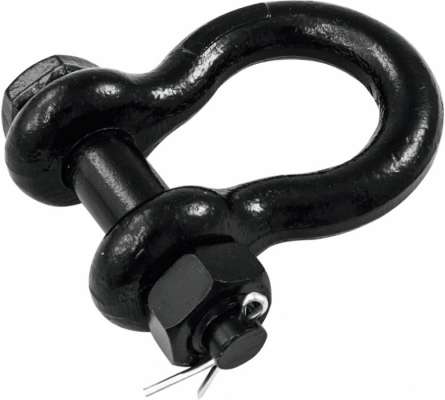
Shackles

Professional Shackles for Event Technology – Your Specialist LTT: Shackles are indispensable rigging hardware components in professional event technology and stage construction. These U-shaped metal connectors with screw or pin closures create secure, load-bearing connections between truss systems, lifting equipment and rigging points. At LTT, you will find a comprehensive range of bow shackles, D-shackles and specialised rigging shackles with working load limits from 160 kg to 9,500 kg – precisely engineered...
Read more »
Shackles
Close window
Shackles

Professional Shackles for Event Technology – Your Specialist LTT

Shackles are indispensable rigging hardware components in professional event technology and stage construction. These U-shaped metal connectors with screw or pin closures create secure, load-bearing connections between truss systems, lifting equipment and rigging points. At LTT, you will find a comprehensive range of bow shackles, D-shackles and specialised rigging shackles with working load limits from 160 kg to 9,500 kg – precisely engineered for demanding stage applications and designed to meet the highest safety standards in the event industry.

What Is a Shackle? Function and Construction

A shackle (also known as a clevis or bow) is a U-shaped connector manufactured from high-tensile steel or stainless steel, closed by a removable bolt or pin. The fundamental design consists of a curved or straight body with two eyes through which the shackle bolt passes, creating a secure yet movable connection point.

Shackles serve primarily to transfer tensile forces at the transition between wire ropes, chains, synthetic slings or fixed structural components such as truss systems. The bolt is typically secured with a nut and cotter pin or features a screw-pin design with internal thread. This construction allows straightforward replacement of damaged rigging components whilst maintaining the structural integrity of the entire lifting assembly.

In stage construction and event rigging, shackles function as the critical interface between aluminium truss sections and lifting equipment, between hoists and suspension points, or between different rigging accessories. Their curved form permits greater freedom of movement compared to fixed connections, automatically compensating for slight angular deviations in multi-point suspension systems.

The key advantage over alternative connection methods such as hooks lies in the closed form: shackles distribute loads more evenly across the material and cannot accidentally disengage under dynamic loading conditions typical in live event environments. Manufactured through forging or casting processes, professional-grade shackles undergo rigorous testing to verify their stated working load limits and safety factors – typically 6:1 for stage rigging applications in accordance with DGUV regulations.

Applications in Stage Construction and Event Rigging

Shackles find extensive application wherever secure, load-bearing connections must be established in temporary structures. In stage construction, they connect truss sections to chain hoists, attach lighting fixtures to overhead rigging, and link ground support towers to base plates. Event technicians rely on shackles to suspend audio line arrays, secure video walls, and anchor scenic elements to truss grids.

In trade fair construction, shackles facilitate the assembly of modular exhibition stands, connecting vertical supports to overhead structures and enabling rapid installation and dismantling cycles. Theatre rigging departments use shackles throughout fly systems, connecting counterweight arbors to lift lines and securing battens to wire rope assemblies. Mobile DJ and band setups benefit from shackles when rigging portable truss systems for lighting rigs and speaker clusters.

Beyond entertainment applications, shackles serve in industrial lifting operations, maritime environments, and mechanical engineering. The same principles that make them reliable for suspending concert lighting arrays apply equally to material handling, crane operations, and offshore installations. Professional users select shackle types based on load direction, connection geometry, and environmental conditions – factors that determine whether a bow shackle or D-shackle proves more suitable for the specific rigging challenge at hand.

Quality Standards and Professional Selection Criteria

Professional shackles for stage rigging must comply with stringent safety standards including DIN 82016 for bow shackles, DIN 82101 for straight shackles, and EN 13889 for forged steel lifting accessories. The working load limit (WLL) stamped on every shackle body represents the maximum safe working load under straight-line tension, calculated with a mandatory 6:1 safety factor for event technology applications governed by DGUV Vorschrift 17 (formerly BGV C1).

Manufacturers such as Riggatec, Doughty, Litec and DMT produce shackles specifically engineered for entertainment rigging, with material specifications ranging from galvanised high-tensile steel for indoor applications to stainless steel A4 AISI 316 for outdoor and marine environments. Forged shackles exhibit superior grain structure compared to cast alternatives, providing predictable deformation characteristics before ultimate failure – a critical safety feature when suspending equipment above performers and audiences.

When selecting shackles, verify that bolt diameter, body width and pin length match your specific truss connection points and rigging hardware. A 3.25-tonne WLL bow shackle typically features an 18 mm pin diameter and 32 mm internal width, dimensions that accommodate standard rigging components whilst maintaining adequate material thickness. Price points reflect material grade and certification level: basic galvanised shackles suitable for ground-based applications start around €8–15, whilst certified stainless steel rigging shackles with full traceability documentation range from €25–80 depending on capacity.

Always inspect shackles before each use for cracks, deformation, thread damage or missing cotter pins. Damaged shackles must be immediately withdrawn from service – the consequences of shackle failure in overhead rigging scenarios justify zero tolerance for compromised components.

Bow Shackles vs D-Shackles: Understanding Load Geometry

The fundamental distinction between bow shackles (also called anchor shackles or omega shackles) and D-shackles (straight or chain shackles) lies in their load distribution characteristics and geometric compatibility with different rigging configurations.

Bow Shackles for Multi-Directional Loads

Bow shackles feature a wide, curved body that accommodates multiple slings or connection points within a single shackle. The generous internal radius distributes side loads more effectively, making bow shackles the preferred choice when rigging forces approach the shackle from varying angles. In truss suspension systems where two or three wire rope slings converge at a single lifting point, the bow shackle's geometry prevents sling overlap and maintains proper load alignment. The curved form also reduces wear on synthetic slings by eliminating sharp contact edges.

D-Shackles for In-Line Tension

D-shackles (straight shackles) present a narrower profile optimised for single-line, in-line loading conditions. Their compact design maximises tensile strength in the primary load axis, making them ideal for direct point-to-point connections such as attaching a single wire rope to a truss end or connecting a chain hoist hook to a suspension clamp. The straight sides of D-shackles provide minimal clearance for the pin, resulting in higher load ratings relative to body size compared to equivalent bow shackles.

Critical consideration: applying side loads or multi-angle forces to D-shackles reduces their effective capacity dramatically. A 45-degree load angle decreases WLL to approximately 65% of rated capacity; 90-degree loading cuts capacity by half. Bow shackles tolerate angular deviation more gracefully, though even they suffer capacity reduction under extreme side loading. Professional riggers match shackle geometry to anticipated load vectors, ensuring that connection hardware operates within design parameters throughout the event duration.

Shackle Integration with Truss Systems and Rigging Hardware

Successful integration of shackles into truss rigging systems requires careful attention to dimensional compatibility, load path continuity, and regulatory compliance. Modern aluminium truss systems from manufacturers including Naxpro-Truss, Prolyte, Global Truss and Litec incorporate standardised connection points designed to interface with specific shackle sizes and configurations.

When rigging Naxpro-Truss FD31 or HD31 sections (50 mm main tube diameter), riggers typically employ shackles with 16–20 mm pin diameters, matching the conical connection hardware and half-couplers integral to these truss systems. The shackle pin passes through the truss connection bolt, creating a positive mechanical link that transfers lifting forces directly into the truss chord structure. Proper installation ensures the shackle body sits flush against the connection surface, eliminating eccentric loading that could induce bending moments.

Rigging clamps, beam clamps and truss adapters manufactured by Riggatec and Doughty feature integrated shackle attachment points with clearly marked WLL ratings. These specialised rigging accessories enable secure fixture mounting without drilling or welding truss members, preserving structural integrity whilst providing certified load paths. Always verify that the combined WLL of the complete rigging assembly – from hoist hook through shackle, clamp and truss section to the suspended fixture – meets or exceeds the actual working load with appropriate safety margins.

DGUV Vorschrift 17 mandates annual inspection of all load-bearing rigging components by qualified personnel, with documentation retained for regulatory review. Shackles used in overhead rigging must display legible WLL markings, exhibit no visible deformation or corrosion, and feature properly secured bolts with intact cotter pins or lock nuts. Establishing a rigorous inspection protocol and maintaining detailed equipment records demonstrates professional diligence and satisfies insurance requirements for event production activities.

LTT – Your Specialist for Event Technology Rigging Hardware

At LTT, you benefit from over 25 years of experience in professional event technology and stage construction. As both manufacturer and full-service supplier, we understand the critical importance of reliable rigging hardware in live production environments. Our shackle range encompasses galvanised steel and stainless steel options from 160 kg to 9,500 kg WLL, ensuring you find precisely the right connection solution for every rigging challenge.

We ship professional rigging hardware worldwide from our facility in Bocholt, Germany, with express delivery options available for time-critical productions. Orders over €69 qualify for free shipping, and our three-year LTT guarantee provides additional peace of mind for your investment in quality rigging components. Our technical advisory team assists with shackle selection, load calculations and DGUV compliance questions, helping you set your productions in the best possible light whilst maintaining uncompromising safety standards.

Discover our complete range of stage construction solutions, from aluminium truss systems and rigging accessories to lighting technology and professional audio equipment – everything you need to achieve impressive results in your next event.

FAQ – Questions & Answers

What is a shackle?

A shackle is a U-shaped metal connector manufactured from high-tensile steel or stainless steel, featuring a removable bolt or pin that closes the open end. Shackles create secure, load-bearing connections between rigging components such as wire ropes, chains, synthetic slings and fixed structural elements in stage construction and lifting applications. The closed-loop design distributes tensile forces evenly whilst permitting limited movement at the connection point. Professional shackles are rated with working load limits (WLL) and manufactured to comply with safety standards including DIN 82016, DIN 82101 and EN 13889.

What are the different types of shackles?

The primary shackle types are bow shackles (anchor shackles) and D-shackles (straight shackles). Bow shackles feature a wide, curved body that accommodates multiple connection points and tolerates multi-directional loading, making them ideal for truss suspension systems where several slings converge. D-shackles present a narrow, straight profile optimised for in-line tension applications such as single-point lifting connections. Additional variations include screw-pin shackles with threaded bolts for temporary installations, and bolt-type shackles with nut and cotter pin for permanent rigging applications. Long-body shackles provide extended reach for specialised connection geometries.

How much weight can a shackle hold?

Professional rigging shackles for event technology are available with working load limits (WLL) ranging from 160 kg to 9,500 kg, with the rated capacity clearly stamped on the shackle body. The WLL represents the maximum safe working load under straight-line tension, calculated with a mandatory 6:1 safety factor for overhead rigging applications. Actual load capacity decreases when forces approach the shackle at angles: a 45-degree load angle reduces effective capacity to approximately 65% of rated WLL, whilst 90-degree side loading cuts capacity by half. Always select shackles with WLL ratings that exceed your actual working loads with appropriate safety margins.

What is the difference between bow shackles and D-shackles?

Bow shackles (anchor shackles) feature a wide, curved body designed to accommodate multiple slings or connection points within a single shackle, distributing side loads more effectively across the broader radius. This geometry makes bow shackles ideal for multi-point suspension systems and applications where rigging forces approach from varying angles. D-shackles (straight shackles) present a narrow, compact profile optimised for in-line tension along a single load axis, maximising tensile strength relative to body size. D-shackles excel in direct point-to-point connections but suffer significant capacity reduction under side loading, whilst bow shackles tolerate angular deviation more gracefully.

Which shackle material is best for stage rigging?

Galvanised high-tensile steel shackles provide excellent strength and corrosion resistance for indoor stage applications, offering the best balance of performance and cost-effectiveness. Stainless steel A4 AISI 316 shackles are specified for outdoor events, marine environments and installations exposed to moisture or chemical atmospheres, where superior corrosion resistance justifies the higher material cost. Forged shackles exhibit superior grain structure compared to cast alternatives, providing predictable deformation characteristics before failure – a critical safety feature in overhead rigging. Always verify that shackle material specifications and certifications comply with DGUV Vorschrift 17 requirements for your specific application.

How do I choose the right shackle for truss rigging?

Select shackles based on three critical factors: working load limit (WLL), pin diameter compatibility, and load geometry. Calculate the maximum load including fixture weight, rigging hardware and dynamic factors, then choose a shackle with WLL exceeding this value with appropriate safety margin. Verify that the shackle pin diameter matches your truss connection hardware – typically 16–20 mm for standard aluminium truss systems. Use bow shackles for multi-point suspension where several slings converge, and D-shackles for single-line, in-line connections. Always ensure shackles display legible WLL markings and comply with DIN 82016, DIN 82101 or EN 13889 standards.

What does WLL mean on a shackle?

WLL (Working Load Limit) represents the maximum safe working load that a shackle can support under straight-line tension during normal use, expressed in kilograms or tonnes. This rating is stamped on the shackle body and calculated with a mandatory safety factor – typically 6:1 for event technology applications governed by DGUV Vorschrift 17. The WLL assumes ideal loading conditions with forces aligned along the shackle's primary axis. Side loading, angular forces or shock loads reduce effective capacity below the stated WLL. Never exceed the marked WLL, and always account for load angles and dynamic factors when calculating rigging loads.

How often must shackles be inspected for stage use?

DGUV Vorschrift 17 (formerly BGV C1) mandates annual inspection of all load-bearing rigging components including shackles by qualified personnel, with inspection documentation retained for regulatory review. Additionally, perform visual inspection before each use, checking for cracks, deformation, thread damage, corrosion and missing or damaged cotter pins. Shackles exhibiting any visible damage, illegible WLL markings or dimensional changes must be immediately withdrawn from service. Establish a rigorous inspection protocol with unique identification numbers for each shackle, recording inspection dates, findings and any maintenance actions in a comprehensive equipment register to demonstrate professional diligence and satisfy insurance requirements.

Top seller
Riggatec Schäkel, matt schwarz, 2 t
Riggatec Shackle, matt black, 2 t
€4.75 *
incl. tax, plus shipping costs
Availability:
Delivery time: 1-3 days
Riggatec Schäkel, matt schwarz, 1 t
Riggatec Shackle, matt black, 1 t
€3.10 *
incl. tax, plus shipping costs
Availability:
Delivery time: 1-3 days
SAFETEX Schäkel 10mm schwarz mit Schraubbolzen
SAFETEX Shackle 10mm black with Screwbolt
€4.95 *
incl. tax, plus shipping costs
Availability:
Delivery time: 1-3 days
40 Articles
Close filters
 
  •  
  •  
  •  
  •  
from to
1 From 2 pages
No results were found for the filter!
Riggatec hochfeste Schäkel 1/4" 0,5 t feuerverzinkt
Riggatec high-strength Shackle 1/4" 0,500 t galvanized
H-shape • With hexagonal-head-pin • Nut and cotter pin • 6 time safety • Material: Steel • Version: Bow galvanized, pin lacquered • Nominal Size: 1/4"...
€1.49 *
incl. tax, plus shipping costs
Availability:
Delivery time: 1-3 days
Riggatec hochfeste Schäkel 5/16" 0,75 t feuerverzinkt
Riggatec high-strength Shackle 5/16" 0,750 t galvanized
H-shape • With hexagonal-head-pin • Nut and cotter pin • 6 time safety • Material: Steel • Version: Bow galvanized, pin lacquered • Nominal Size: 5/16"...
€1.90 *
incl. tax, plus shipping costs
Availability:
Delivery time: 1-3 days
Riggatec hochfeste Schäkel 3/8" 1,0 t feuerverzinkt
Riggatec high-strength Shackle 3/8" 1,0 t galvanized
H-shape • With hexagonal-head-pin • Nut and cotter pin • 6 time safety • Material: Steel • Version: Bow galvanized, pin lacquered • Nominal Size: 3/8"...
€2.50 *
incl. tax, plus shipping costs
Availability:
Delivery time: 1-3 days
Riggatec hochfeste Schäkel 7/16" 1,5 t feuerverzinkt
Riggatec high-strength Shackle 7/16" 1,5 t galvanized
H-shape • With hexagonal-head-pin • Nut and cotter pin • 6 time safety • Material: Steel • Version: Bow galvanized, pin lacquered • Nominal Size: 7/16"...
€2.90 *
incl. tax, plus shipping costs
Availability:
Delivery time: 1-3 days
Riggatec hochfeste Schäkel 1/2" 2,0 t feuerverzinkt
Riggatec high-strength Shackle 1/2" 2,0 t galvanized
H-shape • With hexagonal-head-pin • Nut and cotter pin • 6 time safety • Material: Steel • Version: Bow galvanized, pin lacquered • Nominal Size: 1/2"...
€3.90 *
incl. tax, plus shipping costs
Availability:
Delivery time: 1-3 days
Riggatec hochfeste Schäkel 5/8" 3,25 t feuerverzinkt
Riggatec high-strength Shackle 5/8" 3,25 t galvanized
H-shape • With hexagonal-head-pin • Nut and cotter pin • 6 time safety • Material: Steel • Version: Bow galvanized, pin lacquered • Nominal Size: 5/8"...
€6.90 *
incl. tax, plus shipping costs
Availability:
Delivery time: 1-3 days
Riggatec hochfeste Schäkel 3/4" 4,75 t feuerverzinkt
Riggatec high-strength Shackle 3/4" 4,75 t galvanized
H-shape • With hexagonal-head-pin • Nut and cotter pin • 6 time safety • Material: Steel • Version: Bow galvanized, pin lacquered • Nominal Size: 3/4"...
€9.90 *
incl. tax, plus shipping costs
Availability:
Delivery time: 1-3 days
Riggatec hochfeste Schäkel 7/8" 6,5 t feuerverzinkt
Riggatec high-strength Shackle 7/8" 6,5 t galvanized
H-shape • With hexagonal-head-pin • Nut and cotter pin • 6 time safety • Material: Steel • Version: Bow galvanized, pin lacquered • Nominal Size: 7/8"...
€12.90 *
incl. tax, plus shipping costs
Availability:
Delivery time: 1-3 days
Riggatec hochfeste Schäkel 1 1/8" 9,5 t feuerverzinkt
Riggatec high-strength Shackle 1 1/8" 9,5 t galvanized
H-shape • With hexagonal-head-pin • Nut and cotter pin • 6 time safety • Material: Steel • Version: Bow galvanized, pin lacquered • Nominal Size: 1 1/8"...
€28.90 *
incl. tax, plus shipping costs
Availability:
Delivery time: 3-5 days
Riggatec hochfeste Schäkel 1" 8,5 t feuerverzinkt
Riggatec high-strength Shackle 1" 8,5 t galvanized
H-shape • With hexagonal-head-pin • Nut and cotter pin • 6 time safety • Material: Steel • Version: Bow galvanized, pin lacquered • Nominal Size: 1" Bearing...
€19.90 *
incl. tax, plus shipping costs
Availability:
Delivery time: 1-3 days
Riggatec hochfeste Schäkel 1 1/4" 12,0 t feuerverzinkt
Riggatec high-strength Shackle 1 1/4" 12,0 t galvanized
H-shape • With hexagonal-head-pin • Nut and cotter pin • 6 time safety • Material: Steel • Version: Bow galvanized, pin lacquered • Nominal Size: 1 1/4"...
€29.90 *
incl. tax, plus shipping costs
Availability:
Delivery time: 1-3 days
Riggatec hochfeste Schäkel 1 3/8" 13,5 t feuerverzinkt
Riggatec high-strength Shackle 1 3/8" 13,5 t galvanized
H-shape • With hexagonal-head-pin • Nut and cotter pin • 6 time safety • Material: Steel • Version: Bow galvanized, pin lacquered • Nominal Size: 1 3/8"...
€35.90 * €20.35 *
incl. tax, plus shipping costs
Availability:
Low stock; Delivery time: 1-3 days
Delivery time: 1-3 days
Riggatec hochfeste Schäkel 1 1/2" 17,0 t feuerverzinkt
iggatec high-strength Shackle 1 1/2" 17,0 t galvanized
H-shape • With hexagonal-head-pin • Nut and cotter pin • 6 time safety • Material: Steel • Version: Bow galvanized, pin lacquered • Nominal Size: 1 1/2"...
€59.00 *
incl. tax, plus shipping costs
Availability:
Delivery time: 1-3 days
Riggatec hochfeste Schäkel 1 3/4" 25,0 t feuerverzinkt
Riggatec high-strength Shackle 1 3/4" 25,0 t galvanized
H-shape • With hexagonal-head-pin • Nut and cotter pin • 6 time safety • Material: Steel • Version: Bow galvanized, pin lacquered • Nominal Size: 1 3/4"...
€99.00 *
incl. tax, free shipping to Germany
[International shipping costs]
Availability:
Low stock; Delivery time: 1-3 days
Delivery time: 1-3 days
SAFETEX Schäkel 10mm schwarz mit Schraubbolzen
SAFETEX Shackle 10mm black with Screwbolt
Bow shackle 10 mm, maximum load WLL 1 t Nominal size: 3/8" • Screw bolt • Blackline • Abrasion resistant • Complies with DIN EN 13889:2009-02 • Maximum load WLL...
€4.95 *
incl. tax, plus shipping costs
Availability:
Delivery time: 1-3 days
SAFETEX Schäkel 16mm sw m.Bolzen,Mutter,Splint
SAFETEX Shackle 16mm bl with Bolt,Mother,Splint
Bow shackle 16 mm, with bolt, nut & pin, maximum load WLL 3.25t Nominal size: 16 mm • Screw bolt with hexagon head, hexagon nut and safety pin • Complies with DIN EN 13889:2009-02...
€13.50 *
incl. tax, plus shipping costs
Availability:
Delivery time: 1-3 days
EUROLITE Schäkel 25mm
EUROLITE Shackle 25mm
Bow shackle 25 mm Complies with DIN EN 13889:2009-02 • Nominal size: 25 mm • Yellow 28 mm screw bolt (X-type) with hexagon head, hexagon nut and safety pin • Test report according to...
€20.50 * €12.10 *
incl. tax, plus shipping costs
Availability:
Low stock; Delivery time: 1-3 days
Delivery time: 1-3 days
SAFETEX Schäkel 16mm schwarz mit Schraubbolzen
SAFETEX Shackle 16mm black with Screwbolt
Bow shackle, maximum load WLL 3250 kg Nominal size: 5/8" • Screw bolt • Blackline • Abrasion resistant • Complies with DIN EN 13889:2009-02 • Maximum load WLL...
€12.90 *
incl. tax, plus shipping costs
Availability:
Delivery time: 1-3 days
SAFETEX Schäkel 22mm schwarz mit Schraubbolzen
SAFETEX Shackle 22mm black with Screwbolt
Bow shackle, maximum load WLL 6500 kg Nominal size: 7/8" • Blackline • Abrasion resistant • Screw bolt • Complies with DIN EN 13889:2009-02 • Maximum load WLL...
€23.83 *
incl. tax, plus shipping costs
Availability:
Delivery time: 3-5 days
SAFETEX Schäkel 10mm sw m.Bolzen,Mutter,Splint
SAFETEX Shackle 10mm bl with Bolt,Mother,Splint
Bow shackle, maximum load WLL 1000 kg Nominal size: 10 mm • Screw bolt with hexagon head, hexagon nut and safety split pin • Complies with DIN EN 13889:2009-02 • Maximum load WLL...
€5.90 *
incl. tax, plus shipping costs
Availability:
Delivery time: 3-5 days
SAFETEX Schäkel 22mm sw m.Bolzen,Mutter,Splint
SAFETEX Shackle 22mm bl with Bolt,Mother,Splint
Bow shackle, maximum load WLL 6500 kg Nominal size: 22 mm • Screw bolt with hexagon head, hexagon nut and safety split pin • Complies with DIN EN 13889:2009-02 • Maximum load WLL...
€25.99 *
incl. tax, plus shipping costs
Availability:
Delivery time: 3-5 days
Chain Shackle 2.0T WLL 2.00T shoulderbolt, Black
ELLER Chain Shackle, Shoulder Bolt WLL: 2 Ton - black
For a safe connection to a beam-clamp or chainhoist a proper shackle is required. Therefore Showtec now provides a (certified) range of shackles consisting of 1.0T to 6.5T shackles in order to rig...
€4.84 *
incl. tax, plus shipping costs
Availability:
Delivery time: 3-5 days
Chain Shackle 4.75T WLL 4,75T shoulderbolt, Black
ELLER Chain Shackle, Shoulder Bolt WLL: 4.75 Ton - black
For a safe connection to a beam-clamp or chainhoist a proper shackle is required. Therefore Showtec now provides a (certified) range of shackles consisting of 1.0T to 6.5T shackles in order to rig...
€12.90 *
incl. tax, plus shipping costs
Availability:
Delivery time: 3-5 days
Riggatec Schäkel, matt schwarz, 2 t
Riggatec Shackle, matt black, 2 t
Features for lifting purposes • acc. EN13889 • In black • Galvanized • All shackles are marked with: WLL, Batchcode & CE mark • Safety factor 6 • According EN...
€4.75 *
incl. tax, plus shipping costs
Availability:
Delivery time: 1-3 days
1 From 2 pages
Facts
Professional Shackles for Event Technology – Your Specialist LTT: Shackles are indispensable rigging hardware components in professional event technology and stage construction. These U-shaped metal connectors with screw or pin closures create secure, load-bearing connections between truss systems, lifting equipment and rigging points. At LTT, you will find a comprehensive range of bow shackles, D-shackles and specialised rigging shackles... Read more »
Viewed
Facts

Professional Shackles for Event Technology – Your Specialist LTT

Shackles are indispensable rigging hardware components in professional event technology and stage construction. These U-shaped metal connectors with screw or pin closures create secure, load-bearing connections between truss systems, lifting equipment and rigging points. At LTT, you will find a comprehensive range of bow shackles, D-shackles and specialised rigging shackles with working load limits from 160 kg to 9,500 kg – precisely engineered for demanding stage applications and designed to meet the highest safety standards in the event industry.

What Is a Shackle? Function and Construction

A shackle (also known as a clevis or bow) is a U-shaped connector manufactured from high-tensile steel or stainless steel, closed by a removable bolt or pin. The fundamental design consists of a curved or straight body with two eyes through which the shackle bolt passes, creating a secure yet movable connection point.

Shackles serve primarily to transfer tensile forces at the transition between wire ropes, chains, synthetic slings or fixed structural components such as truss systems. The bolt is typically secured with a nut and cotter pin or features a screw-pin design with internal thread. This construction allows straightforward replacement of damaged rigging components whilst maintaining the structural integrity of the entire lifting assembly.

In stage construction and event rigging, shackles function as the critical interface between aluminium truss sections and lifting equipment, between hoists and suspension points, or between different rigging accessories. Their curved form permits greater freedom of movement compared to fixed connections, automatically compensating for slight angular deviations in multi-point suspension systems.

The key advantage over alternative connection methods such as hooks lies in the closed form: shackles distribute loads more evenly across the material and cannot accidentally disengage under dynamic loading conditions typical in live event environments. Manufactured through forging or casting processes, professional-grade shackles undergo rigorous testing to verify their stated working load limits and safety factors – typically 6:1 for stage rigging applications in accordance with DGUV regulations.

Applications in Stage Construction and Event Rigging

Shackles find extensive application wherever secure, load-bearing connections must be established in temporary structures. In stage construction, they connect truss sections to chain hoists, attach lighting fixtures to overhead rigging, and link ground support towers to base plates. Event technicians rely on shackles to suspend audio line arrays, secure video walls, and anchor scenic elements to truss grids.

In trade fair construction, shackles facilitate the assembly of modular exhibition stands, connecting vertical supports to overhead structures and enabling rapid installation and dismantling cycles. Theatre rigging departments use shackles throughout fly systems, connecting counterweight arbors to lift lines and securing battens to wire rope assemblies. Mobile DJ and band setups benefit from shackles when rigging portable truss systems for lighting rigs and speaker clusters.

Beyond entertainment applications, shackles serve in industrial lifting operations, maritime environments, and mechanical engineering. The same principles that make them reliable for suspending concert lighting arrays apply equally to material handling, crane operations, and offshore installations. Professional users select shackle types based on load direction, connection geometry, and environmental conditions – factors that determine whether a bow shackle or D-shackle proves more suitable for the specific rigging challenge at hand.

Quality Standards and Professional Selection Criteria

Professional shackles for stage rigging must comply with stringent safety standards including DIN 82016 for bow shackles, DIN 82101 for straight shackles, and EN 13889 for forged steel lifting accessories. The working load limit (WLL) stamped on every shackle body represents the maximum safe working load under straight-line tension, calculated with a mandatory 6:1 safety factor for event technology applications governed by DGUV Vorschrift 17 (formerly BGV C1).

Manufacturers such as Riggatec, Doughty, Litec and DMT produce shackles specifically engineered for entertainment rigging, with material specifications ranging from galvanised high-tensile steel for indoor applications to stainless steel A4 AISI 316 for outdoor and marine environments. Forged shackles exhibit superior grain structure compared to cast alternatives, providing predictable deformation characteristics before ultimate failure – a critical safety feature when suspending equipment above performers and audiences.

When selecting shackles, verify that bolt diameter, body width and pin length match your specific truss connection points and rigging hardware. A 3.25-tonne WLL bow shackle typically features an 18 mm pin diameter and 32 mm internal width, dimensions that accommodate standard rigging components whilst maintaining adequate material thickness. Price points reflect material grade and certification level: basic galvanised shackles suitable for ground-based applications start around €8–15, whilst certified stainless steel rigging shackles with full traceability documentation range from €25–80 depending on capacity.

Always inspect shackles before each use for cracks, deformation, thread damage or missing cotter pins. Damaged shackles must be immediately withdrawn from service – the consequences of shackle failure in overhead rigging scenarios justify zero tolerance for compromised components.

Bow Shackles vs D-Shackles: Understanding Load Geometry

The fundamental distinction between bow shackles (also called anchor shackles or omega shackles) and D-shackles (straight or chain shackles) lies in their load distribution characteristics and geometric compatibility with different rigging configurations.

Bow Shackles for Multi-Directional Loads

Bow shackles feature a wide, curved body that accommodates multiple slings or connection points within a single shackle. The generous internal radius distributes side loads more effectively, making bow shackles the preferred choice when rigging forces approach the shackle from varying angles. In truss suspension systems where two or three wire rope slings converge at a single lifting point, the bow shackle's geometry prevents sling overlap and maintains proper load alignment. The curved form also reduces wear on synthetic slings by eliminating sharp contact edges.

D-Shackles for In-Line Tension

D-shackles (straight shackles) present a narrower profile optimised for single-line, in-line loading conditions. Their compact design maximises tensile strength in the primary load axis, making them ideal for direct point-to-point connections such as attaching a single wire rope to a truss end or connecting a chain hoist hook to a suspension clamp. The straight sides of D-shackles provide minimal clearance for the pin, resulting in higher load ratings relative to body size compared to equivalent bow shackles.

Critical consideration: applying side loads or multi-angle forces to D-shackles reduces their effective capacity dramatically. A 45-degree load angle decreases WLL to approximately 65% of rated capacity; 90-degree loading cuts capacity by half. Bow shackles tolerate angular deviation more gracefully, though even they suffer capacity reduction under extreme side loading. Professional riggers match shackle geometry to anticipated load vectors, ensuring that connection hardware operates within design parameters throughout the event duration.

Shackle Integration with Truss Systems and Rigging Hardware

Successful integration of shackles into truss rigging systems requires careful attention to dimensional compatibility, load path continuity, and regulatory compliance. Modern aluminium truss systems from manufacturers including Naxpro-Truss, Prolyte, Global Truss and Litec incorporate standardised connection points designed to interface with specific shackle sizes and configurations.

When rigging Naxpro-Truss FD31 or HD31 sections (50 mm main tube diameter), riggers typically employ shackles with 16–20 mm pin diameters, matching the conical connection hardware and half-couplers integral to these truss systems. The shackle pin passes through the truss connection bolt, creating a positive mechanical link that transfers lifting forces directly into the truss chord structure. Proper installation ensures the shackle body sits flush against the connection surface, eliminating eccentric loading that could induce bending moments.

Rigging clamps, beam clamps and truss adapters manufactured by Riggatec and Doughty feature integrated shackle attachment points with clearly marked WLL ratings. These specialised rigging accessories enable secure fixture mounting without drilling or welding truss members, preserving structural integrity whilst providing certified load paths. Always verify that the combined WLL of the complete rigging assembly – from hoist hook through shackle, clamp and truss section to the suspended fixture – meets or exceeds the actual working load with appropriate safety margins.

DGUV Vorschrift 17 mandates annual inspection of all load-bearing rigging components by qualified personnel, with documentation retained for regulatory review. Shackles used in overhead rigging must display legible WLL markings, exhibit no visible deformation or corrosion, and feature properly secured bolts with intact cotter pins or lock nuts. Establishing a rigorous inspection protocol and maintaining detailed equipment records demonstrates professional diligence and satisfies insurance requirements for event production activities.

LTT – Your Specialist for Event Technology Rigging Hardware

At LTT, you benefit from over 25 years of experience in professional event technology and stage construction. As both manufacturer and full-service supplier, we understand the critical importance of reliable rigging hardware in live production environments. Our shackle range encompasses galvanised steel and stainless steel options from 160 kg to 9,500 kg WLL, ensuring you find precisely the right connection solution for every rigging challenge.

We ship professional rigging hardware worldwide from our facility in Bocholt, Germany, with express delivery options available for time-critical productions. Orders over €69 qualify for free shipping, and our three-year LTT guarantee provides additional peace of mind for your investment in quality rigging components. Our technical advisory team assists with shackle selection, load calculations and DGUV compliance questions, helping you set your productions in the best possible light whilst maintaining uncompromising safety standards.

Discover our complete range of stage construction solutions, from aluminium truss systems and rigging accessories to lighting technology and professional audio equipment – everything you need to achieve impressive results in your next event.

FAQ – Questions & Answers

What is a shackle?

A shackle is a U-shaped metal connector manufactured from high-tensile steel or stainless steel, featuring a removable bolt or pin that closes the open end. Shackles create secure, load-bearing connections between rigging components such as wire ropes, chains, synthetic slings and fixed structural elements in stage construction and lifting applications. The closed-loop design distributes tensile forces evenly whilst permitting limited movement at the connection point. Professional shackles are rated with working load limits (WLL) and manufactured to comply with safety standards including DIN 82016, DIN 82101 and EN 13889.

What are the different types of shackles?

The primary shackle types are bow shackles (anchor shackles) and D-shackles (straight shackles). Bow shackles feature a wide, curved body that accommodates multiple connection points and tolerates multi-directional loading, making them ideal for truss suspension systems where several slings converge. D-shackles present a narrow, straight profile optimised for in-line tension applications such as single-point lifting connections. Additional variations include screw-pin shackles with threaded bolts for temporary installations, and bolt-type shackles with nut and cotter pin for permanent rigging applications. Long-body shackles provide extended reach for specialised connection geometries.

How much weight can a shackle hold?

Professional rigging shackles for event technology are available with working load limits (WLL) ranging from 160 kg to 9,500 kg, with the rated capacity clearly stamped on the shackle body. The WLL represents the maximum safe working load under straight-line tension, calculated with a mandatory 6:1 safety factor for overhead rigging applications. Actual load capacity decreases when forces approach the shackle at angles: a 45-degree load angle reduces effective capacity to approximately 65% of rated WLL, whilst 90-degree side loading cuts capacity by half. Always select shackles with WLL ratings that exceed your actual working loads with appropriate safety margins.

What is the difference between bow shackles and D-shackles?

Bow shackles (anchor shackles) feature a wide, curved body designed to accommodate multiple slings or connection points within a single shackle, distributing side loads more effectively across the broader radius. This geometry makes bow shackles ideal for multi-point suspension systems and applications where rigging forces approach from varying angles. D-shackles (straight shackles) present a narrow, compact profile optimised for in-line tension along a single load axis, maximising tensile strength relative to body size. D-shackles excel in direct point-to-point connections but suffer significant capacity reduction under side loading, whilst bow shackles tolerate angular deviation more gracefully.

Which shackle material is best for stage rigging?

Galvanised high-tensile steel shackles provide excellent strength and corrosion resistance for indoor stage applications, offering the best balance of performance and cost-effectiveness. Stainless steel A4 AISI 316 shackles are specified for outdoor events, marine environments and installations exposed to moisture or chemical atmospheres, where superior corrosion resistance justifies the higher material cost. Forged shackles exhibit superior grain structure compared to cast alternatives, providing predictable deformation characteristics before failure – a critical safety feature in overhead rigging. Always verify that shackle material specifications and certifications comply with DGUV Vorschrift 17 requirements for your specific application.

How do I choose the right shackle for truss rigging?

Select shackles based on three critical factors: working load limit (WLL), pin diameter compatibility, and load geometry. Calculate the maximum load including fixture weight, rigging hardware and dynamic factors, then choose a shackle with WLL exceeding this value with appropriate safety margin. Verify that the shackle pin diameter matches your truss connection hardware – typically 16–20 mm for standard aluminium truss systems. Use bow shackles for multi-point suspension where several slings converge, and D-shackles for single-line, in-line connections. Always ensure shackles display legible WLL markings and comply with DIN 82016, DIN 82101 or EN 13889 standards.

What does WLL mean on a shackle?

WLL (Working Load Limit) represents the maximum safe working load that a shackle can support under straight-line tension during normal use, expressed in kilograms or tonnes. This rating is stamped on the shackle body and calculated with a mandatory safety factor – typically 6:1 for event technology applications governed by DGUV Vorschrift 17. The WLL assumes ideal loading conditions with forces aligned along the shackle's primary axis. Side loading, angular forces or shock loads reduce effective capacity below the stated WLL. Never exceed the marked WLL, and always account for load angles and dynamic factors when calculating rigging loads.

How often must shackles be inspected for stage use?

DGUV Vorschrift 17 (formerly BGV C1) mandates annual inspection of all load-bearing rigging components including shackles by qualified personnel, with inspection documentation retained for regulatory review. Additionally, perform visual inspection before each use, checking for cracks, deformation, thread damage, corrosion and missing or damaged cotter pins. Shackles exhibiting any visible damage, illegible WLL markings or dimensional changes must be immediately withdrawn from service. Establish a rigorous inspection protocol with unique identification numbers for each shackle, recording inspection dates, findings and any maintenance actions in a comprehensive equipment register to demonstrate professional diligence and satisfy insurance requirements.