Foam machines

Foam Machines – Create Spectacular Foam Effects for Your Events: Foam machines and foam cannons are essential equipment for creating unforgettable party atmospheres at clubs, outdoor festivals, beach parties and special events. Whether you need a compact foam generator for intimate venues or a high-capacity foam cannon that shoots foam 6–8 metres into the crowd, LTT offers professional solutions that deliver impressive results. Our range includes stationary foam generators for overhead installation and mobile...
Read more »
Foam machines
Close window
Foam machines

Foam Machines – Create Spectacular Foam Effects for Your Events

Foam machines and foam cannons are essential equipment for creating unforgettable party atmospheres at clubs, outdoor festivals, beach parties and special events. Whether you need a compact foam generator for intimate venues or a high-capacity foam cannon that shoots foam 6–8 metres into the crowd, LTT offers professional solutions that deliver impressive results. Our range includes stationary foam generators for overhead installation and mobile foam cannons for flexible positioning, ensuring you can create the perfect foam coverage for any event scenario.

How Foam Machines and Foam Cannons Work

A foam machine operates through a precisely engineered system that transforms a mixture of foam concentrate and water into dense, long-lasting foam. The process begins with a pump that draws the pre-mixed solution from a reservoir tank – typically ranging from 3 litres for compact units to 25 litres for professional installations. This mixture is then forced through a polyester mesh or net under pressure, where it meets a powerful airstream generated by an integrated fan.

The combination of liquid, air pressure and the mesh structure creates the characteristic foam bubbles with their stable structure. An outlet nozzle then directs the finished foam onto the dance floor or event area. Professional foam generators can produce approximately 3 cubic metres of foam per minute, whilst high-capacity foam cannons achieve outputs of up to 100,000 litres of foam per minute with shooting distances of 6–8 metres.

The key difference between stationary foam generators and foam cannons lies in their installation and application method. Foam generators are typically mounted overhead on truss systems, allowing foam to cascade down onto the crowd from above. Foam cannons, by contrast, are positioned at ground level or on elevated platforms and actively shoot foam horizontally into the audience, eliminating the need for complex overhead rigging infrastructure.

Technical Components and Operation

Every professional foam machine system comprises several essential components: the main foam generation unit with its polyester mesh assembly, an external pump for fluid delivery, intake and delivery hoses, reservoir containers (ranging from 300-litre portable tanks to 1,000-litre IBC containers for large-scale events), and appropriate electrical protection including residual current devices (RCDs) for safe operation. The mixing ratio between foam concentrate and water significantly affects foam density and longevity – typical ratios range from 1:25 for dense, stable foam at the beginning of an event to 1:33 for lighter, more voluminous foam during peak party hours.

Applications and Event Scenarios for Foam Machines

Foam machines have become indispensable equipment across a wide spectrum of professional event applications. In nightclubs and discotheques, stationary foam generators mounted on overhead truss systems create dramatic foam coverage that transforms the dance floor into an immersive experience. The cooling effect of foam makes these installations particularly popular during summer events and beach-themed parties, where temperatures can become uncomfortable for dancers.

Outdoor festivals and large-scale public events benefit from high-capacity foam cannons that can cover extensive areas quickly. These mobile units offer the flexibility to position foam effects strategically without requiring permanent overhead infrastructure. Swimming pool parties and aquatic venues represent another major application area, where foam machines create spectacular visual effects that complement the water environment.

Theatre productions, film and television work increasingly incorporate foam effects for atmospheric scenes and special sequences. The controllable nature of modern foam machines – many featuring DMX control capabilities or wired remote operation – allows precise timing and intensity adjustment to match performance requirements. School graduation celebrations, corporate events and promotional activities also frequently employ foam machines to create memorable "wow moments" that engage participants and generate social media content.

Professional Installation Considerations

When planning foam machine deployment, you must consider several practical factors. Indoor venues require adequate drainage and non-slip flooring, as foam creates wet surfaces. Outdoor installations need protection from wind conditions that can disperse foam prematurely. Electrical supply requirements typically include 230V/16A connections with proper earth protection. Water supply access is essential, either through direct mains connection or pre-filled reservoir tanks. Professional event technicians should always conduct site assessments to determine optimal machine positioning, coverage patterns and safety measures including appropriate warning signage for participants.

Quality Standards and Professional Equipment Selection

Professional foam machines differ significantly from consumer-grade equipment in build quality, output capacity and safety features. When selecting foam equipment for professional applications, you should prioritise machines from established manufacturers such as Eurolite, Showtec and Antari, who engineer their products to withstand intensive commercial use and meet European safety standards.

Output capacity represents the primary specification to consider. Entry-level foam generators typically produce 3–3.5 cubic metres per minute, suitable for small to medium venues up to 100 square metres. Mid-range professional units achieve 5–8 cubic metres per minute, whilst high-capacity foam cannons can generate the equivalent of 100,000–200,000 litres of foam per minute, with projection distances reaching 6–8 metres for large festival applications.

Tank capacity directly affects operational duration between refills. Compact portable units feature 3–5 litre integrated tanks, requiring frequent attention during extended events. Professional installations typically employ external 25-litre containers or larger 300–1,000 litre reservoir systems, enabling hours of continuous operation. The pump system quality determines reliability – professional units incorporate robust centrifugal pumps with adequate flow rates (typically 20–40 litres per minute) and pressure capacity to maintain consistent foam production.

Technical Specifications and Performance Metrics

Power consumption for professional foam machines ranges from 800 watts for compact generators to 2,000–3,000 watts for high-output foam cannons. These figures include both the foam generation mechanism and the integrated pump system. Weight varies considerably: portable units weigh 8–15 kilograms, whilst professional foam cannons can reach 40–80 kilograms, requiring appropriate mounting hardware or transport cases.

Price brackets reflect capability and build quality. Entry-level foam machines suitable for occasional mobile DJ use start around €150–250. Professional stationary generators for permanent club installations range from €400–800, whilst high-capacity foam cannons with advanced control systems command €1,200–2,500. When evaluating total cost of ownership, factor in foam fluid consumption – professional events typically require 25–50 litres of concentrate per event, with quality dermatologically tested fluids costing €8–12 per litre in bulk quantities.

Foam Fluids, Concentrates and Mixing Ratios

The foam fluid you select fundamentally determines the quality, longevity and safety of your foam effects. Professional foam concentrates are specifically formulated for event applications, bearing little resemblance to household detergents or cleaning products. These specialised fluids must meet stringent dermatological and toxicological safety standards, as participants will have direct skin and potential eye contact with the foam.

Quality foam concentrates contain no dyes, perfumes or harsh additives that could cause skin irritation or stain clothing and surfaces. Dermatologically tested formulations from reputable manufacturers ensure participant safety whilst maintaining excellent foam structure and stability. The concentrate typically arrives in 5-litre or 25-litre containers, with larger bulk packaging available for high-volume professional users.

Mixing Ratios and Foam Characteristics

The mixing ratio between concentrate and water dramatically affects foam density, bubble size and longevity. A ratio of 1:25 (one part concentrate to 25 parts water) produces dense, stable foam with smaller bubbles that persists longer on surfaces – ideal for the opening phase of foam parties when you want to build substantial coverage. As the event progresses, switching to a 1:33 ratio creates lighter, more voluminous foam with larger bubbles that feels less "heavy" for participants dancing in deep foam.

Professional operators often prepare multiple batches at different ratios, adjusting throughout the event to maintain optimal foam conditions. Temperature affects mixing efficiency – slightly warm water (20–25°C) helps concentrate dissolve more thoroughly than cold water, ensuring consistent foam production. Always pre-mix concentrate and water in the reservoir tank rather than attempting to add concentrate during operation, which can cause pump cavitation and inconsistent output.

Consumption Calculations and Fluid Management

A typical club event lasting 3–4 hours with intermittent foam effects consumes approximately 25 litres of concentrate mixed with 625–825 litres of water. Large outdoor festivals may require 50–100 litres of concentrate for continuous operation. School graduation events or single-session foam parties typically use 10–25 litres depending on venue size and desired coverage depth. Professional event technicians should always maintain reserve fluid supplies, as running out mid-event creates disappointing gaps in the entertainment programme. Store unused concentrate in sealed containers away from direct sunlight, where it typically remains viable for 12–24 months.

LTT – Your Specialist for Event Technology

LTT has supplied professional event technology to technicians, event agencies and venues across Europe for over 25 years. Our foam machine range encompasses everything from compact portable units for mobile entertainers to high-capacity professional systems for permanent installations. Every foam machine we stock comes from established manufacturers whose products we've tested extensively in real-world applications.

When you order foam equipment from LTT, you benefit from free shipping on orders over €69, with express delivery options available when you need equipment urgently. Our warehouse in Bocholt, Germany, maintains substantial stock levels, ensuring same-day dispatch for most products. We ship worldwide, supporting an international network of professional users and resellers who rely on our expertise and product quality.

Our technical team understands the practical challenges of foam machine deployment – from calculating fluid requirements for specific venue sizes to selecting appropriate pump capacities for different installation scenarios. Whether you're equipping a permanent club installation or building a mobile foam party business, we'll help you select the optimal solution. With LTT's 3-year warranty on selected products and our commitment to stocking genuine replacement parts and accessories, you're investing in equipment that delivers reliable performance event after event.

Safety Standards and Professional Operation

Operating foam machines in professional event environments requires adherence to specific safety protocols and electrical standards. All foam machines sold for European markets must comply with relevant CE marking requirements and low voltage directives. Professional installations should incorporate residual current devices (RCDs) with 30mA sensitivity to protect against electrical faults in the wet environment that foam creates.

Slip hazards represent the primary safety consideration with foam effects. Foam-covered surfaces become extremely slippery, requiring appropriate warning signage and, where possible, designated foam zones with barriers to prevent participants accidentally entering slippery areas. Professional event organisers should conduct risk assessments that address emergency egress routes, ensuring foam deployment doesn't compromise safe evacuation procedures.

Maintenance and Equipment Care

Proper maintenance extends foam machine lifespan and ensures consistent performance. After each use, flush the entire system thoroughly with clean water to remove residual foam concentrate, which can crystallise and block pumps or mesh assemblies if left to dry. The polyester foam generation mesh requires periodic inspection and replacement – typically every 50–100 operating hours depending on fluid quality and operating conditions. Pump impellers and seals represent the primary wear components, with professional units designed for easy field replacement.

Store foam machines in dry conditions with tanks drained and hoses disconnected. Before storage, run clean water through the system for several minutes to ensure no concentrate remains in pumps or internal passages. Inspect electrical connections and cables for damage before each deployment, replacing any components showing wear or degradation. Professional operators maintain service logs documenting operating hours, fluid consumption and maintenance activities, enabling predictive replacement of wear components before failures occur during events.

FAQ – Questions & Answers

How does a foam machine work?

A foam machine works by pumping a pre-mixed solution of foam concentrate and water through a polyester mesh or net whilst simultaneously forcing air through the same assembly. The pump draws the fluid mixture from a reservoir tank and delivers it under pressure to the foam generation unit. Inside this unit, the liquid meets a powerful airstream created by an integrated fan. As the mixture passes through the fine polyester mesh under pressure and air flow, it transforms into stable foam bubbles. An outlet nozzle then directs the finished foam onto the target area. Professional foam machines can produce 3–8 cubic metres of foam per minute, with high-capacity foam cannons achieving outputs equivalent to 100,000 litres per minute and projection distances of 6–8 metres.

What is the difference between a foam machine and a foam cannon?

Foam machines (also called foam generators) are typically stationary units designed for overhead mounting on truss systems, allowing foam to cascade down from above onto the dance floor or event area. These units require professional rigging infrastructure and are ideal for permanent club installations. Foam cannons, by contrast, are mobile units positioned at ground level or on elevated platforms that actively shoot foam horizontally into the crowd. Foam cannons eliminate the need for overhead rigging, making them perfect for outdoor festivals, temporary events and venues without permanent truss systems. Foam cannons generally offer higher output capacity (100,000–200,000 litres per minute) and longer projection distances (6–8 metres) compared to standard foam generators, though they typically cost more and weigh considerably more (40–80 kilograms versus 8–30 kilograms for generators).

What mixing ratio should be used for foam concentrate?

Professional foam concentrates typically use mixing ratios between 1:25 and 1:33 (one part concentrate to 25–33 parts water), depending on the desired foam characteristics. A ratio of 1:25 produces dense, stable foam with smaller bubbles that persists longer on surfaces – ideal for building substantial coverage at the beginning of foam parties. A ratio of 1:33 creates lighter, more voluminous foam with larger bubbles that feels less heavy for participants, suitable for the main party phase. For a 25-litre concentrate container, mixing at 1:25 requires 625 litres of water, whilst 1:33 requires 825 litres of water. Always pre-mix the concentrate and water thoroughly in the reservoir tank before operation, using slightly warm water (20–25°C) to ensure complete dissolution. Never add concentrate during operation, as this can cause pump cavitation and inconsistent foam output.

Can foam machines be used both indoors and outdoors?

Yes, professional foam machines can be used in both indoor and outdoor environments, though each setting requires specific considerations. Indoor venues benefit from controlled conditions but require adequate drainage systems and non-slip flooring, as foam creates wet, slippery surfaces. Indoor operators must ensure proper ventilation and consider how foam may affect lighting equipment or sensitive electronics. Outdoor applications offer natural drainage and ventilation but face challenges from wind conditions that can disperse foam prematurely or blow it away from the intended coverage area. Outdoor installations also require weather-protected electrical connections and may need larger reservoir tanks since water supply access can be limited. Both environments require appropriate safety measures including warning signage, designated foam zones and clear emergency egress routes that foam deployment doesn't compromise.

Is foam machine fluid safe for skin contact?

Professional foam concentrates specifically formulated for event applications are dermatologically tested and toxicologically safe for direct skin contact when used according to manufacturer guidelines. Quality foam fluids contain no harsh dyes, perfumes or additives that could cause skin irritation or allergic reactions. Reputable manufacturers ensure their concentrates meet stringent European safety standards for cosmetic and dermatological products. However, participants with sensitive skin or known allergies should exercise caution, and event organisers should provide clear information about foam composition. The foam fluid is designed to rinse away easily with water and typically doesn't stain clothing or surfaces. Always use genuine foam concentrates from established manufacturers rather than improvised alternatives like household detergents, which can cause skin irritation and damage foam machine components. After foam events, participants should shower to remove residual concentrate from skin and hair.

How much does a professional foam machine cost?

Professional foam machine prices vary significantly based on output capacity, build quality and features. Entry-level foam generators suitable for mobile DJs and small venue applications start around €150–250, offering basic functionality with 3-litre tanks and output of approximately 3 cubic metres per minute. Mid-range professional foam generators designed for permanent club installations range from €400–800, featuring larger tanks (5–10 litres), higher output (5–8 cubic metres per minute) and more robust construction for intensive commercial use. High-capacity foam cannons with advanced control systems, large reservoir compatibility and projection distances of 6–8 metres command €1,200–2,500. When calculating total investment, factor in essential accessories: external pumps (€80–150), reservoir containers (€50–200 depending on size), hoses and fittings (€30–80), and foam concentrate (€8–12 per litre, with typical events consuming 25–50 litres). Professional operators should also budget for replacement polyester mesh assemblies (€40–80) and pump maintenance components.

What power requirements do foam machines have?

Professional foam machines typically require 230V AC electrical supply with current ratings between 4–16 amperes depending on machine capacity. Compact foam generators consume 800–1,200 watts, drawing approximately 4–6 amperes from standard 230V circuits. Mid-range professional units require 1,200–1,800 watts (6–8 amperes), whilst high-capacity foam cannons with integrated high-output pumps consume 2,000–3,000 watts (10–16 amperes). All foam machine installations must incorporate proper electrical protection, particularly residual current devices (RCDs) with 30mA sensitivity, as foam creates wet operating conditions that increase electrical shock risk. Professional installations should use dedicated circuits rather than sharing power with other equipment, ensuring voltage stability and preventing circuit overload. Outdoor applications require weatherproof electrical connections and appropriate cable protection. Always verify that venue electrical infrastructure can support your foam machine's power requirements before deployment, and never operate foam equipment without proper earth connections and RCD protection.

How do you maintain and clean a foam machine?

Proper foam machine maintenance begins immediately after each use by flushing the entire system thoroughly with clean water for 5–10 minutes to remove all residual foam concentrate, which can crystallise and block pumps or mesh assemblies if allowed to dry. Disconnect and drain all hoses, tanks and reservoirs completely. Inspect the polyester foam generation mesh for tears, blockages or degradation – this component typically requires replacement every 50–100 operating hours depending on usage intensity and fluid quality. Check pump impellers and seals for wear, as these represent the primary consumable components in professional systems. Before storage, run clean water through the system one final time, then store the machine in dry conditions with all tanks empty and hoses disconnected. Before each deployment, inspect electrical cables and connections for damage, replacing any worn components. Professional operators maintain service logs documenting operating hours, fluid consumption and component replacements, enabling predictive maintenance that prevents failures during events. Annual deep servicing should include complete pump disassembly, seal replacement and electrical safety testing.

Top seller
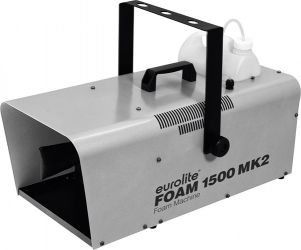
EUROLITE Foam 1500 MK2 Schaummaschine
EUROLITE Foam 1500 MK2 Foam Machine
€219.00 *
incl. tax, free shipping to Germany
[International shipping costs]
Availability:
Delivery time: 1-3 days
beamZ Pro JFC1000 Jet-Schaumkanone
beamZ Pro JFC1000 Jet Foam Cannon
€2,195.00 *
incl. tax, plus forwarding agency costs
Availability:
Delivery time: 3-5 days

Bulky goods

EUROLITE Foam 1200 Schaumkanone
EUROLITE Foam 1200 Cannon
€2,099.00 *
incl. tax, plus forwarding agency costs
Availability:
Delivery time: 3-5 days

Bulky goods

3 Articles
Close filters
 
  •  
  •  
from to
No results were found for the filter!
EUROLITE Foam 1500 MK2 Schaummaschine
EUROLITE Foam 1500 MK2 Foam Machine
Foam machine with 5-liter tank and remote control Produces very large amounts of foam for any party • A tank full will generate 3 m³ foam • Compact design • Easy operation:...
€219.00 *
incl. tax, free shipping to Germany
[International shipping costs]
Availability:
Delivery time: 1-3 days
EUROLITE Foam 1200 Schaumkanone
EUROLITE Foam 1200 Cannon
Foam machine for big partys, directly connected with the fluid tank Produces great amount of foam • Simply fill in foam fluid directly from the can and start • Produce voluminous foam...
€2,099.00 *
incl. tax, plus forwarding agency costs
Availability:
Delivery time: 3-5 days

Bulky goods

beamZ Pro JFC1000 Jet-Schaumkanone
beamZ Pro JFC1000 Jet Foam Cannon
The JFC1000 is a very powerful foam machine which produces a high quality foam. The foam is produced inside the head and is blown out continuously. This machine can shoot a continuous stream of...
€2,195.00 *
incl. tax, plus forwarding agency costs
Availability:
Delivery time: 3-5 days

Bulky goods

Facts
Foam Machines – Create Spectacular Foam Effects for Your Events: Foam machines and foam cannons are essential equipment for creating unforgettable party atmospheres at clubs, outdoor festivals, beach parties and special events. Whether you need a compact foam generator for intimate venues or a high-capacity foam cannon that shoots foam 6–8 metres into the crowd, LTT offers professional solutions that deliver impressive results. Our range... Read more »
Viewed
Facts

Foam Machines – Create Spectacular Foam Effects for Your Events

Foam machines and foam cannons are essential equipment for creating unforgettable party atmospheres at clubs, outdoor festivals, beach parties and special events. Whether you need a compact foam generator for intimate venues or a high-capacity foam cannon that shoots foam 6–8 metres into the crowd, LTT offers professional solutions that deliver impressive results. Our range includes stationary foam generators for overhead installation and mobile foam cannons for flexible positioning, ensuring you can create the perfect foam coverage for any event scenario.

How Foam Machines and Foam Cannons Work

A foam machine operates through a precisely engineered system that transforms a mixture of foam concentrate and water into dense, long-lasting foam. The process begins with a pump that draws the pre-mixed solution from a reservoir tank – typically ranging from 3 litres for compact units to 25 litres for professional installations. This mixture is then forced through a polyester mesh or net under pressure, where it meets a powerful airstream generated by an integrated fan.

The combination of liquid, air pressure and the mesh structure creates the characteristic foam bubbles with their stable structure. An outlet nozzle then directs the finished foam onto the dance floor or event area. Professional foam generators can produce approximately 3 cubic metres of foam per minute, whilst high-capacity foam cannons achieve outputs of up to 100,000 litres of foam per minute with shooting distances of 6–8 metres.

The key difference between stationary foam generators and foam cannons lies in their installation and application method. Foam generators are typically mounted overhead on truss systems, allowing foam to cascade down onto the crowd from above. Foam cannons, by contrast, are positioned at ground level or on elevated platforms and actively shoot foam horizontally into the audience, eliminating the need for complex overhead rigging infrastructure.

Technical Components and Operation

Every professional foam machine system comprises several essential components: the main foam generation unit with its polyester mesh assembly, an external pump for fluid delivery, intake and delivery hoses, reservoir containers (ranging from 300-litre portable tanks to 1,000-litre IBC containers for large-scale events), and appropriate electrical protection including residual current devices (RCDs) for safe operation. The mixing ratio between foam concentrate and water significantly affects foam density and longevity – typical ratios range from 1:25 for dense, stable foam at the beginning of an event to 1:33 for lighter, more voluminous foam during peak party hours.

Applications and Event Scenarios for Foam Machines

Foam machines have become indispensable equipment across a wide spectrum of professional event applications. In nightclubs and discotheques, stationary foam generators mounted on overhead truss systems create dramatic foam coverage that transforms the dance floor into an immersive experience. The cooling effect of foam makes these installations particularly popular during summer events and beach-themed parties, where temperatures can become uncomfortable for dancers.

Outdoor festivals and large-scale public events benefit from high-capacity foam cannons that can cover extensive areas quickly. These mobile units offer the flexibility to position foam effects strategically without requiring permanent overhead infrastructure. Swimming pool parties and aquatic venues represent another major application area, where foam machines create spectacular visual effects that complement the water environment.

Theatre productions, film and television work increasingly incorporate foam effects for atmospheric scenes and special sequences. The controllable nature of modern foam machines – many featuring DMX control capabilities or wired remote operation – allows precise timing and intensity adjustment to match performance requirements. School graduation celebrations, corporate events and promotional activities also frequently employ foam machines to create memorable "wow moments" that engage participants and generate social media content.

Professional Installation Considerations

When planning foam machine deployment, you must consider several practical factors. Indoor venues require adequate drainage and non-slip flooring, as foam creates wet surfaces. Outdoor installations need protection from wind conditions that can disperse foam prematurely. Electrical supply requirements typically include 230V/16A connections with proper earth protection. Water supply access is essential, either through direct mains connection or pre-filled reservoir tanks. Professional event technicians should always conduct site assessments to determine optimal machine positioning, coverage patterns and safety measures including appropriate warning signage for participants.

Quality Standards and Professional Equipment Selection

Professional foam machines differ significantly from consumer-grade equipment in build quality, output capacity and safety features. When selecting foam equipment for professional applications, you should prioritise machines from established manufacturers such as Eurolite, Showtec and Antari, who engineer their products to withstand intensive commercial use and meet European safety standards.

Output capacity represents the primary specification to consider. Entry-level foam generators typically produce 3–3.5 cubic metres per minute, suitable for small to medium venues up to 100 square metres. Mid-range professional units achieve 5–8 cubic metres per minute, whilst high-capacity foam cannons can generate the equivalent of 100,000–200,000 litres of foam per minute, with projection distances reaching 6–8 metres for large festival applications.

Tank capacity directly affects operational duration between refills. Compact portable units feature 3–5 litre integrated tanks, requiring frequent attention during extended events. Professional installations typically employ external 25-litre containers or larger 300–1,000 litre reservoir systems, enabling hours of continuous operation. The pump system quality determines reliability – professional units incorporate robust centrifugal pumps with adequate flow rates (typically 20–40 litres per minute) and pressure capacity to maintain consistent foam production.

Technical Specifications and Performance Metrics

Power consumption for professional foam machines ranges from 800 watts for compact generators to 2,000–3,000 watts for high-output foam cannons. These figures include both the foam generation mechanism and the integrated pump system. Weight varies considerably: portable units weigh 8–15 kilograms, whilst professional foam cannons can reach 40–80 kilograms, requiring appropriate mounting hardware or transport cases.

Price brackets reflect capability and build quality. Entry-level foam machines suitable for occasional mobile DJ use start around €150–250. Professional stationary generators for permanent club installations range from €400–800, whilst high-capacity foam cannons with advanced control systems command €1,200–2,500. When evaluating total cost of ownership, factor in foam fluid consumption – professional events typically require 25–50 litres of concentrate per event, with quality dermatologically tested fluids costing €8–12 per litre in bulk quantities.

Foam Fluids, Concentrates and Mixing Ratios

The foam fluid you select fundamentally determines the quality, longevity and safety of your foam effects. Professional foam concentrates are specifically formulated for event applications, bearing little resemblance to household detergents or cleaning products. These specialised fluids must meet stringent dermatological and toxicological safety standards, as participants will have direct skin and potential eye contact with the foam.

Quality foam concentrates contain no dyes, perfumes or harsh additives that could cause skin irritation or stain clothing and surfaces. Dermatologically tested formulations from reputable manufacturers ensure participant safety whilst maintaining excellent foam structure and stability. The concentrate typically arrives in 5-litre or 25-litre containers, with larger bulk packaging available for high-volume professional users.

Mixing Ratios and Foam Characteristics

The mixing ratio between concentrate and water dramatically affects foam density, bubble size and longevity. A ratio of 1:25 (one part concentrate to 25 parts water) produces dense, stable foam with smaller bubbles that persists longer on surfaces – ideal for the opening phase of foam parties when you want to build substantial coverage. As the event progresses, switching to a 1:33 ratio creates lighter, more voluminous foam with larger bubbles that feels less "heavy" for participants dancing in deep foam.

Professional operators often prepare multiple batches at different ratios, adjusting throughout the event to maintain optimal foam conditions. Temperature affects mixing efficiency – slightly warm water (20–25°C) helps concentrate dissolve more thoroughly than cold water, ensuring consistent foam production. Always pre-mix concentrate and water in the reservoir tank rather than attempting to add concentrate during operation, which can cause pump cavitation and inconsistent output.

Consumption Calculations and Fluid Management

A typical club event lasting 3–4 hours with intermittent foam effects consumes approximately 25 litres of concentrate mixed with 625–825 litres of water. Large outdoor festivals may require 50–100 litres of concentrate for continuous operation. School graduation events or single-session foam parties typically use 10–25 litres depending on venue size and desired coverage depth. Professional event technicians should always maintain reserve fluid supplies, as running out mid-event creates disappointing gaps in the entertainment programme. Store unused concentrate in sealed containers away from direct sunlight, where it typically remains viable for 12–24 months.

LTT – Your Specialist for Event Technology

LTT has supplied professional event technology to technicians, event agencies and venues across Europe for over 25 years. Our foam machine range encompasses everything from compact portable units for mobile entertainers to high-capacity professional systems for permanent installations. Every foam machine we stock comes from established manufacturers whose products we've tested extensively in real-world applications.

When you order foam equipment from LTT, you benefit from free shipping on orders over €69, with express delivery options available when you need equipment urgently. Our warehouse in Bocholt, Germany, maintains substantial stock levels, ensuring same-day dispatch for most products. We ship worldwide, supporting an international network of professional users and resellers who rely on our expertise and product quality.

Our technical team understands the practical challenges of foam machine deployment – from calculating fluid requirements for specific venue sizes to selecting appropriate pump capacities for different installation scenarios. Whether you're equipping a permanent club installation or building a mobile foam party business, we'll help you select the optimal solution. With LTT's 3-year warranty on selected products and our commitment to stocking genuine replacement parts and accessories, you're investing in equipment that delivers reliable performance event after event.

Safety Standards and Professional Operation

Operating foam machines in professional event environments requires adherence to specific safety protocols and electrical standards. All foam machines sold for European markets must comply with relevant CE marking requirements and low voltage directives. Professional installations should incorporate residual current devices (RCDs) with 30mA sensitivity to protect against electrical faults in the wet environment that foam creates.

Slip hazards represent the primary safety consideration with foam effects. Foam-covered surfaces become extremely slippery, requiring appropriate warning signage and, where possible, designated foam zones with barriers to prevent participants accidentally entering slippery areas. Professional event organisers should conduct risk assessments that address emergency egress routes, ensuring foam deployment doesn't compromise safe evacuation procedures.

Maintenance and Equipment Care

Proper maintenance extends foam machine lifespan and ensures consistent performance. After each use, flush the entire system thoroughly with clean water to remove residual foam concentrate, which can crystallise and block pumps or mesh assemblies if left to dry. The polyester foam generation mesh requires periodic inspection and replacement – typically every 50–100 operating hours depending on fluid quality and operating conditions. Pump impellers and seals represent the primary wear components, with professional units designed for easy field replacement.

Store foam machines in dry conditions with tanks drained and hoses disconnected. Before storage, run clean water through the system for several minutes to ensure no concentrate remains in pumps or internal passages. Inspect electrical connections and cables for damage before each deployment, replacing any components showing wear or degradation. Professional operators maintain service logs documenting operating hours, fluid consumption and maintenance activities, enabling predictive replacement of wear components before failures occur during events.

FAQ – Questions & Answers

How does a foam machine work?

A foam machine works by pumping a pre-mixed solution of foam concentrate and water through a polyester mesh or net whilst simultaneously forcing air through the same assembly. The pump draws the fluid mixture from a reservoir tank and delivers it under pressure to the foam generation unit. Inside this unit, the liquid meets a powerful airstream created by an integrated fan. As the mixture passes through the fine polyester mesh under pressure and air flow, it transforms into stable foam bubbles. An outlet nozzle then directs the finished foam onto the target area. Professional foam machines can produce 3–8 cubic metres of foam per minute, with high-capacity foam cannons achieving outputs equivalent to 100,000 litres per minute and projection distances of 6–8 metres.

What is the difference between a foam machine and a foam cannon?

Foam machines (also called foam generators) are typically stationary units designed for overhead mounting on truss systems, allowing foam to cascade down from above onto the dance floor or event area. These units require professional rigging infrastructure and are ideal for permanent club installations. Foam cannons, by contrast, are mobile units positioned at ground level or on elevated platforms that actively shoot foam horizontally into the crowd. Foam cannons eliminate the need for overhead rigging, making them perfect for outdoor festivals, temporary events and venues without permanent truss systems. Foam cannons generally offer higher output capacity (100,000–200,000 litres per minute) and longer projection distances (6–8 metres) compared to standard foam generators, though they typically cost more and weigh considerably more (40–80 kilograms versus 8–30 kilograms for generators).

What mixing ratio should be used for foam concentrate?

Professional foam concentrates typically use mixing ratios between 1:25 and 1:33 (one part concentrate to 25–33 parts water), depending on the desired foam characteristics. A ratio of 1:25 produces dense, stable foam with smaller bubbles that persists longer on surfaces – ideal for building substantial coverage at the beginning of foam parties. A ratio of 1:33 creates lighter, more voluminous foam with larger bubbles that feels less heavy for participants, suitable for the main party phase. For a 25-litre concentrate container, mixing at 1:25 requires 625 litres of water, whilst 1:33 requires 825 litres of water. Always pre-mix the concentrate and water thoroughly in the reservoir tank before operation, using slightly warm water (20–25°C) to ensure complete dissolution. Never add concentrate during operation, as this can cause pump cavitation and inconsistent foam output.

Can foam machines be used both indoors and outdoors?

Yes, professional foam machines can be used in both indoor and outdoor environments, though each setting requires specific considerations. Indoor venues benefit from controlled conditions but require adequate drainage systems and non-slip flooring, as foam creates wet, slippery surfaces. Indoor operators must ensure proper ventilation and consider how foam may affect lighting equipment or sensitive electronics. Outdoor applications offer natural drainage and ventilation but face challenges from wind conditions that can disperse foam prematurely or blow it away from the intended coverage area. Outdoor installations also require weather-protected electrical connections and may need larger reservoir tanks since water supply access can be limited. Both environments require appropriate safety measures including warning signage, designated foam zones and clear emergency egress routes that foam deployment doesn't compromise.

Is foam machine fluid safe for skin contact?

Professional foam concentrates specifically formulated for event applications are dermatologically tested and toxicologically safe for direct skin contact when used according to manufacturer guidelines. Quality foam fluids contain no harsh dyes, perfumes or additives that could cause skin irritation or allergic reactions. Reputable manufacturers ensure their concentrates meet stringent European safety standards for cosmetic and dermatological products. However, participants with sensitive skin or known allergies should exercise caution, and event organisers should provide clear information about foam composition. The foam fluid is designed to rinse away easily with water and typically doesn't stain clothing or surfaces. Always use genuine foam concentrates from established manufacturers rather than improvised alternatives like household detergents, which can cause skin irritation and damage foam machine components. After foam events, participants should shower to remove residual concentrate from skin and hair.

How much does a professional foam machine cost?

Professional foam machine prices vary significantly based on output capacity, build quality and features. Entry-level foam generators suitable for mobile DJs and small venue applications start around €150–250, offering basic functionality with 3-litre tanks and output of approximately 3 cubic metres per minute. Mid-range professional foam generators designed for permanent club installations range from €400–800, featuring larger tanks (5–10 litres), higher output (5–8 cubic metres per minute) and more robust construction for intensive commercial use. High-capacity foam cannons with advanced control systems, large reservoir compatibility and projection distances of 6–8 metres command €1,200–2,500. When calculating total investment, factor in essential accessories: external pumps (€80–150), reservoir containers (€50–200 depending on size), hoses and fittings (€30–80), and foam concentrate (€8–12 per litre, with typical events consuming 25–50 litres). Professional operators should also budget for replacement polyester mesh assemblies (€40–80) and pump maintenance components.

What power requirements do foam machines have?

Professional foam machines typically require 230V AC electrical supply with current ratings between 4–16 amperes depending on machine capacity. Compact foam generators consume 800–1,200 watts, drawing approximately 4–6 amperes from standard 230V circuits. Mid-range professional units require 1,200–1,800 watts (6–8 amperes), whilst high-capacity foam cannons with integrated high-output pumps consume 2,000–3,000 watts (10–16 amperes). All foam machine installations must incorporate proper electrical protection, particularly residual current devices (RCDs) with 30mA sensitivity, as foam creates wet operating conditions that increase electrical shock risk. Professional installations should use dedicated circuits rather than sharing power with other equipment, ensuring voltage stability and preventing circuit overload. Outdoor applications require weatherproof electrical connections and appropriate cable protection. Always verify that venue electrical infrastructure can support your foam machine's power requirements before deployment, and never operate foam equipment without proper earth connections and RCD protection.

How do you maintain and clean a foam machine?

Proper foam machine maintenance begins immediately after each use by flushing the entire system thoroughly with clean water for 5–10 minutes to remove all residual foam concentrate, which can crystallise and block pumps or mesh assemblies if allowed to dry. Disconnect and drain all hoses, tanks and reservoirs completely. Inspect the polyester foam generation mesh for tears, blockages or degradation – this component typically requires replacement every 50–100 operating hours depending on usage intensity and fluid quality. Check pump impellers and seals for wear, as these represent the primary consumable components in professional systems. Before storage, run clean water through the system one final time, then store the machine in dry conditions with all tanks empty and hoses disconnected. Before each deployment, inspect electrical cables and connections for damage, replacing any worn components. Professional operators maintain service logs documenting operating hours, fluid consumption and component replacements, enabling predictive maintenance that prevents failures during events. Annual deep servicing should include complete pump disassembly, seal replacement and electrical safety testing.