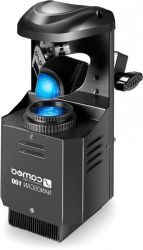
Scanners

Light Scanners – Dynamic Beam Effects for Professional Stage and Event Applications: Welcome to LTT, your specialist for professional event technology. Light scanners are essential moving-light fixtures that create dynamic beam effects through motorised mirrors or moving heads, projecting sharp, focused light beams across stages, dance floors and event spaces. Whether you're lighting a club night, a corporate event or a touring production, scanners deliver the fast, precise movement patterns and gobo...
Read more »
Scanners
Close window
Scanners

Light Scanners – Dynamic Beam Effects for Professional Stage and Event Applications

Welcome to LTT, your specialist for professional event technology. Light scanners are essential moving-light fixtures that create dynamic beam effects through motorised mirrors or moving heads, projecting sharp, focused light beams across stages, dance floors and event spaces. Whether you're lighting a club night, a corporate event or a touring production, scanners deliver the fast, precise movement patterns and gobo projections that bring energy and visual impact to any show. Our range includes LED scanners and traditional discharge-lamp models from leading manufacturers such as Eurolite, Showtec and Cameo, available as individual units or complete sets with DMX control and mounting hardware.

What Is a Light Scanner and How Does It Work?

A light scanner is a stage-lighting fixture that uses a motorised mirror or moving head to redirect a light beam rapidly across a venue, creating sweeping patterns, sharp gobo projections and dynamic colour changes. Unlike static PAR cans or wash lights, scanners offer pan and tilt movement—typically 180° pan and 90° tilt for mirror scanners, or full 540° pan and 270° tilt for moving-head designs—allowing a single fixture to cover a wide area with precision.

Mirror scanners mount a small, lightweight mirror in front of a stationary lamp, moving the mirror at high speed to redirect the beam. This design is compact, energy-efficient and ideal for fast, staccato effects. Moving-head scanners rotate the entire lamp assembly, offering greater flexibility for complex three-dimensional movements and heavier optical trains (multiple gobos, prisms, zoom lenses). Both types accept standard DMX512 control, enabling you to program sequences, synchronise multiple fixtures and trigger effects via lighting consoles or software.

Inside the fixture, the light source—either a traditional discharge lamp (HMI, HTI) or modern LED array—passes through a series of optical components: colour wheels with dichroic filters, rotating gobo wheels (metal or glass patterns), prisms for beam multiplication, and motorised focus and zoom lenses. The control board receives DMX commands and translates them into precise stepper-motor movements, adjusting pan, tilt, colour, gobo selection, rotation speed and strobe effects in real time. This modular optical architecture allows scanners to produce everything from tight, static logos to sweeping aerial effects and rapid chase sequences.

Compared to wash lights, scanners deliver narrow, defined beams (typically 10–20° beam angle) that cut through haze and fog, making them indispensable for creating visible light shafts and mid-air effects. They differ from moving heads primarily in speed and weight: mirror scanners are faster and lighter, while moving heads offer smoother, more cinematic movements and richer feature sets.

Applications – Where and When You Use Light Scanners

Light scanners are the workhorses of dynamic stage lighting, deployed wherever fast, precise beam effects are required. In clubs and discos, mirror scanners create the signature sweeping beams and rapid colour changes that energise dance floors, often synchronised to music via sound-to-light modes or MIDI triggers. Mobile DJs favour compact LED scanners for their low power consumption, instant strike time and lightweight design, making setup and teardown faster and safer.

Theatres and concert venues use moving-head scanners for more complex lighting plots, programming intricate cue sequences that follow performers, highlight set pieces or project custom gobos (company logos, architectural patterns) onto backdrops and cycloramas. Corporate events and product launches rely on scanners to create branded environments, projecting logos and slogans with pin-sharp focus while maintaining the flexibility to shift attention across multiple presentation areas without re-rigging.

Houses of worship integrate scanners into permanent installations, using slow, reverent movements and soft colour transitions during services, then switching to dynamic effects for youth events and concerts. Touring productions demand rugged, road-ready scanners with high IP ratings (IP20 minimum for indoor use, IP65 for outdoor festivals) and robust flight-case protection, ensuring reliable performance night after night.

In all these scenarios, scanners work best when paired with haze or fog machines, which render the beam path visible and amplify the three-dimensional effect. Mounting options range from floor stands and tripods for mobile rigs to truss clamps and rigging points for permanent installations, always observing DGUV Vorschrift 17 (formerly BGV C1) and EN 13814 safety standards for overhead rigging.

Quality and Professional Standards – Choosing the Right Light Scanner

Selecting a professional light scanner requires balancing output power, feature set, build quality and budget. LED scanners dominate the entry and mid-range segments, offering 30–100 W LED sources (equivalent to 150–575 W discharge lamps), instant on/off with no warm-up time, lower power consumption (typically 0.3–0.5 A at 230 V per fixture) and longer lamp life (20,000–50,000 hours). Brands such as Eurolite, Showtec and Cameo deliver reliable LED scanners in the €200–€800 range, suitable for mobile DJs, small venues and rental stock.

Traditional discharge-lamp scanners—using 150 W, 250 W or 575 W HTI or HMI lamps—remain the choice for large venues and touring productions where maximum brightness and colour saturation are non-negotiable. These fixtures produce 8,000–15,000 lumens, cutting through ambient light and long throw distances (15–30 m), but require 3–5 minutes warm-up, consume more power (2–5 A per fixture) and need lamp replacement every 750–2,000 hours. Expect to invest €800–€3,000 per unit for professional models from Elation, American DJ or Futurelight.

Key technical specifications to compare:

  • Pan and tilt range: 180°/90° (mirror) vs. 540°/270° (moving head)
  • Pan/tilt speed: 2–3 seconds for full movement (fast mirror scanners) vs. 4–6 seconds (moving heads)
  • Beam angle: 10–20° (narrow spot) vs. 25–40° (wide beam)
  • Colour wheels: 7–14 dichroic filters plus open white
  • Gobo wheels: 7–9 rotating gobos (metal or glass), often with indexing and continuous rotation
  • DMX channels: 8–16 channels (basic) vs. 20–32 channels (advanced, with 16-bit pan/tilt)
  • Weight: 3–6 kg (LED mirror scanner) vs. 10–20 kg (discharge moving head)

Build quality matters for longevity and safety. Look for die-cast aluminium housings, tempered glass lenses, sealed optical chambers (to prevent dust ingress) and robust pan/tilt mechanisms with metal gears (not plastic). Professional fixtures include thermal protection circuits, auto-reset fuses and quiet fan cooling (≤35 dB at 1 m). Always verify CE marking and check that the manufacturer provides photometric data (lux at distance, beam diagrams) and spare-part availability.

DMX Control and Programming – Integrating Scanners into Your Lighting Rig

Modern light scanners are controlled via the DMX512 protocol, the industry-standard digital communication system that transmits 512 channels of control data over a single XLR cable. Each scanner occupies a DMX address range (typically 8–32 channels depending on mode), with individual channels assigned to specific functions: pan, tilt, colour wheel, gobo wheel, gobo rotation, prism, focus, zoom, strobe and dimmer.

For small rigs, standalone DMX controllers such as the Eurolite DMX Move or Showtec Creator series offer fader-based control, allowing you to manually adjust each parameter or trigger pre-programmed scenes and chases. These controllers are ideal for mobile DJs and small venues where flexibility and portability outweigh the need for complex cue stacks.

Larger productions use lighting consoles (e.g. Chamsys MagicQ, Avolites Titan, GrandMA) or PC-based software (Daslight, Madrix, Arkaos) that provide fixture libraries, multi-cue playback, timecode synchronisation and visualisation tools. Fixture profiles (also called personalities) map the scanner's DMX channels to intuitive controls—pan/tilt on joysticks, colour and gobo selection via touch screens—and enable advanced features such as 16-bit pan/tilt for ultra-smooth movements, colour mixing (for RGBW LED scanners) and effects engines (circle, wave, random patterns).

Master/slave mode simplifies setup when you have multiple identical scanners: designate one fixture as the master (controlled via DMX or sound-to-light), and the others follow automatically via data link cables, eliminating the need to address each unit individually. This mode is popular for symmetrical stage setups (four scanners flanking a DJ booth) but offers less creative flexibility than full DMX control.

For wireless control, DMX over Wi-Fi or radio systems (Lumenradio, Swisson) replace cables with robust 2.4 GHz or 5 GHz transmission, reducing setup time and cable clutter. Always use certified wireless DMX transmitters that comply with ETSI EN 300 328 to avoid interference with other wireless systems (microphones, in-ear monitors).

When programming, remember that scanners respond best to smooth, deliberate movements rather than constant rapid changes, which can look chaotic and distract from the performance. Use fade times (1–3 seconds) for pan/tilt movements, snap changes for gobos and colours during beat hits, and strobe effects sparingly to maintain impact. Test all cues with haze to verify beam visibility and adjust focus/zoom to suit throw distance.

LED vs. Traditional Discharge Lamps – Choosing the Right Light Source

The choice between LED and traditional discharge-lamp scanners hinges on application, budget and operational priorities. LED technology has transformed the scanner market over the past decade, offering compelling advantages for most users while discharge lamps retain a niche in high-output, colour-critical applications.

LED Scanners: Efficiency, Longevity and Flexibility

LED scanners use high-power LED arrays (typically 30–100 W RGBW or white COB LEDs) as the light source, delivering several key benefits:

  • Instant on/off: No warm-up or cool-down time; strike the fixture and it's ready to go, ideal for touring and rental where setup time is critical.
  • Low power consumption: A 60 W LED scanner draws 0.26 A at 230 V, allowing you to run 8–10 fixtures on a single 16 A circuit—critical for mobile rigs and venues with limited power.
  • Long lamp life: 20,000–50,000 hours before noticeable degradation, eliminating the recurring cost and downtime of lamp replacement.
  • Colour mixing: RGBW LED scanners blend red, green, blue and white diodes to create millions of colours without mechanical colour wheels, enabling smooth colour fades and custom hues.
  • Lower heat output: Reduced thermal load means quieter fans, smaller heatsinks and safer operation in confined spaces.

LED scanners are the default choice for mobile DJs, small to mid-size venues, houses of worship and corporate events where versatility, reliability and low running costs outweigh the need for maximum brightness.

Discharge-Lamp Scanners: Power, Punch and Colour Saturation

Traditional scanners use high-intensity discharge lamps—150 W, 250 W or 575 W HTI (metal halide) or HMI (mercury short-arc) bulbs—that produce intense, collimated beams with exceptional colour rendering:

  • High output: 8,000–15,000 lumens, cutting through ambient light and long throw distances (20–40 m) with ease.
  • Saturated colours: Dichroic colour filters in the optical path deliver rich, saturated hues (deep blue, magenta, Congo blue) that LED colour mixing struggles to replicate.
  • Sharp gobos: The point-source nature of discharge lamps produces crisp, high-contrast gobo projections, even at long distances.

The trade-offs are significant: 3–5 minutes warm-up time, 750–2,000 hour lamp life (€50–€150 replacement cost), higher power consumption (2–5 A per fixture) and greater heat output requiring robust cooling. Discharge scanners remain the choice for large concert venues, festivals, touring productions and theatre where output and colour fidelity justify the operational overhead.

Hybrid Approach

Many professional lighting designers use both technologies in a single rig: LED scanners for colour washes, fast effects and low-power applications, with a smaller number of discharge scanners reserved for key moments—spotlighting soloists, projecting logos or creating dramatic aerial effects during climactic sequences. This hybrid approach balances performance, budget and power distribution.

LTT – Your Specialist for Event Technology

At LTT, we've been supplying professional event technology for over 25 years, combining deep technical expertise with a comprehensive product range and outstanding service. As both a retailer and manufacturer with our own production facility in Germany, we understand the demands of live events and the importance of reliable, high-quality equipment.

Our scanner range includes everything from compact LED mirror scanners for mobile DJs to high-output moving heads for touring productions, all from leading brands such as Eurolite, Showtec, Cameo, Futurelight and American DJ. We stock individual fixtures, complete sets with DMX controllers and mounting hardware, and all the accessories you need—DMX cables, truss clamps, safety bonds and haze machines to make those beams visible.

When you order from LTT, you benefit from free shipping on orders over €69, express delivery options for urgent projects, and worldwide shipping to support our international customer base. Every product is backed by our 3-year LTT warranty, giving you peace of mind whether you're building a permanent installation or expanding your rental inventory. Our B2B customers enjoy wholesale pricing and dedicated account management, while our international dealer network ensures local support for our premium brands Naxpro-Truss, Riggatec, Bullstage, Litetruss and Junior-Truss.

With over 100,000 positive customer reviews and a quarter-century of experience in event technology, LTT is your reliable partner for lighting, rigging, effects and everything you need to create unforgettable events. Explore our range, and let us help you find the optimal solution for your next production.

FAQ – Questions & Answers

What is a light scanner and how does it differ from a moving head?

A light scanner is a stage-lighting fixture that uses a motorised mirror or moving head to project dynamic beam effects across a venue. Mirror scanners mount a lightweight mirror in front of a stationary lamp, moving the mirror at high speed to redirect the beam—this design is compact, fast and energy-efficient, ideal for rapid effects in clubs and mobile rigs. Moving-head scanners rotate the entire lamp assembly, offering smoother, more complex three-dimensional movements and greater flexibility for theatrical applications. Both types accept DMX control and deliver sharp, focused beams (10–20° beam angle) that cut through haze, but mirror scanners excel at speed while moving heads provide richer feature sets (more gobos, prisms, zoom lenses). The choice depends on your application: mirror scanners for fast club effects, moving heads for concert touring and theatre.

What are the key differences between LED and discharge-lamp scanners?

LED scanners use 30–100 W LED arrays, offering instant on/off with no warm-up time, low power consumption (0.3–0.5 A per fixture at 230 V), long lamp life (20,000–50,000 hours) and colour mixing via RGBW diodes. They are ideal for mobile DJs, small to mid-size venues and applications where versatility and low running costs are priorities. Discharge-lamp scanners use 150–575 W HTI or HMI lamps, producing 8,000–15,000 lumens with exceptional colour saturation and sharp gobo projection, but require 3–5 minutes warm-up, consume more power (2–5 A per fixture) and need lamp replacement every 750–2,000 hours. Discharge scanners remain the choice for large concert venues, festivals and touring productions where maximum brightness and colour fidelity justify the operational overhead.

How do I control multiple light scanners in a lighting rig?

Multiple light scanners are controlled via the DMX512 protocol, which transmits 512 channels of control data over a single XLR cable. Each scanner occupies a DMX address range (typically 8–32 channels), with individual channels assigned to pan, tilt, colour, gobo, rotation, prism, focus, zoom, strobe and dimmer functions. For small rigs, standalone DMX controllers offer fader-based control and pre-programmed scenes. Larger productions use lighting consoles or PC-based software (Daslight, Madrix, Chamsys MagicQ) that provide fixture libraries, multi-cue playback and visualisation tools. Master/slave mode simplifies setup when you have multiple identical scanners: designate one as the master (controlled via DMX or sound-to-light), and the others follow automatically. For wireless control, DMX over Wi-Fi or radio systems eliminate cables while maintaining robust 2.4 GHz or 5 GHz transmission.

What technical specifications should I compare when choosing a light scanner?

Key specifications include pan and tilt range (180°/90° for mirror scanners, 540°/270° for moving heads), pan/tilt speed (2–3 seconds for fast mirror scanners, 4–6 seconds for moving heads), beam angle (10–20° for narrow spots, 25–40° for wide beams), colour wheels (7–14 dichroic filters plus open white), gobo wheels (7–9 rotating gobos with indexing), DMX channels (8–16 for basic control, 20–32 for advanced features with 16-bit pan/tilt), light source (30–100 W LED or 150–575 W discharge lamp), output (2,000–15,000 lumens) and weight (3–6 kg for LED mirror scanners, 10–20 kg for discharge moving heads). Also verify build quality: die-cast aluminium housing, tempered glass lenses, sealed optical chambers, metal gears in pan/tilt mechanisms, thermal protection circuits and CE marking with photometric data.

Where are light scanners typically used in professional event production?

Light scanners are deployed in clubs and discos for fast, sweeping beam effects synchronised to music; mobile DJ rigs for lightweight, low-power dynamic lighting; theatres and concert venues for complex cue sequences that follow performers and project custom gobos; corporate events and product launches to create branded environments with logo projections; houses of worship for both reverent slow movements during services and dynamic effects for youth events; and touring productions where rugged, road-ready fixtures with high IP ratings ensure reliable performance night after night. In all scenarios, scanners work best when paired with haze or fog machines to render the beam path visible, and they are mounted on floor stands, tripods, truss clamps or rigging points in compliance with DGUV Vorschrift 17 and EN 13814 safety standards.

What is the typical power consumption and lamp life of LED scanners?

LED scanners typically use 30–100 W LED arrays, drawing 0.13–0.43 A per fixture at 230 V, allowing you to run 8–10 fixtures on a single 16 A circuit—critical for mobile rigs and venues with limited power distribution. Lamp life ranges from 20,000 to 50,000 hours before noticeable degradation, eliminating the recurring cost and downtime of lamp replacement. In contrast, traditional discharge-lamp scanners consume 2–5 A per fixture (150–575 W lamps) and require lamp replacement every 750–2,000 hours at a cost of €50–€150 per lamp. The lower power consumption and longer lamp life of LED scanners make them the default choice for mobile DJs, small to mid-size venues and applications where operational efficiency and low running costs are priorities.

How do I integrate light scanners with haze and fog machines for maximum effect?

Light scanners produce narrow, focused beams (10–20° beam angle) that are invisible in clear air but become dramatic, three-dimensional shafts of light when passed through haze or fog. Haze machines (oil-based or water-based) create a fine, even mist that hangs in the air for extended periods, ideal for revealing scanner beams without obscuring the stage or audience. Fog machines produce denser, ground-hugging clouds that create more dramatic effects but dissipate faster. Position haze machines upstage or in the wings, allowing the mist to distribute evenly across the performance area before the scanners strike. Use haze sparingly—too much obscures the stage and triggers smoke detectors, too little renders the beams invisible. Adjust scanner focus and zoom to suit throw distance, and program smooth pan/tilt movements (1–3 second fade times) to allow the beams to sweep gracefully through the haze.

What safety standards and mounting requirements apply to overhead light scanners?

When rigging light scanners overhead, you must comply with DGUV Vorschrift 17 (formerly BGV C1) in Germany and EN 13814 across Europe, which mandate secondary safety attachments (safety bonds or wire rope) for all suspended equipment. Use certified truss clamps or rigging hardware rated for the scanner's weight plus a safety factor of 10:1, and attach a steel safety bond (rated ≥10× fixture weight) to an independent rigging point—never to the same clamp. Verify that the truss or rigging structure is rated for the total load (fixtures, clamps, cables) and that all rigging points are inspected annually by a qualified rigger. For floor-mounted scanners, use stable tripods or floor stands with wide bases and sandbag ballast to prevent tipping. Always route power and DMX cables safely to avoid trip hazards, and ensure adequate ventilation around fixtures to prevent overheating. Professional installations should be designed and certified by a structural engineer or rigging specialist.

Top seller
EUROLITE LED CAT-80 Strahleneffekt
EUROLITE LED CAT-80 Beam Effect
€259.00 *
incl. tax, free shipping to Germany
[International shipping costs]
Availability:
Delivery time: 1-3 days
EUROLITE LED TSL-1000 Scan MK2
€419.00 *
incl. tax, free shipping to Germany
[International shipping costs]
Availability:
Delivery time: 3-5 days
Chauvet DJ Blazor - LED-Barrelscanner
Chauvet DJ Blazor
€379.00 * €325.00 *
incl. tax, free shipping to Germany
[International shipping costs]
Availability:
Low stock; Delivery time: 1-3 days
Delivery time: 1-3 days
Showtec Shark Scan One - Weiße LED mit 100W
SHOWTEC Shark Scan One Compact 100 W LED Scanner
€495.00 *
incl. tax, free shipping to Germany
[International shipping costs]
Availability:
Delivery time: 3-5 days
Showtec Shark Barrel One - Weiße LED mit 100W
SHOWTEC Shark Barrel One Compact 100 W LED Barrel
€495.00 *
incl. tax, free shipping to Germany
[International shipping costs]
Availability:
Currently not available
EUROLITE LED Twin Scan Bar
€499.00 *
incl. tax, free shipping to Germany
[International shipping costs]
Availability:
Delivery time: 3-5 days
EUROLITE LED TSL-1500 Scan
€541.59 *
incl. tax, free shipping to Germany
[International shipping costs]
Availability:
Delivery time: 3-5 days
EUROLITE LED TSL-150 Scan COB
€229.00 *
incl. tax, free shipping to Germany
[International shipping costs]
Availability:
Delivery time: 1-3 days
14 Articles
Close filters
 
  •  
  •  
  •  
  •  
from to
No results were found for the filter!
EUROLITE LED TSL-150 Scan COB
Handy scanner with 30 W COB LED, gobo and color wheel Compact design • Fuzzy sound control: program continues automatically during periods without music or bass-beat • 1 powerful LED 30 W...
€229.00 *
incl. tax, free shipping to Germany
[International shipping costs]
Availability:
Delivery time: 1-3 days
EUROLITE LED TSL-250 Scan COB
Handy scanner with 30 W COB LED, gobo and color wheel Compact design • 1 powerful LED 30 W COB (chip-on-board) • Positioning within TILT • Color wheel; gobo wheel with rotating...
€229.00 *
incl. tax, free shipping to Germany
[International shipping costs]
Availability:
Delivery time: 3-5 days
Showtec Shark Barrel One - Weiße LED mit 100W
SHOWTEC Shark Barrel One Compact 100 W LED Barrel
Compact 100 W LED Barrel • 7 gobos + open • 8 colours + white • 3-facet prism • Motorised focus • DMX and Master/Slave control • The Showtec Shark series offers...
€495.00 *
incl. tax, free shipping to Germany
[International shipping costs]
Availability:
Currently not available
EUROLITE LED TSL-1000 Scan MK2
Scanner with 100 W LED, rotating gobos, 3-facet prism, color wheel and motorized focus Note: The macro programs of the predecessor model (no. 51786122) are not identical, therefore no synchronous...
€419.00 *
incl. tax, free shipping to Germany
[International shipping costs]
Availability:
Delivery time: 3-5 days
EUROLITE LED Twin Scan Bar
LED Scan Bar with 2 full-fledged scanners, incl. IR remote control 2 powerful LEDs 37,5 W COB (chip-on-board) cold white (CW) moving lights effects controlled separately • Positioning within...
€499.00 *
incl. tax, free shipping to Germany
[International shipping costs]
Availability:
Delivery time: 3-5 days
EUROLITE LED TSL-1500 Scan
Scanner with 150 W LED, rotating gobos and 4-facet prism, color wheel and motorized focus 1 powerful LED 150 W COB (chip-on-board) cold white (CW) • Positioning within 180° PAN, 70°...
€541.59 *
incl. tax, free shipping to Germany
[International shipping costs]
Availability:
Delivery time: 3-5 days
EUROLITE LED TSL-350 Scan COB
Handy scanner with 60 W COB LED, gobo and color wheel Compact design • 1 powerful LED 60 W COB (chip-on-board) cold white (CW) • Positioning within TILT • Color wheel; gobo wheel...
€279.00 *
incl. tax, free shipping to Germany
[International shipping costs]
Availability:
Delivery time: 3-5 days
EUROLITE LED TSL-350 Scan COB ws
EUROLITE LED TSL-350 Scan COB wh
Handy scanner with 60 W COB LED, gobo and color wheel Compact design • 1 powerful LED 60 W COB (chip-on-board) cold white (CW) • Positioning within TILT • Color wheel; gobo wheel...
€309.00 *
incl. tax, free shipping to Germany
[International shipping costs]
Availability:
Delivery time: 3-5 days
EUROLITE LED CAT-80 Strahleneffekt
EUROLITE LED CAT-80 Beam Effect
LED beam effect with cold white 80 W COB LED and gobo wheel 3 different motion axes • Rotating faceted mirror inside • Rotating and swiveling mirror cylinder • Generates countless...
€259.00 *
incl. tax, free shipping to Germany
[International shipping costs]
Availability:
Delivery time: 1-3 days
Chauvet DJ Intimidator Scan 360
Intimidator Scan 360 Sharp and fast beams for the dance floor! Our Intimidator Scan 360 is a feature-rich scanner with a 100W LED that is also suitable for mobile performances. The Intimidator Scan...
€460.00 *
incl. tax, free shipping to Germany
[International shipping costs]
Availability:
Near-term available
Delivery time: approx. 1 week
Chauvet DJ Blazor - LED-Barrelscanner
Chauvet DJ Blazor
Chauvet DJ Blazor
Blazor Get rolling with a bright LED barrel scanner that fills the dancefloor with nearly 180 degrees of coverage. At 115 watts, this punchy effect light projects dazzling gobo imagery, even...
€379.00 * €325.00 *
incl. tax, free shipping to Germany
[International shipping costs]
Availability:
Low stock; Delivery time: 1-3 days
Delivery time: 1-3 days
EUROLITE Set 2x LED TSL-1000 Scan MK2 + Case mit Trolleyfunktion
EUROLITE Set 2x LED TSL-1000 Scan MK2 + Case with trolley function
Positioning within • EUROLITE LED TSL-1000 Scan MK2 Scanner with 100 W LED, rotating gobos, 3-facet prism, color wheel and motorized focus Note: The macro programs of the predecessor model...
€1,349.00 *
incl. tax, free shipping to Germany
[International shipping costs]
Availability:
Delivery time: 3-5 days
Showtec Shark Scan One - Weiße LED mit 100W
SHOWTEC Shark Scan One Compact 100 W LED Scanner
Compact 100 W LED Scanner • 7 rotating gobos + open • 8 colours + white • 3-facet prism • Motorised focus • DMX and Master/Slave control • The Showtec Shark series...
€495.00 *
incl. tax, free shipping to Germany
[International shipping costs]
Availability:
Delivery time: 3-5 days
Facts
Light Scanners – Dynamic Beam Effects for Professional Stage and Event Applications: Welcome to LTT, your specialist for professional event technology. Light scanners are essential moving-light fixtures that create dynamic beam effects through motorised mirrors or moving heads, projecting sharp, focused light beams across stages, dance floors and event spaces. Whether you're lighting a club night, a corporate event or a touring production,... Read more »
Viewed
Facts

Light Scanners – Dynamic Beam Effects for Professional Stage and Event Applications

Welcome to LTT, your specialist for professional event technology. Light scanners are essential moving-light fixtures that create dynamic beam effects through motorised mirrors or moving heads, projecting sharp, focused light beams across stages, dance floors and event spaces. Whether you're lighting a club night, a corporate event or a touring production, scanners deliver the fast, precise movement patterns and gobo projections that bring energy and visual impact to any show. Our range includes LED scanners and traditional discharge-lamp models from leading manufacturers such as Eurolite, Showtec and Cameo, available as individual units or complete sets with DMX control and mounting hardware.

What Is a Light Scanner and How Does It Work?

A light scanner is a stage-lighting fixture that uses a motorised mirror or moving head to redirect a light beam rapidly across a venue, creating sweeping patterns, sharp gobo projections and dynamic colour changes. Unlike static PAR cans or wash lights, scanners offer pan and tilt movement—typically 180° pan and 90° tilt for mirror scanners, or full 540° pan and 270° tilt for moving-head designs—allowing a single fixture to cover a wide area with precision.

Mirror scanners mount a small, lightweight mirror in front of a stationary lamp, moving the mirror at high speed to redirect the beam. This design is compact, energy-efficient and ideal for fast, staccato effects. Moving-head scanners rotate the entire lamp assembly, offering greater flexibility for complex three-dimensional movements and heavier optical trains (multiple gobos, prisms, zoom lenses). Both types accept standard DMX512 control, enabling you to program sequences, synchronise multiple fixtures and trigger effects via lighting consoles or software.

Inside the fixture, the light source—either a traditional discharge lamp (HMI, HTI) or modern LED array—passes through a series of optical components: colour wheels with dichroic filters, rotating gobo wheels (metal or glass patterns), prisms for beam multiplication, and motorised focus and zoom lenses. The control board receives DMX commands and translates them into precise stepper-motor movements, adjusting pan, tilt, colour, gobo selection, rotation speed and strobe effects in real time. This modular optical architecture allows scanners to produce everything from tight, static logos to sweeping aerial effects and rapid chase sequences.

Compared to wash lights, scanners deliver narrow, defined beams (typically 10–20° beam angle) that cut through haze and fog, making them indispensable for creating visible light shafts and mid-air effects. They differ from moving heads primarily in speed and weight: mirror scanners are faster and lighter, while moving heads offer smoother, more cinematic movements and richer feature sets.

Applications – Where and When You Use Light Scanners

Light scanners are the workhorses of dynamic stage lighting, deployed wherever fast, precise beam effects are required. In clubs and discos, mirror scanners create the signature sweeping beams and rapid colour changes that energise dance floors, often synchronised to music via sound-to-light modes or MIDI triggers. Mobile DJs favour compact LED scanners for their low power consumption, instant strike time and lightweight design, making setup and teardown faster and safer.

Theatres and concert venues use moving-head scanners for more complex lighting plots, programming intricate cue sequences that follow performers, highlight set pieces or project custom gobos (company logos, architectural patterns) onto backdrops and cycloramas. Corporate events and product launches rely on scanners to create branded environments, projecting logos and slogans with pin-sharp focus while maintaining the flexibility to shift attention across multiple presentation areas without re-rigging.

Houses of worship integrate scanners into permanent installations, using slow, reverent movements and soft colour transitions during services, then switching to dynamic effects for youth events and concerts. Touring productions demand rugged, road-ready scanners with high IP ratings (IP20 minimum for indoor use, IP65 for outdoor festivals) and robust flight-case protection, ensuring reliable performance night after night.

In all these scenarios, scanners work best when paired with haze or fog machines, which render the beam path visible and amplify the three-dimensional effect. Mounting options range from floor stands and tripods for mobile rigs to truss clamps and rigging points for permanent installations, always observing DGUV Vorschrift 17 (formerly BGV C1) and EN 13814 safety standards for overhead rigging.

Quality and Professional Standards – Choosing the Right Light Scanner

Selecting a professional light scanner requires balancing output power, feature set, build quality and budget. LED scanners dominate the entry and mid-range segments, offering 30–100 W LED sources (equivalent to 150–575 W discharge lamps), instant on/off with no warm-up time, lower power consumption (typically 0.3–0.5 A at 230 V per fixture) and longer lamp life (20,000–50,000 hours). Brands such as Eurolite, Showtec and Cameo deliver reliable LED scanners in the €200–€800 range, suitable for mobile DJs, small venues and rental stock.

Traditional discharge-lamp scanners—using 150 W, 250 W or 575 W HTI or HMI lamps—remain the choice for large venues and touring productions where maximum brightness and colour saturation are non-negotiable. These fixtures produce 8,000–15,000 lumens, cutting through ambient light and long throw distances (15–30 m), but require 3–5 minutes warm-up, consume more power (2–5 A per fixture) and need lamp replacement every 750–2,000 hours. Expect to invest €800–€3,000 per unit for professional models from Elation, American DJ or Futurelight.

Key technical specifications to compare:

  • Pan and tilt range: 180°/90° (mirror) vs. 540°/270° (moving head)
  • Pan/tilt speed: 2–3 seconds for full movement (fast mirror scanners) vs. 4–6 seconds (moving heads)
  • Beam angle: 10–20° (narrow spot) vs. 25–40° (wide beam)
  • Colour wheels: 7–14 dichroic filters plus open white
  • Gobo wheels: 7–9 rotating gobos (metal or glass), often with indexing and continuous rotation
  • DMX channels: 8–16 channels (basic) vs. 20–32 channels (advanced, with 16-bit pan/tilt)
  • Weight: 3–6 kg (LED mirror scanner) vs. 10–20 kg (discharge moving head)

Build quality matters for longevity and safety. Look for die-cast aluminium housings, tempered glass lenses, sealed optical chambers (to prevent dust ingress) and robust pan/tilt mechanisms with metal gears (not plastic). Professional fixtures include thermal protection circuits, auto-reset fuses and quiet fan cooling (≤35 dB at 1 m). Always verify CE marking and check that the manufacturer provides photometric data (lux at distance, beam diagrams) and spare-part availability.

DMX Control and Programming – Integrating Scanners into Your Lighting Rig

Modern light scanners are controlled via the DMX512 protocol, the industry-standard digital communication system that transmits 512 channels of control data over a single XLR cable. Each scanner occupies a DMX address range (typically 8–32 channels depending on mode), with individual channels assigned to specific functions: pan, tilt, colour wheel, gobo wheel, gobo rotation, prism, focus, zoom, strobe and dimmer.

For small rigs, standalone DMX controllers such as the Eurolite DMX Move or Showtec Creator series offer fader-based control, allowing you to manually adjust each parameter or trigger pre-programmed scenes and chases. These controllers are ideal for mobile DJs and small venues where flexibility and portability outweigh the need for complex cue stacks.

Larger productions use lighting consoles (e.g. Chamsys MagicQ, Avolites Titan, GrandMA) or PC-based software (Daslight, Madrix, Arkaos) that provide fixture libraries, multi-cue playback, timecode synchronisation and visualisation tools. Fixture profiles (also called personalities) map the scanner's DMX channels to intuitive controls—pan/tilt on joysticks, colour and gobo selection via touch screens—and enable advanced features such as 16-bit pan/tilt for ultra-smooth movements, colour mixing (for RGBW LED scanners) and effects engines (circle, wave, random patterns).

Master/slave mode simplifies setup when you have multiple identical scanners: designate one fixture as the master (controlled via DMX or sound-to-light), and the others follow automatically via data link cables, eliminating the need to address each unit individually. This mode is popular for symmetrical stage setups (four scanners flanking a DJ booth) but offers less creative flexibility than full DMX control.

For wireless control, DMX over Wi-Fi or radio systems (Lumenradio, Swisson) replace cables with robust 2.4 GHz or 5 GHz transmission, reducing setup time and cable clutter. Always use certified wireless DMX transmitters that comply with ETSI EN 300 328 to avoid interference with other wireless systems (microphones, in-ear monitors).

When programming, remember that scanners respond best to smooth, deliberate movements rather than constant rapid changes, which can look chaotic and distract from the performance. Use fade times (1–3 seconds) for pan/tilt movements, snap changes for gobos and colours during beat hits, and strobe effects sparingly to maintain impact. Test all cues with haze to verify beam visibility and adjust focus/zoom to suit throw distance.

LED vs. Traditional Discharge Lamps – Choosing the Right Light Source

The choice between LED and traditional discharge-lamp scanners hinges on application, budget and operational priorities. LED technology has transformed the scanner market over the past decade, offering compelling advantages for most users while discharge lamps retain a niche in high-output, colour-critical applications.

LED Scanners: Efficiency, Longevity and Flexibility

LED scanners use high-power LED arrays (typically 30–100 W RGBW or white COB LEDs) as the light source, delivering several key benefits:

  • Instant on/off: No warm-up or cool-down time; strike the fixture and it's ready to go, ideal for touring and rental where setup time is critical.
  • Low power consumption: A 60 W LED scanner draws 0.26 A at 230 V, allowing you to run 8–10 fixtures on a single 16 A circuit—critical for mobile rigs and venues with limited power.
  • Long lamp life: 20,000–50,000 hours before noticeable degradation, eliminating the recurring cost and downtime of lamp replacement.
  • Colour mixing: RGBW LED scanners blend red, green, blue and white diodes to create millions of colours without mechanical colour wheels, enabling smooth colour fades and custom hues.
  • Lower heat output: Reduced thermal load means quieter fans, smaller heatsinks and safer operation in confined spaces.

LED scanners are the default choice for mobile DJs, small to mid-size venues, houses of worship and corporate events where versatility, reliability and low running costs outweigh the need for maximum brightness.

Discharge-Lamp Scanners: Power, Punch and Colour Saturation

Traditional scanners use high-intensity discharge lamps—150 W, 250 W or 575 W HTI (metal halide) or HMI (mercury short-arc) bulbs—that produce intense, collimated beams with exceptional colour rendering:

  • High output: 8,000–15,000 lumens, cutting through ambient light and long throw distances (20–40 m) with ease.
  • Saturated colours: Dichroic colour filters in the optical path deliver rich, saturated hues (deep blue, magenta, Congo blue) that LED colour mixing struggles to replicate.
  • Sharp gobos: The point-source nature of discharge lamps produces crisp, high-contrast gobo projections, even at long distances.

The trade-offs are significant: 3–5 minutes warm-up time, 750–2,000 hour lamp life (€50–€150 replacement cost), higher power consumption (2–5 A per fixture) and greater heat output requiring robust cooling. Discharge scanners remain the choice for large concert venues, festivals, touring productions and theatre where output and colour fidelity justify the operational overhead.

Hybrid Approach

Many professional lighting designers use both technologies in a single rig: LED scanners for colour washes, fast effects and low-power applications, with a smaller number of discharge scanners reserved for key moments—spotlighting soloists, projecting logos or creating dramatic aerial effects during climactic sequences. This hybrid approach balances performance, budget and power distribution.

LTT – Your Specialist for Event Technology

At LTT, we've been supplying professional event technology for over 25 years, combining deep technical expertise with a comprehensive product range and outstanding service. As both a retailer and manufacturer with our own production facility in Germany, we understand the demands of live events and the importance of reliable, high-quality equipment.

Our scanner range includes everything from compact LED mirror scanners for mobile DJs to high-output moving heads for touring productions, all from leading brands such as Eurolite, Showtec, Cameo, Futurelight and American DJ. We stock individual fixtures, complete sets with DMX controllers and mounting hardware, and all the accessories you need—DMX cables, truss clamps, safety bonds and haze machines to make those beams visible.

When you order from LTT, you benefit from free shipping on orders over €69, express delivery options for urgent projects, and worldwide shipping to support our international customer base. Every product is backed by our 3-year LTT warranty, giving you peace of mind whether you're building a permanent installation or expanding your rental inventory. Our B2B customers enjoy wholesale pricing and dedicated account management, while our international dealer network ensures local support for our premium brands Naxpro-Truss, Riggatec, Bullstage, Litetruss and Junior-Truss.

With over 100,000 positive customer reviews and a quarter-century of experience in event technology, LTT is your reliable partner for lighting, rigging, effects and everything you need to create unforgettable events. Explore our range, and let us help you find the optimal solution for your next production.

FAQ – Questions & Answers

What is a light scanner and how does it differ from a moving head?

A light scanner is a stage-lighting fixture that uses a motorised mirror or moving head to project dynamic beam effects across a venue. Mirror scanners mount a lightweight mirror in front of a stationary lamp, moving the mirror at high speed to redirect the beam—this design is compact, fast and energy-efficient, ideal for rapid effects in clubs and mobile rigs. Moving-head scanners rotate the entire lamp assembly, offering smoother, more complex three-dimensional movements and greater flexibility for theatrical applications. Both types accept DMX control and deliver sharp, focused beams (10–20° beam angle) that cut through haze, but mirror scanners excel at speed while moving heads provide richer feature sets (more gobos, prisms, zoom lenses). The choice depends on your application: mirror scanners for fast club effects, moving heads for concert touring and theatre.

What are the key differences between LED and discharge-lamp scanners?

LED scanners use 30–100 W LED arrays, offering instant on/off with no warm-up time, low power consumption (0.3–0.5 A per fixture at 230 V), long lamp life (20,000–50,000 hours) and colour mixing via RGBW diodes. They are ideal for mobile DJs, small to mid-size venues and applications where versatility and low running costs are priorities. Discharge-lamp scanners use 150–575 W HTI or HMI lamps, producing 8,000–15,000 lumens with exceptional colour saturation and sharp gobo projection, but require 3–5 minutes warm-up, consume more power (2–5 A per fixture) and need lamp replacement every 750–2,000 hours. Discharge scanners remain the choice for large concert venues, festivals and touring productions where maximum brightness and colour fidelity justify the operational overhead.

How do I control multiple light scanners in a lighting rig?

Multiple light scanners are controlled via the DMX512 protocol, which transmits 512 channels of control data over a single XLR cable. Each scanner occupies a DMX address range (typically 8–32 channels), with individual channels assigned to pan, tilt, colour, gobo, rotation, prism, focus, zoom, strobe and dimmer functions. For small rigs, standalone DMX controllers offer fader-based control and pre-programmed scenes. Larger productions use lighting consoles or PC-based software (Daslight, Madrix, Chamsys MagicQ) that provide fixture libraries, multi-cue playback and visualisation tools. Master/slave mode simplifies setup when you have multiple identical scanners: designate one as the master (controlled via DMX or sound-to-light), and the others follow automatically. For wireless control, DMX over Wi-Fi or radio systems eliminate cables while maintaining robust 2.4 GHz or 5 GHz transmission.

What technical specifications should I compare when choosing a light scanner?

Key specifications include pan and tilt range (180°/90° for mirror scanners, 540°/270° for moving heads), pan/tilt speed (2–3 seconds for fast mirror scanners, 4–6 seconds for moving heads), beam angle (10–20° for narrow spots, 25–40° for wide beams), colour wheels (7–14 dichroic filters plus open white), gobo wheels (7–9 rotating gobos with indexing), DMX channels (8–16 for basic control, 20–32 for advanced features with 16-bit pan/tilt), light source (30–100 W LED or 150–575 W discharge lamp), output (2,000–15,000 lumens) and weight (3–6 kg for LED mirror scanners, 10–20 kg for discharge moving heads). Also verify build quality: die-cast aluminium housing, tempered glass lenses, sealed optical chambers, metal gears in pan/tilt mechanisms, thermal protection circuits and CE marking with photometric data.

Where are light scanners typically used in professional event production?

Light scanners are deployed in clubs and discos for fast, sweeping beam effects synchronised to music; mobile DJ rigs for lightweight, low-power dynamic lighting; theatres and concert venues for complex cue sequences that follow performers and project custom gobos; corporate events and product launches to create branded environments with logo projections; houses of worship for both reverent slow movements during services and dynamic effects for youth events; and touring productions where rugged, road-ready fixtures with high IP ratings ensure reliable performance night after night. In all scenarios, scanners work best when paired with haze or fog machines to render the beam path visible, and they are mounted on floor stands, tripods, truss clamps or rigging points in compliance with DGUV Vorschrift 17 and EN 13814 safety standards.

What is the typical power consumption and lamp life of LED scanners?

LED scanners typically use 30–100 W LED arrays, drawing 0.13–0.43 A per fixture at 230 V, allowing you to run 8–10 fixtures on a single 16 A circuit—critical for mobile rigs and venues with limited power distribution. Lamp life ranges from 20,000 to 50,000 hours before noticeable degradation, eliminating the recurring cost and downtime of lamp replacement. In contrast, traditional discharge-lamp scanners consume 2–5 A per fixture (150–575 W lamps) and require lamp replacement every 750–2,000 hours at a cost of €50–€150 per lamp. The lower power consumption and longer lamp life of LED scanners make them the default choice for mobile DJs, small to mid-size venues and applications where operational efficiency and low running costs are priorities.

How do I integrate light scanners with haze and fog machines for maximum effect?

Light scanners produce narrow, focused beams (10–20° beam angle) that are invisible in clear air but become dramatic, three-dimensional shafts of light when passed through haze or fog. Haze machines (oil-based or water-based) create a fine, even mist that hangs in the air for extended periods, ideal for revealing scanner beams without obscuring the stage or audience. Fog machines produce denser, ground-hugging clouds that create more dramatic effects but dissipate faster. Position haze machines upstage or in the wings, allowing the mist to distribute evenly across the performance area before the scanners strike. Use haze sparingly—too much obscures the stage and triggers smoke detectors, too little renders the beams invisible. Adjust scanner focus and zoom to suit throw distance, and program smooth pan/tilt movements (1–3 second fade times) to allow the beams to sweep gracefully through the haze.

What safety standards and mounting requirements apply to overhead light scanners?

When rigging light scanners overhead, you must comply with DGUV Vorschrift 17 (formerly BGV C1) in Germany and EN 13814 across Europe, which mandate secondary safety attachments (safety bonds or wire rope) for all suspended equipment. Use certified truss clamps or rigging hardware rated for the scanner's weight plus a safety factor of 10:1, and attach a steel safety bond (rated ≥10× fixture weight) to an independent rigging point—never to the same clamp. Verify that the truss or rigging structure is rated for the total load (fixtures, clamps, cables) and that all rigging points are inspected annually by a qualified rigger. For floor-mounted scanners, use stable tripods or floor stands with wide bases and sandbag ballast to prevent tipping. Always route power and DMX cables safely to avoid trip hazards, and ensure adequate ventilation around fixtures to prevent overheating. Professional installations should be designed and certified by a structural engineer or rigging specialist.

// Countdown for Black Deals