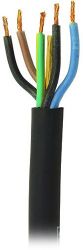
Unfinished cables

Unconfectioned Cables by the Metre – Your Specialist for Stage & Event Technology: Unconfectioned cables give you the freedom to build cable runs exactly as your rig demands. Whether you wire speakers, microphones, moving heads or a full network backbone, you cut every metre to length and terminate it your way. At LTT you order proven bulk cable — speaker cable, microphone cable, DMX cable, multicore and twisted-pair network cable — priced fairly per metre or on a full spool. As your specialist for...
Read more »
Unfinished cables
Close window
Unfinished cables

Unconfectioned Cables by the Metre – Your Specialist for Stage & Event Technology

Unconfectioned cables give you the freedom to build cable runs exactly as your rig demands. Whether you wire speakers, microphones, moving heads or a full network backbone, you cut every metre to length and terminate it your way. At LTT you order proven bulk cable — speaker cable, microphone cable, DMX cable, multicore and twisted-pair network cable — priced fairly per metre or on a full spool.

As your specialist for event technology, LTT supplies the raw material for reliable signal transmission on stage, in the club and on the road. Get flexible cable for custom setups and achieve dependable results every time.

What Are Unconfectioned Cables? Fundamentals and Distinction

Unconfectioned cables are cables sold without connectors already fitted — as bulk cable, on a spool or cut to length by the metre. The term "unconfectioned" means the cable ships bare so you can add the exact connectors your application requires, such as XLR, speakON, PowerCON or RJ45.

Difference between confectioned and unconfectioned cable

A confectioned cable is a finished product with plugs already soldered or crimped on and tested to a fixed length. An unconfectioned cable is the raw cable only. This distinction matters for event technicians who need non-standard lengths, custom colour coding or specific connector brands.

Why professionals choose cable by the metre

Buying cable by the metre lets you plan cable runs precisely, avoid coiled-up excess and keep spare stock for repairs. You control cross-section, shielding and sheath type instead of accepting whatever a pre-made lead offers.

Unconfectioned cable is the foundation for speaker lines, microphone loops, DMX chains for lighting and structured cabling. Compared with a fixed patch lead, bulk cable adapts to your venue rather than forcing your venue to adapt to a cable. That flexibility is exactly why rental companies and touring crews stock spools rather than boxes of pre-made leads.

Cable Types at a Glance: Speaker, Microphone, DMX, Multicore & Network

Each application in event technology needs a specific cable type. Choosing the right one is the difference between clean signal transmission and hum, dropouts or a blown amplifier channel.

Speaker cable

Speaker cable carries the amplified signal from the power amp to passive loudspeakers. Common cross-sections are 2x1.5 mm² for short runs and 2x2.5 mm² for longer runs or higher power. For multi-driver stage systems, versions such as 8x2.5 mm² feed several cabinets over one jacket.

Microphone cable

Microphone cable transmits low-level balanced audio. Typical constructions are 2x0.22 mm² or 2x0.35 mm² with two conductors plus a screen. The balanced design cancels interference, keeping vocals and instruments clean over long stage runs.

DMX cable

DMX cable carries digital lighting control data. It uses a 2x0.22 mm² construction with a defined 110 Ω impedance, which is essential for stable signal transmission to moving heads and effects.

Multicore cable

Multicore cable bundles many pairs into one jacket — 8-pair, 12-pair or 32-pair versions are common for stage and studio. Multicore keeps large channel counts tidy between stage box and mixing console.

Network cable

Twisted-pair network cable (Cat.6, Cat.6A, Cat.7, Cat.8) transports digital audio protocols such as Dante and AES67, media servers and DMX-over-IP across the venue.

Comparison: Which Cable for Microphone, Line, Speaker, DMX and Network

Use this comparison table as a quick buying-guide matrix. It maps each application to a recommended cable type, cross-section or category, and shielding — the single reference no competitor consolidates in one place.

Application Recommended cable Cross-section / category Shielding Typical connector
Microphone / balanced audio Microphone cable 2x0.22–0.35 mm² Shielded (braid/foil) XLR
Line level Signal cable 2x0.22 mm² Shielded XLR / jack
Passive loudspeaker Speaker cable 2x1.5 or 2x2.5 mm² Unshielded speakON
DMX lighting control DMX cable 2x0.22 mm², 110 Ω Shielded XLR 3/5-pin
Multi-channel stage Multicore 8–32 pairs Double shielded Multipin / XLR loom
Data / networked audio Twisted-pair Cat.6A / Cat.7 S/FTP RJ45 / etherCON

Why you should not swap DMX and microphone cable

A recurring pro question is whether microphone cable can replace true DMX cable. The short answer: not for reliable rigs. DMX cable is specified at 110 Ω impedance, while microphone cable typically sits around 45–75 Ω. The impedance mismatch causes signal reflections that lead to flickering fixtures and control errors, especially over long runs or with many devices in the chain. For a stable lighting show, always use dedicated DMX cable.

Shielded vs. Unshielded: What the Difference Means for Your Signal

The choice between shielded and unshielded cable directly affects signal integrity in event technology. A shield is a conductive layer around the conductors that drains electromagnetic interference (EMI) to earth.

What unshielded means

An unshielded cable has no dedicated conductive screen around its conductors. Unshielded designs are common for speaker cable, where the amplified signal level is high enough that induced noise is negligible. Unshielded network cable (U/UTP) is lighter and more flexible but more vulnerable to interference in electrically noisy environments.

What shielded means and how it works

A shielded cable adds an aluminium foil, a braided screen, or a combination of both around the conductors. The braid protects against low-frequency fields, and the screen coverage should exceed 30 % to be effective. A foil-plus-braid combination has proven most effective at reducing both internal crosstalk and external EMI, though it makes the cable thicker and stiffer.

Shielded vs. unshielded network cable

In network cabling you will see designations such as U/UTP (unshielded), F/UTP (foil), and S/FTP (braid plus foil per pair). For a stage packed with dimmers, LED walls and radio links, S/FTP shielded cable is the safer choice; for a quiet office run, unshielded may suffice.

As a rule: any low-level audio, digital control or data line benefits from shielding, while high-level speaker lines usually do not need it.

Technical Buying Criteria: Conductor Quality, OFC Copper and Cross-Section

Beyond the cable type, several technical features decide real-world performance. Judge unconfectioned cable by conductor material, cross-section and construction.

OFC – Oxygen Free Copper

OFC stands for Oxygen Free Copper. OFC conductors offer improved conductivity and signal quality compared with standard copper, lower resistance and reduced heat build-up under load. Fine copper stranded conductors also keep the cable flexible for repeated coiling on the road.

Cross-section selection by run length and power

Cross-section (measured in mm²) is the decisive value for speaker and power cable. As a practical guide: use 2x1.5 mm² for short speaker runs up to roughly 20 m at moderate power, and step up to 2x2.5 mm² for longer runs or higher wattage to limit voltage drop and power loss. The longer the run and the higher the load, the larger the cross-section you need. For DMX and microphone lines, the tiny 0.22 mm² conductor is standard because these carry signal, not power.

Impedance and electrical values

Watch impedance (110 Ω for DMX), conductor resistance (Ω/km) and capacitance (pF/m). Lower conductor resistance and capacitance generally mean cleaner transmission over distance.

Sheath and flexibility

A rubber or high-flex PVC sheath survives touring abuse better than a rigid installation jacket. For repeated setup and tear-down, choose road-tough, double-jacketed constructions.

Buying Guide: Choosing the Right Cable for Your Application

This buying guide walks you through the decisions that matter before you order unconfectioned cable at LTT.

1. Define the application first

Start with the signal: is it high-level speaker power, low-level balanced audio, DMX control or data? The application dictates the cable type and whether shielding is mandatory.

2. Measure your run length

Measure the actual cable run — plus a safety margin for routing around obstacles. Longer runs demand larger cross-sections for speaker/power cable and higher-category cable for network runs (remember the 100 m limit for structured twisted-pair links).

3. Match cross-section to power

For speaker and power lines, oversizing the cross-section slightly is cheap insurance against voltage drop. Never undersize a power cable feeding an amp rack.

4. Rubber sheathed mains cable for stage (TITANEX H07RN-F)

For professional power distribution on stages and outdoor events, TITANEX H07RN-F rubber sheathed cable is the industry benchmark. It stays flexible in cold weather, handles a wide temperature range, resists abrasion and oils, and is built for tour and road use. Available as 3x1.5 mm² and 5x1.5 mm² and larger, it carries mains power safely to distros and dimmers.

5. Choose spool or metre

Order full 50 m or 100 m spools for stock and installation, or exact cut-to-length metres for a single job. LTT prices bulk cable per metre (Preis pro lfm.) so you only pay for what you use.

Terminating Cables Yourself: Soldering, Crimping and Connectors

Because unconfectioned cables ship without plugs, you finish them to suit your rig. Knowing how to confection cables yourself is a core skill for every event technician.

Soldering vs. crimping

Soldering creates a permanent, low-resistance joint and is the classic method for XLR and jack connectors on audio cable. A clean solder joint with strain relief is mechanically robust and easy to inspect. Crimping uses a calibrated tool to form a gas-tight mechanical connection and is fast, repeatable and ideal for RJ45 network plugs and many power contacts. For touring gear, both methods work — pick the one your connector system specifies.

Matching connectors to cable type

  • XLR for microphone, DMX and balanced line cable
  • speakON for loudspeaker cable
  • PowerCON / TRUE1 for mains power on stage
  • RJ45 / etherCON for twisted-pair network cable

Practical tips

Always strip the jacket carefully to avoid nicking the conductors, keep the screen intact and grounded on one defined end, and use the connector's strain relief. For RJ45, follow the EIA/TIA 568A or 568B wiring scheme consistently at both ends. Test every finished cable with a cable tester before it goes into service — a two-minute check saves a show.

Safe Cable Routing and Management on Stage and at Events

Good cable management protects your signal, your gear and your audience. Once cables leave the spool, safe routing becomes a safety-critical task at every event.

Cable ramps and floor protection

Where cables cross walkways, use cable ramps to prevent trip hazards and to shield the cable from foot and vehicle traffic. Check the load rating of a ramp against the weight it must bear — pedestrian ramps and drive-over ramps have very different ratings.

Securing and bundling

Gaffer tape holds cables flat to the floor for short-term events without leaving heavy residue. Hook-and-loop ties bundle cable runs neatly and are reusable, unlike single-use cable ties. Keep power and signal cables separated where possible to reduce induced interference.

Routing without damage

Respect the minimum bend radius of every cable — tight bends damage conductors and shields over time. When fixing cables along walls or truss for a clean look, use proper clips, ties or hangers rather than nails or staples that pierce the jacket. Strain relief at every connector prevents the plug from taking the mechanical load. For rigging-related routing above the crowd, combine cable management with certified rigging accessories from your event assortment.

Brands and Manufacturers of Unconfectioned Cables

LTT stocks unconfectioned cable from established brands that professionals trust for daily touring and installation work. You get high-quality branded products chosen for reliable signal transmission and road durability.

Leading cable brands at LTT

  • DAP-Audio — a broad range of speaker, signal, DMX and multicore cable by the metre and on spools, engineered for stage and studio.
  • Adam Hall Cables / Sommer Cable — flexible instrument, microphone and multicore cable known for consistent quality.
  • TITANEX — the H07RN-F rubber sheathed mains cable regarded as the number one for power distribution on stage.
  • HELUKABEL and OMNITRONIC — solid options for installation and audio applications.
  • Neutrik and Hicon — the go-to connector brands to confection your cable with XLR, speakON, PowerCON and etherCON.

Alongside these, LTT carries connectors and accessories from further specialists so you can build a complete, matched cable solution from a single supplier.

Accessories for Unconfectioned Cables

Unconfectioned cable is only half the job — the right accessories turn bulk cable into a finished, road-ready solution.

Connectors

Stock XLR, speakON, PowerCON and RJ45/etherCON connectors to terminate your cable for its intended application. Choose robust metal-housing versions for touring use.

Tools and consumables

A quality soldering station, a calibrated crimp tool, wire strippers and heat-shrink tubing are the essentials for clean confectioning. Add solder, a cable tester and marker sleeves for labelling.

Management and protection

Cable ramps, hook-and-loop ties, gaffer tape and cable drums keep your runs tidy and safe. Store and transport finished cable in dedicated cases to protect connectors between shows.

Combining the right connectors, tools and management accessories with your bulk cable is the most reliable way to achieve professional, repeatable results on every job.

Care and Maintenance of Event Cables

Cables are among the hardest-working parts of any rig, so regular care and maintenance directly extends their service life and protects your signal quality.

Correct coiling

Coil cables using the over-under technique rather than wrapping them around your arm. Over-under coiling prevents internal twisting that fatigues conductors and shields over time, keeping cable flexible and tangle-free for the next show.

Inspection and cleaning

Before and after each event, inspect the jacket for cuts, the connectors for bent pins and the strain relief for damage. Wipe cables down to remove dust and moisture, and dry any cable used outdoors before storing it. A quick continuity and shield test with a cable tester catches faults before they cost you a gig.

Storage

Store cables loosely coiled in a dry case or on a drum, away from heat and sharp edges. Label each cable with type and length so the right cable is always at hand. Well-maintained cable keeps signal transmission reliable season after season.

LTT – Your Specialist for Event Technology

When you build custom cable runs, you want raw material you can rely on. As your specialist for event technology, LTT combines a deep assortment of unconfectioned cable with the service of a genuine professional partner — from single metres to full spools.

Orders ship from Bocholt, Germany, with free shipping from €69 and express delivery available when a show can't wait. Every purchase is backed by the 3-year LTT warranty, and B2B customers and resellers benefit from dedicated wholesale conditions through our international dealer network.

Complete your setup with matching connectors and cable management, or explore related ranges such as finished cables and connectors, stage lighting and audio equipment. Whatever your project, LTT helps you wire it right and achieve dependable, professional results every time.

FAQ – Questions & Answers

What is the difference between confectioned and unconfectioned cable?

Confectioned cable is a finished product with connectors already soldered or crimped on and cut to a fixed length, ready to plug in. Unconfectioned cable is the raw cable sold as bulk material — on a spool or cut to length by the metre — without any connectors fitted. Event technicians choose unconfectioned cable when they need custom lengths, specific connector brands such as Neutrik or speakON, or particular shielding and cross-sections. Unconfectioned cable gives you full control over your cable runs, while confectioned cable saves you the work of terminating plugs yourself.

What is the difference between shielded and unshielded cable?

The difference between shielded and unshielded cable is the presence of a conductive screen around the conductors. A shielded cable adds an aluminium foil, a braided screen or a combination of both to drain electromagnetic interference and crosstalk to earth; the screen coverage should exceed 30 % to be effective. An unshielded cable has no such screen, making it lighter and more flexible but more vulnerable to interference. In event technology, low-level audio, DMX control and data lines should be shielded, while high-level speaker cable is usually unshielded because its signal level is high enough that induced noise is negligible.

What does unshielded mean?

Unshielded means a cable has no dedicated conductive screen surrounding its conductors. Without a foil or braided shield, an unshielded cable cannot drain external electromagnetic interference away from the signal path, so it is more susceptible to noise in electrically busy environments. Unshielded designs are common for loudspeaker cable, where the amplified signal is strong enough that interference is not a problem, and for network cable in the U/UTP format used in quiet office runs. For stages packed with dimmers, LED walls and radio links, shielded cable is the safer choice to protect signal integrity.

What is an unshielded Ethernet cable?

An unshielded Ethernet cable, designated U/UTP (Unshielded Twisted Pair), is a network cable whose twisted pairs have no additional foil or braided shield around them. The signal integrity relies purely on the twisting of the pairs, which cancels much of the induced interference. Unshielded Ethernet cable is lighter, more flexible and cheaper than shielded types, making it fine for quiet, low-interference environments. On a stage or in a rack full of power and dimmer cables, a shielded S/FTP variant is recommended instead, because it screens each pair and the whole cable against the strong electromagnetic fields typical of event technology.

How can I fix cables invisibly to the wall?

To fix cables invisibly to the wall at an event, run them along skirting boards, door frames or the top edge of the wall where they draw less attention, and secure them with reusable cable clips, hook-and-loop ties or gentle cable trunking. On short-term event installs, colour-matched gaffer tape holds cables flat without leaving heavy residue. Always respect the cable's minimum bend radius and avoid nails or staples that pierce the jacket. Where cables must cross the floor, use a low-profile cable ramp instead so the run stays tidy and safe rather than truly hidden.

How do I connect a LAN cable without a plug?

To connect an unconfectioned LAN cable without a pre-fitted plug, you terminate it yourself with an RJ45 connector or into a keystone module. Strip the outer jacket carefully, untwist the pairs, arrange the eight conductors according to the EIA/TIA 568A or 568B wiring scheme, and keep the same scheme at both ends. Then crimp the RJ45 plug with a calibrated crimp tool, or press the conductors into a keystone jack using an insertion tool. Finally, test the finished cable with a cable tester to confirm all eight conductors and the shield are correctly connected before use.

What does an unconfectioned cable cost?

Unconfectioned cable at LTT is priced per metre (Preis pro lfm.) or as a full spool, so the cost depends on the cable type and cross-section. Thin DMX or microphone cable at 2x0.22 mm² starts from a few euros per metre, while heavier speaker cable and multicore cost more per metre because of the larger conductors and construction. Full 50 m or 100 m spools offer a better price per metre for stock and installation. Rubber sheathed mains cable such as TITANEX H07RN-F is likewise sold by the metre. Buying by the metre means you only pay for the length you actually need.

Which cable should I use for DMX lighting control?

For DMX lighting control you should use dedicated DMX cable with a 2x0.22 mm² construction and a defined 110 Ω impedance, terminated with 3-pin or 5-pin XLR connectors. The 110 Ω impedance is essential for stable data transmission to moving heads and effects, especially over long runs or with many fixtures in the chain. Do not substitute standard microphone cable, which typically sits around 45–75 Ω: the impedance mismatch causes signal reflections that lead to flickering fixtures and control errors. Always choose shielded DMX cable to protect the control signal against electromagnetic interference on a busy stage.

Categories
52 Articles
Close filters
 
  •  
  •  
  •  
  •  
  •  
  •  
  •  
  •  
  •  
  •  
  •  
  •  
from to
1 From 3 pages
No results were found for the filter!
HELUKABEL DMX Kabel 2x0,34 100m sw
HELUKABEL DMX cable 2x0.34 100m bk
The 2-core HELUSOUND® AES/EBU & DMX patch cable is protected against external interferences by its copper spiral screen. This cable is suitable for permanent laying for the control of...
€159.00 *
incl. tax, free shipping to Germany
[International shipping costs]
Availability:
Currently not available
HELUKABEL Steuerleitung 4x0,14 100m LiYCY
HELUKABEL Control Cable 4x0.14 100m LiYCY
For further information about this product, please refer to the Data Sheet under "Downloads" • Cable construction: 4 x 0,14 mm² control line LiYCY • Cable length: 100 m...
€89.90 *
incl. tax, free shipping to Germany
[International shipping costs]
Availability:
Delivery time: 3-5 days
TITANEX Gummikabel H07RN-F 3x1,5mm² Preis pro lfm.
TITANEX - H07 RN-F is the number 1 rubber hose line. It is extremely powerful and impresses with an exceptionally long service life. Manufactured according to strict and ISO - certified quality...
€1.53 *
incl. tax, plus shipping costs
Availability:
Delivery time: 1-3 days
TITANEX Gummikabel H07RN-F 5x1,5mm² Preis pro lfm.
TITANEX - H07 RN-F is the number 1 rubber hose line. It is extremely powerful and impresses with an exceptionally long service life. Manufactured according to strict and ISO - certified quality...
€2.79 *
incl. tax, plus shipping costs
Availability:
Delivery time: 1-3 days
Accu-Cable AC-DMX3/100R DMX cable, 3pin, 100m
Accu-Cable AC-DMX3 / 100R DMX cable, 3pin, 100m
DMX cable on a Roll 3pin 100m black 110 Ohm • Length: 100m • Color: black •
€105.20 *
incl. tax, free shipping to Germany
[International shipping costs]
Availability:
Delivery time: 3-5 days
SOMMER CABLE DMX Kabel 2x0,34 100m sw BINARY FRNC
SOMMER CABLE DMX cable 2x0.34 100m bk BINARY FRNC
High-quality data cable AES/EBU- and DMX-conformant, highly flexible • Very good shielding through the use of copper spiral shielding and a fleece vaporized with aluminum • Extremely...
€235.00 *
incl. tax, free shipping to Germany
[International shipping costs]
Availability:
Delivery time: 3-5 days
AC-DMX5/100R
AC-DMX5/100R
AC-DMX5/100R
DMX cable on a Roll 5pin 100m black - 110 Ohm - Length: 100m - Color: black
€166.43 *
incl. tax, free shipping to Germany
[International shipping costs]
Availability:
Delivery time: 1-3 days
TITANEX Gummikabel H07RN-F 5x2,5mm² Preis per lfm.
TITANEX - H07 RN-F is the number 1 rubber hose line. It is extremely powerful and impresses with an exceptionally long service life. Manufactured according to strict and ISO - certified quality...
€3.79 *
incl. tax, plus shipping costs
Availability:
Delivery time: 1-3 days
TITANEX Gummikabel H07RN-F 5x6mm² Preis per lfm.
TITANEX - H07 RN-F is the number 1 rubber hose line. It is extremely powerful and impresses with an exceptionally long service life. Manufactured according to strict and ISO - certified quality...
€8.75 *
incl. tax, plus shipping costs
Availability:
Delivery time: 1-3 days
TITANEX Gummikabel H07RN-F 5x35mm² Preis per lfm.
TITANEX - H07 RN-F is the number 1 rubber hose line. It is extremely powerful and impresses with an exceptionally long service life. Manufactured according to strict and ISO - certified quality...
€47.90 *
incl. tax, plus shipping costs
Availability:
Delivery time: 1-3 days
TITANEX Gummikabel H07RN-F 3x1,5mm² 50m Ring
TITANEX Power Cable 3x1.5 100m H07RN-F
Titanex power cables can be used as high-power cables for audio, light and heavy machines and are highly resistant to both extremely high and extremely low temperatures. These cables are highly...
€159.00 *
incl. tax, free shipping to Germany
[International shipping costs]
Availability:
Delivery time: 1-3 days
TITANEX Gummikabel H07RN-F 5x16mm² Preis per lfm.
TITANEX Rubber Cable H07RN-F 5x16mm² – Price per linear meter
TITANEX - H07 RN-F is the number 1 rubber hose line. It is extremely powerful and impresses with an exceptionally long service life. Manufactured according to strict and ISO - certified quality...
€22.60 *
incl. tax, plus shipping costs
Availability:
Delivery time: 1-3 days
DAP 240V Stromkabel Multi 14x1,5 mm2 Schwarz (P1415) Preis pro m
DAP-Audio 240 V Power Multicable, Black Price per metre - 14x 1.5 mm² (P1415)
240 V Power Multicable on spool 1.5 mm², Black : Rated Current (A): 16 A • Power Connector In: Open End • Power Connector Out: Open End • Cable Length: 1 m • Conductor...
€5.50 *
incl. tax, plus shipping costs
Availability:
Delivery time: 3-5 days
TITANEX Gummikabel H07RN-F 5x4mm² Preis per lfm.
TITANEX - H07 RN-F is the number 1 rubber hose line. It is extremely powerful and impresses with an exceptionally long service life. Manufactured according to strict and ISO - certified quality...
€5.60 *
incl. tax, plus shipping costs
Availability:
Delivery time: 1-3 days
SOMMER CABLE Kombikabel 1x2x0,25+3G1,5 SC-Monolith Power DMX 100m
SOMMER CABLE Combi Cable 1x2x0,25+3G1,5 SC-Monolith Power DMX 100m
The SC-Monolith 1 POWER/DMX consists of a 3 x 1.5 mm² power cable and one DMX 512 line. Each DMX wire pair is shielded by a tinned helical copper mesh. The power cable was developed in...
€673.91 *
incl. tax, free shipping to Germany
[International shipping costs]
Availability:
Delivery time: 3-5 days
DAP-Audio Flexible CAT-5 + Powercable 3x1,5mm2 100 m on spool
DAP-Audio Flexible CAT5 + Power cable 3x 1.5 mm² 100 m on spool
: On Spool or per metre: On Spool • Cable Length: 100 m • Conductor Resistance: 94.7 Ω/km • Maximum Wire Size: 1.5 mm² • Outer Isolation Diameter: 14 mm • Outer...
€639.00 *
incl. tax, free shipping to Germany
[International shipping costs]
Availability:
Delivery time: 3-5 days
Titanex Neopreen Cable Minimal 1 m 4 x 1,5 mm2
TITANEX Neoprene Cable, Black Price per metre - 4x 1.5 mm²
Titanex cables are the best and most flexible on the market. They are used worldwide by most rental companies and TV studios. They combine quality features with a competitive price. All cables are...
€3.75 *
incl. tax, plus shipping costs
Availability:
Delivery time: 1-3 days
Showtec Pirelli Neopreen Cable  100 m spool/<br />3 x 2,5 mm2
LINEAX Neoprene Cable, Black 100 m on spool - 3x 2.5 mm²
Industrial flexible cable, insulation and outer jacket of elastomer. : Rated Current (A): 16 A • Power Connector In: Open End • Power Connector Out: Open End • Cable Length: 100 m...
€365.00 *
incl. tax, free shipping to Germany
[International shipping costs]
Availability:
Delivery time: 3-5 days
EUROLITE Steuerleitung LED Strip 5x 0,5mm² 100m
EUROLITE Control Cable LED Strip 5x 0,5mm² 100m
Accessory for LED strips Package contents 1 x cable • Cable construction: 5 x 0,5 mm² miscellaneous Cables • Cable length: 100 m • Plug A: 1 x no connector/cable only...
€125.00 *
incl. tax, free shipping to Germany
[International shipping costs]
Availability:
Delivery time: 1-3 days
DAP 240V Stromkabel Multi 18x1,5mm2, Schwarz (P1815) Preis pro m
DAP-Audio 240 V Power Multicable, Black Price per metre - 18x 1.5 mm² (P1815)
240 V Power Multicable on spool 1.5 mm², Black : Rated Current (A): 16 A • Power Connector In: Open End • Power Connector Out: Open End • Cable Length: 1 m • Conductor...
€7.50 *
incl. tax, plus shipping costs
Availability:
Delivery time: 3-5 days
DAP 240V Stromkabel Multi 18x 2,5 mm2, Black (P1825) Preis pro m
DAP-Audio 240 V Power Multicable, Black Price per metre - 18x 2.5 mm² (P1825)
240 V Power Multicable on spool 2.5 mm², Black : Rated Current (A): 20 A • Power Connector In: Open End • Power Connector Out: Open End • Cable Length: 1 m • Conductor...
€19.90 *
incl. tax, plus shipping costs
Availability:
Delivery time: 3-5 days
IMG STAGE LINE CDMX-3 DMX-Kabel
MONACOR CDMX-3 Control lead
Control lead, for transmitting digital DMX512 signals or AES/EBU signals. 100 m reel • 2 x 0.22 mm2 • Metre marking • Double shielding • Outside diameter: Ø 4.5 mm...
€154.00 *
incl. tax, free shipping to Germany
[International shipping costs]
Availability:
Delivery time: 3-5 days
TITANEX Gummikabel H07RN-F 3x1,5mm² 50m Ring
Titanex H07RN-F 3G1,5 50m
TITANEX - H07 RN-F is the number 1 rubber hose line. It is extremely powerful and impresses with an exceptionally long service life. Manufactured according to strict and ISO - certified quality...
€77.65 *
incl. tax, free shipping to Germany
[International shipping costs]
Availability:
Delivery time: 1-3 days
TITANEX Gummikabel 3x2,5 100m H07RN-F
TITANEX Power Cable 3x2.5mm² spool 100m H07RN-F
Titanex power cables can be used as high-power cables for audio, light and heavy machines and are highly resistant to both extremely high and extremely low temperatures. These cables are highly...
€239.00 *
incl. tax, free shipping to Germany
[International shipping costs]
Availability:
Delivery time: 1-3 days
1 From 3 pages
Facts
Unconfectioned Cables by the Metre – Your Specialist for Stage & Event Technology: Unconfectioned cables give you the freedom to build cable runs exactly as your rig demands. Whether you wire speakers, microphones, moving heads or a full network backbone, you cut every metre to length and terminate it your way. At LTT you order proven bulk cable — speaker cable, microphone cable, DMX cable, multicore and twisted-pair network cable —... Read more »
Viewed
Facts

Unconfectioned Cables by the Metre – Your Specialist for Stage & Event Technology

Unconfectioned cables give you the freedom to build cable runs exactly as your rig demands. Whether you wire speakers, microphones, moving heads or a full network backbone, you cut every metre to length and terminate it your way. At LTT you order proven bulk cable — speaker cable, microphone cable, DMX cable, multicore and twisted-pair network cable — priced fairly per metre or on a full spool.

As your specialist for event technology, LTT supplies the raw material for reliable signal transmission on stage, in the club and on the road. Get flexible cable for custom setups and achieve dependable results every time.

What Are Unconfectioned Cables? Fundamentals and Distinction

Unconfectioned cables are cables sold without connectors already fitted — as bulk cable, on a spool or cut to length by the metre. The term "unconfectioned" means the cable ships bare so you can add the exact connectors your application requires, such as XLR, speakON, PowerCON or RJ45.

Difference between confectioned and unconfectioned cable

A confectioned cable is a finished product with plugs already soldered or crimped on and tested to a fixed length. An unconfectioned cable is the raw cable only. This distinction matters for event technicians who need non-standard lengths, custom colour coding or specific connector brands.

Why professionals choose cable by the metre

Buying cable by the metre lets you plan cable runs precisely, avoid coiled-up excess and keep spare stock for repairs. You control cross-section, shielding and sheath type instead of accepting whatever a pre-made lead offers.

Unconfectioned cable is the foundation for speaker lines, microphone loops, DMX chains for lighting and structured cabling. Compared with a fixed patch lead, bulk cable adapts to your venue rather than forcing your venue to adapt to a cable. That flexibility is exactly why rental companies and touring crews stock spools rather than boxes of pre-made leads.

Cable Types at a Glance: Speaker, Microphone, DMX, Multicore & Network

Each application in event technology needs a specific cable type. Choosing the right one is the difference between clean signal transmission and hum, dropouts or a blown amplifier channel.

Speaker cable

Speaker cable carries the amplified signal from the power amp to passive loudspeakers. Common cross-sections are 2x1.5 mm² for short runs and 2x2.5 mm² for longer runs or higher power. For multi-driver stage systems, versions such as 8x2.5 mm² feed several cabinets over one jacket.

Microphone cable

Microphone cable transmits low-level balanced audio. Typical constructions are 2x0.22 mm² or 2x0.35 mm² with two conductors plus a screen. The balanced design cancels interference, keeping vocals and instruments clean over long stage runs.

DMX cable

DMX cable carries digital lighting control data. It uses a 2x0.22 mm² construction with a defined 110 Ω impedance, which is essential for stable signal transmission to moving heads and effects.

Multicore cable

Multicore cable bundles many pairs into one jacket — 8-pair, 12-pair or 32-pair versions are common for stage and studio. Multicore keeps large channel counts tidy between stage box and mixing console.

Network cable

Twisted-pair network cable (Cat.6, Cat.6A, Cat.7, Cat.8) transports digital audio protocols such as Dante and AES67, media servers and DMX-over-IP across the venue.

Comparison: Which Cable for Microphone, Line, Speaker, DMX and Network

Use this comparison table as a quick buying-guide matrix. It maps each application to a recommended cable type, cross-section or category, and shielding — the single reference no competitor consolidates in one place.

Application Recommended cable Cross-section / category Shielding Typical connector
Microphone / balanced audio Microphone cable 2x0.22–0.35 mm² Shielded (braid/foil) XLR
Line level Signal cable 2x0.22 mm² Shielded XLR / jack
Passive loudspeaker Speaker cable 2x1.5 or 2x2.5 mm² Unshielded speakON
DMX lighting control DMX cable 2x0.22 mm², 110 Ω Shielded XLR 3/5-pin
Multi-channel stage Multicore 8–32 pairs Double shielded Multipin / XLR loom
Data / networked audio Twisted-pair Cat.6A / Cat.7 S/FTP RJ45 / etherCON

Why you should not swap DMX and microphone cable

A recurring pro question is whether microphone cable can replace true DMX cable. The short answer: not for reliable rigs. DMX cable is specified at 110 Ω impedance, while microphone cable typically sits around 45–75 Ω. The impedance mismatch causes signal reflections that lead to flickering fixtures and control errors, especially over long runs or with many devices in the chain. For a stable lighting show, always use dedicated DMX cable.

Shielded vs. Unshielded: What the Difference Means for Your Signal

The choice between shielded and unshielded cable directly affects signal integrity in event technology. A shield is a conductive layer around the conductors that drains electromagnetic interference (EMI) to earth.

What unshielded means

An unshielded cable has no dedicated conductive screen around its conductors. Unshielded designs are common for speaker cable, where the amplified signal level is high enough that induced noise is negligible. Unshielded network cable (U/UTP) is lighter and more flexible but more vulnerable to interference in electrically noisy environments.

What shielded means and how it works

A shielded cable adds an aluminium foil, a braided screen, or a combination of both around the conductors. The braid protects against low-frequency fields, and the screen coverage should exceed 30 % to be effective. A foil-plus-braid combination has proven most effective at reducing both internal crosstalk and external EMI, though it makes the cable thicker and stiffer.

Shielded vs. unshielded network cable

In network cabling you will see designations such as U/UTP (unshielded), F/UTP (foil), and S/FTP (braid plus foil per pair). For a stage packed with dimmers, LED walls and radio links, S/FTP shielded cable is the safer choice; for a quiet office run, unshielded may suffice.

As a rule: any low-level audio, digital control or data line benefits from shielding, while high-level speaker lines usually do not need it.

Technical Buying Criteria: Conductor Quality, OFC Copper and Cross-Section

Beyond the cable type, several technical features decide real-world performance. Judge unconfectioned cable by conductor material, cross-section and construction.

OFC – Oxygen Free Copper

OFC stands for Oxygen Free Copper. OFC conductors offer improved conductivity and signal quality compared with standard copper, lower resistance and reduced heat build-up under load. Fine copper stranded conductors also keep the cable flexible for repeated coiling on the road.

Cross-section selection by run length and power

Cross-section (measured in mm²) is the decisive value for speaker and power cable. As a practical guide: use 2x1.5 mm² for short speaker runs up to roughly 20 m at moderate power, and step up to 2x2.5 mm² for longer runs or higher wattage to limit voltage drop and power loss. The longer the run and the higher the load, the larger the cross-section you need. For DMX and microphone lines, the tiny 0.22 mm² conductor is standard because these carry signal, not power.

Impedance and electrical values

Watch impedance (110 Ω for DMX), conductor resistance (Ω/km) and capacitance (pF/m). Lower conductor resistance and capacitance generally mean cleaner transmission over distance.

Sheath and flexibility

A rubber or high-flex PVC sheath survives touring abuse better than a rigid installation jacket. For repeated setup and tear-down, choose road-tough, double-jacketed constructions.

Buying Guide: Choosing the Right Cable for Your Application

This buying guide walks you through the decisions that matter before you order unconfectioned cable at LTT.

1. Define the application first

Start with the signal: is it high-level speaker power, low-level balanced audio, DMX control or data? The application dictates the cable type and whether shielding is mandatory.

2. Measure your run length

Measure the actual cable run — plus a safety margin for routing around obstacles. Longer runs demand larger cross-sections for speaker/power cable and higher-category cable for network runs (remember the 100 m limit for structured twisted-pair links).

3. Match cross-section to power

For speaker and power lines, oversizing the cross-section slightly is cheap insurance against voltage drop. Never undersize a power cable feeding an amp rack.

4. Rubber sheathed mains cable for stage (TITANEX H07RN-F)

For professional power distribution on stages and outdoor events, TITANEX H07RN-F rubber sheathed cable is the industry benchmark. It stays flexible in cold weather, handles a wide temperature range, resists abrasion and oils, and is built for tour and road use. Available as 3x1.5 mm² and 5x1.5 mm² and larger, it carries mains power safely to distros and dimmers.

5. Choose spool or metre

Order full 50 m or 100 m spools for stock and installation, or exact cut-to-length metres for a single job. LTT prices bulk cable per metre (Preis pro lfm.) so you only pay for what you use.

Terminating Cables Yourself: Soldering, Crimping and Connectors

Because unconfectioned cables ship without plugs, you finish them to suit your rig. Knowing how to confection cables yourself is a core skill for every event technician.

Soldering vs. crimping

Soldering creates a permanent, low-resistance joint and is the classic method for XLR and jack connectors on audio cable. A clean solder joint with strain relief is mechanically robust and easy to inspect. Crimping uses a calibrated tool to form a gas-tight mechanical connection and is fast, repeatable and ideal for RJ45 network plugs and many power contacts. For touring gear, both methods work — pick the one your connector system specifies.

Matching connectors to cable type

  • XLR for microphone, DMX and balanced line cable
  • speakON for loudspeaker cable
  • PowerCON / TRUE1 for mains power on stage
  • RJ45 / etherCON for twisted-pair network cable

Practical tips

Always strip the jacket carefully to avoid nicking the conductors, keep the screen intact and grounded on one defined end, and use the connector's strain relief. For RJ45, follow the EIA/TIA 568A or 568B wiring scheme consistently at both ends. Test every finished cable with a cable tester before it goes into service — a two-minute check saves a show.

Safe Cable Routing and Management on Stage and at Events

Good cable management protects your signal, your gear and your audience. Once cables leave the spool, safe routing becomes a safety-critical task at every event.

Cable ramps and floor protection

Where cables cross walkways, use cable ramps to prevent trip hazards and to shield the cable from foot and vehicle traffic. Check the load rating of a ramp against the weight it must bear — pedestrian ramps and drive-over ramps have very different ratings.

Securing and bundling

Gaffer tape holds cables flat to the floor for short-term events without leaving heavy residue. Hook-and-loop ties bundle cable runs neatly and are reusable, unlike single-use cable ties. Keep power and signal cables separated where possible to reduce induced interference.

Routing without damage

Respect the minimum bend radius of every cable — tight bends damage conductors and shields over time. When fixing cables along walls or truss for a clean look, use proper clips, ties or hangers rather than nails or staples that pierce the jacket. Strain relief at every connector prevents the plug from taking the mechanical load. For rigging-related routing above the crowd, combine cable management with certified rigging accessories from your event assortment.

Brands and Manufacturers of Unconfectioned Cables

LTT stocks unconfectioned cable from established brands that professionals trust for daily touring and installation work. You get high-quality branded products chosen for reliable signal transmission and road durability.

Leading cable brands at LTT

  • DAP-Audio — a broad range of speaker, signal, DMX and multicore cable by the metre and on spools, engineered for stage and studio.
  • Adam Hall Cables / Sommer Cable — flexible instrument, microphone and multicore cable known for consistent quality.
  • TITANEX — the H07RN-F rubber sheathed mains cable regarded as the number one for power distribution on stage.
  • HELUKABEL and OMNITRONIC — solid options for installation and audio applications.
  • Neutrik and Hicon — the go-to connector brands to confection your cable with XLR, speakON, PowerCON and etherCON.

Alongside these, LTT carries connectors and accessories from further specialists so you can build a complete, matched cable solution from a single supplier.

Accessories for Unconfectioned Cables

Unconfectioned cable is only half the job — the right accessories turn bulk cable into a finished, road-ready solution.

Connectors

Stock XLR, speakON, PowerCON and RJ45/etherCON connectors to terminate your cable for its intended application. Choose robust metal-housing versions for touring use.

Tools and consumables

A quality soldering station, a calibrated crimp tool, wire strippers and heat-shrink tubing are the essentials for clean confectioning. Add solder, a cable tester and marker sleeves for labelling.

Management and protection

Cable ramps, hook-and-loop ties, gaffer tape and cable drums keep your runs tidy and safe. Store and transport finished cable in dedicated cases to protect connectors between shows.

Combining the right connectors, tools and management accessories with your bulk cable is the most reliable way to achieve professional, repeatable results on every job.

Care and Maintenance of Event Cables

Cables are among the hardest-working parts of any rig, so regular care and maintenance directly extends their service life and protects your signal quality.

Correct coiling

Coil cables using the over-under technique rather than wrapping them around your arm. Over-under coiling prevents internal twisting that fatigues conductors and shields over time, keeping cable flexible and tangle-free for the next show.

Inspection and cleaning

Before and after each event, inspect the jacket for cuts, the connectors for bent pins and the strain relief for damage. Wipe cables down to remove dust and moisture, and dry any cable used outdoors before storing it. A quick continuity and shield test with a cable tester catches faults before they cost you a gig.

Storage

Store cables loosely coiled in a dry case or on a drum, away from heat and sharp edges. Label each cable with type and length so the right cable is always at hand. Well-maintained cable keeps signal transmission reliable season after season.

LTT – Your Specialist for Event Technology

When you build custom cable runs, you want raw material you can rely on. As your specialist for event technology, LTT combines a deep assortment of unconfectioned cable with the service of a genuine professional partner — from single metres to full spools.

Orders ship from Bocholt, Germany, with free shipping from €69 and express delivery available when a show can't wait. Every purchase is backed by the 3-year LTT warranty, and B2B customers and resellers benefit from dedicated wholesale conditions through our international dealer network.

Complete your setup with matching connectors and cable management, or explore related ranges such as finished cables and connectors, stage lighting and audio equipment. Whatever your project, LTT helps you wire it right and achieve dependable, professional results every time.

FAQ – Questions & Answers

What is the difference between confectioned and unconfectioned cable?

Confectioned cable is a finished product with connectors already soldered or crimped on and cut to a fixed length, ready to plug in. Unconfectioned cable is the raw cable sold as bulk material — on a spool or cut to length by the metre — without any connectors fitted. Event technicians choose unconfectioned cable when they need custom lengths, specific connector brands such as Neutrik or speakON, or particular shielding and cross-sections. Unconfectioned cable gives you full control over your cable runs, while confectioned cable saves you the work of terminating plugs yourself.

What is the difference between shielded and unshielded cable?

The difference between shielded and unshielded cable is the presence of a conductive screen around the conductors. A shielded cable adds an aluminium foil, a braided screen or a combination of both to drain electromagnetic interference and crosstalk to earth; the screen coverage should exceed 30 % to be effective. An unshielded cable has no such screen, making it lighter and more flexible but more vulnerable to interference. In event technology, low-level audio, DMX control and data lines should be shielded, while high-level speaker cable is usually unshielded because its signal level is high enough that induced noise is negligible.

What does unshielded mean?

Unshielded means a cable has no dedicated conductive screen surrounding its conductors. Without a foil or braided shield, an unshielded cable cannot drain external electromagnetic interference away from the signal path, so it is more susceptible to noise in electrically busy environments. Unshielded designs are common for loudspeaker cable, where the amplified signal is strong enough that interference is not a problem, and for network cable in the U/UTP format used in quiet office runs. For stages packed with dimmers, LED walls and radio links, shielded cable is the safer choice to protect signal integrity.

What is an unshielded Ethernet cable?

An unshielded Ethernet cable, designated U/UTP (Unshielded Twisted Pair), is a network cable whose twisted pairs have no additional foil or braided shield around them. The signal integrity relies purely on the twisting of the pairs, which cancels much of the induced interference. Unshielded Ethernet cable is lighter, more flexible and cheaper than shielded types, making it fine for quiet, low-interference environments. On a stage or in a rack full of power and dimmer cables, a shielded S/FTP variant is recommended instead, because it screens each pair and the whole cable against the strong electromagnetic fields typical of event technology.

How can I fix cables invisibly to the wall?

To fix cables invisibly to the wall at an event, run them along skirting boards, door frames or the top edge of the wall where they draw less attention, and secure them with reusable cable clips, hook-and-loop ties or gentle cable trunking. On short-term event installs, colour-matched gaffer tape holds cables flat without leaving heavy residue. Always respect the cable's minimum bend radius and avoid nails or staples that pierce the jacket. Where cables must cross the floor, use a low-profile cable ramp instead so the run stays tidy and safe rather than truly hidden.

How do I connect a LAN cable without a plug?

To connect an unconfectioned LAN cable without a pre-fitted plug, you terminate it yourself with an RJ45 connector or into a keystone module. Strip the outer jacket carefully, untwist the pairs, arrange the eight conductors according to the EIA/TIA 568A or 568B wiring scheme, and keep the same scheme at both ends. Then crimp the RJ45 plug with a calibrated crimp tool, or press the conductors into a keystone jack using an insertion tool. Finally, test the finished cable with a cable tester to confirm all eight conductors and the shield are correctly connected before use.

What does an unconfectioned cable cost?

Unconfectioned cable at LTT is priced per metre (Preis pro lfm.) or as a full spool, so the cost depends on the cable type and cross-section. Thin DMX or microphone cable at 2x0.22 mm² starts from a few euros per metre, while heavier speaker cable and multicore cost more per metre because of the larger conductors and construction. Full 50 m or 100 m spools offer a better price per metre for stock and installation. Rubber sheathed mains cable such as TITANEX H07RN-F is likewise sold by the metre. Buying by the metre means you only pay for the length you actually need.

Which cable should I use for DMX lighting control?

For DMX lighting control you should use dedicated DMX cable with a 2x0.22 mm² construction and a defined 110 Ω impedance, terminated with 3-pin or 5-pin XLR connectors. The 110 Ω impedance is essential for stable data transmission to moving heads and effects, especially over long runs or with many fixtures in the chain. Do not substitute standard microphone cable, which typically sits around 45–75 Ω: the impedance mismatch causes signal reflections that lead to flickering fixtures and control errors. Always choose shielded DMX cable to protect the control signal against electromagnetic interference on a busy stage.