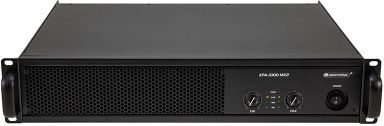
2-channel power amplifiers

Professional 2-Channel Power Amplifiers for Events and Stages: Professional 2-channel power amplifiers form the backbone of reliable PA systems and stage installations. Whether you're powering front-of-house speakers, stage monitors or building a flexible multi-amplifier setup, these versatile workhorses deliver clean, controlled power exactly where you need it. At LTT, you'll find touring-grade 2-channel amplifiers from leading manufacturers, engineered for continuous operation under demanding conditions....
Read more »
2-channel power amplifiers
Close window
2-channel power amplifiers

Professional 2-Channel Power Amplifiers for Events and Stages

Professional 2-channel power amplifiers form the backbone of reliable PA systems and stage installations. Whether you're powering front-of-house speakers, stage monitors or building a flexible multi-amplifier setup, these versatile workhorses deliver clean, controlled power exactly where you need it. At LTT, you'll find touring-grade 2-channel amplifiers from leading manufacturers, engineered for continuous operation under demanding conditions.

Two-channel architecture offers maximum flexibility: run stereo configurations for left/right speaker pairs, operate in dual-mono mode for independent control of different zones, or bridge both channels to drive a single high-power speaker or subwoofer. This adaptability makes 2-channel amplifiers the go-to choice for professional sound engineers, rental companies and fixed installations alike.

Modern 2-channel power amplifiers combine impressive output ratings with intelligent protection circuits, efficient thermal management and rack-mountable designs that integrate seamlessly into professional audio systems. From compact Class-D models to high-current Class-AB designs, you'll discover solutions that match your technical requirements and deliver the reliability that professional applications demand.

What is a 2-Channel Power Amplifier and How Does It Work?

A 2-channel power amplifier is a dedicated audio component that takes line-level signals from a mixing console, preamplifier or digital signal processor and amplifies them to speaker-level power. Unlike integrated amplifiers or powered speakers, a power amplifier focuses exclusively on this amplification task, delivering maximum performance and flexibility for professional applications.

The "2-channel" designation means the amplifier features two independent power sections, each capable of driving a separate speaker or speaker array. Each channel receives its own input signal and provides its own output connection, allowing true stereo operation or independent control of different speaker zones. This separation ensures optimal channel isolation and prevents crosstalk between left and right signals.

Technical Architecture and Amplifier Classes

Professional 2-channel amplifiers employ different amplification topologies, each with distinct characteristics. Class-AB designs use linear amplification stages that deliver excellent audio quality with moderate efficiency, typically around 50–65%. These amplifiers excel in applications where sonic purity is paramount and where adequate ventilation is available to dissipate heat.

Class-D amplifiers use high-frequency switching technology to achieve efficiencies of 85–95%, generating significantly less heat while delivering comparable or superior power output in more compact enclosures. Modern Class-D designs have overcome earlier limitations, now offering frequency response and distortion figures that rival traditional topologies. For touring applications and installations where space, weight and thermal management matter, Class-D represents the current state of the art.

Class-G and Class-H designs represent hybrid approaches, switching between multiple power supply rails to optimise efficiency across different output levels. These topologies are particularly effective in applications with dynamic programme material, where average power consumption remains moderate but peak capability must be substantial.

Bridge Mode Operation

Most professional 2-channel amplifiers support bridge mode, where both channels combine to drive a single speaker at significantly higher power. In bridge configuration, one channel amplifies the positive phase of the signal while the other amplifies the negative phase, effectively doubling the voltage swing available to the load. This capability transforms a 2-channel amplifier into a powerful mono unit, ideal for driving subwoofers or long-throw main speakers that demand high continuous power.

Applications in Event Technology and Stage Systems

Professional 2-channel power amplifiers serve diverse roles across the event technology spectrum. In front-of-house applications, they drive main PA speakers in stereo configuration, ensuring balanced coverage across the venue. The independent channel control allows sound engineers to compensate for asymmetric room acoustics or adjust relative levels between left and right arrays.

Stage monitor systems represent another primary application. A single 2-channel amplifier can power two separate monitor wedges, giving performers independent mixes or driving stereo in-ear systems. For larger productions, multiple 2-channel amplifiers in a rack provide scalable monitoring solutions, with each unit assigned to specific performers or stage positions.

Fixed Installation and Multi-Zone Systems

In conference centres, theatres and houses of worship, 2-channel amplifiers enable flexible zone control. One channel might serve the main auditorium while the second powers a lobby or overflow area. This configuration reduces equipment count while maintaining independent volume control for each space. The ability to bridge channels when needed adds further flexibility—a single amplifier can adapt to changing requirements without hardware replacement.

Rental companies particularly value 2-channel amplifiers for their versatility. A fleet of identical 2-channel units can be deployed in countless configurations: stereo pairs for small events, bridged mono for high-power applications, or mixed setups combining stereo and mono operation within the same rack. This standardisation simplifies inventory management, reduces training requirements and ensures consistent sonic performance across different events.

Integration with PA Systems and Crossover Networks

When integrated into bi-amplified or tri-amplified systems, 2-channel amplifiers work in conjunction with active crossovers or DSP units. One channel might drive mid-high cabinets while the other powers subwoofers, with the crossover network ensuring each frequency range reaches the appropriate transducers. This approach maximises system efficiency and provides precise control over the entire frequency spectrum, delivering the clarity and impact that professional applications demand.

Technical Specifications and Power Ratings Explained

Understanding power specifications is essential when selecting a 2-channel amplifier for professional applications. RMS (Root Mean Square) power ratings indicate continuous power output, the figure that matters for sustained operation. A specification of "2 × 800 W RMS at 4 Ω" means each channel delivers 800 watts continuously into a 4-ohm load—this is the number you should base your calculations on.

Peak or maximum power figures, often twice the RMS rating, describe short-term capability during transient peaks. While these numbers look impressive in marketing materials, they don't reflect real-world performance during extended operation. Professional applications require amplifiers specified by their RMS ratings, with adequate thermal headroom to maintain those ratings continuously.

Impedance Stability and Load Matching

Load impedance directly affects amplifier output and stability. Most professional 2-channel amplifiers are stable down to 2 ohms per channel in stereo mode, delivering increased power as impedance decreases. A typical specification might read: 500 W at 8 Ω, 800 W at 4 Ω, 1200 W at 2 Ω per channel. When bridged, minimum stable impedance typically doubles—an amplifier rated for 2 ohms stereo usually requires 4 ohms minimum in bridge mode.

Parallel speaker connections reduce total impedance. Two 8-ohm speakers wired in parallel present a 4-ohm load; two 4-ohm speakers present 2 ohms. Series connections increase impedance—two 8-ohm speakers in series present 16 ohms total. Understanding these relationships ensures you match amplifier capability to speaker configuration, avoiding both underpowering and potentially damaging overload conditions.

Signal-to-Noise Ratio and Distortion

Signal-to-noise ratio (SNR) quantifies the amplifier's background noise floor relative to full output. Professional amplifiers typically achieve SNR figures of 100–110 dB, ensuring inaudible noise even in quiet passages or when driving high-efficiency speakers. Total Harmonic Distortion plus Noise (THD+N) measurements below 0.1% indicate clean amplification across the audio spectrum, preserving the integrity of the source signal.

Damping factor describes the amplifier's ability to control speaker cone movement, particularly important for tight, accurate bass reproduction. Values above 200 indicate excellent control, though practical benefits plateau beyond 500 due to cable resistance and speaker impedance variations. High damping factor combined with low output impedance ensures precise transient response and articulate low-frequency performance.

Professional Brands and Quality Standards

At LTT, you'll find 2-channel power amplifiers from manufacturers including Omnitronic, dB Technologies, RCF, JBL, DAP Audio, LD Systems and other established professional audio brands. These manufacturers engineer their products to meet the demands of touring, rental and fixed installation applications, with robust construction, comprehensive protection circuits and specifications verified through independent testing. Power ratings comply with industry standards, ensuring the amplifier delivers its stated performance reliably and consistently.

Rack Mounting Standards and Touring Case Integration

Professional 2-channel power amplifiers conform to the 19-inch rack standard, the universal mounting system for professional audio equipment. Rack units (U) measure vertical space—1U equals 44.45 mm (1.75 inches). Most 2-channel amplifiers occupy 2U or 3U of rack space, balancing power output, cooling requirements and front-panel controls within a standardised footprint.

Rack-mounting offers numerous advantages for professional applications. Equipment stacks vertically in a compact, organised configuration, simplifying cable management and reducing setup time. Standardised dimensions ensure compatibility with flight cases, equipment racks and permanent installations worldwide. Front-panel access to controls and indicators remains available even when units are tightly stacked, facilitating monitoring and adjustment during operation.

Flight Case Compatibility and Transport Protection

Touring-grade 2-channel amplifiers are designed for integration into flight cases—rugged transport containers with foam-lined interiors and reinforced corners. These cases protect sensitive electronics during transport, absorb shock and vibration, and often include removable front and rear lids that convert the case into a working rack during setup. Proper flight case selection accounts for amplifier depth, rear connector clearance and ventilation requirements.

Rack rails within flight cases provide threaded mounting holes at standard 19-inch spacing. Amplifiers secure with cage nuts or captive hardware, ensuring firm attachment that withstands transport stresses. Blank panels fill unused rack spaces, maintaining structural integrity and preventing equipment from shifting during movement. For rental companies and touring productions, this standardised approach enables rapid deployment and reliable protection across countless load-ins and strikes.

Thermal Management in Rack Environments

Rack-mounted amplifiers generate substantial heat, particularly under sustained high-power operation. Professional designs incorporate forced-air cooling with temperature-controlled fans that adjust speed based on thermal load. Front-to-rear airflow is standard, drawing cool air through the front panel and exhausting heated air from the rear. This arrangement requires adequate clearance behind the rack and, in enclosed cases, may necessitate additional ventilation fans to maintain safe operating temperatures.

When stacking multiple amplifiers, leave at least 1U of space between units or use vented blank panels to promote airflow. Avoid placing heat-sensitive equipment directly above power amplifiers. Monitor amplifier status indicators during operation—most professional units include thermal warning lights that illuminate before protective shutdown occurs, allowing you to address cooling issues before they interrupt performance.

Installation Best Practices

Secure amplifiers toward the bottom of the rack where their weight contributes to stability rather than creating top-heavy configurations. Route signal cables separately from power cables to minimise interference. Use locking power connectors where available—PowerCON or similar locking IEC connections prevent accidental disconnection during performance. Label all connections clearly, documenting input sources, output destinations and any special configuration notes. This attention to detail pays dividends during troubleshooting and when multiple technicians work with the same equipment.

Impedance Matching and Speaker Configuration for Professional Systems

Proper impedance matching between amplifiers and speakers ensures optimal power transfer, protects equipment and delivers the performance your system was designed to achieve. Every speaker presents a nominal impedance—typically 4, 8 or 16 ohms—that represents its average electrical resistance across the audio spectrum. Amplifiers specify minimum stable impedance, the lowest load they can drive safely without triggering protection circuits or risking damage.

When connecting multiple speakers to a single amplifier channel, the configuration determines total impedance. Parallel connection (positive to positive, negative to negative) reduces impedance: two 8-ohm speakers in parallel present 4 ohms total. The formula is 1/Total = 1/Speaker1 + 1/Speaker2. Three 8-ohm speakers in parallel present 2.67 ohms. Series connection (positive of one speaker to negative of the next) increases impedance: two 8-ohm speakers in series present 16 ohms total.

Calculating Power Distribution

Amplifier power divides among parallel-connected speakers. If a channel delivers 800 watts into a 4-ohm load and you connect two 8-ohm speakers in parallel (presenting 4 ohms total), each speaker receives 400 watts. This assumes identical speakers—mismatched impedances result in unequal power distribution, with lower-impedance speakers drawing disproportionate power. For predictable, balanced performance, use identical speakers in parallel configurations.

Series connections reduce power output because they increase total impedance. That same 800-watt channel might deliver only 400 watts into an 8-ohm load and 200 watts into 16 ohms. Series connection is less common in professional applications but can be useful when you need to reduce power to specific speakers or match amplifier output to high-impedance loads.

Bridge Mode Impedance Considerations

Bridging doubles voltage swing but also doubles the effective load the amplifier sees. A 4-ohm speaker in bridge mode appears as a 2-ohm load to each individual channel. If your amplifier is stable to 2 ohms per channel in stereo mode, it typically requires 4 ohms minimum in bridge mode. Attempting to bridge into too low an impedance triggers protection circuits or, in worst cases, damages output stages. Always consult manufacturer specifications before operating in bridge mode.

Bridge mode delivers substantially more power—often 3–4 times the per-channel stereo rating—making it ideal for subwoofer applications or long-throw main speakers. A 2-channel amplifier rated at 800 watts per channel at 4 ohms stereo might deliver 2400 watts bridged into 4 ohms. This capability transforms a versatile 2-channel unit into a dedicated high-power mono amplifier when applications demand maximum output.

Speakon Connectors and Professional Wiring

Professional 2-channel amplifiers typically feature Speakon connectors—locking, high-current connectors that ensure secure connections and prevent accidental disconnection. NL4 Speakon connectors provide four conductors, allowing a single connector to carry both channels (1+/1− for channel one, 2+/2− for channel two) or to wire bridge mode (1+/2+ for positive, 1−/2− for negative). This standardised connection system simplifies cabling, reduces setup time and ensures reliable signal path integrity even in demanding touring environments.

LTT – Your Specialist for Professional Event Technology

At LTT, you'll find professional 2-channel power amplifiers that meet the demands of touring productions, fixed installations and rental applications. Our range includes proven designs from leading manufacturers, selected for reliability, performance and value. Whether you're building a new PA system, expanding an existing installation or replacing aging amplification, our technical team provides expert guidance to ensure you select the optimal solution.

Every amplifier ships from our Bocholt, Germany facility with comprehensive warranty protection—three years of coverage that reflects our confidence in the products we supply. Orders over €69 ship free throughout Germany, with express delivery available when project timelines demand rapid turnaround. International shipping reaches customers worldwide, supported by our established dealer network and technical support infrastructure.

Beyond amplifiers, LTT supplies the complete signal chain: mixing consoles, signal processors, speaker systems, cables and connectors, all from a single source. This integrated approach simplifies procurement, ensures component compatibility and provides a single point of contact for technical support. Our 25 years of experience in professional event technology informs every recommendation, helping you build systems that deliver reliable performance event after event, season after season.

FAQ – Questions & Answers

What's the difference between 2-channel and 4-channel amplifiers?

A 2-channel power amplifier provides two independent amplification channels, ideal for stereo speaker pairs, dual monitor wedges or bridge-mode subwoofer operation. A 4-channel amplifier offers four separate channels, enabling more complex configurations such as front and rear speaker systems, multiple monitor mixes or bi-amplified setups where mid-high and low-frequency drivers receive separate amplification. For most professional PA applications, 2-channel amplifiers provide optimal flexibility and cost-effectiveness. Choose 4-channel models when you need to drive more than two speaker zones independently or when building multi-way active systems that require separate amplification for different frequency ranges.

How many watts does a 2-channel amplifier need for professional applications?

Required amplifier power depends on speaker sensitivity, venue size and desired sound pressure levels. As a general guideline, match amplifier RMS power to speaker continuous power handling, or provide 20–50% more amplifier power than speaker rating to ensure clean headroom during peaks. For example, speakers rated at 400 watts RMS continuous work well with amplifiers delivering 500–600 watts per channel. Small to medium venues (up to 200 people) typically require 500–1000 watts per channel, while larger spaces or outdoor events may demand 1500–3000 watts per channel. Always base calculations on RMS specifications, not peak or maximum figures, and ensure your amplifier remains stable at your speaker's impedance.

Can I bridge a 2-channel amplifier for subwoofer use?

Yes, most professional 2-channel power amplifiers support bridge mode operation, combining both channels to drive a single speaker at significantly higher power. In bridge configuration, one channel amplifies the positive signal phase while the other amplifies the negative phase, effectively doubling the voltage swing available to the load. This makes bridge mode ideal for powering subwoofers that demand high continuous power. Important considerations: minimum stable impedance typically doubles in bridge mode (an amplifier stable to 2 ohms stereo usually requires 4 ohms minimum bridged), and you must use the correct output terminals as specified in the amplifier's manual. Bridge mode transforms a versatile 2-channel amplifier into a dedicated high-power mono unit when applications demand maximum output.

Which amplifier class is best for live events?

Class-D amplifiers have become the preferred choice for live event applications due to their exceptional efficiency (85–95%), light weight and compact dimensions. Modern Class-D designs deliver audio quality that rivals traditional Class-AB topology while generating significantly less heat, reducing cooling requirements and enabling higher power density in rack configurations. For touring productions where transport weight and flight case space matter, Class-D offers clear advantages. Class-AB amplifiers remain popular in fixed installations where weight is less critical and where some engineers prefer their traditional sonic characteristics. Both topologies deliver professional performance when properly specified—choose based on your specific requirements for portability, power output and thermal management rather than outdated assumptions about sound quality.

What impedance should I use for maximum power output?

Professional 2-channel power amplifiers deliver maximum power into their minimum stable impedance, typically 2 ohms per channel in stereo mode. However, operating continuously at minimum impedance generates maximum heat and stresses components. For optimal reliability during extended operation, run amplifiers at 4 ohms per channel—this provides excellent power output while maintaining thermal headroom and ensuring long-term reliability. When bridged, use 4-ohm or 8-ohm loads (never lower than the manufacturer's specified minimum bridge impedance, typically 4 ohms). Speaker impedance also varies with frequency, so nominal ratings represent averages—actual impedance may dip lower at certain frequencies, making conservative impedance matching important for system stability and protection.

How do I connect multiple speakers to one amplifier channel?

Connect multiple speakers to a single amplifier channel using parallel wiring: connect all positive terminals together and all negative terminals together. This reduces total impedance according to the formula 1/Total = 1/Speaker1 + 1/Speaker2 + 1/Speaker3. Two 8-ohm speakers in parallel present 4 ohms; two 4-ohm speakers present 2 ohms. Ensure the resulting impedance meets or exceeds the amplifier's minimum stable rating. Power divides among parallel speakers—if the channel delivers 800 watts into the combined load, each of two identical speakers receives 400 watts. Use speakers with identical impedance for balanced power distribution. Series connection (positive to negative in a chain) increases impedance and reduces power, useful in specialised applications but less common in professional PA systems.

What protection features should a professional power amplifier include?

Professional 2-channel power amplifiers incorporate multiple protection circuits to ensure reliable operation and prevent damage. Thermal protection monitors internal temperature and reduces output or shuts down the amplifier if safe limits are exceeded, preventing component failure from overheating. Short-circuit protection detects output faults and disconnects the output stage, protecting both amplifier and speakers. DC protection prevents DC voltage from reaching speakers, which could damage voice coils. Soft-start circuitry limits inrush current when powering on, extending component life and preventing circuit breaker trips. Clip limiters detect and prevent signal clipping, protecting speakers from distortion-related damage. LED indicators provide real-time status feedback, alerting operators to protection events before they interrupt performance. These features distinguish professional amplifiers from consumer-grade equipment, ensuring the reliability that touring and rental applications demand.

Do I need active cooling for rack-mounted power amplifiers?

Most professional 2-channel power amplifiers include built-in forced-air cooling with temperature-controlled fans, but rack environment significantly affects thermal performance. In open equipment racks with adequate front-to-rear airflow, amplifier internal fans usually provide sufficient cooling. Enclosed flight cases or equipment cabinets require additional ventilation—install rack-mounted fan panels that exhaust heated air or provide forced air circulation. Leave at least 1U of space between high-power amplifiers or use vented blank panels to promote airflow. Monitor thermal indicators during operation, especially during sustained high-output passages. If thermal warning lights illuminate frequently, improve ventilation before protection circuits interrupt performance. Adequate cooling extends component life, maintains consistent performance and prevents thermal shutdown during critical moments of your production.

Top seller
Vonyx VDA1000 PA-Verstärker 1U 2x 500W
Vonyx VDA1000 PA Amplifier 1U 2x 500W
€139.00 *
incl. tax, free shipping to Germany
[International shipping costs]
Availability:
Delivery time: 1-3 days
Vonyx PA-Verstärker VXA-3000 2x 1500W
Vonyx PA Amplifier VXA-3000 2x 1500W
€289.00 *
incl. tax, free shipping to Germany
[International shipping costs]
Availability:
Delivery time: 1-3 days
Skytec SPL 300 Verstärker 2x 150W Schwarz
Skytec SPL 300 Amplifier 2x 150W Black
€89.95 *
incl. tax, free shipping to Germany
[International shipping costs]
Availability:
Low stock; Delivery time: 1-3 days
Delivery time: 1-3 days
Power Dynamics PV220BT Audio-Verstärker-System 100W
Power Dynamics PV220BT Audio Amplifier System 100W
€129.00 *
incl. tax, free shipping to Germany
[International shipping costs]
Availability:
Delivery time: 1-3 days
Audizio AD200B 2-Kanal HiFi-Verstärker Schwarz
Audizio AD200B 2-Channel HiFi Amplifier Black
€109.00 *
incl. tax, free shipping to Germany
[International shipping costs]
Availability:
Currently not available
Audizio AD220B 2-Kanal-HiFi-Verstärker Schwarz
Audizio AD220B 2-Channel HiFi Amplifier Black
€129.00 *
incl. tax, free shipping to Germany
[International shipping costs]
Availability:
Currently not available
OMNITRONIC EPA-100BT Mischverstärker
OMNITRONIC EPA-100BT Mixing Amplifier
€149.00 *
incl. tax, free shipping to Germany
[International shipping costs]
Availability:
Delivery time: 3-5 days
Vonyx VDA500 PA-Verstärker 1U 2x 250W
Vonyx VDA500 PA Amplifier 1U 2x 250W
€129.00 *
incl. tax, free shipping to Germany
[International shipping costs]
Availability:
Delivery time: 3-5 days
91 Articles
Close filters
 
  •  
  •  
  •  
  •  
  •  
  •  
  •  
  •  
  •  
  •  
  •  
  •  
from to
1 From 4 pages
No results were found for the filter!
IMG STAGE LINE STA-700 Verstaerker
IMG STAGELINE STA-700 Stereo PA amplifier
Stereo PA amplifier, for general applications. Fan cooling • 2 level controls • Ground lift switch • Speaker switch-on delay • Protective circuit with LED indication for...
€299.00 *
incl. tax, free shipping to Germany
[International shipping costs]
Availability:
Delivery time: 3-5 days
IMG STAGE LINE STA-1000 Verstaerker
STA-1000 Professional stereo PA amplifier,
Professional stereo PA amplifier, with integrated crossover network and limiter. LCD for temperature, operating mode, protective function • Integrated crossover network: 120Hz, 24dB/oct.,...
€593.00 *
incl. tax, free shipping to Germany
[International shipping costs]
Availability:
Delivery time: 3-5 days
IMG STAGE LINE STA-2200 Verstaerker
IMG STAGELINE STA-2200 Professional stereo PA amplifier
Professional stereo PA amplifier, with integrated crossover network and limiter. 2 O stable • Class H technology with performance-optmised power supply technology • LCD for indicating...
€950.00 *
incl. tax, free shipping to Germany
[International shipping costs]
Availability:
Delivery time: 3-5 days
MONACOR SA-50 Verstaerker
MONACOR SA-50 Compact universal stereo amplifier, 25 W
Compact universal stereo amplifier, 25 W Silent operation due to fanless cooling concept • Additional 3.5 mm connection with switchable sensitivity on the front panel • Audio source...
€129.00 *
incl. tax, free shipping to Germany
[International shipping costs]
Availability:
Delivery time: 3-5 days
IMG STAGE LINE STA-235 Verstaerker
IMG STAGELINE STA-235 Stereo PA amplifier
Stereo PA amplifier, with integrated limiter. LCD for indicating temperature, operating mode, power • 2 operating modes can be selected (stereo or bridged) • Limiter function can be...
€499.00 *
incl. tax, free shipping to Germany
[International shipping costs]
Availability:
Delivery time: 3-5 days
IMG STAGE LINE STA-600 Verstaerker
IMG STAGELINE STA-600 Professional stereo PA amplifier
Professional stereo PA amplifier, with integrated crossover network and limiter. LCD for indicating temperature, operating mode, protective function • Integrated crossover network: 120 Hz, 24...
€474.00 *
incl. tax, free shipping to Germany
[International shipping costs]
Availability:
Delivery time: 3-5 days
IMG STAGE LINE STA-800D Digitalverstaerker
IMG STAGELINE STA-800D Stereo class D PA amplifier
The new generation of class D PA amplifiers from IMG STAGELINE impresses with a high power capability and high energy efficiency. Other features include a silent operation and a low weight which...
€776.57 *
incl. tax, free shipping to Germany
[International shipping costs]
Availability:
Delivery time: 3-5 days
DAP-Audio CA-2300 - Kompakter 2-Kanal-Verstärker
DAP-Audio CA-2300 Compact 2-channel amplifier (2x 300 W)
Class D amp, SMPT and Soft Start technology • Advanced protection circuits and indicator LEDs • Stereo and bridge mode • 1U suitable for 19" rack • The DAP CA-2300 is a 2x...
€355.00 *
incl. tax, free shipping to Germany
[International shipping costs]
Availability:
Delivery time: 3-5 days
IMG STAGE LINE STA-225 Verstaerker
IMG STAGELINE STA-225 Stereo PA amplifier, 1,000 W
Stereo PA amplifier, 1,000 W, with integrated limiter. LCD for indicating temperature, operating mode, power • 2 operating modes can be selected (stereo or bridged) • Limiter function can...
€399.00 *
incl. tax, free shipping to Germany
[International shipping costs]
Availability:
Delivery time: 3-5 days
LD Systems DEEP2 600 PA Endstufe 2 x 300 W 2 Ohm
LD Systems DEEP2 600 - PA Power Amplifier 2 x 300 W 2 Ohms
PA Power Amplifier 2 x 300 W 2 Ohms The new DEEP2 amp series features four class-H power amplifiers with toroidal core offering amplifying levels from 2 x 400 W till 2 x 810 W at 4 Ohm. During the...
€399.00 *
incl. tax, free shipping to Germany
[International shipping costs]
Availability:
Near-term available
Delivery time: approx. 1 week
OMNITRONIC XPA-700 Endstufe
OMNITRONIC XPA-700 Amplifier
Class AB PA amplifier with limiter, 2 x 350 W RMS (4 ohms), 2 x 240 W RMS (8 ohms) 2 operating modes can be selected (stereo or bridged) • 2 level controls • Each channel with LED for...
€229.74 *
incl. tax, free shipping to Germany
[International shipping costs]
Availability:
Delivery time: 3-5 days
OMNITRONIC XPA-2700 Endstufe
OMNITRONIC XPA-2700 Amplifier
Class H PA amplifier with limiter, 2 x 1350 W RMS (4 ohms), 2 x 1080 W RMS (8 ohms) 3 operating modes can be selected (stereo, parallel or bridged) • Input sensitivity adjustable • 2...
€572.10 *
incl. tax, free shipping to Germany
[International shipping costs]
Availability:
Delivery time: 3-5 days
IMG STAGE LINE STA-400D Digitalverstaerker
IMG STAGELINE STA-400D Stereo class D PA amplifier
The new generation of class D PA amplifiers from IMG STAGELINE impresses with a high power capability and high energy efficiency. Other features include a silent operation and a low weight which...
€451.00 *
incl. tax, free shipping to Germany
[International shipping costs]
Availability:
Delivery time: 3-5 days
OMNITRONIC XDA-1002 Class-D-Verstärker
OMNITRONIC XDA-1002 Class D Amplifier
Class D stereo PA amplifier with SMPS, 2 x 510 W RMS (4 ohms), 2 x 300 W RMS (8 ohms) Stereo PA amplifier with class D circuitry • Low weight and height due to integrated switch mode power...
€319.00 *
incl. tax, free shipping to Germany
[International shipping costs]
Availability:
Delivery time: 3-5 days
IMG STAGE LINE STA-1000D Digitalverstaerker
IMG STAGELINE STA-1000D Stereo class D PA amplifier, 1,200 W
The new generation of class D PA amplifiers from IMG STAGELINE impresses with a high power capability and high energy efficiency. Other features include a silent operation and a low weight which...
€697.99 *
incl. tax, free shipping to Germany
[International shipping costs]
Availability:
Delivery time: 3-5 days
LD Systems DEEP2 1600 PA Endstufe 2 x 800 W 2 Ohm
LD Systems DEEP2 1600 - PA Power Amplifier 2 x 800 W 2 Ohms
PA Power Amplifier 2 x 800 W 2 Ohms The new DEEP2 amp series features four class-H power amplifiers with toroidal core offering amplifying levels from 2 x 400 W till 2 x 810 W at 4 Ohm. During the...
€529.00 *
incl. tax, free shipping to Germany
[International shipping costs]
Availability:
Near-term available
Delivery time: approx. 1 week
IMG STAGE LINE STA-200D Verstaerker
MONACOR STA-200D Stereo class D PA amplifier, 250 W
Stereo class D PA amplifier, 250 W 5 switchable line inputs • Silent operation due to fanless cooling concept • High power reserves due to generously dimensioned toroidal core transformer...
€355.00 *
incl. tax, free shipping to Germany
[International shipping costs]
Availability:
Delivery time: 3-5 days
LD Systems XS 200 PA Endstufe Class D 2 x 100 W 4 Ohm
LD Systems XS 200 - PA Power Amplifier Class D 2 x 100 W 4 Ohms
PA Power Amplifier Class D 2 x 100 W 4 Ohms LD Systems XS200 Power Amplifier The XS200 is an extremely compact, dependable Class D power amplifier with an output of 100W per channel at 4 ohms and a...
€339.20 *
incl. tax, free shipping to Germany
[International shipping costs]
Availability:
Near-term available
Delivery time: approx. 1 week
LD Systems XS 400 PA Endstufe Class D 2 x 200 W 4 Ohm
LD Systems XS 400 - PA Power Amplifier Class D 2 x 200 W 4 Ohms
PA Power Amplifier Class D 2 x 200 W 4 Ohms LD Systems XS400 Power Amplifier The XS400 is an extremely compact, dependable Class D power amplifier with an output of 200W per channel at 4 ohms 400W...
€299.00 *
incl. tax, free shipping to Germany
[International shipping costs]
Availability:
Near-term available
Delivery time: approx. 1 week
OMNITRONIC XDA-2402 Class-D-Verstärker
OMNITRONIC XDA-2402 Class D Amplifier
Class D stereo PA amplifier with SMPS, 2 x 1200 W RMS (4 ohms), 2 x 880 W RMS (8 ohms) Stereo PA amplifier with class D circuitry • Low weight and height due to integrated switch mode power...
€499.00 *
incl. tax, free shipping to Germany
[International shipping costs]
Availability:
Delivery time: 3-5 days
OMNITRONIC A-3603 Class-D 2.1 Endstufe
OMNITRONIC A-3603 Class-D 2.1 Amplifier
Powerful 3-channel amplifier - for classic 2.1 applications with two top and one sub speakerThe A-3603 produces enough power to supply large speaker system with up to a maximum of 3600 watts, 4...
€699.00 *
incl. tax, free shipping to Germany
[International shipping costs]
Availability:
Delivery time: 3-5 days
OMNITRONIC EP-220PR Vorverstärker mit MP3-Player und FM-Radio
OMNITRONIC EP-220PR Preamplifier with MP3 Player and FM Radio
Universal 19" preamplifier with audio player, Bluetooth and FM radio Built-in audio player with Bluetooth receiver • SD card slot and USB port • 5 stereo line inputs • 4 RCA L/R...
€119.00 *
incl. tax, free shipping to Germany
[International shipping costs]
Availability:
Delivery time: 3-5 days
OMNITRONIC EPA-100BT Mischverstärker
OMNITRONIC EPA-100BT Mixing Amplifier
The 1 U flat stereo mixing amplifier EPA-100BT with efficient class D output circuitry is particularly suitable for permanent installations in restaurants, gyms and retail locations which require...
€149.00 *
incl. tax, free shipping to Germany
[International shipping costs]
Availability:
Delivery time: 3-5 days
PSSO DDA-1700 Endstufe
PSSO DDA-1700 Amplifier
Stereo PA amplifiers with up to 3.5kW of powerThe stereo PA amplifiers of the DDA series with integrated limiter have been specially designed for stage and the disco applications. The amplifiers...
€449.00 *
incl. tax, free shipping to Germany
[International shipping costs]
Availability:
Delivery time: 3-5 days
1 From 4 pages
Facts
Professional 2-Channel Power Amplifiers for Events and Stages: Professional 2-channel power amplifiers form the backbone of reliable PA systems and stage installations. Whether you're powering front-of-house speakers, stage monitors or building a flexible multi-amplifier setup, these versatile workhorses deliver clean, controlled power exactly where you need it. At LTT, you'll find touring-grade 2-channel amplifiers from leading... Read more »
Viewed
Facts

Professional 2-Channel Power Amplifiers for Events and Stages

Professional 2-channel power amplifiers form the backbone of reliable PA systems and stage installations. Whether you're powering front-of-house speakers, stage monitors or building a flexible multi-amplifier setup, these versatile workhorses deliver clean, controlled power exactly where you need it. At LTT, you'll find touring-grade 2-channel amplifiers from leading manufacturers, engineered for continuous operation under demanding conditions.

Two-channel architecture offers maximum flexibility: run stereo configurations for left/right speaker pairs, operate in dual-mono mode for independent control of different zones, or bridge both channels to drive a single high-power speaker or subwoofer. This adaptability makes 2-channel amplifiers the go-to choice for professional sound engineers, rental companies and fixed installations alike.

Modern 2-channel power amplifiers combine impressive output ratings with intelligent protection circuits, efficient thermal management and rack-mountable designs that integrate seamlessly into professional audio systems. From compact Class-D models to high-current Class-AB designs, you'll discover solutions that match your technical requirements and deliver the reliability that professional applications demand.

What is a 2-Channel Power Amplifier and How Does It Work?

A 2-channel power amplifier is a dedicated audio component that takes line-level signals from a mixing console, preamplifier or digital signal processor and amplifies them to speaker-level power. Unlike integrated amplifiers or powered speakers, a power amplifier focuses exclusively on this amplification task, delivering maximum performance and flexibility for professional applications.

The "2-channel" designation means the amplifier features two independent power sections, each capable of driving a separate speaker or speaker array. Each channel receives its own input signal and provides its own output connection, allowing true stereo operation or independent control of different speaker zones. This separation ensures optimal channel isolation and prevents crosstalk between left and right signals.

Technical Architecture and Amplifier Classes

Professional 2-channel amplifiers employ different amplification topologies, each with distinct characteristics. Class-AB designs use linear amplification stages that deliver excellent audio quality with moderate efficiency, typically around 50–65%. These amplifiers excel in applications where sonic purity is paramount and where adequate ventilation is available to dissipate heat.

Class-D amplifiers use high-frequency switching technology to achieve efficiencies of 85–95%, generating significantly less heat while delivering comparable or superior power output in more compact enclosures. Modern Class-D designs have overcome earlier limitations, now offering frequency response and distortion figures that rival traditional topologies. For touring applications and installations where space, weight and thermal management matter, Class-D represents the current state of the art.

Class-G and Class-H designs represent hybrid approaches, switching between multiple power supply rails to optimise efficiency across different output levels. These topologies are particularly effective in applications with dynamic programme material, where average power consumption remains moderate but peak capability must be substantial.

Bridge Mode Operation

Most professional 2-channel amplifiers support bridge mode, where both channels combine to drive a single speaker at significantly higher power. In bridge configuration, one channel amplifies the positive phase of the signal while the other amplifies the negative phase, effectively doubling the voltage swing available to the load. This capability transforms a 2-channel amplifier into a powerful mono unit, ideal for driving subwoofers or long-throw main speakers that demand high continuous power.

Applications in Event Technology and Stage Systems

Professional 2-channel power amplifiers serve diverse roles across the event technology spectrum. In front-of-house applications, they drive main PA speakers in stereo configuration, ensuring balanced coverage across the venue. The independent channel control allows sound engineers to compensate for asymmetric room acoustics or adjust relative levels between left and right arrays.

Stage monitor systems represent another primary application. A single 2-channel amplifier can power two separate monitor wedges, giving performers independent mixes or driving stereo in-ear systems. For larger productions, multiple 2-channel amplifiers in a rack provide scalable monitoring solutions, with each unit assigned to specific performers or stage positions.

Fixed Installation and Multi-Zone Systems

In conference centres, theatres and houses of worship, 2-channel amplifiers enable flexible zone control. One channel might serve the main auditorium while the second powers a lobby or overflow area. This configuration reduces equipment count while maintaining independent volume control for each space. The ability to bridge channels when needed adds further flexibility—a single amplifier can adapt to changing requirements without hardware replacement.

Rental companies particularly value 2-channel amplifiers for their versatility. A fleet of identical 2-channel units can be deployed in countless configurations: stereo pairs for small events, bridged mono for high-power applications, or mixed setups combining stereo and mono operation within the same rack. This standardisation simplifies inventory management, reduces training requirements and ensures consistent sonic performance across different events.

Integration with PA Systems and Crossover Networks

When integrated into bi-amplified or tri-amplified systems, 2-channel amplifiers work in conjunction with active crossovers or DSP units. One channel might drive mid-high cabinets while the other powers subwoofers, with the crossover network ensuring each frequency range reaches the appropriate transducers. This approach maximises system efficiency and provides precise control over the entire frequency spectrum, delivering the clarity and impact that professional applications demand.

Technical Specifications and Power Ratings Explained

Understanding power specifications is essential when selecting a 2-channel amplifier for professional applications. RMS (Root Mean Square) power ratings indicate continuous power output, the figure that matters for sustained operation. A specification of "2 × 800 W RMS at 4 Ω" means each channel delivers 800 watts continuously into a 4-ohm load—this is the number you should base your calculations on.

Peak or maximum power figures, often twice the RMS rating, describe short-term capability during transient peaks. While these numbers look impressive in marketing materials, they don't reflect real-world performance during extended operation. Professional applications require amplifiers specified by their RMS ratings, with adequate thermal headroom to maintain those ratings continuously.

Impedance Stability and Load Matching

Load impedance directly affects amplifier output and stability. Most professional 2-channel amplifiers are stable down to 2 ohms per channel in stereo mode, delivering increased power as impedance decreases. A typical specification might read: 500 W at 8 Ω, 800 W at 4 Ω, 1200 W at 2 Ω per channel. When bridged, minimum stable impedance typically doubles—an amplifier rated for 2 ohms stereo usually requires 4 ohms minimum in bridge mode.

Parallel speaker connections reduce total impedance. Two 8-ohm speakers wired in parallel present a 4-ohm load; two 4-ohm speakers present 2 ohms. Series connections increase impedance—two 8-ohm speakers in series present 16 ohms total. Understanding these relationships ensures you match amplifier capability to speaker configuration, avoiding both underpowering and potentially damaging overload conditions.

Signal-to-Noise Ratio and Distortion

Signal-to-noise ratio (SNR) quantifies the amplifier's background noise floor relative to full output. Professional amplifiers typically achieve SNR figures of 100–110 dB, ensuring inaudible noise even in quiet passages or when driving high-efficiency speakers. Total Harmonic Distortion plus Noise (THD+N) measurements below 0.1% indicate clean amplification across the audio spectrum, preserving the integrity of the source signal.

Damping factor describes the amplifier's ability to control speaker cone movement, particularly important for tight, accurate bass reproduction. Values above 200 indicate excellent control, though practical benefits plateau beyond 500 due to cable resistance and speaker impedance variations. High damping factor combined with low output impedance ensures precise transient response and articulate low-frequency performance.

Professional Brands and Quality Standards

At LTT, you'll find 2-channel power amplifiers from manufacturers including Omnitronic, dB Technologies, RCF, JBL, DAP Audio, LD Systems and other established professional audio brands. These manufacturers engineer their products to meet the demands of touring, rental and fixed installation applications, with robust construction, comprehensive protection circuits and specifications verified through independent testing. Power ratings comply with industry standards, ensuring the amplifier delivers its stated performance reliably and consistently.

Rack Mounting Standards and Touring Case Integration

Professional 2-channel power amplifiers conform to the 19-inch rack standard, the universal mounting system for professional audio equipment. Rack units (U) measure vertical space—1U equals 44.45 mm (1.75 inches). Most 2-channel amplifiers occupy 2U or 3U of rack space, balancing power output, cooling requirements and front-panel controls within a standardised footprint.

Rack-mounting offers numerous advantages for professional applications. Equipment stacks vertically in a compact, organised configuration, simplifying cable management and reducing setup time. Standardised dimensions ensure compatibility with flight cases, equipment racks and permanent installations worldwide. Front-panel access to controls and indicators remains available even when units are tightly stacked, facilitating monitoring and adjustment during operation.

Flight Case Compatibility and Transport Protection

Touring-grade 2-channel amplifiers are designed for integration into flight cases—rugged transport containers with foam-lined interiors and reinforced corners. These cases protect sensitive electronics during transport, absorb shock and vibration, and often include removable front and rear lids that convert the case into a working rack during setup. Proper flight case selection accounts for amplifier depth, rear connector clearance and ventilation requirements.

Rack rails within flight cases provide threaded mounting holes at standard 19-inch spacing. Amplifiers secure with cage nuts or captive hardware, ensuring firm attachment that withstands transport stresses. Blank panels fill unused rack spaces, maintaining structural integrity and preventing equipment from shifting during movement. For rental companies and touring productions, this standardised approach enables rapid deployment and reliable protection across countless load-ins and strikes.

Thermal Management in Rack Environments

Rack-mounted amplifiers generate substantial heat, particularly under sustained high-power operation. Professional designs incorporate forced-air cooling with temperature-controlled fans that adjust speed based on thermal load. Front-to-rear airflow is standard, drawing cool air through the front panel and exhausting heated air from the rear. This arrangement requires adequate clearance behind the rack and, in enclosed cases, may necessitate additional ventilation fans to maintain safe operating temperatures.

When stacking multiple amplifiers, leave at least 1U of space between units or use vented blank panels to promote airflow. Avoid placing heat-sensitive equipment directly above power amplifiers. Monitor amplifier status indicators during operation—most professional units include thermal warning lights that illuminate before protective shutdown occurs, allowing you to address cooling issues before they interrupt performance.

Installation Best Practices

Secure amplifiers toward the bottom of the rack where their weight contributes to stability rather than creating top-heavy configurations. Route signal cables separately from power cables to minimise interference. Use locking power connectors where available—PowerCON or similar locking IEC connections prevent accidental disconnection during performance. Label all connections clearly, documenting input sources, output destinations and any special configuration notes. This attention to detail pays dividends during troubleshooting and when multiple technicians work with the same equipment.

Impedance Matching and Speaker Configuration for Professional Systems

Proper impedance matching between amplifiers and speakers ensures optimal power transfer, protects equipment and delivers the performance your system was designed to achieve. Every speaker presents a nominal impedance—typically 4, 8 or 16 ohms—that represents its average electrical resistance across the audio spectrum. Amplifiers specify minimum stable impedance, the lowest load they can drive safely without triggering protection circuits or risking damage.

When connecting multiple speakers to a single amplifier channel, the configuration determines total impedance. Parallel connection (positive to positive, negative to negative) reduces impedance: two 8-ohm speakers in parallel present 4 ohms total. The formula is 1/Total = 1/Speaker1 + 1/Speaker2. Three 8-ohm speakers in parallel present 2.67 ohms. Series connection (positive of one speaker to negative of the next) increases impedance: two 8-ohm speakers in series present 16 ohms total.

Calculating Power Distribution

Amplifier power divides among parallel-connected speakers. If a channel delivers 800 watts into a 4-ohm load and you connect two 8-ohm speakers in parallel (presenting 4 ohms total), each speaker receives 400 watts. This assumes identical speakers—mismatched impedances result in unequal power distribution, with lower-impedance speakers drawing disproportionate power. For predictable, balanced performance, use identical speakers in parallel configurations.

Series connections reduce power output because they increase total impedance. That same 800-watt channel might deliver only 400 watts into an 8-ohm load and 200 watts into 16 ohms. Series connection is less common in professional applications but can be useful when you need to reduce power to specific speakers or match amplifier output to high-impedance loads.

Bridge Mode Impedance Considerations

Bridging doubles voltage swing but also doubles the effective load the amplifier sees. A 4-ohm speaker in bridge mode appears as a 2-ohm load to each individual channel. If your amplifier is stable to 2 ohms per channel in stereo mode, it typically requires 4 ohms minimum in bridge mode. Attempting to bridge into too low an impedance triggers protection circuits or, in worst cases, damages output stages. Always consult manufacturer specifications before operating in bridge mode.

Bridge mode delivers substantially more power—often 3–4 times the per-channel stereo rating—making it ideal for subwoofer applications or long-throw main speakers. A 2-channel amplifier rated at 800 watts per channel at 4 ohms stereo might deliver 2400 watts bridged into 4 ohms. This capability transforms a versatile 2-channel unit into a dedicated high-power mono amplifier when applications demand maximum output.

Speakon Connectors and Professional Wiring

Professional 2-channel amplifiers typically feature Speakon connectors—locking, high-current connectors that ensure secure connections and prevent accidental disconnection. NL4 Speakon connectors provide four conductors, allowing a single connector to carry both channels (1+/1− for channel one, 2+/2− for channel two) or to wire bridge mode (1+/2+ for positive, 1−/2− for negative). This standardised connection system simplifies cabling, reduces setup time and ensures reliable signal path integrity even in demanding touring environments.

LTT – Your Specialist for Professional Event Technology

At LTT, you'll find professional 2-channel power amplifiers that meet the demands of touring productions, fixed installations and rental applications. Our range includes proven designs from leading manufacturers, selected for reliability, performance and value. Whether you're building a new PA system, expanding an existing installation or replacing aging amplification, our technical team provides expert guidance to ensure you select the optimal solution.

Every amplifier ships from our Bocholt, Germany facility with comprehensive warranty protection—three years of coverage that reflects our confidence in the products we supply. Orders over €69 ship free throughout Germany, with express delivery available when project timelines demand rapid turnaround. International shipping reaches customers worldwide, supported by our established dealer network and technical support infrastructure.

Beyond amplifiers, LTT supplies the complete signal chain: mixing consoles, signal processors, speaker systems, cables and connectors, all from a single source. This integrated approach simplifies procurement, ensures component compatibility and provides a single point of contact for technical support. Our 25 years of experience in professional event technology informs every recommendation, helping you build systems that deliver reliable performance event after event, season after season.

FAQ – Questions & Answers

What's the difference between 2-channel and 4-channel amplifiers?

A 2-channel power amplifier provides two independent amplification channels, ideal for stereo speaker pairs, dual monitor wedges or bridge-mode subwoofer operation. A 4-channel amplifier offers four separate channels, enabling more complex configurations such as front and rear speaker systems, multiple monitor mixes or bi-amplified setups where mid-high and low-frequency drivers receive separate amplification. For most professional PA applications, 2-channel amplifiers provide optimal flexibility and cost-effectiveness. Choose 4-channel models when you need to drive more than two speaker zones independently or when building multi-way active systems that require separate amplification for different frequency ranges.

How many watts does a 2-channel amplifier need for professional applications?

Required amplifier power depends on speaker sensitivity, venue size and desired sound pressure levels. As a general guideline, match amplifier RMS power to speaker continuous power handling, or provide 20–50% more amplifier power than speaker rating to ensure clean headroom during peaks. For example, speakers rated at 400 watts RMS continuous work well with amplifiers delivering 500–600 watts per channel. Small to medium venues (up to 200 people) typically require 500–1000 watts per channel, while larger spaces or outdoor events may demand 1500–3000 watts per channel. Always base calculations on RMS specifications, not peak or maximum figures, and ensure your amplifier remains stable at your speaker's impedance.

Can I bridge a 2-channel amplifier for subwoofer use?

Yes, most professional 2-channel power amplifiers support bridge mode operation, combining both channels to drive a single speaker at significantly higher power. In bridge configuration, one channel amplifies the positive signal phase while the other amplifies the negative phase, effectively doubling the voltage swing available to the load. This makes bridge mode ideal for powering subwoofers that demand high continuous power. Important considerations: minimum stable impedance typically doubles in bridge mode (an amplifier stable to 2 ohms stereo usually requires 4 ohms minimum bridged), and you must use the correct output terminals as specified in the amplifier's manual. Bridge mode transforms a versatile 2-channel amplifier into a dedicated high-power mono unit when applications demand maximum output.

Which amplifier class is best for live events?

Class-D amplifiers have become the preferred choice for live event applications due to their exceptional efficiency (85–95%), light weight and compact dimensions. Modern Class-D designs deliver audio quality that rivals traditional Class-AB topology while generating significantly less heat, reducing cooling requirements and enabling higher power density in rack configurations. For touring productions where transport weight and flight case space matter, Class-D offers clear advantages. Class-AB amplifiers remain popular in fixed installations where weight is less critical and where some engineers prefer their traditional sonic characteristics. Both topologies deliver professional performance when properly specified—choose based on your specific requirements for portability, power output and thermal management rather than outdated assumptions about sound quality.

What impedance should I use for maximum power output?

Professional 2-channel power amplifiers deliver maximum power into their minimum stable impedance, typically 2 ohms per channel in stereo mode. However, operating continuously at minimum impedance generates maximum heat and stresses components. For optimal reliability during extended operation, run amplifiers at 4 ohms per channel—this provides excellent power output while maintaining thermal headroom and ensuring long-term reliability. When bridged, use 4-ohm or 8-ohm loads (never lower than the manufacturer's specified minimum bridge impedance, typically 4 ohms). Speaker impedance also varies with frequency, so nominal ratings represent averages—actual impedance may dip lower at certain frequencies, making conservative impedance matching important for system stability and protection.

How do I connect multiple speakers to one amplifier channel?

Connect multiple speakers to a single amplifier channel using parallel wiring: connect all positive terminals together and all negative terminals together. This reduces total impedance according to the formula 1/Total = 1/Speaker1 + 1/Speaker2 + 1/Speaker3. Two 8-ohm speakers in parallel present 4 ohms; two 4-ohm speakers present 2 ohms. Ensure the resulting impedance meets or exceeds the amplifier's minimum stable rating. Power divides among parallel speakers—if the channel delivers 800 watts into the combined load, each of two identical speakers receives 400 watts. Use speakers with identical impedance for balanced power distribution. Series connection (positive to negative in a chain) increases impedance and reduces power, useful in specialised applications but less common in professional PA systems.

What protection features should a professional power amplifier include?

Professional 2-channel power amplifiers incorporate multiple protection circuits to ensure reliable operation and prevent damage. Thermal protection monitors internal temperature and reduces output or shuts down the amplifier if safe limits are exceeded, preventing component failure from overheating. Short-circuit protection detects output faults and disconnects the output stage, protecting both amplifier and speakers. DC protection prevents DC voltage from reaching speakers, which could damage voice coils. Soft-start circuitry limits inrush current when powering on, extending component life and preventing circuit breaker trips. Clip limiters detect and prevent signal clipping, protecting speakers from distortion-related damage. LED indicators provide real-time status feedback, alerting operators to protection events before they interrupt performance. These features distinguish professional amplifiers from consumer-grade equipment, ensuring the reliability that touring and rental applications demand.

Do I need active cooling for rack-mounted power amplifiers?

Most professional 2-channel power amplifiers include built-in forced-air cooling with temperature-controlled fans, but rack environment significantly affects thermal performance. In open equipment racks with adequate front-to-rear airflow, amplifier internal fans usually provide sufficient cooling. Enclosed flight cases or equipment cabinets require additional ventilation—install rack-mounted fan panels that exhaust heated air or provide forced air circulation. Leave at least 1U of space between high-power amplifiers or use vented blank panels to promote airflow. Monitor thermal indicators during operation, especially during sustained high-output passages. If thermal warning lights illuminate frequently, improve ventilation before protection circuits interrupt performance. Adequate cooling extends component life, maintains consistent performance and prevents thermal shutdown during critical moments of your production.

// Countdown for Black Deals