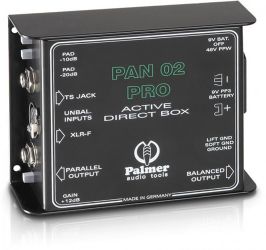
DI boxes

Professional DI Boxes for Events and Stages: Direct injection boxes are essential tools in professional event technology, converting unbalanced instrument signals into balanced mic-level signals for mixing consoles and audio interfaces. Whether you're running a festival stage, corporate event, or broadcast production, DI boxes ensure clean, interference-free audio over long cable runs of up to 100 metres. At LTT, you'll find active and passive DI boxes from leading manufacturers including Radial Engineering,...
Read more »
DI boxes
Close window
DI boxes

Professional DI Boxes for Events and Stages

Direct injection boxes are essential tools in professional event technology, converting unbalanced instrument signals into balanced mic-level signals for mixing consoles and audio interfaces. Whether you're running a festival stage, corporate event, or broadcast production, DI boxes ensure clean, interference-free audio over long cable runs of up to 100 metres. At LTT, you'll find active and passive DI boxes from leading manufacturers including Radial Engineering, Palmer, Behringer, Klark Teknik, and dbx – all designed to meet the demanding requirements of professional live sound and studio applications.

What Is a DI Box and How Does It Work?

A DI box (Direct Injection box) serves three critical functions in professional audio systems: it converts high-impedance, unbalanced instrument signals into low-impedance, balanced signals suitable for mixing console inputs; it matches the output level of electronic instruments to microphone level; and it eliminates ground loops and hum that plague long cable runs.

The conversion process is straightforward yet essential. Instruments like electric guitars, basses, keyboards, and synthesizers produce unbalanced signals on standard TS (tip-sleeve) jack cables. These signals are highly susceptible to interference, especially over distances greater than 6 metres. A DI box transforms this unbalanced signal into a balanced XLR output, using two conductors carrying the signal with opposite polarity. When combined at the mixing console, any noise picked up along the cable path is effectively cancelled out.

Most professional DI boxes feature a ground lift switch that disconnects pin 1 on the XLR connector, breaking ground loops between the instrument and the console. This simple function eliminates the 50 Hz hum that can otherwise plague stage setups. Additional features include a pad switch (typically -15 dB or -20 dB attenuation) for high-output active instruments, and a thru/bypass output that splits the signal – sending one path to the PA system and another to an on-stage amplifier for monitoring.

Compared to signal splitters, which simply divide a signal into multiple outputs, DI boxes actively condition and convert the signal for optimal transmission. While splitters are useful for routing, DI boxes solve the fundamental impedance and balance challenges that arise when connecting instruments directly to professional audio systems.

Active vs Passive DI Boxes Explained

The choice between active and passive DI boxes depends entirely on the output characteristics of your source instrument. Understanding this distinction is crucial for achieving optimal sound quality and avoiding common problems like distortion, noise, or inadequate signal level.

Passive DI Boxes

Passive DI boxes use an isolation transformer to convert the signal – no external power required. They excel at handling high-output sources such as keyboards, digital pianos, synthesizers with built-in preamps, active bass guitars with 9V batteries, and line-level outputs from mixing consoles or audio interfaces. The transformer naturally handles high signal levels without distortion, typically up to +20 dBu or more. Passive models like the Radial JDI or Palmer PAN 01 are particularly effective at eliminating ground loop hum from AC-powered devices, as the transformer provides galvanic isolation between input and output.

The rule of thumb: if the source is active (has its own power supply or battery), use a passive DI box. The high output level of these instruments drives the transformer efficiently, and the passive design naturally attenuates the signal to mic level without introducing noise.

Active DI Boxes

Active DI boxes incorporate a buffer circuit powered by either 48V phantom power from the mixing console, an internal 9V battery, or an external power supply. This buffer provides high input impedance (typically 1 MΩ or greater) and low output impedance, making them ideal for passive instruments with electromagnetic pickups: electric guitars, passive bass guitars, vintage Rhodes electric pianos, and acoustic guitars with piezo pickups.

The buffer prevents loading down the instrument's pickups, preserving the natural tone and full frequency response. Active models like the Radial J48 or Behringer DI100 typically offer wider frequency response (10 Hz to 40 kHz is common) and can handle very low input levels, amplifying them cleanly to mic level. The downside is that active circuits can distort if presented with extremely high signal levels, though most quality units include pad switches to prevent this.

The rule of thumb: if the source is passive (no battery, no power supply), use an active DI box. The high input impedance and buffer amplification ensure optimal signal transfer from low-output pickups.

Industry Standards

Professional sound engineers have established clear preferences based on decades of experience. Acoustic guitars with piezo pickups almost always sound better through active DI boxes like the Radial J48, which preserves the "air" and openness of the instrument. Keyboards and electronic drums, conversely, benefit from passive DI boxes such as the Radial ProD2 or JDI Stereo, which handle high output levels cleanly and eliminate hum from AC power supplies. Bass guitars vary: passive instruments work best with active DI boxes, while modern active basses with onboard preamps pair well with passive DI boxes that can handle their high output without distortion.

Top DI Box Models for Professional Events

The professional event market offers a wide range of DI boxes, from budget-friendly workhorses to premium touring-grade units. Understanding the key models helps you select the right tool for your specific application and budget.

Entry-Level Professional Models

The Behringer DI100 active DI box represents exceptional value for smaller productions and fixed installations. Powered by 9V battery or 48V phantom power, it features ground lift, -20 dB pad, and delivers clean conversion for passive instruments at a price point under £30. For passive applications, the Behringer DI20 offers transformer-based conversion with dual channels, making it ideal for stereo keyboards or dual-mono setups.

The Palmer PAN 01 passive DI box sits in the mid-range, offering German engineering with a high-quality transformer that handles up to +18 dBu input level. Its robust metal housing and reliable ground lift switch make it a favourite for rental companies and touring musicians who need dependable performance without premium pricing.

Professional Touring Models

Radial Engineering dominates the professional touring market with several industry-standard models. The Radial J48 active DI box is widely considered the benchmark for acoustic guitars and passive instruments, featuring exceptional headroom, 48V phantom power operation, and a frequency response extending from 10 Hz to 40 kHz. Its ability to drive 100-metre cable runs without signal degradation makes it indispensable for festival stages and large venues.

For passive applications, the Radial JDI uses a custom-wound transformer that delivers pristine audio quality with keyboards, synthesizers, and active basses. The JDI's ability to handle +22 dBu input levels means it never distorts, even with the hottest keyboard outputs. The stereo version, Radial JDI Stereo, provides two channels in a single enclosure, reducing stage clutter for keyboard players running stereo rigs.

The Klark Teknik DN100 active DI box offers similar performance to the Radial J48 at a slightly lower price point, making it popular with production companies managing large inventories. Its rugged steel chassis survives years of touring abuse, while the Midas-designed preamp circuitry ensures transparent signal conversion.

Broadcast and Studio Grade

For broadcast applications and high-end studio work, the dbx DB-10 active DI box provides ultra-low noise performance (-120 dB THD+N) and exceptional common-mode rejection ratio (>100 dB), ensuring pristine audio even in electrically noisy environments. Its premium components and meticulous circuit design justify the higher investment for applications where audio quality cannot be compromised.

Manufacturers like Radial, Palmer, Behringer, Klark Teknik, and dbx each bring distinct strengths to the market. Radial excels in touring-grade reliability and sonic transparency; Palmer offers excellent value with German engineering; Behringer provides budget-friendly options for fixed installations; Klark Teknik delivers professional performance at competitive pricing; and dbx specialises in broadcast-grade precision. Your choice depends on application demands, budget constraints, and the specific instruments you're connecting.

Multi-Channel DI Systems for Large Productions

Large-scale events, touring productions, and broadcast facilities require more than individual DI boxes scattered across the stage. Multi-channel DI systems consolidate multiple direct injection channels into rack-mounted units, dramatically simplifying stage setup, reducing cable clutter, and improving signal routing efficiency.

Rack-Mounted DI Solutions

Professional 8-channel and 16-channel DI systems mount in standard 19-inch racks, typically occupying 1U or 2U of space. These units feature individual DI circuits for each channel, with dedicated ground lift switches, pad controls, and thru outputs. The consolidated design means a single rack unit replaces eight or sixteen individual DI boxes, reducing the physical footprint on stage and in transport cases.

The primary advantage is signal routing. Instead of running individual XLR cables from scattered DI boxes back to the mixing console or stage box, a single multi-pair snake cable connects the rack-mounted DI system to the FOH position. This approach is standard practice for festival stages, where multiple bands perform in quick succession – the DI rack remains in place while instruments are swapped during changeovers, maintaining consistent signal paths and reducing setup time.

Manufacturers like Radial Engineering offer the SW8 and JD7 series, providing eight channels of passive or active DI conversion in a single rack unit. These systems are designed for touring, with rugged steel construction and redundant grounding schemes that eliminate hum even in challenging electrical environments. For broadcast applications, units with transformer-isolated outputs on every channel ensure complete galvanic isolation between the stage and the broadcast truck, preventing ground loops that could introduce hum into live television or radio feeds.

Integration with Digital Mixing Consoles

Modern event technology increasingly relies on digital mixing consoles with network audio protocols like Dante, AES67, or Waves SoundGrid. While traditional DI boxes convert instrument signals to analogue XLR outputs, a new generation of digital DI systems converts directly to network audio, eliminating the need for analogue stage boxes entirely.

These digital DI systems connect instruments to the network via standard Ethernet cables, transmitting up to 64 channels of audio over a single Cat6 cable. The advantages are substantial: zero signal degradation over distances up to 100 metres, complete immunity to electromagnetic interference, and the ability to route any input to any console channel via software rather than physical patching. For large productions with multiple mixing positions (FOH, monitors, broadcast, recording), a single digital DI system feeds all consoles simultaneously without signal splitting or quality loss.

The integration with audio hybrid cables further streamlines installations, combining network audio, power, and control signals in a single cable run. This approach is particularly valuable for permanent installations in theatres, houses of worship, and conference centres, where clean cable routing and minimal visual impact are priorities.

Stage Plot Considerations

Professional stage managers position DI boxes strategically to minimise cable runs and maintain organised stage layouts. For multi-channel systems, the rack unit typically mounts in a side-stage rack case or at the FOH position, depending on whether you're using a stage snake or direct cable runs. Individual DI boxes for instruments like bass and acoustic guitar are placed immediately adjacent to the performer's position, with short instrument cables (1–3 metres) connecting the instrument to the DI input. The XLR output then runs to the nearest stage box or directly to FOH.

For keyboard rigs requiring four or more channels, a dedicated 8-channel rack-mounted DI system positioned behind the keyboard stand consolidates all connections in one location, with a single multi-pair snake running to FOH. This approach reduces stage clutter and allows the keyboard technician to manage all DI settings from a single rack unit rather than crawling under the stage to adjust individual boxes.

DI Box Setup Guide for Live Events

Proper DI box setup is critical for achieving clean, professional audio at live events. Even the highest-quality DI box will underperform if connected incorrectly or configured inappropriately for the source instrument.

Connection Sequence

Always connect the instrument to the DI box input first, before connecting the XLR output to the mixing console or stage box. This sequence prevents phantom power from reaching the instrument during connection, which could damage certain vintage instruments or active electronics. If using an active DI box with phantom power, enable phantom power at the console only after all connections are complete.

For instruments requiring on-stage amplification (bass guitar, electric guitar), use the DI box's thru/bypass output to send the unprocessed signal to the amplifier. Connect the instrument to the DI input, the thru output to the amplifier input, and the XLR output to the stage box or console. This configuration allows the performer to hear their amplifier on stage while the PA system receives a clean, balanced signal from the DI box.

Ground Lift Usage

Ground lift switches are essential tools for eliminating hum, but they must be used correctly. Start with the ground lift switch in the "ground connected" position (not lifted). If you hear 50 Hz hum through the PA system, engage the ground lift switch to disconnect pin 1 on the XLR connector. In most cases, this immediately eliminates the hum. If hum persists, the problem likely lies elsewhere in the signal chain – check for faulty cables, improper console grounding, or interference from lighting dimmers.

Never use ground lift as a permanent solution without understanding the source of the hum. In some cases, lifting the ground can create safety hazards or violate electrical codes. If ground lift is required to eliminate hum, document this in your stage plot and investigate the root cause during load-out.

Pad Switch Settings

The pad switch attenuates the input signal by a fixed amount, typically -15 dB or -20 dB. Use the pad when connecting high-output instruments like active basses, keyboards, or line-level sources to prevent distortion in the DI box's input stage. Start without the pad engaged; if you hear distortion or if the console's input meter shows clipping even with the gain turned down, engage the pad and readjust the console gain accordingly.

For passive instruments like electric guitars and passive basses, the pad should remain disengaged. These instruments produce relatively low output levels, and engaging the pad unnecessarily reduces signal-to-noise ratio.

Cable Quality and Length

DI boxes enable long cable runs, but cable quality matters. Use professional-grade XLR cables with proper shielding for runs from the DI box to the stage box or console. Cheap cables with inadequate shielding can pick up interference from lighting cables, power distribution, and radio frequency sources, negating the benefits of the balanced signal.

For instrument cables (from the instrument to the DI input), keep lengths under 6 metres when possible. Longer unbalanced instrument cables act as antennas, picking up hum and high-frequency interference before the signal reaches the DI box. If longer runs are unavoidable, use high-quality shielded instrument cables and position them away from power cables and lighting dimmers.

Integration with audio extension cables allows flexible stage layouts without compromising signal quality, provided you maintain proper cable management and avoid running audio cables parallel to power distribution.

LTT – Your Specialist for Event Technology

At LTT, we've been supporting event professionals, sound engineers, and production companies for over 25 years with high-quality equipment and expert advice. Our DI box range includes active and passive models from leading manufacturers like Radial Engineering, Palmer, Behringer, Klark Teknik, and dbx – all selected for their proven reliability in demanding live sound applications.

Every DI box we supply comes with our 3-year LTT warranty, giving you confidence in your investment. We ship worldwide from our facility in Bocholt, Germany, with free shipping on orders over €69 and express delivery available when you need equipment urgently. For production companies and rental firms, we offer wholesale pricing and volume discounts on multi-channel DI systems and bulk orders.

Our expertise extends beyond DI boxes to complete audio solutions. Explore our range of audio tools and accessories for signal processors, metering devices, and connectivity solutions that complement your DI box setup. For complex installations requiring custom cable assemblies, our audio hybrid cables provide integrated solutions for power, audio, and control signals.

Whether you're equipping a festival stage, upgrading a house of worship, or building a touring rig, LTT delivers the professional equipment and support you need to achieve outstanding results. Our team understands the technical demands of live sound and can recommend the optimal DI box configuration for your specific application.

FAQ – Questions & Answers

Does a DI box make a difference?

Yes, a DI box makes a substantial difference in professional audio applications. It converts unbalanced, high-impedance instrument signals into balanced, low-impedance mic-level signals suitable for mixing consoles, enabling cable runs up to 100 metres without noise or signal degradation. The balanced output uses two conductors carrying opposite-polarity signals, which cancel out interference picked up along the cable path. Additionally, DI boxes eliminate ground loop hum through transformer isolation or ground lift switches, solving one of the most common problems in live sound. For instruments like bass guitar, acoustic guitar, and keyboards, a DI box is essential for achieving clean, professional sound at FOH.

Is a DI box necessary for a keyboard?

A DI box is highly recommended for keyboards in live sound and studio applications. Keyboards typically produce line-level, unbalanced signals that are susceptible to noise and hum over cable runs longer than 6 metres. A passive DI box converts this unbalanced signal to a balanced XLR output, eliminating interference and enabling long cable runs to the mixing console without quality loss. The DI box also solves ground loop problems common with AC-powered keyboards, using transformer isolation to break the ground connection between the instrument and the console. For stereo keyboards, a dual-channel passive DI box like the Radial JDI Stereo handles both left and right outputs in a single compact unit.

What happens if you don't use a DI box?

Without a DI box, connecting instruments directly to a mixing console via long unbalanced cables results in significant noise, hum, and signal degradation. Unbalanced instrument cables act as antennas, picking up electromagnetic interference from lighting dimmers, power cables, and radio frequency sources. Cable runs longer than 6 metres suffer from high-frequency loss and increased noise floor, degrading audio quality. Ground loops between the instrument and console create 50 Hz hum that can be difficult or impossible to eliminate without a DI box's ground lift or transformer isolation. Additionally, impedance mismatches between high-impedance instruments and low-impedance console inputs cause tone loss and reduced output level. Professional productions always use DI boxes to avoid these problems.

What are common DI box problems?

Common DI box problems include ground loop hum (solved by engaging the ground lift switch), distortion from excessive input levels (solved by engaging the pad switch or using a passive DI for high-output sources), inadequate output level (caused by using a passive DI with low-output passive instruments – switch to an active DI), phantom power issues (active DI boxes require 48V phantom power from the console; verify it's enabled), and faulty cables (check both instrument cables and XLR cables for intermittent connections or damaged shielding). If hum persists after engaging ground lift, the problem may lie elsewhere in the signal chain – check console grounding, power distribution, and proximity to lighting dimmers. Always test DI boxes with a known-good signal source and cables to isolate the fault.

Do you need a DI box with an amp?

You typically do not need a DI box when using an amplifier for on-stage monitoring only, as the amplifier's input handles the instrument's unbalanced signal over short cable runs. However, if you're sending the instrument signal to both an on-stage amplifier and the PA system, a DI box is essential. Use the DI box's thru/bypass output to send the unprocessed signal to the amplifier input, while the XLR output sends a balanced signal to the mixing console. This configuration is standard for bass guitar and acoustic guitar, allowing the performer to hear their amplifier on stage while the PA system receives a clean, balanced signal from the DI box. The approach reduces stage volume and gives the sound engineer independent control over the FOH mix.

What is the difference between active and passive DI boxes?

Active DI boxes use powered buffer circuits (via 48V phantom power, battery, or external supply) to provide high input impedance and amplify low-level signals, making them ideal for passive instruments like electric guitars, passive basses, and acoustic guitars with piezo pickups. Passive DI boxes use isolation transformers without requiring power, excelling at handling high-output sources like keyboards, active basses, and line-level devices while naturally eliminating ground loop hum. The rule of thumb: use active DI boxes for passive instruments (no battery or power supply) and passive DI boxes for active instruments (with battery or AC power). Active models offer wider frequency response and better sensitivity for low-output sources, while passive models handle higher signal levels without distortion.

Which DI box should I buy for professional events?

For professional events, choose DI boxes based on your specific instruments and budget. For acoustic guitars and passive instruments, the Radial J48 active DI box is the industry standard, offering exceptional audio quality and reliability. For keyboards and active instruments, the Radial JDI passive DI box provides pristine transformer-based conversion with high headroom. Budget-conscious productions can achieve professional results with Behringer DI100 (active) or DI20 (passive) models, which offer reliable performance at lower price points. For touring and rental applications, prioritise rugged construction and proven reliability – Radial, Klark Teknik, and Palmer models withstand years of road use. Multi-channel rack-mounted systems are essential for large productions requiring eight or more DI channels.

Can DI boxes be used with synthesizers and digital pianos?

Yes, DI boxes are ideal for synthesizers and digital pianos in live sound applications. These instruments produce line-level, unbalanced outputs that benefit from conversion to balanced signals for long cable runs to mixing consoles. Use passive DI boxes for synthesizers and digital pianos, as their high output levels (typically +4 dBu to +10 dBu) drive passive transformers efficiently without distortion. For stereo instruments, a dual-channel passive DI box like the Radial ProD2 handles both left and right outputs, maintaining stereo imaging while eliminating hum from AC power supplies. The transformer isolation in passive DI boxes is particularly effective at breaking ground loops common with AC-powered electronic instruments, ensuring clean audio without 50 Hz hum.

Top seller
OMNITRONIC LH-053 DI-Box passiv
OMNITRONIC LH-053 Passive DI Box
€18.90 *
incl. tax, plus shipping costs
Availability:
Delivery time: 1-3 days
OMNITRONIC LH-083 Stereo-Isolator RCA S
OMNITRONIC LH-083 Stereo Isolator RCA S
€36.90 *
incl. tax, plus shipping costs
Availability:
Currently not available;
Article is coming soon
Currently not available
OMNITRONIC LH-042 Line/Phono-Wandler
OMNITRONIC LH-042 Line/Phono Converter
€30.86 *
incl. tax, plus shipping costs
Availability:
Delivery time: 3-5 days
LD Systems LDI 02 DI Box aktiv
LD Systems LDI 02 - DI Box active
€61.90 *
incl. tax, plus shipping costs
Availability:
Near-term available
Delivery time: approx. 1 week
Palmer Pro PAN 04 DI-Box 2 Kanal passiv
Palmer PAN 04 - DI Box 2-Channel passive
€96.46 *
incl. tax, free shipping to Germany
[International shipping costs]
Availability:
Near-term available
Delivery time: approx. 1 week
Palmer RIVER kyll - Passive 2-Kanal Line Isolation Box
Palmer RIVER kyll - Passive 2-Channel Line Isolation Box
€208.25 *
incl. tax, free shipping to Germany
[International shipping costs]
Availability:
Near-term available
Delivery time: approx. 1 week
OMNITRONIC LH-026 3-Kanal-Stereo-Mixer
OMNITRONIC LH-026 3-Channel Stereo Mixer
€79.90 *
incl. tax, free shipping to Germany
[International shipping costs]
Availability:
Delivery time: 3-5 days
IMG STAGE LINE DIB-102 Direkt-Box
IMG STAGELINE DIB-102 2-channel DI box
€59.00 *
incl. tax, plus shipping costs
Availability:
Delivery time: 3-5 days
46 Articles
Close filters
 
  •  
  •  
  •  
  •  
  •  
  •  
from to
1 From 2 pages
No results were found for the filter!
OMNITRONIC LH-053 DI-Box passiv
OMNITRONIC LH-053 Passive DI Box
Little brother of the LH-055 DI Box. Sturdy housing, solid workmanship at an unbeatable price. Passive 1-channel DI box, black 1 high-impedance signal input, 6.3 mm jack • 1 low-impedance XLR...
€18.90 *
incl. tax, plus shipping costs
Availability:
Delivery time: 1-3 days
MONACOR DIB-110 DI-Uebertrager 1:1
MONACOR DIB-110 DI transformer 10:1
DI transformer 10:1 Unshielded version with PCB connections • Wideband version • Change from unbalanced to balanced and vice versa • Galvanic isolation to avoid/eliminate hum loops...
€11.00 *
incl. tax, plus shipping costs
Availability:
Delivery time: 3-5 days
FGA-202 Professioneller 2-Kanal-Line-Übertrager
IMG STAGELINE FGA-202 Professional 2-channel line transformer
Professional 2-channel line transformer, for reducing signal interference and hum loops. 2 inputs via balanced comb. jacks XLR/6.3 mm (600 O) • 2 galvanically isolated XLR outputs (600 O) with...
€70.00 *
incl. tax, free shipping to Germany
[International shipping costs]
Availability:
Delivery time: 3-5 days
OMNITRONIC LH-010 4-Kanal-Mixer passiv
OMNITRONIC LH-010 4-Channel Mixer passive
4-channel mini mixer, passive Distributes the signal of 4 audio sources to 1 output or vice versa • 4 unbalanced jack inputs (for line or instrument signals) with separate level controls...
€36.50 *
incl. tax, plus shipping costs
Availability:
Delivery time: 3-5 days
OMNITRONIC LH-042 Line/Phono-Wandler
OMNITRONIC LH-042 Line/Phono Converter
The LH-042 converts a line signal to a phono signal. What this is good for? Just imagine the following situation. Your working as a DJ and you have recently bought a new line source (a CD player,...
€30.86 *
incl. tax, plus shipping costs
Availability:
Delivery time: 3-5 days
OMNITRONIC LH-015 2-Kanal Mic-Line-Mixer
OMNITRONIC LH-015 2-Channel Mic/Line Mixer
2-channel miniature mic/line mixer Distributes the signal of 2 audio sources (microphones, instruments or line level units) to 1 mono output • 1 mono mic/line input (6.3 mm jack) with separate...
€59.48 *
incl. tax, plus shipping costs
Availability:
Delivery time: 3-5 days
IMG STAGE LINE DIB-102 Direkt-Box
IMG STAGELINE DIB-102 2-channel DI box
DI Boxes For an optimum signal transmission from musical instruments to a mixer or amplifier. By using a transformer coupling, interferences due to matching problems, e.g. hum loops, are prevented...
€59.00 *
incl. tax, plus shipping costs
Availability:
Delivery time: 3-5 days
OMNITRONIC LH-060 PRO Duale DI-Box passiv
OMNITRONIC LH-060 PRO Passive Dual DI Box
Passive 2-channel DI box/splitter, silver 2 high-impedance signal inputs via combo connectors (XLR/6.3 mm jack) • 2 low-impedance XLR outputs • Converts 2 separate unbalanced line inputs...
€71.79 *
incl. tax, free shipping to Germany
[International shipping costs]
Availability:
Delivery time: 3-5 days
Palmer Pro PAN 01 DI-Box passiv
Palmer PAN 01 - DI Box passive
DI Box passive Passive DI box. Jack input with paralell "THRU" output, transformer balanced XLR output. Attenuable input sensitivity, can handle both line level and speaker level signals....
€56.04 *
incl. tax, plus shipping costs
Availability:
Near-term available
Delivery time: approx. 1 week
OMNITRONIC LH-020 3-Kanal-Mikrofonmixer
OMNITRONIC LH-020 3-Channel Mic Mixer
3-channel microphone mixer Compact mixer to mix 3 microphones to 1 line output, with individual level control • 3 microphone input channels with separate level controls, switchable phantom...
€90.49 *
incl. tax, free shipping to Germany
[International shipping costs]
Availability:
Delivery time: 1-3 days
OMNITRONIC LH-082 Stereo-Isolator XLR
OMNITRONIC LH-082 Stereo Isolator XLR
Passive stereo line isolator with XLR sockets For avoiding signal interference and ground loop problems • Input and outputs galvanically isolated • Two high-quality audio transformers...
€75.80 *
incl. tax, free shipping to Germany
[International shipping costs]
Availability:
Delivery time: 1-3 days
DAP ADI-200 Aktive Direkt Box
DAP-Audio ADI-200 Mono active DI box
Prevents ground loops, hum and buzz • Low distortion • Ground lift switch • 0 and 20 dB attenuation switch • Works with 9 V battery or 18-48 V phantom power • Road proof...
€50.90 *
incl. tax, plus shipping costs
Availability:
Delivery time: 1-3 days
IMG STAGE LINE DIB-100 Direkt-Box
IMG STAGELINE DIB-100 DI box
DI Boxes For an optimum signal transmission from musical instruments to a mixer or amplifier. By using a transformer coupling, interferences due to matching problems, e.g. hum loops, are prevented...
€30.00 *
incl. tax, plus shipping costs
Availability:
Delivery time: 3-5 days
OMNITRONIC LH-026 3-Kanal-Stereo-Mixer
OMNITRONIC LH-026 3-Channel Stereo Mixer
3-channel stereo mixer, RCA Mixes the signasl of 3 stereo audio sources to 1 stereo output • 3 stereo RCA input channels with separate level adjustment • 1 stereo RCA master output,...
€79.90 *
incl. tax, free shipping to Germany
[International shipping costs]
Availability:
Delivery time: 3-5 days
OMNITRONIC LH-061 PRO Duale DI-Box passiv
OMNITRONIC LH-061 PRO Passive Dual DI Box
Passive 2-channel DI box/splitter, black 2 high-impedance signal inputs via two 6.3 mm jacks • 2 low-impedance XLR outputs • Converts 2 separate unbalanced line inputs (e.g. CD player,...
€44.90 *
incl. tax, plus shipping costs
Availability:
Delivery time: 3-5 days
Palmer Pro PAN 02 DI-Box aktiv
Palmer PAN 02 - DI Box active
DI Box active Standard active DI box. Can be operated with 9 V batteries or 48 V phantom power. High-impedance input; higher output level than with a passive DI box. Active circuitry allows for...
€68.46 *
incl. tax, plus shipping costs
Availability:
Near-term available
Delivery time: approx. 1 week
Palmer Pro DI-REVERSE Umgekehrte DI Box
Palmer DI-REVERSE - Reversed DI Box
Reversed DI Box Many try using a DI-Box “backwards” in order to convert a balanced signal to unbalanced. The resulting mismatch generally leads to disappointing results. The PDIR...
€92.77 *
incl. tax, free shipping to Germany
[International shipping costs]
Availability:
Near-term available
Delivery time: approx. 1 week
LD Systems LDI 02 DI Box aktiv
LD Systems LDI 02 - DI Box active
DI Box active Active DI box in a sturdy metal housing (aluminium/steel) with protective corners, silver-blue metallic, internal battery (9 V flashes during operation) is switched off automatically...
€61.90 *
incl. tax, plus shipping costs
Availability:
Near-term available
Delivery time: approx. 1 week
Palmer Pro PAN 02 PRO DI-Box aktiv
Palmer PAN 02 PRO - Professional DI Box active
Professional DI Box active First-class Active Di-box • Unbalanced XLR Input • 3-way attenuator (-10, -20, -30dB) • Switchable gain (12dB) • Max. Output voltage +20 dB...
€199.00 *
incl. tax, free shipping to Germany
[International shipping costs]
Availability:
Near-term available
Delivery time: approx. 1 week
Palmer Pro PAN 04 DI-Box 2 Kanal passiv
Palmer PAN 04 - DI Box 2-Channel passive
DI Box 2-Channel passive The PAN-04 consists of a housing containing the equivalent of two PAN-01s, making it a dual channel passive DI box. This „stereo" configuration makes it ideally...
€96.46 *
incl. tax, free shipping to Germany
[International shipping costs]
Availability:
Near-term available
Delivery time: approx. 1 week
Palmer Pro PAN0 3 PASS 19" DI-Box 4 Kanal passiv
Palmer PAN 03 PASS - 19" DI Box 4-Channel passive
19" DI Box 4-Channel passive Passive 4-channel DI BOX in a 19" housing. Each channel has a jack input with a parallel output for looping the signal through. An attenuation switch (-30 dB)...
€205.95 *
incl. tax, free shipping to Germany
[International shipping costs]
Availability:
Near-term available
Delivery time: approx. 1 week
Palmer Pro PAN 03 19" DI-Box 4 Kanal aktiv
Palmer PAN 03 - 19" DI Box 4-Channel active
19" DI Box 4-Channel active Active 4-channel DI box. Each channel has a jack input with a parallel output for passing through the signal. An attenuation switch (-30 dB) allows either a line or...
€329.18 *
incl. tax, free shipping to Germany
[International shipping costs]
Availability:
Near-term available
Delivery time: approx. 1 week
Palmer Pro PAN 16 19"  DI-Box 8 Kanal passiv
Palmer PAN 16 - 19" DI Box 8 Channels passive
19" DI Box 8 Channels passive 19“ passive DI-Box • 8 Channels • Up to 16 Inputs • Link Merge Function • Flexible PAD: -10dB, -20dB, -30dB • Transformer balanced...
€297.95 *
incl. tax, free shipping to Germany
[International shipping costs]
Availability:
Near-term available
Delivery time: approx. 1 week
DAP-Audio PDI-200 Stereo passive direct injection box
DAP-Audio PDI-200 Stereo passive DI box
2x 6.3 mm TS Jack in, 2x balanced XLR out • Prevents ground loops, hum and buzz • Road proof housing with rubber feet • Low distortion • No power supply needed • 0, 20 and...
€49.50 *
incl. tax, plus shipping costs
Availability:
Delivery time: 3-5 days
1 From 2 pages
Facts
Professional DI Boxes for Events and Stages: Direct injection boxes are essential tools in professional event technology, converting unbalanced instrument signals into balanced mic-level signals for mixing consoles and audio interfaces. Whether you're running a festival stage, corporate event, or broadcast production, DI boxes ensure clean, interference-free audio over long cable runs of up to 100 metres. At LTT, you'll find active and... Read more »
Viewed
Facts

Professional DI Boxes for Events and Stages

Direct injection boxes are essential tools in professional event technology, converting unbalanced instrument signals into balanced mic-level signals for mixing consoles and audio interfaces. Whether you're running a festival stage, corporate event, or broadcast production, DI boxes ensure clean, interference-free audio over long cable runs of up to 100 metres. At LTT, you'll find active and passive DI boxes from leading manufacturers including Radial Engineering, Palmer, Behringer, Klark Teknik, and dbx – all designed to meet the demanding requirements of professional live sound and studio applications.

What Is a DI Box and How Does It Work?

A DI box (Direct Injection box) serves three critical functions in professional audio systems: it converts high-impedance, unbalanced instrument signals into low-impedance, balanced signals suitable for mixing console inputs; it matches the output level of electronic instruments to microphone level; and it eliminates ground loops and hum that plague long cable runs.

The conversion process is straightforward yet essential. Instruments like electric guitars, basses, keyboards, and synthesizers produce unbalanced signals on standard TS (tip-sleeve) jack cables. These signals are highly susceptible to interference, especially over distances greater than 6 metres. A DI box transforms this unbalanced signal into a balanced XLR output, using two conductors carrying the signal with opposite polarity. When combined at the mixing console, any noise picked up along the cable path is effectively cancelled out.

Most professional DI boxes feature a ground lift switch that disconnects pin 1 on the XLR connector, breaking ground loops between the instrument and the console. This simple function eliminates the 50 Hz hum that can otherwise plague stage setups. Additional features include a pad switch (typically -15 dB or -20 dB attenuation) for high-output active instruments, and a thru/bypass output that splits the signal – sending one path to the PA system and another to an on-stage amplifier for monitoring.

Compared to signal splitters, which simply divide a signal into multiple outputs, DI boxes actively condition and convert the signal for optimal transmission. While splitters are useful for routing, DI boxes solve the fundamental impedance and balance challenges that arise when connecting instruments directly to professional audio systems.

Active vs Passive DI Boxes Explained

The choice between active and passive DI boxes depends entirely on the output characteristics of your source instrument. Understanding this distinction is crucial for achieving optimal sound quality and avoiding common problems like distortion, noise, or inadequate signal level.

Passive DI Boxes

Passive DI boxes use an isolation transformer to convert the signal – no external power required. They excel at handling high-output sources such as keyboards, digital pianos, synthesizers with built-in preamps, active bass guitars with 9V batteries, and line-level outputs from mixing consoles or audio interfaces. The transformer naturally handles high signal levels without distortion, typically up to +20 dBu or more. Passive models like the Radial JDI or Palmer PAN 01 are particularly effective at eliminating ground loop hum from AC-powered devices, as the transformer provides galvanic isolation between input and output.

The rule of thumb: if the source is active (has its own power supply or battery), use a passive DI box. The high output level of these instruments drives the transformer efficiently, and the passive design naturally attenuates the signal to mic level without introducing noise.

Active DI Boxes

Active DI boxes incorporate a buffer circuit powered by either 48V phantom power from the mixing console, an internal 9V battery, or an external power supply. This buffer provides high input impedance (typically 1 MΩ or greater) and low output impedance, making them ideal for passive instruments with electromagnetic pickups: electric guitars, passive bass guitars, vintage Rhodes electric pianos, and acoustic guitars with piezo pickups.

The buffer prevents loading down the instrument's pickups, preserving the natural tone and full frequency response. Active models like the Radial J48 or Behringer DI100 typically offer wider frequency response (10 Hz to 40 kHz is common) and can handle very low input levels, amplifying them cleanly to mic level. The downside is that active circuits can distort if presented with extremely high signal levels, though most quality units include pad switches to prevent this.

The rule of thumb: if the source is passive (no battery, no power supply), use an active DI box. The high input impedance and buffer amplification ensure optimal signal transfer from low-output pickups.

Industry Standards

Professional sound engineers have established clear preferences based on decades of experience. Acoustic guitars with piezo pickups almost always sound better through active DI boxes like the Radial J48, which preserves the "air" and openness of the instrument. Keyboards and electronic drums, conversely, benefit from passive DI boxes such as the Radial ProD2 or JDI Stereo, which handle high output levels cleanly and eliminate hum from AC power supplies. Bass guitars vary: passive instruments work best with active DI boxes, while modern active basses with onboard preamps pair well with passive DI boxes that can handle their high output without distortion.

Top DI Box Models for Professional Events

The professional event market offers a wide range of DI boxes, from budget-friendly workhorses to premium touring-grade units. Understanding the key models helps you select the right tool for your specific application and budget.

Entry-Level Professional Models

The Behringer DI100 active DI box represents exceptional value for smaller productions and fixed installations. Powered by 9V battery or 48V phantom power, it features ground lift, -20 dB pad, and delivers clean conversion for passive instruments at a price point under £30. For passive applications, the Behringer DI20 offers transformer-based conversion with dual channels, making it ideal for stereo keyboards or dual-mono setups.

The Palmer PAN 01 passive DI box sits in the mid-range, offering German engineering with a high-quality transformer that handles up to +18 dBu input level. Its robust metal housing and reliable ground lift switch make it a favourite for rental companies and touring musicians who need dependable performance without premium pricing.

Professional Touring Models

Radial Engineering dominates the professional touring market with several industry-standard models. The Radial J48 active DI box is widely considered the benchmark for acoustic guitars and passive instruments, featuring exceptional headroom, 48V phantom power operation, and a frequency response extending from 10 Hz to 40 kHz. Its ability to drive 100-metre cable runs without signal degradation makes it indispensable for festival stages and large venues.

For passive applications, the Radial JDI uses a custom-wound transformer that delivers pristine audio quality with keyboards, synthesizers, and active basses. The JDI's ability to handle +22 dBu input levels means it never distorts, even with the hottest keyboard outputs. The stereo version, Radial JDI Stereo, provides two channels in a single enclosure, reducing stage clutter for keyboard players running stereo rigs.

The Klark Teknik DN100 active DI box offers similar performance to the Radial J48 at a slightly lower price point, making it popular with production companies managing large inventories. Its rugged steel chassis survives years of touring abuse, while the Midas-designed preamp circuitry ensures transparent signal conversion.

Broadcast and Studio Grade

For broadcast applications and high-end studio work, the dbx DB-10 active DI box provides ultra-low noise performance (-120 dB THD+N) and exceptional common-mode rejection ratio (>100 dB), ensuring pristine audio even in electrically noisy environments. Its premium components and meticulous circuit design justify the higher investment for applications where audio quality cannot be compromised.

Manufacturers like Radial, Palmer, Behringer, Klark Teknik, and dbx each bring distinct strengths to the market. Radial excels in touring-grade reliability and sonic transparency; Palmer offers excellent value with German engineering; Behringer provides budget-friendly options for fixed installations; Klark Teknik delivers professional performance at competitive pricing; and dbx specialises in broadcast-grade precision. Your choice depends on application demands, budget constraints, and the specific instruments you're connecting.

Multi-Channel DI Systems for Large Productions

Large-scale events, touring productions, and broadcast facilities require more than individual DI boxes scattered across the stage. Multi-channel DI systems consolidate multiple direct injection channels into rack-mounted units, dramatically simplifying stage setup, reducing cable clutter, and improving signal routing efficiency.

Rack-Mounted DI Solutions

Professional 8-channel and 16-channel DI systems mount in standard 19-inch racks, typically occupying 1U or 2U of space. These units feature individual DI circuits for each channel, with dedicated ground lift switches, pad controls, and thru outputs. The consolidated design means a single rack unit replaces eight or sixteen individual DI boxes, reducing the physical footprint on stage and in transport cases.

The primary advantage is signal routing. Instead of running individual XLR cables from scattered DI boxes back to the mixing console or stage box, a single multi-pair snake cable connects the rack-mounted DI system to the FOH position. This approach is standard practice for festival stages, where multiple bands perform in quick succession – the DI rack remains in place while instruments are swapped during changeovers, maintaining consistent signal paths and reducing setup time.

Manufacturers like Radial Engineering offer the SW8 and JD7 series, providing eight channels of passive or active DI conversion in a single rack unit. These systems are designed for touring, with rugged steel construction and redundant grounding schemes that eliminate hum even in challenging electrical environments. For broadcast applications, units with transformer-isolated outputs on every channel ensure complete galvanic isolation between the stage and the broadcast truck, preventing ground loops that could introduce hum into live television or radio feeds.

Integration with Digital Mixing Consoles

Modern event technology increasingly relies on digital mixing consoles with network audio protocols like Dante, AES67, or Waves SoundGrid. While traditional DI boxes convert instrument signals to analogue XLR outputs, a new generation of digital DI systems converts directly to network audio, eliminating the need for analogue stage boxes entirely.

These digital DI systems connect instruments to the network via standard Ethernet cables, transmitting up to 64 channels of audio over a single Cat6 cable. The advantages are substantial: zero signal degradation over distances up to 100 metres, complete immunity to electromagnetic interference, and the ability to route any input to any console channel via software rather than physical patching. For large productions with multiple mixing positions (FOH, monitors, broadcast, recording), a single digital DI system feeds all consoles simultaneously without signal splitting or quality loss.

The integration with audio hybrid cables further streamlines installations, combining network audio, power, and control signals in a single cable run. This approach is particularly valuable for permanent installations in theatres, houses of worship, and conference centres, where clean cable routing and minimal visual impact are priorities.

Stage Plot Considerations

Professional stage managers position DI boxes strategically to minimise cable runs and maintain organised stage layouts. For multi-channel systems, the rack unit typically mounts in a side-stage rack case or at the FOH position, depending on whether you're using a stage snake or direct cable runs. Individual DI boxes for instruments like bass and acoustic guitar are placed immediately adjacent to the performer's position, with short instrument cables (1–3 metres) connecting the instrument to the DI input. The XLR output then runs to the nearest stage box or directly to FOH.

For keyboard rigs requiring four or more channels, a dedicated 8-channel rack-mounted DI system positioned behind the keyboard stand consolidates all connections in one location, with a single multi-pair snake running to FOH. This approach reduces stage clutter and allows the keyboard technician to manage all DI settings from a single rack unit rather than crawling under the stage to adjust individual boxes.

DI Box Setup Guide for Live Events

Proper DI box setup is critical for achieving clean, professional audio at live events. Even the highest-quality DI box will underperform if connected incorrectly or configured inappropriately for the source instrument.

Connection Sequence

Always connect the instrument to the DI box input first, before connecting the XLR output to the mixing console or stage box. This sequence prevents phantom power from reaching the instrument during connection, which could damage certain vintage instruments or active electronics. If using an active DI box with phantom power, enable phantom power at the console only after all connections are complete.

For instruments requiring on-stage amplification (bass guitar, electric guitar), use the DI box's thru/bypass output to send the unprocessed signal to the amplifier. Connect the instrument to the DI input, the thru output to the amplifier input, and the XLR output to the stage box or console. This configuration allows the performer to hear their amplifier on stage while the PA system receives a clean, balanced signal from the DI box.

Ground Lift Usage

Ground lift switches are essential tools for eliminating hum, but they must be used correctly. Start with the ground lift switch in the "ground connected" position (not lifted). If you hear 50 Hz hum through the PA system, engage the ground lift switch to disconnect pin 1 on the XLR connector. In most cases, this immediately eliminates the hum. If hum persists, the problem likely lies elsewhere in the signal chain – check for faulty cables, improper console grounding, or interference from lighting dimmers.

Never use ground lift as a permanent solution without understanding the source of the hum. In some cases, lifting the ground can create safety hazards or violate electrical codes. If ground lift is required to eliminate hum, document this in your stage plot and investigate the root cause during load-out.

Pad Switch Settings

The pad switch attenuates the input signal by a fixed amount, typically -15 dB or -20 dB. Use the pad when connecting high-output instruments like active basses, keyboards, or line-level sources to prevent distortion in the DI box's input stage. Start without the pad engaged; if you hear distortion or if the console's input meter shows clipping even with the gain turned down, engage the pad and readjust the console gain accordingly.

For passive instruments like electric guitars and passive basses, the pad should remain disengaged. These instruments produce relatively low output levels, and engaging the pad unnecessarily reduces signal-to-noise ratio.

Cable Quality and Length

DI boxes enable long cable runs, but cable quality matters. Use professional-grade XLR cables with proper shielding for runs from the DI box to the stage box or console. Cheap cables with inadequate shielding can pick up interference from lighting cables, power distribution, and radio frequency sources, negating the benefits of the balanced signal.

For instrument cables (from the instrument to the DI input), keep lengths under 6 metres when possible. Longer unbalanced instrument cables act as antennas, picking up hum and high-frequency interference before the signal reaches the DI box. If longer runs are unavoidable, use high-quality shielded instrument cables and position them away from power cables and lighting dimmers.

Integration with audio extension cables allows flexible stage layouts without compromising signal quality, provided you maintain proper cable management and avoid running audio cables parallel to power distribution.

LTT – Your Specialist for Event Technology

At LTT, we've been supporting event professionals, sound engineers, and production companies for over 25 years with high-quality equipment and expert advice. Our DI box range includes active and passive models from leading manufacturers like Radial Engineering, Palmer, Behringer, Klark Teknik, and dbx – all selected for their proven reliability in demanding live sound applications.

Every DI box we supply comes with our 3-year LTT warranty, giving you confidence in your investment. We ship worldwide from our facility in Bocholt, Germany, with free shipping on orders over €69 and express delivery available when you need equipment urgently. For production companies and rental firms, we offer wholesale pricing and volume discounts on multi-channel DI systems and bulk orders.

Our expertise extends beyond DI boxes to complete audio solutions. Explore our range of audio tools and accessories for signal processors, metering devices, and connectivity solutions that complement your DI box setup. For complex installations requiring custom cable assemblies, our audio hybrid cables provide integrated solutions for power, audio, and control signals.

Whether you're equipping a festival stage, upgrading a house of worship, or building a touring rig, LTT delivers the professional equipment and support you need to achieve outstanding results. Our team understands the technical demands of live sound and can recommend the optimal DI box configuration for your specific application.

FAQ – Questions & Answers

Does a DI box make a difference?

Yes, a DI box makes a substantial difference in professional audio applications. It converts unbalanced, high-impedance instrument signals into balanced, low-impedance mic-level signals suitable for mixing consoles, enabling cable runs up to 100 metres without noise or signal degradation. The balanced output uses two conductors carrying opposite-polarity signals, which cancel out interference picked up along the cable path. Additionally, DI boxes eliminate ground loop hum through transformer isolation or ground lift switches, solving one of the most common problems in live sound. For instruments like bass guitar, acoustic guitar, and keyboards, a DI box is essential for achieving clean, professional sound at FOH.

Is a DI box necessary for a keyboard?

A DI box is highly recommended for keyboards in live sound and studio applications. Keyboards typically produce line-level, unbalanced signals that are susceptible to noise and hum over cable runs longer than 6 metres. A passive DI box converts this unbalanced signal to a balanced XLR output, eliminating interference and enabling long cable runs to the mixing console without quality loss. The DI box also solves ground loop problems common with AC-powered keyboards, using transformer isolation to break the ground connection between the instrument and the console. For stereo keyboards, a dual-channel passive DI box like the Radial JDI Stereo handles both left and right outputs in a single compact unit.

What happens if you don't use a DI box?

Without a DI box, connecting instruments directly to a mixing console via long unbalanced cables results in significant noise, hum, and signal degradation. Unbalanced instrument cables act as antennas, picking up electromagnetic interference from lighting dimmers, power cables, and radio frequency sources. Cable runs longer than 6 metres suffer from high-frequency loss and increased noise floor, degrading audio quality. Ground loops between the instrument and console create 50 Hz hum that can be difficult or impossible to eliminate without a DI box's ground lift or transformer isolation. Additionally, impedance mismatches between high-impedance instruments and low-impedance console inputs cause tone loss and reduced output level. Professional productions always use DI boxes to avoid these problems.

What are common DI box problems?

Common DI box problems include ground loop hum (solved by engaging the ground lift switch), distortion from excessive input levels (solved by engaging the pad switch or using a passive DI for high-output sources), inadequate output level (caused by using a passive DI with low-output passive instruments – switch to an active DI), phantom power issues (active DI boxes require 48V phantom power from the console; verify it's enabled), and faulty cables (check both instrument cables and XLR cables for intermittent connections or damaged shielding). If hum persists after engaging ground lift, the problem may lie elsewhere in the signal chain – check console grounding, power distribution, and proximity to lighting dimmers. Always test DI boxes with a known-good signal source and cables to isolate the fault.

Do you need a DI box with an amp?

You typically do not need a DI box when using an amplifier for on-stage monitoring only, as the amplifier's input handles the instrument's unbalanced signal over short cable runs. However, if you're sending the instrument signal to both an on-stage amplifier and the PA system, a DI box is essential. Use the DI box's thru/bypass output to send the unprocessed signal to the amplifier input, while the XLR output sends a balanced signal to the mixing console. This configuration is standard for bass guitar and acoustic guitar, allowing the performer to hear their amplifier on stage while the PA system receives a clean, balanced signal from the DI box. The approach reduces stage volume and gives the sound engineer independent control over the FOH mix.

What is the difference between active and passive DI boxes?

Active DI boxes use powered buffer circuits (via 48V phantom power, battery, or external supply) to provide high input impedance and amplify low-level signals, making them ideal for passive instruments like electric guitars, passive basses, and acoustic guitars with piezo pickups. Passive DI boxes use isolation transformers without requiring power, excelling at handling high-output sources like keyboards, active basses, and line-level devices while naturally eliminating ground loop hum. The rule of thumb: use active DI boxes for passive instruments (no battery or power supply) and passive DI boxes for active instruments (with battery or AC power). Active models offer wider frequency response and better sensitivity for low-output sources, while passive models handle higher signal levels without distortion.

Which DI box should I buy for professional events?

For professional events, choose DI boxes based on your specific instruments and budget. For acoustic guitars and passive instruments, the Radial J48 active DI box is the industry standard, offering exceptional audio quality and reliability. For keyboards and active instruments, the Radial JDI passive DI box provides pristine transformer-based conversion with high headroom. Budget-conscious productions can achieve professional results with Behringer DI100 (active) or DI20 (passive) models, which offer reliable performance at lower price points. For touring and rental applications, prioritise rugged construction and proven reliability – Radial, Klark Teknik, and Palmer models withstand years of road use. Multi-channel rack-mounted systems are essential for large productions requiring eight or more DI channels.

Can DI boxes be used with synthesizers and digital pianos?

Yes, DI boxes are ideal for synthesizers and digital pianos in live sound applications. These instruments produce line-level, unbalanced outputs that benefit from conversion to balanced signals for long cable runs to mixing consoles. Use passive DI boxes for synthesizers and digital pianos, as their high output levels (typically +4 dBu to +10 dBu) drive passive transformers efficiently without distortion. For stereo instruments, a dual-channel passive DI box like the Radial ProD2 handles both left and right outputs, maintaining stereo imaging while eliminating hum from AC power supplies. The transformer isolation in passive DI boxes is particularly effective at breaking ground loops common with AC-powered electronic instruments, ensuring clean audio without 50 Hz hum.