Cables & plugs

Professional Cables and Connectors for Events and Stage Technology: Whether you're setting up a concert stage, installing a permanent lighting system, or building a mobile DJ rig – reliable cables and connectors are the foundation of every professional event technology setup. At LTT, you'll find a comprehensive range of power cables, signal cables, audio cables, DMX cables and professional connectors for all applications in stage and event technology. From robust touring-grade power distribution to precision...
Read more »
Cables & plugs
Close window
Cables & plugs

Professional Cables and Connectors for Events and Stage Technology

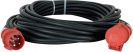
Whether you're setting up a concert stage, installing a permanent lighting system, or building a mobile DJ rig – reliable cables and connectors are the foundation of every professional event technology setup. At LTT, you'll find a comprehensive range of power cables, signal cables, audio cables, DMX cables and professional connectors for all applications in stage and event technology. From robust touring-grade power distribution to precision audio signal transmission, our selection covers every requirement from small club installations to large-scale festival productions. With premium brands like Neutrik, Sommer Cable, Adam Hall Cables and many more, you're investing in connection solutions that deliver flawless performance night after night.

Essential Cable Types for Event Technology

Understanding the different cable types is crucial for building reliable event technology systems. In professional applications, cables are categorised by their primary function: power transmission, audio signal transmission, data and control signal transmission, and hybrid solutions that combine multiple functions.

Power cables form the backbone of every event setup. For stage and event applications, you'll typically work with H07RN-F rubber cables (also known as Titanex cables) in various cross-sections. These heavy-duty cables are designed for outdoor use and frequent handling, with excellent resistance to oil, abrasion and UV radiation. Common configurations include 3×1.5 mm² for lighting fixtures up to 3,500 watts, 3×2.5 mm² for medium loads up to 5,750 watts, and 5×2.5 mm² or 5×4 mm² five-core cables for three-phase power distribution. All professional power cables must meet VDE standards and carry CE marking for safety compliance.

Audio and signal cables require different construction principles. Microphone cables and line-level cables use shielded twisted-pair construction to reject electromagnetic interference. Professional XLR cables feature balanced signal transmission with two conductors plus shield, providing excellent noise rejection over long cable runs of 50 metres or more. Instrument cables for guitars and basses typically use unbalanced construction with a single core and shield, optimised for the high-impedance signals from passive pickups.

DMX and lighting control cables are purpose-built for digital signal transmission. True DMX512 cables use 120-ohm characteristic impedance with twisted-pair construction and overall shield. While standard microphone cables may work for short runs, dedicated DMX cables are essential for reliable operation in complex lighting systems with multiple universes and long cable distances. Modern installations increasingly use Cat5e or Cat6 network cables with Art-Net or sACN protocols, allowing DMX data transmission over standard Ethernet infrastructure.

Multicore systems bundle multiple audio channels into a single cable assembly, dramatically reducing setup time and cable clutter. Stage boxes with 16, 24 or 32 channels are standard in live sound applications, connecting the stage to the mixing console with a single heavy-duty multicore cable. Digital snake systems take this concept further, transmitting dozens of audio channels plus control data over a single Cat6 cable using protocols like Dante, AVB or proprietary systems.

Power Distribution and Load Capacity for Professional Applications

Proper power distribution is critical for safe and reliable event technology installations. Understanding load calculations and cable specifications prevents overloading, voltage drop and potential fire hazards.

For single-phase 230V circuits, the maximum load is determined by the cable cross-section and protection device. A 16A circuit with 3×1.5 mm² cable can safely deliver 3,680 watts continuous load, though you should plan for 80% capacity (approximately 2,900 watts) to maintain safety margins. Stepping up to 3×2.5 mm² cable allows 32A circuits delivering up to 7,360 watts, suitable for larger lighting rigs or multiple moving heads.

Three-phase power distribution using CEE connectors (also called IEC 60309 connectors) is standard for larger productions. A 32A three-phase connection with 5×4 mm² cable can deliver over 22 kilowatts of total power, distributed across three phases. Professional power distributors split this into multiple single-phase outputs, each with individual circuit protection. When planning power distribution, remember that loads should be balanced across all three phases to prevent neutral conductor overload.

Cable length and voltage drop become significant factors in large venues. For a 50-metre cable run carrying 16A, you'll experience approximately 3% voltage drop with 2.5 mm² cable, but only 1.8% with 4 mm² cable. While 3% is generally acceptable, sensitive equipment like LED fixtures or digital audio gear may require larger cable cross-sections to maintain stable voltage. Professional installations often use 5×6 mm² or even 5×10 mm² cables for main power feeds to minimise losses.

IP ratings indicate environmental protection. For indoor use, standard cables without special protection are sufficient. Outdoor events require at least IP44-rated connectors (protection against splashing water) for temporary installations, while permanent outdoor installations should use IP65 or IP67 rated systems. Rubber-sheathed H07RN-F cables combined with IP-rated CEE connectors provide reliable outdoor power distribution that withstands rain, dust and mechanical stress.

All power distribution equipment must comply with DGUV Vorschrift 17 (formerly BGV C1) regulations for temporary electrical installations at events. This includes requirements for residual current devices (RCDs), proper earthing, mechanical protection of cables, and regular inspection by qualified electricians. Professional event technicians maintain detailed documentation of all electrical installations and conduct pre-show safety checks.

Audio Signal Cables and Professional Connector Standards

Audio signal integrity depends on proper cable selection and connector quality. Professional audio systems use balanced connections wherever possible, providing superior noise rejection compared to unbalanced alternatives.

XLR connectors are the industry standard for professional microphone and line-level connections. The three-pin configuration (pin 1 ground, pin 2 hot/positive, pin 3 cold/negative) enables balanced signal transmission that cancels electromagnetic interference picked up along the cable. Quality XLR connectors from manufacturers like Neutrik feature robust metal bodies, gold-plated contacts and strain relief that withstands thousands of connection cycles. Cable assemblies should use proper cable glands that grip the outer jacket, not just the internal conductors, preventing stress on solder joints.

For permanent installations, Neutrik's etherCON connectors provide ruggedised RJ45 connections that combine the convenience of Cat5e/Cat6 cables with the durability expected in professional audio. These connectors are essential for Dante, AVB and other audio-over-IP systems that are rapidly becoming standard in modern installations.

Speaker cables require different specifications than signal cables. Loudspeaker connections carry high current at low impedance, demanding large conductor cross-sections to minimise power loss. For passive loudspeakers, use 2×2.5 mm² cable for runs up to 10 metres, 2×4 mm² for runs up to 20 metres, and 2×6 mm² or larger for longer distances or high-power applications. Speakon connectors (another Neutrik innovation) have become the professional standard for loudspeaker connections, offering secure locking, high current capacity up to 40A, and protection against accidental short circuits.

Instrument cables for guitars, basses and keyboards use unbalanced construction optimised for high-impedance signals. Quality instrument cables feature low-capacitance construction (typically under 100 pF per metre) to preserve high-frequency content and maintain tonal clarity. Neutrik and Sommer Cable offer professional instrument cables with silent-plug technology that eliminates the loud pop when connecting or disconnecting from amplifiers.

Cable capacitance becomes increasingly important with passive guitar pickups. A 6-metre cable with 150 pF/m capacitance (900 pF total) will noticeably roll off high frequencies compared to a low-capacitance cable with 60 pF/m (360 pF total). Professional guitarists often invest in premium low-capacitance cables to maintain their instrument's full tonal range.

Patch cables for effects pedals and rack equipment require compact, reliable connectors and flexible cable construction. Right-angle plugs save space on crowded pedalboards, while colour-coded cables (available from brands like Adam Hall and Sommer Cable) help maintain organisation in complex signal chains.

DMX Lighting Control and Data Transmission Standards

Modern lighting systems rely on digital control protocols, with DMX512 remaining the dominant standard for fixture control. Understanding proper DMX cabling practices ensures reliable operation even in electrically noisy environments.

DMX512 uses RS-485 differential signalling over 120-ohm twisted-pair cable. While the protocol is robust, proper cable specification matters for reliable operation. True DMX cables feature 120-ohm characteristic impedance, achieved through precise conductor spacing and insulation properties. Using standard microphone cable (which typically has 60–80 ohm impedance) may work for short runs of 10–20 metres, but longer distances or complex systems with multiple universes require proper DMX cable to prevent data errors and fixture dropouts.

The DMX512 standard specifies 5-pin XLR connectors, though 3-pin XLR has become common in entertainment lighting. When using 3-pin connections, pins 1, 2 and 3 carry ground, data minus and data plus respectively. The additional pins 4 and 5 in 5-pin XLR were reserved for future expansion and are rarely used in modern equipment. Professional installations should maintain consistency – use either 3-pin or 5-pin throughout the system to avoid confusion and the need for adapters.

DMX termination prevents signal reflections that can cause erratic fixture behaviour. The last fixture in each DMX chain should have a 120-ohm terminator installed (a simple resistor between pins 2 and 3). Many modern fixtures include built-in termination switches, eliminating the need for external terminators. In systems without termination, you may experience intermittent flickering, especially with fast-moving effects or when fixtures are at maximum distance from the controller.

DMX splitters and boosters extend system capacity and reliability. A DMX universe can theoretically address 512 channels across 32 devices, but practical limitations often require splitting. Opto-isolated DMX splitters take a single input and provide multiple isolated outputs, preventing electrical problems in one branch from affecting others. They also refresh the DMX signal, allowing extended cable runs beyond the standard 300-metre limit. Professional splitters from brands like Swisson and DMT offer multiple outputs with individual signal monitoring and fault indication.

Modern installations increasingly use Art-Net and sACN (streaming ACN) protocols that transmit DMX data over standard Ethernet networks. This approach allows a single Cat6 cable to carry multiple DMX universes (typically 4 or 8), dramatically simplifying cabling for large installations. Ethernet-based systems also enable remote monitoring and control, integration with building management systems, and simplified troubleshooting using standard network diagnostic tools. When implementing Art-Net or sACN, use quality Cat6 cable with proper termination and consider managed network switches to ensure reliable multicast traffic delivery.

Safety Standards and Load Specifications for Event Installations

Professional event technology installations must comply with strict safety regulations to protect performers, crew and audiences. Understanding these standards is essential for anyone working in the industry.

DGUV Vorschrift 17 (formerly BGV C1) is the primary German regulation governing temporary electrical installations at events and productions. It mandates specific requirements for cable routing, mechanical protection, residual current devices (RCDs), and regular inspection intervals. All power distribution equipment must be tested before each event, with documentation maintained for inspection by authorities. Qualified electricians must design and supervise installations, and all equipment must carry appropriate certification marks.

Cables in public areas must be protected against mechanical damage. This typically means routing cables overhead where possible, or using cable ramps and cable bridges where floor crossing is unavoidable. Cable ramps must be clearly visible (often yellow or black-and-yellow striped) and securely fixed to prevent movement. The maximum height of cable ramps is typically limited to 3 cm to prevent tripping hazards, though this varies by local regulation.

Residual current devices (RCDs) are mandatory for most event installations. Type A RCDs with 30 mA sensitivity protect against electric shock, while Type B RCDs may be required for installations with frequency converters or DC components (common in LED lighting systems). Professional power distributors integrate RCD protection for each output circuit, providing both safety and fault isolation.

Cable cross-sections must be adequate for the connected load and cable length. Undersized cables cause voltage drop, power loss and potentially dangerous heating. Professional installations use cable cross-section calculators that account for load current, cable length, ambient temperature and installation method (free air, bundled, buried) to ensure safe operation. As a rule of thumb, 1.5 mm² cable is suitable for loads up to 16A over short distances, 2.5 mm² for 16–20A, and 4 mm² or larger for 32A circuits or long cable runs.

Inspection and testing requirements vary by application and local regulation. In Germany, portable electrical equipment used in event technology must be tested at intervals defined by risk assessment, typically every 3–6 months for frequently used equipment. Testing includes visual inspection, earth continuity testing, insulation resistance measurement and functional checks. All equipment must carry test labels indicating the next inspection due date.

For rigging applications where cables support mechanical loads (such as truss-mounted power feeds), additional considerations apply. Cables must never be used as load-bearing elements unless specifically designed and rated for that purpose. Steel wire rope or chain provides mechanical support, with electrical cables secured alongside using proper cable ties or cable socks. This prevents stress on electrical connections and ensures cables remain intact even if mechanical support fails.

LTT – Your Specialist for Event Technology

At LTT, we understand that reliable connections are the foundation of every successful event. That's why we stock an extensive range of professional cables and connectors from leading manufacturers including Neutrik, Sommer Cable, Adam Hall, Titanex and many more. Whether you need heavy-duty power distribution for a festival main stage, precision audio cables for a recording studio, or DMX control cables for a complex lighting installation, you'll find the optimal solution in our range.

With over 25 years of experience in event technology, we know exactly what professionals need. Our team can advise on cable specifications, connector selection and system design to ensure your installation delivers flawless performance. We ship worldwide from our facility in Bocholt, Germany, with express delivery available when you need equipment urgently. Purchase on account is available for business customers, and all products are backed by our 3-year warranty. Free shipping applies to orders over €69, making it easy to stock up on essential cables and connectors.

As both a specialist retailer and manufacturer with our own production facility in Germany, we offer unique insight into quality standards and technical requirements. Our premium brands Naxpro-Truss, Riggatec and Bullstage are complemented by the industry's leading cable and connector manufacturers, giving you access to everything you need for professional event technology installations. Explore our complete range of cables and connectors, and experience the difference that quality connections make to your productions.

FAQ – Questions & Answers

What do you call the plug on the cable?

The plug on a cable is called a connector or plug, with specific names depending on the type. In professional event technology, common connector types include XLR connectors (3-pin or 5-pin) for audio and DMX signals, Schuko plugs for standard 230V power connections, CEE connectors (also called IEC 60309) for three-phase power distribution, Speakon connectors for loudspeaker connections, and PowerCon connectors for professional power connections. Each connector type is designed for specific applications, with features like locking mechanisms, current ratings and environmental protection suited to professional use. Quality connectors from manufacturers like Neutrik, Sommer Cable and Adam Hall ensure reliable connections that withstand the demands of touring and permanent installations.

Which cable goes where in the plug?

In standard power plugs, cable colour coding follows European standards: the brown wire connects to the live/phase terminal (marked L), the blue wire connects to the neutral terminal (marked N), and the green-yellow wire connects to the earth/ground terminal (marked E or with the earth symbol). For XLR audio connectors, pin 1 connects to the cable shield (ground), pin 2 connects to the hot/positive conductor (often white or red), and pin 3 connects to the cold/negative conductor (often black or blue). Always ensure the cable strain relief grips the outer jacket, not just the internal conductors, to prevent stress on the connections. Professional installations should always be carried out by qualified electricians in compliance with VDE standards and local electrical codes.

What cable lengths are available for event technology applications?

Professional event technology cables are available in a wide range of standard lengths to suit different applications. Pre-made audio cables typically come in 1m, 3m, 5m, 10m, 15m, 20m and 30m lengths, with some manufacturers offering up to 50m or 100m for long-distance runs. Power cables are commonly available in 5m, 10m, 25m and 50m lengths, with heavy-duty rubber cables available on reels of 50m or 100m. DMX cables follow similar length options to audio cables. For custom requirements, many cable types are available as meterware (sold by the metre), allowing you to create cables of any length with the appropriate connectors. When selecting cable length, remember that longer runs may require larger cross-sections to compensate for voltage drop in power cables, or signal boosters for extended DMX runs beyond 300 metres.

Which IP rating do I need for outdoor events?

For outdoor events, the minimum recommended IP rating is IP44, which provides protection against splashing water from any direction and solid objects larger than 1mm. IP44-rated connectors and distribution boxes are suitable for temporary outdoor installations where equipment is protected from direct rain exposure, such as under canopies or stage roofs. For equipment exposed to direct rain or harsh weather conditions, IP65 rating is recommended, providing complete dust protection and protection against water jets from any direction. Permanent outdoor installations should use IP67-rated equipment, which offers complete dust protection and can withstand temporary immersion in water up to 1 metre depth. All outdoor power distribution must use rubber-sheathed H07RN-F cables combined with appropriately rated connectors, and installations must comply with DGUV Vorschrift 17 safety regulations including RCD protection and proper earthing.

What is the difference between DMX cable and microphone cable?

DMX cables and microphone cables differ in their characteristic impedance and construction, though they may look similar. True DMX512 cables are built to 120-ohm characteristic impedance using precisely spaced twisted-pair conductors with specific insulation properties, optimised for RS-485 differential signalling used in lighting control. Microphone cables typically have 60–80 ohm impedance and are optimised for audio frequency signals. While microphone cables may work for short DMX runs of 10–20 metres, longer distances or complex systems with multiple universes require proper DMX cable to prevent data errors, fixture dropouts and intermittent behaviour. Professional DMX installations should use dedicated DMX cable with 120-ohm termination at the end of each chain. Modern installations increasingly use Cat5e or Cat6 network cables with Art-Net or sACN protocols, offering even greater reliability and the ability to carry multiple DMX universes over a single cable.

How do I calculate the correct cable cross-section for power distribution?

Calculating the correct cable cross-section requires considering the load current, cable length, ambient temperature and installation method. As a starting point, 1.5 mm² cable is suitable for 16A loads over distances up to 20 metres, 2.5 mm² for 16–20A loads or longer runs up to 30 metres, and 4 mm² for 32A circuits or distances up to 50 metres. For longer cable runs, you must account for voltage drop – professional installations limit voltage drop to 3% maximum to ensure equipment operates correctly. A 50-metre cable carrying 16A will experience approximately 3% voltage drop with 2.5 mm² cable, but only 1.8% with 4 mm² cable. Three-phase installations require five-core cables with appropriate cross-sections for the total load. Professional installations should use cable cross-section calculators that account for all factors, and all work must comply with VDE standards and DGUV Vorschrift 17 regulations. When in doubt, consult a qualified electrician to ensure safe and compliant installations.

What are multicore cables and when should I use them?

Multicore cables bundle multiple audio channels into a single cable assembly, dramatically reducing setup time and cable clutter in live sound applications. A typical stage multicore contains 16, 24 or 32 individually shielded pairs for balanced audio signals, plus additional conductors for power or control signals, all protected by a heavy-duty outer jacket. Multicore systems consist of a stage box (with XLR inputs for microphones and instruments) connected to a fan-out box or direct connections at the mixing console position. This allows you to run a single cable between stage and front-of-house instead of dozens of individual microphone cables. Multicore cables are essential for professional live sound reinforcement, permanent installations in theatres and concert halls, and any application where multiple audio channels must be transmitted over distances of 30 metres or more. Modern digital snake systems take this concept further, transmitting dozens of audio channels plus control data over a single Cat6 cable using protocols like Dante or AVB, offering even greater channel capacity and simplified cabling.

Which cable and connector brands are recommended for professional use?

Professional event technology demands cables and connectors from manufacturers with proven reliability and quality. Neutrik is the industry standard for connectors, offering XLR, Speakon, PowerCon and etherCON connectors that withstand thousands of connection cycles in touring applications. Sommer Cable produces premium audio cables with excellent shielding and low-capacitance construction for transparent signal transmission. Adam Hall Cables offers a comprehensive range of audio, power and data cables specifically designed for event technology, backed by rigorous testing and quality control. For heavy-duty power distribution, Titanex rubber cables provide exceptional durability and weather resistance. Other respected brands include Hicon for affordable quality connectors, Accu Cable for touring-grade assemblies, and MONACOR for permanent installations. At LTT, we stock these premium brands alongside our own tested and approved products, ensuring you have access to professional-grade cables and connectors that deliver reliable performance in demanding event technology applications. All products meet relevant VDE, CE and industry standards for safety and performance.

Categories
2397 Articles
Close filters
 
  •  
  •  
  •  
  •  
  •  
  •  
  •  
  •  
  •  
  •  
  •  
  •  
  •  
  •  
  •  
  •  
  •  
  •  
  •  
  •  
  •  
  •  
  •  
  •  
  •  
  •  
  •  
  •  
  •  
  •  
  •  
  •  
  •  
  •  
  •  
  •  
  •  
  •  
  •  
from to
98 From 100 pages
No results were found for the filter!
DAP-Audio RCA Connector, Male, Black Housing Schwarze Endkappe
DAP-Audio RCA Connector - Male - Black Housing Black end cap
Gold plated • For cables up to 6.0 mm in diameter • Rubber strain relief • The DAP RMK302 is a high-quality RCA plug, suitable for cables with an outer diameter of up to 6.0 mm. It...
€1.75 *
incl. tax, plus shipping costs
Availability:
Currently not available
DAP-Audio RCA Connector, Male, Black Housing Rote Endkappe
DAP-Audio RCA Connector - Male - Black Housing Red end cap
Gold plated • For cables up to 6.0 mm in diameter • Rubber strain relief • The DAP RMK302 is a high-quality RCA plug, suitable for cables with an outer diameter of up to 6.0 mm. It...
€1.75 *
incl. tax, plus shipping costs
Availability:
Currently not available
NL8MPRXX NEUTRIK-SPEAKON-Einbaubuchse
NL8MPRXX NEUTRIK SPEAKON panel jack
NEUTRIK SPEAKON panel jack 8 poles • Plastic • Large square version • With nickel-plated metal plate for extra high stability • : Description: panel jack • Type: NEUTRIK...
€14.00 *
incl. tax, plus shipping costs
Availability:
Currently not available
NL8MPRXX-BAG NEUTRIK-SPEAKON-Einbaubuchse, 8-polig
NL8MPRXX-BAG NEUTRIK SPEAKON panel jack
NEUTRIK SPEAKON panel jack 8 poles • With metal plate • NL8MPRXX = nickel-plated NL8MPRXX-BAG = black NEUTRIK SPEAKON panel jack 8 poles • Plastic • Large square version...
€14.00 *
incl. tax, plus shipping costs
Availability:
Currently not available
NLT4MPXX NEUTRIK-SPEAKON-Einbaubuchse
NLT4MPXX NEUTRIK SPEAKON panel jack
NEUTRIK SPEAKON Connectors Series of Speakon connectors for professional speaker connection technology. Robust design, latching device, all-insulated contacts, cable inlet with self-adjusting...
€11.50 *
incl. tax, plus shipping costs
Availability:
Currently not available
ADJ TRU1PCIA
ADJ TRU1PCIA
ADJ TRU1PCIA
The TRU1PCIA is a 1ft/30cm, 12AWG, IP20 rated IP65 Locking Power to standard Locking Power input power adapter. This adapter was designed for production use and for those who already own standard...
€35.90 *
incl. tax, plus shipping costs
Availability:
Currently not available
Adam Hall Cables 87471C20 - 19" 1HE Steckdosenleiste 8-fach mit Schalter
Adam Hall Cables 87471C20 - 19" 1U socket strip 8-way with switch
19" 1U socket strip 8-way with switch Power distributor with IEC C20 socket and detachable supply cable included • Max. current 16 A • 8 45° rotated Schuko sockets...
€47.76 *
incl. tax, plus shipping costs
Availability:
Currently not available
Adam Hall Cables 4 STAR 440 X - Lautsprecherkabel 4 x 4,0 mm², 10 m
Adam Hall Cables 4 STAR 440 X - Speaker Cable 4 x 4.0 mm², 10 m
Speaker Cable 4 x 4.0 mm², 10 m 4 Star "Standard" Series • Packaging unit: 10 m • Speaker cable Multicore with 4 x 4.0 mm² (AWG 11) • Flexible PVC jacket...
€10.04 *
incl. tax, free shipping to Germany
[International shipping costs]
Availability:
Currently not available
Adam Hall Cables 4 STAR 825 XXV - Lautsprecherkabel 8 x 2,5 mm², 25 m
Adam Hall Cables 4 STAR 825 XXV - Speaker Cable 8 x 2.5 mm², 25 m
Speaker Cable 8 x 2.5 mm², 25 m 4 Star "Standard" Series • Packaging unit: 25 m on drum • High flexibility, also ideal for use on cable drums • Low-oxygen copper...
€13.50 *
Content: 1 m
incl. tax, free shipping to Germany
[International shipping costs]
Availability:
Currently not available
Adam Hall Cables 5 STAR I 122 - Instrumentenkabel 1 x 0,22 mm²
Adam Hall Cables 5 STAR I 122 - Instrument cable 1 x 0.22 mm²
Instrument cable 1 x 0.22 mm² From our 5 Star Series • Packaging unit: 100 m on drum • Made in EU • Very robust jacket • With dual shielding • The instrument cable...
€1.38 *
Content: 1 m
incl. tax, free shipping to Germany
[International shipping costs]
Availability:
Currently not available
Adam Hall Cables 5 STAR I 150 - Instrumentenkabel 1 x 0,50 mm²
Adam Hall Cables 5 STAR I 150 - Instrument cable 1 x 0.50 mm²
Instrument cable 1 x 0.50 mm² From our 5 Star Series • Made in EU • For a clear and powerful sound on the instrument • Dual Shielding • Very low capacity • The 5 STAR...
€3.16 *
Content: 1 m
incl. tax, free shipping to Germany
[International shipping costs]
Availability:
Currently not available
Adam Hall Connectors 4 STAR A XF3 RM2 - Adapter XLR female auf Cinch male
Adam Hall Connectors 4 STAR A XF3 RM2 - Adapter XLR female to Cinch male
Adapter XLR female to Cinch male 4 Star Series • Adapter for connecting XLR and Cinch connectors • e.g. to connect XLR cables with RCA connectors • With solid metal housing...
€7.64 *
incl. tax, plus shipping costs
Availability:
Currently not available
PSSO RE-50 Lautsprecherkabel Klinke 2x2,5 5m sw
PSSO RE-50 Speaker cable Jack 2x2.5 5m bk
REAN a brand of Neutrik • Made in Germany • Package contents 1 x speaker cable • Cable construction: 2 x 2,5 mm² speaker cable • Cable length: 5 m • Plug A: 1 x 6.3 mm...
€26.90 *
incl. tax, plus shipping costs
Availability:
Currently not available
OMNITRONIC Kabel USB-A auf 2x offene Kabelenden 30cm
OMNITRONIC Cable USB-A to 2x open wires 30cm
Cable length: 0,3 m • Plug A: 1 x USB A (M) • Plug B: 2 x no connector/cable only • Color: Black • Weight: 0,01 kg •
€2.90 *
incl. tax, plus shipping costs
Availability:
Currently not available;
Article is coming soon
Currently not available
OMNITRONIC Kaltgeräte Netzkabel 2x0,75 1,5m C17 abgewinkelt ws
OMNITRONIC IEC Power Cable 2x0.75 1.5m C17 angled wt
Package contents 1 x power cord • Cable construction: 2 x 0,75 mm² H03VVH2-F • Cable length: 1,5 m • Plug A: 1 x Euro (M) • Plug B: 1 x IEC (F) 2-pin angled • Color:...
€3.90 *
incl. tax, plus shipping costs
Availability:
Currently not available
Adam Hall Connectors 4 STAR C XF5 IP65 - XLR Stecker 5-Pol Female IP65
Adam Hall Connectors 4 STAR C XF5 IP65 - XLR connector 5-pin female IP65
XLR connector 5-pin female IP65 High quality XLR connector from our 4 Star Series • IP65 certified when mated with the matching jack • Gold plated contacts • Robust zinc die-cast...
€7.38 *
incl. tax, plus shipping costs
Availability:
Currently not available
Neutrik NLT8MXX-BAG - 8-poliger speakON-Stecker, schwarz
Neutrik NLT8MXX-BAG - 8-pole speakON male, black
8-pole speakON male, black IEC 61984 certified, thus suitable as component for devices certified according to IEC 62368-1 • Extremely robust metal housing and insert made of glass-fibre...
€44.58 *
incl. tax, plus shipping costs
Availability:
Currently not available
Neutrik Power Cable powerCON TRUE1 to Schuko 3x 2.5 mm² 1,5 m
NEUTRIK Power Cable powerCON TRUE1 to Schuko 3x 2.5 mm² 1.5 m
1.5 m, 3x 2.5 mm², Straight Schuko : Rated Current (A): 16 A • Connector 1: Schuko Plug ( IP44 ) • Connector 2: powerCON TRUE1 TOP In (Female IP65) • Cable Length: 1.5 m...
€20.66 *
incl. tax, plus shipping costs
Availability:
Currently not available
Neutrik Power Cable powerCON TRUE1 to Schuko 3x 2.5 mm² 3 m
NEUTRIK Power Cable powerCON TRUE1 to Schuko 3x 2.5 mm² 3 m
3 m, 3x 2.5 mm², Straight Schuko : Rated Current (A): 16 A • Connector 1: Schuko Plug ( IP44 ) • Connector 2: powerCON TRUE1 TOP In (Female IP65) • Cable Length: 3 m • Wire...
€29.99 *
incl. tax, plus shipping costs
Availability:
Currently not available
Neutrik Power Cable powerCON TRUE1 male/female 3x 2.5 mm² 1,5 m
NEUTRIK Power Cable powerCON TRUE1 male/female 3x 2.5 mm² 1.5 m
1.5 m, 3x 2.5 mm² : Rated Current (A): 16 A • Connector 1: powerCON TRUE1 In (Female) • Connector 2: powerCON TRUE1 Out (Male) • Cable Length: 1.5 m • Wire Connection: 2.5...
€25.50 *
incl. tax, plus shipping costs
Availability:
Delivery time: 3-5 days
Neutrik Power Cable powerCON TRUE1 male/female 3x 2.5 mm² 3 m
NEUTRIK Power Cable powerCON TRUE1 male/female 3x 2.5 mm² 3 m
3 m, 3x 2.5 mm² : Rated Current (A): 16 A • Connector 1: powerCON TRUE1 In (Female) • Connector 2: powerCON TRUE1 Out (Male) • Cable Length: 3 m • Wire Connection: 2.5...
€36.50 *
incl. tax, plus shipping costs
Availability:
Currently not available
Neutrik Power Cable powerCON TRUE1 male/female 3x 2.5 mm² 5 m
NEUTRIK Power Cable powerCON TRUE1 male/female 3x 2.5 mm² 5 m
5 m, 3x 2.5 mm² : Rated Current (A): 16 A • Connector 1: powerCON TRUE1 In (Female) • Connector 2: powerCON TRUE1 Out (Male) • Cable Length: 5 m • Wire Connection: 2.5...
€50.90 *
incl. tax, plus shipping costs
Availability:
Delivery time: 3-5 days
DAP-Audio Power Cable True 1/CEE 3-pin 16 A 3x 2.5 mm² 1,5 m - IP44
DAP-Audio Power Cable True 1/CEE 3-pin 16 A 3x 2.5 mm² 1.5 m - IP44
Available in different lengths • 16 A • IP44 • 3x 2.5 mm² wires • This DAP power cable is available in different lengths. The cable is made by Titanex and it has a CEE...
€33.90 *
incl. tax, plus shipping costs
Availability:
Currently not available
DAP-Audio powerCONnnector Blue to AUS 1m
: Rated Current (A): 10 A • Connector 1: Australian plug • Connector 2: Power Pro Blue • Cable Length: 1 m • Pins: 3 • Wire Connection: 1.5 mm² • Wire Size: 1.5...
€17.90 *
incl. tax, plus shipping costs
Availability:
Currently not available
98 From 100 pages
Facts
Professional Cables and Connectors for Events and Stage Technology: Whether you're setting up a concert stage, installing a permanent lighting system, or building a mobile DJ rig – reliable cables and connectors are the foundation of every professional event technology setup. At LTT, you'll find a comprehensive range of power cables, signal cables, audio cables, DMX cables and professional connectors for all applications in stage and event... Read more »
Viewed
Facts

Professional Cables and Connectors for Events and Stage Technology

Whether you're setting up a concert stage, installing a permanent lighting system, or building a mobile DJ rig – reliable cables and connectors are the foundation of every professional event technology setup. At LTT, you'll find a comprehensive range of power cables, signal cables, audio cables, DMX cables and professional connectors for all applications in stage and event technology. From robust touring-grade power distribution to precision audio signal transmission, our selection covers every requirement from small club installations to large-scale festival productions. With premium brands like Neutrik, Sommer Cable, Adam Hall Cables and many more, you're investing in connection solutions that deliver flawless performance night after night.

Essential Cable Types for Event Technology

Understanding the different cable types is crucial for building reliable event technology systems. In professional applications, cables are categorised by their primary function: power transmission, audio signal transmission, data and control signal transmission, and hybrid solutions that combine multiple functions.

Power cables form the backbone of every event setup. For stage and event applications, you'll typically work with H07RN-F rubber cables (also known as Titanex cables) in various cross-sections. These heavy-duty cables are designed for outdoor use and frequent handling, with excellent resistance to oil, abrasion and UV radiation. Common configurations include 3×1.5 mm² for lighting fixtures up to 3,500 watts, 3×2.5 mm² for medium loads up to 5,750 watts, and 5×2.5 mm² or 5×4 mm² five-core cables for three-phase power distribution. All professional power cables must meet VDE standards and carry CE marking for safety compliance.

Audio and signal cables require different construction principles. Microphone cables and line-level cables use shielded twisted-pair construction to reject electromagnetic interference. Professional XLR cables feature balanced signal transmission with two conductors plus shield, providing excellent noise rejection over long cable runs of 50 metres or more. Instrument cables for guitars and basses typically use unbalanced construction with a single core and shield, optimised for the high-impedance signals from passive pickups.

DMX and lighting control cables are purpose-built for digital signal transmission. True DMX512 cables use 120-ohm characteristic impedance with twisted-pair construction and overall shield. While standard microphone cables may work for short runs, dedicated DMX cables are essential for reliable operation in complex lighting systems with multiple universes and long cable distances. Modern installations increasingly use Cat5e or Cat6 network cables with Art-Net or sACN protocols, allowing DMX data transmission over standard Ethernet infrastructure.

Multicore systems bundle multiple audio channels into a single cable assembly, dramatically reducing setup time and cable clutter. Stage boxes with 16, 24 or 32 channels are standard in live sound applications, connecting the stage to the mixing console with a single heavy-duty multicore cable. Digital snake systems take this concept further, transmitting dozens of audio channels plus control data over a single Cat6 cable using protocols like Dante, AVB or proprietary systems.

Power Distribution and Load Capacity for Professional Applications

Proper power distribution is critical for safe and reliable event technology installations. Understanding load calculations and cable specifications prevents overloading, voltage drop and potential fire hazards.

For single-phase 230V circuits, the maximum load is determined by the cable cross-section and protection device. A 16A circuit with 3×1.5 mm² cable can safely deliver 3,680 watts continuous load, though you should plan for 80% capacity (approximately 2,900 watts) to maintain safety margins. Stepping up to 3×2.5 mm² cable allows 32A circuits delivering up to 7,360 watts, suitable for larger lighting rigs or multiple moving heads.

Three-phase power distribution using CEE connectors (also called IEC 60309 connectors) is standard for larger productions. A 32A three-phase connection with 5×4 mm² cable can deliver over 22 kilowatts of total power, distributed across three phases. Professional power distributors split this into multiple single-phase outputs, each with individual circuit protection. When planning power distribution, remember that loads should be balanced across all three phases to prevent neutral conductor overload.

Cable length and voltage drop become significant factors in large venues. For a 50-metre cable run carrying 16A, you'll experience approximately 3% voltage drop with 2.5 mm² cable, but only 1.8% with 4 mm² cable. While 3% is generally acceptable, sensitive equipment like LED fixtures or digital audio gear may require larger cable cross-sections to maintain stable voltage. Professional installations often use 5×6 mm² or even 5×10 mm² cables for main power feeds to minimise losses.

IP ratings indicate environmental protection. For indoor use, standard cables without special protection are sufficient. Outdoor events require at least IP44-rated connectors (protection against splashing water) for temporary installations, while permanent outdoor installations should use IP65 or IP67 rated systems. Rubber-sheathed H07RN-F cables combined with IP-rated CEE connectors provide reliable outdoor power distribution that withstands rain, dust and mechanical stress.

All power distribution equipment must comply with DGUV Vorschrift 17 (formerly BGV C1) regulations for temporary electrical installations at events. This includes requirements for residual current devices (RCDs), proper earthing, mechanical protection of cables, and regular inspection by qualified electricians. Professional event technicians maintain detailed documentation of all electrical installations and conduct pre-show safety checks.

Audio Signal Cables and Professional Connector Standards

Audio signal integrity depends on proper cable selection and connector quality. Professional audio systems use balanced connections wherever possible, providing superior noise rejection compared to unbalanced alternatives.

XLR connectors are the industry standard for professional microphone and line-level connections. The three-pin configuration (pin 1 ground, pin 2 hot/positive, pin 3 cold/negative) enables balanced signal transmission that cancels electromagnetic interference picked up along the cable. Quality XLR connectors from manufacturers like Neutrik feature robust metal bodies, gold-plated contacts and strain relief that withstands thousands of connection cycles. Cable assemblies should use proper cable glands that grip the outer jacket, not just the internal conductors, preventing stress on solder joints.

For permanent installations, Neutrik's etherCON connectors provide ruggedised RJ45 connections that combine the convenience of Cat5e/Cat6 cables with the durability expected in professional audio. These connectors are essential for Dante, AVB and other audio-over-IP systems that are rapidly becoming standard in modern installations.

Speaker cables require different specifications than signal cables. Loudspeaker connections carry high current at low impedance, demanding large conductor cross-sections to minimise power loss. For passive loudspeakers, use 2×2.5 mm² cable for runs up to 10 metres, 2×4 mm² for runs up to 20 metres, and 2×6 mm² or larger for longer distances or high-power applications. Speakon connectors (another Neutrik innovation) have become the professional standard for loudspeaker connections, offering secure locking, high current capacity up to 40A, and protection against accidental short circuits.

Instrument cables for guitars, basses and keyboards use unbalanced construction optimised for high-impedance signals. Quality instrument cables feature low-capacitance construction (typically under 100 pF per metre) to preserve high-frequency content and maintain tonal clarity. Neutrik and Sommer Cable offer professional instrument cables with silent-plug technology that eliminates the loud pop when connecting or disconnecting from amplifiers.

Cable capacitance becomes increasingly important with passive guitar pickups. A 6-metre cable with 150 pF/m capacitance (900 pF total) will noticeably roll off high frequencies compared to a low-capacitance cable with 60 pF/m (360 pF total). Professional guitarists often invest in premium low-capacitance cables to maintain their instrument's full tonal range.

Patch cables for effects pedals and rack equipment require compact, reliable connectors and flexible cable construction. Right-angle plugs save space on crowded pedalboards, while colour-coded cables (available from brands like Adam Hall and Sommer Cable) help maintain organisation in complex signal chains.

DMX Lighting Control and Data Transmission Standards

Modern lighting systems rely on digital control protocols, with DMX512 remaining the dominant standard for fixture control. Understanding proper DMX cabling practices ensures reliable operation even in electrically noisy environments.

DMX512 uses RS-485 differential signalling over 120-ohm twisted-pair cable. While the protocol is robust, proper cable specification matters for reliable operation. True DMX cables feature 120-ohm characteristic impedance, achieved through precise conductor spacing and insulation properties. Using standard microphone cable (which typically has 60–80 ohm impedance) may work for short runs of 10–20 metres, but longer distances or complex systems with multiple universes require proper DMX cable to prevent data errors and fixture dropouts.

The DMX512 standard specifies 5-pin XLR connectors, though 3-pin XLR has become common in entertainment lighting. When using 3-pin connections, pins 1, 2 and 3 carry ground, data minus and data plus respectively. The additional pins 4 and 5 in 5-pin XLR were reserved for future expansion and are rarely used in modern equipment. Professional installations should maintain consistency – use either 3-pin or 5-pin throughout the system to avoid confusion and the need for adapters.

DMX termination prevents signal reflections that can cause erratic fixture behaviour. The last fixture in each DMX chain should have a 120-ohm terminator installed (a simple resistor between pins 2 and 3). Many modern fixtures include built-in termination switches, eliminating the need for external terminators. In systems without termination, you may experience intermittent flickering, especially with fast-moving effects or when fixtures are at maximum distance from the controller.

DMX splitters and boosters extend system capacity and reliability. A DMX universe can theoretically address 512 channels across 32 devices, but practical limitations often require splitting. Opto-isolated DMX splitters take a single input and provide multiple isolated outputs, preventing electrical problems in one branch from affecting others. They also refresh the DMX signal, allowing extended cable runs beyond the standard 300-metre limit. Professional splitters from brands like Swisson and DMT offer multiple outputs with individual signal monitoring and fault indication.

Modern installations increasingly use Art-Net and sACN (streaming ACN) protocols that transmit DMX data over standard Ethernet networks. This approach allows a single Cat6 cable to carry multiple DMX universes (typically 4 or 8), dramatically simplifying cabling for large installations. Ethernet-based systems also enable remote monitoring and control, integration with building management systems, and simplified troubleshooting using standard network diagnostic tools. When implementing Art-Net or sACN, use quality Cat6 cable with proper termination and consider managed network switches to ensure reliable multicast traffic delivery.

Safety Standards and Load Specifications for Event Installations

Professional event technology installations must comply with strict safety regulations to protect performers, crew and audiences. Understanding these standards is essential for anyone working in the industry.

DGUV Vorschrift 17 (formerly BGV C1) is the primary German regulation governing temporary electrical installations at events and productions. It mandates specific requirements for cable routing, mechanical protection, residual current devices (RCDs), and regular inspection intervals. All power distribution equipment must be tested before each event, with documentation maintained for inspection by authorities. Qualified electricians must design and supervise installations, and all equipment must carry appropriate certification marks.

Cables in public areas must be protected against mechanical damage. This typically means routing cables overhead where possible, or using cable ramps and cable bridges where floor crossing is unavoidable. Cable ramps must be clearly visible (often yellow or black-and-yellow striped) and securely fixed to prevent movement. The maximum height of cable ramps is typically limited to 3 cm to prevent tripping hazards, though this varies by local regulation.

Residual current devices (RCDs) are mandatory for most event installations. Type A RCDs with 30 mA sensitivity protect against electric shock, while Type B RCDs may be required for installations with frequency converters or DC components (common in LED lighting systems). Professional power distributors integrate RCD protection for each output circuit, providing both safety and fault isolation.

Cable cross-sections must be adequate for the connected load and cable length. Undersized cables cause voltage drop, power loss and potentially dangerous heating. Professional installations use cable cross-section calculators that account for load current, cable length, ambient temperature and installation method (free air, bundled, buried) to ensure safe operation. As a rule of thumb, 1.5 mm² cable is suitable for loads up to 16A over short distances, 2.5 mm² for 16–20A, and 4 mm² or larger for 32A circuits or long cable runs.

Inspection and testing requirements vary by application and local regulation. In Germany, portable electrical equipment used in event technology must be tested at intervals defined by risk assessment, typically every 3–6 months for frequently used equipment. Testing includes visual inspection, earth continuity testing, insulation resistance measurement and functional checks. All equipment must carry test labels indicating the next inspection due date.

For rigging applications where cables support mechanical loads (such as truss-mounted power feeds), additional considerations apply. Cables must never be used as load-bearing elements unless specifically designed and rated for that purpose. Steel wire rope or chain provides mechanical support, with electrical cables secured alongside using proper cable ties or cable socks. This prevents stress on electrical connections and ensures cables remain intact even if mechanical support fails.

LTT – Your Specialist for Event Technology

At LTT, we understand that reliable connections are the foundation of every successful event. That's why we stock an extensive range of professional cables and connectors from leading manufacturers including Neutrik, Sommer Cable, Adam Hall, Titanex and many more. Whether you need heavy-duty power distribution for a festival main stage, precision audio cables for a recording studio, or DMX control cables for a complex lighting installation, you'll find the optimal solution in our range.

With over 25 years of experience in event technology, we know exactly what professionals need. Our team can advise on cable specifications, connector selection and system design to ensure your installation delivers flawless performance. We ship worldwide from our facility in Bocholt, Germany, with express delivery available when you need equipment urgently. Purchase on account is available for business customers, and all products are backed by our 3-year warranty. Free shipping applies to orders over €69, making it easy to stock up on essential cables and connectors.

As both a specialist retailer and manufacturer with our own production facility in Germany, we offer unique insight into quality standards and technical requirements. Our premium brands Naxpro-Truss, Riggatec and Bullstage are complemented by the industry's leading cable and connector manufacturers, giving you access to everything you need for professional event technology installations. Explore our complete range of cables and connectors, and experience the difference that quality connections make to your productions.

FAQ – Questions & Answers

What do you call the plug on the cable?

The plug on a cable is called a connector or plug, with specific names depending on the type. In professional event technology, common connector types include XLR connectors (3-pin or 5-pin) for audio and DMX signals, Schuko plugs for standard 230V power connections, CEE connectors (also called IEC 60309) for three-phase power distribution, Speakon connectors for loudspeaker connections, and PowerCon connectors for professional power connections. Each connector type is designed for specific applications, with features like locking mechanisms, current ratings and environmental protection suited to professional use. Quality connectors from manufacturers like Neutrik, Sommer Cable and Adam Hall ensure reliable connections that withstand the demands of touring and permanent installations.

Which cable goes where in the plug?

In standard power plugs, cable colour coding follows European standards: the brown wire connects to the live/phase terminal (marked L), the blue wire connects to the neutral terminal (marked N), and the green-yellow wire connects to the earth/ground terminal (marked E or with the earth symbol). For XLR audio connectors, pin 1 connects to the cable shield (ground), pin 2 connects to the hot/positive conductor (often white or red), and pin 3 connects to the cold/negative conductor (often black or blue). Always ensure the cable strain relief grips the outer jacket, not just the internal conductors, to prevent stress on the connections. Professional installations should always be carried out by qualified electricians in compliance with VDE standards and local electrical codes.

What cable lengths are available for event technology applications?

Professional event technology cables are available in a wide range of standard lengths to suit different applications. Pre-made audio cables typically come in 1m, 3m, 5m, 10m, 15m, 20m and 30m lengths, with some manufacturers offering up to 50m or 100m for long-distance runs. Power cables are commonly available in 5m, 10m, 25m and 50m lengths, with heavy-duty rubber cables available on reels of 50m or 100m. DMX cables follow similar length options to audio cables. For custom requirements, many cable types are available as meterware (sold by the metre), allowing you to create cables of any length with the appropriate connectors. When selecting cable length, remember that longer runs may require larger cross-sections to compensate for voltage drop in power cables, or signal boosters for extended DMX runs beyond 300 metres.

Which IP rating do I need for outdoor events?

For outdoor events, the minimum recommended IP rating is IP44, which provides protection against splashing water from any direction and solid objects larger than 1mm. IP44-rated connectors and distribution boxes are suitable for temporary outdoor installations where equipment is protected from direct rain exposure, such as under canopies or stage roofs. For equipment exposed to direct rain or harsh weather conditions, IP65 rating is recommended, providing complete dust protection and protection against water jets from any direction. Permanent outdoor installations should use IP67-rated equipment, which offers complete dust protection and can withstand temporary immersion in water up to 1 metre depth. All outdoor power distribution must use rubber-sheathed H07RN-F cables combined with appropriately rated connectors, and installations must comply with DGUV Vorschrift 17 safety regulations including RCD protection and proper earthing.

What is the difference between DMX cable and microphone cable?

DMX cables and microphone cables differ in their characteristic impedance and construction, though they may look similar. True DMX512 cables are built to 120-ohm characteristic impedance using precisely spaced twisted-pair conductors with specific insulation properties, optimised for RS-485 differential signalling used in lighting control. Microphone cables typically have 60–80 ohm impedance and are optimised for audio frequency signals. While microphone cables may work for short DMX runs of 10–20 metres, longer distances or complex systems with multiple universes require proper DMX cable to prevent data errors, fixture dropouts and intermittent behaviour. Professional DMX installations should use dedicated DMX cable with 120-ohm termination at the end of each chain. Modern installations increasingly use Cat5e or Cat6 network cables with Art-Net or sACN protocols, offering even greater reliability and the ability to carry multiple DMX universes over a single cable.

How do I calculate the correct cable cross-section for power distribution?

Calculating the correct cable cross-section requires considering the load current, cable length, ambient temperature and installation method. As a starting point, 1.5 mm² cable is suitable for 16A loads over distances up to 20 metres, 2.5 mm² for 16–20A loads or longer runs up to 30 metres, and 4 mm² for 32A circuits or distances up to 50 metres. For longer cable runs, you must account for voltage drop – professional installations limit voltage drop to 3% maximum to ensure equipment operates correctly. A 50-metre cable carrying 16A will experience approximately 3% voltage drop with 2.5 mm² cable, but only 1.8% with 4 mm² cable. Three-phase installations require five-core cables with appropriate cross-sections for the total load. Professional installations should use cable cross-section calculators that account for all factors, and all work must comply with VDE standards and DGUV Vorschrift 17 regulations. When in doubt, consult a qualified electrician to ensure safe and compliant installations.

What are multicore cables and when should I use them?

Multicore cables bundle multiple audio channels into a single cable assembly, dramatically reducing setup time and cable clutter in live sound applications. A typical stage multicore contains 16, 24 or 32 individually shielded pairs for balanced audio signals, plus additional conductors for power or control signals, all protected by a heavy-duty outer jacket. Multicore systems consist of a stage box (with XLR inputs for microphones and instruments) connected to a fan-out box or direct connections at the mixing console position. This allows you to run a single cable between stage and front-of-house instead of dozens of individual microphone cables. Multicore cables are essential for professional live sound reinforcement, permanent installations in theatres and concert halls, and any application where multiple audio channels must be transmitted over distances of 30 metres or more. Modern digital snake systems take this concept further, transmitting dozens of audio channels plus control data over a single Cat6 cable using protocols like Dante or AVB, offering even greater channel capacity and simplified cabling.

Which cable and connector brands are recommended for professional use?

Professional event technology demands cables and connectors from manufacturers with proven reliability and quality. Neutrik is the industry standard for connectors, offering XLR, Speakon, PowerCon and etherCON connectors that withstand thousands of connection cycles in touring applications. Sommer Cable produces premium audio cables with excellent shielding and low-capacitance construction for transparent signal transmission. Adam Hall Cables offers a comprehensive range of audio, power and data cables specifically designed for event technology, backed by rigorous testing and quality control. For heavy-duty power distribution, Titanex rubber cables provide exceptional durability and weather resistance. Other respected brands include Hicon for affordable quality connectors, Accu Cable for touring-grade assemblies, and MONACOR for permanent installations. At LTT, we stock these premium brands alongside our own tested and approved products, ensuring you have access to professional-grade cables and connectors that deliver reliable performance in demanding event technology applications. All products meet relevant VDE, CE and industry standards for safety and performance.

// Countdown for Black Deals