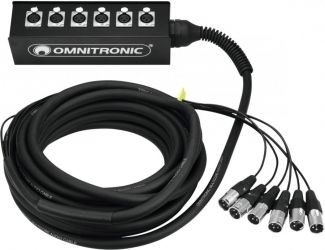
Stage box & stage drums
Stageboxes and Stage Reels at LTT – Your Specialist Overview
Clean signal routing decides whether your show sounds professional or amateurish. With stageboxes and stage reels from LTT you bring every microphone, DI box and amplifier from the stage to the mixer through a single, well-organised cable path. As your specialist for event technology, LTT combines analog multicore boxes, robust cable reels and pro connector systems into one range built for real touring life.
Whether you run a live stage, a theatre, a club or a mobile DJ setup, the right stagebox saves setup time, reduces cable chaos and delivers a reliable, balanced signal. Discover professional signal distribution that lets your production shine on stage.
What Is a Stagebox? Function and Construction Explained – Fundamentals
A stagebox is a junction box with connectors for audio and lighting signals, and it is the central hub of any professional stage cabling. Its core function is to combine the many individual connections on stage into a single multicore cable that runs to the front of house (FOH) mixer. In short, a stagebox is the transition point between the individual stage cabling and the multicore that feeds the mixing console.
Typical construction
Most stageboxes consist of a rugged metal housing fitted with multiple XLR sockets. On stage you plug in the cables of your microphones, DI boxes, amplifiers and monitors. From the box, one bundled multicore cable carries all those balanced signals to the mixer, keeping the stage tidy and repeatable.
Clear distinction from adjacent products
Do not confuse a stagebox with a simple patch panel or a plain microphone cable. A single XLR cable transmits exactly one signal; a stagebox transmits many signals in parallel through one organised bundle. A patch panel only re-sorts connections in a rack, while a stagebox physically bridges the distance between stage and console.
All signal paths in a quality stagebox are balanced, using two cores plus paired shielding per channel. That shielding is what protects your audio against hum and interference over long cable runs, which is exactly why a proper stagebox beats a loose bundle of single cables every time.
Analog vs Digital Stageboxes – Comparison and Use Cases
The biggest decision when choosing a stagebox is analog versus digital. Both approaches solve the same problem — getting many signals from stage to mixer — but they differ massively in cabling effort, cost and flexibility.
An analog stagebox uses a thick copper multicore with individual XLR pairs. It is plug-and-play, needs no configuration and works with any mixer. A digital stagebox converts the signals on stage and transmits them over a single Cat5e, Cat6 or fibre network cable to a digital console, dramatically reducing cable weight.
Comparison table: analog vs digital stagebox
Network protocols for digital stageboxes
Digital stageboxes talk to the console using dedicated audio-over-Ethernet protocols. The most common are Dante (used by Yamaha, Allen & Heath and many others), MADI (Soundcraft, DiGiCo, RME), AES50 (Behringer, Midas) and AES67 for interoperability. Newer formats include StageConnect, dSNAKE and DiGiCo's A3232. Dante runs over standard network hardware and scales to hundreds of channels, while MADI offers up to 64 stable, low-latency channels over BNC or fibre.
When you build a digital audio network, plan for synchronisation (Word Clock or PTP), low latency and redundancy through dual network paths — a single damaged network cable can otherwise interrupt the entire signal chain.
Multicore Cables and Cable Reels (Stage Reels)
The multicore cable is the backbone of every analog stagebox. It carries all balanced signals in one flexible, shielded bundle from the stage to the FOH position. At LTT you will find multicores in practical lengths such as 20 m, 30 m and 45 m, matched to typical venue distances.
Signal counts and configurations
Multicores are specified by their signal ways. A compact 6IN box handles six input channels, while a 24/4 configuration provides 24 inputs and 4 outputs or returns for monitor feeds. Every signal path is balanced with two cores and paired screening, and cores are usually numbered for fast identification during setup and teardown.
Stage reels: the special case
A stage reel (Stagetrommel) is a special case where the stagebox is permanently mounted on a cable reel. This solution rolls the entire multicore neatly onto a drum, often on a steel-tube base with four rollers, a brake and a reel lock. For mobile crews this is a huge advantage: you simply roll the reel to position, unwind the exact length you need and connect. A typical professional 24/4 stage reel with a 30 m multicore weighs and rolls as a single unit, ending the days of tangled cable snakes on stage.
Stage reels keep your multicore protected, coiled correctly and ready for the next gig, which is exactly why touring technicians and rental companies rely on them.
Connectors and Signal Formats: XLR, Harting, Tourlock & More
The connectors on a stagebox determine compatibility and flexibility. Understanding the main connector systems helps you pick a box that fits your existing infrastructure.
The XLR standard
The 3-pole XLR connector (male and female) is the universal standard for balanced analog audio. Inputs on a stagebox are typically 3-pole XLR female sockets; outputs and returns use male connectors. Each connection carries two signal cores plus a shield, delivering hum-free, balanced transmission over long runs.
Multipin connectors for flexible setups
While many stageboxes are fixed directly to the multicore, others connect via heavy-duty multipin connectors. This allows one box to be split, swapped or extended with different multicore lengths:
- Harting – rugged rectangular industrial multipin, common on large tours (e.g. HAN 108 for 32-channel systems)
- VEAM – circular military-grade multipin for demanding touring use
- Tourlock – robust round connector designed for fast, secure locking on the road
- LK85 / LK37 – round multipin systems widely used for splitting stageboxes onto multiple XLR fan-outs
Analog versus digital signal formats
Analog boxes transmit each channel individually over its own balanced pair. Digital boxes convert everything into a data stream sent over a single Cat6 network cable or fibre. Choosing between XLR-based analog and network-based digital formats depends on your mixer and how many channels you need to move.
Buying Guide: How to Choose Channel Count and Cable Length
Choosing the right stagebox comes down to two practical questions: how many signals do you need, and how far do they have to travel? This buying guide gives you a clear decision aid tailored to real stage setups.
Step 1 – Count your channels
Add up every source on stage: vocal microphones, instrument mics, DI boxes for keyboards and bass, plus any monitor returns you need to send back. Then add roughly 20–30 % headroom for future growth. A solo DJ or duo may only need a 6-channel box, a typical band lands around 16 channels, and a full production benefits from a 24/4 configuration.
Step 2 – Match the cable length to the venue
Measure the distance from the stage to the mixing position and add slack for cable routing around the room:
Step 3 – Analog or digital, and reel or box?
If you use an analog mixer or want plug-and-play simplicity, choose an analog stagebox. If you own a digital console and need many channels with minimal weight, invest in a digital stagebox with Dante, MADI or AES50. For mobile crews who set up and tear down constantly, a stage reel with an integrated box saves enormous time. Weigh price, weight and future channel needs together to find the optimal solution for your stage.
Application Scenarios and Use: Live Stage, Theatre, Club and Mobile DJ
Stageboxes and stage reels appear in almost every professional audio environment. Matching the type to the concrete application ensures fast, reliable setups.
Live stage and touring bands
On a live stage, a 16- or 24-channel stagebox gathers all vocal and instrument signals into one multicore to the FOH desk. Bands on tour often prefer digital stageboxes with Dante or AES50 to cut cable weight during load-in.
Theatre and fixed installations
Theatres value tidy, permanent cabling. A fixed multicore with a wall-mounted stagebox keeps signal routing invisible and repeatable for every performance, while longer 45 m runs cover the distance to a rear control booth.
Clubs and event venues
In clubs, a compact stagebox handles guest bands and DJs without recabling the whole room every night. Combined with your PA speakers and monitors and a solid mixer, it becomes the permanent audio hub of the venue.
Mobile DJ setups
For mobile DJs, a 6IN stage reel is the fastest way to connect turntables, controllers and microphones. Roll it out, unwind, plug in and play. Pair it with your audio cables and connectors to keep every gig quick and clean.
Brands and Manufacturers for Stageboxes at LTT
As your specialist, LTT curates a focused range of stagebox and stage reel manufacturers rather than a single random product. That curation means you can compare configurations, connectors and lengths side by side and pick the right professional solution.
Key brands you will find in this category include:
- Omnitronic – reliable analog multicore stageboxes and stage reels from 6IN to 24/4, a strong value choice for bands and DJs
- Sommer Cable – premium multicore cabling and connector solutions built for durability
- Neutrik – the reference standard for rugged XLR and multipin connectors
- Hicon – professional connectors from Sommer Cable's own brand for reliable terminations
- Roadinger – practical cases and cabling accessories for transport and protection
For digital setups, the range connects seamlessly with the leading protocol ecosystems from Yamaha, Allen & Heath, Behringer, Midas and DiGiCo. Whether you need a simple analog box or a networked digital solution, LTT combines these high-quality brand products into innovative solutions for professionals.
Accessories for Stageboxes and Stage Reels
The right accessories keep your stagebox reliable and your setup fast. Around every stagebox and stage reel, a handful of matching components make daily touring life easier.
Essential accessories
- Extension multicores – add reach when the venue is larger than expected, connected via Harting, VEAM or LK85 multipin
- Spare XLR connectors – Neutrik and Hicon plugs for quick field repairs
- Protective covers and bags – the covers supplied with many boxes protect connectors during transport
- Cable ties, hook-and-loop straps and labels – for tidy, numbered cable management
- Network cables (Cat6) – for digital stageboxes running Dante, MADI or AES50
Round off your signal chain with matching microphone and audio cables and reliable XLR connectors and plugs. Investing in quality accessories protects your main stagebox investment and keeps every gig running smoothly.
Care, Maintenance and Storage of Cable Reels
Proper care and maintenance dramatically extend the life of a stagebox and its multicore. Because the multicore is the most stressed component, correct handling pays off directly in reliability.
Winding and storage tips
- Always wind a stage reel evenly and without kinks; a twisted multicore shortens cable life and can cause intermittent faults
- Use the reel lock and brake so the cable does not unspool during transport
- Store the reel dry and away from extreme heat or cold, ideally upright on its base
- Keep connectors clean; a quick blast of contact cleaner on XLR and multipin contacts prevents crackle and signal drops
- Coil loose multicores in relaxed, over-under loops rather than tight wraps to avoid internal core damage
Regular maintenance checks
Before each event, inspect the housing, sockets and cable jacket for damage. Test each channel with a cable tester to catch a broken shield or open core before it disrupts a live show. Well-maintained stageboxes and reels stay dependable for years, which is exactly what professional use demands.
LTT – Your Specialist for Event Technology
As your specialist for event technology, LTT is your reliable partner for professional signal distribution. From the compact 6IN stage reel to fully networked digital stageboxes, you get high-quality brand products, honest advice and configurations that actually fit your stage — not just a random single item on a shelf.
With over 25 years of experience, shipping from Bocholt in Germany and worldwide delivery through our international dealer network, LTT keeps your production supplied wherever it runs. Enjoy free shipping from €69, express delivery when time is tight, and a full 3-year LTT warranty on your gear, backed by attractive B2B conditions for resellers.
Complete your setup with matching PA and sound systems and reliable audio cables and connectors. Whatever your stage demands, LTT helps you achieve impressive results with the optimal solution for clean, dependable signal routing.
FAQ – Questions & Answers
A stagebox is a junction box with connectors for audio signals that combines the many individual connections on stage into a single multicore cable running to the mixer. In practice, a stagebox is a rugged metal housing fitted with multiple 3-pole XLR sockets, into which you plug microphones, DI boxes, amplifiers and monitors on stage. The stagebox is therefore the transition point between the individual stage cabling and the multicore that feeds the front of house console, keeping complex setups tidy, repeatable and free of cable chaos.
A digital stagebox converts stage signals into a data stream and transmits them over a single Cat5e, Cat6 or fibre network cable to a digital mixing console, using protocols such as Dante, MADI or AES50. An analog stagebox instead sends each channel individually through a thick copper multicore with one balanced XLR pair per signal. The key differences are cabling and weight: a digital stagebox needs only one thin network cable and scales to many channels, while an analog stagebox is heavier but works plug-and-play with any mixer without configuration.
A stagebox and a multicore cable work together but are not the same thing. A stagebox is the connection panel — the metal housing with multiple XLR sockets where you plug in your stage sources. A multicore cable is the bundled cable that carries all those balanced signals together from the stagebox to the mixer. In other words, the stagebox is the interface you connect to, and the multicore is the transmission path. On a stage reel, both are combined: the stagebox is permanently mounted on a reel holding the multicore.
Digital stageboxes use dedicated audio-over-Ethernet and digital transmission protocols to talk to the console. The most common protocols are Dante (Yamaha, Allen & Heath and many others), MADI (Soundcraft, DiGiCo, RME), AES50 (Behringer, Midas) and AES67 for interoperability between systems. Newer formats include StageConnect, dSNAKE and DiGiCo's A3232 over fibre. Dante runs over standard network hardware and scales to hundreds of channels, while MADI offers up to 64 stable, low-latency channels. When choosing a protocol, match it to your digital mixer and plan for synchronisation and redundancy.
The channel count a stagebox needs depends on how many sources you run on stage. A solo DJ or duo is usually well served by a 6-channel (6IN) box, a typical live band lands around 16 channels, and a full production benefits from a 24/4 configuration with 24 inputs and 4 outputs or returns for monitor feeds. To future-proof your setup, add roughly 20–30 % headroom above your current source count. Count every microphone, DI box and monitor return, then choose the next size up for comfortable expansion.
Prices for stageboxes and stage reels at LTT span a wide range depending on channel count, cable length and construction. A basic analog 6IN multicore stagebox with a 20 m cable starts at around €90, mid-range configurations sit between roughly €135 and €220, and a fully assembled 24/4 stage reel with a 30 m multicore on a rolling steel base costs in the region of €629 to €749. Digital stageboxes with Dante or MADI typically cost more because they require conversion hardware. LTT offers free shipping from €69 and attractive B2B conditions for resellers.
For a mobile DJ setup, a compact 6IN stage reel is usually the ideal choice. It provides six balanced signal paths — enough for turntables, a controller and a microphone — and rolls the entire multicore neatly onto a drum with a brake. That means you simply position the reel, unwind the exact length you need, plug in and play, then wind everything back up cleanly for the next gig. If you frequently add more sources or use a digital mixer, consider a larger analog box or a digital stagebox with Dante for extra flexibility.
To keep a cable reel and stagebox reliable, always wind the multicore evenly and without kinks, then engage the reel lock and brake so it does not unspool during transport. Store the reel dry, upright on its base and away from extreme heat or cold. Keep the XLR and multipin contacts clean, using contact cleaner to prevent crackle, and coil loose multicores in relaxed over-under loops rather than tight wraps to protect the internal cores. Before each event, inspect the housing and cable jacket and test each channel with a cable tester to catch faults early.