CEE connectors

CEE Connectors – Reliable Power Distribution for Professional Event Technology: CEE connectors are the backbone of professional power distribution in stage and event technology. Designed to IEC 60309 standards, these robust industrial connectors deliver safe, reliable electrical connections for demanding applications – from festival stages and concert tours to trade show installations and outdoor events. Whether You need 16A single-phase power for lighting rigs or 63A three-phase distribution for heavy-duty...
Read more »
CEE connectors
Close window
CEE connectors

CEE Connectors – Reliable Power Distribution for Professional Event Technology

CEE connectors are the backbone of professional power distribution in stage and event technology. Designed to IEC 60309 standards, these robust industrial connectors deliver safe, reliable electrical connections for demanding applications – from festival stages and concert tours to trade show installations and outdoor events. Whether You need 16A single-phase power for lighting rigs or 63A three-phase distribution for heavy-duty sound systems, CEE connectors provide the performance and safety Your production demands. At LTT, You will find a comprehensive range of CEE plugs, sockets, couplings and T-connectors from leading manufacturers, ready to ship worldwide from our facility in Bocholt, Germany.

What Are CEE Connectors? Technical Fundamentals and Standards

CEE connectors – often called "industrial plugs" or "IEC 60309 connectors" – are standardised electrical connectors designed for robust, safe power distribution in professional and industrial environments. The term "CEE" originally referred to the Commission on the Rules for the Approval of the Electrical Equipment, an international body that harmonised electrical standards across Europe. Today, CEE connectors follow the IEC 60309 specification, which defines pin configuration, voltage ratings, current capacity and protection class.

Key Technical Specifications

CEE connectors are available in multiple configurations:

  • Current ratings: 16A, 32A, 63A and 125A
  • Voltage ratings: Single-phase 230V (blue, 2P+E or 3-pole) and three-phase 400V (red, 3P+N+E or 5-pole)
  • Protection classes: IP44 (splash-proof, suitable for indoor and sheltered outdoor use) and IP67 (fully dust-tight and waterproof, ideal for harsh outdoor conditions)
  • Pin configurations: The "clock position" (e.g. 6h) indicates the earth pin location, ensuring correct polarity and preventing accidental cross-connection between different voltage systems
  • Cable entry: Typically 6–15 mm for 16A connectors, 11.5–22 mm for 32A, and larger diameters for 63A and above; wire cross-sections range from 1 mm² to 16 mm² depending on current rating

Unlike domestic Schuko plugs, CEE connectors feature screw terminals or spring-loaded clamp technology for secure, vibration-resistant connections. The colour-coding system (blue for 230V, red for 400V, yellow for 110V) prevents dangerous mis-wiring, a critical safety feature on busy event sites where multiple power sources operate simultaneously.

CEE Connectors vs. PowerCON and Schuko

While Schuko plugs are common in household applications, they lack the mechanical robustness, IP rating and current capacity required for professional stage work. PowerCON connectors (manufactured by Neutrik) offer locking mechanisms and are popular for audio and lighting equipment, but CEE connectors remain the industry standard for main power distribution due to their standardised pin layout, wide availability and compatibility with rental equipment fleets across Europe and beyond.

Applications – Where CEE Connectors Excel in Event Technology

CEE connectors are indispensable across the entire spectrum of professional event technology. Their robust construction, standardised design and high current capacity make them the first choice for power distribution in challenging environments.

Stage and Concert Production

On festival stages and concert tours, CEE connectors distribute power from generator sets or venue supply to lighting trusses, sound systems, video walls and special effects equipment. A typical setup might use 63A five-pole connectors for main distribution, branching into 32A feeds for individual lighting rigs and 16A connections for smaller fixtures. The IP67-rated variants withstand rain, dust and mechanical stress, ensuring uninterrupted performance even during outdoor festivals.

Trade Shows and Exhibitions

At trade shows, CEE connectors provide flexible, modular power distribution for booth lighting, multimedia displays and demonstration equipment. T-connectors and splitter boxes allow multiple exhibitors to tap into a single main feed, reducing cabling complexity and setup time. The blue 16A single-phase connectors are particularly popular for smaller booths, while larger installations rely on red 32A or 63A three-phase supplies.

Outdoor Events and Mobile Applications

From corporate events and product launches to sports tournaments and public festivals, outdoor events demand weatherproof, reliable power connections. IP67-rated CEE connectors resist high-pressure water jets (IP69 in some premium models), making them suitable for cleaning and maintenance in rental fleets. Mobile DJ setups, food trucks and mobile stages all benefit from the quick-connect convenience and safety of CEE technology.

Broadcast and Film Production

Film sets and broadcast OB vans use CEE connectors to power camera systems, lighting rigs and sound recording equipment. The standardised pin layout ensures compatibility with international crews and rental equipment, while the robust construction withstands the rigours of location shooting.

Choosing the Right CEE Connector – Quality, Brands and Buying Criteria

Selecting the correct CEE connector involves more than matching amperage and voltage. Professional event technicians consider material quality, terminal design, IP rating and manufacturer reputation to ensure long-term reliability and safety.

Material Quality and Construction

High-quality CEE connectors use glass-fibre-reinforced polyester (GRP) or impact-resistant thermoplastic housings that resist mechanical shock, UV degradation and chemical exposure. Premium models feature silver-nickel contact plating to minimise contact resistance and prevent oxidation, ensuring low heat generation even under continuous high-current operation. Screw terminals should be brass or nickel-plated copper, with double earth-pin clamping for enhanced safety – a feature mandated by many rental companies and venue operators.

Current Rating and Load Capacity

Always select a connector rated above Your maximum expected load. For example, if Your lighting rig draws 12A continuous current, use a 16A connector to provide a safety margin. For three-phase distribution, calculate the total load across all phases and select 32A or 63A connectors accordingly. Remember that cable cross-section must match the connector rating: 16A connectors typically require 1.5–2.5 mm² cable, 32A connectors need 4–6 mm², and 63A connectors demand 10–16 mm² conductors.

IP Rating for Environmental Protection

IP44 connectors are splash-proof and suitable for indoor venues and sheltered outdoor use. IP67 connectors are fully dust-tight and waterproof to 1 metre depth for 30 minutes, making them the preferred choice for outdoor festivals, beach events and touring productions. For applications involving high-pressure cleaning (e.g. rental equipment fleets), IP69-rated connectors withstand hot water jets up to 80°C and 100 bar pressure.

Leading Brands and Manufacturers

At LTT, You will find CEE connectors from industry-leading manufacturers including PCE (PC Electric), MENNEKES, Neutrik, Seetronic and Adam Hall Connectors. PCE connectors are renowned for their robust construction and competitive pricing, making them a staple in rental fleets. MENNEKES connectors, manufactured in Germany, offer premium build quality and are often specified for permanent installations. Neutrik and Seetronic provide innovative designs with tool-free cable entry and colour-coded strain relief, ideal for fast-paced touring environments.

Price Brackets and Value Considerations

Entry-level 16A CEE plugs and sockets start around €4–€8, while premium 32A connectors with IP67 rating and spring-clamp terminals range from €12–€25. High-current 63A connectors typically cost €40–€80 depending on features and brand. For rental companies and touring productions, investing in premium connectors pays dividends through reduced maintenance, longer service life and fewer on-site failures.

Installation and Safety – Wiring CEE Connectors Correctly

Proper installation of CEE connectors is critical for electrical safety and reliable operation. Incorrect wiring can lead to equipment damage, electric shock or fire hazards – risks no professional event technician can afford.

Wiring Diagrams and Phase Rotation

CEE connectors follow a standardised pin layout defined by IEC 60309. For three-phase 400V connectors (red, 5-pole), the pins are arranged clockwise as follows when viewed from the cable entry side: L1 (phase 1), L2 (phase 2), L3 (phase 3), N (neutral) and PE (protective earth). The earth pin is always positioned at the 6 o'clock position (6h) for 230V and 400V connectors, ensuring correct polarity. Single-phase 230V connectors (blue, 3-pole) use L (live), N (neutral) and PE (earth).

Phase rotation testers are essential tools for verifying correct wiring, especially when connecting to unfamiliar power sources. Incorrect phase sequence can damage three-phase motors and cause lighting fixtures to flicker or fail.

Cable Preparation and Termination

Strip cable insulation carefully to expose the correct length of conductor – typically 8–12 mm for screw terminals. Use ferrules (crimp sleeves) on stranded conductors to prevent strand breakage and ensure a gas-tight connection. The protective earth conductor must always be longer than the phase and neutral conductors (by at least 10–15 mm) so that in the event of cable strain or accidental pull-out, the earth connection is the last to break and the first to reconnect.

Tighten screw terminals to the manufacturer's specified torque (typically 0.8–1.2 Nm for 16A connectors, 1.5–2.5 Nm for 32A). Over-tightening can crack terminal blocks; under-tightening leads to high contact resistance, heat generation and potential arcing.

Testing and Maintenance for Rental Equipment

Rental companies and touring productions must implement regular PAT (Portable Appliance Testing) schedules for all CEE connectors and cables. Visual inspections should check for cracked housings, damaged pins, loose cable glands and signs of overheating (discolouration, melted plastic). Electrical tests include earth continuity (resistance < 0.1 Ω), insulation resistance (> 1 MΩ at 500V DC) and polarity verification.

Replace connectors showing any signs of damage immediately. The modular design of premium connectors (e.g. MENNEKES, Neutrik) allows individual components – such as contact carriers or cable glands – to be replaced, extending service life and reducing waste.

Load Capacity Calculations for Multi-Device Setups

When distributing power to multiple devices via T-connectors or splitter boxes, calculate the total current draw carefully. For example, a 32A three-phase distribution feeding four 16A single-phase circuits must ensure that the load is balanced across all three phases. Unbalanced loads cause neutral current, voltage drop and potential overheating. Use a clamp meter to measure actual current draw during setup and adjust device allocation accordingly.

Advanced Topic – CEE T-Connectors and Modular Power Distribution

T-connectors and splitter boxes extend the versatility of CEE power distribution, enabling flexible, modular setups that adapt to changing event requirements. Understanding their correct application and limitations is essential for safe, efficient power management.

What Are CEE T-Connectors?

A CEE T-connector is a compact distribution unit featuring one CEE input socket and two or more output sockets, all housed in a single IP-rated enclosure. The input plugs directly into an existing CEE socket (e.g. on a power distribution box or extension cable), providing additional outlets without the need for separate splitter cables. T-connectors are available in 16A and 32A ratings, with 230V single-phase and 400V three-phase variants.

Applications and Benefits

T-connectors are invaluable in situations where cable runs must be minimised or where additional outlets are needed close to the power source. For example, on a festival stage, a single 32A feed from the main distribution can be split via a T-connector to supply separate lighting and audio circuits. The 90-degree offset design of many T-connectors allows one output to run forward and another to the side, reducing cable clutter and trip hazards.

In trade show environments, T-connectors enable exhibitors to share a single main feed while maintaining individual circuit protection. This modular approach simplifies setup, reduces cabling costs and allows last-minute changes without rewiring entire booth sections.

Load Limitations and Safety Considerations

The total current drawn from all outputs of a T-connector must not exceed the input rating. For example, a 16A T-connector with two outputs can supply a maximum combined load of 16A – not 16A per output. Exceeding this limit will trip upstream circuit breakers or, in the absence of adequate protection, cause overheating and potential fire.

Always use T-connectors with built-in fuses or circuit breakers where possible, and ensure that upstream protection (RCD, MCB) is correctly rated. For three-phase T-connectors, verify that the load is balanced across all phases to prevent neutral overload.

Premium Features in Modern T-Connectors

High-quality T-connectors from manufacturers such as PCE and MENNEKES feature spring-loaded terminal blocks for tool-free cable connection, reducing installation time and eliminating the risk of loose screw terminals. Transparent or colour-coded housings allow quick visual inspection of wiring, while lockable covers prevent unauthorised access or accidental disconnection during events.

Some models include integrated cable strain relief and IP67-rated seals, making them suitable for permanent outdoor installations or touring applications where equipment is repeatedly assembled and disassembled.

LTT – Your Specialist for Professional Event Technology

At LTT, You will find everything You need for professional power distribution in stage and event technology. Our comprehensive range of CEE connectors, cables and distribution equipment is backed by over 25 years of experience in the event industry and our commitment to quality, reliability and customer service.

We stock CEE connectors from leading manufacturers including PCE, MENNEKES, Neutrik, Seetronic and Adam Hall, ensuring You have access to the best products for every application – from budget-conscious rental fleets to premium touring productions. Every connector is tested and ready to ship, with free shipping on orders over €69 and express delivery options for urgent projects.

Our 3-year LTT warranty provides peace of mind, while our experienced technical team is always available to advise on product selection, wiring best practices and system design. Whether You are equipping a new venue, expanding Your rental inventory or planning a major tour, LTT is Your reliable partner for professional event technology.

Shop CEE connectors online today and experience the LTT difference – quality products, expert advice and fast delivery from Bocholt, Germany to event professionals worldwide.

FAQ – Questions & Answers

What is the difference between CEE plugs and CEE sockets?

CEE plugs (also called "male connectors") feature protruding pins and are typically fitted to the cable end that connects to a power source. CEE sockets (also called "female connectors" or "couplings") have recessed contacts and are fitted to the cable end that connects to equipment or distribution boxes. The plug-socket pairing ensures correct polarity and prevents accidental reverse connection. In event technology, the convention is to fit plugs to the "supply" end of a cable and sockets to the "load" end, so that exposed pins are never live when disconnected.

Which CEE connector do I need for 16A or 32A applications?

For 16A single-phase applications (up to 3.6 kW at 230V), use a blue 16A CEE connector rated 230V, 2P+E (3-pole). For 16A three-phase applications (up to 11 kW at 400V), use a red 16A CEE connector rated 400V, 3P+N+E (5-pole). For 32A single-phase applications (up to 7.4 kW at 230V), use a blue 32A CEE connector rated 230V, 2P+E. For 32A three-phase applications (up to 22 kW at 400V), use a red 32A CEE connector rated 400V, 3P+N+E. Always match the cable cross-section to the connector rating: 16A requires 1.5–2.5 mm², 32A requires 4–6 mm².

Are CEE connectors waterproof – IP44 vs. IP67 explained?

IP44-rated CEE connectors are splash-proof and protected against solid objects larger than 1 mm and water splashes from any direction. They are suitable for indoor use and sheltered outdoor applications. IP67-rated CEE connectors are fully dust-tight (the "6") and waterproof to 1 metre depth for 30 minutes (the "7"), making them ideal for outdoor festivals, beach events and touring productions where exposure to rain, dust and mechanical stress is expected. For rental equipment that undergoes high-pressure cleaning, IP69-rated connectors withstand hot water jets up to 80°C and 100 bar pressure.

Can I use CEE connectors for outdoor events?

Yes, CEE connectors are widely used for outdoor events, provided You select the correct IP rating. For outdoor festivals, concerts and sports events, always use IP67-rated CEE connectors to ensure protection against rain, dust and accidental submersion. IP44-rated connectors are suitable only for sheltered outdoor areas such as covered stages or marquees. Additionally, ensure that all cable connections are elevated above ground level or protected by cable ramps to prevent water ingress, and use RCD (residual current device) protection on all outdoor circuits to guard against electric shock.

How do I wire a CEE connector correctly?

To wire a CEE connector correctly, first strip the outer cable sheath to expose the individual conductors, leaving enough length for strain relief. Strip each conductor to expose 8–12 mm of bare wire and fit ferrules to stranded cables. Connect the protective earth (PE, green-yellow) first, ensuring it is 10–15 mm longer than the phase and neutral conductors so it disconnects last if the cable is pulled. For single-phase 230V connectors (blue), connect live (L, brown) and neutral (N, blue) to the remaining pins. For three-phase 400V connectors (red), connect L1 (brown), L2 (black), L3 (grey) and N (blue) according to the pin layout. Tighten screw terminals to the specified torque and verify correct wiring with a phase rotation tester before use.

What does the clock position (e.g. 6h) mean on CEE connectors?

The clock position (e.g. 6h, 4h) indicates the location of the earth pin when viewing the connector face-on, using a clock face as reference. For example, "6h" means the earth pin is at the 6 o'clock position (bottom centre), which is standard for 230V and 400V CEE connectors. Different clock positions are used for different voltage systems (e.g. 110V connectors use 4h) to prevent accidental cross-connection between incompatible power sources. This keying system is a critical safety feature, ensuring that only connectors of the correct voltage and current rating can be mated.

What is a CEE T-connector and when should I use one?

A CEE T-connector is a compact power distribution unit with one input socket and two or more output sockets, all housed in a single IP-rated enclosure. T-connectors are used to split a single CEE power feed into multiple circuits without the need for separate splitter cables, reducing cable clutter and setup time. They are ideal for trade show booths, festival stages and mobile DJ setups where additional outlets are needed close to the power source. The total current drawn from all outputs must not exceed the input rating (e.g. a 16A T-connector can supply a maximum combined load of 16A across all outputs). Always use T-connectors with adequate upstream circuit protection.

How often should I test and maintain CEE connectors in rental equipment?

Rental companies and touring productions should implement a regular PAT (Portable Appliance Testing) schedule for all CEE connectors and cables. Visual inspections should be performed before and after each rental or tour, checking for cracked housings, damaged pins, loose cable glands and signs of overheating. Electrical tests – including earth continuity (resistance < 0.1 Ω), insulation resistance (> 1 MΩ at 500V DC) and polarity verification – should be conducted at least every six months or after any suspected fault. Replace damaged connectors immediately and maintain detailed service records to comply with DGUV Vorschrift 3 (formerly BGV A3) and other workplace electrical safety regulations.

Top seller
PCE CEE 16 A/110 V 4P Stecker - männlich - gelb
PCE CEE 16 A/110 V 4P Plug - male - yellow
€5.45 *
incl. tax, plus shipping costs
Availability:
Delivery time: 3-5 days
Showtec CEE 16A 240V 3p Stecker männlich - Blau, IP44
PCE CEE 16 A/240 V - 3P Plug male Blue
€3.25 *
incl. tax, plus shipping costs
Availability:
Delivery time: 1-3 days
PCE CEE 16A 400V 4p Stecker Male
PCE CEE 16 A/400 V - 4P Plug male Black
€5.55 *
incl. tax, plus shipping costs
Availability:
Delivery time: 1-3 days
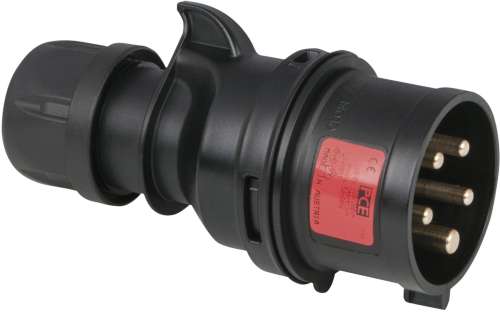
PCE CEE 16A 400V 5p Stecker männlich - Schwarz, IP44
PCE CEE 16 A/400 V 5-pin Plug male Black
€5.69 *
incl. tax, plus shipping costs
Availability:
Delivery time: 3-5 days
PCE CEE 16A 400V 4p Stecker weiblich - Rot, IP44
PCE CEE 16 A/400 V 4-pin Plug female Red
€6.56 *
incl. tax, plus shipping costs
Availability:
Delivery time: 3-5 days
PCE CEE 16A 400V 5p Stecker weiblich - Schwarz, IP44
PCE CEE 16 A/400 V 5-pin Plug female Black
€7.69 *
incl. tax, plus shipping costs
Availability:
Delivery time: 3-5 days
BALS Schutzkontakt Steckdose 16A sw
BALS Safety Outlet 16A bk
€6.50 *
incl. tax, plus shipping costs
Availability:
Delivery time: 1-3 days
103 Articles
Close filters
 
  •  
  •  
  •  
from to
4 From 5 pages
No results were found for the filter!
Showtec CEE 16A 240V 3p Sockel weiblich - Blau, IP44
PCE CEE 16 A/240 V - 3P Socket female Blue
: Rated Current (A): 16 A • Flashover Voltage: 240 V • Pins: 3 • Minimum Wire Size: 1 mm² • Maximum Wire Size: 2.5 mm² • Length (mm): 76 mm • Height (mm): 70...
€7.09 *
incl. tax, plus shipping costs
Availability:
Delivery time: 3-5 days
Showtec CEE 16A 240V 3p Sockel weiblich - Schwarz, IP44
PCE CEE 16 A/240 V - 3P Socket female Black
: Rated Current (A): 16 A • Flashover Voltage: 240 V • Pins: 3 • Minimum Wire Size: 1 mm² • Maximum Wire Size: 2.5 mm² • Length (mm): 76 mm • Height (mm): 70...
€6.74 *
incl. tax, plus shipping costs
Availability:
Delivery time: 3-5 days
Showtec CEE 16A 240V 3p Wandhalterung männlich - Blau, IP44
PCE CEE 16 A/240 V 3P Wallmount - male Blue
: Rated Current (A): 16 A • Flashover Voltage: 240 V • Cable Entry: M25 • Pins: 3 • Minimum Wire Size: 1 mm² • Maximum Wire Size: 2.5 mm² • Length (mm): 120...
€11.29 *
incl. tax, plus shipping costs
Availability:
Delivery time: 3-5 days
Showtec CEE 16A 240V 3p Wandhalterung weiblich - Blau, IP44
PCE CEE 16 A/240 V 3P Wallmount - female Blue
: Rated Current (A): 16 A • Flashover Voltage: 240 V • Cable Entry: M25 • Pins: 3 • Minimum Wire Size: 1 mm² • Maximum Wire Size: 2.5 mm² • Length (mm): 142...
€7.61 *
incl. tax, plus shipping costs
Availability:
Delivery time: 3-5 days
BALS CEE Kupplung 63A 5pol rt
BALS CEE Socket 63A 5pin rd
Made in Germany • Package contents 1 x terminating plug (power) • Connector type: CEE 63A 5-pin (F) • Construction: Plug for cable • Weight: 0,76 kg •
€57.15 *
incl. tax, plus shipping costs
Availability:
Delivery time: 3-5 days
PSSO CEE Kompaktverteiler CEE 3SK
PSSO CEE Compact Distributor CEE 3SK
Compact power distributor The easiest way to distribute power • Rugged construction made of impact resistant polyamide • Suitable for outdoor use IP44 • IP classification: IP44...
€51.90 *
incl. tax, plus shipping costs
Availability:
Delivery time: 3-5 days
PC ELECTRIC CEE Kompaktverteiler CEE H2SK 1,5m
PC ELECTRIC CEE compact distributor CEE H2SK 1.5m
Compact CEE-distributor The easiest way to distribute power • Rugged construction made of impact resistant polyamide • With self-locking flap covers • Heavy rubber coating with...
€84.90 * €61.15 *
incl. tax, plus shipping costs
Availability:
Low stock; Delivery time: 1-3 days
Delivery time: 1-3 days
MENNEKES CEE Gerätesteckdose 32A 3pol
MENNEKES CEE Mounting Connector 32A 3pin
Made in Germany • Connector type: CEE 32A 3-pin (F) • Construction: Mounting version • Weight: 0,21 kg •
€20.90 *
incl. tax, plus shipping costs
Availability:
Delivery time: 3-5 days
BALS Schutzkontakt Steckdose 16A sw
BALS Safety Outlet 16A bk
Black safety outlet 16 A 250 V IP54 Made in Germany • For further information about this product, please refer to the Data Sheet under "Downloads" • Connector type: Safety...
€6.50 *
incl. tax, plus shipping costs
Availability:
Delivery time: 1-3 days
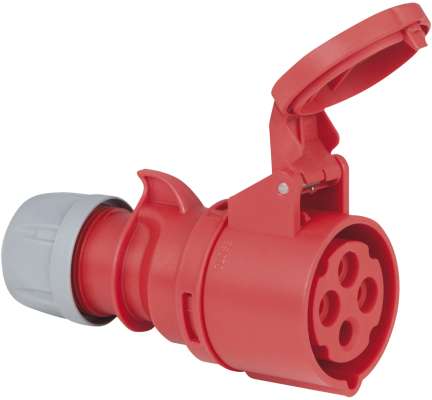
PC ELECTRIC CEE Kupplung Power Twist IP67 16A 5Pol 6h
PC ELECTRIC CEE Connector Power Twist IP67 16A 5Pol 6h
clutch socket with screw terminals • Housing material: PA6 • Contacts: Brass • Protection class: IP67 •
€9.90 *
incl. tax, plus shipping costs
Availability:
Delivery time: 3-5 days
MENNEKES CEE Kupplung 16A 5pol sw
MENNEKES CEE socket 16A 5pin bk
€17.00 * €12.45 *
incl. tax, plus shipping costs
Availability:
Low stock; Delivery time: 1-3 days
Delivery time: 1-3 days
PCE CEE 16 A/110 V 4P Stecker - männlich - gelb
PCE CEE 16 A/110 V 4P Plug - male - yellow
: Rated Current (A): 16 A • Flashover Voltage: 110 V • Pins: 4 • Minimum Wire Size: 1 mm² • Maximum Wire Size: 2.5 mm² • Cable Entry: 6-15 mm • Length (mm):...
€5.45 *
incl. tax, plus shipping costs
Availability:
Delivery time: 3-5 days
PCE CEE T-Connect 16 A / 240 V - 3P Male/Female 1 x 3P CEE Eingang - 1 x 3P CEE Ausgang - 1x 3P
PCE CEE T-Connect 16 A / 240 V - 3P Male/Female 1x 3P CEE in - 1x 3P CEE out - 1x 3P terminal out
3P CEE in and output and 3P terminal output • Up to 250 V AC and 16 A • IP44 • The CEE T-Connect allows you to “tap into” a CEE power line and connect a 3P, 3x 2.5...
€32.90 *
incl. tax, plus shipping costs
Availability:
Delivery time: 3-5 days
PCE Mobile Verteilerbox Kunststoffserie ST.ANTON 2F 16/5 GS32/5 Ea m.B. 1x 5P CEE 32 A in - 1x
PCE Mobile Distribution Box Plastic Series ST.ANTON 2F 16/5 GS32/5 Ea m.B. 1x 5P CEE 32 A in - 1x
Adaptor for 32 to 16 A power distribution • 5P CEE in and out • 16A 3p C circuit breaker • IP44 • This power adapter with CEE plug 32A (male) to CEE socket 16A (female) is...
€94.50 *
incl. tax, free shipping to Germany
[International shipping costs]
Availability:
Delivery time: 3-5 days
PCE CEE 16 A/240 V - 3P Buchse blau
PCE CEE 16 A/240 V - 3P Socket female Blue
CEE 16 A/240 V 3-pin female socket • 6h position • IP54 • The CEE 16 A/240 V - 3P Socket female is a robust and reliable flush-mounted socket outlet designed for industrial...
€5.85 *
incl. tax, plus shipping costs
Availability:
Delivery time: 1-3 days
PCE CEE 16A 400V 4p Stecker Male
PCE CEE 16 A/400 V - 4P Plug male Red
: Rated Current (A): 16 A • Flashover Voltage: 400 V • Cable Entry: 6-15 mm • Pins: 4 • Minimum Wire Size: 1 mm² • Maximum Wire Size: 2.5 mm² • Length (mm):...
€4.45 *
incl. tax, plus shipping costs
Availability:
Delivery time: 3-5 days
PCE CEE 16A 400V 5p Stecker männlich - Schwarz, Turbo Twist, IP44
PCE CEE 16 A/400 V 5-pin Plug male Black - Turbo Terminal - screwless
: Rated Current (A): 16 A • Flashover Voltage: 400 V • Cable Entry: 8-16 mm / Pg29 • Pins: 5 • Minimum Wire Size: 1 mm² • Maximum Wire Size: 2.5 mm² • Length...
€7.25 *
incl. tax, plus shipping costs
Availability:
Currently not available
PCE CEE 16A 400V 5p Sockel weiblich - Rot, IP44
PCE CEE 16 A/400 V 5-pin Socket female Red
: Rated Current (A): 16 A • Flashover Voltage: 400 V • Pins: 5 • Minimum Wire Size: 1 mm² • Maximum Wire Size: 2.5 mm² • Length (mm): 76 mm • Height (mm): 70...
€6.95 *
incl. tax, plus shipping costs
Availability:
Currently not available
PCE CEE 63A 400V 5p Wandhalterung weiblich - Rot, IP67
PCE CEE 63 A/400 V 5P Wallmount - female Red
: Rated Current (A): 63 A • Flashover Voltage: 400 V • Cable Entry: M32 • Pins: 5 • Minimum Wire Size: 6 mm² • Maximum Wire Size: 16 mm² • Length (mm): 213...
€53.38 *
incl. tax, plus shipping costs
Availability:
Delivery time: 3-5 days
PC ELECTRIC CEE Stecker 32A 5pol rt mit Phasenwender
PC ELECTRIC CEE Plug 32A 5p rd with phase inverter
Phase inverter Plug 32A 5p 6h IP44 Shark, with screw terminals, Housing material: PA6, Contacts: nickel-plated contacts • • IEC current: 32A • Number of poles: 5 • Voltage...
€14.87 *
incl. tax, plus shipping costs
Availability:
Currently not available;
Article is coming soon
Currently not available
PC ELECTRIC CEE Kupplung Shark IP67 32A 3Pol 6h
PC ELECTRIC CEE Connector Shark IP67 32A 3Pol 6h
clutch socket with screw terminals • Housing material: PA6 • Contacts: Brass • Protection class: IP67 •
€14.65 *
incl. tax, plus shipping costs
Availability:
Not in stock
Delivery time: approx. 2 weeks
PC ELECTRIC CEE Stecker Shark IP67 32A 3Pol 6h
PC ELECTRIC CEE Plug Shark IP67 32A 3Pol 6h
plug with screw terminals • Housing material: PA6 • Contacts: Brass • Protection class: IP67 •
€11.90 *
incl. tax, plus shipping costs
Availability:
Not in stock
Delivery time: approx. 2 weeks
PC ELECTRIC CEE Stecker Power Twist IP66/67 125A 5Pol 6h
PC ELECTRIC CEE Plug Power Twist IP66/67 125A 5Pol 6h
plug frame clamp with Allen screws • Housing material: PA6 • Contacts: Nickel-plated contacts with pilot contact • Protection class: IP66/67 •
€109.24 *
incl. tax, free shipping to Germany
[International shipping costs]
Availability:
Not in stock
Delivery time: approx. 2 weeks
PC ELECTRIC CEE Kupplung Power Twist IP66/67 63A 5Pol 6h
PC ELECTRIC CEE Connector Power Twist IP66/67 63A 5Pol 6h
clutch socket with frame clamp with screws • Housing material: PA6 • Contacts: Brass with CuBe lamella contact • Protection class: IP66/67 •
€34.49 *
incl. tax, plus shipping costs
Availability:
Not in stock
Delivery time: approx. 2 weeks
4 From 5 pages
Facts
CEE Connectors – Reliable Power Distribution for Professional Event Technology: CEE connectors are the backbone of professional power distribution in stage and event technology. Designed to IEC 60309 standards, these robust industrial connectors deliver safe, reliable electrical connections for demanding applications – from festival stages and concert tours to trade show installations and outdoor events. Whether You need 16A single-phase... Read more »
Viewed
Facts

CEE Connectors – Reliable Power Distribution for Professional Event Technology

CEE connectors are the backbone of professional power distribution in stage and event technology. Designed to IEC 60309 standards, these robust industrial connectors deliver safe, reliable electrical connections for demanding applications – from festival stages and concert tours to trade show installations and outdoor events. Whether You need 16A single-phase power for lighting rigs or 63A three-phase distribution for heavy-duty sound systems, CEE connectors provide the performance and safety Your production demands. At LTT, You will find a comprehensive range of CEE plugs, sockets, couplings and T-connectors from leading manufacturers, ready to ship worldwide from our facility in Bocholt, Germany.

What Are CEE Connectors? Technical Fundamentals and Standards

CEE connectors – often called "industrial plugs" or "IEC 60309 connectors" – are standardised electrical connectors designed for robust, safe power distribution in professional and industrial environments. The term "CEE" originally referred to the Commission on the Rules for the Approval of the Electrical Equipment, an international body that harmonised electrical standards across Europe. Today, CEE connectors follow the IEC 60309 specification, which defines pin configuration, voltage ratings, current capacity and protection class.

Key Technical Specifications

CEE connectors are available in multiple configurations:

  • Current ratings: 16A, 32A, 63A and 125A
  • Voltage ratings: Single-phase 230V (blue, 2P+E or 3-pole) and three-phase 400V (red, 3P+N+E or 5-pole)
  • Protection classes: IP44 (splash-proof, suitable for indoor and sheltered outdoor use) and IP67 (fully dust-tight and waterproof, ideal for harsh outdoor conditions)
  • Pin configurations: The "clock position" (e.g. 6h) indicates the earth pin location, ensuring correct polarity and preventing accidental cross-connection between different voltage systems
  • Cable entry: Typically 6–15 mm for 16A connectors, 11.5–22 mm for 32A, and larger diameters for 63A and above; wire cross-sections range from 1 mm² to 16 mm² depending on current rating

Unlike domestic Schuko plugs, CEE connectors feature screw terminals or spring-loaded clamp technology for secure, vibration-resistant connections. The colour-coding system (blue for 230V, red for 400V, yellow for 110V) prevents dangerous mis-wiring, a critical safety feature on busy event sites where multiple power sources operate simultaneously.

CEE Connectors vs. PowerCON and Schuko

While Schuko plugs are common in household applications, they lack the mechanical robustness, IP rating and current capacity required for professional stage work. PowerCON connectors (manufactured by Neutrik) offer locking mechanisms and are popular for audio and lighting equipment, but CEE connectors remain the industry standard for main power distribution due to their standardised pin layout, wide availability and compatibility with rental equipment fleets across Europe and beyond.

Applications – Where CEE Connectors Excel in Event Technology

CEE connectors are indispensable across the entire spectrum of professional event technology. Their robust construction, standardised design and high current capacity make them the first choice for power distribution in challenging environments.

Stage and Concert Production

On festival stages and concert tours, CEE connectors distribute power from generator sets or venue supply to lighting trusses, sound systems, video walls and special effects equipment. A typical setup might use 63A five-pole connectors for main distribution, branching into 32A feeds for individual lighting rigs and 16A connections for smaller fixtures. The IP67-rated variants withstand rain, dust and mechanical stress, ensuring uninterrupted performance even during outdoor festivals.

Trade Shows and Exhibitions

At trade shows, CEE connectors provide flexible, modular power distribution for booth lighting, multimedia displays and demonstration equipment. T-connectors and splitter boxes allow multiple exhibitors to tap into a single main feed, reducing cabling complexity and setup time. The blue 16A single-phase connectors are particularly popular for smaller booths, while larger installations rely on red 32A or 63A three-phase supplies.

Outdoor Events and Mobile Applications

From corporate events and product launches to sports tournaments and public festivals, outdoor events demand weatherproof, reliable power connections. IP67-rated CEE connectors resist high-pressure water jets (IP69 in some premium models), making them suitable for cleaning and maintenance in rental fleets. Mobile DJ setups, food trucks and mobile stages all benefit from the quick-connect convenience and safety of CEE technology.

Broadcast and Film Production

Film sets and broadcast OB vans use CEE connectors to power camera systems, lighting rigs and sound recording equipment. The standardised pin layout ensures compatibility with international crews and rental equipment, while the robust construction withstands the rigours of location shooting.

Choosing the Right CEE Connector – Quality, Brands and Buying Criteria

Selecting the correct CEE connector involves more than matching amperage and voltage. Professional event technicians consider material quality, terminal design, IP rating and manufacturer reputation to ensure long-term reliability and safety.

Material Quality and Construction

High-quality CEE connectors use glass-fibre-reinforced polyester (GRP) or impact-resistant thermoplastic housings that resist mechanical shock, UV degradation and chemical exposure. Premium models feature silver-nickel contact plating to minimise contact resistance and prevent oxidation, ensuring low heat generation even under continuous high-current operation. Screw terminals should be brass or nickel-plated copper, with double earth-pin clamping for enhanced safety – a feature mandated by many rental companies and venue operators.

Current Rating and Load Capacity

Always select a connector rated above Your maximum expected load. For example, if Your lighting rig draws 12A continuous current, use a 16A connector to provide a safety margin. For three-phase distribution, calculate the total load across all phases and select 32A or 63A connectors accordingly. Remember that cable cross-section must match the connector rating: 16A connectors typically require 1.5–2.5 mm² cable, 32A connectors need 4–6 mm², and 63A connectors demand 10–16 mm² conductors.

IP Rating for Environmental Protection

IP44 connectors are splash-proof and suitable for indoor venues and sheltered outdoor use. IP67 connectors are fully dust-tight and waterproof to 1 metre depth for 30 minutes, making them the preferred choice for outdoor festivals, beach events and touring productions. For applications involving high-pressure cleaning (e.g. rental equipment fleets), IP69-rated connectors withstand hot water jets up to 80°C and 100 bar pressure.

Leading Brands and Manufacturers

At LTT, You will find CEE connectors from industry-leading manufacturers including PCE (PC Electric), MENNEKES, Neutrik, Seetronic and Adam Hall Connectors. PCE connectors are renowned for their robust construction and competitive pricing, making them a staple in rental fleets. MENNEKES connectors, manufactured in Germany, offer premium build quality and are often specified for permanent installations. Neutrik and Seetronic provide innovative designs with tool-free cable entry and colour-coded strain relief, ideal for fast-paced touring environments.

Price Brackets and Value Considerations

Entry-level 16A CEE plugs and sockets start around €4–€8, while premium 32A connectors with IP67 rating and spring-clamp terminals range from €12–€25. High-current 63A connectors typically cost €40–€80 depending on features and brand. For rental companies and touring productions, investing in premium connectors pays dividends through reduced maintenance, longer service life and fewer on-site failures.

Installation and Safety – Wiring CEE Connectors Correctly

Proper installation of CEE connectors is critical for electrical safety and reliable operation. Incorrect wiring can lead to equipment damage, electric shock or fire hazards – risks no professional event technician can afford.

Wiring Diagrams and Phase Rotation

CEE connectors follow a standardised pin layout defined by IEC 60309. For three-phase 400V connectors (red, 5-pole), the pins are arranged clockwise as follows when viewed from the cable entry side: L1 (phase 1), L2 (phase 2), L3 (phase 3), N (neutral) and PE (protective earth). The earth pin is always positioned at the 6 o'clock position (6h) for 230V and 400V connectors, ensuring correct polarity. Single-phase 230V connectors (blue, 3-pole) use L (live), N (neutral) and PE (earth).

Phase rotation testers are essential tools for verifying correct wiring, especially when connecting to unfamiliar power sources. Incorrect phase sequence can damage three-phase motors and cause lighting fixtures to flicker or fail.

Cable Preparation and Termination

Strip cable insulation carefully to expose the correct length of conductor – typically 8–12 mm for screw terminals. Use ferrules (crimp sleeves) on stranded conductors to prevent strand breakage and ensure a gas-tight connection. The protective earth conductor must always be longer than the phase and neutral conductors (by at least 10–15 mm) so that in the event of cable strain or accidental pull-out, the earth connection is the last to break and the first to reconnect.

Tighten screw terminals to the manufacturer's specified torque (typically 0.8–1.2 Nm for 16A connectors, 1.5–2.5 Nm for 32A). Over-tightening can crack terminal blocks; under-tightening leads to high contact resistance, heat generation and potential arcing.

Testing and Maintenance for Rental Equipment

Rental companies and touring productions must implement regular PAT (Portable Appliance Testing) schedules for all CEE connectors and cables. Visual inspections should check for cracked housings, damaged pins, loose cable glands and signs of overheating (discolouration, melted plastic). Electrical tests include earth continuity (resistance < 0.1 Ω), insulation resistance (> 1 MΩ at 500V DC) and polarity verification.

Replace connectors showing any signs of damage immediately. The modular design of premium connectors (e.g. MENNEKES, Neutrik) allows individual components – such as contact carriers or cable glands – to be replaced, extending service life and reducing waste.

Load Capacity Calculations for Multi-Device Setups

When distributing power to multiple devices via T-connectors or splitter boxes, calculate the total current draw carefully. For example, a 32A three-phase distribution feeding four 16A single-phase circuits must ensure that the load is balanced across all three phases. Unbalanced loads cause neutral current, voltage drop and potential overheating. Use a clamp meter to measure actual current draw during setup and adjust device allocation accordingly.

Advanced Topic – CEE T-Connectors and Modular Power Distribution

T-connectors and splitter boxes extend the versatility of CEE power distribution, enabling flexible, modular setups that adapt to changing event requirements. Understanding their correct application and limitations is essential for safe, efficient power management.

What Are CEE T-Connectors?

A CEE T-connector is a compact distribution unit featuring one CEE input socket and two or more output sockets, all housed in a single IP-rated enclosure. The input plugs directly into an existing CEE socket (e.g. on a power distribution box or extension cable), providing additional outlets without the need for separate splitter cables. T-connectors are available in 16A and 32A ratings, with 230V single-phase and 400V three-phase variants.

Applications and Benefits

T-connectors are invaluable in situations where cable runs must be minimised or where additional outlets are needed close to the power source. For example, on a festival stage, a single 32A feed from the main distribution can be split via a T-connector to supply separate lighting and audio circuits. The 90-degree offset design of many T-connectors allows one output to run forward and another to the side, reducing cable clutter and trip hazards.

In trade show environments, T-connectors enable exhibitors to share a single main feed while maintaining individual circuit protection. This modular approach simplifies setup, reduces cabling costs and allows last-minute changes without rewiring entire booth sections.

Load Limitations and Safety Considerations

The total current drawn from all outputs of a T-connector must not exceed the input rating. For example, a 16A T-connector with two outputs can supply a maximum combined load of 16A – not 16A per output. Exceeding this limit will trip upstream circuit breakers or, in the absence of adequate protection, cause overheating and potential fire.

Always use T-connectors with built-in fuses or circuit breakers where possible, and ensure that upstream protection (RCD, MCB) is correctly rated. For three-phase T-connectors, verify that the load is balanced across all phases to prevent neutral overload.

Premium Features in Modern T-Connectors

High-quality T-connectors from manufacturers such as PCE and MENNEKES feature spring-loaded terminal blocks for tool-free cable connection, reducing installation time and eliminating the risk of loose screw terminals. Transparent or colour-coded housings allow quick visual inspection of wiring, while lockable covers prevent unauthorised access or accidental disconnection during events.

Some models include integrated cable strain relief and IP67-rated seals, making them suitable for permanent outdoor installations or touring applications where equipment is repeatedly assembled and disassembled.

LTT – Your Specialist for Professional Event Technology

At LTT, You will find everything You need for professional power distribution in stage and event technology. Our comprehensive range of CEE connectors, cables and distribution equipment is backed by over 25 years of experience in the event industry and our commitment to quality, reliability and customer service.

We stock CEE connectors from leading manufacturers including PCE, MENNEKES, Neutrik, Seetronic and Adam Hall, ensuring You have access to the best products for every application – from budget-conscious rental fleets to premium touring productions. Every connector is tested and ready to ship, with free shipping on orders over €69 and express delivery options for urgent projects.

Our 3-year LTT warranty provides peace of mind, while our experienced technical team is always available to advise on product selection, wiring best practices and system design. Whether You are equipping a new venue, expanding Your rental inventory or planning a major tour, LTT is Your reliable partner for professional event technology.

Shop CEE connectors online today and experience the LTT difference – quality products, expert advice and fast delivery from Bocholt, Germany to event professionals worldwide.

FAQ – Questions & Answers

What is the difference between CEE plugs and CEE sockets?

CEE plugs (also called "male connectors") feature protruding pins and are typically fitted to the cable end that connects to a power source. CEE sockets (also called "female connectors" or "couplings") have recessed contacts and are fitted to the cable end that connects to equipment or distribution boxes. The plug-socket pairing ensures correct polarity and prevents accidental reverse connection. In event technology, the convention is to fit plugs to the "supply" end of a cable and sockets to the "load" end, so that exposed pins are never live when disconnected.

Which CEE connector do I need for 16A or 32A applications?

For 16A single-phase applications (up to 3.6 kW at 230V), use a blue 16A CEE connector rated 230V, 2P+E (3-pole). For 16A three-phase applications (up to 11 kW at 400V), use a red 16A CEE connector rated 400V, 3P+N+E (5-pole). For 32A single-phase applications (up to 7.4 kW at 230V), use a blue 32A CEE connector rated 230V, 2P+E. For 32A three-phase applications (up to 22 kW at 400V), use a red 32A CEE connector rated 400V, 3P+N+E. Always match the cable cross-section to the connector rating: 16A requires 1.5–2.5 mm², 32A requires 4–6 mm².

Are CEE connectors waterproof – IP44 vs. IP67 explained?

IP44-rated CEE connectors are splash-proof and protected against solid objects larger than 1 mm and water splashes from any direction. They are suitable for indoor use and sheltered outdoor applications. IP67-rated CEE connectors are fully dust-tight (the "6") and waterproof to 1 metre depth for 30 minutes (the "7"), making them ideal for outdoor festivals, beach events and touring productions where exposure to rain, dust and mechanical stress is expected. For rental equipment that undergoes high-pressure cleaning, IP69-rated connectors withstand hot water jets up to 80°C and 100 bar pressure.

Can I use CEE connectors for outdoor events?

Yes, CEE connectors are widely used for outdoor events, provided You select the correct IP rating. For outdoor festivals, concerts and sports events, always use IP67-rated CEE connectors to ensure protection against rain, dust and accidental submersion. IP44-rated connectors are suitable only for sheltered outdoor areas such as covered stages or marquees. Additionally, ensure that all cable connections are elevated above ground level or protected by cable ramps to prevent water ingress, and use RCD (residual current device) protection on all outdoor circuits to guard against electric shock.

How do I wire a CEE connector correctly?

To wire a CEE connector correctly, first strip the outer cable sheath to expose the individual conductors, leaving enough length for strain relief. Strip each conductor to expose 8–12 mm of bare wire and fit ferrules to stranded cables. Connect the protective earth (PE, green-yellow) first, ensuring it is 10–15 mm longer than the phase and neutral conductors so it disconnects last if the cable is pulled. For single-phase 230V connectors (blue), connect live (L, brown) and neutral (N, blue) to the remaining pins. For three-phase 400V connectors (red), connect L1 (brown), L2 (black), L3 (grey) and N (blue) according to the pin layout. Tighten screw terminals to the specified torque and verify correct wiring with a phase rotation tester before use.

What does the clock position (e.g. 6h) mean on CEE connectors?

The clock position (e.g. 6h, 4h) indicates the location of the earth pin when viewing the connector face-on, using a clock face as reference. For example, "6h" means the earth pin is at the 6 o'clock position (bottom centre), which is standard for 230V and 400V CEE connectors. Different clock positions are used for different voltage systems (e.g. 110V connectors use 4h) to prevent accidental cross-connection between incompatible power sources. This keying system is a critical safety feature, ensuring that only connectors of the correct voltage and current rating can be mated.

What is a CEE T-connector and when should I use one?

A CEE T-connector is a compact power distribution unit with one input socket and two or more output sockets, all housed in a single IP-rated enclosure. T-connectors are used to split a single CEE power feed into multiple circuits without the need for separate splitter cables, reducing cable clutter and setup time. They are ideal for trade show booths, festival stages and mobile DJ setups where additional outlets are needed close to the power source. The total current drawn from all outputs must not exceed the input rating (e.g. a 16A T-connector can supply a maximum combined load of 16A across all outputs). Always use T-connectors with adequate upstream circuit protection.

How often should I test and maintain CEE connectors in rental equipment?

Rental companies and touring productions should implement a regular PAT (Portable Appliance Testing) schedule for all CEE connectors and cables. Visual inspections should be performed before and after each rental or tour, checking for cracked housings, damaged pins, loose cable glands and signs of overheating. Electrical tests – including earth continuity (resistance < 0.1 Ω), insulation resistance (> 1 MΩ at 500V DC) and polarity verification – should be conducted at least every six months or after any suspected fault. Replace damaged connectors immediately and maintain detailed service records to comply with DGUV Vorschrift 3 (formerly BGV A3) and other workplace electrical safety regulations.

// Countdown for Black Deals