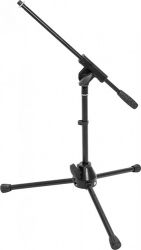
Microphone stands

Microphone Stands at LTT – The Right Hold for Every Application: A microphone stand keeps your mic exactly where you need it — stable, precise and ready for hours of use. Whether you run live vocals on stage, capture instruments in the studio or record a podcast at your desk, the right stand puts your sound in the spotlight and frees up your hands. At LTT you find microphone stands and holders of every type: floor stands, boom stands, desk stands and gooseneck models from leading manufacturers. As your...
Read more »
Microphone stands
Close window
Microphone stands

Microphone Stands at LTT – The Right Hold for Every Application

A microphone stand keeps your mic exactly where you need it — stable, precise and ready for hours of use. Whether you run live vocals on stage, capture instruments in the studio or record a podcast at your desk, the right stand puts your sound in the spotlight and frees up your hands.

At LTT you find microphone stands and holders of every type: floor stands, boom stands, desk stands and gooseneck models from leading manufacturers. As your specialist for event technology with over 25 years of experience, we combine hard-wearing hardware with spec-driven advice.

Explore the full range below and pick the stand that matches your setup — from entry-level tripods to professional-grade booms for heavy microphones.

What Is a Microphone Stand? Fundamentals and Function

A microphone stand is a support device that holds a microphone at a fixed, adjustable height and angle so you do not have to hold it by hand. In its simplest form it consists of an upright metal tube, a base for stability and a thread at the top onto which a microphone clip or holder is mounted. This basic principle has stayed the same for decades, while the range of variants has grown enormously.

The core job of a microphone stand is to hold the mic permanently stable at the right distance and height relative to the sound source. On stage, a few centimetres often make a noticeable difference in tone; in the studio, precise placement in front of an amp or instrument is essential. That is why almost every microphone stand is height-adjustable, and many add a swivel arm — the boom — to reach over or around an obstacle.

It helps to distinguish a microphone stand from adjacent product types. A microphone stand carries the mic and defines its position, whereas a microphone clip or shock mount is the interface that actually grips the microphone body. A boom arm is a hinged extension that attaches to a stand or a desk clamp. Understanding these roles avoids confusion when you combine components: the stand provides the hold, the clip provides the grip, and adapters bridge different thread standards.

Types and Variants of Microphone Stands: Floor, Boom, Desk and Gooseneck

Microphone stands come in several clearly defined types, each built for a specific placement task.

Floor stands (round base and tripod)

Floor stands are the classic upright models. A round-base floor stand uses a heavy weighted disc — often around 2 to 3 kg — for a slim footprint and an elegant look, ideal for stage vocals. A tripod floor stand uses foldable legs for a wide, secure footing and packs down small for transport.

Boom stands

A boom stand adds a horizontal or angled arm to the upright, letting you position the microphone away from the base. This is essential when the stand cannot sit directly next to the performer — for example when miking a drum kit, a guitar amp or an overhead orchestra section. Many booms telescope for extra reach.

Desk and table stands

Compact desk stands sit on a table or desktop and are the go-to choice for podcasting, streaming, radio and desktop recording. They keep the mic close and out of the way.

Gooseneck stands

Gooseneck models use a flexible neck for fine angle adjustment, common at lecterns, conference tables and speaker's desks.

2-in-1 dual-use designs

Some stands convert between straight and boom configurations, giving you two tools in one and saving space in your rig.

Applications: Where Microphone Stands Are Used

Microphone stands appear anywhere sound is captured or amplified, and the use case dictates the type you should choose.

  • Live vocals on stage: a stable floor stand with a heavy base keeps the mic steady even after repeated removal and re-seating.
  • Studio recording of instruments and amps: boom stands let you angle the mic precisely in front of a cabinet, a snare or an acoustic guitar.
  • Podcasting and streaming: compact desk stands and desk-clamp boom arms position the mic cleanly in front of the speaker.
  • Video conferences and calls: gooseneck and desk models offer discreet, fixed placement.
  • Overhead orchestra miking: tall boom stands reach far above the musicians.

In a professional event context, microphone stands are only one part of the setup. They work alongside lighting rigs, truss structures and rigging hardware to deliver a complete stage. If you are equipping a full venue, browse our wider event technology range and pair your stands with matching audio and sound equipment for a coherent, professional result.

Comparison: Floor, Boom, Desk and Gooseneck Stands at a Glance

The main difference between microphone stand types lies in placement flexibility, footprint and typical use. The table below compares the four most common variants so you can match a stand to your application quickly.

Criterion Floor stand (round/tripod) Boom stand Desk stand
Typical use case Live stage vocals Instrument/amp miking, overhead Podcast, streaming, desktop
Height range approx. 90–170 cm approx. 90–220 cm with arm approx. 15–40 cm
Reach/off-axis placement Limited (upright only) High (extendable arm) Very limited
Footprint Small (round) / wide (tripod) Wide, needs counterweight Minimal
Portability Good, tripod folds flat Moderate, bulkier Excellent
Best for Singers, speakers Studio, drums, orchestras Broadcasters, gamers

As a rule of thumb: choose a floor stand for straightforward vocal work, a boom stand whenever the mic must reach over an obstacle, and a desk stand for seated recording. Gooseneck models slot in where subtle, fixed angling at a lectern or table is required.

Technical Buying Criteria: Material, Threads and Stability

When you evaluate a microphone stand, focus on concrete technical features rather than looks alone.

  • Material and construction: high-quality stands are made from steel or aluminium. Steel and cast bases add weight (often 2–3 kg) for stability; aluminium keeps the stand light for mobile use.
  • Thread standard: the mount at the top uses either a 3/8 inch thread (common in Europe) or a 5/8 inch thread (common with many microphone clips). A 3/8" to 5/8" thread adapter bridges the two — always check which standard your clip needs.
  • Height adjustment: look for a smooth clutch and a wide height range. One-hand adjustment mechanisms, as found on the K&M 26075, let you change height mid-performance.
  • Base type: a heavy round base gives a slim footprint; a tripod base offers a wider, more secure stance and folds for transport.
  • Boom length and counterweight: an extendable boom increases reach but requires a counterweight to stay balanced.

Match these values to your microphone: a lightweight dynamic vocal mic tolerates a slim stand, while a large-diaphragm condenser or a heavy broadcast mic demands a sturdier build and higher load capacity.

Stands for Heavy Microphones: Load Capacity and Stability

Load capacity is the criterion most often overlooked — and the one that matters most for heavy microphones. A large-diaphragm condenser combined with a shock mount and a pop filter can weigh well over a kilogram, and a boom arm multiplies the leverage on the stand.

When you use a heavy mic on a boom, the extended arm creates a lever that tries to tip the stand. To keep everything steady, pay attention to:

  • Base weight: a heavier round base (2 kg and up) or a wide tripod resists tipping.
  • Counterweight: many pro boom stands accept or include a counterweight to balance a long arm.
  • Clutch strength: the height and tilt clutches must lock firmly so the mic does not sag over a long session.
  • Tube diameter and wall thickness: thicker steel tubing carries more weight without flexing.

For demanding studio or stage work with heavy microphones, choose a professional-grade boom stand with a stated load rating and a solid base. This delivers the reliable hold you need to achieve consistently impressive results, session after session.

Thread Standards, Adapters and Clips Explained (Accessories)

Compatibility between a microphone stand and a microphone comes down to threads and clips — and this is where the right accessories make all the difference.

Thread standards: 3/8" vs 5/8"

Two thread sizes dominate microphone hardware. The 3/8 inch thread is the European standard for most stands, while the 5/8 inch (also written 5/8"-27) thread is common on microphone clips and many broadcast mics. If your clip and your stand do not match, a thread adapter solves it instantly — a 3/8" to 5/8" adapter is the most frequently needed part.

Essential accessories

The right add-ons turn a basic stand into a complete workstation:

  • Microphone clips and clamps to grip the mic body securely.
  • Shock mounts to isolate the mic from floor and handling vibration.
  • Pop filters to tame plosives during vocal and podcast recording.
  • Thread adapters to bridge 3/8" and 5/8" fittings.
  • Carrying bags to protect and transport your stands.
  • Tablet and phone holders for lyrics, scripts or streaming controls.

Browse our microphone accessories and matching cables and connectors to complete your signal chain.

Buying Guide: Entry-Level vs Professional Microphone Stands

Choosing the right microphone stand comes down to how hard you will work it. This buying guide separates entry-level from professional-grade equipment so you invest wisely.

Entry-level stands

Entry-level stands suit home podcasters, hobby musicians and occasional use. They are typically lighter, use simpler clutches and carry lighter microphones. They are perfectly adequate for a desktop mic or a straightforward vocal setup, but the clutches may wear faster under heavy daily use.

Professional stands

Professional stands are built for touring, rental and studio duty. They use thicker steel or aluminium tubing, robust one-hand clutches, heavier bases and higher load capacity for demanding condenser or broadcast microphones. They cost more but survive years of setup and teardown.

Which stand suits which user?

  • Podcaster or streamer: a desk stand or desk-clamp boom arm.
  • Singer on stage: a round-base floor stand with a firm clutch.
  • Studio engineer: a heavy boom stand with counterweight.
  • Touring technician: a foldable tripod boom that packs flat.

When in doubt, buy one grade above your current need — a slightly sturdier stand pays off in durability.

Wall and Ceiling Mounts for Permanent Installation

Not every microphone needs to sit on a floor stand. For fixed installations in clubs, theatres, churches, studios and conference rooms, wall and ceiling mounts offer a permanent, space-saving solution.

A wall mount brings the microphone out from a surface on a fixed or swivel arm, keeping floor space clear and preventing the mic from being knocked over. A ceiling mount suspends the microphone from above — ideal for overhead choir miking, drop-down vocal positions or discreet conference capture where cables can run through the ceiling void.

When planning a permanent installation, consider the mounting surface (solid wall versus plasterboard), the reach and swivel range of the arm, cable management and the same 3/8" or 5/8" thread compatibility that applies to portable stands. For professional venues, fixed mounts deliver a clean, repeatable setup that stays exactly where you left it — no re-adjusting before every show. As your reliable partner for event technology, LTT helps you specify the right installation hardware for the room.

Brands and Manufacturers: König & Meyer, Gravity, Manfrotto and More

Which microphone stands do professionals reach for? The answer usually starts with a handful of trusted brands, and you find the leading manufacturers in our range.

  • König & Meyer (K&M): the reference for German-made stands, famous for durable clutches and one-hand models such as the 26075.
  • Gravity: modern, robust stands with clever quick-lock features, popular with touring engineers.
  • Manfrotto: precision hardware bridging photo, video and audio applications.
  • Adam Hall Stands: a broad, reliable range covering stage and studio needs.
  • Showtec and Omnitronic: solid, value-oriented options for club and event use.

Each brand covers different price points and use cases, from entry-level tripods to heavy-duty studio booms. Because LTT carries a wide selection of these high-quality branded products, you can compare models side by side and pick the optimal solution for your budget and workload — backed by proper specifications instead of guesswork.

Care, Maintenance and Durability of Microphone Stands

A microphone stand is a long-term investment, and a little maintenance keeps it working reliably for years — a topic most shops ignore.

Cleaning

Wipe down tubes and bases after use, especially after outdoor or stage events where dust, spilled drinks and stage fog leave residue. A dry or slightly damp cloth is enough; avoid harsh solvents that attack painted finishes.

Maintenance

Check the clutches and locking collars regularly. If a height adjustment starts to slip, tighten or replace the clutch insert before it fails mid-show. Keep threads clean so clips and adapters seat properly, and a drop of light lubricant on threaded parts prevents seizing.

Durability and rust resistance

Steel stands offer great weight and stability but can rust if stored damp — dry them before packing away. Aluminium and powder-coated stands resist corrosion better and suit humid or outdoor environments. Store stands folded in a carrying bag to protect the finish and the clutches during transport. Well-maintained professional stands easily outlast a decade of regular use.

LTT – Your Specialist for Event Technology

At LTT, microphone stands are part of a much bigger picture. As your specialist for event technology, we ship durable, spec-driven audio hardware from our warehouse in Bocholt, Germany — with free shipping from €69, optional express delivery and worldwide dispatch through our international dealer network. Every purchase is backed by the 3-year LTT warranty, so you can rely on your gear show after show.

With over 25 years of experience and more than 100,000 positive customer reviews, we support professionals, B2B resellers and enthusiasts alike, and we offer wholesale conditions for trade partners.

To build a complete stage or studio setup, combine your stands with the right supporting gear. Explore our microphone accessories for clips, adapters and shock mounts, and browse our cables and connectors to finish your signal chain. Whatever you are equipping, LTT helps you put your sound in the spotlight.

FAQ – Questions & Answers

What is the stand with a microphone called?

The stand with a microphone is called a microphone stand (or mic stand). It is a support device that holds a microphone at an adjustable height and angle so you do not have to hold it by hand. A microphone stand consists of an upright tube, a base for stability and a thread at the top onto which a microphone clip or shock mount is fitted. Depending on the design, it may be a floor stand, a boom stand, a desk stand or a gooseneck model. The stand provides the hold, while a separate clip actually grips the microphone body.

What types of microphone stands are there?

There are four main types of microphone stands. Floor stands stand on the ground with either a heavy round base or foldable tripod legs and suit stage vocals. Boom stands add an angled or horizontal arm to reach the mic over an obstacle, ideal for instruments and overhead miking. Desk stands are compact table-top models for podcasting, streaming and desktop recording. Gooseneck stands use a flexible neck for fine angle adjustment at lecterns and conference tables. Some 2-in-1 designs convert between straight and boom configurations to save space, giving you two tools in one stand.

What thread does a microphone stand have?

A microphone stand typically has one of two thread standards at its top: a 3/8 inch thread or a 5/8 inch thread. The 3/8 inch thread is the common European standard for stands, while the 5/8 inch thread (5/8"-27) is found on many microphone clips and broadcast microphones. If your microphone clip and your stand do not share the same thread, a 3/8" to 5/8" thread adapter bridges the difference in seconds. Before buying, always check which thread your clip and microphone require so you order the correct adapter alongside the stand.

Which microphone stand is the best?

The best microphone stand is the one that matches your application, so there is no single winner. For live stage vocals, a heavy round-base floor stand with a firm one-hand clutch is best. For studio work with heavy condenser microphones, a professional boom stand with a counterweight and high load capacity is best. For podcasting and streaming, a compact desk stand or desk-clamp boom arm is best. In practice, professional-grade stands from brands such as König & Meyer, Gravity or Adam Hall Stands offer the durability and stability that make them the best long-term choice.

Which microphone stands do professionals use?

Professionals use robust, spec-driven microphone stands built for repeated setup and teardown. Common professional choices include König & Meyer (K&M) for German-made durability and one-hand models, Gravity for touring-grade quick-lock features, Manfrotto for precision hardware and Adam Hall Stands for a broad, reliable range. Professionals favour stands with thicker steel or aluminium tubing, heavy bases, strong clutches and a stated load capacity, because these features keep heavy microphones stable throughout long sessions. At LTT you find these professional brands side by side so you can compare specifications and choose the right model for touring, studio or fixed installation use.

Which microphone holder is right for my use case?

The right microphone holder depends on your setup. For a singer on stage, choose a round-base floor stand with a firm clutch. For miking instruments, amps or a drum kit, choose a boom stand so you can angle the mic precisely over an obstacle. For podcasting, streaming or desktop recording, choose a compact desk stand or a desk-clamp boom arm. For lecterns and conference tables, choose a gooseneck model. For clubs, theatres and studios, a wall or ceiling mount offers a permanent solution. Match the holder to your microphone weight, and add a thread adapter if the clip and stand threads differ.

What does a microphone stand cost?

A microphone stand costs anywhere from around €15 for a simple entry-level desk or tripod model to well over €100 for professional touring and studio stands. Entry-level stands suit home podcasters and hobby musicians who use them occasionally. Professional stands from brands such as König & Meyer, Gravity or Adam Hall Stands cost more because they use thicker tubing, heavier bases, stronger clutches and offer higher load capacity for heavy microphones. When budgeting, factor in accessories such as microphone clips, shock mounts, pop filters and thread adapters, since these are often not included with the stand itself.

What is the difference between a floor stand and a boom stand?

The difference between a floor stand and a boom stand lies in placement flexibility. A floor stand is a straight upright with a base and holds the microphone directly above it, making it ideal for singers and speakers who stand close to the mic. A boom stand adds a hinged, often extendable arm to the upright, letting you position the microphone away from the base — essential for miking a drum kit, a guitar amp or an overhead orchestra where the base cannot sit directly under the mic. Boom stands need a wider base or a counterweight to stay balanced when the arm is extended.

Top seller
Gravity XSP 10215 - Klemmhülse für MS 23 XLR B Schwanenhals-Mikrofonstativ
Gravity XSP 10215 - Clamping sleeve for MS 23 XLR B gooseneck microphone stand
€3.99 *
incl. tax, plus shipping costs
Availability:
Near-term available
Delivery time: approx. 1 week
OMNITRONIC KS-4 Tisch-Mikrofonstativ
OMNITRONIC KS-4 Table Microphone Stand
€10.90 *
incl. tax, plus shipping costs
Availability:
Currently not available
OMNITRONIC GES-1 Guß-Tischfuß
OMNITRONIC GES-1 Mic Table Stand
€9.90 *
incl. tax, plus shipping costs
Availability:
Delivery time: 3-5 days
OMNITRONIC Mikrofonstativ MS-2A mit Galgen sw
OMNITRONIC Microphone Tripod MS-2A with Boom bk
€17.90 *
incl. tax, plus shipping costs
Availability:
Delivery time: 3-5 days
Adam Hall Stands S 8 BB Tischmikrofonständer
Adam Hall Stands S 8 BB - Tabletop microphone stand
€13.36 *
incl. tax, plus shipping costs
Availability:
Near-term available
Delivery time: approx. 1 week
Adam Hall Stands S 6 B Mikrofonständer mit Schwenkarm
Adam Hall Stands S 6 B - Microphone stand with boom arm
€30.24 *
incl. tax, plus shipping costs
Availability:
Near-term available
Delivery time: approx. 1 week
Vonyx TS02 Tischstativ Mikrofon klappbar
Vonyx TS02 Table stand Microphone foldable
€18.00 *
incl. tax, plus shipping costs
Availability:
Delivery time: 1-3 days
78 Articles
Close filters
 
  •  
  •  
  •  
  •  
  •  
  •  
  •  
  •  
  •  
  •  
from to
1 From 4 pages
No results were found for the filter!
MONACOR MS-12 Mikrofon-Tischstativ
MONACOR MS-12 Desktop microphone stand
Desktop microphone stand Shock-absorbing • Folding • Height: 170 mm • Thread: 16 mm (?") and 9 mm (?") • Weight: 193 g • : Description: desktop microphone stand...
€13.00 *
incl. tax, plus shipping costs
Availability:
Delivery time: 3-5 days
KÖNIG & MEYER KM-210/9 Mikrofonstativ
KÖNIG & MEYER KM-210/9 Microphone floor stand
Microphone floor stand, with movable boom of adjustable length and shock-absorbing folding feet. Thread: 9 mm (?"). Mat black lacquered • Adjustable boom length: 46-77 cm...
€95.00 *
incl. tax, free shipping to Germany
[International shipping costs]
Availability:
Delivery time: 3-5 days
OMNITRONIC Tisch-Mikrofonstativ KS-3
OMNITRONIC Table-Microphone Stand KS-3
Ultra compact retractable table stand for microphone holder Three detachable feet • Feet with rubber coating • 1.5 cm (5/8") thread and 1 cm (3/8") • Package contents 1 x...
€5.90 *
incl. tax, plus shipping costs
Availability:
Delivery time: 3-5 days
KÖNIG & MEYER KM-26085 Mikrofonstativ
KÖNIG & MEYER KM-26085 Microphone floor stand with one-hand height adjustment
Microphone floor stand with one-hand height adjustment, mat black lacquered, with shock-absorbing black diecast base (Ø 25 cm). Handle with soft-touch coating • Thread: 9 mm (?")...
€97.00 *
incl. tax, free shipping to Germany
[International shipping costs]
Availability:
Delivery time: 3-5 days
IMG STAGE LINE DMS-1 Mikrofon-Tischfuss
MONACOR DMS-1 Desktop microphone base
Desktop microphone base, for gooseneck microphones. On/off switch • Non-slip diecast housing • Microphone connection via XLR jack with latching device • XLR output, balanced...
€70.00 *
incl. tax, free shipping to Germany
[International shipping costs]
Availability:
Delivery time: 3-5 days
KÖNIG & MEYER KM-259 Mikrofonstativ
KÖNIG & MEYER KM-259 Half-height microphone floor stand
Half-height microphone floor stand, with movable boom of adjustable length and shock-absorbing folding feet. Thread: 9 mm (?"). Mat black lacquered • Adjustable boom length: 47-77 cm...
€90.00 *
incl. tax, free shipping to Germany
[International shipping costs]
Availability:
Delivery time: 3-5 days
MONACOR MS-1 Mikrofon-Tischstativ
MONACOR MS-1 Desktop microphone stand
Desktop microphone stand Shock-absorbing • Ø 100 mm x 105 mm • Thread: 16 mm (?") and 9 mm (?") • Weight: 395 g • : Description: desktop microphone stand...
€20.00 *
incl. tax, plus shipping costs
Availability:
Delivery time: 3-5 days
OMNITRONIC Tisch-Mikrofonarm TMA-1N
OMNITRONIC Table Microphone Arm TMA-1N
Telescopic arm with XLR cable, can be mounted onto tabletops Adjustable height • Package contents 1 x holder • Height: Maximum: 105 cm Minimum: 43 cm • Type (general stands):...
€20.87 *
incl. tax, plus shipping costs
Availability:
Delivery time: 3-5 days
Manfrotto - 622B - Mikrofon-Stativ Schwarz
Manfrotto - 622B - Black Alu Microphone Stand
Manfrotto microphone stands Complete with grip collar that allows the stand to be set at the required height with single Operation • Lightweight rubber base reducing "bottom...
€155.00 *
incl. tax, free shipping to Germany
[International shipping costs]
Availability:
Near-term available
Delivery time: approx. 1 week
DAP-Audio Microphone Stand - Value Line
SHOWGEAR Microphone Stand - Value Line 900-1400 mm - 3/8 thread
This microphone stand is ideal for practice and home use. : Width (mm): 745 mm • Minimum Height (mm): 900 mm • Maximum Height (mm): 1400 mm • Boom Arm Length: 745 mm • Boom Arm:...
€18.02 *
incl. tax, plus shipping costs
Availability:
Delivery time: 3-5 days
IMG STAGE LINE MS-60/SW Mikrofonstativ
MONACOR MS-60/SW Microphone floor stand
Microphone floor stand, with movable boom of adjustable length and shock-absorbing folding feet. Thread: 16 mm (?") and 9 mm (?"). Mat black lacquered • Adjustable boom length: 56-95...
€48.00 *
incl. tax, plus shipping costs
Availability:
Delivery time: 3-5 days
OMNITRONIC Mikrofonstativ MS-2A mit Galgen sw
OMNITRONIC Microphone Tripod MS-2A with Boom bk
Simple microphone stand with adjustable boom Fully shock absorbing • Boom arm adjustable • Easy to assemble • Adjustable height • Setup: Easy to assemble • Maximum carrying...
€17.90 *
incl. tax, plus shipping costs
Availability:
Delivery time: 3-5 days
Adam Hall Stands S 5 BE Mikrofonständer mit Schwenkarm schwarz
Adam Hall Stands S 5 BE - Microphone stand black with boom arm
Microphone stand black with boom arm : Product type: Stands and Tripods • Type: Microphone Stands • Tubing material: Steel • Tubing colour: Black • Tubing surface: Powder coated...
€16.30 *
incl. tax, plus shipping costs
Availability:
Near-term available
Delivery time: approx. 1 week
Monacor  MS-40/SW Mikrofonstativ
MONACOR MS-40/SW Microphone floor stand
Microphone floor stand, with pivoting boom and shock-absorbing folding feet. Thread: 16 mm (?") and 9 mm (?"). Mat black lacquered • Boom length: 72 cm • Adjustable height:...
€34.00 *
incl. tax, plus shipping costs
Availability:
Delivery time: 3-5 days
MONACOR MS-22 Mikrofon-Tischstativ
MONACOR MS-22 Desktop microphone stand
Desktop microphone stand Diecast metal base • Shock-absorbing • Ø 150 mm x 230-380 mm • Thread: 16 mm (?") and 9 mm (?") • Weight: 1.6 kg • : Description:...
€41.00 *
incl. tax, plus shipping costs
Availability:
Delivery time: 3-5 days
Gravity MS 23 Mikrofonständer gerade mit Tellerfuß schwarz
Gravity MS 23 - Microphone Stand with Round Base
Microphone Stand with Round Base Sturdy and durable design • Exceptionally stable base • Ergonomic handling • Interchangeable colour rings • The MS 23 is a premium-quality...
€40.95 *
incl. tax, plus shipping costs
Availability:
Near-term available
Delivery time: approx. 1 week
IMG STAGE LINE MS-100/SW Mikrofonstativ
MONACOR MS-100/SW Desktop microphone stand/floor stand
Desktop microphone stand/floor stand Black lacquered • Shock-absorbing • Variable boom (arm length: 375 mm) • Adjustable height: 365-550 mm • Thread: 16 mm (?") and 9 mm...
€41.00 *
incl. tax, plus shipping costs
Availability:
Delivery time: 3-5 days
OMNITRONIC Tisch-Mikrofonarm TMA-2 sw
OMNITRONIC Table-Microphone Arm TMA-2 bk
Telescopic arm with XLR cable, can be mounted onto tabletops Adjustable height • Height: Maximum: 105 cm Minimum: 43 cm • Type (general stands): Microphone stand (desk) • Color:...
€49.90 *
incl. tax, plus shipping costs
Availability:
Delivery time: 3-5 days
Manfrotto - 622CS - Mikrofon-Stativ Chrom Silber
Manfrotto - 622CS - Steel Microphone Stand Chrome
Manfrotto microphone stands Complete with grip collar that allows the stand to be set at the required height with single Operation • Lightweight rubber base reducing "bottom...
€111.35 *
incl. tax, free shipping to Germany
[International shipping costs]
Availability:
Low stock; Delivery time: 1-3 days
Delivery time: 1-3 days
JTS FGM-170 Elektret-Schwanenhals-Mikrofon
JTS FGM-170 Floor stand microphones
Floor stand microphones, with carbon fibre boom. 3 high-quality back electret microphone cartridges with different polar patterns • Low cut switch (80 Hz) • 10 dB attentuation, switchable...
€411.00 *
incl. tax, free shipping to Germany
[International shipping costs]
Availability:
Delivery time: 3-5 days
Adam Hall Stands S 9 B Mikrofonständer klein mit Schwenkarm
Adam Hall Stands S 9 B - Microphone Stand small with Boom Arm
Microphone Stand small with Boom Arm Small microstand black for guitar, amp, drum, brass a.s.o. : Product type: Stands and Tripods • Type: Microphone Stands • Tubing material: Steel...
€22.78 *
incl. tax, plus shipping costs
Availability:
Near-term available
Delivery time: approx. 1 week
Adam Hall Stands S 8 B Tischmikrofonständer
Adam Hall Stands S 8 B - Tabletop microphone stand
Tabletop microphone stand Table microphone stand With microphone holder : Product type: Stands and Tripods • Type: Microphone Stands • Tubing material: Steel • Tubing colour: Black...
€12.40 *
incl. tax, plus shipping costs
Availability:
Near-term available
Delivery time: approx. 1 week
Adam Hall Stands S 8 BB Tischmikrofonständer
Adam Hall Stands S 8 BB - Tabletop microphone stand
Tabletop microphone stand Stable thanks to heavy cast steel round base • Screwable tripod tube • 5/8" thread connection • Stable microphone stand with base plate made of cast...
€13.36 *
incl. tax, plus shipping costs
Availability:
Near-term available
Delivery time: approx. 1 week
Gravity MS 23 W Mikrofonständer gerade mit Tellerfuß weiß
Gravity MS 23 W - Microphone Stand with Round Base, White
Microphone Stand with Round Base, White Sturdy and durable design • Exceptionally stable base • Ergonomic handling • Interchangeable colour rings • The MS 23 is a...
€43.07 *
incl. tax, plus shipping costs
Availability:
Near-term available
Delivery time: approx. 1 week
1 From 4 pages
Facts
Microphone Stands at LTT – The Right Hold for Every Application: A microphone stand keeps your mic exactly where you need it — stable, precise and ready for hours of use. Whether you run live vocals on stage, capture instruments in the studio or record a podcast at your desk, the right stand puts your sound in the spotlight and frees up your hands. At LTT you find microphone stands and holders of every type: floor stands, boom stands,... Read more »
Viewed
Facts

Microphone Stands at LTT – The Right Hold for Every Application

A microphone stand keeps your mic exactly where you need it — stable, precise and ready for hours of use. Whether you run live vocals on stage, capture instruments in the studio or record a podcast at your desk, the right stand puts your sound in the spotlight and frees up your hands.

At LTT you find microphone stands and holders of every type: floor stands, boom stands, desk stands and gooseneck models from leading manufacturers. As your specialist for event technology with over 25 years of experience, we combine hard-wearing hardware with spec-driven advice.

Explore the full range below and pick the stand that matches your setup — from entry-level tripods to professional-grade booms for heavy microphones.

What Is a Microphone Stand? Fundamentals and Function

A microphone stand is a support device that holds a microphone at a fixed, adjustable height and angle so you do not have to hold it by hand. In its simplest form it consists of an upright metal tube, a base for stability and a thread at the top onto which a microphone clip or holder is mounted. This basic principle has stayed the same for decades, while the range of variants has grown enormously.

The core job of a microphone stand is to hold the mic permanently stable at the right distance and height relative to the sound source. On stage, a few centimetres often make a noticeable difference in tone; in the studio, precise placement in front of an amp or instrument is essential. That is why almost every microphone stand is height-adjustable, and many add a swivel arm — the boom — to reach over or around an obstacle.

It helps to distinguish a microphone stand from adjacent product types. A microphone stand carries the mic and defines its position, whereas a microphone clip or shock mount is the interface that actually grips the microphone body. A boom arm is a hinged extension that attaches to a stand or a desk clamp. Understanding these roles avoids confusion when you combine components: the stand provides the hold, the clip provides the grip, and adapters bridge different thread standards.

Types and Variants of Microphone Stands: Floor, Boom, Desk and Gooseneck

Microphone stands come in several clearly defined types, each built for a specific placement task.

Floor stands (round base and tripod)

Floor stands are the classic upright models. A round-base floor stand uses a heavy weighted disc — often around 2 to 3 kg — for a slim footprint and an elegant look, ideal for stage vocals. A tripod floor stand uses foldable legs for a wide, secure footing and packs down small for transport.

Boom stands

A boom stand adds a horizontal or angled arm to the upright, letting you position the microphone away from the base. This is essential when the stand cannot sit directly next to the performer — for example when miking a drum kit, a guitar amp or an overhead orchestra section. Many booms telescope for extra reach.

Desk and table stands

Compact desk stands sit on a table or desktop and are the go-to choice for podcasting, streaming, radio and desktop recording. They keep the mic close and out of the way.

Gooseneck stands

Gooseneck models use a flexible neck for fine angle adjustment, common at lecterns, conference tables and speaker's desks.

2-in-1 dual-use designs

Some stands convert between straight and boom configurations, giving you two tools in one and saving space in your rig.

Applications: Where Microphone Stands Are Used

Microphone stands appear anywhere sound is captured or amplified, and the use case dictates the type you should choose.

  • Live vocals on stage: a stable floor stand with a heavy base keeps the mic steady even after repeated removal and re-seating.
  • Studio recording of instruments and amps: boom stands let you angle the mic precisely in front of a cabinet, a snare or an acoustic guitar.
  • Podcasting and streaming: compact desk stands and desk-clamp boom arms position the mic cleanly in front of the speaker.
  • Video conferences and calls: gooseneck and desk models offer discreet, fixed placement.
  • Overhead orchestra miking: tall boom stands reach far above the musicians.

In a professional event context, microphone stands are only one part of the setup. They work alongside lighting rigs, truss structures and rigging hardware to deliver a complete stage. If you are equipping a full venue, browse our wider event technology range and pair your stands with matching audio and sound equipment for a coherent, professional result.

Comparison: Floor, Boom, Desk and Gooseneck Stands at a Glance

The main difference between microphone stand types lies in placement flexibility, footprint and typical use. The table below compares the four most common variants so you can match a stand to your application quickly.

Criterion Floor stand (round/tripod) Boom stand Desk stand
Typical use case Live stage vocals Instrument/amp miking, overhead Podcast, streaming, desktop
Height range approx. 90–170 cm approx. 90–220 cm with arm approx. 15–40 cm
Reach/off-axis placement Limited (upright only) High (extendable arm) Very limited
Footprint Small (round) / wide (tripod) Wide, needs counterweight Minimal
Portability Good, tripod folds flat Moderate, bulkier Excellent
Best for Singers, speakers Studio, drums, orchestras Broadcasters, gamers

As a rule of thumb: choose a floor stand for straightforward vocal work, a boom stand whenever the mic must reach over an obstacle, and a desk stand for seated recording. Gooseneck models slot in where subtle, fixed angling at a lectern or table is required.

Technical Buying Criteria: Material, Threads and Stability

When you evaluate a microphone stand, focus on concrete technical features rather than looks alone.

  • Material and construction: high-quality stands are made from steel or aluminium. Steel and cast bases add weight (often 2–3 kg) for stability; aluminium keeps the stand light for mobile use.
  • Thread standard: the mount at the top uses either a 3/8 inch thread (common in Europe) or a 5/8 inch thread (common with many microphone clips). A 3/8" to 5/8" thread adapter bridges the two — always check which standard your clip needs.
  • Height adjustment: look for a smooth clutch and a wide height range. One-hand adjustment mechanisms, as found on the K&M 26075, let you change height mid-performance.
  • Base type: a heavy round base gives a slim footprint; a tripod base offers a wider, more secure stance and folds for transport.
  • Boom length and counterweight: an extendable boom increases reach but requires a counterweight to stay balanced.

Match these values to your microphone: a lightweight dynamic vocal mic tolerates a slim stand, while a large-diaphragm condenser or a heavy broadcast mic demands a sturdier build and higher load capacity.

Stands for Heavy Microphones: Load Capacity and Stability

Load capacity is the criterion most often overlooked — and the one that matters most for heavy microphones. A large-diaphragm condenser combined with a shock mount and a pop filter can weigh well over a kilogram, and a boom arm multiplies the leverage on the stand.

When you use a heavy mic on a boom, the extended arm creates a lever that tries to tip the stand. To keep everything steady, pay attention to:

  • Base weight: a heavier round base (2 kg and up) or a wide tripod resists tipping.
  • Counterweight: many pro boom stands accept or include a counterweight to balance a long arm.
  • Clutch strength: the height and tilt clutches must lock firmly so the mic does not sag over a long session.
  • Tube diameter and wall thickness: thicker steel tubing carries more weight without flexing.

For demanding studio or stage work with heavy microphones, choose a professional-grade boom stand with a stated load rating and a solid base. This delivers the reliable hold you need to achieve consistently impressive results, session after session.

Thread Standards, Adapters and Clips Explained (Accessories)

Compatibility between a microphone stand and a microphone comes down to threads and clips — and this is where the right accessories make all the difference.

Thread standards: 3/8" vs 5/8"

Two thread sizes dominate microphone hardware. The 3/8 inch thread is the European standard for most stands, while the 5/8 inch (also written 5/8"-27) thread is common on microphone clips and many broadcast mics. If your clip and your stand do not match, a thread adapter solves it instantly — a 3/8" to 5/8" adapter is the most frequently needed part.

Essential accessories

The right add-ons turn a basic stand into a complete workstation:

  • Microphone clips and clamps to grip the mic body securely.
  • Shock mounts to isolate the mic from floor and handling vibration.
  • Pop filters to tame plosives during vocal and podcast recording.
  • Thread adapters to bridge 3/8" and 5/8" fittings.
  • Carrying bags to protect and transport your stands.
  • Tablet and phone holders for lyrics, scripts or streaming controls.

Browse our microphone accessories and matching cables and connectors to complete your signal chain.

Buying Guide: Entry-Level vs Professional Microphone Stands

Choosing the right microphone stand comes down to how hard you will work it. This buying guide separates entry-level from professional-grade equipment so you invest wisely.

Entry-level stands

Entry-level stands suit home podcasters, hobby musicians and occasional use. They are typically lighter, use simpler clutches and carry lighter microphones. They are perfectly adequate for a desktop mic or a straightforward vocal setup, but the clutches may wear faster under heavy daily use.

Professional stands

Professional stands are built for touring, rental and studio duty. They use thicker steel or aluminium tubing, robust one-hand clutches, heavier bases and higher load capacity for demanding condenser or broadcast microphones. They cost more but survive years of setup and teardown.

Which stand suits which user?

  • Podcaster or streamer: a desk stand or desk-clamp boom arm.
  • Singer on stage: a round-base floor stand with a firm clutch.
  • Studio engineer: a heavy boom stand with counterweight.
  • Touring technician: a foldable tripod boom that packs flat.

When in doubt, buy one grade above your current need — a slightly sturdier stand pays off in durability.

Wall and Ceiling Mounts for Permanent Installation

Not every microphone needs to sit on a floor stand. For fixed installations in clubs, theatres, churches, studios and conference rooms, wall and ceiling mounts offer a permanent, space-saving solution.

A wall mount brings the microphone out from a surface on a fixed or swivel arm, keeping floor space clear and preventing the mic from being knocked over. A ceiling mount suspends the microphone from above — ideal for overhead choir miking, drop-down vocal positions or discreet conference capture where cables can run through the ceiling void.

When planning a permanent installation, consider the mounting surface (solid wall versus plasterboard), the reach and swivel range of the arm, cable management and the same 3/8" or 5/8" thread compatibility that applies to portable stands. For professional venues, fixed mounts deliver a clean, repeatable setup that stays exactly where you left it — no re-adjusting before every show. As your reliable partner for event technology, LTT helps you specify the right installation hardware for the room.

Brands and Manufacturers: König & Meyer, Gravity, Manfrotto and More

Which microphone stands do professionals reach for? The answer usually starts with a handful of trusted brands, and you find the leading manufacturers in our range.

  • König & Meyer (K&M): the reference for German-made stands, famous for durable clutches and one-hand models such as the 26075.
  • Gravity: modern, robust stands with clever quick-lock features, popular with touring engineers.
  • Manfrotto: precision hardware bridging photo, video and audio applications.
  • Adam Hall Stands: a broad, reliable range covering stage and studio needs.
  • Showtec and Omnitronic: solid, value-oriented options for club and event use.

Each brand covers different price points and use cases, from entry-level tripods to heavy-duty studio booms. Because LTT carries a wide selection of these high-quality branded products, you can compare models side by side and pick the optimal solution for your budget and workload — backed by proper specifications instead of guesswork.

Care, Maintenance and Durability of Microphone Stands

A microphone stand is a long-term investment, and a little maintenance keeps it working reliably for years — a topic most shops ignore.

Cleaning

Wipe down tubes and bases after use, especially after outdoor or stage events where dust, spilled drinks and stage fog leave residue. A dry or slightly damp cloth is enough; avoid harsh solvents that attack painted finishes.

Maintenance

Check the clutches and locking collars regularly. If a height adjustment starts to slip, tighten or replace the clutch insert before it fails mid-show. Keep threads clean so clips and adapters seat properly, and a drop of light lubricant on threaded parts prevents seizing.

Durability and rust resistance

Steel stands offer great weight and stability but can rust if stored damp — dry them before packing away. Aluminium and powder-coated stands resist corrosion better and suit humid or outdoor environments. Store stands folded in a carrying bag to protect the finish and the clutches during transport. Well-maintained professional stands easily outlast a decade of regular use.

LTT – Your Specialist for Event Technology

At LTT, microphone stands are part of a much bigger picture. As your specialist for event technology, we ship durable, spec-driven audio hardware from our warehouse in Bocholt, Germany — with free shipping from €69, optional express delivery and worldwide dispatch through our international dealer network. Every purchase is backed by the 3-year LTT warranty, so you can rely on your gear show after show.

With over 25 years of experience and more than 100,000 positive customer reviews, we support professionals, B2B resellers and enthusiasts alike, and we offer wholesale conditions for trade partners.

To build a complete stage or studio setup, combine your stands with the right supporting gear. Explore our microphone accessories for clips, adapters and shock mounts, and browse our cables and connectors to finish your signal chain. Whatever you are equipping, LTT helps you put your sound in the spotlight.

FAQ – Questions & Answers

What is the stand with a microphone called?

The stand with a microphone is called a microphone stand (or mic stand). It is a support device that holds a microphone at an adjustable height and angle so you do not have to hold it by hand. A microphone stand consists of an upright tube, a base for stability and a thread at the top onto which a microphone clip or shock mount is fitted. Depending on the design, it may be a floor stand, a boom stand, a desk stand or a gooseneck model. The stand provides the hold, while a separate clip actually grips the microphone body.

What types of microphone stands are there?

There are four main types of microphone stands. Floor stands stand on the ground with either a heavy round base or foldable tripod legs and suit stage vocals. Boom stands add an angled or horizontal arm to reach the mic over an obstacle, ideal for instruments and overhead miking. Desk stands are compact table-top models for podcasting, streaming and desktop recording. Gooseneck stands use a flexible neck for fine angle adjustment at lecterns and conference tables. Some 2-in-1 designs convert between straight and boom configurations to save space, giving you two tools in one stand.

What thread does a microphone stand have?

A microphone stand typically has one of two thread standards at its top: a 3/8 inch thread or a 5/8 inch thread. The 3/8 inch thread is the common European standard for stands, while the 5/8 inch thread (5/8"-27) is found on many microphone clips and broadcast microphones. If your microphone clip and your stand do not share the same thread, a 3/8" to 5/8" thread adapter bridges the difference in seconds. Before buying, always check which thread your clip and microphone require so you order the correct adapter alongside the stand.

Which microphone stand is the best?

The best microphone stand is the one that matches your application, so there is no single winner. For live stage vocals, a heavy round-base floor stand with a firm one-hand clutch is best. For studio work with heavy condenser microphones, a professional boom stand with a counterweight and high load capacity is best. For podcasting and streaming, a compact desk stand or desk-clamp boom arm is best. In practice, professional-grade stands from brands such as König & Meyer, Gravity or Adam Hall Stands offer the durability and stability that make them the best long-term choice.

Which microphone stands do professionals use?

Professionals use robust, spec-driven microphone stands built for repeated setup and teardown. Common professional choices include König & Meyer (K&M) for German-made durability and one-hand models, Gravity for touring-grade quick-lock features, Manfrotto for precision hardware and Adam Hall Stands for a broad, reliable range. Professionals favour stands with thicker steel or aluminium tubing, heavy bases, strong clutches and a stated load capacity, because these features keep heavy microphones stable throughout long sessions. At LTT you find these professional brands side by side so you can compare specifications and choose the right model for touring, studio or fixed installation use.

Which microphone holder is right for my use case?

The right microphone holder depends on your setup. For a singer on stage, choose a round-base floor stand with a firm clutch. For miking instruments, amps or a drum kit, choose a boom stand so you can angle the mic precisely over an obstacle. For podcasting, streaming or desktop recording, choose a compact desk stand or a desk-clamp boom arm. For lecterns and conference tables, choose a gooseneck model. For clubs, theatres and studios, a wall or ceiling mount offers a permanent solution. Match the holder to your microphone weight, and add a thread adapter if the clip and stand threads differ.

What does a microphone stand cost?

A microphone stand costs anywhere from around €15 for a simple entry-level desk or tripod model to well over €100 for professional touring and studio stands. Entry-level stands suit home podcasters and hobby musicians who use them occasionally. Professional stands from brands such as König & Meyer, Gravity or Adam Hall Stands cost more because they use thicker tubing, heavier bases, stronger clutches and offer higher load capacity for heavy microphones. When budgeting, factor in accessories such as microphone clips, shock mounts, pop filters and thread adapters, since these are often not included with the stand itself.

What is the difference between a floor stand and a boom stand?

The difference between a floor stand and a boom stand lies in placement flexibility. A floor stand is a straight upright with a base and holds the microphone directly above it, making it ideal for singers and speakers who stand close to the mic. A boom stand adds a hinged, often extendable arm to the upright, letting you position the microphone away from the base — essential for miking a drum kit, a guitar amp or an overhead orchestra where the base cannot sit directly under the mic. Boom stands need a wider base or a counterweight to stay balanced when the arm is extended.