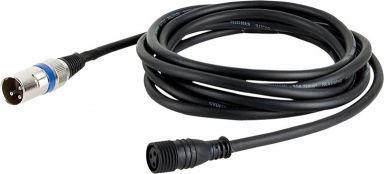
DMX cables

DMX Cables from Your Event Technology Specialist: DMX cables carry the digital control signal that lets you set your entire lighting rig in scene — from moving heads and LED bars to scanners and dimmers. At LTT you get professionally built cables with true 110-ohm impedance, robust screening and reliable connectors for flawless data transmission across a busy stage. Whether you run a single par can or a full DMX512 universe with dozens of fixtures, the right cable is the backbone of every show. Choose the...
Read more »
DMX cables
Close window
DMX cables

DMX Cables from Your Event Technology Specialist

DMX cables carry the digital control signal that lets you set your entire lighting rig in scene — from moving heads and LED bars to scanners and dimmers. At LTT you get professionally built cables with true 110-ohm impedance, robust screening and reliable connectors for flawless data transmission across a busy stage.

Whether you run a single par can or a full DMX512 universe with dozens of fixtures, the right cable is the backbone of every show. Choose the correct length, the correct pin count and a quality grade that survives touring life — and you will achieve impressive results without flicker, dropouts or signal noise.

Browse 3-pin and 5-pin XLR builds in stock lengths from short jumpers to long trunk runs, all ready to ship fast from Germany.

What Is a DMX Cable and What Is It Used For? Fundamentals

A DMX cable is a screened, twisted-pair data cable that transmits the DMX512 lighting protocol between a lighting console and your fixtures. Unlike a standard signal cable, a DMX cable is engineered to hold a defined characteristic impedance of 110 ohms, which keeps the fast digital data reflection-free over long runs.

What DMX Cables Do

DMX cables do not carry sound or power. They carry data — instructions that tell each fixture how to behave: dimmer level, colour, pan and tilt, gobo selection and strobe rate. The DMX512 protocol was introduced in 1986 and reused the existing XLR connector format, which is why DMX and audio cables can look confusingly similar.

Where the Distinction Matters

A DMX cable belongs to the world of lighting control, sitting alongside your console, splitters and fixtures. It is a completely different animal from an analog microphone cable, from a power cable and from a network patch lead — even when the plug on the end looks the same. Using the correct 110-ohm DMX cable protects your show from strobing, flickering and intermittent addressing.

Typical Users

Event technicians, DJs, bands, theatres, clubs, houses of worship and rental companies all rely on DMX cables every single day. As a daisy-chained backbone, DMX cabling links fixture to fixture, so build quality and correct specification directly determine how stable your rig runs.

Applications and Use: Where DMX Cables Are Needed

DMX cables are used wherever intelligent lighting has to be controlled from a central console. On mobile stages and touring rigs, DMX cabling connects moving heads, wash lights, blinders and strobes into one addressable chain. In fixed installations — clubs, theatres, TV studios and houses of worship — DMX runs feed permanently mounted fixtures and dimmer racks.

DJs use short DMX jumpers to link a handful of LED effects for master/slave or full console control. Larger productions route long DMX trunks along truss and cable ramps to reach fixtures spread across the venue.

DMX also drives more than lights: hazers, fog machines and moving effect units are frequently addressed over the same protocol, so a single DMX chain can command your entire visual show. That makes reliable, correctly specified cabling the quiet hero behind every professional lighting design.

Types and Variants of DMX Cables: 3-Pin vs 5-Pin

DMX cables come in two main connector variants — 3-pin XLR and 5-pin XLR — plus different quality grades and lengths. Choosing the right variant depends on the fixtures you own.

3-Pin XLR Cables

The 3-pin XLR build is the most common in the entertainment market. Its pinout is Pin 1 signal common (ground), Pin 2 Data -, Pin 3 Data +. Most compact fixtures, LED bars, DJ effects and budget-to-mid-range lighting use 3-pin connectors. Note that strictly speaking, 3-pin connectors are technically prohibited by ANSI E1.11-2008 for DMX, but the industry has adopted them almost universally.

5-Pin XLR Cables

The 5-pin XLR build is the original DMX standard connector. Its pinout is Pin 1 signal common, Pin 2 Data 1 -, Pin 3 Data 1 +, Pin 4 Data 2 -, Pin 5 Data 2 +. Many professional and touring fixtures use 5-pin because it clearly separates lighting data from audio cabling on the same stage. In practice the two extra pins (Data 2) are rarely used, so most 5-pin cables only have three conductors soldered.

Adapters and Conversion

Because the extra pins are usually unused, 3-to-5 and 5-to-3 conversions are direct and simple. If your console is 5-pin and your fixtures are 3-pin, a short DMX adapter bridges the gap without loss of signal. Always check whether your equipment needs 3-pin or 5-pin before you order.

Comparison: DMX Cable vs XLR Audio Cable and Pin Types

DMX cables and XLR audio cables share the same connector but serve fundamentally different purposes. A DMX cable carries digital lighting data and is rated at 110 ohms; an XLR audio cable carries analog sound and typically measures 45–75 ohms. Using an audio cable for DMX can cause flickering and dropouts, while using a DMX cable as a mic lead risks noise interference. The table below summarises the key differences.

Criterion 3-Pin DMX Cable 5-Pin DMX Cable XLR Audio Cable
Purpose Digital lighting data Digital lighting data Analog audio signal
Impedance 110 ohms 110 ohms approx. 45–75 ohms
Standard Widely used (not ANSI-compliant) Original DMX512 standard Standard audio connector
Typical use LED bars, DJ effects, most fixtures Touring & pro fixtures, consoles Microphones, line signals
Extra data pair No Yes (Data 2, mostly unused) No
Conversion Adapts to 5-pin easily Adapts to 3-pin easily Not recommended for DMX

The bottom line: always use a purpose-built 110-ohm DMX cable for lighting control. It protects your show from signal degradation and gives you clean, reliable data transmission across every fixture in the chain.

Technical Buying Criteria: Impedance, Shielding and Standards

The technical heart of a good DMX cable is its impedance and screening. Get these right and your data travels cleanly even over long runs and high fixture counts.

Impedance and Construction

The DMX512 protocol is built on RS-485 transmission, which calls for a screened twisted pair with a characteristic impedance of 110 ohms (some installation cables run 120 ohms). Proven reference cables include Belden 9841 (single pair) and Belden 9842 (two pair), plus Van Damme Smart Control for touring and the Van Damme Purple Series for installations. Shielded Cat 5/6/7 cable is also approved under the ANSI standard for DMX where a network-style infrastructure is preferred.

Shielding

Shielding comes as braided screen or foil screen. Braided screening offers excellent flexibility and mechanical durability for touring cables, while foil screening is cost-effective and works well for fixed runs. Both protect the twisted pair from electromagnetic interference so the signal stays noise-free over long distances.

Connectors and Jacket

Look for solid, well-strain-relieved connectors — Neutrik connectors are a benchmark for touring reliability. A highly flexible, rubberised jacket handles daily coiling and stage abuse, and low fire hazard (LSZH) variants add safety in permanently installed venues. Typical touring cable diameters sit around 4–7 mm depending on grade.

Buying Guide: Choosing Length, DMX Chains and Terminators

This buying guide helps you match cable length, pin count and quality to a real stage, club or truss-mounted rig — the practical knowledge most product listings skip.

Correct Length and Chain Limits

DMX fixtures are connected in a daisy chain: output of one fixture into the input of the next. A single DMX512 universe addresses up to 512 channels, which can be spread across many fixtures. As a practical rule of thumb, keep a single DMX run below roughly 300 metres total and no more than around 32 devices per chain before signal integrity suffers. For long or heavily loaded runs, a DMX splitter or buffer keeps the signal strong.

Why You Need a DMX Terminator

At the end of a long DMX chain, signal reflections can corrupt the data. A DMX terminator — a 120-ohm resistor fitted to the last fixture — absorbs these reflections and stabilises the whole chain. If your rig behaves erratically over distance, a terminator is often the fix.

Matching Length to the Job

Use short 0.5–3 m jumpers between closely spaced fixtures on a bar or truss, and longer 5–20 m runs to reach outlying positions. Order a mix so you avoid coiling excess cable or stretching a lead too far. For fixed venues, a DMX cable reel or installation-grade bulk cable lets you cut exact lengths and terminate your own connectors.

DMX Cabling for Truss, Rigging and Stage Setups

Routing DMX cleanly along truss and rigging is what separates a tidy professional rig from a troublesome one — and it fits directly into the truss and rigging world LTT knows best.

When you mount fixtures on aluminium truss, run your DMX cabling alongside the power feed but keep a little separation to reduce interference. Secure cables to the truss chord with cable ties or hook-and-loop wraps, leaving a service loop at each fixture so cables are not under tension when the truss is trimmed or moved.

Plan the daisy chain to follow the physical layout: feed the console signal to the nearest fixture, then hop from unit to unit along the bar. This keeps cable runs short and avoids crossing the stage twice. On lifted or motor-flown truss, dress cables neatly so nothing snags during the trim.

For permanent installations on fixed truss, installation-grade DMX cable and a terminator at the far end deliver a stable, maintenance-free backbone. Combine your cabling with the right truss and rigging hardware to build a rig that is both safe and reliable show after show.

Brands, Manufacturers and Quality Grades in Our Range

In this range you will find hochwertige branded DMX cables and connectors chosen specifically for professional event use. For lighting fixtures that these cables control, we stock trusted event brands such as Eurolite, Showtec, Cameo and LD Systems, so you can match cables and fixtures with confidence.

On the cable and connector side, Neutrik connectors are the reliability benchmark for touring, while SOMMER CABLE and Adam Hall Cables deliver excellent screened twisted-pair stock. Accu Cable and Titanex round out the range with rugged, practical builds for everyday hire and installation work.

Quality Grades at a Glance

  • Entry level: flexible 3-pin cables ideal for DJs and small LED setups
  • Touring grade: braided-screen 110-ohm cables with Neutrik connectors for daily abuse
  • Installation grade: low fire hazard cable, often supplied on a reel for fixed venues

Across every grade, choose the correct impedance and connector count first, then step up in quality to suit how hard the cable will work.

Accessories: Adapters, Terminators and Cable Management

The right accessories keep your DMX chain flexible and reliable. The essentials are:

  • DMX adapters — 3-to-5 and 5-to-3 pin adapters let a 5-pin console talk to 3-pin fixtures and vice versa without rewiring your rig.
  • DMX terminators — 120-ohm end-of-line plugs that eliminate signal reflections on long chains.
  • DMX splitters/buffers — distribute one signal to multiple branches while regenerating the data for long or heavily loaded runs.
  • Cable reels and drums — keep long trunk cables tidy, protected and fast to deploy.
  • Cable ties, hook-and-loop wraps and floor ramps — dress and protect cabling along truss and across walkways.

Stocking a small kit of adapters and terminators alongside your cables means you can solve most on-site connection problems in seconds — a hallmark of a professionally prepared rig.

Care and Maintenance of DMX Cables

Good care keeps DMX cables reliable for years and prevents the intermittent faults that ruin shows. Coil cables using the over-under technique rather than wrapping tightly around the elbow — this avoids kinks and internal conductor breaks that cause data dropouts.

After each event, wipe cables down and check the connectors: bent pins, loose strain relief or a cracked shell are the most common failure points. Store cables loosely coiled in a dry case, away from heat and sharp edges, and never leave them lying where they can be crushed by flight cases or vehicles.

Test suspect cables with a DMX or cable tester before a show rather than during it. Retire any cable that shows intermittent continuity — a marginal DMX cable is far more expensive in lost show time than the cost of a replacement.

Related Categories

Round out your lighting control setup with closely related categories from our range. Explore lighting fixtures such as moving heads, LED bars and effects to build the rig your DMX cables will control, and pair them with control desks and splitters to manage larger DMX512 universes.

For a tidy, safe stage, combine your cabling with truss and rigging hardware to mount fixtures overhead, and add power cabling and distribution so every fixture is both addressed and powered. Together, these categories give you a complete, professional show setup from a single specialist.

LTT – Your Specialist for Event Technology

As your specialist for event technology, LTT combines over 25 years of experience with a curated range of professional DMX cables, connectors and lighting control gear. We know the difference the right 110-ohm cable makes to a live show, and we help you find the optimal solution for your rig — from a single DJ jumper to a fully cabled touring lighting package.

You order with confidence: fast dispatch from Bocholt, Germany, a 3-year LTT warranty and free shipping from €69, with express delivery and worldwide shipping available. Resellers benefit from dedicated wholesale conditions and our international dealer network.

Browse our DMX cables now and pair them with matching lighting fixtures and truss and rigging hardware to build a rig that runs flawlessly — as your reliable partner for every production.

FAQ – Questions & Answers

What is a DMX cable for?

A DMX cable is used to transmit the DMX512 lighting control protocol from a console to intelligent fixtures such as moving heads, LED bars, dimmers, scanners, hazers and fog machines. Instead of carrying audio or power, a DMX cable carries digital data that tells each fixture how to behave — its brightness, colour, movement and effects. Fixtures are linked in a daisy chain, so the DMX cable forms the signal backbone of the entire lighting rig. A purpose-built 110-ohm DMX cable ensures this data arrives reliably and reflection-free, even over long runs with many fixtures.

What cable should I use for DMX?

For DMX you should use a screened, twisted-pair cable with a characteristic impedance of 110 ohms, since DMX512 is based on RS-485 transmission. Proven reference cables include Belden 9841 (single pair), Belden 9842 (two pair), Van Damme Smart Control for touring and the Van Damme Purple Series for installations. Shielded Cat 5/6/7 cable is also ANSI-approved for DMX. Avoid using ordinary analog XLR audio cables for DMX, because their lower, unrated impedance can cause flickering and dropouts. Choose 3-pin or 5-pin XLR connectors to match your fixtures, and use braided screening and solid connectors for touring reliability.

Are DMX and XLR cables the same thing?

DMX and XLR cables are not the same thing, even though they often share the identical 3-pin XLR connector. A DMX cable carries digital lighting data and is rated at 110 ohms, while a standard XLR audio cable carries analog sound and typically measures 45–75 ohms. Because the DMX512 protocol reused existing XLR connectors when it was created in 1986, the two cables look confusingly similar. In practice, using an audio cable for DMX can cause strobing and dropouts, while using a DMX cable for microphones can introduce noise. Always use a purpose-built DMX cable for lighting control.

Why are DMX cables so expensive?

DMX cables are more expensive than ordinary audio cables mainly because of the construction required to meet the 110-ohm impedance standard. Holding a precise characteristic impedance demands a carefully engineered screened twisted pair, consistent conductor spacing and quality screening — either braided or foil — to keep the fast digital data reflection-free over long distances. Professional DMX cables also use solid, well-strain-relieved connectors such as Neutrik and a durable, flexible jacket built for daily touring abuse. You are paying for reliable, noise-free data transmission that keeps a full lighting rig stable, which is far cheaper than a flickering, unreliable show.

What is the difference between 3-pin and 5-pin DMX cables?

The difference between 3-pin and 5-pin DMX cables lies in the connector and its pinout. A 3-pin DMX cable uses Pin 1 signal common, Pin 2 Data -, and Pin 3 Data +, and is the most common type for LED bars, DJ effects and most fixtures. A 5-pin DMX cable is the original DMX512 standard connector, adding Pin 4 Data 2 - and Pin 5 Data 2 +, and is often found on touring and professional fixtures and consoles. The extra data pair is rarely used, so most 5-pin cables only have three conductors wired. Conversions between 3-pin and 5-pin are simple with a DMX adapter.

Do I need a DMX terminator on my chain?

You need a DMX terminator on longer or heavily loaded DMX chains to prevent data errors. A DMX terminator is a 120-ohm resistor fitted to the DMX output of the last fixture in the chain. It absorbs signal reflections that would otherwise travel back down the cable and corrupt the DMX512 data, causing fixtures to flicker or respond erratically. For short chains with only a few fixtures you may not notice a difference, but for long runs, high fixture counts or permanent installations a terminator is strongly recommended. It is a small, inexpensive part that dramatically improves signal stability across the whole rig.

How long can a DMX cable run be?

A DMX cable run can be surprisingly long thanks to the robust RS-485 transmission behind DMX512, but there are practical limits. As a rule of thumb, keep a single DMX chain below roughly 300 metres total length and no more than around 32 fixtures before signal integrity suffers. Long runs and high fixture counts increase the risk of data errors, so a DMX splitter or buffer is used to regenerate the signal and branch it to further fixtures. Fitting a 120-ohm terminator at the end of the chain also stabilises long runs by absorbing reflections. For reliable performance, plan your cabling to keep individual runs as short as practical.

Which DMX cable should I buy for my lighting rig?

Which DMX cable you should buy depends on your fixtures, run lengths and how hard the cable will work. First check whether your fixtures use 3-pin or 5-pin XLR connectors, and add a DMX adapter if your console and fixtures differ. Choose a genuine 110-ohm screened cable — a touring grade with braided screening and Neutrik connectors for mobile rigs, or a low fire hazard installation grade for fixed venues. Order a mix of lengths, using short jumpers between close fixtures and longer runs to reach outlying positions. At LTT you get quality branded DMX cables with a 3-year warranty and fast dispatch from Germany.

Top seller
DMX Kabel 3pin, 3m, 110 Ohm, AC3PDMX10
€6.00 *
incl. tax, plus shipping costs
Availability:
Delivery time: 1-3 days
DMX Kabel 3pin, 1,5m , 110 Ohm, AC3PDMX3
€5.85 *
incl. tax, plus shipping costs
Availability:
Delivery time: 1-3 days
DMX Kabel 3pin, 5m, 110 Ohm, AC3PDMX30
€9.50 *
incl. tax, plus shipping costs
Availability:
Delivery time: 1-3 days
DMX Kabel 3pin, 0,5m , 110 Ohm, AC3PDMX3
AC-DMX3/0,5
€4.62 *
incl. tax, plus shipping costs
Availability:
Delivery time: 1-3 days
DMX Kabel 3pin, 10m, 110 Ohm, AC3PDMX30
€12.64 * €10.90 *
incl. tax, plus shipping costs
Availability:
Delivery time: 1-3 days
DMX Kabel 3pin, 15m, 110 Ohm, AC3PDMX30
€18.42 *
incl. tax, plus shipping costs
Availability:
Delivery time: 1-3 days
DMX Kabel 3pin, 30m , 110 Ohm, AC3PDMX100
€33.10 *
incl. tax, plus shipping costs
Availability:
Delivery time: 1-3 days
120 Articles
Close filters
 
  •  
  •  
  •  
  •  
  •  
  •  
  •  
from to
1 From 5 pages
No results were found for the filter!
DMX Kabel 3pin, 3m, 110 Ohm, AC3PDMX10
Professional DMX cable with 110 OHM resistance. : 3Pin XLR male/female connector • Length: 3 meters •
€6.00 *
incl. tax, plus shipping costs
Availability:
Delivery time: 1-3 days
DMX Kabel 3pin, 1,5m , 110 Ohm, AC3PDMX3
Professional DMX cable with 110 OHM resistance. : 3Pin XLR male/female connector • Length: 1.5 meters •
€5.85 *
incl. tax, plus shipping costs
Availability:
Delivery time: 1-3 days
DMX Kabel 3pin, 10m, 110 Ohm, AC3PDMX30
Professional DMX cable with 110 OHM resistance. : 3Pin XLR male/female connector • Length: 10 meters •
€12.64 * €10.90 *
incl. tax, plus shipping costs
Availability:
Delivery time: 1-3 days
DMX Kabel 3pin, 5m, 110 Ohm, AC3PDMX30
DMX cable 3-pin – 5m, 110 Ohm High-quality DMX cable with 3-pin connectors for reliable signal transmission. 5 meters in length for flexible installations. Robust construction and 110 ohm...
€9.50 *
incl. tax, plus shipping costs
Availability:
Delivery time: 1-3 days
DMX Kabel 3pin, 0,5m , 110 Ohm, AC3PDMX3
AC-DMX3/0,5
AC-DMX3/0,5
Pre assembled 3pin DMX cable, 110 ohm, 0,5m Length: 0,5m • 3 pin XLR • Metal XLR plugs • Color: black • Velcro strip included •
€4.62 *
incl. tax, plus shipping costs
Availability:
Delivery time: 1-3 days
DMX Kabel 3pin, 15m, 110 Ohm, AC3PDMX30
Professional DMX cable with 110 OHM resistance. : 3Pin XLR male/female connector • Length: 15 meters •
€18.42 *
incl. tax, plus shipping costs
Availability:
Delivery time: 1-3 days
Showtec DMX Kabel für Cameleon Serie 3m
SHOWTEC DMX Input Cable for Cameleon 3P DMX Input Cable - 3 m
DMX connection cable for Cameleon fixtures • 3 metre • The Showtec Cameleon series offers IP65-rated Floodlights, Light-bars and Spots, from subtle pastels to punchy colours and clear...
€16.90 *
incl. tax, plus shipping costs
Availability:
Delivery time: 3-5 days
PSSO DMX Kabeltrommel XLR 50m sw Neutrik 2x0,22
PSSO DMX cable drum XLR 50m bk Neutrik 2x0.22
Cable reel with DMX cable Schill cable reel, black • For long cable runs • High-quality DMX cable • Adheres to the DMX standard USITT DMX-512/1990/-A • Highly flexible...
€199.00 *
incl. tax, free shipping to Germany
[International shipping costs]
Availability:
Delivery time: 1-3 days
DMX Kabel 3pin, 30m , 110 Ohm, AC3PDMX100
Professional DMX cable with 110 OHM resistance. : 3Pin XLR male/female connector • Length: 30 meters •
€33.10 *
incl. tax, plus shipping costs
Availability:
Delivery time: 1-3 days
Cameo DMX EX 005 DMX Verlängerungskabel IP65 5m
Cameo DMX EX 005 - DMX Extension Cable IP65 5 m
DMX Extension Cable IP65 5 m : Product type: LED PAR Lighting Accessories • Type: Extension Cable • Cable Length: 5 m • Protection class IP: 65 • Length: 5 m • Weight: 0,12...
€20.38 *
incl. tax, plus shipping costs
Availability:
Delivery time: 1-3 days
EUROLITE DMX Kabel XLR 5pol 10m sw
EUROLITE DMX cable XLR 5pin 10m bk
High-quality DMX cable Adheres to the DMX standard USITT DMX-512/1990/-A • Very flexible cable • Electric cable with good shielding • Robust version • For building DMX...
€21.90 *
incl. tax, plus shipping costs
Availability:
Delivery time: 3-5 days
Showtec DMX Verlängerungskabel für Cameleon Serie 6m
SHOWTEC DMX Extension Cable for Cameleon Series Dedicated 3P IP65 DMX Extension Cable - 6 m
DMX extension cable for Cameleon fixtures • Dust and water resistant (IP65), fit for outdoor use • Available in various lengths • The Showtec Cameleon series offers IP65-rated...
€23.64 *
incl. tax, plus shipping costs
Availability:
Delivery time: 3-5 days
Cameo DMX EX 001 DMX Verlängerungskabel IP65 1m
Cameo DMX EX 001 - DMX Extension Cable IP65 1 m
DMX Extension Cable IP65 1 m : Product type: LED PAR Lighting Accessories • Type: Extension Cable • Protection class IP: 65 • Length: 1 m • Weight: 0,084 kg •
€6.77 *
incl. tax, plus shipping costs
Availability:
Delivery time: 1-3 days
Cameo DMX EX 003 DMX Verlängerungskabel IP65 3m
Cameo DMX EX 003 - DMX Extension Cable IP65 3 m
DMX Extension Cable IP65 3 m : Product type: LED PAR Lighting Accessories • Type: Extension Cable • Protection class IP: 65 • Length: 3 m • Weight: 0,12 kg •
€12.08 *
incl. tax, plus shipping costs
Availability:
Delivery time: 1-3 days
Cameo DMX EX 010 DMX Verlängerungskabel IP65 10m
Cameo DMX EX 010 - DMX Extension Cable IP65 10 m
DMX Extension Cable IP65 10 m : Product type: LED PAR Lighting Accessories • Type: Extension Cable • Cable Length: 10 m • Protection class IP: 65 • Weight: 0,589 kg •
€43.36 *
incl. tax, plus shipping costs
Availability:
Near-term available
Delivery time: approx. 1 week
Cameo DMX EX 020 DMX Verlängerungskabel IP65 20m
Cameo DMX EX 020 - DMX Extension Cable IP65 20 m
DMX Extension Cable IP65 20 m : Product type: LED PAR Lighting Accessories • Type: Extension Cable • Protection class IP: 65 • Length: 20 m • Weight: 1,08 kg •
€71.11 *
incl. tax, free shipping to Germany
[International shipping costs]
Availability:
Near-term available
Delivery time: approx. 1 week
PSSO DMX Kabeltrommel XLR 30m sw Neutrik 2x0,22
PSSO DMX cable drum XLR 30m bk Neutrik 2x0.22
Cable reel with DMX cable Schill cable reel, black • For long cable runs • High-quality DMX cable • Adheres to the DMX standard USITT DMX-512/1990/-A • Highly flexible...
€159.00 *
incl. tax, free shipping to Germany
[International shipping costs]
Availability:
Delivery time: 3-5 days
DAP-Audio FL84 - DMX/AES-EBU XLR/M 5p. > XLR/F 5p. Neutrik - 10 m
DAP-Audio FL84 - DMX/AES-EBU XLR/M 5P to XLR/F 5P Neutrik 10 m
: Connector 1: XLR 5P • Connector 2: XLR 5P • Brand Connector 1: Neutrik • Impedance: 110 Ω • Cable Length: 10 m • Pins: 5 • Conductor Resistance: 130 Ω/km...
€41.65 *
incl. tax, plus shipping costs
Availability:
Delivery time: 3-5 days
DAP-Audio FL84 - DMX/AES-EBU XLR/M 5p. > XLR/F 5p. Neutrik - 15 m
DAP-Audio FL84 - DMX/AES-EBU XLR/M 5P to XLR/F 5P Neutrik 15 m
: Connector 1: XLR 5P • Connector 2: XLR 5P • Brand Connector 1: Neutrik • Impedance: 110 Ω • Cable Length: 15 m • Pins: 5 • Conductor Resistance: 130 Ω/km...
€45.73 *
incl. tax, plus shipping costs
Availability:
Delivery time: 3-5 days
DAP-Audio FL84 - DMX/AES-EBU XLR/M 5p. > XLR/F 5p. Neutrik - 150 cm
DAP-Audio FL84 - DMX/AES-EBU XLR/M 5P to XLR/F 5P Neutrik 1.5 m
: Connector 1: XLR 5P • Connector 2: XLR 5P • Brand Connector 1: Neutrik • Impedance: 110 Ω • Cable Length: 1.5 m • Pins: 5 • Conductor Resistance: 130...
€32.13 *
incl. tax, plus shipping costs
Availability:
Delivery time: 3-5 days
DAP-Audio FL84 - DMX/AES-EBU XLR/M 5p. > XLR/F 5p. Neutrik - 20 m
DAP-Audio FL84 - DMX/AES-EBU XLR/M 5P to XLR/F 5P Neutrik 20 m
: Connector 1: XLR 5P • Connector 2: XLR 5P • Brand Connector 1: Neutrik • Impedance: 110 Ω • Cable Length: 20 m • Pins: 5 • Conductor Resistance: 130 Ω/km...
€50.83 *
incl. tax, plus shipping costs
Availability:
Delivery time: 3-5 days
DAP-Audio FL84 - DMX/AES-EBU XLR/M 5p. > XLR/F 5p. Neutrik - 6 m
DAP-Audio FL84 - DMX/AES-EBU XLR/M 5P to XLR/F 5P Neutrik 6 m
: Connector 1: XLR 5P • Connector 2: XLR 5P • Brand Connector 1: Neutrik • Impedance: 110 Ω • Cable Length: 6 m • Pins: 5 • Conductor Resistance: 130 Ω/km...
€37.23 *
incl. tax, plus shipping costs
Availability:
Delivery time: 3-5 days
DAP-Audio FL84 - DMX/AES-EBU XLR/M 5p. > XLR/F 5p. Neutrik - 75 cm
DAP-Audio FL84 - DMX/AES-EBU XLR/M 5P to XLR/F 5P Neutrik 0.75 m
: Connector 1: XLR 5P • Connector 2: XLR 5P • Brand Connector 1: Neutrik • Impedance: 110 Ω • Cable Length: 0.75 m • Pins: 5 • Conductor Resistance: 130...
€30.58 *
incl. tax, plus shipping costs
Availability:
Delivery time: 3-5 days
ADJ DMX 3pin IP65 0,5m STR
3 pin DMX IP extension cable 0,5m
€9.20 *
incl. tax, plus shipping costs
Availability:
Delivery time: 3-5 days
1 From 5 pages
Facts
DMX Cables from Your Event Technology Specialist: DMX cables carry the digital control signal that lets you set your entire lighting rig in scene — from moving heads and LED bars to scanners and dimmers. At LTT you get professionally built cables with true 110-ohm impedance, robust screening and reliable connectors for flawless data transmission across a busy stage. Whether you run a single par can or a full DMX512 universe with dozens of... Read more »
Viewed
Facts

DMX Cables from Your Event Technology Specialist

DMX cables carry the digital control signal that lets you set your entire lighting rig in scene — from moving heads and LED bars to scanners and dimmers. At LTT you get professionally built cables with true 110-ohm impedance, robust screening and reliable connectors for flawless data transmission across a busy stage.

Whether you run a single par can or a full DMX512 universe with dozens of fixtures, the right cable is the backbone of every show. Choose the correct length, the correct pin count and a quality grade that survives touring life — and you will achieve impressive results without flicker, dropouts or signal noise.

Browse 3-pin and 5-pin XLR builds in stock lengths from short jumpers to long trunk runs, all ready to ship fast from Germany.

What Is a DMX Cable and What Is It Used For? Fundamentals

A DMX cable is a screened, twisted-pair data cable that transmits the DMX512 lighting protocol between a lighting console and your fixtures. Unlike a standard signal cable, a DMX cable is engineered to hold a defined characteristic impedance of 110 ohms, which keeps the fast digital data reflection-free over long runs.

What DMX Cables Do

DMX cables do not carry sound or power. They carry data — instructions that tell each fixture how to behave: dimmer level, colour, pan and tilt, gobo selection and strobe rate. The DMX512 protocol was introduced in 1986 and reused the existing XLR connector format, which is why DMX and audio cables can look confusingly similar.

Where the Distinction Matters

A DMX cable belongs to the world of lighting control, sitting alongside your console, splitters and fixtures. It is a completely different animal from an analog microphone cable, from a power cable and from a network patch lead — even when the plug on the end looks the same. Using the correct 110-ohm DMX cable protects your show from strobing, flickering and intermittent addressing.

Typical Users

Event technicians, DJs, bands, theatres, clubs, houses of worship and rental companies all rely on DMX cables every single day. As a daisy-chained backbone, DMX cabling links fixture to fixture, so build quality and correct specification directly determine how stable your rig runs.

Applications and Use: Where DMX Cables Are Needed

DMX cables are used wherever intelligent lighting has to be controlled from a central console. On mobile stages and touring rigs, DMX cabling connects moving heads, wash lights, blinders and strobes into one addressable chain. In fixed installations — clubs, theatres, TV studios and houses of worship — DMX runs feed permanently mounted fixtures and dimmer racks.

DJs use short DMX jumpers to link a handful of LED effects for master/slave or full console control. Larger productions route long DMX trunks along truss and cable ramps to reach fixtures spread across the venue.

DMX also drives more than lights: hazers, fog machines and moving effect units are frequently addressed over the same protocol, so a single DMX chain can command your entire visual show. That makes reliable, correctly specified cabling the quiet hero behind every professional lighting design.

Types and Variants of DMX Cables: 3-Pin vs 5-Pin

DMX cables come in two main connector variants — 3-pin XLR and 5-pin XLR — plus different quality grades and lengths. Choosing the right variant depends on the fixtures you own.

3-Pin XLR Cables

The 3-pin XLR build is the most common in the entertainment market. Its pinout is Pin 1 signal common (ground), Pin 2 Data -, Pin 3 Data +. Most compact fixtures, LED bars, DJ effects and budget-to-mid-range lighting use 3-pin connectors. Note that strictly speaking, 3-pin connectors are technically prohibited by ANSI E1.11-2008 for DMX, but the industry has adopted them almost universally.

5-Pin XLR Cables

The 5-pin XLR build is the original DMX standard connector. Its pinout is Pin 1 signal common, Pin 2 Data 1 -, Pin 3 Data 1 +, Pin 4 Data 2 -, Pin 5 Data 2 +. Many professional and touring fixtures use 5-pin because it clearly separates lighting data from audio cabling on the same stage. In practice the two extra pins (Data 2) are rarely used, so most 5-pin cables only have three conductors soldered.

Adapters and Conversion

Because the extra pins are usually unused, 3-to-5 and 5-to-3 conversions are direct and simple. If your console is 5-pin and your fixtures are 3-pin, a short DMX adapter bridges the gap without loss of signal. Always check whether your equipment needs 3-pin or 5-pin before you order.

Comparison: DMX Cable vs XLR Audio Cable and Pin Types

DMX cables and XLR audio cables share the same connector but serve fundamentally different purposes. A DMX cable carries digital lighting data and is rated at 110 ohms; an XLR audio cable carries analog sound and typically measures 45–75 ohms. Using an audio cable for DMX can cause flickering and dropouts, while using a DMX cable as a mic lead risks noise interference. The table below summarises the key differences.

Criterion 3-Pin DMX Cable 5-Pin DMX Cable XLR Audio Cable
Purpose Digital lighting data Digital lighting data Analog audio signal
Impedance 110 ohms 110 ohms approx. 45–75 ohms
Standard Widely used (not ANSI-compliant) Original DMX512 standard Standard audio connector
Typical use LED bars, DJ effects, most fixtures Touring & pro fixtures, consoles Microphones, line signals
Extra data pair No Yes (Data 2, mostly unused) No
Conversion Adapts to 5-pin easily Adapts to 3-pin easily Not recommended for DMX

The bottom line: always use a purpose-built 110-ohm DMX cable for lighting control. It protects your show from signal degradation and gives you clean, reliable data transmission across every fixture in the chain.

Technical Buying Criteria: Impedance, Shielding and Standards

The technical heart of a good DMX cable is its impedance and screening. Get these right and your data travels cleanly even over long runs and high fixture counts.

Impedance and Construction

The DMX512 protocol is built on RS-485 transmission, which calls for a screened twisted pair with a characteristic impedance of 110 ohms (some installation cables run 120 ohms). Proven reference cables include Belden 9841 (single pair) and Belden 9842 (two pair), plus Van Damme Smart Control for touring and the Van Damme Purple Series for installations. Shielded Cat 5/6/7 cable is also approved under the ANSI standard for DMX where a network-style infrastructure is preferred.

Shielding

Shielding comes as braided screen or foil screen. Braided screening offers excellent flexibility and mechanical durability for touring cables, while foil screening is cost-effective and works well for fixed runs. Both protect the twisted pair from electromagnetic interference so the signal stays noise-free over long distances.

Connectors and Jacket

Look for solid, well-strain-relieved connectors — Neutrik connectors are a benchmark for touring reliability. A highly flexible, rubberised jacket handles daily coiling and stage abuse, and low fire hazard (LSZH) variants add safety in permanently installed venues. Typical touring cable diameters sit around 4–7 mm depending on grade.

Buying Guide: Choosing Length, DMX Chains and Terminators

This buying guide helps you match cable length, pin count and quality to a real stage, club or truss-mounted rig — the practical knowledge most product listings skip.

Correct Length and Chain Limits

DMX fixtures are connected in a daisy chain: output of one fixture into the input of the next. A single DMX512 universe addresses up to 512 channels, which can be spread across many fixtures. As a practical rule of thumb, keep a single DMX run below roughly 300 metres total and no more than around 32 devices per chain before signal integrity suffers. For long or heavily loaded runs, a DMX splitter or buffer keeps the signal strong.

Why You Need a DMX Terminator

At the end of a long DMX chain, signal reflections can corrupt the data. A DMX terminator — a 120-ohm resistor fitted to the last fixture — absorbs these reflections and stabilises the whole chain. If your rig behaves erratically over distance, a terminator is often the fix.

Matching Length to the Job

Use short 0.5–3 m jumpers between closely spaced fixtures on a bar or truss, and longer 5–20 m runs to reach outlying positions. Order a mix so you avoid coiling excess cable or stretching a lead too far. For fixed venues, a DMX cable reel or installation-grade bulk cable lets you cut exact lengths and terminate your own connectors.

DMX Cabling for Truss, Rigging and Stage Setups

Routing DMX cleanly along truss and rigging is what separates a tidy professional rig from a troublesome one — and it fits directly into the truss and rigging world LTT knows best.

When you mount fixtures on aluminium truss, run your DMX cabling alongside the power feed but keep a little separation to reduce interference. Secure cables to the truss chord with cable ties or hook-and-loop wraps, leaving a service loop at each fixture so cables are not under tension when the truss is trimmed or moved.

Plan the daisy chain to follow the physical layout: feed the console signal to the nearest fixture, then hop from unit to unit along the bar. This keeps cable runs short and avoids crossing the stage twice. On lifted or motor-flown truss, dress cables neatly so nothing snags during the trim.

For permanent installations on fixed truss, installation-grade DMX cable and a terminator at the far end deliver a stable, maintenance-free backbone. Combine your cabling with the right truss and rigging hardware to build a rig that is both safe and reliable show after show.

Brands, Manufacturers and Quality Grades in Our Range

In this range you will find hochwertige branded DMX cables and connectors chosen specifically for professional event use. For lighting fixtures that these cables control, we stock trusted event brands such as Eurolite, Showtec, Cameo and LD Systems, so you can match cables and fixtures with confidence.

On the cable and connector side, Neutrik connectors are the reliability benchmark for touring, while SOMMER CABLE and Adam Hall Cables deliver excellent screened twisted-pair stock. Accu Cable and Titanex round out the range with rugged, practical builds for everyday hire and installation work.

Quality Grades at a Glance

  • Entry level: flexible 3-pin cables ideal for DJs and small LED setups
  • Touring grade: braided-screen 110-ohm cables with Neutrik connectors for daily abuse
  • Installation grade: low fire hazard cable, often supplied on a reel for fixed venues

Across every grade, choose the correct impedance and connector count first, then step up in quality to suit how hard the cable will work.

Accessories: Adapters, Terminators and Cable Management

The right accessories keep your DMX chain flexible and reliable. The essentials are:

  • DMX adapters — 3-to-5 and 5-to-3 pin adapters let a 5-pin console talk to 3-pin fixtures and vice versa without rewiring your rig.
  • DMX terminators — 120-ohm end-of-line plugs that eliminate signal reflections on long chains.
  • DMX splitters/buffers — distribute one signal to multiple branches while regenerating the data for long or heavily loaded runs.
  • Cable reels and drums — keep long trunk cables tidy, protected and fast to deploy.
  • Cable ties, hook-and-loop wraps and floor ramps — dress and protect cabling along truss and across walkways.

Stocking a small kit of adapters and terminators alongside your cables means you can solve most on-site connection problems in seconds — a hallmark of a professionally prepared rig.

Care and Maintenance of DMX Cables

Good care keeps DMX cables reliable for years and prevents the intermittent faults that ruin shows. Coil cables using the over-under technique rather than wrapping tightly around the elbow — this avoids kinks and internal conductor breaks that cause data dropouts.

After each event, wipe cables down and check the connectors: bent pins, loose strain relief or a cracked shell are the most common failure points. Store cables loosely coiled in a dry case, away from heat and sharp edges, and never leave them lying where they can be crushed by flight cases or vehicles.

Test suspect cables with a DMX or cable tester before a show rather than during it. Retire any cable that shows intermittent continuity — a marginal DMX cable is far more expensive in lost show time than the cost of a replacement.

Related Categories

Round out your lighting control setup with closely related categories from our range. Explore lighting fixtures such as moving heads, LED bars and effects to build the rig your DMX cables will control, and pair them with control desks and splitters to manage larger DMX512 universes.

For a tidy, safe stage, combine your cabling with truss and rigging hardware to mount fixtures overhead, and add power cabling and distribution so every fixture is both addressed and powered. Together, these categories give you a complete, professional show setup from a single specialist.

LTT – Your Specialist for Event Technology

As your specialist for event technology, LTT combines over 25 years of experience with a curated range of professional DMX cables, connectors and lighting control gear. We know the difference the right 110-ohm cable makes to a live show, and we help you find the optimal solution for your rig — from a single DJ jumper to a fully cabled touring lighting package.

You order with confidence: fast dispatch from Bocholt, Germany, a 3-year LTT warranty and free shipping from €69, with express delivery and worldwide shipping available. Resellers benefit from dedicated wholesale conditions and our international dealer network.

Browse our DMX cables now and pair them with matching lighting fixtures and truss and rigging hardware to build a rig that runs flawlessly — as your reliable partner for every production.

FAQ – Questions & Answers

What is a DMX cable for?

A DMX cable is used to transmit the DMX512 lighting control protocol from a console to intelligent fixtures such as moving heads, LED bars, dimmers, scanners, hazers and fog machines. Instead of carrying audio or power, a DMX cable carries digital data that tells each fixture how to behave — its brightness, colour, movement and effects. Fixtures are linked in a daisy chain, so the DMX cable forms the signal backbone of the entire lighting rig. A purpose-built 110-ohm DMX cable ensures this data arrives reliably and reflection-free, even over long runs with many fixtures.

What cable should I use for DMX?

For DMX you should use a screened, twisted-pair cable with a characteristic impedance of 110 ohms, since DMX512 is based on RS-485 transmission. Proven reference cables include Belden 9841 (single pair), Belden 9842 (two pair), Van Damme Smart Control for touring and the Van Damme Purple Series for installations. Shielded Cat 5/6/7 cable is also ANSI-approved for DMX. Avoid using ordinary analog XLR audio cables for DMX, because their lower, unrated impedance can cause flickering and dropouts. Choose 3-pin or 5-pin XLR connectors to match your fixtures, and use braided screening and solid connectors for touring reliability.

Are DMX and XLR cables the same thing?

DMX and XLR cables are not the same thing, even though they often share the identical 3-pin XLR connector. A DMX cable carries digital lighting data and is rated at 110 ohms, while a standard XLR audio cable carries analog sound and typically measures 45–75 ohms. Because the DMX512 protocol reused existing XLR connectors when it was created in 1986, the two cables look confusingly similar. In practice, using an audio cable for DMX can cause strobing and dropouts, while using a DMX cable for microphones can introduce noise. Always use a purpose-built DMX cable for lighting control.

Why are DMX cables so expensive?

DMX cables are more expensive than ordinary audio cables mainly because of the construction required to meet the 110-ohm impedance standard. Holding a precise characteristic impedance demands a carefully engineered screened twisted pair, consistent conductor spacing and quality screening — either braided or foil — to keep the fast digital data reflection-free over long distances. Professional DMX cables also use solid, well-strain-relieved connectors such as Neutrik and a durable, flexible jacket built for daily touring abuse. You are paying for reliable, noise-free data transmission that keeps a full lighting rig stable, which is far cheaper than a flickering, unreliable show.

What is the difference between 3-pin and 5-pin DMX cables?

The difference between 3-pin and 5-pin DMX cables lies in the connector and its pinout. A 3-pin DMX cable uses Pin 1 signal common, Pin 2 Data -, and Pin 3 Data +, and is the most common type for LED bars, DJ effects and most fixtures. A 5-pin DMX cable is the original DMX512 standard connector, adding Pin 4 Data 2 - and Pin 5 Data 2 +, and is often found on touring and professional fixtures and consoles. The extra data pair is rarely used, so most 5-pin cables only have three conductors wired. Conversions between 3-pin and 5-pin are simple with a DMX adapter.

Do I need a DMX terminator on my chain?

You need a DMX terminator on longer or heavily loaded DMX chains to prevent data errors. A DMX terminator is a 120-ohm resistor fitted to the DMX output of the last fixture in the chain. It absorbs signal reflections that would otherwise travel back down the cable and corrupt the DMX512 data, causing fixtures to flicker or respond erratically. For short chains with only a few fixtures you may not notice a difference, but for long runs, high fixture counts or permanent installations a terminator is strongly recommended. It is a small, inexpensive part that dramatically improves signal stability across the whole rig.

How long can a DMX cable run be?

A DMX cable run can be surprisingly long thanks to the robust RS-485 transmission behind DMX512, but there are practical limits. As a rule of thumb, keep a single DMX chain below roughly 300 metres total length and no more than around 32 fixtures before signal integrity suffers. Long runs and high fixture counts increase the risk of data errors, so a DMX splitter or buffer is used to regenerate the signal and branch it to further fixtures. Fitting a 120-ohm terminator at the end of the chain also stabilises long runs by absorbing reflections. For reliable performance, plan your cabling to keep individual runs as short as practical.

Which DMX cable should I buy for my lighting rig?

Which DMX cable you should buy depends on your fixtures, run lengths and how hard the cable will work. First check whether your fixtures use 3-pin or 5-pin XLR connectors, and add a DMX adapter if your console and fixtures differ. Choose a genuine 110-ohm screened cable — a touring grade with braided screening and Neutrik connectors for mobile rigs, or a low fire hazard installation grade for fixed venues. Order a mix of lengths, using short jumpers between close fixtures and longer runs to reach outlying positions. At LTT you get quality branded DMX cables with a 3-year warranty and fast dispatch from Germany.