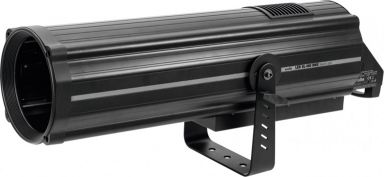
Followspots
Follow Spots – Professional Stage Lighting for Every Performance
Follow spots (known in German as "Verfolger") are the cornerstone of professional stage lighting, enabling you to highlight performers with precision and impact. Whether you're lighting a theatre production, concert, corporate event or awards ceremony, these powerful spotlights deliver the focused beam control and throw distance needed to create truly memorable moments. At LTT, you'll find a comprehensive range of follow spots from leading manufacturers including Eurolite, Cameo and Showtec – all backed by expert technical advice and fast delivery from our warehouse in Bocholt, Germany.
What is a Follow Spot?
A follow spot is a specialised stage lighting fixture designed to track and illuminate individual performers or objects with a highly focused, adjustable beam of light. Unlike static stage lights, follow spots are operated manually by a trained lighting technician who controls the fixture's pan, tilt, focus, iris and colour settings in real time to keep the spotlight precisely on the moving subject.
The term "Verfolger" comes from the German verb "verfolgen" (to follow, pursue or track), perfectly describing the fixture's primary function. In English-speaking markets, these fixtures are universally known as follow spots or spotlights, though "pursuit light" is occasionally used in technical documentation.
Follow spots typically feature a high-output light source – either traditional tungsten halogen or modern LED – paired with precision optical systems that include adjustable iris mechanisms, colour filter frames, and gobo holders. The iris allows the operator to vary the beam diameter from a tight pinspot to a broader wash, whilst the optical train ensures even illumination across the entire beam with minimal hotspotting.
Professional follow spots are distinguished from general-purpose moving heads by their manual operation, superior throw distance (often 20–100 metres), exceptional colour rendering index (CRI 85+ for halogen, CRI 90+ for premium LED models), and robust mechanical construction designed for continuous operation throughout long performances. The operator platform typically includes ergonomic handles, smooth pan-tilt mechanisms with adjustable friction, and clearly labelled controls for rapid adjustments during live shows.
Applications and Typical Use Cases
Follow spots are indispensable in any venue where individual performers need to be highlighted against darker backgrounds or complex stage settings. In theatre productions, follow spots track actors during monologues, musical numbers and dramatic entrances, ensuring the audience's attention remains focused on the key action regardless of stage blocking.
Concert and live music events rely heavily on follow spots to illuminate lead vocalists, soloists and featured musicians, creating visual hierarchy and adding production value. Multiple follow spots are often deployed simultaneously – one for the lead singer, additional units for backing vocalists or instrumental soloists – coordinated by the lighting director to create dynamic visual compositions.
Corporate events, awards ceremonies and gala dinners use follow spots to highlight speakers at podiums, award recipients walking to stage, and VIP guests during introductions. The ability to quickly reposition the beam makes follow spots ideal for events with multiple presenters and unpredictable movement patterns.
Houses of worship increasingly deploy follow spots to enhance visibility during services, particularly in larger sanctuaries where ambient lighting may be insufficient to clearly illuminate speakers or performers. Modern LED follow spots offer silent operation and flicker-free output compatible with video recording – essential features for broadcast and streaming applications.
Cruise ships, theme parks and touring productions demand rugged, reliable follow spots capable of withstanding constant transport, varying environmental conditions and intensive daily use. These applications typically specify professional-grade units with robust housings, comprehensive spare parts availability and established service networks.
LED vs Traditional Halogen Follow Spots
The choice between LED and traditional tungsten halogen follow spots represents one of the most significant decisions in your lighting specification, with profound implications for operating costs, colour quality and practical workflow.
Traditional halogen follow spots have dominated professional theatre and broadcast for decades, offering exceptional colour rendering (CRI 98–100), smooth dimming curves without colour shift, and the warm 3000–3200K colour temperature that flatters skin tones naturally. Halogen units typically range from 575W to 2500W, with the higher wattages delivering throw distances exceeding 80 metres. However, halogen technology brings substantial heat output, high power consumption (a 1200W halogen unit draws approximately 5.5A at 230V), and lamp replacement costs of €50–200 per bulb with typical lifespans of 300–750 hours depending on usage intensity.
LED follow spots have matured dramatically over the past decade, now offering viable alternatives for most applications. Modern LED units deliver 150W–400W LED output equivalent to 575W–1200W halogen performance, reducing power consumption by 60–75% and eliminating lamp replacement costs for 20,000–50,000 hours of operation. Premium LED follow spots achieve CRI 90–95 with tuneable colour temperature (typically 2700K–6500K), enabling you to match ambient lighting conditions or create specific moods without physical colour filters.
The operational advantages of LED technology extend beyond energy efficiency: instant on/off capability eliminates warm-up delays, silent operation suits intimate venues and broadcast applications, and dramatically reduced heat output improves operator comfort and reduces HVAC loads in smaller venues. However, LED units typically carry 30–50% higher initial purchase costs (€1,200–4,500 for professional models vs €800–3,000 for equivalent halogen units), and some lighting designers still prefer halogen for applications demanding absolute colour fidelity, such as high-end theatre and opera productions.
Technical Specifications and Buying Criteria
Selecting the right follow spot requires careful consideration of several technical parameters matched to your specific venue and application requirements.
Throw distance – the maximum effective distance between the fixture and the illuminated subject – is perhaps the most critical specification. Manufacturers typically rate follow spots for specific throw ranges: short-throw units (10–25 metres) suit smaller theatres and clubs, mid-throw models (20–50 metres) serve most municipal theatres and medium-sized concert venues, whilst long-throw units (40–100+ metres) are specified for large arenas, stadiums and outdoor festivals. Always verify throw distance specifications against your actual venue geometry, accounting for mounting position height and stage depth.
Beam angle and iris range determine the fixture's versatility. Professional follow spots typically offer continuously variable iris adjustment from 1–2° (tight pinspot) to 8–15° (broader wash), with some models extending to 20° for shorter throw applications. The optical system quality directly impacts beam evenness – premium units from manufacturers like Eurolite, Cameo and Robert Juliat deliver flat, even fields with minimal hotspotting, whilst budget models may exhibit pronounced centre-to-edge brightness variation.
Light output is measured in lumens (LED) or lux at distance (halogen). A 250W LED follow spot typically delivers 18,000–25,000 lumens, whilst a 1200W halogen unit produces approximately 28,000–35,000 lumens. However, raw lumen figures can be misleading – optical efficiency, beam angle and colour temperature all significantly impact perceived brightness. Request manufacturer data showing lux values at your specific throw distance for accurate comparison.
Colour systems range from simple manual colour filter frames (accepting standard gel sheets or dichroic glass filters) to motorised CMY colour mixing systems in premium models. Manual systems offer unlimited colour options at minimal cost but require the operator to physically change filters during blackouts. Motorised systems enable instant colour changes but add €800–2,000 to the purchase price.
Leading brands in the LTT portfolio include Eurolite (offering robust mid-range models from €1,100–2,800 with excellent parts availability), Cameo (known for innovative LED designs and comprehensive DMX control from €1,400–3,200), and Showtec (delivering professional features at competitive price points from €900–2,400). All three manufacturers provide CE certification, comprehensive technical documentation and established service networks across Europe.
Mounting, Rigging and Safety Requirements
Professional follow spot installation demands careful attention to structural requirements, operator safety and regulatory compliance – particularly when fixtures are rigged overhead or in elevated positions.
Rigging and truss mounting must account for the substantial weight of professional follow spots, which typically range from 18–45 kg depending on model and light source technology. When mounting to aluminium truss systems, verify that the truss specification (such as Naxpro-Truss FD34 or HD34 models) provides adequate load capacity with appropriate safety factors. German regulations require compliance with DGUV Vorschrift 17 (formerly BGV C1) for entertainment rigging, mandating minimum 5:1 safety factors for static loads and 10:1 for dynamic loads.
Follow spots are most commonly operated from dedicated follow spot platforms or towers positioned at the rear of the auditorium (front-of-house position) or in elevated side positions (box boom or balcony rail mounts). The operator platform must provide stable footing, adequate working space (minimum 1.2m × 1.5m per operator), guardrails meeting local building codes (typically 1.1m height minimum), and proper electrical supply with individual circuit protection.
Electrical requirements vary significantly by model: a 1200W halogen follow spot draws approximately 5.5A at 230V and requires a dedicated 16A circuit, whilst a 250W LED unit draws just 1.2A and can share circuits with other low-power fixtures. Always verify that building electrical infrastructure can support your total connected load, accounting for inrush current during lamp ignition (halogen units may draw 150–200% of rated current for 0.5–2 seconds at switch-on).
Ventilation and heat management are critical for halogen follow spots, which exhaust substantial heat through rear-mounted vents. Maintain minimum clearances specified by the manufacturer (typically 50cm rear, 30cm sides) and ensure adequate air circulation in enclosed follow spot booths. LED units generate significantly less heat but still require unobstructed ventilation openings.
Operator training should cover safe pan-tilt operation (avoiding sudden movements that could destabilise the mounting), proper lamp handling procedures (halogen lamps must never be touched with bare hands due to skin oil contamination), and emergency shutdown procedures. Document all rigging points, load calculations and safety inspections in accordance with venue safety management systems and local regulatory requirements.
LTT – Your Specialist for Professional Event Lighting
At LTT, we've been supporting lighting professionals, event technicians and venue operators for over 25 years with expert advice, premium products and reliable service. Our follow spot range includes carefully selected models from Eurolite, Cameo, Showtec and other leading manufacturers – each chosen for proven reliability, comprehensive spare parts availability and exceptional value.
Every follow spot order benefits from our comprehensive technical support team, who can advise on throw distance calculations, power requirements, rigging specifications and accessory selection. We maintain substantial stock depth at our Bocholt distribution centre, enabling same-day dispatch on most models with free shipping on orders over €69 and express delivery options for urgent requirements.
Our international customer base spans touring production companies, municipal theatres, corporate event agencies, houses of worship and educational institutions across the UK, Ireland and beyond. B2B customers benefit from dedicated account management, volume pricing and flexible payment terms, whilst our worldwide shipping network ensures your equipment arrives safely regardless of destination.
Backed by our 3-year LTT guarantee and supported by over 100,000 positive customer reviews, we're your reliable partner for professional event lighting technology. Explore our complete range of stage lighting, rigging hardware and control systems to create truly impressive results for every performance.
Follow Spot Operator Skills and Coordination
Operating a follow spot effectively requires a unique combination of technical knowledge, physical coordination and artistic sensitivity that distinguishes exceptional operators from merely competent technicians.
Essential Operator Skills
Professional follow spot operators must master smooth tracking – the ability to keep the beam centred on a moving performer without jerky movements or lag. This demands anticipation of performer movement patterns, understanding of stage blocking, and the muscle memory to execute pan and tilt adjustments as fluid, coordinated motions rather than discrete corrections. Experienced operators develop an almost intuitive sense of performer speed and direction, positioning the beam slightly ahead of rapid movements to maintain consistent coverage.
Iris and focus control must become second nature, with operators making continuous micro-adjustments to maintain optimal beam size and edge sharpness as throw distance varies with performer movement across the stage depth. A performer moving from upstage to downstage may traverse 8–12 metres of depth variation, requiring corresponding focus and iris adjustments to maintain consistent apparent beam size and intensity.
Coordination and Cueing
In productions employing multiple follow spots, inter-operator coordination becomes critical. The lighting director typically designates a lead operator (often following the principal performer) with additional operators assigned to secondary subjects. Operators must execute coordinated pickups (simultaneously illuminating their assigned subjects), handoffs (transferring coverage of a performer from one spot to another as sightlines change), and blackouts (simultaneously extinguishing all spots) with frame-accurate timing.
Professional productions use dedicated follow spot cueing systems – either traditional cue lights (red for standby, green for go) or modern wireless headset communication enabling the lighting director to provide real-time verbal cues and adjustments. Operators maintain detailed cue sheets documenting every pickup, colour change, iris adjustment and blackout, cross-referenced to script page numbers or musical bar counts.
Training and Development
Developing proficient follow spot operators typically requires 20–40 hours of supervised practice across varied production types. Training should progress from static subjects (lectern speakers) to predictable movement patterns (processionals, award recipient walks) to complex choreography (musical theatre, dance performances). Many professional operators begin as lighting crew members, progressing to follow spot duties after demonstrating mechanical aptitude, attention to detail and the ability to remain focused during long performances.
FAQ – Questions & Answers
Verfolger is the German word for "follow spot" or "pursuit light" in stage and event lighting terminology. The term derives from the German verb "verfolgen," meaning to follow, pursue, chase or track. In professional lighting contexts, a Verfolger (follow spot) is a manually operated spotlight designed to track and illuminate individual performers or subjects with a focused, adjustable beam of light. The English equivalent terms are "follow spot," "followspot" or simply "spot," whilst the German term Verfolger is occasionally used in international technical documentation and equipment specifications. Professional follow spots are manufactured by companies including Eurolite, Cameo, Showtec and Robert Juliat, with models ranging from compact 150W LED units for small venues to powerful 2500W halogen fixtures for large arenas and stadiums.
LED and halogen follow spots differ fundamentally in light source technology, operating costs and colour characteristics. Halogen follow spots use traditional tungsten filament lamps (typically 575W–2500W) that deliver exceptional colour rendering (CRI 98–100), warm 3000–3200K colour temperature and smooth dimming, but consume substantial power, generate significant heat and require lamp replacement every 300–750 hours at costs of €50–200 per bulb. LED follow spots use solid-state light sources (typically 150W–400W LED equivalent to 575W–1200W halogen output) that reduce power consumption by 60–75%, eliminate lamp replacement for 20,000–50,000 hours, offer instant on/off capability and tuneable colour temperature (2700K–6500K), but carry 30–50% higher initial purchase costs and slightly lower colour rendering (CRI 90–95). For most applications, modern LED follow spots from manufacturers like Eurolite and Cameo now offer performance comparable to halogen units with substantially lower total cost of ownership.
Follow spot throw distance requirements depend on the physical distance between the operator position and the illuminated stage area, accounting for mounting height and stage depth. Short-throw follow spots (effective range 10–25 metres) suit small theatres, clubs and corporate meeting rooms with follow spot positions at balcony or rear-of-house locations relatively close to the stage. Mid-throw models (20–50 metres) serve most municipal theatres, medium-sized concert venues and hotel ballrooms where follow spot platforms are positioned 15–40 metres from the stage. Long-throw units (40–100+ metres) are specified for large arenas, stadiums, outdoor festivals and venues where follow spot positions are in distant balconies or control rooms. To calculate your required throw distance, measure the straight-line distance from your planned operator position to the furthest downstage point, add 20% margin for optical efficiency losses, and consult manufacturer specifications showing lux values at your specific distance. Professional models from Eurolite, Cameo and Showtec provide detailed photometric data for accurate specification.
Professional follow spot prices range from approximately €900 to €4,500 depending on light source technology, output power, optical quality and feature set. Entry-level halogen follow spots (575W–650W, manual colour frame, basic iris) from manufacturers like Showtec and Eurolite typically cost €900–1,400 and suit small to medium venues with throw distances under 30 metres. Mid-range LED follow spots (200W–300W LED output, manual or motorised colour, precision iris) from Eurolite and Cameo range from €1,400–2,400 and represent the best value for most professional applications. Premium halogen units (1200W–2500W, motorised colour mixing, advanced optics) and high-output LED models (300W–400W LED, CMY colour, DMX control) cost €2,400–4,500 and are specified for large venues, broadcast applications and touring productions demanding maximum performance. Operating costs must also be considered: halogen units incur ongoing lamp replacement costs of €50–200 per bulb every 300–750 hours, whilst LED units eliminate lamp replacement for 20,000–50,000 hours but carry higher initial purchase prices.
Some modern follow spots offer DMX control capability for colour mixing, iris adjustment and other motorised functions, though pan and tilt remain manually operated by the lighting technician in virtually all professional follow spot applications. Premium LED follow spots from manufacturers like Cameo and Eurolite may include DMX-controlled CMY colour mixing systems, motorised iris mechanisms and electronic dimming, enabling the lighting director to remotely adjust these parameters whilst the operator maintains manual tracking of the performer. However, the fundamental purpose of a follow spot – real-time tracking of unpredictable performer movement – requires human judgment and coordination that cannot be automated. Fully automated tracking spotlights do exist (using infrared sensors or video tracking systems) but are considered a separate product category from traditional follow spots and are rarely used in professional theatre due to reliability concerns and inability to interpret artistic intent. For applications requiring automated spotlight effects, moving head fixtures with tight beam angles (2–5°) offer an alternative solution, though they lack the throw distance and colour rendering of dedicated follow spots.
Follow spot rigging and installation must comply with DGUV Vorschrift 17 (formerly BGV C1) entertainment rigging regulations in Germany, which mandate minimum 5:1 safety factors for static loads and proper load documentation for all overhead rigging points. Professional follow spots weigh 18–45 kg depending on model, requiring truss systems with adequate load capacity – Naxpro-Truss FD34 or HD34 aluminium truss provides suitable load ratings for most applications when properly engineered. Follow spot platforms must include guardrails meeting local building codes (typically 1.1 metre minimum height), stable footing with non-slip surfaces, adequate working space (minimum 1.2m × 1.5m per operator) and proper electrical supply with individual circuit protection. Halogen follow spots require minimum clearances of 50cm rear and 30cm sides for ventilation and heat dissipation, whilst all installations must maintain unobstructed emergency egress paths. Electrical installations must provide dedicated circuits sized for peak inrush current (halogen units may draw 150–200% of rated current during lamp ignition), with proper earthing and residual current protection. All rigging points, load calculations and safety inspections should be documented in accordance with venue safety management systems and reviewed by qualified rigging professionals before operation.
LTT recommends follow spots from Eurolite, Cameo and Showtec based on proven reliability, comprehensive spare parts availability, competitive pricing and strong manufacturer support across European markets. Eurolite offers robust mid-range halogen and LED follow spots (€1,100–2,800) with excellent build quality, intuitive controls and extensive accessory compatibility, making them ideal for municipal theatres, corporate event companies and houses of worship. Cameo specialises in innovative LED follow spot designs (€1,400–3,200) featuring advanced colour mixing systems, comprehensive DMX control and exceptional optical performance, suited to touring productions, broadcast applications and venues demanding maximum flexibility. Showtec delivers professional features at competitive price points (€900–2,400) with models spanning entry-level halogen units to sophisticated LED systems, offering excellent value for budget-conscious buyers without compromising essential performance. All three manufacturers provide CE certification, detailed technical documentation and established service networks, ensuring long-term support and parts availability. LTT maintains substantial stock depth across all recommended brands, enabling same-day dispatch and expert technical advice for specification and installation support.
Essential follow spot accessories include colour filter sets (gel frames or dichroic glass filters in CTB, CTO, primary and secondary colours, typically €45–120 per set), spare lamps for halogen models (€50–200 depending on wattage), iris replacement parts (€80–150 for manual mechanisms), and dedicated follow spot stands or rigging hardware (€200–600 for professional-grade platforms). Many operators also specify gobo holders and pattern sets (€60–180) for creating textured beam effects, douser mechanisms (€120–250) for instant blackouts without extinguishing the lamp, and protective transport cases (€180–450) for touring applications. Halogen follow spots benefit from lamp rotation schedules to maximise service life, requiring spare lamp inventory and proper storage in protective packaging. LED units eliminate lamp replacement but may require periodic cleaning of optical elements and cooling fans to maintain output and prevent overheating. Communication systems – either traditional cue light controllers (€80–150) or wireless headset systems (€200–400 per operator position) – are essential for coordinating multiple follow spot operators in professional productions. LTT stocks comprehensive accessory ranges for all major follow spot brands, with expert advice available to ensure compatibility and optimal performance for your specific application requirements.