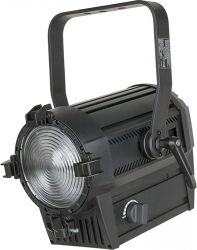
Profile spotlights (profilers)
Profile Spotlights – Professional Stage & Theatre Lighting
Profile spotlights, also known as profilers or contour spotlights, are the cornerstone of professional theatre and stage lighting. These precision instruments create sharply defined light beams with hard-edged boundaries, allowing you to illuminate performers and objects with surgical accuracy while keeping surrounding areas in darkness. Whether you're lighting a theatre production, concert stage, or corporate event, profile spotlights deliver the control and flexibility that professionals demand. At LTT, you'll find a comprehensive range of profile spotlights from leading manufacturers, backed by expert advice and fast delivery from our warehouse in Bocholt, Germany.
What Makes Profile Spotlights Essential for Professional Stages
A profile spotlight is fundamentally a projection device, sharing the same optical principles as slide projectors and film projectors. The key difference lies in its ability to shape and control light with exceptional precision. The basic structure consists of four main components working in sequence: the light source (lamp house), a condenser system that collects and directs light, the object plane (where shutters, iris, and gobos are positioned), and finally the projection lens system that focuses the beam onto the stage.
What sets profile spotlights apart from other stage lighting fixtures is their unique double-lens system. This optical arrangement allows you to project a sharply focused beam with clearly defined edges – a capability that fresnel spotlights and wash lights simply cannot match. The condenser optics or ellipsoidal reflector in the lamp house gathers light efficiently and floods the object plane with intense, directed illumination. The projection lens then images whatever is in that plane – whether it's the edge created by shutter blades, the circular opening of an iris diaphragm, or a patterned gobo – onto the stage with remarkable clarity.
This sharp edge control is precisely why profile spotlights dominate theatre applications. When you need to light the front of a stage without spilling light into the orchestra pit, or illuminate a solo performer without affecting the surrounding set, only a profile spotlight delivers the required precision. The hard shadow boundary and high contrast ratio create dramatic visual separation that's impossible to achieve with softer light sources. Modern profile spotlights also produce minimal stray light, ensuring that only your intended target receives illumination – a critical factor when lighting design demands absolute control over every beam.
LED vs Halogen Profile Spotlights – Technology Comparison
The evolution from traditional halogen to LED technology has transformed the profile spotlight market, offering event professionals compelling advantages without sacrificing the optical quality that defines these instruments. Understanding the differences helps you make informed decisions for your specific applications.
LED Profile Spotlights – Modern Efficiency
LED profile spotlights have matured dramatically over the past decade. Early LED models struggled to match the light output and colour rendering of halogen fixtures, but contemporary LED profilers now deliver exceptional performance. A typical 150-watt LED profile spotlight produces approximately 11,000 lux at 2 metres – more than sufficient for most theatre and event applications. The energy savings are substantial: where a 1000-watt halogen profiler might be required, a 200-watt LED equivalent often suffices, reducing power consumption by 80% and eliminating the need for heavy-duty electrical infrastructure.
Heat management represents another major advantage. LED fixtures generate minimal heat compared to halogen lamps, making them comfortable for performers working in close proximity and reducing air conditioning demands in enclosed venues. Many LED profile spotlights operate with whisper-quiet convection cooling or temperature-regulated fans, making them ideal for acoustically sensitive environments like theatres, churches, and broadcast studios. The extended lamp life – often 50,000 hours or more – virtually eliminates lamp replacement costs and maintenance downtime during tours and long-running productions.
Halogen Profile Spotlights – Traditional Power
Despite LED advances, tungsten halogen profile spotlights remain relevant for specific applications. Their continuous spectrum produces exceptional colour rendering with CRI values of 100, making them the preferred choice for applications where accurate colour reproduction is paramount. The warm 3200K colour temperature creates the classic theatre aesthetic that many lighting designers still prefer. Halogen profilers also offer instant full output without warm-up time and maintain consistent colour temperature throughout dimming ranges – characteristics that some LED fixtures still struggle to match perfectly.
For budget-conscious buyers, quality used halogen profilers from manufacturers like ETC, Robert Juliat, and Strand Lighting offer professional performance at accessible price points. However, factor in the ongoing costs of lamp replacement and higher energy consumption when calculating total ownership costs.
Professional Features – Shutters, Iris & Gobo Systems
The defining features of profile spotlights – shutter blades, iris diaphragms, and gobo holders – transform these fixtures from simple spotlights into versatile creative tools that put you in complete control of light shaping.
Shutter Blades for Precise Beam Cutting
Four independently adjustable shutter blades form the heart of every profile spotlight's beam-shaping capability. These metal blades slide into the optical path at the object plane, allowing you to cut the light beam with hard, precise edges. By adjusting each blade independently, you can create rectangular, triangular, or trapezoidal beam shapes that fit exactly where you need light – and nowhere else. This capability is essential for front-of-house positions where you must light the stage edge without spilling into the orchestra pit, or for architectural lighting where beams must terminate cleanly at building edges.
Many professional profile spotlights feature rotatable shutter assemblies, allowing you to angle the entire shutter frame to match stage geometry or architectural features. Higher-end models offer individual blade rotation, providing even greater creative flexibility. Some moving-head profilers include motorised shutters for dynamic beam shaping during performances, though manual shutters remain standard on conventional profile spotlights.
Iris Diaphragm for Circular Beam Control
While shutters create angular beam shapes, the iris diaphragm produces perfectly circular light pools of variable diameter. This mechanical aperture consists of overlapping metal leaves that open and close to adjust the beam size smoothly from full aperture down to a tight spot. The iris is particularly valuable for follow-spot applications, allowing operators to tighten the beam around a moving performer, and for creating dramatic isolated pools of light in otherwise dark scenes.
Some profile spotlights include the iris as standard equipment, while others offer it as an optional accessory. When specifying a profiler for theatre use, confirm iris compatibility – it's an essential tool that you'll use regularly.
Gobo Projection Capabilities
Gobos ("goes before optics") are metal or glass templates inserted into the object plane to project patterns, textures, logos, or images onto the stage. Profile spotlights project gobos with sharp focus, making them ideal for creating dappled forest light, architectural details, corporate branding, or abstract textures. Standard gobo sizes include Size A (100mm diameter, 75mm image area), Size B (86mm diameter, 64.4mm image area), and Size M (66mm diameter, 48mm image area). Verify which gobo size your chosen profile spotlight accepts – manufacturers like ETC Source Four use Size B, while many European fixtures accept Size A.
The ability to combine shutters, iris, and gobos in a single fixture makes profile spotlights extraordinarily versatile. You can project a gobo pattern, then use shutters to crop it precisely, and add an iris to create a vignetted edge – all from one instrument. This flexibility explains why profile spotlights remain indispensable tools in professional lighting design despite the rise of automated fixtures.
Leading Brands & Models for Professional Applications
The profile spotlight market offers instruments ranging from compact 150-watt LED units to powerful 1200-watt halogen workhorses. Understanding the landscape helps you select fixtures that match your performance requirements and budget.
Professional-Grade Manufacturers
ETC (Electronic Theatre Controls) dominates the professional theatre market with their Source Four family, which has become the de facto standard in countless venues worldwide. The Source Four's efficient ellipsoidal reflector system, excellent colour mixing with optional LED engines, and comprehensive accessory ecosystem make it a benchmark against which other profilers are measured. Robert Juliat profile spotlights represent the premium end of the market, with French-engineered optics delivering exceptional beam quality and smooth, even field distribution. Their 600 series and 700 series profilers are found in prestigious theatres and opera houses globally.
Strand Lighting, with models like the Harmony and Cantata series, offers robust fixtures designed for demanding touring and installation applications. DTS and Elation provide feature-rich options that balance performance with value, making professional-quality profile lighting accessible to mid-sized venues and production companies. For LED-specific applications, manufacturers like Cameo and Showtec deliver modern profilers with advanced features like motorised zoom, CMY colour mixing, and silent operation at competitive price points.
Selecting the Right Output Power
Profile spotlight selection starts with throw distance and desired illumination level. For small theatre applications with throw distances under 8 metres, a 150-watt to 250-watt LED profiler typically provides sufficient output. Medium throws of 8–15 metres benefit from 300-watt to 500-watt fixtures, while large venues with front-of-house positions exceeding 15 metres require 650-watt to 1200-watt instruments. When comparing specifications, look beyond wattage to actual lux output at your working distance – a well-designed 200-watt LED profiler with 100 lumens per watt efficiency can outperform a poorly optimised 300-watt unit.
Beam angle options typically range from narrow (15°–28°) for long throws and tight spots, through medium (25°–50°) for general stage work, to wide (50°–90°) for shorter distances and broader coverage. Zoom profile spotlights offer adjustable beam angles, providing flexibility for multi-purpose venues where throw distances vary. Fixed-beam profilers cost less and often deliver superior optical quality within their specified range, making them ideal for permanent installations with known requirements.
Price Ranges and Value Considerations
Entry-level LED profile spotlights suitable for small venues and mobile DJs start around €200–€400, offering basic shutter and gobo functionality with acceptable optical quality. Professional-grade fixtures from established manufacturers typically range from €800 to €2,500, delivering the optical precision, build quality, and feature sets that touring productions and permanent installations demand. Premium instruments from Robert Juliat, ETC, and similar manufacturers can exceed €3,000, justified by exceptional beam quality, comprehensive accessory systems, and proven reliability in demanding applications. When budgeting, factor in essential accessories: gobo holders, iris diaphragms, colour frame holders, safety cables, and appropriate clamps add 15–25% to the base fixture cost.
Rigging & Installation Requirements
Professional profile spotlight installation demands attention to structural loading, electrical requirements, and safety protocols that ensure reliable operation and comply with applicable regulations.
Truss Mounting and Load Calculations
Profile spotlights typically weigh between 5 and 15 kilograms depending on size and construction, with larger halogen units at the heavier end of the range. When mounting multiple fixtures on truss systems, calculate the total static load including fixtures, clamps, safety cables, and accessories. A typical front-of-house truss position might carry 20–30 profile spotlights, representing 150–300 kilograms of lighting equipment alone. Ensure your truss system provides adequate working load limit (WLL) with appropriate safety factors – generally 8:1 for static installations under DGUV Vorschrift 17 (formerly BGV C1) guidelines.
Use only rated clamps appropriate for your truss type and fixture weight. Half-couplers (also called hook clamps) suit most profile spotlights on 48–51mm diameter truss, while smaller fixtures may use lightweight clamps on 35mm truss. Every fixture must have a secondary safety attachment – typically a steel safety cable rated for the fixture weight, attached to the truss independently of the primary clamp. This redundancy ensures that even if the clamp fails, the fixture remains secured.
Power Distribution and DMX Control
While conventional profile spotlights require only mains power for operation, LED models increasingly incorporate DMX control for dimming, colour temperature adjustment, and in some cases motorised zoom and focus. Plan your power distribution to avoid overloading circuits – a 1000-watt halogen profiler draws approximately 4.3 amps at 230V, meaning a standard 16-amp circuit can safely power three fixtures with appropriate margin. LED profilers draw substantially less current, allowing more fixtures per circuit but requiring consideration of inrush current when multiple units power on simultaneously.
For DMX-controlled fixtures, maintain proper signal integrity with quality DMX cable (not microphone cable), appropriate termination at the end of each DMX run, and opto-isolated splitters when distributing signal to multiple positions. Profile spotlights typically use 1–4 DMX channels depending on features: basic LED units might use a single channel for dimming, while advanced models with CMY colour mixing and motorised functions can require 20 or more channels.
Focus and Alignment Procedures
After rigging, proper focus ensures optimal performance. Profile spotlights require adjustment in multiple dimensions: pan and tilt to aim the beam, focus to sharpen the projected image, and often zoom to set the beam angle. When focusing for theatre applications, work systematically from front-of-house positions toward upstage, ensuring each fixture illuminates its assigned area with appropriate intensity and beam size. Use the shutter blades to cut beams precisely, avoiding light spill onto scenery, masking, or audience areas. For gobo projection, achieve sharp focus by adjusting the lens tube position until the projected pattern appears crisp at the working distance.
Document your focus positions with photographs and written notes – this "focus plot" becomes invaluable when refocusing after transport or when training new crew members. For touring productions, consider investing in profile spotlights with indexed focus and zoom mechanisms that allow repeatable settings across multiple venues.
Technical Specifications & Power Requirements
Understanding the technical specifications of profile spotlights enables informed purchasing decisions and proper system design for your venue or production requirements.
Optical Performance Metrics
Lux output at a specified distance provides the most meaningful measure of a profile spotlight's brightness. A professional-grade 300-watt LED profiler might produce 15,000–20,000 lux at 5 metres, while a 1000-watt halogen fixture could deliver 30,000–40,000 lux at the same distance. However, raw lux numbers don't tell the complete story – beam quality matters equally. Look for specifications describing field evenness (the variation in illumination across the beam), typically expressed as a percentage. Premium fixtures maintain field evenness within ±10%, ensuring uniform illumination without hot spots or dark edges.
Colour rendering index (CRI) quantifies how accurately a light source reproduces colours compared to natural daylight. Halogen lamps achieve CRI 100 by definition, while LED profile spotlights vary from CRI 80 (acceptable for general events) to CRI 95+ (essential for broadcast and theatre where colour accuracy matters). For critical applications, also consider the R9 value (red rendering), which standard CRI calculations can mask – look for R9 values above 80 for accurate skin tones and saturated colours.
Electrical Specifications and Power Factor
Halogen profile spotlights present straightforward resistive loads: a 1000-watt fixture draws 1000 watts regardless of dimmer setting (though dimmed fixtures consume less). LED fixtures, however, incorporate switch-mode power supplies that can exhibit poor power factor if not properly designed. Quality LED profilers include power factor correction (PFC) circuitry, achieving power factors of 0.95 or better. Poor power factor increases current draw without delivering additional light output, wasting energy and potentially overloading electrical infrastructure. When specifying LED fixtures, verify the power factor specification – it's particularly important for large installations with dozens of fixtures.
Operating voltage ranges matter for international touring. Most professional profile spotlights accept 100–240V AC at 50/60Hz, automatically adapting to local power standards. However, some budget fixtures operate only at 230V or only at 120V – verify compatibility before purchasing for international use. Halogen fixtures often use specific lamp voltages (typically 230V or 120V) that require matching to your local supply or using appropriate transformers.
Thermal Management and Noise Levels
Halogen profile spotlights generate substantial heat – a 1000-watt fixture converts approximately 950 watts into heat and only 50 watts into visible light. This heat must be managed through convection cooling and adequate spacing between fixtures. Maintain minimum clearances specified by the manufacturer (typically 0.5–1.0 metres from combustible materials) and ensure adequate air circulation around lamp houses. LED fixtures generate far less heat but still require cooling for the LED junction and power supply. Quality LED profilers use temperature-regulated fans that adjust speed based on thermal load, running quietly during normal operation and increasing speed only when necessary.
Noise specifications matter for theatre and broadcast applications. Convection-cooled LED profilers operate silently, making them ideal for quiet venues. Fan-cooled units typically produce 20–35 dBA at one metre – quieter than a whisper and inaudible in most performance contexts. However, cheaper fixtures with poorly designed cooling can exceed 45 dBA, creating noticeable distraction in intimate theatre settings. When noise sensitivity is critical, prioritise fixtures with published noise specifications and temperature-regulated cooling.
LTT – Your Specialist for Event Technology
When you choose LTT for your profile spotlight requirements, you're partnering with a company that combines over 25 years of event technology expertise with comprehensive product knowledge and exceptional service. As both a leading retailer and manufacturer with our own production facilities in Germany, we understand professional lighting from both technical and practical perspectives.
Our profile spotlight range includes quality instruments from manufacturers like Eurolite, Showtec, Cameo, and other established brands, ensuring you'll find the right fixture for your application and budget. Whether you're equipping a theatre, upgrading a touring rig, or building a rental inventory, our team provides expert guidance to match fixtures to your specific requirements. We stock essential accessories including gobo holders, iris diaphragms, colour frames, safety cables, and clamps – everything you need for a complete installation arrives together.
Benefit from free shipping on orders over €69, with express delivery options available when you need equipment urgently. Our international shipping network serves customers worldwide, and our B2B programme offers wholesale pricing for resellers and production companies with volume requirements. Every purchase is backed by our 3-year LTT guarantee, providing peace of mind for your investment in professional lighting equipment. With over 100,000 positive customer reviews, LTT has earned its reputation as a reliable partner for event professionals who demand quality products and dependable service.
FAQ – Questions & Answers
A profile spotlight consists of four main optical components arranged in sequence: the light source (lamp house with either a halogen lamp or LED module), a condenser system or ellipsoidal reflector that collects and directs light, the object plane where shutters, iris diaphragm, and gobo holders are positioned, and finally the projection lens system (either fixed focal length or zoom) that focuses the beam onto the stage. This arrangement allows the profile spotlight to project whatever is in the object plane – whether shutter edges, iris opening, or gobo patterns – with sharp focus at the working distance. The lamp house and projection optics work together as two coordinated optical systems within a single housing to deliver the precise beam control that defines profile spotlights.
LED profile spotlights use light-emitting diode technology instead of traditional halogen lamps, offering several compelling advantages for professional applications. Modern LED profilers consume 70–80% less energy than equivalent halogen fixtures while delivering comparable light output – a 200-watt LED unit often matches a 1000-watt halogen fixture. They generate minimal heat, making them comfortable for performers and reducing cooling costs in enclosed venues. Many LED profile spotlights operate with whisper-quiet convection cooling or temperature-regulated fans, ideal for acoustically sensitive environments like theatres and broadcast studios. LED lamps last 50,000 hours or more, virtually eliminating lamp replacement costs and maintenance downtime. Contemporary LED profilers achieve CRI values of 90–97, ensuring excellent colour rendering for professional applications.
A mini profiler is a compact profile spotlight designed for applications requiring sharp beam control in a smaller, lighter package. These fixtures typically use 150-watt to 300-watt LED engines or compact halogen lamps, producing sufficient output for throw distances up to 8–10 metres. Mini profilers maintain the essential features of full-sized profile spotlights – shutter blades for beam shaping, gobo projection capability, and sharp edge control – but in a housing that weighs 3–6 kilograms instead of 10–15 kilograms. They're particularly popular for mobile DJ applications, small theatre productions, retail displays, and architectural accent lighting where space and weight constraints make full-sized profilers impractical. Mini profilers typically accept Size M (66mm) or Size E (37.5mm) gobos rather than the larger Size A or B gobos used in standard fixtures.
Profile spotlights and fresnel lights serve fundamentally different purposes in stage lighting. Profile spotlights create hard-edged beams with sharp boundaries, using a double-lens projection system that allows precise beam shaping with shutters, iris control, and gobo projection. They produce minimal stray light and excel at illuminating specific areas while keeping surrounding regions dark. Fresnel lights, by contrast, produce soft-edged beams with gradual transitions from light to shadow, using a single stepped lens that creates even, diffused illumination. Fresnels cannot project sharp edges or gobos, and they generate more stray light. Profile spotlights are preferred for front-of-house positions, follow spots, and applications requiring precise control, while fresnel lights excel at general area lighting, backlight, and situations where soft, blended illumination is desired.
Zoom profile spotlights incorporate a projection lens system with two or more lens elements that move relative to each other and to the object plane, allowing continuous adjustment of the beam angle without changing the fixture's position or focus distance. By moving the lens elements closer together or further apart, the operator changes the effective focal length of the projection system, narrowing or widening the beam angle. A typical zoom profiler might offer a range from 15° to 35°, or 25° to 50°, providing flexibility for different throw distances and coverage requirements. The zoom mechanism can be manual (adjusted by rotating a collar on the lens tube) or motorised (controlled via DMX on moving-head profilers). Quality zoom systems maintain sharp focus and even field distribution throughout the zoom range, though they're typically more expensive and optically complex than fixed-beam profile spotlights.
Profile spotlights accept gobos in standardised sizes, with Size A, Size B, and Size M being most common. Size A gobos measure 100mm overall diameter with a 75mm image area and fit many European-manufactured profile spotlights and larger fixtures like ETC Source Four when fitted with Size A holders. Size B gobos measure 86mm overall diameter with a 64.4mm image area and are the standard for ETC Source Four fixtures and many professional profilers from manufacturers like Robert Juliat and Strand Lighting. Size M gobos measure 66mm overall diameter with a 48mm image area and fit compact profile spotlights and mini profilers. Less common sizes include Size D (53.3mm) and Size E (37.5mm) for very compact fixtures. Always verify which gobo size your specific profile spotlight model accepts before ordering custom gobos or stock patterns, as using the wrong size prevents proper installation and focus.
Professional profile spotlight prices vary significantly based on technology, features, and manufacturer. Entry-level LED profile spotlights suitable for small venues and mobile applications start around €200–€400, offering basic shutter control and gobo projection with acceptable optical quality. Mid-range professional fixtures from established manufacturers like Eurolite, Showtec, and Cameo typically cost €800–€1,500, delivering superior beam quality, robust construction, and comprehensive feature sets including iris capability and zoom optics. Premium profile spotlights from manufacturers like ETC, Robert Juliat, and Strand Lighting range from €2,000 to €4,000 or more, justified by exceptional optical performance, extensive accessory ecosystems, and proven reliability in demanding touring and installation applications. When budgeting, add 15–25% for essential accessories including gobo holders, iris diaphragms, safety cables, clamps, and colour frames.
Theatre front-of-house positions typically require profile spotlights with sufficient output for throw distances of 12–20 metres, sharp beam control to avoid light spill into audience areas, and quiet operation for acoustically sensitive environments. For most theatre applications, choose fixtures producing at least 15,000–25,000 lux at your working distance – typically 300-watt to 650-watt LED profilers or 650-watt to 1000-watt halogen units. Prioritise models with four-blade shutters for precise beam shaping, iris capability for circular beam control, and gobo holders for pattern projection. Beam angles of 25°–35° suit most front-of-house applications, though zoom profilers offer flexibility for venues with varying throw distances. For quiet operation essential in theatre, select LED fixtures with convection cooling or temperature-regulated fans producing under 30 dBA. Brands like ETC Source Four, Robert Juliat, and Strand Lighting offer proven front-of-house solutions with the optical quality and reliability that professional theatre demands.