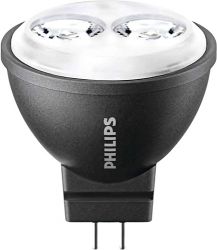
Illuminants
Professional Light Sources for Stage and Event Technology
Welcome to the professional light source range at LTT – your specialist for event technology. Whether you are equipping a touring production, upgrading your club installation or maintaining a theatre lighting rig, you will find the right bulbs and lamps for every professional application here. From high-output discharge lamps for moving heads to precision halogen bulbs for profile spotlights and energy-efficient LED modules for architectural lighting – our range covers the complete spectrum of professional stage and event lighting. Every light source is selected to meet the demanding requirements of live events, broadcast studios and permanent installations.
What Are Professional Light Sources and How Do They Differ?
A light source – often referred to as a lamp or bulb in technical specifications – is the core component that generates light within a luminaire or fixture. In professional event technology, light sources are engineered to deliver consistent colour temperature, high luminous intensity and reliable performance under demanding operating conditions. Unlike household bulbs, professional stage lamps must withstand vibration during transport, elevated ambient temperatures inside fixtures and frequent on-off cycles during shows.
LED light sources use semiconductor technology to produce light with exceptional energy efficiency, typically 80–150 lumens per watt, and lifespans exceeding 50,000 operating hours. They are available in fixed white colour temperatures (2700K warm white through to 6500K daylight) and as RGB or RGBW modules for dynamic colour mixing. LED modules are increasingly common in wash lights, PAR cans and architectural fixtures.
Halogen bulbs operate by heating a tungsten filament inside a quartz envelope filled with halogen gas. This technology delivers excellent colour rendering (CRI >95) and smooth dimming performance, making halogen lamps the preferred choice for profile spotlights, followspots and applications where warm, natural light quality is essential. Typical power ratings range from 300W to 1200W, with colour temperatures around 3200K.
Discharge lamps – including metal halide (HMI, MSR, MSD) and high-pressure sodium types – generate light by creating an electric arc through ionised gas. These lamps produce extremely high luminous intensity from compact arc sources, making them ideal for long-throw spotlights, moving heads and searchlights. Discharge lamps require dedicated ballasts and ignitors, and most models need several minutes to reach full brightness and cannot be instantly restarted when hot.
Each technology serves distinct applications: LED for energy efficiency and colour flexibility, halogen for natural colour rendering and smooth control, discharge for maximum output and beam intensity.
Applications and Venue Requirements for Professional Light Sources
Professional light sources must be matched to the specific demands of each venue and application. In small clubs and bars (up to 200 capacity), LED PAR cans with 12–18W RGBW modules or 50–75W warm-white COB LEDs provide sufficient output for wash lighting and accent effects. Halogen bulbs in the 300–500W range are suitable for compact profile spotlights used for stage key lighting.
Mid-size theatres and event halls (200–800 capacity) typically require a mix of technologies. Profile spotlights with 575W or 750W halogen lamps deliver the beam intensity needed for front-of-house positions at throw distances of 10–20 metres. Moving heads equipped with 250W or 300W discharge lamps (MSR, MSD) provide dynamic effects and gobo projection. LED wash fixtures with 150–200W total output create even stage washes and colour effects.
Large arenas, concert halls and outdoor festivals (800+ capacity) demand maximum output. Discharge lamps in the 575W to 1200W range are standard for long-throw followspots, large-format moving heads and architectural floodlights. Beam angles, lamp life and hot-restrike capability become critical selection criteria. For permanent installations, LED sources rated at 300W+ per fixture offer lower operating costs despite higher initial investment.
Broadcast studios and film sets have unique requirements: flicker-free operation at high frame rates (up to 10,000 fps for slow-motion work), precise colour temperature matching (typically 3200K tungsten or 5600K daylight), and high CRI values (>90, ideally >95) for accurate skin tones. Tungsten-halogen Fresnel fixtures and daylight-balanced HMI lamps remain industry standards, though high-CRI LED panels are gaining ground.
When selecting light sources, always consider throw distance, required beam angle, colour rendering needs and whether DMX dimming or colour control is required.
Quality Standards and Professional Selection Criteria
Professional light sources are precision-engineered components, and selecting the right lamp requires attention to several technical parameters. Luminous flux, measured in lumens, indicates total light output – but for stage applications, luminous intensity (candela) and beam angle matter more, as they determine how effectively light reaches the stage from front-of-house positions. A 575W discharge lamp typically produces 40,000–49,000 lumens, but the optical system of the fixture concentrates this into a narrow beam.
Colour temperature is specified in Kelvin and must match the application. Tungsten-halogen lamps operate at 3000–3200K, producing warm white light ideal for theatrical skin tones. Daylight-balanced discharge lamps (5600–6000K) match natural daylight and are used in film production and architectural applications. LED sources are available across the full range, with some fixtures offering tuneable white (2700–6500K) or full RGBW colour mixing.
Colour Rendering Index (CRI) measures how accurately a light source reproduces colours compared to natural daylight. Professional applications require CRI >80 as a minimum; broadcast and theatre work demands CRI >90. High-quality LED modules from manufacturers like Osram, Philips and GE achieve CRI values of 95+, rivalling halogen performance. Cheap LED sources with CRI <70 produce unnatural skin tones and are unsuitable for professional use.
Operating life varies dramatically by technology. LED modules are rated for 50,000+ hours (approximately 10 years of typical event use), halogen lamps for 300–2000 hours depending on power rating and dimming level, and discharge lamps for 750–6000 hours. However, discharge lamps lose approximately 30% of their output over their rated life, so they are often replaced at 70% of rated hours in critical applications.
Heat resistance is critical for enclosed fixtures. Moving head lamps must withstand ambient temperatures up to 300°C inside the lamp compartment. Professional lamps are manufactured with high-temperature quartz glass and ceramic bases rated for these conditions. Always verify that replacement lamps meet the fixture manufacturer's specifications – using underspecified lamps creates fire hazards and voids insurance.
Price ranges reflect quality and application: LED modules for professional fixtures cost €40–€200 depending on output and CRI rating. Halogen lamps range from €8 for 300W GY9.5 types to €45 for 1200W models. Discharge lamps start at €60 for 250W MSR types and reach €180–€250 for 1200W long-life variants. Buying from established brands like Osram, Philips, GE and Ushio ensures consistent performance and compliance with EN 60598 safety standards.
Socket Types, Compatibility and Safe Lamp Replacement
Professional stage lighting uses specialised lamp bases and sockets designed for high power, vibration resistance and safe handling. Understanding socket types is essential for correct lamp selection and safe replacement.
GY9.5 and GX9.5 sockets are the industry standard for halogen lamps in profile spotlights and Fresnel fixtures. The GY9.5 base has two pins spaced 9.5mm apart with a locating notch, ensuring correct lamp orientation for optimal filament alignment with the reflector. These sockets handle lamps from 300W to 2000W. The GX9.5 variant has a slightly different pin configuration and is not interchangeable.
G22 and GY22 sockets are used for high-power halogen and some discharge lamps. The G22 base features two robust pins and is common in 2000W+ theatre fixtures. Always verify pin spacing and orientation before attempting replacement.
PGJ5 and PGJX5 sockets are specific to compact discharge lamps used in moving heads and automated fixtures. These precision sockets ensure exact arc positioning within ±0.1mm, which is critical for beam quality. The locking mechanism prevents vibration-induced misalignment during transport and operation.
SFc10-4 and FC2 sockets are used in high-intensity discharge lamps for followspots and large-format moving heads. These ceramic sockets withstand temperatures exceeding 300°C and feature spring-loaded contacts for reliable electrical connection despite thermal expansion.
Safe Lamp Replacement Procedure
Always disconnect mains power and allow fixtures to cool for at least 30 minutes before attempting lamp replacement. Halogen and discharge lamps operate at extremely high temperatures – a 575W lamp can reach 900°C at the quartz envelope.
Wear clean cotton gloves when handling quartz lamps. Skin oils deposited on the quartz envelope create hot spots that cause premature failure or catastrophic rupture. If you accidentally touch the glass, clean it with isopropyl alcohol before installation.
Verify that the replacement lamp matches the fixture specification exactly: wattage, base type, and for discharge lamps, the arc gap and colour temperature. Using incorrect lamps can damage the fixture's optical system, create fire hazards or cause the lamp to explode.
For discharge lamps, note the orientation markings on the base. Most discharge lamps must be operated in a specific position (base-up, base-down or horizontal) to ensure correct arc behaviour and prevent premature failure. Consult the fixture manual if orientation markings are unclear.
After installation, inspect the lamp visually before powering on. Check that the base is fully seated in the socket, that no foreign material is present, and that the lamp is correctly oriented. For moving heads, verify that any lamp retaining clips or shields are properly secured.
Dispose of used lamps responsibly. Discharge lamps contain mercury and must be recycled through certified waste management facilities. Halogen lamps can typically be disposed of with general glass recycling, but check local regulations.
DMX Control, Dimming Behaviour and Electrical Compatibility
Understanding how different light source technologies respond to control signals is essential for achieving professional results. Halogen lamps offer smooth, linear dimming from 0–100% when controlled by phase-angle dimmers or electronic dimmer packs. As you reduce power, the colour temperature shifts from 3200K at full output down to approximately 2400K at 10%, creating a warm amber glow. This behaviour is often desirable for theatrical effects but must be considered when colour-matching multiple fixtures.
Halogen lamps can be dimmed to very low levels (1–2%) without flickering or extinguishing, making them ideal for slow fade effects. However, operating halogen lamps continuously at low dim levels (below 30%) significantly reduces lamp life due to tungsten evaporation and filament degradation. For long-duration low-level scenes, consider using neutral density filters at full power instead.
LED light sources respond instantly to DMX control signals with no warm-up time and no colour shift during dimming. However, dimming behaviour depends entirely on the driver electronics. High-quality LED fixtures use PWM (pulse-width modulation) dimming at frequencies above 1200Hz, which is flicker-free even when filmed at high frame rates. Budget fixtures may use lower PWM frequencies (200–400Hz) that cause visible flicker on camera and can trigger discomfort in sensitive individuals.
When specifying LED fixtures for broadcast or film work, always verify the dimming frequency and ensure it exceeds your camera's frame rate by at least 10×. For 50fps recording, the fixture should use PWM >500Hz; for high-speed work at 1000fps, you need >10kHz.
LED fixtures with RGBW or tuneable-white capability require multi-channel DMX control – typically 3–7 channels per fixture for colour mixing, dimming, strobe effects and colour temperature adjustment. Ensure your lighting console has sufficient DMX outputs and that you understand the fixture's channel mapping before programming.
Discharge lamps cannot be dimmed using conventional phase-angle dimmers – they require full power to maintain the arc. Intensity control is achieved mechanically using shutters, iris diaphragms or colour flags within the fixture. This means discharge-lamp fixtures respond more slowly to fade commands (typically 0.5–2 seconds for a full shutter close) compared to the instant response of LED or halogen sources.
Discharge lamps also require 2–5 minutes to reach full output after striking, and most types cannot be re-struck immediately after being switched off – they must cool for 5–15 minutes before the arc will re-establish. This behaviour must be considered when programming shows: if a discharge-lamp moving head is accidentally switched off during a performance, it cannot be brought back online quickly.
For reliable operation, discharge lamps require electronic ballasts that provide regulated current and high-voltage ignition pulses (typically 20–40kV). Always use the ballast specified by the fixture manufacturer – generic ballasts may appear to work but can cause unstable arc behaviour, reduced lamp life or damage to the fixture.
When integrating mixed fixture types (LED, halogen, discharge) into a single lighting rig, programme separate timing for fade cues to compensate for the different response characteristics. LED and halogen fixtures can execute instant fades, but discharge fixtures need longer fade times to allow mechanical shutters to operate smoothly.
LTT – Your Specialist for Event Technology
At LTT, you will find everything you need for professional lighting installations – from individual replacement lamps to complete fixture packages. Our range includes light sources from leading manufacturers like Osram, Philips, GE, Ushio and Sylvania, ensuring you receive genuine components that meet original equipment specifications.
With over 25 years of experience in event technology, we understand the demands of touring productions, permanent installations and live events. Our team provides expert technical advice to help you select the right lamps for your specific fixtures and applications. Whether you need guidance on colour temperature matching, lamp life optimisation or DMX integration, we are here to support you.
We ship worldwide from our facility in Bocholt, Germany, with express delivery options available for urgent replacements. Orders over €69 qualify for free shipping, and our 3-year LTT warranty provides additional peace of mind. As both a specialist retailer and manufacturer with our own production facilities, we offer trade pricing for resellers and volume discounts for large projects.
Beyond light sources, explore our comprehensive range of professional lighting fixtures, truss systems, rigging hardware and control equipment. Everything you need to create impressive lighting designs and achieve outstanding results is available from a single trusted partner.
FAQ – Questions & Answers
Professional stage lighting uses three main light source technologies: LED modules offering 50,000+ hour lifespans and energy efficiency of 80–150 lumens per watt, available in fixed white or RGB/RGBW colour mixing; halogen lamps (300W–2000W) providing excellent colour rendering (CRI >95) and smooth dimming, ideal for profile spotlights and Fresnel fixtures; and discharge lamps (250W–1200W metal halide or high-pressure sodium) delivering maximum luminous intensity from compact arc sources for moving heads, followspots and long-throw applications. Each technology serves distinct applications based on output requirements, colour quality needs and control characteristics.
A light source – technically termed a lamp – is the component within a luminaire that generates light through electrical, chemical or physical processes. In professional event technology, light sources are precision-engineered to deliver consistent colour temperature, high luminous output and reliable performance under demanding conditions including vibration, elevated temperatures and frequent switching cycles. Unlike household bulbs, professional stage lamps are specified by luminous flux (lumens), colour temperature (Kelvin), colour rendering index (CRI) and operating life, with socket types and electrical characteristics designed for high-power applications and compatibility with DMX control systems.
The choice between 3000K and 4000K colour temperature depends on your application. 3000K warm white (similar to tungsten-halogen at 3200K) produces flattering skin tones and creates an intimate atmosphere, making it ideal for theatrical performances, concerts and events where natural, warm lighting is desired. 4000K neutral white provides crisper, more neutral illumination suitable for corporate events, trade shows and applications requiring accurate colour perception without the warm amber cast. For broadcast and film work, 3200K tungsten balance remains the professional standard for interior scenes, while 5600K daylight balance is used for outdoor or mixed-lighting scenarios. Many modern LED fixtures offer tuneable white (2700–6500K) allowing you to adjust colour temperature to suit each scene.
Professional stage fixtures use specialised sockets: GY9.5 (two pins, 9.5mm spacing with locating notch) is standard for 300W–2000W halogen lamps in profile spots and Fresnels; GX9.5 has different pin orientation and is not interchangeable with GY9.5; G22 handles high-power halogen and some discharge lamps above 2000W; PGJ5 and PGJX5 are precision sockets for compact discharge lamps in moving heads, ensuring exact arc positioning; SFc10-4 and FC2 are ceramic sockets for high-intensity discharge lamps in followspots. Always verify the exact socket type marked on your fixture or consult the manufacturer's manual before ordering replacement lamps – incorrect socket types will not fit or may create safety hazards.
Lumen requirements depend on venue size and throw distance. For small clubs (up to 200 capacity), LED wash fixtures with 3000–5000 lumens per unit and profile spots with 5000–8000 lumens provide adequate coverage. Mid-size theatres (200–800 capacity) require 15,000–25,000 lumens for front-of-house key lighting at 10–20 metre throws, typically achieved with 575W–750W halogen or 250W–300W discharge lamps. Large arenas (800+ capacity) demand 40,000–80,000 lumens for long-throw followspots and moving heads, requiring 575W–1200W discharge lamps. However, luminous intensity (candela) and beam angle matter more than raw lumens – a tightly focused 20,000-lumen fixture can outperform a 40,000-lumen wide-flood at distance. Consult photometric data and use lighting calculation software for precise planning.
No, household LED bulbs are unsuitable for professional stage lighting. Consumer LEDs typically have inadequate colour rendering (CRI 70–80 vs. professional CRI 90–95+), causing unnatural skin tones and poor colour accuracy. They lack the thermal management required for enclosed fixtures – professional LED modules include active cooling and are rated for ambient temperatures up to 50°C, while household bulbs overheat and fail rapidly in stage fixtures. Consumer LEDs also use low-frequency PWM dimming (200–400Hz) that creates visible flicker on camera, whereas professional fixtures use >1200Hz for flicker-free broadcast operation. Additionally, household bulbs do not provide the luminous intensity, beam control or DMX compatibility required for professional applications. Always use light sources specifically designed and rated for stage lighting use.
Professional stage lamp prices reflect technology and application requirements. LED modules for wash fixtures and PAR cans range from €40 for basic 12W RGBW units to €200 for high-CRI 200W+ COB modules with advanced thermal management. Halogen lamps cost €8–€15 for standard 300W–650W GY9.5 types (EGJ, EGG, FKJ profiles) and €35–€45 for 1200W models or specialised long-life variants. Discharge lamps start at €60–€80 for 250W MSR/MSD types used in compact moving heads, rising to €120–€180 for 575W models and €180–€250 for 1200W long-life lamps for followspots and large-format fixtures. Genuine lamps from manufacturers like Osram, Philips and GE cost more than generic alternatives but deliver consistent performance, longer life and compliance with safety standards – false economy from cheap lamps leads to premature failure and potential fixture damage.
Safe discharge lamp replacement requires careful procedure: 1) Disconnect mains power and allow the fixture to cool for at least 30 minutes – discharge lamps operate at 900°C+ and remain dangerously hot long after switch-off. 2) Wear clean cotton gloves to prevent skin oils contaminating the quartz envelope, which causes hot spots and premature failure. 3) Verify the replacement lamp matches exactly: wattage, base type (PGJ5, PGJX5, etc.), arc gap and colour temperature as specified in the fixture manual. 4) Note orientation markings on the lamp base – most discharge lamps must operate in a specific position (base-up, base-down or horizontal). 5) Seat the lamp fully in the socket, ensuring any retaining clips or shields are properly secured. 6) Inspect visually before powering on – check alignment, socket engagement and absence of foreign material. Never look directly at an operating discharge lamp without appropriate UV-filtering eyewear. Dispose of used lamps through certified mercury recycling facilities.