Energy-saving lamps
Energy-Saving Bulbs for Professional Events
Energy-saving bulbs, also known as compact fluorescent lamps (CFL), remain a reliable choice for specific professional event and stage lighting applications. At LTT, you'll find a comprehensive range of CFLs from leading manufacturers Osram and Philips, available in all standard socket types. Whether you're equipping a budget production, need backup lighting for touring rigs, or require specific colour temperatures for theatrical effects, our selection delivers the performance you need. With over 25 years of experience in event technology, we understand the demands of professional applications and offer the technical expertise to help you choose the right solution.
What Are Energy-Saving Bulbs?
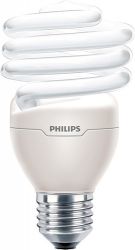
Energy-saving bulbs are compact fluorescent lamps that generate light through a gas discharge process inside a folded or spiral glass tube. Unlike traditional incandescent bulbs, CFLs use a mercury vapour and phosphor coating to produce visible light when an electric current passes through the gas. The term "compact" refers to their space-saving design – the fluorescent tube is bent, coiled or folded to fit into a form factor similar to conventional bulbs.
CFLs offer significantly better energy efficiency than incandescent lamps, consuming approximately 70–80% less power for equivalent light output. A 7W CFL produces roughly the same brightness as a 35W incandescent bulb, while an 11W CFL replaces a 60W incandescent, delivering 450–600 lumens. Higher wattages – 15W and 20W – replace 75W and 100W incandescent bulbs respectively, with light outputs ranging from 900 to 1,500 lumens.
The technology differs fundamentally from LED lighting. CFLs require a warm-up period of 1–4 minutes to reach full brightness, making them less suitable for applications requiring instant illumination. However, they remain valuable in professional event technology for specific scenarios: budget-conscious productions, warm-up lighting in backstage areas, or situations where the characteristic colour rendering of fluorescent technology is artistically desired. CFLs contain 2–5mg of mercury, requiring proper disposal through WEEE-compliant recycling channels. While LED technology has largely superseded CFLs in most applications, compact fluorescent lamps still serve niche roles in professional lighting setups where their specific characteristics align with technical or budgetary requirements.
CFL vs LED: Technical Comparison for Stage Lighting
Understanding the technical differences between compact fluorescent lamps and LED technology is crucial for making informed decisions in professional event lighting. While LEDs have become the dominant technology, CFLs retain specific advantages in certain scenarios.
Energy Efficiency and Heat Output
LED lamps are approximately 70% more energy-efficient than CFLs, consuming less power for equivalent light output. More importantly for stage environments, LEDs generate significantly less heat. A 15W CFL can produce as much heat as a 60W incandescent bulb during operation, whereas an equivalent LED remains considerably cooler. This heat differential matters in enclosed stage fixtures, near performers, and in temperature-sensitive environments where equipment cooling is a concern.
Instant Brightness and Dimming Compatibility
LEDs reach full brightness instantly, while CFLs require 1–4 minutes to warm up and achieve maximum output. For professional applications requiring rapid on/off cycling or instant illumination – such as stage cues, emergency lighting, or quick scene changes – this delay makes CFLs impractical. Dimmer compatibility also differs significantly: most CFLs are not compatible with standard dimming systems or DMX controllers used in professional event technology. Specialised dimmable CFLs exist but represent a small fraction of available products. LEDs, conversely, integrate seamlessly with professional lighting control systems.
Lifespan and Reliability
CFLs typically last 8,000–15,000 hours under ideal conditions, while LEDs can achieve 50,000–100,000 hours. For touring productions or permanent installations, this translates to fewer lamp changes and lower maintenance costs. CFLs are also more sensitive to frequent switching cycles, which can reduce their lifespan – a critical consideration in event environments with multiple daily on/off cycles.
Colour Rendering and Temperature Options
CFLs typically offer a CRI (Colour Rendering Index) of 80–85, while professional LEDs achieve 90–99. For applications where accurate colour reproduction matters – such as theatrical productions, product presentations, or video recording – LEDs provide superior performance. Both technologies are available in standard colour temperatures: 2700K warm white, 3000K warm white, 4000K neutral white, and 6000K daylight. However, LEDs offer far greater flexibility, including RGB colour mixing and tuneable white options that CFLs cannot match.
Available Socket Types and Wattages
Energy-saving bulbs are manufactured in a comprehensive range of socket types to ensure compatibility with existing lighting fixtures across professional event installations.
Standard Screw Sockets
The E27 socket (Edison screw, 27mm diameter) represents the most common fitting for CFLs. Available wattages range from 7W to 23W, with corresponding light outputs from 350 to 1,500 lumens. These lamps directly replace traditional incandescent bulbs in standard fixtures. The E14 socket (small Edison screw, 14mm diameter) is used for more compact fixtures and candelabra-style fittings, with wattages typically ranging from 5W to 14W and outputs from 200 to 800 lumens.
Pin and Bi-Pin Sockets
The GU10 socket features a bayonet-style twist-and-lock mechanism with two pins spaced 10mm apart. GU10 CFLs are commonly used in spotlight fixtures and recessed downlights, available in 7W to 11W variants delivering 350–600 lumens. The GX53 socket is a flat, circular fitting designed for ultra-low-profile installations, ideal for shallow ceiling voids in stage sets or exhibition stands. GX53 CFLs typically range from 6W to 11W.
For professional applications, 2-pin and 4-pin plug-in CFLs with separate ballasts offer advantages in fixture design and lamp replacement efficiency. Common variants include G23 (2-pin), G24d (2-pin with starter), and G24q (4-pin) sockets, available in wattages from 5W to 26W. These configurations are frequently found in commercial downlights and professional stage fixtures where the ballast is integrated into the housing rather than the lamp itself.
Wattage Conversion Reference
When replacing incandescent lamps with CFLs:
- 7W CFL = 35W incandescent (≈350 lumens)
- 11W CFL = 60W incandescent (≈600 lumens)
- 15W CFL = 75W incandescent (≈900 lumens)
- 20W CFL = 100W incandescent (≈1,300 lumens)
- 23W CFL = 120W incandescent (≈1,500 lumens)
Always verify socket type, physical dimensions, and voltage compatibility before ordering replacement lamps for professional installations.
Professional Applications in Event Technology
While LED technology dominates modern event lighting, compact fluorescent lamps continue to serve specific professional applications where their characteristics align with technical or economic requirements.
Budget Productions and Touring Backup
For smaller touring productions, community theatre groups, or events with tight budgets, CFLs offer a cost-effective lighting solution. Initial purchase costs are significantly lower than LED equivalents, making them attractive for productions that require large quantities of lamps but operate with limited capital budgets. Many touring companies maintain CFL stock as emergency backup lighting, ensuring shows can proceed even if primary LED systems fail.
Backstage and Workshop Areas
CFL lamps excel in backstage work areas, dressing rooms, storage spaces, and technical workshops where instant brightness is not critical and lights remain on for extended periods. The warm-up time becomes irrelevant in these applications, while the energy savings compared to incandescent alternatives remain significant. Many permanent venues continue to use CFLs in these auxiliary spaces, reserving LED investments for front-of-house and stage lighting.
Specific Colour Temperature Requirements
Certain theatrical productions deliberately specify fluorescent lighting for its characteristic colour rendering properties. The slightly cooler, more clinical quality of CFL light can enhance specific atmospheric effects or period-accurate representations of institutional settings. Experienced lighting designers sometimes combine CFL and LED sources strategically to achieve particular visual textures that pure LED rigs cannot replicate.
Exhibition and Trade Show Lighting
Temporary exhibition stands and trade show booths frequently employ CFL downlights in modular ceiling systems. The lower initial cost, adequate colour rendering for product display (CRI 80–85), and compatibility with standard exhibition power supplies make CFLs a practical choice for short-duration installations that will be dismantled after the event.
Bulk Purchasing for Large Venues
Permanent venues such as conference centres, hotels, and multi-purpose halls often purchase CFLs in bulk for general area lighting in corridors, foyers, and ancillary spaces. The combination of lower purchase price and reasonable lifespan (8,000–15,000 hours) delivers acceptable total cost of ownership for applications where the superior performance of LEDs is not essential. At LTT, we offer professional bulk purchasing options and B2B pricing for event companies, venues, and contractors requiring volume orders.
Disposal and Environmental Considerations
Proper disposal of compact fluorescent lamps is a critical responsibility in professional event technology, governed by strict environmental regulations due to their mercury content.
Mercury Content and Health Considerations
Every CFL contains 2–5mg of mercury vapour, essential for the lamp's operation but hazardous if released. Modern CFLs use mercury amalgam technology, which binds the mercury in solid form, reducing the risk if a lamp breaks. However, all CFLs must be treated as hazardous waste and never disposed of in general refuse. If a CFL breaks during handling or installation, ventilate the area immediately, avoid direct contact with fragments, and clean up using disposable materials rather than a vacuum cleaner.
WEEE Directive Compliance
Under the Waste Electrical and Electronic Equipment (WEEE) Directive, all CFLs must be recycled through authorised collection schemes. In professional contexts, this means:
- Never dispose of CFLs in general waste bins – they must go to designated recycling facilities
- Use approved waste contractors for bulk disposal from venues and touring productions
- Maintain disposal records for environmental compliance audits
- Store spent lamps safely in sealed containers until collection
Many local authorities operate collection points for small quantities, while commercial waste contractors provide collection services for professional users. At LTT, we can advise on appropriate disposal partners for bulk quantities.
EU Regulatory Changes
Since 1st April 2015, the EU has prohibited manufacture and sale of inefficient mercury-containing lamps with light output below 80 lumens per watt. From 31st December 2022 (effective early 2023), the EU Mercury Regulation banned all import, export, and manufacture of CFLs within the European Union. Existing stock can still be sold until depleted, but no new CFLs are entering the market.
This regulatory shift reflects the environmental imperative to eliminate mercury from lighting products and transition entirely to LED technology. For professional users, this means planning migration strategies away from CFL-dependent systems and investing in LED alternatives for long-term sustainability.
Environmental Impact Comparison
While CFLs consume 70–80% less energy than incandescent lamps, LEDs are approximately 50% more efficient than CFLs and contain no mercury. The total environmental footprint – including manufacturing, energy consumption during use, and end-of-life disposal – strongly favours LED technology. Professional event companies committed to environmental responsibility should prioritise LED investment wherever technically and economically feasible, reserving CFLs only for specific legacy applications where replacement is not yet practical.
LTT – Your Specialist for Event Technology
At LTT, we combine over 25 years of experience in professional event technology with comprehensive product knowledge to help you make informed lighting decisions. Whether you need compact fluorescent lamps for specific applications or are planning a complete transition to LED technology, our team provides expert guidance tailored to your technical requirements and budget.
We stock energy-saving bulbs from industry-leading manufacturers Osram and Philips in all standard socket types, ensuring compatibility with your existing fixtures. Our B2B services include bulk purchasing options with professional trade pricing for event companies, venues, and contractors. Every order benefits from fast dispatch from our facility in Bocholt, Germany, with free shipping on orders over €69 and express delivery available when you need lamps urgently.
As both a specialist retailer and manufacturer with our own production facility in Germany, we understand the technical demands of professional applications. Our portfolio extends far beyond lamps to encompass complete lighting systems, trussing solutions through our Naxpro-Truss brand, rigging equipment via Riggatec, and comprehensive accessories for every aspect of event production. When you partner with LTT, you gain access to innovative solutions backed by reliable service and technical expertise that helps you achieve impressive results in every production.
Technical Specifications Guide
Understanding the technical specifications of compact fluorescent lamps ensures you select the correct products for your professional applications.
Lumens and Light Output
Lumens measure actual light output, providing a more accurate performance indicator than wattage. Professional applications typically require:
- 350–500 lumens: Accent lighting, small spotlights, decorative fixtures
- 600–900 lumens: General area lighting, dressing rooms, backstage work areas
- 1,000–1,500 lumens: Primary workspace lighting, exhibition stands, conference areas
Always specify lumen requirements rather than wattage equivalents when planning lighting installations to ensure adequate illumination levels.
Colour Temperature Selection
CFLs are available in standard colour temperatures measured in Kelvin (K):
- 2700K (Extra Warm White): Creates intimate, cosy atmospheres similar to incandescent lighting; suitable for hospitality venues and theatrical warm tones
- 3000K (Warm White): Professional standard for most event spaces, providing comfortable illumination without excessive yellow cast
- 4000K (Neutral White): Clean, neutral light ideal for workshops, technical areas, and modern exhibition spaces
- 6000K (Daylight): Cool, energising light for task-oriented environments and areas requiring high alertness
Mixing colour temperatures within a single space creates visual discomfort – maintain consistency across all fixtures in a given area.
Colour Rendering Index (CRI)
CRI measures how accurately a light source reproduces colours compared to natural daylight (CRI 100). Most CFLs achieve CRI 80–85, which is adequate for general applications but may not suffice for:
- Product photography and video recording (CRI 90+ recommended)
- Art galleries and exhibitions where colour accuracy is critical
- Theatrical productions with demanding colour requirements
For these applications, specify high-CRI LEDs rather than CFLs.
Power Factor and Ballast Type
CFLs with integrated electronic ballasts typically have power factors of 0.5–0.6, meaning they draw more current than their wattage suggests. This matters when calculating total load on electrical circuits in large installations. Professional-grade CFLs with separate ballasts often achieve power factors above 0.9, providing more efficient operation and better compatibility with dimming systems.
Operating Temperature Range
CFL performance degrades in cold environments. Most CFLs are rated for operation between 0°C and 40°C ambient temperature. In outdoor winter events or cold storage areas, light output can drop by 20–30% and warm-up times extend significantly. For cold-environment applications, specify cold-weather CFLs or transition to LED alternatives that maintain performance across wider temperature ranges.
FAQ – Questions & Answers
LED bulbs are approximately 70% more energy-efficient than compact fluorescent lamps (CFLs). While a CFL consumes about 75% less energy than an equivalent incandescent bulb, LEDs go further, using roughly 50% less energy than CFLs for the same light output. For example, a 7W LED produces similar brightness to an 11W CFL, both replacing a 60W incandescent bulb. Additionally, LEDs generate significantly less heat, last 3–5 times longer (50,000–100,000 hours vs. 8,000–15,000 hours), and contain no mercury, making them the superior choice for energy efficiency and environmental impact in professional event technology applications.
Compact fluorescent lamps must never be disposed of in general waste due to their mercury content (2–5mg per bulb). Under the WEEE Directive, CFLs must be recycled through authorised collection schemes. For professional users, this means using approved commercial waste contractors who provide collection services for bulk quantities. Store spent CFLs in sealed containers until collection, maintain disposal records for compliance audits, and never place them in standard refuse bins. Many local authorities also operate collection points for smaller quantities. If a CFL breaks, ventilate the area immediately, avoid direct contact with fragments, and clean up using disposable materials rather than a vacuum cleaner.
An 11W compact fluorescent lamp replaces a 60W incandescent bulb, producing approximately 600 lumens of light output. This represents an energy saving of roughly 80%. When selecting replacement CFLs, focus on lumens rather than wattage for accurate brightness comparison: a 60W incandescent produces 600–800 lumens, so any CFL delivering this lumen range provides equivalent illumination. Other common conversions include 7W CFL for 35W incandescent (350 lumens), 15W CFL for 75W incandescent (900 lumens), and 20W CFL for 100W incandescent (1,300 lumens). Always verify socket type compatibility alongside wattage when replacing lamps in professional fixtures.
Following Brexit, the UK maintains regulations similar to EU standards. The EU banned manufacture, import, and export of compact fluorescent lamps from 31st December 2022 (effective early 2023) under the Mercury Regulation. Existing stock can still be sold until depleted, so CFLs remain available in limited quantities as retailers clear remaining inventory. However, no new CFLs are being manufactured for the UK or EU markets. Professional users should plan transition strategies to LED technology, as CFL availability will continue to decline. For ongoing projects requiring CFLs, purchase sufficient stock now while supplies last, but prioritise LED alternatives for long-term sustainability and regulatory compliance.
Compact fluorescent lamps typically last 8,000–15,000 hours under ideal conditions, while LED bulbs achieve 50,000–100,000 hours – approximately 5–10 times longer. In practical terms, a CFL operating 8 hours daily lasts roughly 3–5 years, whereas an equivalent LED lasts 15–30 years. For professional event applications, this lifespan difference significantly impacts maintenance costs and operational reliability. CFLs are also more sensitive to frequent on/off cycling, which can reduce their lifespan by 20–30% in applications with multiple daily switching cycles. LEDs maintain consistent performance regardless of switching frequency, making them far more suitable for professional stage and event lighting where reliability is critical.
Most compact fluorescent lamps are not compatible with standard dimming systems or DMX controllers used in professional event technology. The electronic ballasts in CFLs require specific dimmer types, and only specially marked "dimmable CFLs" work with dimming equipment – these represent a small fraction of available products. Even dimmable CFLs rarely integrate seamlessly with professional lighting control systems, often producing flickering, buzzing, or limited dimming range (typically only 20–80% rather than 0–100%). For professional applications requiring dimming capability or DMX integration, LED lamps are the only practical choice, offering smooth, flicker-free dimming across the full range and reliable compatibility with industry-standard control protocols.
Compact fluorescent lamps require 1–4 minutes to reach full brightness after switching on, a characteristic called warm-up time. During this period, light output gradually increases from approximately 50–60% to 100% as the mercury vapour and phosphor coating reach optimal operating temperature. For professional stage lighting requiring instant illumination – such as precise cue timing, emergency lighting, or rapid scene changes – this delay makes CFLs impractical. The warm-up time also means CFLs are unsuitable for applications with frequent on/off cycling. However, in backstage areas, dressing rooms, or technical workshops where lights remain on continuously, warm-up time becomes irrelevant and CFLs can serve effectively.
Osram and Philips are the leading manufacturers of compact fluorescent lamps for professional applications, offering superior quality, consistent colour rendering, and reliable performance. These brands provide comprehensive technical specifications, batch consistency for large installations, and proven longevity in demanding environments. Professional-grade CFLs from Osram and Philips typically achieve CRI values of 82–85, maintain stable colour temperature throughout their lifespan, and meet strict quality standards for commercial use. At LTT, we stock both manufacturers across all standard socket types, ensuring you have access to reliable products backed by technical support. While other brands exist at lower price points, professional event applications benefit from the proven reliability and performance consistency of Osram and Philips products.




 Express delivery possible


