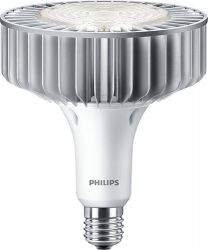
Special lamps
Special Lamps – Professional Light Sources for Stage and Event Technology
Special lamps form the heart of professional stage lighting systems, delivering the precise beam characteristics, colour temperature and output power that entertainment applications demand. Unlike standard household illuminants, these lamps are engineered for high-intensity projection, DMX-controlled fixtures and continuous operation under demanding conditions. Whether you're equipping moving lights, theatre spotlights or effect fixtures, the right lamp determines beam quality, colour rendering and fixture reliability. LTT offers a comprehensive range of discharge lamps, tungsten-halogen sources, infrared radiators and LED retrofit solutions from leading manufacturers including Osram, Philips, GE and Ushio.
What Are Special Lamps and How Do They Differ from Standard Illuminants?
Special lamps are precision-engineered light sources designed for applications that exceed the capabilities of conventional household bulbs. In professional event technology, they encompass discharge lamps (metal halide, HMI, HTI, MSR), tungsten-halogen lamps with specialised sockets (G9.5, GY9.5, GX9.5), infrared emitters and UV sources. The key distinction lies in their construction: special lamps feature reinforced filaments or arc tubes capable of withstanding mechanical vibration, thermal cycling and high operating currents.
Discharge lamps generate light through an electric arc in a pressurised gas mixture, producing exceptionally high luminous efficacy (80–120 lumens per watt) and colour temperatures between 5,600 K and 8,000 K that closely match daylight. Tungsten-halogen variants use a halogen gas cycle to extend filament life and maintain consistent colour temperature (typically 3,200 K) throughout their rated lifespan of 300–2,000 hours. Socket types such as G9.5 (9.5 mm pin spacing) and GY9.5 (9.5 mm with positioning key) ensure precise lamp alignment within optical systems, critical for beam focus and gobo projection.
Compared to energy-saving lamps or standard halogen bulbs, special lamps deliver concentrated luminous flux (often 10,000–50,000 lumens), narrow beam angles (4°–60°) and instant restrike capability after brief power interruptions – essential for live performance environments where reliability is paramount.
Applications in Stage, Theatre and Event Lighting
Special lamps power the full spectrum of entertainment lighting fixtures. In moving head spots and beams, discharge lamps such as Philips MSR Gold or Osram Sirius HRI deliver the intense, collimated beams required for mid-air effects and long-throw projection. Theatre profile spotlights rely on tungsten-halogen sources (typically 500 W–2,500 W) to produce warm, controllable light with excellent colour rendering (CRI >90) for skin tones and costume detail.
PAR cans and floodlights use sealed-beam lamps or separate reflector lamps with G9.5 or GX9.5 sockets, enabling rapid lamp changes during touring productions. Followspots demand high-wattage discharge lamps (1,200 W–4,000 W) to maintain visibility over distances exceeding 50 metres. UV effect fixtures employ mercury vapour or LED alternatives to excite fluorescent materials in scenic elements and costumes, creating striking visual contrasts.
Infrared radiators serve specialised roles in drying applications for scenic paint or in heating zones for outdoor winter events. Stroboscopes use xenon flash tubes – a distinct category of special lamp – to produce brief, high-intensity pulses that freeze motion on stage. Each application requires careful lamp selection based on wattage, socket type, colour temperature and expected operating hours to achieve optimal results and maintain DGUV Vorschrift 17 compliance for rigging safety.
Quality Standards and Leading Manufacturers
Professional special lamps are manufactured to exacting tolerances by a small group of specialist producers. Osram's Sirius and Lok-it! ranges set industry benchmarks for discharge lamp reliability, with hot-restrike times under 5 minutes and consistent colour temperature across the lamp's 1,500–3,000 hour lifespan. Philips MSR Gold and MSD Platinum lamps are renowned for their high luminous efficacy (up to 95 lm/W) and low electrode erosion, critical for maintaining beam quality in touring fixtures.
GE Lighting supplies tungsten-halogen lamps for theatre and broadcast applications, with models rated from 300 W to 10,000 W and colour temperatures stabilised at 3,200 K ±100 K. Ushio specialises in short-arc discharge lamps for projection and scientific instruments, offering precise arc gap dimensions (typically 1.0–1.3 mm) that ensure sharp gobo projection in profile spotlights. LEDVANCE (formerly Osram's general lighting division) now produces LED retrofit lamps for G9.5 sockets and special sockets, enabling energy savings of 60–80% in compatible fixtures.
When selecting lamps, prioritise manufacturers with ISO 9001 certification and published photometric data. Verify that discharge lamps carry CE marking and comply with EN 62471 (photobiological safety), particularly for UV and high-intensity sources. Expect to invest €15–€80 for tungsten-halogen lamps (500 W–2,000 W), €80–€250 for metal halide discharge lamps (150 W–1,200 W) and €200–€600 for high-wattage HMI or MSR lamps (2,500 W–4,000 W). Authentic manufacturer lamps consistently outperform generic alternatives in lifespan, colour stability and warranty support.
Socket Types and DMX Integration for Professional Fixtures
Socket compatibility is fundamental to lamp selection in event technology. The G9.5 socket (IEC 60061-1) features two cylindrical pins spaced 9.5 mm apart, used primarily in theatre profile spotlights and Fresnel fixtures with wattages from 500 W to 2,000 W. The GY9.5 variant includes a positioning key that prevents incorrect lamp orientation, essential for fixtures with asymmetric reflectors or dichroic filters. GX9.5 sockets add a locking mechanism to secure lamps against vibration during transport – a critical feature for touring rigs.
Higher-wattage fixtures (2,500 W+) often use G22 or G38 sockets with larger pin diameters (2.0–2.5 mm) and wider spacing (22–38 mm) to handle increased current loads. Discharge lamps in moving heads typically employ proprietary sockets such as SFc10-4 (single-ended, four-pin) or PGJ5 (bipin with positioning groove), which ensure precise arc positioning within the optical path – deviations of just 0.5 mm can degrade beam quality by 20–30%.
While the lamps themselves are not DMX-addressable, they integrate into DMX512-controlled lighting systems through fixture electronics. Moving heads, intelligent controllers and dimmer racks regulate lamp power, ignition sequences and thermal management via DMX channels. Modern discharge lamp ballasts incorporate hot-restrike protocols, gradual warm-up curves (typically 3–5 minutes to full output) and end-of-life detection to prevent catastrophic lamp failure. When specifying lamps for DMX fixtures, always verify socket type, wattage rating and ballast compatibility with the fixture manufacturer's documentation to ensure safe, reliable operation.
LED Alternatives and Energy Efficiency in Modern Stage Lighting
LED technology has transformed special lamp applications, offering retrofit solutions that reduce power consumption by 60–85% while extending operational life to 25,000–50,000 hours. LED special lamps now exist for G9, G9.5 and E27 sockets, enabling direct replacement in compatible fixtures without rewiring. A typical 2.6 W LED lamp produces 320 lumens – equivalent to a 30 W halogen lamp – with colour temperatures ranging from 2,700 K (warm white) to 6,500 K (daylight).
However, LED retrofits face limitations in high-output applications. Discharge lamps in moving head spots deliver 30,000–100,000 lumens from a compact arc source, a level unattainable with current LED packages in the same form factor. Beam angle also differs: LED lamps typically emit 300° of diffuse light, whereas tungsten-halogen and discharge sources produce directional output (8°–40°) that optical systems can focus into tight beams. For this reason, professional fixtures increasingly use purpose-built LED arrays rather than retrofit lamps, integrating thermal management and optics from the ground up.
Energy savings remain compelling for static installations. Replacing ten 500 W halogen lamps with 50 W LED equivalents reduces power draw from 5,000 W to 500 W, cutting electricity costs by 90% and eliminating 15,360 kWh annually (based on 8-hour daily operation). Heat output drops proportionally, reducing HVAC loads in enclosed venues. When evaluating LED alternatives, verify CRI (colour rendering index) exceeds 80 for accurate colour reproduction, and confirm flicker-free operation at all dimming levels – critical for video recording and broadcast applications. For fixtures requiring the beam characteristics of discharge or tungsten-halogen sources, traditional special lamps remain the professional standard.
LTT – Your Expert for Event Technology Special Lamps
LTT stocks an extensive range of special lamps for every stage and event lighting application, from compact G9 LED retrofits to high-wattage discharge lamps for touring productions. With over 25 years of experience in professional event technology, we understand the critical role lamp selection plays in fixture performance, colour accuracy and operational reliability. Our inventory includes original equipment from Osram, Philips, GE, Ushio and LEDVANCE, ensuring you receive genuine lamps with full manufacturer warranties and published photometric data.
Every order benefits from our 3-year LTT warranty, free shipping on orders over €69 and express delivery options for urgent production requirements. Our technical team provides expert guidance on socket compatibility, wattage ratings and DMX integration, helping you specify the optimal lamp for your fixtures and applications. Whether you're outfitting a theatre, upgrading a touring rig or maintaining a rental inventory, LTT delivers the quality and service that professional technicians demand.
Explore our complete illuminants range, including discharge lamps with special sockets and infrared radiators, to find the perfect light source for your next project. Trust LTT as your reliable partner for innovative solutions that set your productions in the spotlight and deliver impressive results every time.
FAQ – Questions & Answers
Special lamps for stage and event lighting use a variety of precision sockets designed for high-wattage applications and secure lamp positioning. The most common types include G9.5 (9.5 mm pin spacing, 500 W–2,000 W), GY9.5 (9.5 mm with positioning key for asymmetric reflectors), GX9.5 (9.5 mm with locking mechanism for touring fixtures), G22 and G38 (larger pins for 2,500 W+ fixtures), and proprietary sockets such as SFc10-4 and PGJ5 used in discharge lamps for moving heads. Socket selection ensures correct lamp alignment within optical systems, which is critical for beam focus, gobo projection and colour rendering. Always verify socket compatibility with your fixture's specifications before ordering replacement lamps.
LED special lamps offer dramatically extended lifespans compared to traditional technologies. LED retrofit lamps rated for G9, G9.5 or E27 sockets typically last 25,000–50,000 hours, compared to 300–2,000 hours for tungsten-halogen lamps and 1,500–3,000 hours for metal halide discharge lamps. This translates to 10–25 years of operation at 8 hours per day for LEDs, versus 6–12 months for halogen and 12–24 months for discharge sources. However, LED retrofits cannot match the luminous output (30,000–100,000 lumens) or beam characteristics of discharge lamps in high-intensity applications such as moving head spots or followspots, where traditional special lamps remain the professional standard despite their shorter lifespan.
Signify (formerly Philips Lighting) is widely recognised as the world's largest lighting company by revenue and market presence, operating in over 70 countries with brands including Philips, Color Kinetics and Interact. In the professional stage and event lighting sector, Signify's Philips Entertainment division produces industry-standard discharge lamps such as MSR Gold and MSD Platinum, which power moving heads, followspots and theatre fixtures worldwide. Other major manufacturers in the special lamp segment include Osram (now part of ams OSRAM), GE Lighting, Ushio and LEDVANCE. For event technology applications, lamp selection should prioritise performance specifications, socket compatibility and manufacturer warranty rather than company size alone.
The leading LED brands in professional stage and event lighting include Osram (Sirius and Duris LED ranges), Philips/Signify (Luxeon and Fortimo LED modules), LEDVANCE (LED retrofit lamps for special sockets), Cree (XLamp high-power LEDs used in fixture manufacturing) and Lumileds (Luxeon LEDs for entertainment applications). These manufacturers produce both discrete LED packages for fixture integration and retrofit lamps for existing G9, G9.5 and E27 sockets. When selecting LED solutions for stage lighting, verify colour rendering index (CRI >80), flicker-free dimming performance and thermal management capabilities. For high-output applications such as moving heads and followspots, purpose-built LED fixtures from manufacturers like Robe, Martin and Clay Paky often outperform retrofit lamps in beam quality and luminous output.
Discharge lamps and tungsten-halogen lamps represent fundamentally different light generation technologies with distinct performance characteristics. Discharge lamps (metal halide, HMI, MSR) produce light through an electric arc in pressurised gas, delivering 80–120 lumens per watt, colour temperatures of 5,600 K–8,000 K (daylight spectrum) and luminous output of 30,000–100,000 lumens – ideal for moving heads, followspots and long-throw applications. Tungsten-halogen lamps use a heated filament in halogen gas, producing 15–25 lumens per watt, 3,200 K colour temperature (warm white) and 5,000–50,000 lumens – preferred for theatre profile spotlights, Fresnel fixtures and applications requiring warm colour rendering (CRI >90). Discharge lamps require 3–5 minute warm-up periods and specialised ballasts, while halogen lamps offer instant-on capability and simple dimming. Both technologies remain essential in professional event lighting, selected based on beam requirements, colour temperature needs and fixture design.
Professional special lamps for moving head fixtures range from €80 to €600 depending on wattage, technology and manufacturer. Metal halide discharge lamps (150 W–575 W) such as Philips MSD Platinum or Osram Sirius HRI typically cost €80–€150 and last 1,500–2,000 hours. Higher-wattage lamps (700 W–1,200 W) for mid-range moving heads cost €120–€250 with similar lifespans. High-output MSR or HMI lamps (2,500 W–4,000 W) for large-venue fixtures range from €200 to €600 and deliver 3,000–6,000 hours of operation. Always purchase genuine manufacturer lamps rather than generic alternatives – authentic Osram, Philips or Ushio lamps provide consistent colour temperature, published photometric data and warranty support that justify the investment. Factor replacement costs into your total cost of ownership calculations when specifying fixtures for touring or permanent installations.
Theatre profile spotlights and Fresnel fixtures typically use tungsten-halogen lamps with G9.5, GY9.5 or GX9.5 sockets in wattages from 500 W to 2,000 W. Popular models include Osram 64515 (300 W), 64575 (750 W) and 64717 (1,000 W), and Philips 6994Z (650 W) and 7005X (1,200 W). These lamps produce 3,200 K colour temperature (warm white) with excellent colour rendering (CRI >90) for accurate skin tones and costume detail. Lamp selection depends on fixture design, throw distance and desired beam intensity – 500 W–750 W lamps suit small theatre spaces (5–15 metre throws), while 1,000 W–2,000 W lamps serve larger venues (15–30 metre throws). Always verify socket type and maximum wattage rating in your fixture's specifications, and consider GX9.5 locking sockets for touring applications where vibration resistance is critical. Expected lifespan ranges from 300 to 1,000 hours depending on dimming levels and thermal management.
Special lamps themselves are not directly covered by DGUV Vorschrift 17 (formerly BGV C1), which regulates the safe rigging and operation of event technology equipment including trusses, hoists and suspended fixtures. However, the fixtures containing special lamps must comply with DGUV Vorschrift 17 when installed in overhead rigging systems. This includes proper fixture mounting with certified clamps, safety cables rated for the fixture's weight, and regular inspection of electrical connections and lamp housings. High-wattage discharge lamps (>1,200 W) generate significant heat and UV radiation, requiring fixtures with adequate ventilation, heat-resistant wiring and UV-blocking glass to meet EN 60598 (luminaire safety) and EN 62471 (photobiological safety) standards. When specifying special lamps for rigged fixtures, ensure the complete installation – including lamps, fixtures, clamps and cables – meets DGUV Vorschrift 17 requirements and undergoes annual inspection by qualified personnel. LTT provides technical guidance on compliant installations for all special lamp applications.