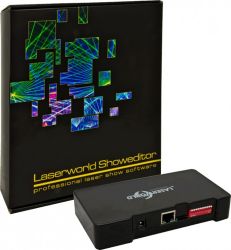
Laser controllers

Laser Controllers – Bring Your Laser Shows to Life: Professional laser controllers are the central nervous system of every impressive laser show. Whether you're programming complex timeline sequences for large-scale events or controlling multiple lasers simultaneously in live mode, the right control system makes all the difference. At LTT, you'll find professional laser control solutions that transform static laser projectors into dynamic show elements. From intuitive software packages to robust hardware...
Read more »
Laser controllers
Close window
Laser controllers

Laser Controllers – Bring Your Laser Shows to Life

Professional laser controllers are the central nervous system of every impressive laser show. Whether you're programming complex timeline sequences for large-scale events or controlling multiple lasers simultaneously in live mode, the right control system makes all the difference. At LTT, you'll find professional laser control solutions that transform static laser projectors into dynamic show elements. From intuitive software packages to robust hardware interfaces, our range covers everything event technicians, stage designers and show producers need to create stunning visual effects.

What Are Laser Controllers and How Do They Work?

A laser controller is a specialised control system that translates creative input into precise laser movements, colour changes and pattern projections. The technology operates primarily through two industry-standard protocols: ILDA (International Laser Display Association) and DMX512.

ILDA protocol is the professional standard for laser show control, transmitting high-resolution vector data at speeds up to 100,000 points per second. This protocol enables smooth animations, complex graphics and precise beam positioning. ILDA controllers connect to laser projectors via DB25 cables or modern RJ-45 network interfaces, delivering frame-accurate synchronisation essential for professional applications.

DMX control integrates laser systems into existing lighting infrastructures. While DMX offers lower resolution than ILDA (typically 512 channels per universe), it excels at coordinating lasers with conventional stage lighting, moving heads and LED fixtures through a unified control desk.

Modern laser controllers combine both protocols, featuring USB or Ethernet connectivity for computer-based software control. Professional systems include ShowNET capabilities, allowing multiple ILDA interfaces to operate simultaneously across network infrastructure – essential for large-scale productions requiring synchronised multi-projector setups.

The control chain typically consists of three elements: control software (for programming and playback), a hardware interface (converting digital signals to ILDA/DMX output), and the laser projector itself. Advanced systems add emergency stop integration, safety interlocks and real-time preview functions, ensuring both creative flexibility and regulatory compliance with Class 3B laser operation requirements.

Applications – Where Laser Controllers Excel

Professional laser controllers find their place wherever visual impact matters. Concert touring demands timeline-programmed shows synchronised to music tracks, with multiple projectors creating aerial effects, audience scanning and stage backdrops. Controllers enable touring technicians to store complete show files, ensuring consistent performance across venues.

Corporate events and product launches benefit from custom logo projections, animated brand elements and architectural mapping. The ability to pre-program sequences means presentations run flawlessly without live operator intervention, whilst retaining manual override for spontaneous adjustments.

Nightclub and festival installations require live control capabilities. DJs and lighting operators use real-time control interfaces to trigger beam effects, colour chases and pattern sequences that respond instantly to music energy and crowd dynamics. ShowNET architecture allows multiple lasers positioned around venues to operate as coordinated arrays.

Theatre productions integrate laser effects into scenic design, using timeline programming to cue atmospheric effects, reveal moments and dramatic accents with frame-accurate precision. The integration with conventional lighting desks via DMX ensures seamless coordination with the broader production design.

Architectural projection mapping employs laser controllers to animate building facades, create immersive environments and deliver large-scale outdoor spectacles. Network-based control systems manage projector arrays spanning hundreds of metres, maintaining synchronisation across complex installations.

Regardless of application, professional laser controllers provide the technical foundation for transforming laser hardware into expressive creative tools, delivering the "wow effect" that defines memorable events.

Quality Standards and Professional Equipment Selection

Selecting the right laser controller requires understanding both technical specifications and practical workflow requirements. Software capability forms the foundation – professional packages like Pangolin QuickShow and Laserworld Showeditor offer comprehensive toolsets including timeline editors, live performance modes, graphic creation suites and music synchronisation engines.

Pangolin systems, widely regarded as industry-leading solutions, provide extensive ILDA interface support (up to 16 simultaneous outputs), advanced colour correction, zone management and real-time preview rendering. The QuickShow platform combines intuitive operation with professional-grade features, making it suitable for both touring professionals and installation technicians. Typical investment ranges from €629 for entry-level QuickShow packages to €2,500+ for flagship Beyond systems with advanced networking.

Laserworld Showeditor offers compelling value, with complete software-plus-interface packages starting around €309. The platform supports DMX integration, standalone operation (pre-programmed shows stored in interface memory) and music-reactive modes. While the interface may feel less refined than Pangolin equivalents, the functionality covers most professional requirements at accessible price points.

Hardware interface quality directly impacts show reliability. Professional ILDA interfaces feature galvanometer-optimised output stages, ensuring smooth beam movement without flicker or distortion. USB connectivity (typically USB 2.0 or 3.0) provides plug-and-play operation, whilst Ethernet-based ShowNET interfaces enable distributed control across venues. Look for interfaces with robust DB25 or RJ-45 connectors rated for touring environments.

Safety integration is non-negotiable for Class 3B laser operation. Controllers must support emergency stop circuits, typically via dedicated inputs that instantly disable laser output when triggered. Professional systems include 20-metre emergency stop cables as standard, meeting DGUV Regulation 17 requirements for German and EU installations. Interlock functionality prevents accidental laser activation during setup or maintenance.

Manufacturers like Laserworld, Pangolin and ShowTec represent proven quality in the professional market. When evaluating systems, consider software licensing models (dongle-based vs. cloud authentication), upgrade paths (many platforms offer tiered licensing) and compatibility with your existing laser inventory. The optimal solution balances immediate creative needs with long-term scalability as your production capabilities expand.

Control Protocols Deep-Dive – ILDA, DMX and Network Standards

Understanding control protocols helps you select systems that integrate seamlessly with your technical infrastructure. ILDA protocol remains the gold standard for laser control, transmitting X/Y galvanometer position data, RGB colour values and blanking signals through a 25-pin DB25 connection. The protocol operates at scan rates up to 100 kHz, enabling smooth vector graphics and complex animations impossible with lower-resolution systems.

Modern ILDA implementations use differential signalling, improving noise immunity over long cable runs (up to 30 metres without signal degradation). The standard defines both analogue voltage ranges (±5V or ±10V for galvanometer positioning) and digital blanking signals, ensuring universal compatibility across manufacturer ecosystems.

DMX512 integration allows laser projectors to function as lighting fixtures within conventional control infrastructures. A typical laser consumes 8–32 DMX channels, controlling parameters like colour selection, pattern choice, rotation speed and strobe effects. Whilst DMX lacks the resolution for smooth vector graphics, it excels at coordinating lasers with moving heads, LED walls and atmospheric effects through unified lighting desks like GrandMA, Avolites or ChamSys consoles.

Art-Net and sACN (Streaming ACN) represent network-based lighting protocols, transmitting DMX universes over standard Ethernet infrastructure. These protocols enable large-scale installations to exceed the 512-channel limitation of traditional DMX, with Art-Net supporting up to 32,768 universes across IP networks. Professional laser controllers with Art-Net capability integrate into campus-wide control systems, ideal for permanent installations in theatres, cruise ships or theme parks.

ShowNET technology, pioneered by Pangolin, extends ILDA control across Ethernet networks. Multiple ILDA interfaces connect to a central computer running show software, with synchronisation maintained through network time protocols. This architecture supports distributed projector arrays whilst centralising programming and playback control – essential for arena tours and festival main stages.

When designing control systems, consider protocol redundancy. Hybrid controllers supporting both ILDA and DMX provide operational flexibility, allowing the same laser to function in timeline-programmed shows (via ILDA) or integrate into live lighting cues (via DMX). Network-based protocols add scalability but require robust IT infrastructure – ensure your venue provides dedicated VLANs and sufficient bandwidth to prevent control latency during critical show moments.

LTT – Your Specialist for Event Technology

At LTT, we've spent over 25 years supporting event professionals with innovative solutions for stage, lighting and show technology. Our laser controller range reflects this expertise, combining leading software platforms with reliable hardware interfaces that perform night after night.

Every system ships from our Bocholt, Germany facility with free delivery on orders over €69, ensuring your control equipment arrives quickly whether you're preparing for a weekend festival or a multi-week tour. Our 3-year LTT guarantee covers all laser controllers, providing peace of mind for investments that form the backbone of your production infrastructure.

Beyond products, we offer genuine technical partnership. Our team understands the practical challenges of laser show production – from DGUV Regulation 17 compliance for German installations to multi-projector synchronisation across festival stages. We're here to help you select the optimal solution for your specific requirements, whether that's an entry-level Showeditor package for mobile DJs or a comprehensive Pangolin Beyond system for touring productions.

With over 100,000 positive customer reviews and an international dealer network, LTT has become the reliable partner for professionals who demand quality, expertise and responsive support. Explore our complete range of laser controllers and discover how the right control system can elevate your productions from competent to unforgettable.

Multi-Laser Synchronisation and Advanced Show Techniques

Professional productions increasingly demand coordinated multi-projector arrays, creating immersive environments impossible with single-laser setups. Multi-laser synchronisation requires both technical infrastructure and sophisticated software control.

Timeline programming forms the foundation of synchronised shows. Professional software platforms allow technicians to arrange laser cues on multi-track timelines, similar to audio editing workflows. Each track controls a separate projector or projector group, with frame-accurate synchronisation ensuring beams intersect, patterns align and colour transitions occur simultaneously across the array.

Zone management divides performance spaces into control regions. A festival main stage might define zones for left/right side fills, upstage backdrop projection and audience scanning areas. The controller routes specific content to designated projectors, preventing overlap whilst maintaining creative coordination. Advanced systems support dynamic zone reassignment, adapting to different venue configurations without reprogramming entire shows.

ShowNET architecture enables true distributed control. Multiple ILDA interfaces connect to a central computer via Ethernet, with each interface driving one or more projectors. The software maintains synchronisation through network time protocols, typically achieving sub-millisecond accuracy across dozens of outputs. This approach scales from small club installations (2–4 projectors) to arena spectaculars (20+ projectors creating volumetric effects).

Live control integration combines pre-programmed timeline content with real-time operator input. A lighting operator might trigger pre-built laser sequences via MIDI controllers or lighting desk macros, adjusting intensity, colour and speed parameters on-the-fly to match performance energy. This hybrid approach delivers the polish of programmed content with the spontaneity of live performance.

Music synchronisation ranges from simple beat detection (triggering effects on kick drum hits) to sophisticated waveform analysis that maps laser movements to melodic content, vocal phrases and harmonic progressions. Professional systems analyse audio in real-time or pre-process tracks during programming, creating organic relationships between sound and visual elements.

Mastering these techniques transforms laser controllers from playback devices into expressive instruments, enabling technicians to craft shows that audiences remember long after the final beam fades.

FAQ – Questions & Answers

Which is the best software for controlling laser shows?

The best laser show control software depends on your specific requirements and budget. Pangolin QuickShow and Pangolin Beyond are widely regarded as industry-leading platforms, offering comprehensive timeline programming, live performance modes, extensive ILDA interface support (up to 16 outputs) and advanced features like zone management and ShowNET networking. QuickShow provides an excellent balance of capability and usability for most professional applications, starting around €629. Laserworld Showeditor offers compelling value at lower price points (from €309), delivering solid functionality including DMX integration, standalone operation and music synchronisation. For touring professionals and large-scale productions, Pangolin Beyond represents the premium choice with unmatched feature depth. Consider your workflow requirements, existing equipment ecosystem and budget when selecting software – both platforms deliver professional results in skilled hands.

What is ILDA protocol and why does it matter for laser control?

ILDA protocol is the professional industry standard for laser show control, developed by the International Laser Display Association. The protocol transmits high-resolution vector data including X/Y galvanometer positioning, RGB colour values and blanking signals through a 25-pin DB25 connection. ILDA operates at scan rates up to 100,000 points per second, enabling smooth animations, complex graphics and precise beam positioning impossible with lower-resolution control methods. The protocol uses differential signalling for noise immunity over cable runs up to 30 metres. ILDA compatibility ensures universal interoperability between control software, hardware interfaces and laser projectors from different manufacturers. For professional applications requiring vector graphics, timeline programming and multi-projector synchronisation, ILDA protocol provides the technical foundation that separates professional laser shows from basic DMX-controlled effects.

What does a professional laser controller cost?

Professional laser controller pricing varies significantly based on software capability and hardware specifications. Entry-level complete packages like Laserworld Showeditor with USB ILDA interface start around €249–€309, providing solid functionality for mobile DJs, small venue installations and event technicians building initial laser capabilities. Mid-range solutions like Pangolin QuickShow with FB3 interface typically cost €629–€869, offering professional-grade timeline programming, live control and multi-interface support suitable for touring productions and corporate events. Premium systems like Pangolin Beyond with advanced networking and unlimited ILDA outputs range from €2,500 to €5,000+, targeting arena tours, festival main stages and permanent installations requiring extensive multi-projector coordination. Additional costs include software upgrades (€249+ for version updates), extra ILDA interfaces (€200–€600 each) and emergency stop systems (€20–€70). Consider total system cost including all required interfaces when budgeting for laser control infrastructure.

Can I control multiple lasers simultaneously with one controller?

Yes, professional laser controllers are specifically designed for multi-projector operation. The capability depends on your software platform and hardware interface configuration. Single-interface systems can control multiple projectors by daisy-chaining ILDA connections, though this limits independent control – all projectors display identical content. Multi-interface systems provide true independent control, with software platforms like Pangolin QuickShow supporting up to 16 simultaneous ILDA outputs. Each interface drives separate projectors with unique content, enabling coordinated arrays where beams intersect, patterns complement each other and colour transitions synchronise across the installation. ShowNET architecture extends this capability across Ethernet networks, allowing dozens of projectors to operate as unified systems whilst maintaining frame-accurate synchronisation. For professional multi-laser shows, invest in software that supports multiple zones and timeline tracks, plus sufficient ILDA interfaces to match your projector count – typically one interface per 1–2 projectors depending on complexity requirements.

What safety features are required for professional laser controllers?

Professional laser controllers must integrate comprehensive safety features to comply with Class 3B laser regulations, particularly DGUV Regulation 17 in Germany and equivalent EU standards. Emergency stop circuits are mandatory, providing dedicated inputs that instantly disable all laser output when triggered. Professional systems include emergency stop switches with 20-metre cables as standard, allowing safety officers to halt shows from audience positions or stage wings. Interlock functionality prevents laser activation during setup, maintenance or projector repositioning – the controller only enables output when all safety circuits confirm proper configuration. Key switches restrict laser operation to authorised personnel, meeting regulatory requirements for controlled access. Scan-fail safety monitors galvanometer positioning, automatically blanking the beam if scanners malfunction to prevent static exposure. Remote monitoring capabilities in network-based systems allow safety supervisors to observe laser status from control positions. When selecting laser controllers, verify that emergency stop integration meets local regulatory requirements and that the system provides clear visual indication of safety circuit status during operation.

What is the difference between ILDA and DMX control for lasers?

ILDA and DMX represent fundamentally different control approaches with distinct strengths. ILDA protocol transmits high-resolution vector data at up to 100,000 points per second, enabling smooth animations, complex graphics, precise text rendering and sophisticated beam effects. ILDA controllers connect directly to laser projectors via DB25 or RJ-45 cables, providing dedicated communication channels optimised for laser-specific parameters. This protocol is essential for timeline-programmed shows, graphic projections and applications requiring fine detail. DMX512 control integrates lasers into conventional lighting infrastructures, treating projectors as lighting fixtures within unified control desks. DMX typically allocates 8–32 channels per laser, controlling parameters like colour selection, pattern choice, rotation speed and strobe effects. Whilst DMX lacks resolution for smooth vector graphics, it excels at coordinating lasers with moving heads, LED fixtures and atmospheric effects through single-console operation. Many professional laser controllers support both protocols simultaneously, allowing the same projector to function in ILDA mode for programmed content or DMX mode for live lighting integration.

Which laser controller suits mobile DJ and small event applications?

Mobile DJs and small event operators benefit most from all-in-one software-plus-interface packages that balance capability with portability and budget. Laserworld Showeditor with USB ILDA interface (around €309) provides excellent value, offering intuitive software with timeline programming, live triggers, music synchronisation and standalone operation where pre-programmed shows run from interface memory without computer connection. The package supports DMX integration for coordination with existing lighting, making it ideal for mobile setups. Pangolin QuickShow (from €629) represents the next tier, delivering more refined software, superior graphic creation tools and better multi-projector support – worthwhile for operators building professional reputations or expanding to larger venues. Prioritise systems with robust USB interfaces rated for mobile use, quick-access live control for spontaneous adjustments and comprehensive effect libraries that accelerate show creation. Avoid over-investing in advanced networking features unnecessary for single-operator mobile applications – focus budget on reliable core functionality that performs consistently across diverse venue environments.

How do I integrate laser controllers with existing lighting control systems?

Integrating laser controllers with lighting infrastructures requires understanding protocol compatibility and signal routing. DMX integration is the most straightforward approach – configure your laser controller to receive DMX input, assign a starting address and patch the laser as a fixture in your lighting console. The console then triggers laser patterns, colours and effects alongside conventional lighting cues. Most professional laser controllers support DMX input via 3-pin or 5-pin XLR connections. Art-Net and sACN enable network-based integration, transmitting DMX universes over Ethernet infrastructure. Configure your laser controller to listen for specific Art-Net universes, allowing lighting desks to control lasers without physical DMX cable runs – ideal for distributed installations. MIDI integration provides an alternative, with laser software responding to MIDI note or control-change messages from lighting desks, DJ controllers or sequencers. For advanced integration, consider OSC protocol (Open Sound Control), enabling bidirectional communication between laser software and lighting control platforms like GrandMA or Resolume. When planning integration, verify that your laser controller supports your preferred protocol, allocate sufficient DMX channels or network bandwidth and test thoroughly before show day to ensure reliable communication under performance conditions.

Top seller
Laserworld Showcontroller - Showcontroller PLUS Upgrade
€249.00 *
incl. tax, free shipping to Germany
[International shipping costs]
Availability:
Near-term available
Delivery time: approx. 1 week
LASERWORLD Showeditor Set - Lasershow Software
€309.00 *
incl. tax, free shipping to Germany
[International shipping costs]
Availability:
Delivery time: 3-5 days
Laserworld Showcontroller - Showcontroller license dongle
€299.00 *
incl. tax, free shipping to Germany
[International shipping costs]
Availability:
Delivery time: 3-5 days
beamZ Pangolin Quickshow / Rückblende 3
Laserdesigner Pangolin QuickShow FB3/QS
€799.00 *
incl. tax, free shipping to Germany
[International shipping costs]
Availability:
Delivery time: 3-5 days
4 Articles
Close filters
  •  
  •  
from to
No results were found for the filter!
Laserworld Showcontroller - Showcontroller license dongle
Showcontroller – high professional laser show and multimedia control software Showcontroller is a full-feature laser show and multimedia control software. It consists of the parts Live,...
€299.00 *
incl. tax, free shipping to Germany
[International shipping costs]
Availability:
Delivery time: 3-5 days
Laserworld Showcontroller - Showcontroller PLUS Upgrade
Upgrade for existing Showcontroller License to PLUS Version Laser show creation made easy: No matter if a professional music synchronous timeline laser show is required or live laser show control...
€249.00 *
incl. tax, free shipping to Germany
[International shipping costs]
Availability:
Near-term available
Delivery time: approx. 1 week
beamZ Pangolin Quickshow / Rückblende 3
Laserdesigner Pangolin QuickShow FB3/QS
Pangolin Quickshow is a full laser control software that was designed for live performance as well as for programming of laser shows. With nearly 2000 pre-loaded graphics, animations, beam effects...
€799.00 *
incl. tax, free shipping to Germany
[International shipping costs]
Availability:
Delivery time: 3-5 days
LASERWORLD Showeditor Set - Lasershow Software
Set with Laserworld Showeditor 2015 and Laserworld ShowNET Network Interface Control via DMX; ILDA; stand-alone; sound to light • The device can be connected via RJ-45 (F) mounting version to...
€309.00 *
incl. tax, free shipping to Germany
[International shipping costs]
Availability:
Delivery time: 3-5 days
Facts
Laser Controllers – Bring Your Laser Shows to Life: Professional laser controllers are the central nervous system of every impressive laser show. Whether you're programming complex timeline sequences for large-scale events or controlling multiple lasers simultaneously in live mode, the right control system makes all the difference. At LTT, you'll find professional laser control solutions that transform static laser projectors into dynamic... Read more »
Viewed
Facts

Laser Controllers – Bring Your Laser Shows to Life

Professional laser controllers are the central nervous system of every impressive laser show. Whether you're programming complex timeline sequences for large-scale events or controlling multiple lasers simultaneously in live mode, the right control system makes all the difference. At LTT, you'll find professional laser control solutions that transform static laser projectors into dynamic show elements. From intuitive software packages to robust hardware interfaces, our range covers everything event technicians, stage designers and show producers need to create stunning visual effects.

What Are Laser Controllers and How Do They Work?

A laser controller is a specialised control system that translates creative input into precise laser movements, colour changes and pattern projections. The technology operates primarily through two industry-standard protocols: ILDA (International Laser Display Association) and DMX512.

ILDA protocol is the professional standard for laser show control, transmitting high-resolution vector data at speeds up to 100,000 points per second. This protocol enables smooth animations, complex graphics and precise beam positioning. ILDA controllers connect to laser projectors via DB25 cables or modern RJ-45 network interfaces, delivering frame-accurate synchronisation essential for professional applications.

DMX control integrates laser systems into existing lighting infrastructures. While DMX offers lower resolution than ILDA (typically 512 channels per universe), it excels at coordinating lasers with conventional stage lighting, moving heads and LED fixtures through a unified control desk.

Modern laser controllers combine both protocols, featuring USB or Ethernet connectivity for computer-based software control. Professional systems include ShowNET capabilities, allowing multiple ILDA interfaces to operate simultaneously across network infrastructure – essential for large-scale productions requiring synchronised multi-projector setups.

The control chain typically consists of three elements: control software (for programming and playback), a hardware interface (converting digital signals to ILDA/DMX output), and the laser projector itself. Advanced systems add emergency stop integration, safety interlocks and real-time preview functions, ensuring both creative flexibility and regulatory compliance with Class 3B laser operation requirements.

Applications – Where Laser Controllers Excel

Professional laser controllers find their place wherever visual impact matters. Concert touring demands timeline-programmed shows synchronised to music tracks, with multiple projectors creating aerial effects, audience scanning and stage backdrops. Controllers enable touring technicians to store complete show files, ensuring consistent performance across venues.

Corporate events and product launches benefit from custom logo projections, animated brand elements and architectural mapping. The ability to pre-program sequences means presentations run flawlessly without live operator intervention, whilst retaining manual override for spontaneous adjustments.

Nightclub and festival installations require live control capabilities. DJs and lighting operators use real-time control interfaces to trigger beam effects, colour chases and pattern sequences that respond instantly to music energy and crowd dynamics. ShowNET architecture allows multiple lasers positioned around venues to operate as coordinated arrays.

Theatre productions integrate laser effects into scenic design, using timeline programming to cue atmospheric effects, reveal moments and dramatic accents with frame-accurate precision. The integration with conventional lighting desks via DMX ensures seamless coordination with the broader production design.

Architectural projection mapping employs laser controllers to animate building facades, create immersive environments and deliver large-scale outdoor spectacles. Network-based control systems manage projector arrays spanning hundreds of metres, maintaining synchronisation across complex installations.

Regardless of application, professional laser controllers provide the technical foundation for transforming laser hardware into expressive creative tools, delivering the "wow effect" that defines memorable events.

Quality Standards and Professional Equipment Selection

Selecting the right laser controller requires understanding both technical specifications and practical workflow requirements. Software capability forms the foundation – professional packages like Pangolin QuickShow and Laserworld Showeditor offer comprehensive toolsets including timeline editors, live performance modes, graphic creation suites and music synchronisation engines.

Pangolin systems, widely regarded as industry-leading solutions, provide extensive ILDA interface support (up to 16 simultaneous outputs), advanced colour correction, zone management and real-time preview rendering. The QuickShow platform combines intuitive operation with professional-grade features, making it suitable for both touring professionals and installation technicians. Typical investment ranges from €629 for entry-level QuickShow packages to €2,500+ for flagship Beyond systems with advanced networking.

Laserworld Showeditor offers compelling value, with complete software-plus-interface packages starting around €309. The platform supports DMX integration, standalone operation (pre-programmed shows stored in interface memory) and music-reactive modes. While the interface may feel less refined than Pangolin equivalents, the functionality covers most professional requirements at accessible price points.

Hardware interface quality directly impacts show reliability. Professional ILDA interfaces feature galvanometer-optimised output stages, ensuring smooth beam movement without flicker or distortion. USB connectivity (typically USB 2.0 or 3.0) provides plug-and-play operation, whilst Ethernet-based ShowNET interfaces enable distributed control across venues. Look for interfaces with robust DB25 or RJ-45 connectors rated for touring environments.

Safety integration is non-negotiable for Class 3B laser operation. Controllers must support emergency stop circuits, typically via dedicated inputs that instantly disable laser output when triggered. Professional systems include 20-metre emergency stop cables as standard, meeting DGUV Regulation 17 requirements for German and EU installations. Interlock functionality prevents accidental laser activation during setup or maintenance.

Manufacturers like Laserworld, Pangolin and ShowTec represent proven quality in the professional market. When evaluating systems, consider software licensing models (dongle-based vs. cloud authentication), upgrade paths (many platforms offer tiered licensing) and compatibility with your existing laser inventory. The optimal solution balances immediate creative needs with long-term scalability as your production capabilities expand.

Control Protocols Deep-Dive – ILDA, DMX and Network Standards

Understanding control protocols helps you select systems that integrate seamlessly with your technical infrastructure. ILDA protocol remains the gold standard for laser control, transmitting X/Y galvanometer position data, RGB colour values and blanking signals through a 25-pin DB25 connection. The protocol operates at scan rates up to 100 kHz, enabling smooth vector graphics and complex animations impossible with lower-resolution systems.

Modern ILDA implementations use differential signalling, improving noise immunity over long cable runs (up to 30 metres without signal degradation). The standard defines both analogue voltage ranges (±5V or ±10V for galvanometer positioning) and digital blanking signals, ensuring universal compatibility across manufacturer ecosystems.

DMX512 integration allows laser projectors to function as lighting fixtures within conventional control infrastructures. A typical laser consumes 8–32 DMX channels, controlling parameters like colour selection, pattern choice, rotation speed and strobe effects. Whilst DMX lacks the resolution for smooth vector graphics, it excels at coordinating lasers with moving heads, LED walls and atmospheric effects through unified lighting desks like GrandMA, Avolites or ChamSys consoles.

Art-Net and sACN (Streaming ACN) represent network-based lighting protocols, transmitting DMX universes over standard Ethernet infrastructure. These protocols enable large-scale installations to exceed the 512-channel limitation of traditional DMX, with Art-Net supporting up to 32,768 universes across IP networks. Professional laser controllers with Art-Net capability integrate into campus-wide control systems, ideal for permanent installations in theatres, cruise ships or theme parks.

ShowNET technology, pioneered by Pangolin, extends ILDA control across Ethernet networks. Multiple ILDA interfaces connect to a central computer running show software, with synchronisation maintained through network time protocols. This architecture supports distributed projector arrays whilst centralising programming and playback control – essential for arena tours and festival main stages.

When designing control systems, consider protocol redundancy. Hybrid controllers supporting both ILDA and DMX provide operational flexibility, allowing the same laser to function in timeline-programmed shows (via ILDA) or integrate into live lighting cues (via DMX). Network-based protocols add scalability but require robust IT infrastructure – ensure your venue provides dedicated VLANs and sufficient bandwidth to prevent control latency during critical show moments.

LTT – Your Specialist for Event Technology

At LTT, we've spent over 25 years supporting event professionals with innovative solutions for stage, lighting and show technology. Our laser controller range reflects this expertise, combining leading software platforms with reliable hardware interfaces that perform night after night.

Every system ships from our Bocholt, Germany facility with free delivery on orders over €69, ensuring your control equipment arrives quickly whether you're preparing for a weekend festival or a multi-week tour. Our 3-year LTT guarantee covers all laser controllers, providing peace of mind for investments that form the backbone of your production infrastructure.

Beyond products, we offer genuine technical partnership. Our team understands the practical challenges of laser show production – from DGUV Regulation 17 compliance for German installations to multi-projector synchronisation across festival stages. We're here to help you select the optimal solution for your specific requirements, whether that's an entry-level Showeditor package for mobile DJs or a comprehensive Pangolin Beyond system for touring productions.

With over 100,000 positive customer reviews and an international dealer network, LTT has become the reliable partner for professionals who demand quality, expertise and responsive support. Explore our complete range of laser controllers and discover how the right control system can elevate your productions from competent to unforgettable.

Multi-Laser Synchronisation and Advanced Show Techniques

Professional productions increasingly demand coordinated multi-projector arrays, creating immersive environments impossible with single-laser setups. Multi-laser synchronisation requires both technical infrastructure and sophisticated software control.

Timeline programming forms the foundation of synchronised shows. Professional software platforms allow technicians to arrange laser cues on multi-track timelines, similar to audio editing workflows. Each track controls a separate projector or projector group, with frame-accurate synchronisation ensuring beams intersect, patterns align and colour transitions occur simultaneously across the array.

Zone management divides performance spaces into control regions. A festival main stage might define zones for left/right side fills, upstage backdrop projection and audience scanning areas. The controller routes specific content to designated projectors, preventing overlap whilst maintaining creative coordination. Advanced systems support dynamic zone reassignment, adapting to different venue configurations without reprogramming entire shows.

ShowNET architecture enables true distributed control. Multiple ILDA interfaces connect to a central computer via Ethernet, with each interface driving one or more projectors. The software maintains synchronisation through network time protocols, typically achieving sub-millisecond accuracy across dozens of outputs. This approach scales from small club installations (2–4 projectors) to arena spectaculars (20+ projectors creating volumetric effects).

Live control integration combines pre-programmed timeline content with real-time operator input. A lighting operator might trigger pre-built laser sequences via MIDI controllers or lighting desk macros, adjusting intensity, colour and speed parameters on-the-fly to match performance energy. This hybrid approach delivers the polish of programmed content with the spontaneity of live performance.

Music synchronisation ranges from simple beat detection (triggering effects on kick drum hits) to sophisticated waveform analysis that maps laser movements to melodic content, vocal phrases and harmonic progressions. Professional systems analyse audio in real-time or pre-process tracks during programming, creating organic relationships between sound and visual elements.

Mastering these techniques transforms laser controllers from playback devices into expressive instruments, enabling technicians to craft shows that audiences remember long after the final beam fades.

FAQ – Questions & Answers

Which is the best software for controlling laser shows?

The best laser show control software depends on your specific requirements and budget. Pangolin QuickShow and Pangolin Beyond are widely regarded as industry-leading platforms, offering comprehensive timeline programming, live performance modes, extensive ILDA interface support (up to 16 outputs) and advanced features like zone management and ShowNET networking. QuickShow provides an excellent balance of capability and usability for most professional applications, starting around €629. Laserworld Showeditor offers compelling value at lower price points (from €309), delivering solid functionality including DMX integration, standalone operation and music synchronisation. For touring professionals and large-scale productions, Pangolin Beyond represents the premium choice with unmatched feature depth. Consider your workflow requirements, existing equipment ecosystem and budget when selecting software – both platforms deliver professional results in skilled hands.

What is ILDA protocol and why does it matter for laser control?

ILDA protocol is the professional industry standard for laser show control, developed by the International Laser Display Association. The protocol transmits high-resolution vector data including X/Y galvanometer positioning, RGB colour values and blanking signals through a 25-pin DB25 connection. ILDA operates at scan rates up to 100,000 points per second, enabling smooth animations, complex graphics and precise beam positioning impossible with lower-resolution control methods. The protocol uses differential signalling for noise immunity over cable runs up to 30 metres. ILDA compatibility ensures universal interoperability between control software, hardware interfaces and laser projectors from different manufacturers. For professional applications requiring vector graphics, timeline programming and multi-projector synchronisation, ILDA protocol provides the technical foundation that separates professional laser shows from basic DMX-controlled effects.

What does a professional laser controller cost?

Professional laser controller pricing varies significantly based on software capability and hardware specifications. Entry-level complete packages like Laserworld Showeditor with USB ILDA interface start around €249–€309, providing solid functionality for mobile DJs, small venue installations and event technicians building initial laser capabilities. Mid-range solutions like Pangolin QuickShow with FB3 interface typically cost €629–€869, offering professional-grade timeline programming, live control and multi-interface support suitable for touring productions and corporate events. Premium systems like Pangolin Beyond with advanced networking and unlimited ILDA outputs range from €2,500 to €5,000+, targeting arena tours, festival main stages and permanent installations requiring extensive multi-projector coordination. Additional costs include software upgrades (€249+ for version updates), extra ILDA interfaces (€200–€600 each) and emergency stop systems (€20–€70). Consider total system cost including all required interfaces when budgeting for laser control infrastructure.

Can I control multiple lasers simultaneously with one controller?

Yes, professional laser controllers are specifically designed for multi-projector operation. The capability depends on your software platform and hardware interface configuration. Single-interface systems can control multiple projectors by daisy-chaining ILDA connections, though this limits independent control – all projectors display identical content. Multi-interface systems provide true independent control, with software platforms like Pangolin QuickShow supporting up to 16 simultaneous ILDA outputs. Each interface drives separate projectors with unique content, enabling coordinated arrays where beams intersect, patterns complement each other and colour transitions synchronise across the installation. ShowNET architecture extends this capability across Ethernet networks, allowing dozens of projectors to operate as unified systems whilst maintaining frame-accurate synchronisation. For professional multi-laser shows, invest in software that supports multiple zones and timeline tracks, plus sufficient ILDA interfaces to match your projector count – typically one interface per 1–2 projectors depending on complexity requirements.

What safety features are required for professional laser controllers?

Professional laser controllers must integrate comprehensive safety features to comply with Class 3B laser regulations, particularly DGUV Regulation 17 in Germany and equivalent EU standards. Emergency stop circuits are mandatory, providing dedicated inputs that instantly disable all laser output when triggered. Professional systems include emergency stop switches with 20-metre cables as standard, allowing safety officers to halt shows from audience positions or stage wings. Interlock functionality prevents laser activation during setup, maintenance or projector repositioning – the controller only enables output when all safety circuits confirm proper configuration. Key switches restrict laser operation to authorised personnel, meeting regulatory requirements for controlled access. Scan-fail safety monitors galvanometer positioning, automatically blanking the beam if scanners malfunction to prevent static exposure. Remote monitoring capabilities in network-based systems allow safety supervisors to observe laser status from control positions. When selecting laser controllers, verify that emergency stop integration meets local regulatory requirements and that the system provides clear visual indication of safety circuit status during operation.

What is the difference between ILDA and DMX control for lasers?

ILDA and DMX represent fundamentally different control approaches with distinct strengths. ILDA protocol transmits high-resolution vector data at up to 100,000 points per second, enabling smooth animations, complex graphics, precise text rendering and sophisticated beam effects. ILDA controllers connect directly to laser projectors via DB25 or RJ-45 cables, providing dedicated communication channels optimised for laser-specific parameters. This protocol is essential for timeline-programmed shows, graphic projections and applications requiring fine detail. DMX512 control integrates lasers into conventional lighting infrastructures, treating projectors as lighting fixtures within unified control desks. DMX typically allocates 8–32 channels per laser, controlling parameters like colour selection, pattern choice, rotation speed and strobe effects. Whilst DMX lacks resolution for smooth vector graphics, it excels at coordinating lasers with moving heads, LED fixtures and atmospheric effects through single-console operation. Many professional laser controllers support both protocols simultaneously, allowing the same projector to function in ILDA mode for programmed content or DMX mode for live lighting integration.

Which laser controller suits mobile DJ and small event applications?

Mobile DJs and small event operators benefit most from all-in-one software-plus-interface packages that balance capability with portability and budget. Laserworld Showeditor with USB ILDA interface (around €309) provides excellent value, offering intuitive software with timeline programming, live triggers, music synchronisation and standalone operation where pre-programmed shows run from interface memory without computer connection. The package supports DMX integration for coordination with existing lighting, making it ideal for mobile setups. Pangolin QuickShow (from €629) represents the next tier, delivering more refined software, superior graphic creation tools and better multi-projector support – worthwhile for operators building professional reputations or expanding to larger venues. Prioritise systems with robust USB interfaces rated for mobile use, quick-access live control for spontaneous adjustments and comprehensive effect libraries that accelerate show creation. Avoid over-investing in advanced networking features unnecessary for single-operator mobile applications – focus budget on reliable core functionality that performs consistently across diverse venue environments.

How do I integrate laser controllers with existing lighting control systems?

Integrating laser controllers with lighting infrastructures requires understanding protocol compatibility and signal routing. DMX integration is the most straightforward approach – configure your laser controller to receive DMX input, assign a starting address and patch the laser as a fixture in your lighting console. The console then triggers laser patterns, colours and effects alongside conventional lighting cues. Most professional laser controllers support DMX input via 3-pin or 5-pin XLR connections. Art-Net and sACN enable network-based integration, transmitting DMX universes over Ethernet infrastructure. Configure your laser controller to listen for specific Art-Net universes, allowing lighting desks to control lasers without physical DMX cable runs – ideal for distributed installations. MIDI integration provides an alternative, with laser software responding to MIDI note or control-change messages from lighting desks, DJ controllers or sequencers. For advanced integration, consider OSC protocol (Open Sound Control), enabling bidirectional communication between laser software and lighting control platforms like GrandMA or Resolume. When planning integration, verify that your laser controller supports your preferred protocol, allocate sufficient DMX channels or network bandwidth and test thoroughly before show day to ensure reliable communication under performance conditions.