

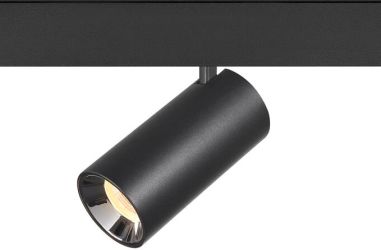
Top seller

SLV IN-LINE 44 48V TRACK, opal, DALI, spot, white 14W, 1180lm, 3000K, CRI90, 95°
€161.00
*
Availability:
Delivery time: 3-5 days
Delivery time: 3-5 days

SLV IN-LINE 24 48V TRACK, Move DALI, Darklight Reflector, spot, black / black, 7.3W, 610lm, 3000K
€131.25
*
Availability:
Delivery time: 3-5 days
Delivery time: 3-5 days

SLV IN-LINE 44 48V TRACK, Darklight Reflector, DALI, spot, black / black, 14W, 1230lm, 3000K
€174.13
*
Availability:
Currently not available
Currently not available

SLV IN-LINE 44 48V TRACK, opal, DALI, spot, black / black, 14W, 1180lm, 3000K, CRI90, 95°
€161.00
*
Availability:
Currently not available
Currently not available

SLV NUMINOS® S 48V TRACK, DALI, spot, black / black, 16W, 1060lm, 3000K, CRI90, 20°
€161.88
*
Availability:
Currently not available
Currently not available

ISOLED Track48 track light black, 7W, 30°, 48V DC, 3000K, CRI90
€36.03
*
incl. tax,
plus shipping costs
Availability:
Not in stock
Delivery time: approx. 2 weeks
Delivery time: approx. 2 weeks
Delivery time: approx. 2 weeks

SLV 48V SYSTEM, Intrack LED driver, 48VDC, 100 W, incl. 300 cm connection cable for 220-240VAC
€95.38
*
Availability:
Delivery time: 3-5 days
Delivery time: 3-5 days

SLV IN-LINE 22 48V TRACK, Darklight Reflector, DALI, spot, black / black, 7.3W, 610lm, 3000K
€122.50
*
Availability:
Currently not available
Currently not available
457
Articles
No results were found for the filter!

SLV NUMINOS® XS 48V TRACK, DALI, pendant light, white / white, 8.7W, 730lm, 3000K, CRI90, 20°
SLV NUMINOS® XS 48V TRACK, DALI, pendant light, white / white, 8.7W, 730lm, 3000K, CRI90, 20°
High-quality minimalism across the board: the compact NUMINOS® pendant lights provide elegant yet effective illumination with a 48V track system. They also perfectly complement the most...
€170.63
*
Availability:
Delivery time: 3-5 days
Delivery time: 3-5 days

SLV NUMINOS® S 48V TRACK, DALI, spot, white / black, 16W, 1060lm, 3000K, CRI90, 20°
SLV NUMINOS® S 48V TRACK, DALI, spot, white / black, 16W, 1060lm, 3000K, CRI90, 20°
High-quality minimalism across the board: the compact NUMINOS® spotlights provide elegant yet effective illumination with a 48V track system. They also perfectly complement the most discerning...
€161.88
*
Availability:
Delivery time: 3-5 days
Delivery time: 3-5 days

SLV NUMINOS® S 48V TRACK, DALI, spot, white / chrome, 16W, 1000lm, 2700K, CRI90, 40°
SLV NUMINOS® S 48V TRACK, DALI, spot, white / chrome, 16W, 1000lm, 2700K, CRI90, 40°
High-quality minimalism across the board: the compact NUMINOS® spotlights provide elegant yet effective illumination with a 48V track system. They also perfectly complement the most discerning...
€161.88
*
Availability:
Delivery time: 3-5 days
Delivery time: 3-5 days

SLV IN-LINE 46 48V TRACK, Move DALI, Darklight Reflector, spot, black / black, 14W, 1180lm, 2700K
SLV IN-LINE 46 48V TRACK, Move DALI, Darklight Reflector, spot, black / black, 14W, 1180lm, 2700K
Plain linear luminaires for a particularly elegant look: the IN-LINE spotlight is concealed within a 48V TRACK system, allowing only the best feature to surface: high-quality light with a 35°...
€182.88
*
Availability:
Delivery time: 3-5 days
Delivery time: 3-5 days

SLV IN-LINE 46 48V TRACK, Move DALI, Darklight Reflector, spot, white / white, 14W, 1180lm, 2700K
SLV IN-LINE 46 48V TRACK, Move DALI, Darklight Reflector, spot, white / white, 14W, 1180lm, 2700K
Plain linear luminaires for a particularly elegant look: the IN-LINE spotlight is concealed within a 48V TRACK system, allowing only the best feature to surface: high-quality light with a 35°...
€182.88
*
Availability:
Delivery time: 3-5 days
Delivery time: 3-5 days

SLV IN-LINE 46 48V TRACK, Move DALI, Darklight Reflector, spot, black / black, 14W, 1230lm, 3000K
SLV IN-LINE 46 48V TRACK, Move DALI, Darklight Reflector, spot, black / black, 14W, 1230lm, 3000K
Plain linear luminaires for a particularly elegant look: the IN-LINE spotlight is concealed within a 48V TRACK system, allowing only the best feature to surface: high-quality light with a 35°...
€182.88
*
Availability:
Delivery time: 3-5 days
Delivery time: 3-5 days
SLV IN-LINE 24 48V TRACK, Move DALI, Darklight Reflector, spot, black / black, 7.3W, 610lm, 3000K
SLV IN-LINE 24 48V TRACK, Move DALI, Darklight Reflector, spot, black / black, 7.3W, 610lm, 3000K
Plain linear luminaires for a particularly elegant look: the IN-LINE spotlight is concealed within a 48V TRACK system, allowing only the best feature to surface: high-quality light with a 35°...
€131.25
*
Availability:
Delivery time: 3-5 days
Delivery time: 3-5 days

SLV IN-LINE 24 48V TRACK, Move DALI, Darklight Reflector, spot, white / white, 7.3W, 610lm, 3000K
SLV IN-LINE 24 48V TRACK, Move DALI, Darklight Reflector, spot, white / white, 7.3W, 610lm, 3000K
Plain linear luminaires for a particularly elegant look: the IN-LINE spotlight is concealed within a 48V TRACK system, allowing only the best feature to surface: high-quality light with a 35°...
€131.25
*
Availability:
Delivery time: 3-5 days
Delivery time: 3-5 days

SLV IN-LINE 24 48V TRACK, Move DALI, Darklight Reflector, spot, white / white, 7.3W, 580lm, 2700K
SLV IN-LINE 24 48V TRACK, Move DALI, Darklight Reflector, spot, white / white, 7.3W, 580lm, 2700K
Plain linear luminaires for a particularly elegant look: the IN-LINE spotlight is concealed within a 48V TRACK system, allowing only the best feature to surface: high-quality light with a 35°...
€131.25
*
Availability:
Delivery time: 3-5 days
Delivery time: 3-5 days

SLV IN-LINE 44 48V TRACK, Darklight Reflector, DALI, spot, white / white, 14W, 1230lm, 3000K
SLV IN-LINE 44 48V TRACK, Darklight Reflector, DALI, spot, white / white, 14W, 1230lm, 3000K
Plain linear luminaires for a particularly elegant look: the IN-LINE spotlight is concealed within a 48V TRACK system, allowing only the best feature to surface: high-quality light with a 35°...
€174.13
*
Availability:
Delivery time: 3-5 days
Delivery time: 3-5 days

SLV IN-LINE 24 48V TRACK, Move DALI, Darklight Reflector, spot, black / black, 7.3W, 580lm, 2700K
SLV IN-LINE 24 48V TRACK, Move DALI, Darklight Reflector, spot, black / black, 7.3W, 580lm, 2700K
Plain linear luminaires for a particularly elegant look: the IN-LINE spotlight is concealed within a 48V TRACK system, allowing only the best feature to surface: high-quality light with a 35°...
€131.25
*
Availability:
Delivery time: 3-5 days
Delivery time: 3-5 days

SLV IN-LINE 44 48V TRACK, Darklight Reflector, DALI, spot, white / white, 14W, 1180lm, 2700K
SLV IN-LINE 44 48V TRACK, Darklight Reflector, DALI, spot, white / white, 14W, 1180lm, 2700K
Plain linear luminaires for a particularly elegant look: the IN-LINE spotlight is concealed within a 48V TRACK system, allowing only the best feature to surface: high-quality light with a 35°...
€174.13
*
Availability:
Delivery time: 3-5 days
Delivery time: 3-5 days

SLV IN-LINE 22 48V TRACK, Darklight Reflector, DALI, spot, white / white, 7.3W, 610lm, 3000K
SLV IN-LINE 22 48V TRACK, Darklight Reflector, DALI, spot, white / white, 7.3W, 610lm, 3000K
Plain linear luminaires for a particularly elegant look: the IN-LINE spotlight is concealed within a 48V TRACK system, allowing only the best feature to surface: high-quality light with a 35°...
€122.50
*
Availability:
Delivery time: 3-5 days
Delivery time: 3-5 days

SLV IN-LINE 22 48V TRACK, Darklight Reflector, DALI, spot, black / black, 7.3W, 580lm, 2700K
SLV IN-LINE 22 48V TRACK, Darklight Reflector, DALI, spot, black / black, 7.3W, 580lm, 2700K
Plain linear luminaires for a particularly elegant look: the IN-LINE spotlight is concealed within a 48V TRACK system, allowing only the best feature to surface: high-quality light with a 35°...
€122.50
*
Availability:
Delivery time: 3-5 days
Delivery time: 3-5 days

SLV IN-LINE 22 48V TRACK, Darklight Reflector, DALI, spot, white / white, 7.3W, 580lm, 2700K
SLV IN-LINE 22 48V TRACK, Darklight Reflector, DALI, spot, white / white, 7.3W, 580lm, 2700K
Plain linear luminaires for a particularly elegant look: the IN-LINE spotlight is concealed within a 48V TRACK system, allowing only the best feature to surface: high-quality light with a 35°...
€122.50
*
Availability:
Delivery time: 3-5 days
Delivery time: 3-5 days
SLV IN-LINE 44 48V TRACK, opal, DALI, spot, white 14W, 1180lm, 3000K, CRI90, 95°
SLV IN-LINE 44 48V TRACK, opal, DALI, spot, white 14W, 1180lm, 3000K, CRI90, 95°
Plain linear luminaires for a particularly elegant look: the IN-LINE spotlight is concealed within a 48V TRACK system, allowing only the best feature to surface: high-quality light with a 35°...
€161.00
*
Availability:
Delivery time: 3-5 days
Delivery time: 3-5 days

SLV IN-LINE 44 48V TRACK, opal, DALI, spot, black 14W, 1140lm, 2700K, CRI90, 95°
SLV IN-LINE 44 48V TRACK, opal, DALI, spot, black 14W, 1140lm, 2700K, CRI90, 95°
Plain linear luminaires for a particularly elegant look: the IN-LINE spotlight is concealed within a 48V TRACK system, allowing only the best feature to surface: high-quality light with a 35°...
 Express delivery possible


€161.00
*
Availability:
Delivery time: 1-3 days
Delivery time: 1-3 days

SLV IN-LINE 44 48V TRACK, opal, DALI, spot, white / white, 14W, 1140lm, 2700K, CRI90, 95°
SLV IN-LINE 44 48V TRACK, opal, DALI, spot, white / white, 14W, 1140lm, 2700K, CRI90, 95°
Plain linear luminaires for a particularly elegant look: the IN-LINE spotlight is concealed within a 48V TRACK system, allowing only the best feature to surface: high-quality light with a 35°...
€161.00
*
Availability:
Delivery time: 3-5 days
Delivery time: 3-5 days

SLV IN-LINE 22 48V TRACK, opal, DALI, spot, black / black, 7.3W, 570lm, 3000K, CRI90, 95°
SLV IN-LINE 22 48V TRACK, opal, DALI, spot, black / black, 7.3W, 570lm, 3000K, CRI90, 95°
Plain linear luminaires for a particularly elegant look: the IN-LINE spotlight is concealed within a 48V TRACK system, allowing only the best feature to surface: high-quality light with a 35°...
€109.38
*
Availability:
Delivery time: 3-5 days
Delivery time: 3-5 days

SLV IN-LINE 22 48V TRACK, opal, DALI, spot, white / white, 7.3W, 570lm, 3000K, CRI90, 95°
SLV IN-LINE 22 48V TRACK, opal, DALI, spot, white / white, 7.3W, 570lm, 3000K, CRI90, 95°
Plain linear luminaires for a particularly elegant look: the IN-LINE spotlight is concealed within a 48V TRACK system, allowing only the best feature to surface: high-quality light with a 35°...
€109.38
*
Availability:
Delivery time: 3-5 days
Delivery time: 3-5 days

SLV IN-LINE 22 48V TRACK, opal, DALI, spot, white 7.3W, 540lm, 2700K, CRI90, 95°
SLV IN-LINE 22 48V TRACK, opal, DALI, spot, white 7.3W, 540lm, 2700K, CRI90, 95°
Plain linear luminaires for a particularly elegant look: the IN-LINE spotlight is concealed within a 48V TRACK system, allowing only the best feature to surface: high-quality light with a 35°...
€109.38
*
Availability:
Delivery time: 3-5 days
Delivery time: 3-5 days

SLV IN-LINE 22 48V TRACK, opal, DALI, spot, black / black, 7.3W, 540lm, 2700K, CRI90, 95°
SLV IN-LINE 22 48V TRACK, opal, DALI, spot, black / black, 7.3W, 540lm, 2700K, CRI90, 95°
Plain linear luminaires for a particularly elegant look: the IN-LINE spotlight is concealed within a 48V TRACK system, allowing only the best feature to surface: high-quality light with a 35°...
€109.38
*
Availability:
Delivery time: 3-5 days
Delivery time: 3-5 days

SLV NUMINOS® XS 48V TRACK, DALI, spot, black / black, 8.7W, 690lm, 3000K, CRI90, 55°
SLV NUMINOS® XS 48V TRACK, DALI, spot, black / black, 8.7W, 690lm, 3000K, CRI90, 55°
High-quality minimalism across the board: the compact NUMINOS® spotlights provide elegant yet effective illumination with a 48V track system. They also perfectly complement the most discerning...
€153.13
*
Availability:
Delivery time: 3-5 days
Delivery time: 3-5 days

SLV NUMINOS® XS 48V TRACK, DALI, spot, black / black, 8.7W, 670lm, 3000K, CRI90, 40°
SLV NUMINOS® XS 48V TRACK, DALI, spot, black / black, 8.7W, 670lm, 3000K, CRI90, 40°
High-quality minimalism across the board: the compact NUMINOS® spotlights provide elegant yet effective illumination with a 48V track system. They also perfectly complement the most discerning...
€153.13
*
Availability:
Delivery time: 3-5 days
Delivery time: 3-5 days