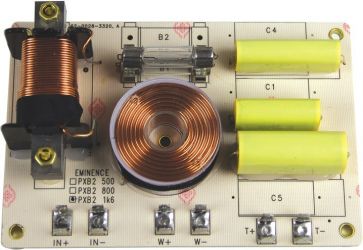
Frequency crossovers

Crossovers for Professional Event and Stage Audio – Overview: Welcome to the crossover range at LTT – your specialist for event technology. Whether you run a touring PA, equip a club or fine-tune stage monitors, the right crossover is the key to clean, powerful sound. Here You find passive networks, active analogue units and modern DSP controllers for every professional application. A crossover splits the audio signal by frequency and sends each band to the driver built for it. That protects Your tweeters...
Read more »
Frequency crossovers
Close window
Frequency crossovers

Crossovers for Professional Event and Stage Audio – Overview

Welcome to the crossover range at LTT – your specialist for event technology. Whether you run a touring PA, equip a club or fine-tune stage monitors, the right crossover is the key to clean, powerful sound. Here You find passive networks, active analogue units and modern DSP controllers for every professional application.

A crossover splits the audio signal by frequency and sends each band to the driver built for it. That protects Your tweeters and woofers, prevents distortion and delivers the balanced, punchy sound that live audiences expect. From compact 2-way networks to 19" speaker-management systems with EQ, limiter and delay, this category covers the full signal chain for professional sound engineers.

Browse hand-picked, high-quality branded products from the leading names in event audio – ready to ship fast from Germany and backed by a 3-year LTT warranty.

What Is a Crossover and Why Do You Need One? Fundamentals

A crossover (in German Frequenzweiche) is an audio component that divides a full-range signal into separate frequency bands and routes each band to the loudspeaker driver designed to reproduce it. The human hearing range spans roughly 20 Hz to 20 kHz, but no single driver can cover that full span cleanly. A tiny, lightweight tweeter reproduces high frequencies with ease, while a large, heavy woofer moves the air needed for deep bass. A crossover makes sure each driver receives only the frequencies it handles well.

Why a crossover matters

Without a crossover, every driver in a multi-way loudspeaker would try to reproduce the entire spectrum at once. The result is smeared vocals, muddy bass and harsh, distorted highs. Worse, feeding low-frequency energy to a tweeter can physically destroy it. A crossover therefore fulfils two jobs at once: it optimises sound quality and it protects Your drivers from damage.

How a crossover differs from an equaliser or a mixer

Unlike an equaliser, which shapes the tonal balance within a band, a crossover splits the signal into distinct bands (high, mid, low). Unlike a mixer, which combines and levels multiple sources, a crossover sits later in the signal path and distributes one signal across matching amplifiers and drivers. In a professional PA, the crossover is the dividing gate between the amplifier stage and the loudspeakers – a role no other device replaces. This distinction matters when You plan a stage system: a mixer, an EQ and a crossover each do a different job in the chain.

How Crossovers Work: High-Pass, Low-Pass and Band-Pass Filters

A crossover works by combining electronic filters that let certain frequencies through and block others. Understanding these filters helps You match a crossover to Your speaker system.

The three basic filter types

  • Low-pass filter: Passes low frequencies to the woofer and blocks the highs. It relies on an inductor coil, which presents a rising resistance to high frequencies.
  • High-pass filter: Passes high frequencies to the tweeter and blocks the lows. It uses a capacitor, which presents a rising resistance to low frequencies.
  • Band-pass filter: Combines a high-pass and a low-pass filter to pass only a defined middle band – ideal for the midrange driver in a 3-way system.

The components inside

A passive crossover is built from capacitors, inductor coils (inductors) and resistors. Capacitors block low frequencies while inductors block high frequencies, so combining them creates the required filter functions. Resistors add damping and level matching. For a simple passive high-pass, the capacitor value follows the formula C = 1 / (2π × f × R), where C is capacitance, f the crossover frequency and R the driver impedance.

Filter slope and filter order

The filter order describes how sharply the crossover separates the bands – known as the slope, measured in decibels per octave. Each order adds roughly 6 dB/octave: a 1st-order filter gives 6 dB/octave, a 2nd-order LC filter 12 dB/octave, and a 4th-order design 24 dB/octave. Common design families include Butterworth (flat amplitude response), Bessel (excellent phase linearity) and Linkwitz-Riley (steep slope with matched phase at the crossover point), the last being a favourite for high-quality PA systems. A steeper slope keeps frequencies out of the wrong driver more effectively but introduces more phase shift.

Passive vs. Active Crossovers – Which Is Right for Your PA?

The most important choice when buying a crossover is between passive and active designs. Both split the signal, but they sit at different points in the signal path and offer different levels of control.

Passive crossovers

A passive crossover needs no external power. It sits between the amplifier and the loudspeaker, usually built directly into the speaker cabinet. Its big advantage is simplicity: a single power amplifier drives the whole speaker, and there is no extra power supply to worry about. Because the components handle the full amplifier output, the inductors and capacitors are physically large, and some energy is lost as heat. Passive networks are common in point-source PA tops and passive stage monitors.

Active crossovers

An active crossover needs a power supply and is placed before the amplifiers, splitting the signal at line level. Each frequency band then gets its own dedicated amplifier – a setup known as bi-amping or tri-amping. Because the signal is split before amplification, active crossovers offer far greater precision and flexibility, and overload protection is easier to build in. In event technology, active crossovers often appear as 19" DSP controllers with built-in EQ, limiter, compressor and delay – true speaker-management systems for configuring an entire stage rig.

Which one for Your system?

For a plug-and-play passive PA speaker, a passive crossover inside the cabinet is all You need. For a demanding touring or install system where a sound engineer wants full control over crossover frequency, delay and driver protection, an active DSP crossover is the professional choice.

Types and Variants: 2-Way, 3-Way and DSP Crossovers for Live Sound

Crossovers come in several configurations, and choosing the right number of ways defines how finely Your system is tuned.

Common configurations

  • 2-way crossover: Splits the signal into high and low bands, feeding a tweeter and a woofer. This is the standard for compact PA tops and many stage monitors.
  • 3-way crossover: Splits into high, mid and low, adding a dedicated midrange driver for clearer vocals and instruments. More ways mean finer tuning across the spectrum.
  • Dedicated subwoofer and tweeter crossovers: Purpose-built filters that either send only the lows to a sub or protect a tweeter from damaging low frequencies.

DSP crossovers and speaker management

For professional live sound, digital DSP crossovers dominate. Built into 19" speaker controllers, they realise filter functions inside a digital signal processor. Beyond dividing the bands, a DSP controller adds parametric EQ, limiters, compressors and precise delay so You can time-align tops and subs on a large stage. High filter orders are easy to achieve digitally, and presets let a sound engineer recall a proven system tuning in seconds.

Analogue active variants

Between passive networks and full DSP, analogue active crossovers use op-amps and transistors to split the signal at line level, typically with 2nd- to 8th-order filters. They bridge the gap for engineers who want active flexibility without a full digital front end.

Comparison: Passive vs. Active vs. DSP Crossovers

The comparison below shows the key differences between the three crossover types so You can pick the optimal solution for Your setup.

Criterion Passive crossover Active analogue crossover Active DSP crossover
Power supply Not required Required Required
Position in signal path After amplifier, before speaker Before amplifiers (line level) Before amplifiers (line level)
Amplifiers needed One per speaker One per band (bi-/tri-amping) One per band (bi-/tri-amping)
Precision & flexibility Basic, fixed tuning High, adjustable Very high, fully programmable
Extra functions None Level, limited EQ EQ, limiter, compressor, delay, presets
Typical use case Passive PA tops, monitors Compact bi-amp rigs Touring & install systems
Typical price level Low Medium Medium to high
Best for Plug-and-play setups Engineers wanting active control Professional stage & venue systems

For most passive PA speakers a built-in passive network is sufficient, while touring engineers and venue operators benefit from the fine control of a DSP crossover. If You mainly need clean bi-amping without digital processing, an analogue active crossover is a cost-effective middle ground.

Technical Buying Criteria: Impedance, Power Handling and Slope

When You buy a crossover, a few concrete technical values decide whether it fits Your loudspeakers and delivers beautiful results.

Impedance matching

The crossover must match the impedance of Your drivers. Common PA impedances are 2, 4 and 8 Ohm. A passive network is calculated for a specific impedance – using it with a mismatched driver shifts the crossover frequency and degrades the sound. Many quality passive crossovers include impedance linearisation so they work reliably across 2, 4 and 8 Ohm systems.

Power handling

A passive crossover sits in the full amplifier path, so its components must handle the system power. Check the rated power (in watts) against Your amplifier and speaker rating. Undersized inductors and capacitors overheat and fail under load, especially in high-output touring use.

Crossover frequency and slope

Select a crossover frequency that suits Your drivers – for example around 2–3 kHz between a woofer and a tweeter. The slope (6, 12, 18 or 24 dB/octave) determines how cleanly the bands separate. Steeper slopes protect drivers better but add phase shift near the crossover point.

Components and protection

High-quality crossovers use MKP film capacitors, low-loss ferrite or air-core coils and precise resistors. Look for PTC tweeter protection, which raises its resistance as it heats up and shields the tweeter from overload. Clean wiring, correct layout and short lead lengths also matter, because poor placement causes electromagnetic interference and audible losses.

Buying Guide: How to Choose the Right Crossover for Your Speaker System

Choosing the right crossover comes down to matching it to Your loudspeakers, Your amplifiers and the size of Your system. Follow these steps for a confident purchase.

  1. Define Your system type. Are You wiring a passive PA top, building an active bi-amp rig, or configuring a full touring stack? This decides passive vs. active vs. DSP.
  2. Match impedance and power. Confirm the crossover matches Your driver impedance (2/4/8 Ohm) and can handle the amplifier power without overheating.
  3. Choose the number of ways. Use a 2-way crossover for tops and monitors, a 3-way for full-range systems that need a dedicated midrange, and dedicated sub crossovers for a subwoofer array.
  4. Pick the right functions. If You need delay, EQ and limiting to align a stage system, an active DSP controller is the optimal solution. For simple setups, a passive network keeps things fast and reliable.
  5. Consider slope and design. Linkwitz-Riley designs suit high-quality PA systems thanks to their steep slope and matched phase.

Pro tip on integration

In a full event PA, the crossover sits between Your mixer or DSP and Your amplifiers and speakers. Planning the whole signal path – source, processing, crossover, amplification, loudspeaker – ensures every component works together and Your system delivers impressive results on stage.

Brands and Manufacturers at LTT

As a specialist for event technology, LTT stocks high-quality branded products for professional PA and live sound rather than DIY hi-fi parts. In the crossover and speaker-management range You find trusted names used by sound engineers, DJs, bands and venues every day.

Among the leading manufacturers in this category are Cameo, LD Systems, Showtec, Eurolite and Omnitronic – covering everything from compact passive networks to full 19" DSP controllers. These brands are known for reliable components, robust build quality and features that stand up to touring and install use.

Because LTT works with all the major event-audio brands, You can match Your crossover to Your existing amplifiers and PA loudspeakers from a single source. Whether You need a simple passive crossover for a monitor or a programmable speaker-management system for a large stage, You get manufacturer variety, expert advice and genuine spare parts in one place.

Accessories and Related Components for Your Crossover System

A crossover rarely works alone – the right accessories complete Your signal chain and keep the system running reliably.

Matching equipment

  • Power amplifiers: Active crossovers and DSP controllers need one amplifier per band for bi-amping or tri-amping.
  • PA loudspeakers and stage monitors: The drivers that actually reproduce each frequency band.
  • Speaker and signal cables: Quality cabling with reliable connectors preserves signal integrity and avoids losses.
  • 19" rack cases: Protect DSP controllers and amplifiers during transport and install.

Spare parts

For passive networks, replacement MKP capacitors, ferrite coils and resistors let You service or upgrade a crossover. PTC protection devices can also be replaced if a tweeter circuit has been overloaded.

When You plan a purchase, think of the crossover as one link in a chain that runs from Your mixer through processing, crossover, amplification and finally to Your loudspeakers – every accessory in that chain contributes to the final result.

Recommendations for DJs, Bands and Venue Operators

The best crossover depends on who You are and how You use Your system. Here is tailored guidance for the main event-audio user types.

For DJs

Most mobile DJs run active PA tops with built-in processing, so a simple passive crossover inside the speaker is usually enough. If You add separate subwoofers, a compact active crossover or a small DSP controller lets You split highs and lows cleanly and protect Your tops.

For bands

Bands touring with passive PA speakers benefit from a robust passive network for reliability, or a straightforward active analogue crossover if the setup uses separate amps for tops and subs. Priority: durability and fast setup.

For venue operators and sound engineers

Clubs, theatres and installed venues get the most from a 19" DSP crossover. Full EQ, limiter, delay and recallable presets let a sound engineer time-align the system, protect every driver and deliver consistent sound night after night – the professional choice for permanent stage and venue systems.

Entry-level vs. pro

If You are starting out, a passive or basic active crossover keeps things affordable and simple. As Your ambitions grow, a DSP speaker-management system gives You the precision and flexibility to get the most out of every loudspeaker.

LTT – Your Specialist for Event Technology

With more than 25 years of experience in event technology, LTT is your reliable partner for professional audio – from single crossovers to complete stage systems. As a manufacturer with our own production in Germany, we know what durability and performance mean on the road and in permanent installations.

Every order ships fast from Bocholt, Germany, with free shipping from €69, optional express delivery and a 3-year LTT warranty for peace of mind. Reseller and wholesale customers benefit from dedicated trade conditions and our international dealer network.

Looking to build out Your rig? Combine Your crossover with matching PA loudspeakers, power amplifiers and stage monitors, or explore our cabling and rack cases to complete the signal chain. Whatever Your project, LTT helps You put Your sound in the spotlight and achieve impressive results – with expert advice and high-quality branded products from a single source.

FAQ – Questions & Answers

What is a crossover?

A crossover is an audio component that splits a full-range signal into separate frequency bands and routes each band to the loudspeaker driver built to reproduce it. Because the human hearing range spans roughly 20 Hz to 20 kHz and no single driver covers it cleanly, a crossover sends lows to the woofer, mids to the midrange driver and highs to the tweeter. This improves sound quality, prevents distortion and protects drivers from damage. Crossovers are essential in every multi-way PA loudspeaker and stage monitor.

What is a frequency crossover (Frequenzweiche)?

A frequency crossover, known in German as a Frequenzweiche, is the network of filters that divides an audio signal by frequency inside or ahead of a loudspeaker. A frequency crossover uses high-pass, low-pass and band-pass filters – built from capacitors, inductor coils and resistors – to make sure each driver receives only the frequencies it handles well. In professional event technology, a frequency crossover can be a passive network inside the speaker or an active 19" DSP controller placed before the amplifiers for full control over the sound.

When do you need a crossover?

You need a crossover whenever a loudspeaker uses more than one driver – for example a tweeter and a woofer, or a full 3-way system. Because different drivers are optimised for different frequency ranges, a crossover ensures each one only receives its intended band. Without a crossover, every driver would try to reproduce the whole spectrum, causing distortion, muddy sound and potential damage to the tweeter. In a PA rig, You also need a crossover to split highs and lows between separate tops and subwoofers driven by different amplifiers.

Which crossover is the best?

There is no single best crossover – the best choice depends on Your system. For plug-and-play passive PA speakers, a well-matched passive crossover with quality MKP capacitors and PTC tweeter protection is ideal. For touring and installed venue systems, an active 19" DSP crossover is usually the best option, because it adds EQ, limiter, compressor and delay for precise system tuning. The best crossover is the one that matches Your driver impedance, power handling and application, and that comes from a trusted event-audio brand such as Cameo, LD Systems or Showtec.

How do I choose the right crossover for my speaker system?

To choose the right crossover, match it to Your loudspeakers and amplifiers. First confirm the impedance (commonly 2, 4 or 8 Ohm) and the power handling in watts against Your system rating. Next decide on the configuration: a 2-way crossover for tops and monitors, a 3-way for full-range systems, or a dedicated crossover for subwoofers. Then choose passive for simple setups or active DSP if You need delay, EQ and limiting to align a stage system. Finally, pick a suitable crossover frequency and slope so the bands separate cleanly.

How do you calculate a crossover?

You calculate a passive crossover from the desired crossover frequency and the driver impedance. For a simple first-order high-pass, the capacitor value follows the formula C = 1 / (2π × f × R), where C is capacitance, f the crossover frequency and R the driver impedance in Ohm. The inductor for the low-pass follows a matching formula based on the same values. Higher-order filters (12, 18 or 24 dB/octave) and 3-way designs need more precise calculations to avoid phase cancellation and level dips. Design families such as Butterworth and Linkwitz-Riley provide proven starting values.

What is the difference between a passive and an active crossover?

The difference between a passive and an active crossover lies in power and position. A passive crossover needs no power supply and sits between the amplifier and the loudspeaker, usually inside the cabinet, driven by a single amplifier. An active crossover needs power and sits before the amplifiers at line level, giving each frequency band its own dedicated amplifier – a setup called bi-amping. Active crossovers, especially DSP controllers, offer far greater precision and flexibility with EQ, limiter and delay, while passive crossovers are simpler and require no extra power.

What does a crossover cost?

The cost of a crossover depends on its type and features. Simple passive crossover networks for a single speaker start at a low price point, while quality passive units with impedance linearisation and PTC tweeter protection sit in the mid range. Active analogue crossovers cost more because they need power and offer adjustable filters. Full 19" DSP crossovers and speaker-management systems with EQ, limiter, compressor and delay are the most expensive, but they deliver professional-grade control. At LTT You find crossovers across all price levels, backed by a 3-year warranty and free shipping from €69.

Top seller
OMNITRONIC XO-230 Aktive Frequenzweiche
OMNITRONIC XO-230 Active Crossover
€105.01 *
incl. tax, free shipping to Germany
[International shipping costs]
Availability:
Delivery time: 3-5 days
DAP-AudioDCP-26 MKII Digital Cross Over 2-in, 6-out
DAP-Audio DCP-26 MKII 6-channel digital crossover
€289.00 *
incl. tax, free shipping to Germany
[International shipping costs]
Availability:
Delivery time: 3-5 days
DAP-Audio DCP-24 MKII Digital Cross Over 2-in, 4-out
DAP-Audio DCP-24 MKII 4-channel digital crossover
€268.15 *
incl. tax, free shipping to Germany
[International shipping costs]
Availability:
Delivery time: 3-5 days
OMNITRONIC XO-300 Aktive Frequenzweiche
OMNITRONIC XO-300 Active Crossover
€120.38 *
incl. tax, free shipping to Germany
[International shipping costs]
Availability:
Delivery time: 3-5 days
dbx 223XS -  Stereo 2-Weg / Mono 3-Weg Frequenzweiche
dbx 223XS Stereo 2-Way/Mono 3-Way Crossover with XLR Connectors
€229.00 *
incl. tax, free shipping to Germany
[International shipping costs]
Availability:
Delivery time: 3-5 days
IMG STAGE LINE MCX-200/SW Elektronische Frequenzweiche
MONACOR MCX-200/SW Electronic stereo crossover network
€117.00 *
incl. tax, free shipping to Germany
[International shipping costs]
Availability:
Delivery time: 3-5 days
LD Systems X 223 Frequenzweiche aktiv
LD Systems X 223 - Active Crossover
€153.50 *
incl. tax, free shipping to Germany
[International shipping costs]
Availability:
Currently not available
8 Articles
Close filters
  •  
  •  
  •  
  •  
  •  
from to
No results were found for the filter!
IMG STAGE LINE MCX-200/SW Elektronische Frequenzweiche
MONACOR MCX-200/SW Electronic stereo crossover network
Electronic stereo crossover network Subwoofer operation/satellite operation • Additional mono subwoofer output • Output level can be adjusted individually for each frequency range...
€117.00 *
incl. tax, free shipping to Germany
[International shipping costs]
Availability:
Delivery time: 3-5 days
OMNITRONIC XO-300 Aktive Frequenzweiche
OMNITRONIC XO-300 Active Crossover
Active crossover, stereo 3-way operation 3-way stereo operation • Variable 24 dB per octave Linkwitz-Riley filters • Individual output level controls for each frequency range...
€120.38 *
incl. tax, free shipping to Germany
[International shipping costs]
Availability:
Delivery time: 3-5 days
OMNITRONIC XO-230 Aktive Frequenzweiche
OMNITRONIC XO-230 Active Crossover
Active crossover, stereo 2-way and mono 3-way operation 2-way or 3-way stereo operation • Variable 24 dB per octave Linkwitz-Riley filters • Crossover frequencies continuously adjustable...
€105.01 *
incl. tax, free shipping to Germany
[International shipping costs]
Availability:
Delivery time: 3-5 days
DAP-AudioDCP-26 MKII Digital Cross Over 2-in, 6-out
DAP-Audio DCP-26 MKII 6-channel digital crossover
48 kHz, 64 Bits Sample rate • 5 parametric EQs each in- and output • Limiter, delay, reverse and volume control • USB interface and user-friendly software included • 50 User...
€289.00 *
incl. tax, free shipping to Germany
[International shipping costs]
Availability:
Delivery time: 3-5 days
DAP-Audio DCP-24 MKII Digital Cross Over 2-in, 4-out
DAP-Audio DCP-24 MKII 4-channel digital crossover
48 kHz, 64-bit Sample rate • 5 parametric EQs each in- and output • Limiter, delay, reverse and volume control • USB interface and user-friendly software included • 50 user...
€268.15 *
incl. tax, free shipping to Germany
[International shipping costs]
Availability:
Delivery time: 3-5 days
dbx 223XS -  Stereo 2-Weg / Mono 3-Weg Frequenzweiche
dbx 223XS Stereo 2-Way/Mono 3-Way Crossover with XLR Connectors
More sound to your amps and speakers The secret to making speakers sound great lies with the crossover you use. With the dbx® 223xs Crossover you'll get great performance, ultra low-noise,...
€229.00 *
incl. tax, free shipping to Germany
[International shipping costs]
Availability:
Delivery time: 3-5 days
dbx 234S - Stereo 3-Weg / Mono 4-Weg Frequenzweiche
dbx 234s Stereo 2/3 Way, Mono 4-Way Crossover
More sound to your amps and speakers The secret to making speakers sound great lies with the crossover you use. With the dbx® 234s Crossover you'll get great performance, ultra low-noise,...
€250.00 *
incl. tax, free shipping to Germany
[International shipping costs]
Availability:
Delivery time: 3-5 days
LD Systems X 223 Frequenzweiche aktiv
LD Systems X 223 - Active Crossover
Active Crossover The LD Systems X223 is a stereo 2 way / mono 3 way crossover in standard 19"/1U rack format. Its rugged construction, high quality and robust knobs as well as the integrated...
€153.50 *
incl. tax, free shipping to Germany
[International shipping costs]
Availability:
Currently not available
Facts
Crossovers for Professional Event and Stage Audio – Overview: Welcome to the crossover range at LTT – your specialist for event technology. Whether you run a touring PA, equip a club or fine-tune stage monitors, the right crossover is the key to clean, powerful sound. Here You find passive networks, active analogue units and modern DSP controllers for every professional application. A crossover splits the audio signal by frequency and... Read more »
Viewed
Facts

Crossovers for Professional Event and Stage Audio – Overview

Welcome to the crossover range at LTT – your specialist for event technology. Whether you run a touring PA, equip a club or fine-tune stage monitors, the right crossover is the key to clean, powerful sound. Here You find passive networks, active analogue units and modern DSP controllers for every professional application.

A crossover splits the audio signal by frequency and sends each band to the driver built for it. That protects Your tweeters and woofers, prevents distortion and delivers the balanced, punchy sound that live audiences expect. From compact 2-way networks to 19" speaker-management systems with EQ, limiter and delay, this category covers the full signal chain for professional sound engineers.

Browse hand-picked, high-quality branded products from the leading names in event audio – ready to ship fast from Germany and backed by a 3-year LTT warranty.

What Is a Crossover and Why Do You Need One? Fundamentals

A crossover (in German Frequenzweiche) is an audio component that divides a full-range signal into separate frequency bands and routes each band to the loudspeaker driver designed to reproduce it. The human hearing range spans roughly 20 Hz to 20 kHz, but no single driver can cover that full span cleanly. A tiny, lightweight tweeter reproduces high frequencies with ease, while a large, heavy woofer moves the air needed for deep bass. A crossover makes sure each driver receives only the frequencies it handles well.

Why a crossover matters

Without a crossover, every driver in a multi-way loudspeaker would try to reproduce the entire spectrum at once. The result is smeared vocals, muddy bass and harsh, distorted highs. Worse, feeding low-frequency energy to a tweeter can physically destroy it. A crossover therefore fulfils two jobs at once: it optimises sound quality and it protects Your drivers from damage.

How a crossover differs from an equaliser or a mixer

Unlike an equaliser, which shapes the tonal balance within a band, a crossover splits the signal into distinct bands (high, mid, low). Unlike a mixer, which combines and levels multiple sources, a crossover sits later in the signal path and distributes one signal across matching amplifiers and drivers. In a professional PA, the crossover is the dividing gate between the amplifier stage and the loudspeakers – a role no other device replaces. This distinction matters when You plan a stage system: a mixer, an EQ and a crossover each do a different job in the chain.

How Crossovers Work: High-Pass, Low-Pass and Band-Pass Filters

A crossover works by combining electronic filters that let certain frequencies through and block others. Understanding these filters helps You match a crossover to Your speaker system.

The three basic filter types

  • Low-pass filter: Passes low frequencies to the woofer and blocks the highs. It relies on an inductor coil, which presents a rising resistance to high frequencies.
  • High-pass filter: Passes high frequencies to the tweeter and blocks the lows. It uses a capacitor, which presents a rising resistance to low frequencies.
  • Band-pass filter: Combines a high-pass and a low-pass filter to pass only a defined middle band – ideal for the midrange driver in a 3-way system.

The components inside

A passive crossover is built from capacitors, inductor coils (inductors) and resistors. Capacitors block low frequencies while inductors block high frequencies, so combining them creates the required filter functions. Resistors add damping and level matching. For a simple passive high-pass, the capacitor value follows the formula C = 1 / (2π × f × R), where C is capacitance, f the crossover frequency and R the driver impedance.

Filter slope and filter order

The filter order describes how sharply the crossover separates the bands – known as the slope, measured in decibels per octave. Each order adds roughly 6 dB/octave: a 1st-order filter gives 6 dB/octave, a 2nd-order LC filter 12 dB/octave, and a 4th-order design 24 dB/octave. Common design families include Butterworth (flat amplitude response), Bessel (excellent phase linearity) and Linkwitz-Riley (steep slope with matched phase at the crossover point), the last being a favourite for high-quality PA systems. A steeper slope keeps frequencies out of the wrong driver more effectively but introduces more phase shift.

Passive vs. Active Crossovers – Which Is Right for Your PA?

The most important choice when buying a crossover is between passive and active designs. Both split the signal, but they sit at different points in the signal path and offer different levels of control.

Passive crossovers

A passive crossover needs no external power. It sits between the amplifier and the loudspeaker, usually built directly into the speaker cabinet. Its big advantage is simplicity: a single power amplifier drives the whole speaker, and there is no extra power supply to worry about. Because the components handle the full amplifier output, the inductors and capacitors are physically large, and some energy is lost as heat. Passive networks are common in point-source PA tops and passive stage monitors.

Active crossovers

An active crossover needs a power supply and is placed before the amplifiers, splitting the signal at line level. Each frequency band then gets its own dedicated amplifier – a setup known as bi-amping or tri-amping. Because the signal is split before amplification, active crossovers offer far greater precision and flexibility, and overload protection is easier to build in. In event technology, active crossovers often appear as 19" DSP controllers with built-in EQ, limiter, compressor and delay – true speaker-management systems for configuring an entire stage rig.

Which one for Your system?

For a plug-and-play passive PA speaker, a passive crossover inside the cabinet is all You need. For a demanding touring or install system where a sound engineer wants full control over crossover frequency, delay and driver protection, an active DSP crossover is the professional choice.

Types and Variants: 2-Way, 3-Way and DSP Crossovers for Live Sound

Crossovers come in several configurations, and choosing the right number of ways defines how finely Your system is tuned.

Common configurations

  • 2-way crossover: Splits the signal into high and low bands, feeding a tweeter and a woofer. This is the standard for compact PA tops and many stage monitors.
  • 3-way crossover: Splits into high, mid and low, adding a dedicated midrange driver for clearer vocals and instruments. More ways mean finer tuning across the spectrum.
  • Dedicated subwoofer and tweeter crossovers: Purpose-built filters that either send only the lows to a sub or protect a tweeter from damaging low frequencies.

DSP crossovers and speaker management

For professional live sound, digital DSP crossovers dominate. Built into 19" speaker controllers, they realise filter functions inside a digital signal processor. Beyond dividing the bands, a DSP controller adds parametric EQ, limiters, compressors and precise delay so You can time-align tops and subs on a large stage. High filter orders are easy to achieve digitally, and presets let a sound engineer recall a proven system tuning in seconds.

Analogue active variants

Between passive networks and full DSP, analogue active crossovers use op-amps and transistors to split the signal at line level, typically with 2nd- to 8th-order filters. They bridge the gap for engineers who want active flexibility without a full digital front end.

Comparison: Passive vs. Active vs. DSP Crossovers

The comparison below shows the key differences between the three crossover types so You can pick the optimal solution for Your setup.

Criterion Passive crossover Active analogue crossover Active DSP crossover
Power supply Not required Required Required
Position in signal path After amplifier, before speaker Before amplifiers (line level) Before amplifiers (line level)
Amplifiers needed One per speaker One per band (bi-/tri-amping) One per band (bi-/tri-amping)
Precision & flexibility Basic, fixed tuning High, adjustable Very high, fully programmable
Extra functions None Level, limited EQ EQ, limiter, compressor, delay, presets
Typical use case Passive PA tops, monitors Compact bi-amp rigs Touring & install systems
Typical price level Low Medium Medium to high
Best for Plug-and-play setups Engineers wanting active control Professional stage & venue systems

For most passive PA speakers a built-in passive network is sufficient, while touring engineers and venue operators benefit from the fine control of a DSP crossover. If You mainly need clean bi-amping without digital processing, an analogue active crossover is a cost-effective middle ground.

Technical Buying Criteria: Impedance, Power Handling and Slope

When You buy a crossover, a few concrete technical values decide whether it fits Your loudspeakers and delivers beautiful results.

Impedance matching

The crossover must match the impedance of Your drivers. Common PA impedances are 2, 4 and 8 Ohm. A passive network is calculated for a specific impedance – using it with a mismatched driver shifts the crossover frequency and degrades the sound. Many quality passive crossovers include impedance linearisation so they work reliably across 2, 4 and 8 Ohm systems.

Power handling

A passive crossover sits in the full amplifier path, so its components must handle the system power. Check the rated power (in watts) against Your amplifier and speaker rating. Undersized inductors and capacitors overheat and fail under load, especially in high-output touring use.

Crossover frequency and slope

Select a crossover frequency that suits Your drivers – for example around 2–3 kHz between a woofer and a tweeter. The slope (6, 12, 18 or 24 dB/octave) determines how cleanly the bands separate. Steeper slopes protect drivers better but add phase shift near the crossover point.

Components and protection

High-quality crossovers use MKP film capacitors, low-loss ferrite or air-core coils and precise resistors. Look for PTC tweeter protection, which raises its resistance as it heats up and shields the tweeter from overload. Clean wiring, correct layout and short lead lengths also matter, because poor placement causes electromagnetic interference and audible losses.

Buying Guide: How to Choose the Right Crossover for Your Speaker System

Choosing the right crossover comes down to matching it to Your loudspeakers, Your amplifiers and the size of Your system. Follow these steps for a confident purchase.

  1. Define Your system type. Are You wiring a passive PA top, building an active bi-amp rig, or configuring a full touring stack? This decides passive vs. active vs. DSP.
  2. Match impedance and power. Confirm the crossover matches Your driver impedance (2/4/8 Ohm) and can handle the amplifier power without overheating.
  3. Choose the number of ways. Use a 2-way crossover for tops and monitors, a 3-way for full-range systems that need a dedicated midrange, and dedicated sub crossovers for a subwoofer array.
  4. Pick the right functions. If You need delay, EQ and limiting to align a stage system, an active DSP controller is the optimal solution. For simple setups, a passive network keeps things fast and reliable.
  5. Consider slope and design. Linkwitz-Riley designs suit high-quality PA systems thanks to their steep slope and matched phase.

Pro tip on integration

In a full event PA, the crossover sits between Your mixer or DSP and Your amplifiers and speakers. Planning the whole signal path – source, processing, crossover, amplification, loudspeaker – ensures every component works together and Your system delivers impressive results on stage.

Brands and Manufacturers at LTT

As a specialist for event technology, LTT stocks high-quality branded products for professional PA and live sound rather than DIY hi-fi parts. In the crossover and speaker-management range You find trusted names used by sound engineers, DJs, bands and venues every day.

Among the leading manufacturers in this category are Cameo, LD Systems, Showtec, Eurolite and Omnitronic – covering everything from compact passive networks to full 19" DSP controllers. These brands are known for reliable components, robust build quality and features that stand up to touring and install use.

Because LTT works with all the major event-audio brands, You can match Your crossover to Your existing amplifiers and PA loudspeakers from a single source. Whether You need a simple passive crossover for a monitor or a programmable speaker-management system for a large stage, You get manufacturer variety, expert advice and genuine spare parts in one place.

Accessories and Related Components for Your Crossover System

A crossover rarely works alone – the right accessories complete Your signal chain and keep the system running reliably.

Matching equipment

  • Power amplifiers: Active crossovers and DSP controllers need one amplifier per band for bi-amping or tri-amping.
  • PA loudspeakers and stage monitors: The drivers that actually reproduce each frequency band.
  • Speaker and signal cables: Quality cabling with reliable connectors preserves signal integrity and avoids losses.
  • 19" rack cases: Protect DSP controllers and amplifiers during transport and install.

Spare parts

For passive networks, replacement MKP capacitors, ferrite coils and resistors let You service or upgrade a crossover. PTC protection devices can also be replaced if a tweeter circuit has been overloaded.

When You plan a purchase, think of the crossover as one link in a chain that runs from Your mixer through processing, crossover, amplification and finally to Your loudspeakers – every accessory in that chain contributes to the final result.

Recommendations for DJs, Bands and Venue Operators

The best crossover depends on who You are and how You use Your system. Here is tailored guidance for the main event-audio user types.

For DJs

Most mobile DJs run active PA tops with built-in processing, so a simple passive crossover inside the speaker is usually enough. If You add separate subwoofers, a compact active crossover or a small DSP controller lets You split highs and lows cleanly and protect Your tops.

For bands

Bands touring with passive PA speakers benefit from a robust passive network for reliability, or a straightforward active analogue crossover if the setup uses separate amps for tops and subs. Priority: durability and fast setup.

For venue operators and sound engineers

Clubs, theatres and installed venues get the most from a 19" DSP crossover. Full EQ, limiter, delay and recallable presets let a sound engineer time-align the system, protect every driver and deliver consistent sound night after night – the professional choice for permanent stage and venue systems.

Entry-level vs. pro

If You are starting out, a passive or basic active crossover keeps things affordable and simple. As Your ambitions grow, a DSP speaker-management system gives You the precision and flexibility to get the most out of every loudspeaker.

LTT – Your Specialist for Event Technology

With more than 25 years of experience in event technology, LTT is your reliable partner for professional audio – from single crossovers to complete stage systems. As a manufacturer with our own production in Germany, we know what durability and performance mean on the road and in permanent installations.

Every order ships fast from Bocholt, Germany, with free shipping from €69, optional express delivery and a 3-year LTT warranty for peace of mind. Reseller and wholesale customers benefit from dedicated trade conditions and our international dealer network.

Looking to build out Your rig? Combine Your crossover with matching PA loudspeakers, power amplifiers and stage monitors, or explore our cabling and rack cases to complete the signal chain. Whatever Your project, LTT helps You put Your sound in the spotlight and achieve impressive results – with expert advice and high-quality branded products from a single source.

FAQ – Questions & Answers

What is a crossover?

A crossover is an audio component that splits a full-range signal into separate frequency bands and routes each band to the loudspeaker driver built to reproduce it. Because the human hearing range spans roughly 20 Hz to 20 kHz and no single driver covers it cleanly, a crossover sends lows to the woofer, mids to the midrange driver and highs to the tweeter. This improves sound quality, prevents distortion and protects drivers from damage. Crossovers are essential in every multi-way PA loudspeaker and stage monitor.

What is a frequency crossover (Frequenzweiche)?

A frequency crossover, known in German as a Frequenzweiche, is the network of filters that divides an audio signal by frequency inside or ahead of a loudspeaker. A frequency crossover uses high-pass, low-pass and band-pass filters – built from capacitors, inductor coils and resistors – to make sure each driver receives only the frequencies it handles well. In professional event technology, a frequency crossover can be a passive network inside the speaker or an active 19" DSP controller placed before the amplifiers for full control over the sound.

When do you need a crossover?

You need a crossover whenever a loudspeaker uses more than one driver – for example a tweeter and a woofer, or a full 3-way system. Because different drivers are optimised for different frequency ranges, a crossover ensures each one only receives its intended band. Without a crossover, every driver would try to reproduce the whole spectrum, causing distortion, muddy sound and potential damage to the tweeter. In a PA rig, You also need a crossover to split highs and lows between separate tops and subwoofers driven by different amplifiers.

Which crossover is the best?

There is no single best crossover – the best choice depends on Your system. For plug-and-play passive PA speakers, a well-matched passive crossover with quality MKP capacitors and PTC tweeter protection is ideal. For touring and installed venue systems, an active 19" DSP crossover is usually the best option, because it adds EQ, limiter, compressor and delay for precise system tuning. The best crossover is the one that matches Your driver impedance, power handling and application, and that comes from a trusted event-audio brand such as Cameo, LD Systems or Showtec.

How do I choose the right crossover for my speaker system?

To choose the right crossover, match it to Your loudspeakers and amplifiers. First confirm the impedance (commonly 2, 4 or 8 Ohm) and the power handling in watts against Your system rating. Next decide on the configuration: a 2-way crossover for tops and monitors, a 3-way for full-range systems, or a dedicated crossover for subwoofers. Then choose passive for simple setups or active DSP if You need delay, EQ and limiting to align a stage system. Finally, pick a suitable crossover frequency and slope so the bands separate cleanly.

How do you calculate a crossover?

You calculate a passive crossover from the desired crossover frequency and the driver impedance. For a simple first-order high-pass, the capacitor value follows the formula C = 1 / (2π × f × R), where C is capacitance, f the crossover frequency and R the driver impedance in Ohm. The inductor for the low-pass follows a matching formula based on the same values. Higher-order filters (12, 18 or 24 dB/octave) and 3-way designs need more precise calculations to avoid phase cancellation and level dips. Design families such as Butterworth and Linkwitz-Riley provide proven starting values.

What is the difference between a passive and an active crossover?

The difference between a passive and an active crossover lies in power and position. A passive crossover needs no power supply and sits between the amplifier and the loudspeaker, usually inside the cabinet, driven by a single amplifier. An active crossover needs power and sits before the amplifiers at line level, giving each frequency band its own dedicated amplifier – a setup called bi-amping. Active crossovers, especially DSP controllers, offer far greater precision and flexibility with EQ, limiter and delay, while passive crossovers are simpler and require no extra power.

What does a crossover cost?

The cost of a crossover depends on its type and features. Simple passive crossover networks for a single speaker start at a low price point, while quality passive units with impedance linearisation and PTC tweeter protection sit in the mid range. Active analogue crossovers cost more because they need power and offer adjustable filters. Full 19" DSP crossovers and speaker-management systems with EQ, limiter, compressor and delay are the most expensive, but they deliver professional-grade control. At LTT You find crossovers across all price levels, backed by a 3-year warranty and free shipping from €69.