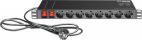
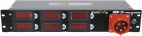
Power distributors
Professional Power Distributors for Events and Stage Technology
When household sockets no longer suffice and professional three-phase power is required, power distributors become indispensable. LTT offers you robust, reliable solutions for concerts, festivals, theatre productions and trade fair installations. Our range includes portable CEE distributors with 16A, 32A and 63A ratings, wall-mounted units and stackable models – all engineered to deliver safe, uninterrupted power exactly where you need it. Whether you are rigging lighting trusses, running fog machines or powering sound systems, our power distributors ensure your event runs smoothly from load-in to load-out.
What Is a Power Distributor and How Does It Work?
A power distributor – also known as a CEE distributor or stage power unit – is a robust electrical enclosure designed to split a single three-phase supply into multiple outlets. Unlike domestic extension leads, professional distributors feature CEE connectors (the round, colour-coded plugs common in industrial and event settings) alongside standard earthed sockets, enabling you to run high-wattage equipment safely.
Typically, a power distributor comprises a break-resistant housing made from special plastic or rubber, an inlet cable terminated with a CEE plug (commonly 400 V, five-pin), and a combination of output sockets: several 230 V earthed outlets for smaller devices and one or more CEE sockets rated at 16 A, 32 A or 63 A for heavier loads. Internal circuit breakers and, in many models, residual-current devices (RCDs) protect against overload and earth faults.
How does it differ from a simple extension lead? A household extension lead handles single-phase 230 V power and low currents – adequate for lamps or small tools but wholly inadequate for professional lighting rigs, motors or multi-kilowatt audio systems. Power distributors, by contrast, manage three-phase 400 V supplies, distribute loads across multiple phases to prevent imbalance, and incorporate safety devices that trip instantly if a fault occurs. In essence, a power distributor is the backbone of temporary electrical installations wherever mains infrastructure is absent or insufficient.
Applications: Where and When You Need Power Distributors
Power distributors are the workhorse of temporary electrical installations across a wide spectrum of professional environments:
Live events and festivals – From small club gigs to multi-stage outdoor festivals, distributors supply power to lighting trusses, moving heads, LED walls, fog and haze machines, DJ booths and monitor systems. Portable units can be repositioned quickly as stage layouts evolve, and stackable models save precious backstage space.
Theatre and broadcast – Theatres rely on distributors to feed dimmers, followspots and control desks, while broadcast crews use them to power cameras, lights and transmission equipment on location. Wall-mounted distributors are common in fixed installations, offering tidy, permanent solutions in technical galleries and control rooms.
Trade fairs and exhibitions – Exhibition stands demand flexible power for spotlights, monitors, coffee machines and product demonstrations. Distributors with IP44 protection withstand the rigours of build-up and breakdown, and their multiple outlets reduce the need for daisy-chaining extension leads – a practice that compromises both safety and aesthetics.
Construction sites and industrial settings – Although construction-site distributors are optimised for heavy tools and outdoor exposure, event-technology models share the same core principles: robust housing, H07RN-F rubber cable and CEE connectivity. The key difference lies in the balance of socket types and the inclusion of features such as cable reels or hanging brackets tailored to rigging workflows.
Whether you are setting the stage for a rock concert or powering a corporate presentation, the right power distributor ensures reliable, code-compliant electricity exactly where you need it.
Quality and Professional Standards: What to Look for When Buying
Choosing a power distributor is not simply a matter of counting sockets. Professional users must weigh several critical factors to ensure safety, longevity and compliance with electrical standards.
Amperage rating and load capacity
Power distributors are classified by their maximum current: 16 A, 32 A or 63 A. A 16 A unit can handle approximately 11 kW (at 400 V three-phase), sufficient for modest lighting rigs or small PA systems. A 32 A distributor doubles that capacity to roughly 22 kW, accommodating larger setups with multiple moving heads, hazers and amplifiers. For festival main stages or touring productions, 63 A models deliver up to 44 kW, powering entire lighting plots and sound systems from a single feed. Always calculate your total connected load – including startup surges for motors and transformers – and select a distributor rated at least 20 per cent above that figure to maintain headroom and prevent nuisance tripping.
Circuit protection: RCD and circuit breakers
Modern distributors incorporate residual-current devices (RCDs), often labelled FI switches in German-speaking markets. Type A RCDs detect pulsating DC fault currents common in electronic dimmers and LED drivers, while Type B devices also respond to smooth DC faults from frequency converters and motor controllers. In addition, individual circuit breakers (MCBs) protect each output socket, isolating faults without shutting down the entire distributor. Look for models that clearly indicate which breaker protects which socket – a feature that saves precious minutes during troubleshooting in the dark.
Housing and cable quality
The enclosure must be IP44-rated at minimum – splash-proof and dust-protected – to withstand outdoor use, accidental spills and the rough handling typical of load-ins. Premium models use special rubber compounds resistant to oils, petrol and impact, ensuring the housing survives years of touring. The inlet cable should be H07RN-F (rubber-sheathed, flexible) with a cross-section appropriate to the distributor's rating: 4 mm² for 32 A, 6 mm² or larger for 63 A. Inadequate cable gauge leads to voltage drop, heat buildup and potential fire hazards.
Trusted manufacturers
LTT stocks power distributors from renowned brands including as-Schwabe, Brennenstuhl, Showtec, Eurolite and Riggatec. These manufacturers adhere to DIN VDE standards and subject their products to rigorous testing, ensuring compliance with DGUV Vorschrift 17 (formerly BGV C1) – the German regulation governing electrical equipment in entertainment venues. Investing in quality pays dividends in reliability, safety certification and resale value.
Types of Power Distributors: Portable, Wall-Mounted and Stackable Solutions
Power distributors come in several form factors, each optimised for specific workflows and installation scenarios.
Portable distributors with carry handles
These compact units feature a robust carry handle – often powder-coated steel – and a cable winder or hook for tidy storage. Portable distributors are the go-to choice for mobile DJs, small touring bands and rental companies that need to deploy and strike equipment quickly. Their lightweight construction (typically 4–6 kg) and IP44 housing make them equally at home in a club, a marquee or an outdoor festival site.
Stackable distributors
Stackable models incorporate interlocking feet and recesses, allowing multiple units to be stacked securely atop one another. This design is a game-changer for touring productions and rental depots: instead of scattering distributors across the floor, you build a neat tower that occupies minimal floor space and simplifies cable management. Stackable distributors often include side-mounted hanging brackets, enabling you to suspend them from truss or scaffolding – a technique that keeps cables off the ground and reduces trip hazards.
Wall-mounted distributors
For fixed installations – technical galleries, rehearsal studios, workshop benches – wall-mounted distributors offer a permanent, tidy solution. Mounting holes or keyhole slots on the rear panel allow secure attachment to brick, timber or metal surfaces. Some models ship with a separate steel-frame stand, converting a wall unit into a free-standing distributor for temporary setups. This versatility is particularly valuable for hire companies that serve both permanent venues and one-off events.
Hanging distributors (pendants)
Hanging or pendant distributors are designed to be suspended above the work area, delivering power at any height without trailing cables across the floor. Common in workshops and backstage areas, they feature a robust suspension eye and a long inlet cable. In stage-rigging contexts, pendant distributors can be flown on truss alongside lighting fixtures, feeding dimmers and effects units directly at the point of use and eliminating the need for long, heavy feeder runs.
Choosing the right type depends on your workflow: if you strike and set up daily, portability and stackability are paramount. If the distributor will live in a fixed location, wall-mounting or a pendant configuration may be more elegant and space-efficient.
Load Calculation and Phase Distribution for Event Professionals
One of the most common mistakes in temporary power installations is underestimating total load or failing to balance it across the three phases. Proper load calculation and phase distribution are essential to prevent tripped breakers, voltage sag and potential equipment damage.
Calculating total amperage
Begin by listing every device you intend to connect, noting its power consumption in watts. For resistive loads (incandescent lamps, heaters), the calculation is straightforward: divide wattage by voltage (230 V for single-phase devices) to obtain current in amperes. For inductive loads (motors, transformers) and electronic equipment (LED drivers, switch-mode power supplies), consult the nameplate or manual for the rated current, as power factor and inrush currents can significantly exceed the steady-state figure.
Sum the currents for all devices on each phase. A balanced three-phase load distributes roughly equal current across L1, L2 and L3. If one phase carries significantly more load than the others, the neutral conductor may become overloaded, and the distributor's main breaker may trip even though the total power is within rating. Aim for a phase imbalance of no more than 10–15 per cent.
Practical example: a small stage rig
Imagine a setup comprising:
- Four LED moving heads at 150 W each (600 W total)
- Two hazer units at 800 W each (1,600 W)
- A powered PA system drawing 2,000 W
- Miscellaneous control gear and monitors totalling 500 W
Total load: 4,700 W. At 230 V single-phase, that equates to roughly 20 A – comfortably within a 32 A distributor's capacity. However, if all devices are plugged into sockets on the same phase, that phase sees the full 20 A while the other two remain idle. A better approach is to distribute the moving heads and hazers across L1 and L2, and the PA across L3, keeping each phase below 10 A and leaving ample headroom.
Headroom and safety margin
Never run a distributor at its maximum rated current for extended periods. Heat buildup in cables and connectors accelerates insulation degradation and increases fire risk. Industry best practice is to size the distributor so that normal operation consumes no more than 80 per cent of its rating. For a 32 A unit, that means a sustained load of 25 A or less. This margin also accommodates startup surges – motors and capacitive power supplies can draw several times their running current for a fraction of a second – without nuisance tripping.
By mastering load calculation and phase balancing, you ensure reliable power delivery, extend the service life of your distributors and maintain compliance with electrical safety regulations.
LTT – Your Specialist for Event Technology
LTT has been the trusted partner for event professionals, exhibition builders and touring crews for over 25 years. Our expertise spans the entire spectrum of stage and rigging technology – from aluminium truss systems under our Naxpro-Truss brand to professional power distribution solutions from leading manufacturers.
When you order power distributors from LTT, you benefit from free shipping on orders over €69, three-year LTT warranty coverage and the option of express delivery when time is tight. Our warehouse in Bocholt, Germany, ships worldwide, and we maintain an international dealer network to support you wherever your productions take you. Trade customers and hire companies enjoy wholesale pricing and dedicated account management.
Whether you need a compact 16 A portable unit for a mobile DJ rig or a fleet of stackable 63 A distributors for a festival main stage, LTT delivers innovative solutions that set the stage for impressive results. Explore our full range of event-technology essentials and experience the difference that comes from working with a true specialist.
FAQ – Questions & Answers
The amperage rating indicates the maximum current the power distributor can safely handle. A 16 A distributor can supply approximately 11 kW of three-phase power, suitable for smaller lighting rigs, DJ setups or modest PA systems. A 32 A distributor doubles that capacity to around 22 kW, accommodating larger stage productions with multiple moving heads, hazers and amplifiers. A 63 A distributor delivers up to 44 kW, designed for festival main stages, touring productions and installations requiring substantial electrical capacity. The physical size of the CEE inlet plug and socket also increases with amperage: 16 A connectors are smaller, while 32 A and 63 A plugs feature larger contact pins and housings to handle higher currents safely. Always calculate your total connected load and choose a distributor rated at least 20 per cent above that figure to maintain headroom and prevent nuisance tripping.
For outdoor events, festivals and any application exposed to rain, dust or accidental splashes, a power distributor must carry at least an IP44 rating. The first digit (4) certifies protection against solid objects larger than 1 mm – including dust and small debris – while the second digit (4) confirms splash-proof performance from any direction. IP44-rated enclosures withstand typical outdoor conditions but are not submersion-proof; avoid placing them in standing water or direct heavy rain without additional shelter. For exceptionally harsh environments – such as open-air festivals in coastal regions or construction sites with high dust levels – consider IP54 or IP65 models, which offer enhanced dust-tightness and protection against water jets. LTT stocks a wide range of IP44 power distributors with robust rubber or special-plastic housings, ensuring your electrical installation remains safe and code-compliant throughout the event.
Many professional power distributors incorporate residual-current devices (RCDs), also known as FI switches, but not all models include them as standard. RCD protection is essential for detecting earth-fault currents and disconnecting the supply before a dangerous shock can occur. Type A RCDs respond to pulsating DC fault currents common in electronic dimmers and LED drivers, while Type B RCDs also detect smooth DC faults from frequency converters and motor controllers. When purchasing a power distributor, check the product specification to confirm whether an RCD is fitted and, if so, which type. If your distributor lacks built-in RCD protection, you can install a separate RCD adapter upstream or ensure the supply from the mains panel includes RCD coverage. For event and stage applications – where personnel frequently handle equipment under time pressure and in less-than-ideal conditions – RCD protection is not merely a regulatory tick-box but a critical life-safety feature.
Yes, many power distributors are equally suited to construction sites and event-technology workflows, provided they meet the relevant standards. Construction-site distributors typically emphasise rugged housing, IP44 or higher ingress protection, H07RN-F rubber cable and CEE connectivity – features shared by professional event distributors. The key difference lies in socket configuration: construction models often prioritise multiple earthed outlets for power tools, whereas event distributors balance earthed sockets with CEE outputs for lighting and audio gear. Both must comply with DIN VDE standards and, in Germany, DGUV Vorschrift 17 (formerly BGV C1) for electrical equipment in entertainment venues. If you plan to use a distributor across both construction and event contexts, verify that it carries the appropriate certifications and that the cable cross-section matches the highest anticipated load. LTT offers distributors from brands such as Brennenstuhl, as-Schwabe and Riggatec, all of which meet or exceed industry safety benchmarks for demanding professional use.
To size a power distributor correctly, list every device you intend to connect and note its power consumption in watts or its rated current in amperes. For resistive loads – incandescent lamps, heaters – divide wattage by 230 V to obtain current. For inductive and electronic loads – motors, LED drivers, switch-mode power supplies – consult the nameplate for rated current, as power factor and inrush can exceed steady-state figures. Sum the currents for all devices, then distribute them as evenly as possible across the three phases (L1, L2, L3) to avoid overloading the neutral conductor. Industry best practice is to size the distributor so that normal operation consumes no more than 80 per cent of its rated capacity, leaving headroom for startup surges and future expansion. For example, if your total load is 18 A, choose a 32 A distributor rather than a 16 A model. This margin reduces heat buildup, extends component life and minimises the risk of nuisance tripping during critical moments of your production.
H07RN-F is the European designation for a flexible, rubber-sheathed cable designed for heavy-duty, outdoor and industrial applications. The code breaks down as follows: H indicates harmonised European standard; 07 specifies a rated voltage of 450/750 V; R denotes rubber insulation; N signifies neoprene or equivalent synthetic-rubber sheath; and F confirms the cable is flexible. H07RN-F cable resists oils, petrol, abrasion and UV exposure, making it ideal for power distributors used on construction sites, at outdoor festivals and in touring production environments. The rubber sheath remains pliable in cold weather and withstands repeated coiling and uncoiling without cracking – critical for equipment that is set up and struck daily. When purchasing a power distributor, verify that the inlet cable is H07RN-F (or the equivalent H07RN-F designation) and that its cross-sectional area matches the distributor's amperage rating: typically 4 mm² for 32 A and 6 mm² or larger for 63 A. Using undersized or inappropriate cable compromises safety and violates electrical codes.
Yes, many professional power distributors feature integrated hanging brackets, suspension eyes or mounting holes specifically designed for rigging on truss, scaffolding or overhead structures. Suspending a distributor at the point of use – for example, on a lighting truss alongside moving heads and LED fixtures – eliminates long, heavy feeder cables trailing across the stage floor, reduces trip hazards and simplifies cable management. When rigging a distributor overhead, ensure the suspension point is rated for the combined weight of the unit (typically 4–8 kg) plus any connected cables, and use appropriate rigging hardware such as shackles or clamps certified to the required working load limit. Stackable distributors often include side-mounted brackets that double as hanging points, offering maximum flexibility for both floor-standing and flown configurations. Always consult the manufacturer's documentation to confirm the distributor's suitability for overhead mounting and adhere to DGUV Vorschrift 17 (formerly BGV C1) rigging safety guidelines. LTT stocks a wide range of distributors with rigging-friendly features, ensuring seamless integration into your stage and truss systems.
Stackable power distributors incorporate interlocking feet and recesses that allow multiple units to be stacked securely on top of one another, creating a vertical tower that occupies minimal floor space. This design is invaluable for touring productions, rental depots and festival sites where floor real estate is at a premium and cable management must be tidy and efficient. By stacking distributors, you consolidate your power infrastructure into a single, organised footprint, making it easier to route inlet feeds, label circuits and troubleshoot faults. Stackable models also typically feature side-mounted hanging brackets, enabling you to suspend them from truss or scaffolding when a flown configuration is preferable. The result is a versatile, space-saving solution that adapts to the evolving demands of live events, exhibitions and temporary installations. LTT offers stackable distributors from leading brands such as Brennenstuhl and Showtec, all engineered to deliver robust performance and long service life in demanding professional environments.