

Top seller

OSRAM LED STAR STICK 75 FR 9 W/6500 K E14
€4.91
*
incl. tax,
plus shipping costs
 Express delivery possible

Availability:
Delivery time: 1-3 days
Delivery time: 1-3 days

OSRAM LED SPECIAL T26 5 1.6 W/2400 K E14
€3.20
*
€2.40
*
incl. tax,
plus shipping costs

Availability:
Delivery time: 1-3 days
Delivery time: 1-3 days

OSRAM PARATHOM® Retrofit CLASSIC B 40 4 W/2700 K E14
€2.89
*
€2.34
*
incl. tax,
plus shipping costs

Availability:
Low stock; Delivery time: 1-3 days
Delivery time: 1-3 days

LEDVANCE LED CLASSIC P P 2.5W 827 Clear E14
€2.18
*
incl. tax,
plus shipping costs

Availability:
Not in stock
Delivery time: approx. 2 weeks
Delivery time: approx. 2 weeks
Delivery time: approx. 2 weeks

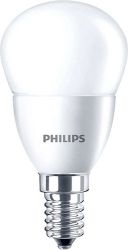
PHILIPS CorePro lustre ND 5-40W E14 827 P45 FR
€1.99
*
incl. tax,
plus shipping costs

Availability:
Delivery time: 1-3 days
Delivery time: 1-3 days

OSRAM Vintage 1906® LED CLASSIC B 4W 824 Gold E14
€2.79
*
incl. tax,
plus shipping costs

Availability:
Low stock; Delivery time: 1-3 days
Delivery time: 1-3 days

LEDVANCE LED CLASSIC B P 4W 827 Frosted E14
€2.54
*
incl. tax,
plus shipping costs

Availability:
Not in stock
Delivery time: approx. 2 weeks
Delivery time: approx. 2 weeks
Delivery time: approx. 2 weeks

LEDVANCE LED CLASSIC B DIM CRI97 S 4.2W 927 Clear E14
€6.59
*
incl. tax,
plus shipping costs

Availability:
Delivery time: 1-3 days
Delivery time: 1-3 days
309
Articles
No results were found for the filter!

OSRAM LED STAR R39 25 36 ° 1.5 W/2700 K E14
OSRAM LED STAR R39 25 36 ° 1.5 W/2700 K E14
LED reflector lamps R39 with retrofit screw base. Product features: LED alternative to high voltage halogen lamps • High color consistency: = 6 SDCM • Not dimmable • Base: E14...
€3.11
*
incl. tax,
plus shipping costs

Availability:
Delivery time: 1-3 days
Delivery time: 1-3 days

Philips CorePro LEDspot D 4.3-60W R50 E14 827 36D
Philips CorePro LEDspot D 4.3-60W R50 E14 827 36D
General properties • Base: E14 [ E14] • Nominal life (Nom): 15000 h • Switching cycle: 50000X • Technical type: 4.3-60W • Lighting data • Color code: 827 [ CCT of 2700...
€7.09
*
incl. tax,
plus shipping costs

Availability:
Low stock; Delivery time: 1-3 days
Delivery time: 1-3 days

OMNILUX LED Mini Bulb 230V E-14 2700K
OMNILUX LED Mini Bulb 230V E-14 2700K
Replacement lamp for LED Police Light DE-1 6 powerful LEDs SMD 2835 warm white (WW) • Good color rendering index (CRI) • Operating voltage: 230 • Nominal wattage: 1,8 W • Base:...
€3.90
*
incl. tax,
plus shipping costs
Availability:
Delivery time: 3-5 days
Delivery time: 3-5 days

Osram SST CLASSIC B 40 CL 5 W/2700 K E14
Osram SST CLASSIC B 40 CL 5 W/2700 K E14
Rated wattage: 5.00 W • Nominal wattage: 5.00 W • Nominal voltage: 220.240 V • Operating frequency: 50.60 Hz • Photometrical data • Rated color temperature: 2700 K...
€8.19
*
incl. tax,
plus shipping costs

Availability:
Low stock; Delivery time: 1-3 days
Delivery time: 1-3 days

OSRAM Vintage 1906® LED 22 2.5 W/2400 K E14
OSRAM Vintage 1906® LED 22 2.5 W/2400 K E14
LED lamps, vintage edition. Product features: LED lamps for line voltage • Lamp made of glass • Lifetime: up to 15,000 h • Beam angle: up to 360° • Good quality of light;...
€3.29
*
incl. tax,
plus shipping costs

Availability:
Delivery time: 1-3 days
Delivery time: 1-3 days

OSRAM Vintage 1906® LED 22 2.5 W/2400 K E14
OSRAM Vintage 1906® LED 22 2.5 W/2400 K E14
LED lamps, vintage edition. Product features: LED lamps for line voltage • Lamp made of glass • Lifetime: up to 15,000 h • Beam angle: up to 360° • Good quality of light;...
€4.09
*
incl. tax,
plus shipping costs

Availability:
Delivery time: 1-3 days
Delivery time: 1-3 days

OSRAM Vintage 1906® LED 35 4 W/2400 K E14
OSRAM Vintage 1906® LED 35 4 W/2400 K E14
LED lamps, vintage edition. Product features: LED lamps for line voltage • Lamp made of glass • Lifetime: up to 15,000 h • Beam angle: up to 360° • Good quality of light;...
€4.12
*
incl. tax,
plus shipping costs

Availability:
Delivery time: 1-3 days
Delivery time: 1-3 days

Osram LED STAR CL STICK FR 60 non-dim 8W/827 E14
Osram LED STAR CL STICK FR 60 non-dim 8W/827 E14
Low energy consumption • Attractive lamp appearance • Areas of application All domestic rooms, especially where the lamps are visible • Wherever compact and efficient lamps are...
€4.43
*
incl. tax,
plus shipping costs

Availability:
Delivery time: approx. 2-3 weeks
Delivery time: approx. 2-3 weeks

Osram LED STAR CL STICK FR 60 non-dim 8W E14
Osram LED STAR CL STICK FR 60 non-dim 8W E14
Low energy consumption • Attractive lamp appearance • Areas of application All domestic rooms, especially where the lamps are visible • Wherever compact and efficient lamps are...
€2.84
*
incl. tax,
plus shipping costs

Availability:
Delivery time: 1-3 days
Delivery time: 1-3 days

OSRAM LED SPECIAL T26 55 6.5 W/2700 K E14
OSRAM LED SPECIAL T26 55 6.5 W/2700 K E14
Small special LED lamps with E14 screw base. Product features: LED alternative to conventional high voltage lamps • Good quality of light; color rendering index Ra: = 80; constant chromaticity...
€5.59
*
incl. tax,
plus shipping costs

Availability:
Delivery time: 1-3 days
Delivery time: 1-3 days

Osram LED STAR CL B FR 25 non-dim 3,3W/827 E14
Osram LED STAR CL B FR 25 non-dim 3,3W/827 E14
Low energy consumption • Easy replacement of classic lamps thanks to compact design • Instant 100 % light, no warm-up time • Areas of application Domestic applications • General...
€1.81
*
incl. tax,
plus shipping costs

Availability:
Delivery time: approx. 2-3 weeks
Delivery time: approx. 2-3 weeks

Osram LED STAR CL P FR 60 non-dim 7,5W/827 E14
Osram LED STAR CL P FR 60 non-dim 7,5W/827 E14
Low energy consumption • Easy replacement of classic lamps thanks to compact design • Instant 100 % light, no warm-up time • Areas of application Domestic applications • General...
€4.55
*
incl. tax,
plus shipping costs

Availability:
Delivery time: 1-3 days
Delivery time: 1-3 days

ISOLED E14 R50 LED spotlight, 5W, warm white, frosted
ISOLED E14 R50 LED spotlight, 5W, warm white, frosted
E14 R50 LED spotlight, 5W, warm white, frosted Length: 86mm • Diameter: 50mm • Net weight: 136g • Socket: E14 • LED type: 24x2835SMD • Nominal voltage: 220-240V AC...
€6.27
*
incl. tax,
plus shipping costs

Availability:
Low stock; Delivery time: 1-3 days
Delivery time: 1-3 days

ISOLED E14 LED candle, 2W, CLEAR, warm white, dimmable
ISOLED E14 LED candle, 2W, CLEAR, warm white, dimmable
E14 LED candle, 2W, CLEAR, warm white, dimmable Length: 100mm • Diameter: 35mm • Net weight: 2500g • Socket: E14 • LED type: 2xFIL • Nominal voltage: 220-240V AC...
€4.36
*
incl. tax,
plus shipping costs

Availability:
Delivery time: 1-3 days
Delivery time: 1-3 days

ISOLED E14 LED candle, 4W, CLEAR, warm white, dimmable
ISOLED E14 LED candle, 4W, CLEAR, warm white, dimmable
E14 LED candle, 4W, CLEAR, warm white, dimmable Length: 100mm • Diameter: 35mm • Net weight: 12g • Socket: E14 • LED type: 4xFIL • Nominal voltage: 220-240V AC...
€5.16
*
incl. tax,
plus shipping costs

Availability:
Delivery time: 1-3 days
Delivery time: 1-3 days

ISOLED E14 LED candle, 2W, milky, warm white, dimmable
ISOLED E14 LED candle, 2W, milky, warm white, dimmable
E14 LED candle, 2W, milky, warm white, dimmable Length: 100mm • Diameter: 35mm • Net weight: 12g • Socket: E14 • LED type: 2xFIL • Nominal voltage: 220-240V AC...
€4.68
*
incl. tax,
plus shipping costs

Availability:
Not in stock
Delivery time: approx. 2 weeks
Delivery time: approx. 2 weeks
Delivery time: approx. 2 weeks

ISOLED E14 LED Illu, 4W, CLEAR, warm white, dimmable
ISOLED E14 LED Illu, 4W, CLEAR, warm white, dimmable
E14 LED Illu, 4W, CLEAR, warm white, dimmable Length: 78mm • Diameter: 45mm • Net weight: 12g • Socket: E14 • LED type: 4xFIL • Nominal voltage: 220-240V AC • Nominal...
€5.16
*
incl. tax,
plus shipping costs

Availability:
Low stock; Delivery time: 1-3 days
Delivery time: 1-3 days

ISOLED E14 LED Illu, 4W, milky, warm white, dimmable
ISOLED E14 LED Illu, 4W, milky, warm white, dimmable
E14 LED Illu, 4W, milky, warm white, dimmable Length: 78mm • Diameter: 45mm • Net weight: 12g • Socket: E14 • LED type: 4xFIL • Nominal voltage: 220-240V AC • Nominal...
€5.47
*
incl. tax,
plus shipping costs

Availability:
Delivery time: 1-3 days
Delivery time: 1-3 days

ISOLED E14 Vintage Line LED candle 4W ultrawarm white, dimmable
ISOLED E14 Vintage Line LED candle 4W ultrawarm white, dimmable
E14 Vintage Line LED candle 4W ultrawarm white, dimmable Length: 100mm • Diameter: 35mm • Net weight: 22g • Socket: E14 • Nominal voltage: 220-240V AC • Nominal power: 3,5W...
€5.36
*
incl. tax,
plus shipping costs

Availability:
Delivery time: 1-3 days
Delivery time: 1-3 days

SLV C35 E14, transparent LED light, 4.2W 2700K CRI90 320°
SLV C35 E14, transparent LED light, 4.2W 2700K CRI90 320°
The transparent 4.2W SLV LED Filament lamp with E14 base and C35 shape is dimmable, has a CRI value of 90, 380 lumens and a lifespan of 15,000 hours. This version has a beam angle of 320° and...
€5.69
*
incl. tax,
plus shipping costs

Availability:
Delivery time: 1-3 days
Delivery time: 1-3 days

SLV C35 E14, Frosted LED light, 4.2W 2700K CRI90 320°
SLV C35 E14, Frosted LED light, 4.2W 2700K CRI90 320°
The frosted 4.2W SLV LED Filament lamp with E14 base and C35 shape is dimmable, has a CRI value of 90, 350 lumens and a lifespan of 15,000 hours. This version has a beam angle of 320° and is...
€7.44
*
incl. tax,
plus shipping costs
Availability:
Delivery time: 3-5 days
Delivery time: 3-5 days

OSRAM LED Retrofit CLASSIC P Mirror 34 4 W/2700 K E14
OSRAM LED Retrofit CLASSIC P Mirror 34 4 W/2700 K E14
LED lamps, classic mini-ball shape with mirror bulb crown. Product features: Bulb crown coating: gold or silver • Lamp made of glass • Good quality of light; color rendering index Ra: =...
€4.48
*
incl. tax,
plus shipping costs

Availability:
Delivery time: 1-3 days
Delivery time: 1-3 days

OSRAM LED Retrofit RGBW lamps with remote control 4.9 W/2700 K E14 FR
OSRAM LED Retrofit RGBW lamps with remote control 4.9 W/2700 K E14 FR
Consumer LED RGBW lamps with remote control. Product features: Lifetime: up to 25,000 h • Allows for control of colors, saturation and dimming levels • Wide range of controllable light...
€8.44
*
€7.73
*
incl. tax,
plus shipping costs

Availability:
Low stock; Delivery time: 1-3 days
Delivery time: 1-3 days

OSRAM LED THREE STEP DIM CLASSIC B 40 4 W/2700 K E14
OSRAM LED THREE STEP DIM CLASSIC B 40 4 W/2700 K E14
LED lamps with three-step dimming. Product features: Dimmable in three steps: 100 %, 55 % and 10 % • Controllable via standard wall switch • Good quality of light; color rendering index...
€9.73
*
incl. tax,
plus shipping costs

Availability:
Delivery time: 1-3 days
Delivery time: 1-3 days