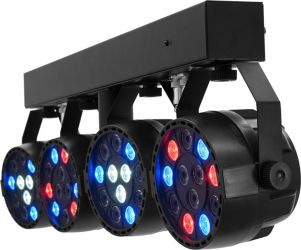
Party effects

Party Effects – Professional Lighting Equipment for Events and Venues: Welcome to LTT, your specialist for professional party effects and event lighting technology. Whether you're a DJ, event technician, club operator or venue manager, you'll find everything you need to create unforgettable atmospheres and deliver impressive visual experiences. From classic strobe lights and laser projectors to modern LED effects and atmospheric fog machines – our comprehensive range covers every aspect of professional party...
Read more »
Party effects
Close window
Party effects

Party Effects – Professional Lighting Equipment for Events and Venues

Welcome to LTT, your specialist for professional party effects and event lighting technology. Whether you're a DJ, event technician, club operator or venue manager, you'll find everything you need to create unforgettable atmospheres and deliver impressive visual experiences. From classic strobe lights and laser projectors to modern LED effects and atmospheric fog machines – our comprehensive range covers every aspect of professional party lighting. With over 25 years of experience in event technology, we supply high-quality equipment from leading manufacturers, ensuring your events always achieve the "wow effect" you're aiming for.

What Are Party Effects? Understanding Professional Event Lighting Equipment

Party effects are specialized lighting and atmospheric devices designed to create dynamic visual experiences in entertainment environments. Unlike static architectural lighting or simple stage wash lights, party effects generate movement, patterns, colors and atmospheric enhancements that respond to music, programmed sequences or manual control.

The category encompasses several distinct product families. Strobe lights produce intense, rapid flashes of white light that freeze motion and create pulsating energy on dance floors, typically operating at flash rates between 1 and 20 Hz with xenon or LED light sources. Laser projectors generate coherent light beams in various colors (typically red 650 nm, green 532 nm, blue 445 nm) that can project patterns, text or abstract animations across walls, ceilings and audiences, classified by power output from Class 2 (<1 mW) to Class 4 (>500 mW) according to EN 60825-1 safety standards.

LED effects include moonflower lights (multi-beam rotating patterns), derby lights (lens-based color projections), wash lights (color-changing flood illumination) and gobo projectors (static or rotating pattern projection), most operating on 10–150 W LED arrays with RGBW or RGBA color mixing. UV blacklights emit ultraviolet radiation in the 365–400 nm spectrum that causes fluorescent materials to glow, available as tube fixtures (18–58 W fluorescent tubes) or modern LED panels (30–100 W).

Atmospheric effects – fog machines, haze generators and low-fog systems – create the visible medium through which light beams become tangible. Standard fog machines heat water-based fluid to 150–180°C, producing dense clouds at output rates of 3,000–10,000 cubic feet per minute, while haze generators create fine, transparent mist that remains suspended for hours, making laser beams and moving lights visible without obscuring the stage or dance floor.

Unlike general event lighting (which provides visibility and color wash) or intelligent moving heads (which offer precision positioning and complex programming), party effects prioritize impact, movement and atmosphere creation. They're designed for environments where visual excitement, energy and spectacle take precedence over subtle illumination or precise color rendering.

Applications: Where Professional Party Effects Create Impact

Party effects find their primary application in nightclubs and discotheques, where multiple effect types work together to create immersive environments. A typical club installation combines 4–8 LED derby or moonflower effects for continuous movement, 2–4 strobe lights for peak-energy moments, 1–2 laser projectors for aerial effects, UV blacklights around the dance floor perimeter, and a haze generator running continuously to make all beam effects visible. DMX control allows the lighting operator to synchronize effects with music beats, build intensity during transitions and create signature looks for different music genres.

Mobile DJs and entertainers rely on compact, lightweight party effects that deliver maximum visual impact with minimal setup time. A professional mobile setup typically includes 2–4 LED effects (derby, moonflower or wash lights), 1 strobe light, 1 compact fog machine and a simple DMX controller or sound-activated operation. Equipment must withstand frequent transport, quick setup/teardown cycles and operation in diverse venues from wedding receptions to corporate events. Battery-powered wireless effects have become increasingly popular for outdoor events and venues without convenient power access.

Live music venues, concert halls and festival stages use party effects to enhance performances, particularly for electronic music, rock concerts and theatrical productions. Strobe lights create dramatic freeze-frame effects during guitar solos or beat drops, laser systems generate aerial displays that extend the visual experience beyond the stage, and atmospheric effects ensure that moving lights and beams remain visible to audiences 20–50 meters from the stage. Professional installations often include dedicated haze systems with fan distribution to maintain consistent atmospheric density across large performance areas.

Theaters, churches and cultural venues employ party effects more selectively, using UV blacklights for special scenes, fog machines for atmospheric moments and controlled strobe effects for dramatic impact. These applications demand precise control, quiet operation and equipment that integrates seamlessly with existing theatrical lighting systems. Low-lying fog effects created by dry ice machines or ultrasonic foggers are particularly popular for creating ground-level mist without filling the entire venue.

Corporate events, trade shows and product launches increasingly incorporate party effects to create memorable brand experiences. Laser projections can display company logos on walls or ceilings, color-changing LED effects match corporate branding, and atmospheric fog enhances product reveals. These applications require reliable equipment with professional appearance, silent operation and the ability to integrate with presentation technology and architectural lighting systems.

Quality Standards and Buying Criteria for Professional Party Effects

When selecting party effects for professional applications, several technical and quality factors determine long-term performance and value. Power consumption and light output form the primary specification relationship – modern LED effects typically deliver 1,500–3,000 lumens per 100 watts of power consumption, while older halogen-based effects consumed 250–575 watts for comparable output. For strobe lights, flash energy (measured in joules) and maximum flash rate determine impact, with professional units offering 100–300 joules per flash at rates up to 20 Hz, compared to consumer models at 20–50 joules and 1–10 Hz.

Laser classification and safety compliance are mandatory considerations. Class 2 lasers (<1 mW) are eye-safe and require no special safety measures, suitable for small venues and mobile applications. Class 3B (5–500 mW) and Class 4 (>500 mW) lasers deliver spectacular aerial effects but require safety training, audience scanning safety protocols, emergency stop systems and compliance with local regulations – in Germany, operation requires notification to the Gewerbeaufsichtsamt and adherence to DGUV Vorschrift 17 (formerly BGV B2) for laser safety.

Build quality and thermal management separate professional equipment from consumer products. High-quality party effects from manufacturers like Eurolite, Showtec, Cameo and beamZ Pro feature metal housings (rather than plastic), active cooling systems with temperature-monitored fans, and LED drivers with power factor correction and thermal protection. Professional fog machines include automatic pump cleaning cycles, low-fluid sensors and thermostatic temperature control that maintains consistent output, while consumer units often lack these features and suffer from inconsistent fog production and premature pump failure.

Control options and integration capability determine operational flexibility. Entry-level effects offer sound-activated mode (responding to music via built-in microphone) and automatic programs, suitable for small mobile setups. Professional applications demand DMX512 control via 3-pin or 5-pin XLR connections, allowing precise programming, synchronization with other lighting and integration with lighting consoles. Advanced units offer 8–32 DMX channels controlling color mixing, pattern selection, rotation speed, strobe rate and special functions. Wireless DMX capability (via protocols like W-DMX or LumenRadio) eliminates cable runs in complex installations.

Price brackets and expected performance provide realistic guidance. Basic LED effects start at €50–150, offering sound activation and basic color mixing suitable for home parties or occasional mobile use. Mid-range professional effects (€150–500) deliver DMX control, robust construction and reliable performance for regular mobile DJ work or permanent small-venue installation. Premium effects (€500–2,000+) from manufacturers like Chauvet DJ, ADJ (American DJ) and Showtec offer advanced features like wireless control, RGBW+UV color mixing, motorized zoom, and construction quality for daily professional use in demanding club environments.

Atmospheric effect specifications require particular attention. Fog machine output is rated in cubic feet per minute (CFM) or cubic meters per minute – a 1,000-watt machine typically produces 3,000–5,000 CFM, suitable for small to medium venues, while 1,500–3,000-watt units deliver 10,000–20,000 CFM for large clubs and concert stages. Haze generators specify particle size (0.5–2.0 microns for fine haze), suspension time (2–8 hours) and fluid consumption rate (typically 10–30 ml per minute). Professional units from Antari, Smoke Factory and MagicFX include DMX control of output volume, timer functions and low-fluid warnings.

DMX Control and Programming: Maximizing Party Effect Potential

The DMX512 protocol (Digital Multiplex with 512 channels) forms the backbone of professional party effect control, allowing a single lighting console or controller to manage up to 512 individual parameters across multiple fixtures. Each DMX universe carries data at 250 kbit/s over standard 5-pin XLR cable (or 3-pin XLR in many installations), with each fixture assigned a start address and occupying a specific number of channels based on its feature set.

A typical LED derby effect might use 8 DMX channels: channel 1 for color selection, channel 2 for pattern/gobo selection, channel 3 for rotation speed, channel 4 for rotation direction, channel 5 for strobe rate, channel 6 for dimmer, channel 7 for special functions and channel 8 for sound sensitivity. By setting the fixture to DMX address 1, it occupies channels 1–8; a second identical fixture set to address 9 occupies channels 9–16, and so forth. This addressing system allows individual control of each fixture or grouped control of multiple fixtures for synchronized effects.

Lighting consoles range from simple DMX controllers with 8–24 faders and basic scene storage (€100–300) to sophisticated desks with touchscreens, motorized faders, effects engines and hundreds of programmable scenes (€1,000–10,000+). For party effect applications, mid-range controllers from manufacturers like Chamsys (MagicQ series), Showtec (Creator series) and ADJ (MyDMX series) offer the optimal balance of capability and cost, providing 512–1,024 DMX channels, scene programming, chase creation and MIDI/audio triggering.

Software-based control via PC or tablet has become increasingly popular, with applications like Daslight, Madrix, Arkaos and DMXControl offering powerful programming environments at lower cost than hardware consoles. These systems require a USB-to-DMX interface (€80–300) but provide unlimited scene storage, complex effect programming, video-to-DMX mapping and integration with music production software. For mobile DJs, tablet-based control via iOS or Android apps offers portability and intuitive touchscreen operation.

Sound-to-light functionality creates automatic synchronization between music and lighting effects. Basic sound activation uses a built-in microphone to trigger pre-programmed patterns whenever audio exceeds a threshold – simple but limited. Advanced systems analyze audio frequency content, separating bass, midrange and treble, then map different frequency ranges to different effects: bass kicks trigger strobe flashes, snare hits change colors, and hi-hats control rotation speed. Professional installations often use MIDI timecode or SMPTE timecode to synchronize lighting with pre-recorded music tracks, ensuring perfect timing for theatrical productions or corporate presentations.

Wireless DMX systems eliminate cable runs between controller and fixtures, particularly valuable in venues with difficult cable routing or temporary installations. Systems like Lumenradio CRMX, W-DMX by Wireless Solution and Swisson XWL provide reliable transmission over 100–300 meters with automatic frequency hopping to avoid interference. Battery-powered fixtures with integrated wireless DMX receivers enable completely cable-free installations, ideal for outdoor events, architectural lighting and situations where traditional cabling is impractical.

For venues requiring permanent installation, architectural DMX integration allows party effects to be controlled alongside house lighting, HVAC systems and audio equipment via building management systems. Protocols like Art-Net and sACN (streaming ACN) convert DMX data to Ethernet network packets, allowing control data to be distributed over standard network infrastructure and integrated with systems like Crestron, AMX or Pharos architectural controllers.

Safety Standards and Installation Requirements for Party Effects

Professional installation and operation of party effects must comply with multiple safety standards and regulations. In Germany, DGUV Vorschrift 17 (formerly BGV C1) governs the use of event technology equipment, requiring annual inspections by qualified personnel (befähigte Person) for rigging points, electrical installations and mechanical components. Party effects mounted overhead or in positions where failure could cause injury must be secured with secondary safety attachments (safety cables or chains rated for the fixture weight) independent of the primary mounting.

Electrical safety requires that all party effects carry CE marking and comply with EN 60598 (luminaire safety) or equivalent standards. Professional installations use dedicated power distribution with appropriate circuit protection – a typical club installation might draw 50–150 amperes across multiple circuits, requiring careful load calculation and distribution. Fog machines and haze generators, which contain heating elements drawing 1,000–3,000 watts, should operate on dedicated circuits to prevent overload. All equipment must be connected to properly grounded outlets, and outdoor installations require IP-rated enclosures (minimum IP65 for weather protection).

Laser safety is particularly strictly regulated. Class 3B and Class 4 laser projectors require a laser safety officer (Laserschutzbeauftragter) appointed by the venue, who has completed certified training and is responsible for ensuring safe operation. Audience scanning – projecting laser beams into areas where people are present – requires compliance with maximum permissible exposure (MPE) limits defined in EN 60825-1, typically achieved by limiting power density to <25 mW/cm² for visible wavelengths. Emergency stop buttons (E-stops) must be readily accessible, and laser projectors must include safety features like automatic shutdown if the scan system fails (preventing stationary beams that exceed MPE limits).

Atmospheric effect safety addresses both fire safety and health concerns. Fog and haze fluids must be water-based and glycol-based formulations approved for human exposure – mineral oil-based fluids are prohibited in most jurisdictions due to respiratory risks. Fog machines produce hot vapor and must be positioned where accidental contact is prevented, typically mounted at heights above 2.5 meters or behind barriers. Venues must maintain adequate ventilation to prevent excessive atmospheric density that could obscure exit signs or trigger fire alarm systems. Many venues install smoke detectors with particle discrimination that can distinguish between fire smoke and theatrical fog, preventing false alarms.

Structural mounting for party effects follows the same principles as general stage lighting. Overhead mounting requires certified rigging points with documented load capacity, typically using truss systems from manufacturers like Prolyte, Global Truss or Naxpro-Truss. Each fixture must be secured with a safety cable rated for at least 10× the fixture weight, attached to the truss or rigging point independently of the primary clamp. Floor-mounted effects on stands must use stable bases with adequate footprint – a general rule is that the base diameter should be at least 1/3 of the total height to prevent tipping.

Operational safety protocols for professional venues include pre-show equipment checks (verifying that all fixtures respond to control, safety cables are intact, and atmospheric effects produce consistent output), emergency procedures (how to quickly disable all effects if needed), and audience safety zones (maintaining minimum distances between high-intensity strobes or lasers and audience positions). Many venues maintain equipment logs documenting inspection dates, maintenance performed and any issues identified, both for safety compliance and insurance purposes.

LTT – Your Specialist for Professional Party Effects and Event Technology

At LTT, we combine over 25 years of experience in event technology with comprehensive product knowledge and professional service. Our range includes everything from compact LED effects for mobile DJs to sophisticated laser systems and atmospheric effect equipment for permanent club installations. We stock high-quality products from leading manufacturers including Eurolite, Showtec, Cameo, beamZ Pro, Chauvet DJ, ADJ, Antari and many others, ensuring you have access to reliable equipment that delivers professional results.

Every party effect in our range is carefully selected to meet professional standards. We offer free shipping from €69 throughout Germany and international delivery to support our global customer base. Our 3-year LTT warranty provides additional security beyond standard manufacturer warranties, and our technical support team can assist with product selection, DMX addressing, control system integration and troubleshooting.

Whether you're building your first mobile DJ lighting rig, upgrading a club installation or specifying equipment for a permanent venue, our team understands the technical requirements and practical considerations that ensure successful installations. We're not just a retailer – as manufacturers of Naxpro-Truss, Riggatec and Bullstage products, we understand event technology from the inside and can provide expert guidance on complete system integration.

Explore our comprehensive range of party effects, atmospheric equipment and control systems, and discover why professional event technicians, DJs and venue operators across Europe trust LTT for their event technology needs. With over 100,000 positive customer reviews and decades of industry experience, we're your reliable partner for creating unforgettable events and impressive visual experiences.

FAQ – Questions & Answers

What are the most popular DJ effects?

The most popular DJ effects for professional mobile and club applications include LED derby lights (multi-beam rotating patterns), moonflower effects (lens-based color projections), strobe lights (intense rhythmic flashing), laser projectors (aerial beam effects) and UV blacklights (fluorescent material illumination). A typical professional DJ setup combines 2–4 LED effects for continuous movement, 1 strobe light for peak-energy moments, and 1 compact fog machine to make beam effects visible. Modern LED-based effects have largely replaced older halogen fixtures due to lower power consumption (30–150 watts versus 250–575 watts), cooler operation, longer lifespan (30,000–50,000 hours) and integrated color mixing. Sound-activated operation allows effects to respond automatically to music, while DMX control provides precise programming and synchronization for more sophisticated shows.

How do I choose the right party effects for my venue?

Choosing party effects for a venue depends on room size, ceiling height, intended atmosphere and control requirements. For small venues (50–100 people), 4–6 compact LED effects with sound activation provide adequate coverage without overwhelming the space. Medium venues (100–300 people) benefit from 8–12 effects with DMX control, including dedicated strobe lights, multiple color-changing effects and a haze generator to enhance beam visibility. Large clubs and concert venues (300+ people) require professional-grade equipment with higher output, sophisticated DMX programming and often include laser systems for aerial effects. Ceiling height determines mounting options – venues with ceilings below 3 meters should use compact fixtures to avoid overwhelming the space, while high ceilings (4+ meters) allow larger fixtures and more dramatic beam effects. Consider power availability (total wattage and circuit capacity), control infrastructure (DMX cabling or wireless systems) and maintenance access when planning installations.

What is the difference between fog machines and haze generators?

Fog machines and haze generators create atmospheric effects through different methods with distinct characteristics. Fog machines heat water-based fluid to 150–180°C, producing dense, opaque clouds at high output rates (3,000–20,000 cubic feet per minute) that settle and dissipate within 5–15 minutes. They create dramatic, visible fog banks ideal for concealing stage areas, creating mystery effects or filling dance floors with thick atmosphere. Haze generators use different technology – either oil-cracking (heating mineral oil to create fine particles) or water-based ultrasonic atomization – to produce transparent, fine mist with particle sizes of 0.5–2.0 microns that remains suspended for 2–8 hours. Haze makes light beams visible without obscuring the stage or audience, ideal for revealing laser effects, moving light beams and architectural lighting. Professional venues often use both: haze generators running continuously for beam visibility, and fog machines triggered for specific dramatic moments.

Do I need DMX control for party effects?

DMX control is not mandatory for basic party effect operation but becomes essential for professional applications requiring synchronization, precise programming and complex shows. Entry-level party effects offer sound-activated mode (responding to music via built-in microphone) and automatic programs that cycle through colors and patterns – adequate for small mobile setups or home use where simplicity is prioritized. DMX512 control allows you to program specific scenes, synchronize multiple fixtures precisely, adjust individual parameters (color, speed, pattern, strobe rate) and integrate effects with other lighting equipment. For mobile DJs working regular events, basic DMX control via a simple controller (€100–300) significantly improves show quality and professionalism. Permanent club installations, concert venues and theatrical productions require sophisticated DMX programming to create signature looks, build intensity during musical transitions and maintain consistent atmosphere. Modern wireless DMX systems eliminate cable runs, making professional control practical even in challenging installation environments.

Are laser projectors safe for use with audiences?

Laser projectors can be safe for audience use when properly classified, installed and operated according to safety regulations, but require careful attention to power levels and scanning protocols. Class 2 lasers (<1 mW total output) are inherently eye-safe and suitable for small venues without special precautions. Class 3B (5–500 mW) and Class 4 (>500 mW) lasers deliver spectacular effects but require compliance with maximum permissible exposure (MPE) limits defined in EN 60825-1. Audience scanning – projecting beams into areas where people are present – is permitted when power density remains below 25 mW/cm² for visible wavelengths, typically achieved through scanning systems that keep beams in constant motion. Professional laser projectors include safety features like scan-fail detection (automatic shutdown if the scanning system fails), emergency stop capability and beam attenuation zones. In Germany, operating Class 3B or Class 4 lasers requires appointing a certified laser safety officer (Laserschutzbeauftragter) and notifying local authorities. Never point static laser beams at audiences or operate lasers without understanding applicable safety regulations.

How much power do party effects consume?

Party effect power consumption varies significantly by type and technology. Modern LED effects typically consume 30–150 watts per fixture – a LED derby or moonflower effect draws 40–80 watts, LED strobe lights consume 80–150 watts, and compact LED wash lights use 30–100 watts. A typical mobile DJ setup with 4 LED effects, 1 strobe and 1 small fog machine totals approximately 1,200–1,500 watts (10–13 amperes at 230V), easily powered by a single 16-ampere circuit. Fog machines are the highest consumers, with 1,000-watt units suitable for small venues, 1,500-watt machines for medium spaces and 3,000-watt units for large clubs or concert stages. Laser projectors consume 50–300 watts depending on power class and technology. Older halogen-based effects consumed significantly more – 250–575 watts per fixture – making LED technology far more efficient for both power consumption and heat generation. When planning installations, calculate total wattage and distribute loads across multiple circuits, ensuring no single circuit exceeds 80% of its rated capacity for sustained operation.

What maintenance do party effects require?

Professional party effects require regular maintenance to ensure reliable performance and longevity. LED fixtures need periodic cleaning of lenses and color filters – dust accumulation reduces light output by 20–40% over 6–12 months in typical club environments. Use microfiber cloths and approved lens cleaning solutions, never abrasive materials that scratch optical surfaces. Check and tighten mounting hardware quarterly, as vibration from bass frequencies can loosen bolts and clamps over time. Fog machines require the most maintenance: run cleaning solution (distilled water with 20% white vinegar) through the system every 40–80 hours of operation to prevent mineral buildup in the heat exchanger and pump. Replace fog machine pumps every 200–400 hours of operation (approximately annually for regular club use). DMX cables and connectors should be inspected for damage, with particular attention to XLR pins that can bend or corrode. Professional venues following DGUV Vorschrift 17 must conduct annual safety inspections by qualified personnel, documenting rigging point integrity, electrical safety and mechanical condition. Maintain equipment logs recording inspection dates, maintenance performed and any issues identified.

Can I use party effects outdoors?

Party effects can be used outdoors with appropriate precautions and equipment selection. Standard indoor fixtures lack weather protection and will fail if exposed to rain, humidity or temperature extremes. Outdoor applications require IP-rated enclosures – IP65 rating (dust-tight, protected against water jets) is the minimum for weather-exposed installations, while IP67 (dust-tight, protected against temporary immersion) provides additional security for ground-level placement where standing water may occur. Outdoor-rated LED effects, strobe lights and laser projectors are available from manufacturers like Showtec, Cameo and beamZ Pro, typically at 30–50% price premium over indoor equivalents. Fog machines generally cannot operate outdoors effectively – wind disperses fog immediately, and atmospheric effects are visible only in still air or enclosed spaces. For outdoor events, consider battery-powered wireless fixtures that eliminate exposed power cables and simplify setup. Protect all equipment from direct sun exposure during daytime setup, as internal temperatures can exceed operating limits. After outdoor use, allow equipment to dry thoroughly before storage to prevent corrosion and moisture damage to electronic components.

Top seller
EUROLITE LED Polizeilicht DE-1 rot
EUROLITE LED Police Light DE-1 red
€25.90 *
incl. tax, plus shipping costs
Availability:
Delivery time: 1-3 days
EUROLITE Polizeilicht STA-1221 blau 12V/21W
EUROLITE Police Beacon STA-1221 blue 12V/21W
€19.90 *
incl. tax, plus shipping costs
Availability:
Delivery time: 3-5 days
EUROLITE LED Polizeilicht DE-1 gelb
EUROLITE LED Police Light DE-1 yellow
€25.90 *
incl. tax, plus shipping costs
Availability:
Delivery time: 1-3 days
beamZ LightBox5 Party-Effekt 5-in-1
beamZ LightBox5 Party Effect 5-in-1
€119.00 * €109.00 *
incl. tax, free shipping to Germany
[International shipping costs]
Availability:
Delivery time: 1-3 days
EUROLITE LED Polizeilicht DE-1 blau
EUROLITE LED Police Light DE-1 blue
€25.90 *
incl. tax, plus shipping costs
Availability:
Delivery time: 1-3 days
EUROLITE Polizeilicht DE-1 grün
EUROLITE Police Light DE-1 green
€19.90 *
incl. tax, plus shipping costs
Availability:
Currently not available
EUROLITE LED PARty Spot Silent RGB/WW
€52.50 *
incl. tax, plus shipping costs
Availability:
Delivery time: 3-5 days
30 Articles
Close filters
 
  •  
  •  
  •  
  •  
  •  
  •  
from to
1 From 2 pages
No results were found for the filter!
EUROLITE Polizeilicht COL-1221 blau 12V/21W
EUROLITE Police Beacon COL-1221 blue 12V/21W
Warning beacon with magnetic holder and cable for the cigarette lighter A special reflector rotates around the lamp • 12 V/21 W bayonet lamp already installed • Robust version...
€14.90 *
incl. tax, plus shipping costs
Availability:
Delivery time: 1-3 days
EUROLITE LED Mini-Polizeilicht rot USB/Batterie
EUROLITE LED Mini Police Beacon red USB/Battery
Mini LED rotating beacon for 3 x AA 1,5V battery or USBThe funny rotating beacon EUROLITE LED mini police light always works well as a party gag. Simply connect the included USB cable to the...
€12.90 *
incl. tax, plus shipping costs
Availability:
Delivery time: 1-3 days
EUROLITE LED Buzzer-Polizeilicht blau
EUROLITE LED Buzzer Police Light blue
LED warning beacon, activates with a push on the plastic cover Rotating double reflector 180° opposed, with an LED as central light source • Witty party gag or parlor game accessory...
€14.90 *
incl. tax, plus shipping costs
Availability:
Delivery time: 3-5 days
EUROLITE LED Mini-Polizeilicht blau USB/Batterie
EUROLITE LED Mini Police Beacon blue USB/Battery
Mini LED rotating beacon for 3 x AA 1,5V battery or USBThe funny rotating beacon EUROLITE LED mini police light always works well as a party gag. Simply connect the included USB cable to the...
€12.90 *
incl. tax, plus shipping costs
Availability:
Delivery time: 1-3 days
EUROLITE LED Polizeilicht 108 LEDs rot Classic
EUROLITE LED Police Light 108 LEDs red Classic
LED police beacon with 108 LEDs Robust PVC housing • High quality, long-lived technology • ATTENTION: The operation of warning beacons in Germany is permitted only in non-public areas....
€38.90 *
incl. tax, plus shipping costs
Availability:
Delivery time: 3-5 days
EUROLITE LED Polizeilicht 108 LEDs blau Classic
EUROLITE LED Police Light 108 LEDs blue Classic
LED police beacon with 108 LEDs Robust PVC housing • High quality, long-lived technology • ATTENTION: The operation of warning beacons in Germany is permitted only in non-public areas....
€35.90 *
incl. tax, plus shipping costs
Availability:
Delivery time: 1-3 days
Showtec Parcan 36, Pinspot Farbwechsler Set Schwarz
Showtec Par 36 with Pinspot Colour Changer Set Parcan Pinspot with 30 W bulb, Colour Wheel and Motor
Parcan Pinspot with 30 W bulb • Motorised colour wheel for continuously changing colours • Power cable included • Suitable for illuminating a mirror ball • The Showtec Classic...
€57.90 *
incl. tax, plus shipping costs
Availability:
Delivery time: 3-5 days
EUROLITE Polizeilicht STA-1221 blau 12V/21W
EUROLITE Police Beacon STA-1221 blue 12V/21W
Warning beacon with magnetic holder and cable for the cigarette lighter A special reflector rotates around the lamp • 12 V/21 W bayonet lamp already installed • Robust version...
€19.90 *
incl. tax, plus shipping costs
Availability:
Delivery time: 3-5 days
EUROLITE LED Polizeilicht DE-1 blau
EUROLITE LED Police Light DE-1 blue
With the Eurolite police light DE1 you get a classic light effect. Whether in your party cellar or at the DJ desk: The DE1 police light attracts attention and creates a good atmosphere. You can put...
€25.90 *
incl. tax, plus shipping costs
Availability:
Delivery time: 1-3 days
EUROLITE LED Polizeilicht DE-1 grün
EUROLITE LED Police Light DE-1 green
Classic decorative effect with LED lamp Compact plastic housing with mounting brackets • LED lamp E-14/230 V already installed • A special reflector rotates around the lamp...
€25.90 *
incl. tax, plus shipping costs
Availability:
Delivery time: 1-3 days
EUROLITE Polizeilicht STA-1221 orange 12V/21W
EUROLITE Police Beacon STA-1221 orange 12V/21W
Warning beacon with magnetic holder and cable for the cigarette lighter A special reflector rotates around the lamp • 12 V/21 W bayonet lamp already installed • Robust version...
€19.90 *
incl. tax, plus shipping costs
Availability:
Delivery time: 1-3 days
EUROLITE LED BC-4 Strahleneffekt
EUROLITE LED BC-4 Beam Effect
The compact LED BC-4 Beam Effect by Eurolite produces impressive, room-filling mirror ball effects in living rooms, home party rooms, smaller clubs and more - fully automatically thanks to the...
€24.90 *
incl. tax, plus shipping costs
Availability:
Delivery time: 1-3 days
EUROLITE LED Polizeilicht DE-1 gelb
EUROLITE LED Police Light DE-1 yellow
With the Eurolite police light DE1 you get a classic light effect. Whether in your party cellar or at the DJ desk: The DE1 police light attracts attention and creates a good atmosphere. You can put...
€25.90 *
incl. tax, plus shipping costs
Availability:
Delivery time: 1-3 days
EUROLITE LED Polizeilicht DE-1 rot
EUROLITE LED Police Light DE-1 red
With the Eurolite police light DE1 you get a classic light effect. Whether in your party cellar or at the DJ desk: The DE1 police light attracts attention and creates a good atmosphere. You can put...
€25.90 *
incl. tax, plus shipping costs
Availability:
Delivery time: 1-3 days
EUROLITE Set LED BC-1 RGB + Hexopus Fassung schwarz
EUROLITE Set LED BC-1 RGB + Hexopus base black
Hexopus design base including disco effect luminary with RGB OMNILUX LED BC-1 E-27 Beam Effect RGB Disco effect light with RGB Rotating decorative luminary with red, green and blue LEDs...
€19.90 *
incl. tax, plus shipping costs
Availability:
Delivery time: 1-3 days
EUROPALMS Knicklicht, orange, 15cm, 12x
EUROPALMS Glow rod, orange, 15cm, 12x
Classic glowstick By bending the stick, one or several capsules in the interior break and set free energy which is transformed into light • No fire, no heat (cold light), water-resistent and...
€6.90 *
incl. tax, plus shipping costs
Availability:
Delivery time: 3-5 days
EUROPALMS Knicklicht, blau, 15cm, 12x
EUROPALMS Glow rod, blue, 15cm, 12x
Classic glowstick By bending the stick, one or several capsules in the interior break and set free energy which is transformed into light • No fire, no heat (cold light), water-resistent and...
€6.90 *
incl. tax, plus shipping costs
Availability:
Delivery time: 3-5 days
beamZ JB60R Jelly Ball DMX LED 6 Farben
beamZ JB60R Jelly Ball DMX LED 6 Colours
Looking for fun ways to brighten up your party? With the spectacular JR60R Jelly Ball light effect with 6 different colours, you can light up your party like never before! It features 82 rotating...
€39.90 *
incl. tax, plus shipping costs
Availability:
Delivery time: 1-3 days
beamZ JB90R Mini Star Ball DMX LED 9 Farben
beamZ JB90R Mini Star Ball DMX LED 9 Colours
Turn your party, club, or other event into a blast with this spectacular lighting effect! This LED disco ball features bright LEDs in 9 different colours and has strobe and gradual lighting modes...
€44.00 * €41.50 *
incl. tax, plus shipping costs
Availability:
Delivery time: 1-3 days
beamZ LightBox5 Party-Effekt 5-in-1
beamZ LightBox5 Party Effect 5-in-1
The LightBox5 combines the power of 5 popular effects in 1 fixture. With only 1 light the complete party effect! The combination of the widespread Red/Green laser, together with the coloured LED...
€119.00 * €109.00 *
incl. tax, free shipping to Germany
[International shipping costs]
Availability:
Delivery time: 1-3 days
beamZ MultiAce2 LED-Effekt 2-in-1
beamZ MultiAce2 LED Effect 2-in-1
A spectacular 2-in-1 lighting effect that combines 4 powerful RGB UV LEDs and 36 white strobe LEDs in one device! This dynamic effect covers a large area and can be controlled by automatic or...
€149.90 *
incl. tax, free shipping to Germany
[International shipping costs]
Availability:
Delivery time: 3-5 days
EUROLITE LED PARty Spot Silent RGB/WW
Compact spotlight with 12 x 5 W 4in1 QCL RGB/WW LED and DMX control 12 powerful LEDs 5 W COB (chip-on-board) 4in1 QCL RGB/WW (homogenous color mix) • Color blend stepless; color change...
€52.50 *
incl. tax, plus shipping costs
Availability:
Delivery time: 3-5 days
OMNILUX LED BC-1 E-27 Strahleneffekt RGB
OMNILUX LED BC-1 E-27 Beam Effect RGB
Disco effect light with RGB Rotating decorative luminary with red, green and blue LEDs • These dancing color-theatrics please the eye and the spirit • Create colorful kaleidoscopic...
€7.50 *
incl. tax, plus shipping costs
Availability:
Delivery time: 3-5 days
Eliminator Fantasy FX dynamischer Lichteffekt
Eliminator Fantasy FX
Unleash Creativity with the Eliminator Lighting Fantasy FX The Eliminator Lighting Fantasy FX is a dynamic, dual-effect lighting fixture designed to transform any event into a vibrant visual...
€339.00 *
incl. tax, free shipping to Germany
[International shipping costs]
Availability:
Delivery time: 3-5 days
1 From 2 pages
Facts
Party Effects – Professional Lighting Equipment for Events and Venues: Welcome to LTT, your specialist for professional party effects and event lighting technology. Whether you're a DJ, event technician, club operator or venue manager, you'll find everything you need to create unforgettable atmospheres and deliver impressive visual experiences. From classic strobe lights and laser projectors to modern LED effects and atmospheric fog... Read more »
Viewed
Facts

Party Effects – Professional Lighting Equipment for Events and Venues

Welcome to LTT, your specialist for professional party effects and event lighting technology. Whether you're a DJ, event technician, club operator or venue manager, you'll find everything you need to create unforgettable atmospheres and deliver impressive visual experiences. From classic strobe lights and laser projectors to modern LED effects and atmospheric fog machines – our comprehensive range covers every aspect of professional party lighting. With over 25 years of experience in event technology, we supply high-quality equipment from leading manufacturers, ensuring your events always achieve the "wow effect" you're aiming for.

What Are Party Effects? Understanding Professional Event Lighting Equipment

Party effects are specialized lighting and atmospheric devices designed to create dynamic visual experiences in entertainment environments. Unlike static architectural lighting or simple stage wash lights, party effects generate movement, patterns, colors and atmospheric enhancements that respond to music, programmed sequences or manual control.

The category encompasses several distinct product families. Strobe lights produce intense, rapid flashes of white light that freeze motion and create pulsating energy on dance floors, typically operating at flash rates between 1 and 20 Hz with xenon or LED light sources. Laser projectors generate coherent light beams in various colors (typically red 650 nm, green 532 nm, blue 445 nm) that can project patterns, text or abstract animations across walls, ceilings and audiences, classified by power output from Class 2 (<1 mW) to Class 4 (>500 mW) according to EN 60825-1 safety standards.

LED effects include moonflower lights (multi-beam rotating patterns), derby lights (lens-based color projections), wash lights (color-changing flood illumination) and gobo projectors (static or rotating pattern projection), most operating on 10–150 W LED arrays with RGBW or RGBA color mixing. UV blacklights emit ultraviolet radiation in the 365–400 nm spectrum that causes fluorescent materials to glow, available as tube fixtures (18–58 W fluorescent tubes) or modern LED panels (30–100 W).

Atmospheric effects – fog machines, haze generators and low-fog systems – create the visible medium through which light beams become tangible. Standard fog machines heat water-based fluid to 150–180°C, producing dense clouds at output rates of 3,000–10,000 cubic feet per minute, while haze generators create fine, transparent mist that remains suspended for hours, making laser beams and moving lights visible without obscuring the stage or dance floor.

Unlike general event lighting (which provides visibility and color wash) or intelligent moving heads (which offer precision positioning and complex programming), party effects prioritize impact, movement and atmosphere creation. They're designed for environments where visual excitement, energy and spectacle take precedence over subtle illumination or precise color rendering.

Applications: Where Professional Party Effects Create Impact

Party effects find their primary application in nightclubs and discotheques, where multiple effect types work together to create immersive environments. A typical club installation combines 4–8 LED derby or moonflower effects for continuous movement, 2–4 strobe lights for peak-energy moments, 1–2 laser projectors for aerial effects, UV blacklights around the dance floor perimeter, and a haze generator running continuously to make all beam effects visible. DMX control allows the lighting operator to synchronize effects with music beats, build intensity during transitions and create signature looks for different music genres.

Mobile DJs and entertainers rely on compact, lightweight party effects that deliver maximum visual impact with minimal setup time. A professional mobile setup typically includes 2–4 LED effects (derby, moonflower or wash lights), 1 strobe light, 1 compact fog machine and a simple DMX controller or sound-activated operation. Equipment must withstand frequent transport, quick setup/teardown cycles and operation in diverse venues from wedding receptions to corporate events. Battery-powered wireless effects have become increasingly popular for outdoor events and venues without convenient power access.

Live music venues, concert halls and festival stages use party effects to enhance performances, particularly for electronic music, rock concerts and theatrical productions. Strobe lights create dramatic freeze-frame effects during guitar solos or beat drops, laser systems generate aerial displays that extend the visual experience beyond the stage, and atmospheric effects ensure that moving lights and beams remain visible to audiences 20–50 meters from the stage. Professional installations often include dedicated haze systems with fan distribution to maintain consistent atmospheric density across large performance areas.

Theaters, churches and cultural venues employ party effects more selectively, using UV blacklights for special scenes, fog machines for atmospheric moments and controlled strobe effects for dramatic impact. These applications demand precise control, quiet operation and equipment that integrates seamlessly with existing theatrical lighting systems. Low-lying fog effects created by dry ice machines or ultrasonic foggers are particularly popular for creating ground-level mist without filling the entire venue.

Corporate events, trade shows and product launches increasingly incorporate party effects to create memorable brand experiences. Laser projections can display company logos on walls or ceilings, color-changing LED effects match corporate branding, and atmospheric fog enhances product reveals. These applications require reliable equipment with professional appearance, silent operation and the ability to integrate with presentation technology and architectural lighting systems.

Quality Standards and Buying Criteria for Professional Party Effects

When selecting party effects for professional applications, several technical and quality factors determine long-term performance and value. Power consumption and light output form the primary specification relationship – modern LED effects typically deliver 1,500–3,000 lumens per 100 watts of power consumption, while older halogen-based effects consumed 250–575 watts for comparable output. For strobe lights, flash energy (measured in joules) and maximum flash rate determine impact, with professional units offering 100–300 joules per flash at rates up to 20 Hz, compared to consumer models at 20–50 joules and 1–10 Hz.

Laser classification and safety compliance are mandatory considerations. Class 2 lasers (<1 mW) are eye-safe and require no special safety measures, suitable for small venues and mobile applications. Class 3B (5–500 mW) and Class 4 (>500 mW) lasers deliver spectacular aerial effects but require safety training, audience scanning safety protocols, emergency stop systems and compliance with local regulations – in Germany, operation requires notification to the Gewerbeaufsichtsamt and adherence to DGUV Vorschrift 17 (formerly BGV B2) for laser safety.

Build quality and thermal management separate professional equipment from consumer products. High-quality party effects from manufacturers like Eurolite, Showtec, Cameo and beamZ Pro feature metal housings (rather than plastic), active cooling systems with temperature-monitored fans, and LED drivers with power factor correction and thermal protection. Professional fog machines include automatic pump cleaning cycles, low-fluid sensors and thermostatic temperature control that maintains consistent output, while consumer units often lack these features and suffer from inconsistent fog production and premature pump failure.

Control options and integration capability determine operational flexibility. Entry-level effects offer sound-activated mode (responding to music via built-in microphone) and automatic programs, suitable for small mobile setups. Professional applications demand DMX512 control via 3-pin or 5-pin XLR connections, allowing precise programming, synchronization with other lighting and integration with lighting consoles. Advanced units offer 8–32 DMX channels controlling color mixing, pattern selection, rotation speed, strobe rate and special functions. Wireless DMX capability (via protocols like W-DMX or LumenRadio) eliminates cable runs in complex installations.

Price brackets and expected performance provide realistic guidance. Basic LED effects start at €50–150, offering sound activation and basic color mixing suitable for home parties or occasional mobile use. Mid-range professional effects (€150–500) deliver DMX control, robust construction and reliable performance for regular mobile DJ work or permanent small-venue installation. Premium effects (€500–2,000+) from manufacturers like Chauvet DJ, ADJ (American DJ) and Showtec offer advanced features like wireless control, RGBW+UV color mixing, motorized zoom, and construction quality for daily professional use in demanding club environments.

Atmospheric effect specifications require particular attention. Fog machine output is rated in cubic feet per minute (CFM) or cubic meters per minute – a 1,000-watt machine typically produces 3,000–5,000 CFM, suitable for small to medium venues, while 1,500–3,000-watt units deliver 10,000–20,000 CFM for large clubs and concert stages. Haze generators specify particle size (0.5–2.0 microns for fine haze), suspension time (2–8 hours) and fluid consumption rate (typically 10–30 ml per minute). Professional units from Antari, Smoke Factory and MagicFX include DMX control of output volume, timer functions and low-fluid warnings.

DMX Control and Programming: Maximizing Party Effect Potential

The DMX512 protocol (Digital Multiplex with 512 channels) forms the backbone of professional party effect control, allowing a single lighting console or controller to manage up to 512 individual parameters across multiple fixtures. Each DMX universe carries data at 250 kbit/s over standard 5-pin XLR cable (or 3-pin XLR in many installations), with each fixture assigned a start address and occupying a specific number of channels based on its feature set.

A typical LED derby effect might use 8 DMX channels: channel 1 for color selection, channel 2 for pattern/gobo selection, channel 3 for rotation speed, channel 4 for rotation direction, channel 5 for strobe rate, channel 6 for dimmer, channel 7 for special functions and channel 8 for sound sensitivity. By setting the fixture to DMX address 1, it occupies channels 1–8; a second identical fixture set to address 9 occupies channels 9–16, and so forth. This addressing system allows individual control of each fixture or grouped control of multiple fixtures for synchronized effects.

Lighting consoles range from simple DMX controllers with 8–24 faders and basic scene storage (€100–300) to sophisticated desks with touchscreens, motorized faders, effects engines and hundreds of programmable scenes (€1,000–10,000+). For party effect applications, mid-range controllers from manufacturers like Chamsys (MagicQ series), Showtec (Creator series) and ADJ (MyDMX series) offer the optimal balance of capability and cost, providing 512–1,024 DMX channels, scene programming, chase creation and MIDI/audio triggering.

Software-based control via PC or tablet has become increasingly popular, with applications like Daslight, Madrix, Arkaos and DMXControl offering powerful programming environments at lower cost than hardware consoles. These systems require a USB-to-DMX interface (€80–300) but provide unlimited scene storage, complex effect programming, video-to-DMX mapping and integration with music production software. For mobile DJs, tablet-based control via iOS or Android apps offers portability and intuitive touchscreen operation.

Sound-to-light functionality creates automatic synchronization between music and lighting effects. Basic sound activation uses a built-in microphone to trigger pre-programmed patterns whenever audio exceeds a threshold – simple but limited. Advanced systems analyze audio frequency content, separating bass, midrange and treble, then map different frequency ranges to different effects: bass kicks trigger strobe flashes, snare hits change colors, and hi-hats control rotation speed. Professional installations often use MIDI timecode or SMPTE timecode to synchronize lighting with pre-recorded music tracks, ensuring perfect timing for theatrical productions or corporate presentations.

Wireless DMX systems eliminate cable runs between controller and fixtures, particularly valuable in venues with difficult cable routing or temporary installations. Systems like Lumenradio CRMX, W-DMX by Wireless Solution and Swisson XWL provide reliable transmission over 100–300 meters with automatic frequency hopping to avoid interference. Battery-powered fixtures with integrated wireless DMX receivers enable completely cable-free installations, ideal for outdoor events, architectural lighting and situations where traditional cabling is impractical.

For venues requiring permanent installation, architectural DMX integration allows party effects to be controlled alongside house lighting, HVAC systems and audio equipment via building management systems. Protocols like Art-Net and sACN (streaming ACN) convert DMX data to Ethernet network packets, allowing control data to be distributed over standard network infrastructure and integrated with systems like Crestron, AMX or Pharos architectural controllers.

Safety Standards and Installation Requirements for Party Effects

Professional installation and operation of party effects must comply with multiple safety standards and regulations. In Germany, DGUV Vorschrift 17 (formerly BGV C1) governs the use of event technology equipment, requiring annual inspections by qualified personnel (befähigte Person) for rigging points, electrical installations and mechanical components. Party effects mounted overhead or in positions where failure could cause injury must be secured with secondary safety attachments (safety cables or chains rated for the fixture weight) independent of the primary mounting.

Electrical safety requires that all party effects carry CE marking and comply with EN 60598 (luminaire safety) or equivalent standards. Professional installations use dedicated power distribution with appropriate circuit protection – a typical club installation might draw 50–150 amperes across multiple circuits, requiring careful load calculation and distribution. Fog machines and haze generators, which contain heating elements drawing 1,000–3,000 watts, should operate on dedicated circuits to prevent overload. All equipment must be connected to properly grounded outlets, and outdoor installations require IP-rated enclosures (minimum IP65 for weather protection).

Laser safety is particularly strictly regulated. Class 3B and Class 4 laser projectors require a laser safety officer (Laserschutzbeauftragter) appointed by the venue, who has completed certified training and is responsible for ensuring safe operation. Audience scanning – projecting laser beams into areas where people are present – requires compliance with maximum permissible exposure (MPE) limits defined in EN 60825-1, typically achieved by limiting power density to <25 mW/cm² for visible wavelengths. Emergency stop buttons (E-stops) must be readily accessible, and laser projectors must include safety features like automatic shutdown if the scan system fails (preventing stationary beams that exceed MPE limits).

Atmospheric effect safety addresses both fire safety and health concerns. Fog and haze fluids must be water-based and glycol-based formulations approved for human exposure – mineral oil-based fluids are prohibited in most jurisdictions due to respiratory risks. Fog machines produce hot vapor and must be positioned where accidental contact is prevented, typically mounted at heights above 2.5 meters or behind barriers. Venues must maintain adequate ventilation to prevent excessive atmospheric density that could obscure exit signs or trigger fire alarm systems. Many venues install smoke detectors with particle discrimination that can distinguish between fire smoke and theatrical fog, preventing false alarms.

Structural mounting for party effects follows the same principles as general stage lighting. Overhead mounting requires certified rigging points with documented load capacity, typically using truss systems from manufacturers like Prolyte, Global Truss or Naxpro-Truss. Each fixture must be secured with a safety cable rated for at least 10× the fixture weight, attached to the truss or rigging point independently of the primary clamp. Floor-mounted effects on stands must use stable bases with adequate footprint – a general rule is that the base diameter should be at least 1/3 of the total height to prevent tipping.

Operational safety protocols for professional venues include pre-show equipment checks (verifying that all fixtures respond to control, safety cables are intact, and atmospheric effects produce consistent output), emergency procedures (how to quickly disable all effects if needed), and audience safety zones (maintaining minimum distances between high-intensity strobes or lasers and audience positions). Many venues maintain equipment logs documenting inspection dates, maintenance performed and any issues identified, both for safety compliance and insurance purposes.

LTT – Your Specialist for Professional Party Effects and Event Technology

At LTT, we combine over 25 years of experience in event technology with comprehensive product knowledge and professional service. Our range includes everything from compact LED effects for mobile DJs to sophisticated laser systems and atmospheric effect equipment for permanent club installations. We stock high-quality products from leading manufacturers including Eurolite, Showtec, Cameo, beamZ Pro, Chauvet DJ, ADJ, Antari and many others, ensuring you have access to reliable equipment that delivers professional results.

Every party effect in our range is carefully selected to meet professional standards. We offer free shipping from €69 throughout Germany and international delivery to support our global customer base. Our 3-year LTT warranty provides additional security beyond standard manufacturer warranties, and our technical support team can assist with product selection, DMX addressing, control system integration and troubleshooting.

Whether you're building your first mobile DJ lighting rig, upgrading a club installation or specifying equipment for a permanent venue, our team understands the technical requirements and practical considerations that ensure successful installations. We're not just a retailer – as manufacturers of Naxpro-Truss, Riggatec and Bullstage products, we understand event technology from the inside and can provide expert guidance on complete system integration.

Explore our comprehensive range of party effects, atmospheric equipment and control systems, and discover why professional event technicians, DJs and venue operators across Europe trust LTT for their event technology needs. With over 100,000 positive customer reviews and decades of industry experience, we're your reliable partner for creating unforgettable events and impressive visual experiences.

FAQ – Questions & Answers

What are the most popular DJ effects?

The most popular DJ effects for professional mobile and club applications include LED derby lights (multi-beam rotating patterns), moonflower effects (lens-based color projections), strobe lights (intense rhythmic flashing), laser projectors (aerial beam effects) and UV blacklights (fluorescent material illumination). A typical professional DJ setup combines 2–4 LED effects for continuous movement, 1 strobe light for peak-energy moments, and 1 compact fog machine to make beam effects visible. Modern LED-based effects have largely replaced older halogen fixtures due to lower power consumption (30–150 watts versus 250–575 watts), cooler operation, longer lifespan (30,000–50,000 hours) and integrated color mixing. Sound-activated operation allows effects to respond automatically to music, while DMX control provides precise programming and synchronization for more sophisticated shows.

How do I choose the right party effects for my venue?

Choosing party effects for a venue depends on room size, ceiling height, intended atmosphere and control requirements. For small venues (50–100 people), 4–6 compact LED effects with sound activation provide adequate coverage without overwhelming the space. Medium venues (100–300 people) benefit from 8–12 effects with DMX control, including dedicated strobe lights, multiple color-changing effects and a haze generator to enhance beam visibility. Large clubs and concert venues (300+ people) require professional-grade equipment with higher output, sophisticated DMX programming and often include laser systems for aerial effects. Ceiling height determines mounting options – venues with ceilings below 3 meters should use compact fixtures to avoid overwhelming the space, while high ceilings (4+ meters) allow larger fixtures and more dramatic beam effects. Consider power availability (total wattage and circuit capacity), control infrastructure (DMX cabling or wireless systems) and maintenance access when planning installations.

What is the difference between fog machines and haze generators?

Fog machines and haze generators create atmospheric effects through different methods with distinct characteristics. Fog machines heat water-based fluid to 150–180°C, producing dense, opaque clouds at high output rates (3,000–20,000 cubic feet per minute) that settle and dissipate within 5–15 minutes. They create dramatic, visible fog banks ideal for concealing stage areas, creating mystery effects or filling dance floors with thick atmosphere. Haze generators use different technology – either oil-cracking (heating mineral oil to create fine particles) or water-based ultrasonic atomization – to produce transparent, fine mist with particle sizes of 0.5–2.0 microns that remains suspended for 2–8 hours. Haze makes light beams visible without obscuring the stage or audience, ideal for revealing laser effects, moving light beams and architectural lighting. Professional venues often use both: haze generators running continuously for beam visibility, and fog machines triggered for specific dramatic moments.

Do I need DMX control for party effects?

DMX control is not mandatory for basic party effect operation but becomes essential for professional applications requiring synchronization, precise programming and complex shows. Entry-level party effects offer sound-activated mode (responding to music via built-in microphone) and automatic programs that cycle through colors and patterns – adequate for small mobile setups or home use where simplicity is prioritized. DMX512 control allows you to program specific scenes, synchronize multiple fixtures precisely, adjust individual parameters (color, speed, pattern, strobe rate) and integrate effects with other lighting equipment. For mobile DJs working regular events, basic DMX control via a simple controller (€100–300) significantly improves show quality and professionalism. Permanent club installations, concert venues and theatrical productions require sophisticated DMX programming to create signature looks, build intensity during musical transitions and maintain consistent atmosphere. Modern wireless DMX systems eliminate cable runs, making professional control practical even in challenging installation environments.

Are laser projectors safe for use with audiences?

Laser projectors can be safe for audience use when properly classified, installed and operated according to safety regulations, but require careful attention to power levels and scanning protocols. Class 2 lasers (<1 mW total output) are inherently eye-safe and suitable for small venues without special precautions. Class 3B (5–500 mW) and Class 4 (>500 mW) lasers deliver spectacular effects but require compliance with maximum permissible exposure (MPE) limits defined in EN 60825-1. Audience scanning – projecting beams into areas where people are present – is permitted when power density remains below 25 mW/cm² for visible wavelengths, typically achieved through scanning systems that keep beams in constant motion. Professional laser projectors include safety features like scan-fail detection (automatic shutdown if the scanning system fails), emergency stop capability and beam attenuation zones. In Germany, operating Class 3B or Class 4 lasers requires appointing a certified laser safety officer (Laserschutzbeauftragter) and notifying local authorities. Never point static laser beams at audiences or operate lasers without understanding applicable safety regulations.

How much power do party effects consume?

Party effect power consumption varies significantly by type and technology. Modern LED effects typically consume 30–150 watts per fixture – a LED derby or moonflower effect draws 40–80 watts, LED strobe lights consume 80–150 watts, and compact LED wash lights use 30–100 watts. A typical mobile DJ setup with 4 LED effects, 1 strobe and 1 small fog machine totals approximately 1,200–1,500 watts (10–13 amperes at 230V), easily powered by a single 16-ampere circuit. Fog machines are the highest consumers, with 1,000-watt units suitable for small venues, 1,500-watt machines for medium spaces and 3,000-watt units for large clubs or concert stages. Laser projectors consume 50–300 watts depending on power class and technology. Older halogen-based effects consumed significantly more – 250–575 watts per fixture – making LED technology far more efficient for both power consumption and heat generation. When planning installations, calculate total wattage and distribute loads across multiple circuits, ensuring no single circuit exceeds 80% of its rated capacity for sustained operation.

What maintenance do party effects require?

Professional party effects require regular maintenance to ensure reliable performance and longevity. LED fixtures need periodic cleaning of lenses and color filters – dust accumulation reduces light output by 20–40% over 6–12 months in typical club environments. Use microfiber cloths and approved lens cleaning solutions, never abrasive materials that scratch optical surfaces. Check and tighten mounting hardware quarterly, as vibration from bass frequencies can loosen bolts and clamps over time. Fog machines require the most maintenance: run cleaning solution (distilled water with 20% white vinegar) through the system every 40–80 hours of operation to prevent mineral buildup in the heat exchanger and pump. Replace fog machine pumps every 200–400 hours of operation (approximately annually for regular club use). DMX cables and connectors should be inspected for damage, with particular attention to XLR pins that can bend or corrode. Professional venues following DGUV Vorschrift 17 must conduct annual safety inspections by qualified personnel, documenting rigging point integrity, electrical safety and mechanical condition. Maintain equipment logs recording inspection dates, maintenance performed and any issues identified.

Can I use party effects outdoors?

Party effects can be used outdoors with appropriate precautions and equipment selection. Standard indoor fixtures lack weather protection and will fail if exposed to rain, humidity or temperature extremes. Outdoor applications require IP-rated enclosures – IP65 rating (dust-tight, protected against water jets) is the minimum for weather-exposed installations, while IP67 (dust-tight, protected against temporary immersion) provides additional security for ground-level placement where standing water may occur. Outdoor-rated LED effects, strobe lights and laser projectors are available from manufacturers like Showtec, Cameo and beamZ Pro, typically at 30–50% price premium over indoor equivalents. Fog machines generally cannot operate outdoors effectively – wind disperses fog immediately, and atmospheric effects are visible only in still air or enclosed spaces. For outdoor events, consider battery-powered wireless fixtures that eliminate exposed power cables and simplify setup. Protect all equipment from direct sun exposure during daytime setup, as internal temperatures can exceed operating limits. After outdoor use, allow equipment to dry thoroughly before storage to prevent corrosion and moisture damage to electronic components.

// Countdown for Black Deals