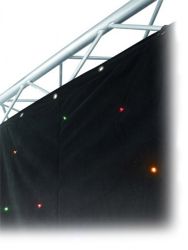
LED curtains

LED Curtains – Dynamic Stage Backdrops for Professional Events: LED curtains transform stages, DJ booths and exhibition stands into visually stunning environments. These flexible backdrop systems combine traditional stage drapery with programmable LED technology, creating everything from subtle starfield effects to full-motion video displays. Whether you're designing a concert stage, corporate presentation or theatrical production, LED curtains deliver impressive visual impact with straightforward rigging and...
Read more »
LED curtains
Close window
LED curtains

LED Curtains – Dynamic Stage Backdrops for Professional Events

LED curtains transform stages, DJ booths and exhibition stands into visually stunning environments. These flexible backdrop systems combine traditional stage drapery with programmable LED technology, creating everything from subtle starfield effects to full-motion video displays. Whether you're designing a concert stage, corporate presentation or theatrical production, LED curtains deliver impressive visual impact with straightforward rigging and control. At LTT, you'll find complete LED curtain systems from leading manufacturers, ready to set your next event in motion.

What Are LED Curtains and How Do They Work?

An LED curtain is a fabric backdrop embedded with individually addressable LEDs arranged in a matrix pattern. Unlike simple decorative light chains, professional LED curtains feature fire-retardant stage fabric (typically DIN 4102 B1 certified), robust LED modules and DMX control compatibility.

Core Components

Professional LED curtain systems consist of three main elements: the fabric carrier (usually black stage molton or scrim), LED strings or pixel modules mounted at regular intervals, and a control interface (DMX controller or media server). The LEDs are typically arranged in vertical strings with 12 to 16 LEDs per string, creating a pixel density between 5.7 and 100 LEDs per square metre depending on the application.

LED Curtains vs LED Video Walls

While both display moving images, LED curtains and video walls serve different purposes. Video walls offer high pixel density (often 2.5–10 mm pixel pitch) for crisp text and detailed imagery, but require rigid panel construction and significant weight capacity. LED curtains sacrifice resolution for flexibility, portability and ease of rigging – they fold into standard flight cases, hang from conventional truss systems using Velcro or eyelets, and weigh a fraction of comparable video wall installations. For atmospheric effects, brand colours and abstract motion graphics, LED curtains deliver professional results at a more accessible price point.

Control and Programming

Most professional LED curtains accept DMX512, Art-Net or sACN protocols, allowing integration with standard lighting desks and media servers. Individual LEDs or LED strings can be mapped as pixels, enabling video playback, generative effects and synchronisation with moving lights and other stage elements.

Applications – Where LED Curtains Excel

LED curtains are the go-to solution when you need a visually striking backdrop that's quick to install and adaptable to different venues.

Concert and Festival Stages – LED curtains create depth behind bands and DJs, displaying animated logos, colour washes or synchronised patterns. Their lightweight construction makes them ideal for touring productions where load-in time and transport volume matter.

Corporate Events and Product Launches – Brand colours, animated logos and dynamic transitions set the tone for presentations and keynote speeches. LED curtains integrate seamlessly with projection and LED spotlights to create layered visual environments.

Theatre and Broadcast – Theatrical productions use LED curtains for scene transitions, mood lighting and abstract visual storytelling. Fire-retardant certification ensures compliance with venue safety regulations.

Exhibition Stands and Trade Shows – Modular LED curtain sections define booth spaces and attract visitor attention. Battery-powered or mains-connected options suit different stand configurations.

Outdoor Events – Waterproof LED curtains (IP65 or IP67 rated) withstand weather exposure for festivals, open-air concerts and architectural installations. UV-resistant materials prevent colour fade during extended outdoor use.

LED curtains complement other deco lighting elements such as LED stripes and rope lights, creating cohesive lighting designs across entire venues.

Quality Standards and Professional Specifications

Professional LED curtains are engineered for reliability, safety and ease of use in demanding production environments. Understanding key specifications helps you select the right system for your application.

Fire Safety Certification

Venue regulations typically require stage fabrics to meet DIN 4102 B1 (Germany) or NFPA 701 (USA) flame-retardant standards. Always verify certification documentation before installation – non-compliant materials can result in venue rejection and insurance issues.

LED Density and Pixel Pitch

Standard LED curtains feature 5.7 to 30 LEDs per square metre, suitable for atmospheric effects and abstract visuals viewed from 3+ metres. High-density curtains (50–100 LEDs/m²) enable recognisable imagery and text at closer viewing distances but increase weight, power consumption and cost. Manufacturers including Showtex, Gerriets and Futurelight offer configurable density options.

Power Consumption and Distribution

A typical 3 × 3 metre LED curtain with 300 RGB LEDs draws 150–300 watts at full white output. Professional systems include integrated power distribution with short-circuit protection and daisy-chain capability, allowing multiple curtain sections to connect from a single mains feed. Battery-powered variants (USB or rechargeable packs) suit temporary installations and locations without mains access.

Control Interfaces

Entry-level systems offer 8-channel DMX control with pre-programmed patterns and standalone operation. Professional installations require full pixel-mapping capability via Art-Net or sACN, enabling integration with media servers from Resolume, Madrix or Arkaos. Controllers should include memory functions, timer modes and remote control options for walk-in/walk-out operation.

Rigging and Transport

Professional LED curtains feature Velcro loops or eyelets along the top edge for quick truss mounting. Fabric and electronics pack into foam-lined flight cases (typically 1200 × 600 × 400 mm for a 3 × 3 m curtain) with cable management compartments. Total system weight ranges from 8–25 kg depending on size and LED density.

Integration with Professional Lighting Systems

LED curtains deliver maximum impact when integrated into a coordinated lighting design. Modern control protocols and standardised rigging methods make integration straightforward.

DMX and Art-Net Protocol Compatibility

Professional LED curtains accept DMX512 input via 3-pin or 5-pin XLR connectors. Each LED or LED string occupies 3 DMX channels (red, green, blue), so a 300-LED curtain requires 900 channels or multiple DMX universes. Art-Net and sACN protocols transmit multiple DMX universes over standard Ethernet, simplifying cable runs and enabling remote control from front-of-house positions.

Synchronisation with Moving Lights and Effects

LED curtains work alongside moving head washers and moving head spots to create layered visual scenes. Lighting desks from Chamsys, Avolites or MA Lighting control all elements from a single interface, triggering coordinated colour changes, chases and video effects. Timecode synchronisation locks LED curtain animations to music playback and pyrotechnic cues.

Pixel Mapping and Video Content

Media servers map video content onto LED curtain grids, treating each LED as a pixel. Low-resolution content (abstract patterns, colour gradients, simple logos) works best – fine detail is lost at typical LED densities. Content creation tools including Resolume Arena, Madrix and TouchDesigner offer LED curtain templates and real-time preview.

Power and Data Infrastructure

Large LED curtain installations require careful power planning. A 6 × 3 metre curtain drawing 600 watts needs a dedicated 16A circuit or power distribution from a touring rack. Data distribution via DMX splitters or Art-Net switches ensures reliable signal delivery across multiple curtain sections. Swisson and DMT manufacture ruggedised distribution hardware for touring applications.

Rigging Considerations

LED curtains hang from standard aluminium truss using Velcro loops, cable ties or dedicated curtain track systems. Ensure truss load capacity accounts for curtain weight plus safety factor (typically 5:1 for overhead rigging). Cable management prevents trip hazards and maintains clean sightlines – use cable ties or Riggatec cable management accessories to secure power and data runs along truss.

Maintenance, Transport and Rental Considerations

Professional LED curtains are built for repeated use, but proper care extends lifespan and maintains visual quality.

Routine Maintenance

Inspect LED modules before each use for loose connections, damaged LEDs or frayed cables. Most systems use "push-and-pull" LED modules that replace without tools – carry 10–15 spare LEDs and replacement connectors in your touring kit. Clean fabric surfaces with a soft brush or vacuum; avoid liquid cleaners that may damage electronics or compromise fire-retardant treatment.

Transport and Storage

Fold LED curtains loosely into padded flight cases, avoiding sharp creases that stress LED connections. Store in dry, temperature-controlled environments (5–35°C) to prevent condensation damage. Label cases clearly with curtain dimensions, LED count and power requirements for efficient load-in.

Spare Parts and Field Repairs

Stock spare LED modules, 3M-style connectors (male and female), and replacement Velcro strips. Most LED failures result from connector issues rather than LED burnout – reseating connectors resolves 80% of field problems. Carry a DMX tester to diagnose signal issues quickly.

Rental Fleet Management

Rental companies should maintain detailed service logs for each curtain, tracking total operating hours, LED replacements and fabric condition. Rotate curtains through the fleet to equalise wear. Budget for fabric replacement every 200–300 hire cycles or when fire certification expires (typically 5 years).

Touring Cases and Accessories

Invest in custom foam inserts that protect LED modules during transport. Include cable management accessories, spare connectors and a laminated quick-start guide in each case. Roadinger and Accu Case manufacture ruggedised flight cases sized for standard LED curtain dimensions.

LTT – Your Specialist for Event Technology

LTT supplies professional LED curtain systems from leading manufacturers, backed by expert technical support and comprehensive after-sales service. Whether you're equipping a rental fleet, upgrading a fixed installation or designing a one-off event, our team helps you specify the right system for your application.

Every LED curtain system ships from our Bocholt, Germany warehouse with full documentation, spare parts and setup guidance. We offer free shipping on orders over €69 and express delivery when project timelines demand it. Our 3-year LTT warranty covers manufacturing defects, and our technical team provides ongoing support for control integration and troubleshooting.

Explore complementary products including LED profiles and mounting systems for permanent installations, or discover our range of light chains and LED stripes for additional decorative effects. For complete stage lighting solutions, browse our selection of theatre spotlights and show lasers.

LTT – your partner for professional event technology, delivering innovative solutions and reliable service for over 25 years.

FAQ – Questions & Answers

Can LED curtains be programmed for custom effects?

Yes, professional LED curtains accept DMX512, Art-Net or sACN control, allowing full programming of colours, patterns and video effects. Media servers such as Resolume, Madrix or TouchDesigner enable pixel mapping, where each LED or LED string displays part of a video file or generative animation. Entry-level systems include pre-programmed effects (colour washes, chases, strobes) accessible via remote control or standalone mode. For custom programming, you'll need a lighting desk or media server that supports pixel mapping – consult your LED curtain's channel map to configure correct addressing.

What's the difference between LED curtains and fabric curtains with LEDs?

LED curtains integrate LEDs directly into fire-retardant stage fabric with professional control systems, designed for repeated touring and venue installations. Fabric curtains with LEDs (often sold for home decoration) use lightweight materials, simpler LED strings and basic battery or USB power, lacking DMX control, fire certification or ruggedised construction. Professional LED curtains meet DIN 4102 B1 or NFPA 701 flame-retardant standards, include short-circuit protection and offer individual LED addressing for pixel mapping. Decorative fabric curtains suit residential use but do not meet venue safety requirements or provide the control flexibility needed for professional event production.

Are LED curtains suitable for outdoor events?

Waterproof LED curtains rated IP65 or IP67 are specifically designed for outdoor use, protecting electronics against rain, dust and UV exposure. Standard indoor LED curtains (typically IP20) should not be used outdoors – moisture ingress damages controllers and creates electrical safety hazards. Outdoor-rated systems feature sealed LED modules, waterproof connectors and UV-resistant fabric that prevents colour fade during extended sun exposure. Verify IP rating and UV certification before outdoor deployment. Even waterproof curtains should be stored dry between events to maximise lifespan. Outdoor LED curtain systems are available from manufacturers including Showtex and Gerriets.

How do LED curtains connect to DMX controllers?

LED curtains connect to DMX controllers via 3-pin or 5-pin XLR cables, using the same connectors as conventional stage lighting. Each curtain includes a control box (ConBox) that converts DMX signals into LED drive currents. Connect the DMX output from your lighting desk to the curtain's DMX input, set the curtain's DMX start address using the ConBox display or DIP switches, then patch the curtain in your lighting desk software. Large curtains may require multiple DMX universes – use Art-Net or sACN over Ethernet to transmit additional universes. Always terminate the last device in a DMX chain with a 120-ohm terminator to prevent signal reflections.

What power consumption do professional LED curtains have?

Professional LED curtains typically consume 0.5 to 1 watt per RGB LED at full white output. A standard 3 × 3 metre curtain with 300 LEDs draws 150–300 watts, while high-density 6 × 3 metre curtains with 600 LEDs may require 300–600 watts. Actual consumption varies with colour and brightness – single-colour effects (red, green or blue only) use approximately one-third of full-white power. Most systems operate on 230V AC mains with integrated power supplies; some portable models accept 12V DC or USB power for battery operation. Always verify power requirements before deployment and ensure adequate circuit capacity, especially when running multiple curtain sections from a single distribution point.

How do I choose the right LED density for my application?

LED density determines viewing distance and image detail. Low-density curtains (5–10 LEDs/m²) suit atmospheric effects and colour washes viewed from 5+ metres, ideal for concert backdrops and large stages. Medium-density curtains (20–40 LEDs/m²) display recognisable logos and simple graphics from 3–5 metres, suitable for corporate events and medium-sized venues. High-density curtains (50–100 LEDs/m²) enable text and detailed imagery from 2–3 metres but increase cost, weight and power consumption significantly. For most stage and event applications, 20–30 LEDs/m² offers the best balance of visual impact and practicality. Consider viewing distance, content complexity and budget when specifying LED density.

Do LED curtains require special rigging equipment?

LED curtains hang from standard aluminium truss using the same methods as conventional stage drapes. Most professional curtains feature Velcro loops or eyelets along the top edge that attach directly to truss with cable ties, S-hooks or curtain track systems. No specialised rigging hardware is required beyond what you'd use for fabric drapes. Ensure truss load capacity accounts for curtain weight (typically 8–25 kg for a 3 × 3 m curtain) plus a 5:1 safety factor for overhead rigging. Use cable management accessories to secure power and data cables along truss, preventing trip hazards and maintaining clean sightlines. LED curtains are significantly lighter than equivalent video wall panels, reducing structural requirements.

What maintenance do LED curtains need between events?

Inspect LED modules and connectors before each use, checking for loose connections, damaged LEDs or cable wear. Most professional curtains use replaceable "push-and-pull" LED modules – carry 10–15 spares in your touring kit for quick field repairs. Clean fabric surfaces with a soft brush or vacuum; avoid liquid cleaners that may damage electronics or fire-retardant treatment. Store curtains loosely folded in padded flight cases in dry, temperature-controlled environments (5–35°C). Check DMX addressing and test all control functions during setup. Replace fabric when fire certification expires (typically every 5 years) or when physical damage compromises appearance. Maintain service logs tracking operating hours and component replacements to predict maintenance needs.

Top seller
beamZ SPW96 SparkleWall LED96 RGBW 3x 2m mit Controller
beamZ SPW96 SparkleWall LED96 RGBW 3x 2m with controller
€289.00 *
incl. tax, free shipping to Germany
[International shipping costs]
Availability:
Currently not available
EUROLITE CRT-190 LED-Vorhang 6x4m
EUROLITE CRT-190 LED-Curtain 6x4m
€799.00 *
incl. tax, free shipping to Germany
[International shipping costs]
Availability:
Delivery time: 3-5 days
beamZ SPW96RGB Sparkle Curtain 3 x 2 m
beamZ SPW96RGB Sparkle Curtain 3x2m
€319.00 *
incl. tax, free shipping to Germany
[International shipping costs]
Availability:
Currently not available
4 Articles
Close filters
  •  
  •  
  •  
from to
No results were found for the filter!
EUROLITE CRT-190 LED-Vorhang 6x4m
EUROLITE CRT-190 LED-Curtain 6x4m
LED curtain with 190 RGBA LEDs and compatible DMX controller (6 x 4 m) Several curtains can be linked via DMX512 • 190 powerful LEDs 5 mm R/G/B/A • Control via stand-alone; DMX; sound to...
€799.00 *
incl. tax, free shipping to Germany
[International shipping costs]
Availability:
Delivery time: 3-5 days
LED Rubber Net Light WW 540 LEDS/400x200cm, connectable
SHOWTEC LED Rubber Net Light WW 540 LEDs - 400 x 200 cm - Connectable
2x1, 3x2 or 4x2 m Warm White LED Net • 176, 288 or 540 LEDs • Daisy chainable up to 6 sets • Suitable for bush decoration (IP44) • Ready-to-use • Including end cap and...
€185.00 *
incl. tax, free shipping to Germany
[International shipping costs]
Availability:
Currently not available
beamZ SPW96 SparkleWall LED96 RGBW 3x 2m mit Controller
beamZ SPW96 SparkleWall LED96 RGBW 3x 2m with controller
This LED starcloth is made from high quality, low reflective material and can be mounted to trussing or a DJ stand. The reusable cable ties make it ideal for mobile DJs and entertainers or on-stage...
€289.00 *
incl. tax, free shipping to Germany
[International shipping costs]
Availability:
Currently not available
beamZ SPW96RGB Sparkle Curtain 3 x 2 m
beamZ SPW96RGB Sparkle Curtain 3x2m
Brighten any space or event with the beamZ SPW96RGB Sparkle Curtain. Measuring 3x2 meters, this LED curtain includes 96 vibrant RGB LEDs for striking light effects and dynamic colour patterns,...
€319.00 *
incl. tax, free shipping to Germany
[International shipping costs]
Availability:
Currently not available
Facts
LED Curtains – Dynamic Stage Backdrops for Professional Events: LED curtains transform stages, DJ booths and exhibition stands into visually stunning environments. These flexible backdrop systems combine traditional stage drapery with programmable LED technology, creating everything from subtle starfield effects to full-motion video displays. Whether you're designing a concert stage, corporate presentation or theatrical production, LED... Read more »
Viewed
Facts

LED Curtains – Dynamic Stage Backdrops for Professional Events

LED curtains transform stages, DJ booths and exhibition stands into visually stunning environments. These flexible backdrop systems combine traditional stage drapery with programmable LED technology, creating everything from subtle starfield effects to full-motion video displays. Whether you're designing a concert stage, corporate presentation or theatrical production, LED curtains deliver impressive visual impact with straightforward rigging and control. At LTT, you'll find complete LED curtain systems from leading manufacturers, ready to set your next event in motion.

What Are LED Curtains and How Do They Work?

An LED curtain is a fabric backdrop embedded with individually addressable LEDs arranged in a matrix pattern. Unlike simple decorative light chains, professional LED curtains feature fire-retardant stage fabric (typically DIN 4102 B1 certified), robust LED modules and DMX control compatibility.

Core Components

Professional LED curtain systems consist of three main elements: the fabric carrier (usually black stage molton or scrim), LED strings or pixel modules mounted at regular intervals, and a control interface (DMX controller or media server). The LEDs are typically arranged in vertical strings with 12 to 16 LEDs per string, creating a pixel density between 5.7 and 100 LEDs per square metre depending on the application.

LED Curtains vs LED Video Walls

While both display moving images, LED curtains and video walls serve different purposes. Video walls offer high pixel density (often 2.5–10 mm pixel pitch) for crisp text and detailed imagery, but require rigid panel construction and significant weight capacity. LED curtains sacrifice resolution for flexibility, portability and ease of rigging – they fold into standard flight cases, hang from conventional truss systems using Velcro or eyelets, and weigh a fraction of comparable video wall installations. For atmospheric effects, brand colours and abstract motion graphics, LED curtains deliver professional results at a more accessible price point.

Control and Programming

Most professional LED curtains accept DMX512, Art-Net or sACN protocols, allowing integration with standard lighting desks and media servers. Individual LEDs or LED strings can be mapped as pixels, enabling video playback, generative effects and synchronisation with moving lights and other stage elements.

Applications – Where LED Curtains Excel

LED curtains are the go-to solution when you need a visually striking backdrop that's quick to install and adaptable to different venues.

Concert and Festival Stages – LED curtains create depth behind bands and DJs, displaying animated logos, colour washes or synchronised patterns. Their lightweight construction makes them ideal for touring productions where load-in time and transport volume matter.

Corporate Events and Product Launches – Brand colours, animated logos and dynamic transitions set the tone for presentations and keynote speeches. LED curtains integrate seamlessly with projection and LED spotlights to create layered visual environments.

Theatre and Broadcast – Theatrical productions use LED curtains for scene transitions, mood lighting and abstract visual storytelling. Fire-retardant certification ensures compliance with venue safety regulations.

Exhibition Stands and Trade Shows – Modular LED curtain sections define booth spaces and attract visitor attention. Battery-powered or mains-connected options suit different stand configurations.

Outdoor Events – Waterproof LED curtains (IP65 or IP67 rated) withstand weather exposure for festivals, open-air concerts and architectural installations. UV-resistant materials prevent colour fade during extended outdoor use.

LED curtains complement other deco lighting elements such as LED stripes and rope lights, creating cohesive lighting designs across entire venues.

Quality Standards and Professional Specifications

Professional LED curtains are engineered for reliability, safety and ease of use in demanding production environments. Understanding key specifications helps you select the right system for your application.

Fire Safety Certification

Venue regulations typically require stage fabrics to meet DIN 4102 B1 (Germany) or NFPA 701 (USA) flame-retardant standards. Always verify certification documentation before installation – non-compliant materials can result in venue rejection and insurance issues.

LED Density and Pixel Pitch

Standard LED curtains feature 5.7 to 30 LEDs per square metre, suitable for atmospheric effects and abstract visuals viewed from 3+ metres. High-density curtains (50–100 LEDs/m²) enable recognisable imagery and text at closer viewing distances but increase weight, power consumption and cost. Manufacturers including Showtex, Gerriets and Futurelight offer configurable density options.

Power Consumption and Distribution

A typical 3 × 3 metre LED curtain with 300 RGB LEDs draws 150–300 watts at full white output. Professional systems include integrated power distribution with short-circuit protection and daisy-chain capability, allowing multiple curtain sections to connect from a single mains feed. Battery-powered variants (USB or rechargeable packs) suit temporary installations and locations without mains access.

Control Interfaces

Entry-level systems offer 8-channel DMX control with pre-programmed patterns and standalone operation. Professional installations require full pixel-mapping capability via Art-Net or sACN, enabling integration with media servers from Resolume, Madrix or Arkaos. Controllers should include memory functions, timer modes and remote control options for walk-in/walk-out operation.

Rigging and Transport

Professional LED curtains feature Velcro loops or eyelets along the top edge for quick truss mounting. Fabric and electronics pack into foam-lined flight cases (typically 1200 × 600 × 400 mm for a 3 × 3 m curtain) with cable management compartments. Total system weight ranges from 8–25 kg depending on size and LED density.

Integration with Professional Lighting Systems

LED curtains deliver maximum impact when integrated into a coordinated lighting design. Modern control protocols and standardised rigging methods make integration straightforward.

DMX and Art-Net Protocol Compatibility

Professional LED curtains accept DMX512 input via 3-pin or 5-pin XLR connectors. Each LED or LED string occupies 3 DMX channels (red, green, blue), so a 300-LED curtain requires 900 channels or multiple DMX universes. Art-Net and sACN protocols transmit multiple DMX universes over standard Ethernet, simplifying cable runs and enabling remote control from front-of-house positions.

Synchronisation with Moving Lights and Effects

LED curtains work alongside moving head washers and moving head spots to create layered visual scenes. Lighting desks from Chamsys, Avolites or MA Lighting control all elements from a single interface, triggering coordinated colour changes, chases and video effects. Timecode synchronisation locks LED curtain animations to music playback and pyrotechnic cues.

Pixel Mapping and Video Content

Media servers map video content onto LED curtain grids, treating each LED as a pixel. Low-resolution content (abstract patterns, colour gradients, simple logos) works best – fine detail is lost at typical LED densities. Content creation tools including Resolume Arena, Madrix and TouchDesigner offer LED curtain templates and real-time preview.

Power and Data Infrastructure

Large LED curtain installations require careful power planning. A 6 × 3 metre curtain drawing 600 watts needs a dedicated 16A circuit or power distribution from a touring rack. Data distribution via DMX splitters or Art-Net switches ensures reliable signal delivery across multiple curtain sections. Swisson and DMT manufacture ruggedised distribution hardware for touring applications.

Rigging Considerations

LED curtains hang from standard aluminium truss using Velcro loops, cable ties or dedicated curtain track systems. Ensure truss load capacity accounts for curtain weight plus safety factor (typically 5:1 for overhead rigging). Cable management prevents trip hazards and maintains clean sightlines – use cable ties or Riggatec cable management accessories to secure power and data runs along truss.

Maintenance, Transport and Rental Considerations

Professional LED curtains are built for repeated use, but proper care extends lifespan and maintains visual quality.

Routine Maintenance

Inspect LED modules before each use for loose connections, damaged LEDs or frayed cables. Most systems use "push-and-pull" LED modules that replace without tools – carry 10–15 spare LEDs and replacement connectors in your touring kit. Clean fabric surfaces with a soft brush or vacuum; avoid liquid cleaners that may damage electronics or compromise fire-retardant treatment.

Transport and Storage

Fold LED curtains loosely into padded flight cases, avoiding sharp creases that stress LED connections. Store in dry, temperature-controlled environments (5–35°C) to prevent condensation damage. Label cases clearly with curtain dimensions, LED count and power requirements for efficient load-in.

Spare Parts and Field Repairs

Stock spare LED modules, 3M-style connectors (male and female), and replacement Velcro strips. Most LED failures result from connector issues rather than LED burnout – reseating connectors resolves 80% of field problems. Carry a DMX tester to diagnose signal issues quickly.

Rental Fleet Management

Rental companies should maintain detailed service logs for each curtain, tracking total operating hours, LED replacements and fabric condition. Rotate curtains through the fleet to equalise wear. Budget for fabric replacement every 200–300 hire cycles or when fire certification expires (typically 5 years).

Touring Cases and Accessories

Invest in custom foam inserts that protect LED modules during transport. Include cable management accessories, spare connectors and a laminated quick-start guide in each case. Roadinger and Accu Case manufacture ruggedised flight cases sized for standard LED curtain dimensions.

LTT – Your Specialist for Event Technology

LTT supplies professional LED curtain systems from leading manufacturers, backed by expert technical support and comprehensive after-sales service. Whether you're equipping a rental fleet, upgrading a fixed installation or designing a one-off event, our team helps you specify the right system for your application.

Every LED curtain system ships from our Bocholt, Germany warehouse with full documentation, spare parts and setup guidance. We offer free shipping on orders over €69 and express delivery when project timelines demand it. Our 3-year LTT warranty covers manufacturing defects, and our technical team provides ongoing support for control integration and troubleshooting.

Explore complementary products including LED profiles and mounting systems for permanent installations, or discover our range of light chains and LED stripes for additional decorative effects. For complete stage lighting solutions, browse our selection of theatre spotlights and show lasers.

LTT – your partner for professional event technology, delivering innovative solutions and reliable service for over 25 years.

FAQ – Questions & Answers

Can LED curtains be programmed for custom effects?

Yes, professional LED curtains accept DMX512, Art-Net or sACN control, allowing full programming of colours, patterns and video effects. Media servers such as Resolume, Madrix or TouchDesigner enable pixel mapping, where each LED or LED string displays part of a video file or generative animation. Entry-level systems include pre-programmed effects (colour washes, chases, strobes) accessible via remote control or standalone mode. For custom programming, you'll need a lighting desk or media server that supports pixel mapping – consult your LED curtain's channel map to configure correct addressing.

What's the difference between LED curtains and fabric curtains with LEDs?

LED curtains integrate LEDs directly into fire-retardant stage fabric with professional control systems, designed for repeated touring and venue installations. Fabric curtains with LEDs (often sold for home decoration) use lightweight materials, simpler LED strings and basic battery or USB power, lacking DMX control, fire certification or ruggedised construction. Professional LED curtains meet DIN 4102 B1 or NFPA 701 flame-retardant standards, include short-circuit protection and offer individual LED addressing for pixel mapping. Decorative fabric curtains suit residential use but do not meet venue safety requirements or provide the control flexibility needed for professional event production.

Are LED curtains suitable for outdoor events?

Waterproof LED curtains rated IP65 or IP67 are specifically designed for outdoor use, protecting electronics against rain, dust and UV exposure. Standard indoor LED curtains (typically IP20) should not be used outdoors – moisture ingress damages controllers and creates electrical safety hazards. Outdoor-rated systems feature sealed LED modules, waterproof connectors and UV-resistant fabric that prevents colour fade during extended sun exposure. Verify IP rating and UV certification before outdoor deployment. Even waterproof curtains should be stored dry between events to maximise lifespan. Outdoor LED curtain systems are available from manufacturers including Showtex and Gerriets.

How do LED curtains connect to DMX controllers?

LED curtains connect to DMX controllers via 3-pin or 5-pin XLR cables, using the same connectors as conventional stage lighting. Each curtain includes a control box (ConBox) that converts DMX signals into LED drive currents. Connect the DMX output from your lighting desk to the curtain's DMX input, set the curtain's DMX start address using the ConBox display or DIP switches, then patch the curtain in your lighting desk software. Large curtains may require multiple DMX universes – use Art-Net or sACN over Ethernet to transmit additional universes. Always terminate the last device in a DMX chain with a 120-ohm terminator to prevent signal reflections.

What power consumption do professional LED curtains have?

Professional LED curtains typically consume 0.5 to 1 watt per RGB LED at full white output. A standard 3 × 3 metre curtain with 300 LEDs draws 150–300 watts, while high-density 6 × 3 metre curtains with 600 LEDs may require 300–600 watts. Actual consumption varies with colour and brightness – single-colour effects (red, green or blue only) use approximately one-third of full-white power. Most systems operate on 230V AC mains with integrated power supplies; some portable models accept 12V DC or USB power for battery operation. Always verify power requirements before deployment and ensure adequate circuit capacity, especially when running multiple curtain sections from a single distribution point.

How do I choose the right LED density for my application?

LED density determines viewing distance and image detail. Low-density curtains (5–10 LEDs/m²) suit atmospheric effects and colour washes viewed from 5+ metres, ideal for concert backdrops and large stages. Medium-density curtains (20–40 LEDs/m²) display recognisable logos and simple graphics from 3–5 metres, suitable for corporate events and medium-sized venues. High-density curtains (50–100 LEDs/m²) enable text and detailed imagery from 2–3 metres but increase cost, weight and power consumption significantly. For most stage and event applications, 20–30 LEDs/m² offers the best balance of visual impact and practicality. Consider viewing distance, content complexity and budget when specifying LED density.

Do LED curtains require special rigging equipment?

LED curtains hang from standard aluminium truss using the same methods as conventional stage drapes. Most professional curtains feature Velcro loops or eyelets along the top edge that attach directly to truss with cable ties, S-hooks or curtain track systems. No specialised rigging hardware is required beyond what you'd use for fabric drapes. Ensure truss load capacity accounts for curtain weight (typically 8–25 kg for a 3 × 3 m curtain) plus a 5:1 safety factor for overhead rigging. Use cable management accessories to secure power and data cables along truss, preventing trip hazards and maintaining clean sightlines. LED curtains are significantly lighter than equivalent video wall panels, reducing structural requirements.

What maintenance do LED curtains need between events?

Inspect LED modules and connectors before each use, checking for loose connections, damaged LEDs or cable wear. Most professional curtains use replaceable "push-and-pull" LED modules – carry 10–15 spares in your touring kit for quick field repairs. Clean fabric surfaces with a soft brush or vacuum; avoid liquid cleaners that may damage electronics or fire-retardant treatment. Store curtains loosely folded in padded flight cases in dry, temperature-controlled environments (5–35°C). Check DMX addressing and test all control functions during setup. Replace fabric when fire certification expires (typically every 5 years) or when physical damage compromises appearance. Maintain service logs tracking operating hours and component replacements to predict maintenance needs.

// Countdown for Black Deals