

Top seller

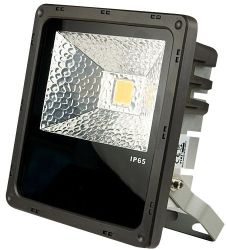
LEDVANCE FLOODLIGHT FL 50 P 41W 6KLM 830 PS SY100 BK
€24.90
*
incl. tax,
plus shipping costs
 Express delivery possible
Availability:
Delivery time: 1-3 days
Delivery time: 1-3 days

LEDVANCE FLOODLIGHT FL 150 P 100W 15KLM 830 PS SY100 BK
€79.90
*
Availability:
Delivery time: 1-3 days
Delivery time: 1-3 days

beamZ BBP12 Mini Battery Uplight 12W Outdoor
€119.00
*
Availability:
Delivery time: 1-3 days
Delivery time: 1-3 days

LEDVANCE ENDURA® FLOOD Cool White 10 W 4000 K DG
€15.45
*
incl. tax,
plus shipping costs
Availability:
Near-term available
Delivery time: approx. 1 week
Delivery time: approx. 1 week
Delivery time: approx. 1 week

SLV SYNA SHADE, ground spike light, GU10, 1x max. 10 W, IP65, round, black
€39.29
*
incl. tax,
plus shipping costs
Availability:
Delivery time: 3-5 days
Delivery time: 3-5 days
168
Articles
No results were found for the filter!

SLV NAUTILUS, outdoor floodlight, QPAR51, stainless steel, max. 35W, incl. 1.5m cable
SLV NAUTILUS, outdoor floodlight, QPAR51, stainless steel, max. 35W, incl. 1.5m cable
The mobile spotlights of the NAUTILUS family are the Plug & Play best-sellers from SLV, which have enhanced a countless number of commercial and private outdoor areas for many years. The...
€86.63
*
Availability:
Delivery time: 3-5 days
Delivery time: 3-5 days

LEDVANCE ENDURA® FLOOD Sensor Warm White 10 W 3000 K DG
LEDVANCE ENDURA® FLOOD Sensor Warm White 10 W 3000 K DG
Outdoor sensor luminaires in 3000K. Product features: Very bright and functional outdoor LED luminaires • Symmetrical beam angle: 110° x 110° • Mounting bracket for up to 180°...
€25.30
*
incl. tax,
plus shipping costs

Availability:
Low stock; Delivery time: 1-3 days
Delivery time: 1-3 days

LEDVANCE ENDURA® FLOOD Sensor Cool White 10 W 4000 K DG
LEDVANCE ENDURA® FLOOD Sensor Cool White 10 W 4000 K DG
Outdoor sensor luminaires in 4000K. Product features: Very bright and functional outdoor LED luminaires • Symmetrical beam angle: 110° x 110° • Mounting bracket for up to 180°...
€31.76
*
incl. tax,
plus shipping costs
Availability:
Delivery time: approx. 2-3 weeks
Delivery time: approx. 2-3 weeks

SLV DASAR PROJECTOR, outdoor floodlight, LED, 3000K, IP68, stainless steel 316, 12-24V, 7W
SLV DASAR PROJECTOR, outdoor floodlight, LED, 3000K, IP68, stainless steel 316, 12-24V, 7W
The accessible high-voltage inground light DASAR Projector LED PRO impresses with its stainless steel screen and glass cover in a partial satin finish. Its IP 68 protection class makes it ideal for...
€211.75
*

Availability:
Delivery time: 3-5 days
Delivery time: 3-5 days

SLV DASAR PROJECTOR, outdoor floodlight, LED, 3000K, IP67, stainless steel 316, 230V, 6W
SLV DASAR PROJECTOR, outdoor floodlight, LED, 3000K, IP67, stainless steel 316, 230V, 6W
DASAR Projector LED PRO is the accessible high-voltage inground light from SLV that impresses with its stainless steel screen and glass cover in a partial satin finish. With its IP 67 protection...
€264.25
*

Availability:
Delivery time: 3-5 days
Delivery time: 3-5 days

FLAC BEAM, outdoor façade light, LED, 3000K, IP65, stone-grey, with Philips DLMi module 1800lm, 27W
FLAC BEAM, outdoor façade light, LED, 3000K, IP65, stone-grey, with Philips DLMi module 1800lm, 27W
The FLAC BEAM outdoor floodlights are fitted with high-performance LED modules made by Philips. The floodlight is made of aluminium and, thanks to the fitted mounting bracket, is suitable for...
€430.50
*
Availability:
Delivery time: 3-5 days
Delivery time: 3-5 days

SLV HELIA, outdoor spot, LED, 3000K, 35°, anthracite, IP55
SLV HELIA, outdoor spot, LED, 3000K, 35°, anthracite, IP55
The HELIA LED pathway luminaire is equipped with an 8W high-voltage LED and emits a warm-white light colour. The luminaire is made of aluminium and is connected using the 3m supply cable with open...
€154.00
*

Availability:
Delivery time: 3-5 days
Delivery time: 3-5 days

EUROLITE LED IP FL-10 COB UV
EUROLITE LED IP FL-10 COB UV
Weather-proof (IP54) UV spotlight with 10 W COB UV LED Suitable for larger distances • 1 powerful LED 10 W COB (chip-on-board) ultra violet (UV) • UV effect • The device is cooled by...
€49.90
*
incl. tax,
plus shipping costs
Availability:
Delivery time: 3-5 days
Delivery time: 3-5 days

EUROLITE LED IP FL-30 COB UV
EUROLITE LED IP FL-30 COB UV
Weather-proof (IP54) UV spotlight with 30 W COB UV LED Suitable for larger distances • 1 powerful LED 30 W COB (chip-on-board) ultra violet (UV) • UV effect • The device is cooled by...
€114.90
*
Availability:
Delivery time: 1-3 days
Delivery time: 1-3 days

EUROLITE LED IP FL-80 COB RGB 120° RC
EUROLITE LED IP FL-80 COB RGB 120° RC
Outdoor floodlight (IP65) with 80 W COB LED (RGB) and IR remote control Add highlights to your house and garden • Ideal LED luminary for indoor or outdoor use • Weather-proof housing...
€199.00
*
€142.25
*
Availability:
Low stock; Delivery time: 1-3 days
Delivery time: 1-3 days

EUROLITE LED IP FL-100 6400K
EUROLITE LED IP FL-100 6400K
Flat IP54 outdoor floodlight with 140 SMD-LEDs cold white (CW) Add highlights to your house and garden • Extremely flat housing • 140 powerful LEDs SMD 3030 cold white (CW) • The...
€77.37
*
Availability:
Delivery time: 3-5 days
Delivery time: 3-5 days

EUROLITE LED IP FL-100 3000K
EUROLITE LED IP FL-100 3000K
Flat IP54 outdoor floodlight with 140 SMD-LEDs warm white (WW) Add highlights to your house and garden • Extremely flat housing • 140 powerful LEDs SMD 3030 warm white (WW) • The...
€76.27
*
Availability:
Delivery time: 3-5 days
Delivery time: 3-5 days

EUROLITE LED IP FL-150 6400K
EUROLITE LED IP FL-150 6400K
Flat IP54 outdoor floodlight with 196 SMD-LEDs cold white (CW) Add highlights to your house and garden • Extremely flat housing • 196 powerful LEDs SMD 3030 cold white (CW) • The...
€123.55
*
Availability:
Delivery time: 3-5 days
Delivery time: 3-5 days

ARTECTA Carlow 21 RGB 7/3 7x 3 W outdoor RGB LED Spot
ARTECTA Carlow 21 RGB 7/3 7x 3 W outdoor RGB LED Spot
Suitable for outdoor installations (IP66) • Manual, DMX and Master/Slave control • 630 lm output • 18° beam angle • Two 1.5 m power cables (IP66) included • Optional...
€173.54
*
Availability:
Delivery time: 3-5 days
Delivery time: 3-5 days

ARTECTA Carlow 72 RGB 24/3 24x 3 W outdoor RGB LED Spot
ARTECTA Carlow 72 RGB 24/3 24x 3 W outdoor RGB LED Spot
Suitable for outdoor installations (IP66) • Manual, DMX and Master/Slave control • 2404 lm output • 18° beam angle • 1.5 m power cable (IP66) included • The Artecta...
€395.01
*
Availability:
Delivery time: 3-5 days
Delivery time: 3-5 days

LEDVANCE FLOODLIGHT SENSOR 20 W 3000 K SYM 100 S WT
LEDVANCE FLOODLIGHT SENSOR 20 W 3000 K SYM 100 S WT
Floodlight with flexible motion and daylight sensor, up to 2400 lm light output. Product features: Flexible motion and daylight sensor • Sensor with 350° pan and 180° tilt...
€32.06
*
incl. tax,
plus shipping costs

Availability:
Delivery time: approx. 2-3 weeks
Delivery time: approx. 2-3 weeks

ISOLED LED outdoor spotlight Cube IP65, 4x2W CREE, anthracite, warm white
ISOLED LED outdoor spotlight Cube IP65, 4x2W CREE, anthracite, warm white
LED outdoor spotlight Cube IP65, 4x2W CREE, anthracite, warm white Length: 70mm • Width: 80mm • Height: 327mm • Net weight: 730g • LED type: 4xCREEHighPower • Nominal...
€75.29
*

Availability:
Not in stock
Delivery time: approx. 2 weeks
Delivery time: approx. 2 weeks
Delivery time: approx. 2 weeks

LEDVANCE Battery LED Spotlight Single Black
LEDVANCE Battery LED Spotlight Single Black
Outdoor spotlights with single luminaire head. Product features: Luminous flux: up to 260 lm • Integrated light and motion sensor • Battery life in continuous operation: up to 10 h...
€31.95
*
incl. tax,
plus shipping costs
Availability:
Delivery time: 1-3 days
Delivery time: 1-3 days
LEDVANCE ENDURA® FLOOD Cool White 10 W 4000 K DG
LEDVANCE ENDURA® FLOOD Cool White 10 W 4000 K DG
Outdoor luminaires in 4000K. Product features: Very bright and functional outdoor LED luminaires • Symmetrical beam angle: 110° x 110° • Mounting bracket for up to 180°...
€15.45
*
incl. tax,
plus shipping costs
Availability:
Near-term available
Delivery time: approx. 1 week
Delivery time: approx. 1 week
Delivery time: approx. 1 week

LEDVANCE WORKLIGHTS S-STAND 30 W/4000 K
LEDVANCE WORKLIGHTS S-STAND 30 W/4000 K
Flexible, portable worklight. Product features: Worklight with swiveling head • Type of protection, luminaire head and housing: IP65, Type of protection, plug: IP44 • Quick-release...
€31.96
*
incl. tax,
plus shipping costs

Availability:
Low stock; Delivery time: 1-3 days
Delivery time: 1-3 days

LEDVANCE WORKLIGHTS S-STAND 50 W/4000 K
LEDVANCE WORKLIGHTS S-STAND 50 W/4000 K
Flexible, portable worklight. Product features: Worklight with swiveling head • Type of protection, luminaire head and housing: IP65, Type of protection, plug: IP44 • Quick-release...
€47.96
*
€42.47
*
incl. tax,
plus shipping costs

Availability:
Low stock; Delivery time: 1-3 days
Delivery time: 1-3 days

LEDVANCE ENDURA FLOOD Solar double Sensor
LEDVANCE ENDURA FLOOD Solar double Sensor
ENDURA STYLE SOLAR DOUBLE : Length: 160 mm • Width: 110 mm • Height: 172 mm • Net weight: 354 g • Nominal voltage: 3 V • Nominal current: 925 mA • Rated power: 2,90 W...
€44.46
*
incl. tax,
plus shipping costs
Availability:
Low stock; Delivery time: 1-3 days
Delivery time: 1-3 days

SHOWTEC Aviano Tour 10W CCT LED Floodlight with selectable colour temperature
SHOWTEC Aviano Tour 10W CCT LED Floodlight with selectable colour temperature
24x 0.4 W LEDs • Selectable colour temperature (3000 K, 4200 K or 6000 K) • Housing IP65, cable IP44 • Cable with additional power socket • Strong mounting bracket...
€43.50
*
incl. tax,
plus shipping costs
Availability:
Delivery time: 3-5 days
Delivery time: 3-5 days

SHOWTEC Aviano Tour 30W CCT LED Floodlight with selectable colour temperature
SHOWTEC Aviano Tour 30W CCT LED Floodlight with selectable colour temperature
72x 0.4 W LEDs • Selectable colour temperature (3000 K, 4200 K or 6000 K) • Housing IP65, cable IP44 • Cable with additional power socket • Strong mounting bracket...
€62.90
*
incl. tax,
plus shipping costs
Availability:
Delivery time: 3-5 days
Delivery time: 3-5 days