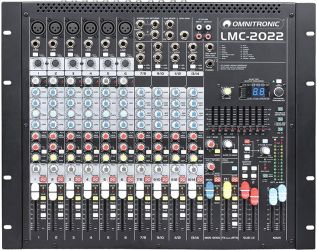
Power mixer consoles

Power Mixers – The All-in-One Solution for Live Sound: Power mixers combine a full mixing console and a power amplifier in a single, road-ready housing — the pragmatic heart of any compact PA. As your specialist for event technology, LTT gives you powered mixers that let you connect passive speakers directly, cut down on cabling and get a working setup in minutes. Whether you run a rehearsal room, play small-to-mid live gigs or need a dependable central unit for vocals, keys and playback, a power mixer...
Read more »
Power mixer consoles
Close window
Power mixer consoles

Power Mixers – The All-in-One Solution for Live Sound

Power mixers combine a full mixing console and a power amplifier in a single, road-ready housing — the pragmatic heart of any compact PA. As your specialist for event technology, LTT gives you powered mixers that let you connect passive speakers directly, cut down on cabling and get a working setup in minutes.

Whether you run a rehearsal room, play small-to-mid live gigs or need a dependable central unit for vocals, keys and playback, a power mixer keeps your rig lean and mobile. Fewer components, less to carry, faster load-in.

Explore our curated range and set your next show in the spotlight with hardware built for professional use.

What Is a Power Mixer and How Does It Work?

A power mixer (also called a powered mixer or Power Mischpult) is an audio device that integrates a mixing console and one or more power amplifiers into one chassis. That means you can wire passive PA speakers straight to the unit — no external amp rack required.

The working principle in short

You feed microphones, instruments and line sources into the input channels. Inside the mixer, each channel strip lets you set gain, EQ and level. The summed signal is routed internally to the built-in Class-D amplifier, which drives your passive tops and monitors directly through Speakon or 6.3 mm jack outputs.

Why this matters for mobile use

The combined design simplifies cabling and setup dramatically. Instead of hauling a mixer, a separate power amp, an FX unit and a controller, you carry one device. This makes power mixers ideal for quick setups, mobile jobs and fixed background-music installations alike.

Modern units go far beyond raw amplification: multi-FX processors, graphic EQ, phantom power, feedback suppression, USB recording and Bluetooth streaming are common on board. In practice, that gives you a self-contained PA brain that stays stable and easy to operate, even without a dedicated front-of-house engineer on the day.

Comparison: Power Mixer vs. Passive Mixer vs. Separate Amp

The core question many event technicians face is: one integrated power mixer, or a modular chain of a passive mixer plus a separate power amplifier? Both approaches drive passive speakers — but the trade-offs differ. The comparison table below breaks down the decisive criteria so you can choose the optimal solution for your workflow.

Criterion Power Mixer (integrated) Passive Mixer + Separate Amp
Setup speed Very fast, one device to connect Slower, mixer and amp wired separately
Cabling effort Minimal — speakers plug straight in Higher — mixer-to-amp-to-speaker chain
Transport weight One combined unit, easy to carry Two units, heavier overall load
Expandability Limited, fixed amp power High, swap or add amps freely
Distortion headroom Good for small-to-mid PA Better at high SPL and sub handling
Typical entry price From around €200 (up to ~500 W) Around €360 for a comparable modular rig

A power mixer wins on speed, weight and simplicity — perfect for singer-songwriters, bands and mobile jobs that will not scale much. A separate mixer and amp win on modular expandability and distortion-free output at high volumes.

What is the difference in one sentence?

A passive mixer only shapes and routes signals, whereas a power mixer adds a built-in power amplifier so you no longer need to carry a separate amp — that single feature is the whole distinction.

Buying Guide: Choosing the Right Power Mixer by Wattage, Channels and Features

This buying guide walks you through the criteria that actually matter when selecting a power mixer, so you neither overspend nor buy short of your needs.

Match wattage to venue size

Power ratings are given at 4 Ohm and 8 Ohm loads. Common classes range from 2x 600 W and 2x 800 W up to 2x 1000 W in Class-D designs, while budget units sit between 240 W and 500 W. Trust realistic RMS figures over marketing peak numbers — stable reserves matter more than headline watts for rehearsal rooms and pub gigs.

Count your channels honestly

Power mixers typically come as 4, 6, 8, 12 or 16-channel models. Add up microphones, instruments, playback devices, talkback and a reserve for guests. Look for mic, line and instrument inputs, plus 48V phantom power for condenser microphones.

Check the features that save your show

Useful on-board tools include a multi-FX processor (16 to 380 presets), 2-band or graphic EQ, feedback suppression, a low-cut filter, Bluetooth 5.1 streaming and USB/SD MP3 playback and recording. Aux and monitor ways are essential if you run in-ears or stage monitors.

Entry-level vs. professional demands

For a hobby band or small venue, a compact 6 to 8-channel unit with basic FX is enough. Professionals mixing multiple vocals, keys and playback should prioritise several aux ways, a 9-band graphic EQ and serious feedback tools. As your reliable partner, LTT helps you weigh budget against expandability so the mixer still fits your rig in two years.

Connecting a Power Mixer to Passive Speakers and Impedance

Getting the speaker matching right is where many setups go wrong — so here is the pairing logic for professional PA use.

Understanding impedance (4 Ohm / 8 Ohm)

A power mixer delivers different output power depending on the load. At 4 Ohm you get the higher wattage figure, at 8 Ohm noticeably less. Always check the total impedance of the speakers you connect per side: two 8-Ohm tops wired in parallel present a 4-Ohm load, so match this to the mixer's rated output to avoid overloading the amp.

Practical connection steps

  • Use Speakon connectors where available — they lock securely and carry high current safely for live use.
  • Connect one passive top (or a permitted parallel pair) to the left output, another to the right.
  • Never drop below the minimum impedance stated by the manufacturer.
  • If your unit supports bridge mode, note that bridging changes the minimum safe load — read the manual before bridging.

Adding monitors and subs

Many power mixers offer a subwoofer output and dedicated monitor ways via aux sends. Route stage monitors through an aux bus so performers hear an independent mix. This keeps your front-of-house sound clean while giving the band a stable monitor way for beautiful, controlled results on stage.

Applications and Use: Rehearsal, Small Stage, Mobile Setups and Installations

Power mixers shine wherever you need reliable sound reinforcement without a full amp rack. Here are the core application scenarios for our audience.

Rehearsal rooms and small live gigs

Bands, solo performers and singer-songwriters get a complete PA brain in one box — mix vocals, guitars, keys and playback, then drive passive tops directly. Ideal for a fast "pack, set up, play" workflow.

Mobile DJ and event jobs

For mobile DJs and small event agencies, the integrated design means a lighter load and quicker teardown. Connect a media player or laptop, stream via Bluetooth and run the show from a single device.

Small stages and trade fair booths

On a small stage or a trade fair booth, a power mixer keeps the tech footprint minimal while still handling microphones, speeches and background music. Pair it with a compact PA and you have a clean, portable solution that sets the space in the spotlight.

Fixed installations

Cafes, pubs, youth centres, clubs, churches and conference rooms benefit from power mixers as permanent background-music and announcement systems. To integrate the unit into a wider event-tech rig, browse matching stage cases, cabling and PA speakers in our related audio and stage categories.

Top Brands and Manufacturers at a Glance

LTT carries high-quality branded products from the manufacturers that define this segment. Among the power mixer and audio brands you will find in our range are Power Dynamics, Omnitronic, DAP-Audio, IMG Stageline and LD Systems, alongside classic industry references such as the Dynacord PowerMate and Yamaha EMX series that set the professional benchmark.

What each brand line stands for

  • Power Dynamics — accessible 4 to 16-channel powered mixers with Bluetooth, DSP and up to 380 effects, strong value for bands and mobile users.
  • Omnitronic and DAP-Audio — dependable event-tech workhorses with solid Class-D amplification for club and touring use.
  • Dynacord PowerMate (600-3, 1000-3, 2200-3) — professional 2x 1000 W at 4 Ohm units with multiple aux buses, USB audio and rugged transport solutions.
  • Yamaha EMX (EMX 5, EMX 7) — portable all-rounders with feedback suppression, presets and integrated FX, from 2x 630 W to 2x 710 W at 4 Ohm.

Whichever brand suits your budget and channel needs, our specialists point you to the optimal solution for professional use — no guesswork, just gear that performs on the day.

Accessories, Transport, Cases and Rack Integration for Mobile Use

Event technicians move gear constantly, so the right accessories decide whether a power mixer survives years on the road.

Protection and transport

A flight case or padded cover shields faders, connectors and the display from impact and dust during transport. Larger units such as the Dynacord PowerMate 2200-3 practically demand a dedicated flight case because of their dimensions and weight — protect your investment before the first load-out.

Rack integration

Many power mixers are 19" rack-mountable or ship with optional rack-mount kits. Integrating the mixer into a mobile rack alongside cabling and a media player creates a self-contained, tour-ready central unit that installs in seconds on site.

Essential accessories

  • Speakon and jack cables in the right gauge for your amp power.
  • Microphone cables and XLR patch leads for clean signal runs.
  • Rack shelves, kits and covers to build a tidy mobile setup.
  • Spare fuses and connectors as on-site insurance.

Stock up on matching cables, cases and stage infrastructure from our related event-tech categories to complete your rig in one order.

Care, Maintenance and Durability for Mobile Use

A power mixer lives a hard life on the road, so a little regular care keeps it reliable for years — a point most retailers ignore, but one that genuinely matters for a specialist rig.

Routine cleaning

Wipe the surface and faders with a dry or barely damp cloth; never use aggressive solvents on the panel. Keep the amplifier's ventilation slots free of dust so the Class-D stage stays cool under load. Blow out fader tracks with compressed air if channels start to crackle.

Heat and airflow

Heat is the main enemy of any built-in power amplifier. Give the unit room to breathe, avoid stacking heat sources directly on top and never run it fully enclosed in a sealed case while powered on.

Care and maintenance checklist

  • Store the mixer in a dry, dust-free case between jobs.
  • Check connectors and cables for wear before every gig.
  • Let the unit cool down before packing it away hot.
  • Power down in the correct order (amp last) to protect your speakers.

Treated well, a quality power mixer delivers dependable, distortion-free sound show after show.

LTT – Your Specialist for Event Technology

At LTT you get more than a power mixer — you get 25 years of experience in event technology and a team that treats you as a reliable partner from the first question to the finished setup. As a manufacturer and full-service dealer, we know exactly which powered mixer delivers beautiful, dependable results for your venue and workflow.

Every order ships from our warehouse in Germany with free shipping from €69 and our 3-year LTT warranty for genuine peace of mind. Express delivery and worldwide dispatch are available whenever your production cannot wait.

To complete your rig, explore our wider audio and stage ranges — from PA speakers and mixing consoles to flight cases and cabling. Combine the right components and you will set every event in the spotlight with hardware built for professional use. Got a specific question about impedance, channels or power ratings? Talk to our specialists — that is what we are here for.

FAQ – Questions & Answers

What is a power mixer?

A power mixer is an audio device that combines a full mixing console and a built-in power amplifier in a single housing. Because a power mixer integrates the amp, you can connect passive PA speakers directly without an external amplifier, which simplifies cabling and speeds up setup. Power mixers typically add features such as multi-FX processors, EQ, phantom power and Bluetooth streaming, making them ideal for rehearsal rooms, small-to-mid live gigs and mobile event work. They are the most pragmatic route to a compact, road-ready PA.

What is the difference between a passive mixer and a powered mixer?

The difference between a passive mixer and a powered mixer is the built-in amplifier. A passive mixer only mixes, shapes and routes audio signals and requires a separate power amplifier to drive speakers. A powered mixer (power mixer) adds an integrated power amplifier, so passive speakers can be connected directly to the unit. This means with a powered mixer you carry fewer components and less cabling, whereas a passive mixer plus separate amp offers greater expandability and better distortion-free output at very high volumes.

How do you connect a power mixer to a powered speaker?

To connect a power mixer to an active (powered) speaker, you do not use the amplified speaker outputs of the power mixer. Instead, take a line-level signal — typically the main mix output, a monitor/aux send or the record output — via XLR or 6.3 mm jack, and feed it into the active speaker's line input. Active speakers already contain their own amplifier, so the power mixer's built-in amp stays unused for them. Only passive speakers are wired to the power mixer's Speakon or jack amplifier outputs, matching the stated impedance.

Which brand of sound mixer is best?

There is no single best sound mixer brand — the best power mixer depends on your channels, wattage and budget. For professional reliability, the Dynacord PowerMate series is a benchmark with 2x 1000 W at 4 Ohm and generous aux buses. Yamaha EMX models offer portable all-round performance with feedback suppression and presets. Power Dynamics gives strong value for bands and mobile DJs, while Omnitronic and DAP-Audio are dependable event-tech workhorses. At LTT our specialists match the right brand to your specific application rather than pushing one name.

How much power in watts do I need for my venue?

The power you need depends on venue size and audience. For rehearsal rooms, small pubs or youth centres, power mixers between 240 W and 500 W are often sufficient. For small-to-mid live gigs and clubs, aim for 2x 600 W to 2x 800 W. Larger stages and full bands benefit from 2x 1000 W at 4 Ohm. Always read ratings at the correct impedance (4 Ohm or 8 Ohm) and trust realistic RMS figures over marketing peak values. Stable power reserves matter more than headline watts for clean, distortion-free sound.

How many channels does a power mixer need?

How many channels a power mixer needs depends on your sources. Common power mixers come as 4, 6, 8, 12 or 16-channel models. Count every microphone, instrument, playback device and talkback line, then add a reserve for guests. A solo performer or duo may manage with 4 to 6 channels, a small band typically needs 8 to 12, and a full band with multiple vocals, keys and playback often requires 16 channels. Also check that inputs offer mic, line and instrument options plus 48V phantom power for condenser microphones.

What does a power mixer cost?

Power mixer prices span a wide range. Budget units with up to around 500 W output start at roughly €200, and compact 6 to 8-channel models with Bluetooth and effects from brands like Power Dynamics sit in a similar bracket. A 16-channel Behringer PMP4000-class unit with 2x 800 W costs a little over €300. Professional Dynacord PowerMate and Yamaha EMX models with 2x 1000 W, multiple aux ways and advanced feedback tools cost more. At LTT you also benefit from free shipping from €69 and a 3-year warranty on your purchase.

Which power mixer suits a mobile DJ or small event setup?

For a mobile DJ or small event setup, a power mixer suits you when you want a light, fast rig with minimal cabling. Choose a compact 6 to 8-channel powered mixer with Bluetooth streaming, USB/MP3 playback, a multi-FX processor and at least 2x 600 W of Class-D output. Look for a low transport weight, sturdy handles and a 19" rack or flight-case option so the unit survives constant transport. This combination lets a mobile DJ connect a laptop or media player, drive passive tops directly and tear down in minutes after the show.

Top seller
Power Dynamics PDM-C405A 4-Kanal-Mischpult mit Verstärker
Power Dynamics PDM-C405A 4-Channel Mixer with Amplifier
€149.00 *
incl. tax, free shipping to Germany
[International shipping costs]
Availability:
Delivery time: 3-5 days
Power Dynamics PDM-Y401 Studio-Musikmischpult 4-Kanal
Power Dynamics PDM-Y401 Studio Music Mixer 4-Ch
€85.00 *
incl. tax, free shipping to Germany
[International shipping costs]
Availability:
Delivery time: 1-3 days
Power Dynamics PDM-Y601 Studio-Musikmischpult 6-Kanal
Power Dynamics PDM-Y601 Studio Music Mixer 6-Ch
€99.90 *
incl. tax, free shipping to Germany
[International shipping costs]
Availability:
Delivery time: 3-5 days
OMNITRONIC LMC-2022FX USB Mischpult
OMNITRONIC LMC-2022FX USB Mixing Console
€359.44 *
incl. tax, free shipping to Germany
[International shipping costs]
Availability:
Delivery time: 3-5 days
Power Dynamics PDM-C805A 8-Kanal-Mischpult mit Verstärker
Power Dynamics PDM-C805A 8-Channel Mixer with Amplifier
€179.00 *
incl. tax, free shipping to Germany
[International shipping costs]
Availability:
Delivery time: 3-5 days
Power Dynamics PDM-M604A 6-Kanal-Musikmischpult mit Verstärker
Power Dynamics PDM-M604A 6-Channel Music Mixer with Amplifier
€339.00 *
incl. tax, free shipping to Germany
[International shipping costs]
Availability:
Delivery time: 3-5 days
14 Articles
Close filters
 
  •  
  •  
  •  
  •  
from to
No results were found for the filter!
OMNITRONIC LMC-1422FX USB Mischpult
OMNITRONIC LMC-1422FX USB Mixing Console
Professional live mixing consoles with British EQ, FX unit and USB interfaceEffortlessly achieve the right sound with the LMC series by OMNITRONIC! The incredibly user-friendly mixing consoles...
€251.20 *
incl. tax, free shipping to Germany
[International shipping costs]
Availability:
Delivery time: 3-5 days
OMNITRONIC LMC-2022FX USB Mischpult
OMNITRONIC LMC-2022FX USB Mixing Console
Professional live mixing consoles with British EQ, FX unit and USB interfaceEffortlessly achieve the right sound with the LMC series by OMNITRONIC! The incredibly user-friendly mixing consoles...
€359.44 *
incl. tax, free shipping to Germany
[International shipping costs]
Availability:
Delivery time: 3-5 days
OMNITRONIC LMC-2642FX USB Mischpult
OMNITRONIC LMC-2642FX USB Mixing Console
Professional live mixing consoles with British EQ, FX unit and USB interfaceEffortlessly achieve the right sound with the LMC series by OMNITRONIC! The incredibly user-friendly mixing consoles...
€499.00 *
incl. tax, free shipping to Germany
[International shipping costs]
Availability:
Delivery time: 3-5 days
Vonyx AM8A 8-Kanal-Mischpult mit Verstärker DSP/BT/SD/USB/MP3
Vonyx AM8A 8-Channel Mixer with Amplifier DSP/BT/SD/USB/MP3
This 8-channel mixer holds a 2x 500W amplifier. Giving the user a complete unit as base for this setup. With 8 mono microphone and line inputs it's ideal for live performers on stage. 16 digital...
€279.00 *
incl. tax, free shipping to Germany
[International shipping costs]
Availability:
Delivery time: 1-3 days
Power Dynamics PDM-M404A 4-Kanal-Musikmischpult mit Verstärker
Power Dynamics PDM-M404A 4-Channel Music Mixer with Amplifier
Table top design music mixer with built-in amplifier and many attractive features. Features include mute and solo switches on every channel, built-in USB player with digital display and BT receiver...
€249.90 *
incl. tax, free shipping to Germany
[International shipping costs]
Availability:
Delivery time: 3-5 days
Power Dynamics PDM-C405A 4-Kanal-Mischpult mit Verstärker
Power Dynamics PDM-C405A 4-Channel Mixer with Amplifier
This 4-channel mixer with amplifier suits a number of different applications, like Live PA, DJ, musicians, bands and other PA purposes. Each input channel has separate bass and treble control as...
€149.00 *
incl. tax, free shipping to Germany
[International shipping costs]
Availability:
Delivery time: 3-5 days
Power Dynamics PDM-C805A 8-Kanal-Mischpult mit Verstärker
Power Dynamics PDM-C805A 8-Channel Mixer with Amplifier
This 8-channel mixer with amplifier suits a number of different applications, like Live PA, DJ, musicians, bands and other PA purposes. Each input channel has separate bass and treble control as...
€179.00 *
incl. tax, free shipping to Germany
[International shipping costs]
Availability:
Delivery time: 3-5 days
Vonyx AM5A 5-Kanal-Mischpult mit Verstärker DSP/BT/SD/USB/MP3
Vonyx AM5A 5-Channel Mixer with Amplifier DSP/BT/SD/USB/MP3
This 5-channel mixer holds a 2x 500W amplifier. Giving the user a complete unit as base for this setup. With 4 microphone and line inputs it's ideal for live performers on stage. 16 digital effects...
€229.00 *
incl. tax, free shipping to Germany
[International shipping costs]
Availability:
Delivery time: 1-3 days
Power Dynamics PDM-M604A 6-Kanal-Musikmischpult mit Verstärker
Power Dynamics PDM-M604A 6-Channel Music Mixer with Amplifier
Table top design music mixer with built-in amplifier and many attractive features. Features include mute and solo switches on every channel, built-in USB player with digital display and BT receiver...
€339.00 *
incl. tax, free shipping to Germany
[International shipping costs]
Availability:
Delivery time: 3-5 days
Power Dynamics PDM-M804A 8-Kanal-Musikmischpult mit Verstärker
Power Dynamics PDM-M804A 8-Channel Music Mixer with Amplifier
Table top design music mixer with built-in amplifier and many attractive features. Features include mute and solo switches on every channel, built-in USB player with digital display and BT receiver...
€365.00 *
incl. tax, free shipping to Germany
[International shipping costs]
Availability:
Delivery time: 1-3 days
Power Dynamics PDM-Y401 Studio-Musikmischpult 4-Kanal
Power Dynamics PDM-Y401 Studio Music Mixer 4-Ch
The PDM-Y mixers are flexible and efficient compact music mixers suitable for home music recording, webcasting, singing, parties and many other applications. Featuring versatile channels and...
€85.00 *
incl. tax, free shipping to Germany
[International shipping costs]
Availability:
Delivery time: 1-3 days
Power Dynamics PDM-Y601 Studio-Musikmischpult 6-Kanal
Power Dynamics PDM-Y601 Studio Music Mixer 6-Ch
The PDM-Y mixers are flexible and efficient compact music mixers suitable for home music recording, webcasting, singing, parties and many other applications. Featuring versatile channels and...
€99.90 *
incl. tax, free shipping to Germany
[International shipping costs]
Availability:
Delivery time: 3-5 days
Allen & Heath ZED 10FX Audiomixer mit Effekt-Prozessor
Allen & Heath ZED 10FX Audiomixer with Effect-Prozessor
4 mic/line inputs, 2 with Class A FET high impedance inputs • Neutrik mic XLR • Neutrik 1/4 inch jacks • 3 band EQ with MusiQ • 2 auxes • Sound image pan • Illuminated...
€363.37 *
incl. tax, free shipping to Germany
[International shipping costs]
Availability:
Currently not available
Allen & Heath ZED 22FX Audiomixer Mischpult
ZED-22FX is ideal for groups who need to travel light. Featuring configurable USB audio in/out makes it easy to capture stereo recordings. The ZED-22FX easily accommodates vocals, drums, guitar,...
€999.00 *
incl. tax, free shipping to Germany
[International shipping costs]
Availability:
Not in stock
Delivery time: approx. 2 weeks
Facts
Power Mixers – The All-in-One Solution for Live Sound: Power mixers combine a full mixing console and a power amplifier in a single, road-ready housing — the pragmatic heart of any compact PA. As your specialist for event technology, LTT gives you powered mixers that let you connect passive speakers directly, cut down on cabling and get a working setup in minutes. Whether you run a rehearsal room, play small-to-mid live gigs or need a... Read more »
Viewed
Facts

Power Mixers – The All-in-One Solution for Live Sound

Power mixers combine a full mixing console and a power amplifier in a single, road-ready housing — the pragmatic heart of any compact PA. As your specialist for event technology, LTT gives you powered mixers that let you connect passive speakers directly, cut down on cabling and get a working setup in minutes.

Whether you run a rehearsal room, play small-to-mid live gigs or need a dependable central unit for vocals, keys and playback, a power mixer keeps your rig lean and mobile. Fewer components, less to carry, faster load-in.

Explore our curated range and set your next show in the spotlight with hardware built for professional use.

What Is a Power Mixer and How Does It Work?

A power mixer (also called a powered mixer or Power Mischpult) is an audio device that integrates a mixing console and one or more power amplifiers into one chassis. That means you can wire passive PA speakers straight to the unit — no external amp rack required.

The working principle in short

You feed microphones, instruments and line sources into the input channels. Inside the mixer, each channel strip lets you set gain, EQ and level. The summed signal is routed internally to the built-in Class-D amplifier, which drives your passive tops and monitors directly through Speakon or 6.3 mm jack outputs.

Why this matters for mobile use

The combined design simplifies cabling and setup dramatically. Instead of hauling a mixer, a separate power amp, an FX unit and a controller, you carry one device. This makes power mixers ideal for quick setups, mobile jobs and fixed background-music installations alike.

Modern units go far beyond raw amplification: multi-FX processors, graphic EQ, phantom power, feedback suppression, USB recording and Bluetooth streaming are common on board. In practice, that gives you a self-contained PA brain that stays stable and easy to operate, even without a dedicated front-of-house engineer on the day.

Comparison: Power Mixer vs. Passive Mixer vs. Separate Amp

The core question many event technicians face is: one integrated power mixer, or a modular chain of a passive mixer plus a separate power amplifier? Both approaches drive passive speakers — but the trade-offs differ. The comparison table below breaks down the decisive criteria so you can choose the optimal solution for your workflow.

Criterion Power Mixer (integrated) Passive Mixer + Separate Amp
Setup speed Very fast, one device to connect Slower, mixer and amp wired separately
Cabling effort Minimal — speakers plug straight in Higher — mixer-to-amp-to-speaker chain
Transport weight One combined unit, easy to carry Two units, heavier overall load
Expandability Limited, fixed amp power High, swap or add amps freely
Distortion headroom Good for small-to-mid PA Better at high SPL and sub handling
Typical entry price From around €200 (up to ~500 W) Around €360 for a comparable modular rig

A power mixer wins on speed, weight and simplicity — perfect for singer-songwriters, bands and mobile jobs that will not scale much. A separate mixer and amp win on modular expandability and distortion-free output at high volumes.

What is the difference in one sentence?

A passive mixer only shapes and routes signals, whereas a power mixer adds a built-in power amplifier so you no longer need to carry a separate amp — that single feature is the whole distinction.

Buying Guide: Choosing the Right Power Mixer by Wattage, Channels and Features

This buying guide walks you through the criteria that actually matter when selecting a power mixer, so you neither overspend nor buy short of your needs.

Match wattage to venue size

Power ratings are given at 4 Ohm and 8 Ohm loads. Common classes range from 2x 600 W and 2x 800 W up to 2x 1000 W in Class-D designs, while budget units sit between 240 W and 500 W. Trust realistic RMS figures over marketing peak numbers — stable reserves matter more than headline watts for rehearsal rooms and pub gigs.

Count your channels honestly

Power mixers typically come as 4, 6, 8, 12 or 16-channel models. Add up microphones, instruments, playback devices, talkback and a reserve for guests. Look for mic, line and instrument inputs, plus 48V phantom power for condenser microphones.

Check the features that save your show

Useful on-board tools include a multi-FX processor (16 to 380 presets), 2-band or graphic EQ, feedback suppression, a low-cut filter, Bluetooth 5.1 streaming and USB/SD MP3 playback and recording. Aux and monitor ways are essential if you run in-ears or stage monitors.

Entry-level vs. professional demands

For a hobby band or small venue, a compact 6 to 8-channel unit with basic FX is enough. Professionals mixing multiple vocals, keys and playback should prioritise several aux ways, a 9-band graphic EQ and serious feedback tools. As your reliable partner, LTT helps you weigh budget against expandability so the mixer still fits your rig in two years.

Connecting a Power Mixer to Passive Speakers and Impedance

Getting the speaker matching right is where many setups go wrong — so here is the pairing logic for professional PA use.

Understanding impedance (4 Ohm / 8 Ohm)

A power mixer delivers different output power depending on the load. At 4 Ohm you get the higher wattage figure, at 8 Ohm noticeably less. Always check the total impedance of the speakers you connect per side: two 8-Ohm tops wired in parallel present a 4-Ohm load, so match this to the mixer's rated output to avoid overloading the amp.

Practical connection steps

  • Use Speakon connectors where available — they lock securely and carry high current safely for live use.
  • Connect one passive top (or a permitted parallel pair) to the left output, another to the right.
  • Never drop below the minimum impedance stated by the manufacturer.
  • If your unit supports bridge mode, note that bridging changes the minimum safe load — read the manual before bridging.

Adding monitors and subs

Many power mixers offer a subwoofer output and dedicated monitor ways via aux sends. Route stage monitors through an aux bus so performers hear an independent mix. This keeps your front-of-house sound clean while giving the band a stable monitor way for beautiful, controlled results on stage.

Applications and Use: Rehearsal, Small Stage, Mobile Setups and Installations

Power mixers shine wherever you need reliable sound reinforcement without a full amp rack. Here are the core application scenarios for our audience.

Rehearsal rooms and small live gigs

Bands, solo performers and singer-songwriters get a complete PA brain in one box — mix vocals, guitars, keys and playback, then drive passive tops directly. Ideal for a fast "pack, set up, play" workflow.

Mobile DJ and event jobs

For mobile DJs and small event agencies, the integrated design means a lighter load and quicker teardown. Connect a media player or laptop, stream via Bluetooth and run the show from a single device.

Small stages and trade fair booths

On a small stage or a trade fair booth, a power mixer keeps the tech footprint minimal while still handling microphones, speeches and background music. Pair it with a compact PA and you have a clean, portable solution that sets the space in the spotlight.

Fixed installations

Cafes, pubs, youth centres, clubs, churches and conference rooms benefit from power mixers as permanent background-music and announcement systems. To integrate the unit into a wider event-tech rig, browse matching stage cases, cabling and PA speakers in our related audio and stage categories.

Top Brands and Manufacturers at a Glance

LTT carries high-quality branded products from the manufacturers that define this segment. Among the power mixer and audio brands you will find in our range are Power Dynamics, Omnitronic, DAP-Audio, IMG Stageline and LD Systems, alongside classic industry references such as the Dynacord PowerMate and Yamaha EMX series that set the professional benchmark.

What each brand line stands for

  • Power Dynamics — accessible 4 to 16-channel powered mixers with Bluetooth, DSP and up to 380 effects, strong value for bands and mobile users.
  • Omnitronic and DAP-Audio — dependable event-tech workhorses with solid Class-D amplification for club and touring use.
  • Dynacord PowerMate (600-3, 1000-3, 2200-3) — professional 2x 1000 W at 4 Ohm units with multiple aux buses, USB audio and rugged transport solutions.
  • Yamaha EMX (EMX 5, EMX 7) — portable all-rounders with feedback suppression, presets and integrated FX, from 2x 630 W to 2x 710 W at 4 Ohm.

Whichever brand suits your budget and channel needs, our specialists point you to the optimal solution for professional use — no guesswork, just gear that performs on the day.

Accessories, Transport, Cases and Rack Integration for Mobile Use

Event technicians move gear constantly, so the right accessories decide whether a power mixer survives years on the road.

Protection and transport

A flight case or padded cover shields faders, connectors and the display from impact and dust during transport. Larger units such as the Dynacord PowerMate 2200-3 practically demand a dedicated flight case because of their dimensions and weight — protect your investment before the first load-out.

Rack integration

Many power mixers are 19" rack-mountable or ship with optional rack-mount kits. Integrating the mixer into a mobile rack alongside cabling and a media player creates a self-contained, tour-ready central unit that installs in seconds on site.

Essential accessories

  • Speakon and jack cables in the right gauge for your amp power.
  • Microphone cables and XLR patch leads for clean signal runs.
  • Rack shelves, kits and covers to build a tidy mobile setup.
  • Spare fuses and connectors as on-site insurance.

Stock up on matching cables, cases and stage infrastructure from our related event-tech categories to complete your rig in one order.

Care, Maintenance and Durability for Mobile Use

A power mixer lives a hard life on the road, so a little regular care keeps it reliable for years — a point most retailers ignore, but one that genuinely matters for a specialist rig.

Routine cleaning

Wipe the surface and faders with a dry or barely damp cloth; never use aggressive solvents on the panel. Keep the amplifier's ventilation slots free of dust so the Class-D stage stays cool under load. Blow out fader tracks with compressed air if channels start to crackle.

Heat and airflow

Heat is the main enemy of any built-in power amplifier. Give the unit room to breathe, avoid stacking heat sources directly on top and never run it fully enclosed in a sealed case while powered on.

Care and maintenance checklist

  • Store the mixer in a dry, dust-free case between jobs.
  • Check connectors and cables for wear before every gig.
  • Let the unit cool down before packing it away hot.
  • Power down in the correct order (amp last) to protect your speakers.

Treated well, a quality power mixer delivers dependable, distortion-free sound show after show.

LTT – Your Specialist for Event Technology

At LTT you get more than a power mixer — you get 25 years of experience in event technology and a team that treats you as a reliable partner from the first question to the finished setup. As a manufacturer and full-service dealer, we know exactly which powered mixer delivers beautiful, dependable results for your venue and workflow.

Every order ships from our warehouse in Germany with free shipping from €69 and our 3-year LTT warranty for genuine peace of mind. Express delivery and worldwide dispatch are available whenever your production cannot wait.

To complete your rig, explore our wider audio and stage ranges — from PA speakers and mixing consoles to flight cases and cabling. Combine the right components and you will set every event in the spotlight with hardware built for professional use. Got a specific question about impedance, channels or power ratings? Talk to our specialists — that is what we are here for.

FAQ – Questions & Answers

What is a power mixer?

A power mixer is an audio device that combines a full mixing console and a built-in power amplifier in a single housing. Because a power mixer integrates the amp, you can connect passive PA speakers directly without an external amplifier, which simplifies cabling and speeds up setup. Power mixers typically add features such as multi-FX processors, EQ, phantom power and Bluetooth streaming, making them ideal for rehearsal rooms, small-to-mid live gigs and mobile event work. They are the most pragmatic route to a compact, road-ready PA.

What is the difference between a passive mixer and a powered mixer?

The difference between a passive mixer and a powered mixer is the built-in amplifier. A passive mixer only mixes, shapes and routes audio signals and requires a separate power amplifier to drive speakers. A powered mixer (power mixer) adds an integrated power amplifier, so passive speakers can be connected directly to the unit. This means with a powered mixer you carry fewer components and less cabling, whereas a passive mixer plus separate amp offers greater expandability and better distortion-free output at very high volumes.

How do you connect a power mixer to a powered speaker?

To connect a power mixer to an active (powered) speaker, you do not use the amplified speaker outputs of the power mixer. Instead, take a line-level signal — typically the main mix output, a monitor/aux send or the record output — via XLR or 6.3 mm jack, and feed it into the active speaker's line input. Active speakers already contain their own amplifier, so the power mixer's built-in amp stays unused for them. Only passive speakers are wired to the power mixer's Speakon or jack amplifier outputs, matching the stated impedance.

Which brand of sound mixer is best?

There is no single best sound mixer brand — the best power mixer depends on your channels, wattage and budget. For professional reliability, the Dynacord PowerMate series is a benchmark with 2x 1000 W at 4 Ohm and generous aux buses. Yamaha EMX models offer portable all-round performance with feedback suppression and presets. Power Dynamics gives strong value for bands and mobile DJs, while Omnitronic and DAP-Audio are dependable event-tech workhorses. At LTT our specialists match the right brand to your specific application rather than pushing one name.

How much power in watts do I need for my venue?

The power you need depends on venue size and audience. For rehearsal rooms, small pubs or youth centres, power mixers between 240 W and 500 W are often sufficient. For small-to-mid live gigs and clubs, aim for 2x 600 W to 2x 800 W. Larger stages and full bands benefit from 2x 1000 W at 4 Ohm. Always read ratings at the correct impedance (4 Ohm or 8 Ohm) and trust realistic RMS figures over marketing peak values. Stable power reserves matter more than headline watts for clean, distortion-free sound.

How many channels does a power mixer need?

How many channels a power mixer needs depends on your sources. Common power mixers come as 4, 6, 8, 12 or 16-channel models. Count every microphone, instrument, playback device and talkback line, then add a reserve for guests. A solo performer or duo may manage with 4 to 6 channels, a small band typically needs 8 to 12, and a full band with multiple vocals, keys and playback often requires 16 channels. Also check that inputs offer mic, line and instrument options plus 48V phantom power for condenser microphones.

What does a power mixer cost?

Power mixer prices span a wide range. Budget units with up to around 500 W output start at roughly €200, and compact 6 to 8-channel models with Bluetooth and effects from brands like Power Dynamics sit in a similar bracket. A 16-channel Behringer PMP4000-class unit with 2x 800 W costs a little over €300. Professional Dynacord PowerMate and Yamaha EMX models with 2x 1000 W, multiple aux ways and advanced feedback tools cost more. At LTT you also benefit from free shipping from €69 and a 3-year warranty on your purchase.

Which power mixer suits a mobile DJ or small event setup?

For a mobile DJ or small event setup, a power mixer suits you when you want a light, fast rig with minimal cabling. Choose a compact 6 to 8-channel powered mixer with Bluetooth streaming, USB/MP3 playback, a multi-FX processor and at least 2x 600 W of Class-D output. Look for a low transport weight, sturdy handles and a 19" rack or flight-case option so the unit survives constant transport. This combination lets a mobile DJ connect a laptop or media player, drive passive tops directly and tear down in minutes after the show.