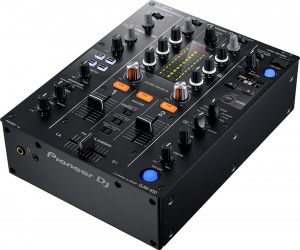
DJ mixer consoles

Professional DJ Mixers for Every Event: DJ mixers are the beating heart of every professional performance, enabling seamless transitions, creative blends and precise control over multiple audio sources. Whether you're performing in intimate club settings, large-scale festivals or recording studio sessions, the right DJ mixing console transforms individual tracks into a cohesive sonic experience. At LTT, you'll find an extensive selection of professional DJ mixers from industry-leading manufacturers including...
Read more »
DJ mixer consoles
Close window
DJ mixer consoles

Professional DJ Mixers for Every Event

DJ mixers are the beating heart of every professional performance, enabling seamless transitions, creative blends and precise control over multiple audio sources. Whether you're performing in intimate club settings, large-scale festivals or recording studio sessions, the right DJ mixing console transforms individual tracks into a cohesive sonic experience. At LTT, you'll find an extensive selection of professional DJ mixers from industry-leading manufacturers including Pioneer DJ, Allen & Heath, Numark, Reloop and Denon DJ – each designed to deliver the performance, reliability and sound quality that discerning DJs demand. From compact 2-channel models perfect for mobile DJs to sophisticated 6-channel club installations, our range covers every application and skill level in the professional event technology sector.

What Is a DJ Mixer and How Does It Work?

A DJ mixer is a specialised audio mixing console designed specifically for controlling and blending multiple sound sources in real time. Unlike larger mixing consoles used in sound recording or live sound reinforcement – which may feature 24, 48 or even 96 input channels – DJ mixers typically offer between two and six channels, each optimised for connecting turntables, CDJs, media players or laptop-based DJ software.

The defining feature of every DJ mixer is the crossfader, a horizontal sliding control that allows seamless transitions between two audio sources. When positioned fully left, only channel A is audible; fully right outputs only channel B; at the centre position, both channels blend equally. This intuitive control enables the smooth song-to-song transitions that define professional DJ performance. Beyond the crossfader, DJ mixers incorporate channel faders for individual volume control, three-band EQ sections (bass, mid, treble) for frequency shaping, and gain controls to match input levels from different sources.

Modern DJ mixers include phono preamplifiers (phono preamps) to boost the weak signal from vinyl turntables to line level, cue functions that route selected channels to headphones for pre-listening, and dedicated microphone inputs with talkover functionality for announcements. Professional models feature VCA crossfaders for ultra-smooth operation and extended lifespan, booth monitor outputs for DJ monitoring separate from the main PA system, and master outputs on balanced XLR connectors for connection to professional sound reinforcement systems.

Unlike general-purpose audio mixers, DJ mixers prioritise tactile control, rapid response and the ability to preview upcoming tracks via headphones – the essential workflow that separates DJ mixing from conventional audio engineering. This specialised design makes DJ mixers indispensable tools for club performances, mobile events, radio broadcasting and music production across electronic dance music, hip hop, house and countless other genres.

Applications and Performance Scenarios for DJ Mixers

DJ mixers serve as the central hub in diverse performance environments, each demanding specific features and capabilities. In nightclub installations, 4- to 6-channel mixers with robust construction handle nightly use, connecting multiple CDJs, turntables and digital media players whilst providing booth monitor outputs and balanced master connections to the venue's sound system. Club-grade mixers from Pioneer DJ, Allen & Heath and Denon DJ deliver the reliability and sound quality required for continuous operation in demanding professional environments.

Mobile DJs and event technicians rely on compact 2- to 3-channel mixers that balance portability with professional features. These units typically include USB audio interfaces for laptop integration, built-in effects processors, and microphone inputs with EQ and talkover functions – essential for wedding receptions, corporate events and private functions where announcements and music must coexist seamlessly. Lightweight construction and protective flight cases enable rapid setup and teardown across multiple venues.

Turntablists and battle DJs demand mixers with ultra-responsive crossfaders, reverse crossfader assignment, and dedicated phono inputs optimised for scratching techniques. Battle mixers feature shortened crossfader curves, replaceable Innofader-compatible crossfaders, and robust channel faders designed to withstand the physical demands of scratch performance and beat juggling. Brands like Rane and certain Pioneer DJ models specifically cater to this performance style.

Radio broadcasting and podcast production benefit from DJ mixers with multiple microphone inputs, USB recording outputs, and precise gain staging capabilities. The ability to blend music sources with spoken content whilst monitoring via headphones makes DJ mixers ideal for live radio shows, streaming broadcasts and content creation. Studio-grade mixers from Allen & Heath and Reloop offer the low-noise performance and flexible routing required for broadcast applications.

Festival and large-scale event production requires DJ mixers that integrate seamlessly with professional sound systems, lighting controllers and recording equipment. High-end models feature digital connectivity via USB, MIDI output for lighting synchronisation, and multiple output configurations including booth, recording and main PA feeds. The ability to handle diverse input sources – from vinyl turntables to digital controllers – ensures compatibility across multi-DJ lineups and varied technical riders.

Choosing the Right Channel Configuration

The number of channels in a DJ mixer directly determines how many simultaneous audio sources you can control, making channel configuration one of the most critical purchasing decisions. Understanding your typical performance requirements ensures you select a mixer that matches both current needs and future expansion.

2-Channel DJ Mixers

2-channel mixers represent the entry point for most DJs and remain the preferred choice for mobile performers and bedroom producers. These compact units connect two turntables, two CDJs, or a combination of analogue and digital sources, providing all essential mixing functions – crossfader, channel faders, three-band EQ, cue system and microphone input – in a portable, affordable package. Budget-friendly 2-channel models from Numark, Behringer and Reloop start around €100–€200, whilst professional 2-channel mixers from Pioneer DJ and Allen & Heath range from €400–€800, offering superior sound quality, robust construction and advanced features like USB audio interfaces and built-in effects.

3-Channel DJ Mixers

3-channel configurations add flexibility for DJs who incorporate additional sound sources – a third turntable, sampler, drum machine or laptop – into their performances. This middle-ground option suits mobile DJs who need to blend background music with live microphone announcements and primary music sources, or electronic music producers integrating hardware synthesisers into DJ sets. Pricing typically ranges from €300–€600 for quality 3-channel units.

4-Channel DJ Mixers and Beyond

Professional club installations and advanced performers require 4-channel or larger mixers, enabling simultaneous control of four or more audio sources. This configuration supports back-to-back DJ performances (two DJs sharing the mixer), complex layering of multiple tracks, and integration of external effects units or samplers alongside primary playback devices. Premium 4-channel mixers from Pioneer DJ (DJM series) and Allen & Heath (Xone series) range from €800–€2,500, featuring professional-grade components, extensive connectivity, digital effects processors, and filter sections that define club sound.

Six-channel mixers cater to festival installations, multi-format venues and DJs who require maximum flexibility. These high-end consoles – often exceeding €2,000 – provide dedicated inputs for vinyl, digital media, laptops and auxiliary sources, with sophisticated routing that allows multiple DJs to perform simultaneously or enables a single performer to create complex, layered soundscapes.

When selecting channel configuration, consider not only your current setup but also anticipated growth: a 4-channel mixer purchased today accommodates future expansion into additional decks, controllers or hardware instruments without requiring a complete system upgrade.

Essential Features and Professional Standards

Professional DJ mixers distinguish themselves through specific technical features, build quality and component specifications that directly impact performance reliability and sound quality. Understanding these criteria ensures you invest in equipment that meets professional standards and delivers consistent results across demanding applications.

Crossfader quality represents the single most critical component in any DJ mixer. Professional units feature VCA (Voltage Controlled Amplifier) crossfaders that provide smooth, linear control with minimal electrical noise and extended operational lifespan – typically rated for 500,000+ movements compared to 50,000–100,000 for budget optical crossfaders. High-end mixers from Pioneer DJ and Allen & Heath incorporate user-replaceable crossfaders compatible with aftermarket Innofader upgrades, allowing performers to customise crossfader curves and replace worn components without replacing the entire mixer. Battle mixers specifically designed for scratching feature ultra-short crossfader curves and reverse assignment switches.

Phono preamplifiers built into DJ mixers must deliver sufficient gain (typically 35–40 dB) and accurate RIAA equalisation to properly amplify the weak signal from turntable cartridges. Professional mixers include switchable phono/line inputs on each channel, accommodating both vinyl turntables and line-level sources like CDJs or media players. Ground terminals on each phono input eliminate hum and interference from turntable earth connections.

EQ sections on professional DJ mixers provide three-band frequency control (bass, mid, treble) with isolator-style kill switches that completely remove selected frequency bands – a technique fundamental to modern mixing. Quality EQ circuits feature centre detents at 0 dB (unity gain) and offer ±26 dB or greater boost/cut range. Advanced mixers from Allen & Heath incorporate four-band EQ with dedicated filter sections, whilst Pioneer DJ's high-end models include resonant filters and colour effects.

Digital connectivity and effects processing define modern professional DJ mixers. USB audio interfaces enable direct connection to laptops running Serato DJ, Traktor or Rekordbox software, with 24-bit/96 kHz audio quality becoming the professional standard. Built-in DSP effects processors provide reverb, delay, echo, flanger and other time-based effects, with dedicated send/return loops for external hardware effects units. MIDI output enables synchronisation with lighting controllers and DAW software.

Build quality and component specifications separate professional equipment from consumer-grade alternatives. Metal chassis construction, professional-grade potentiometers and faders, balanced XLR master outputs, and separate booth monitor outputs characterise club-standard mixers. Power consumption typically ranges from 15–40 watts depending on channel count and feature set, with universal 100–240V AC power supplies ensuring worldwide compatibility.

Leading manufacturers in the professional DJ mixer market include Pioneer DJ (industry-standard DJM series), Allen & Heath (renowned Xone series with audiophile-grade sound), Numark (value-oriented professional features), Reloop (innovative German engineering), Denon DJ (professional performance and reliability), and Rane (battle mixer specialists). Each brand brings distinct sonic characteristics and workflow philosophies, allowing DJs to select equipment that matches their performance style and technical requirements.

Integration with Event Technology Systems

Professional DJ mixers function as central control hubs within comprehensive event technology ecosystems, requiring seamless integration with sound reinforcement systems, lighting controllers, recording equipment and power infrastructure. Understanding these integration requirements ensures reliable performance and optimal results across professional installations.

Sound System Connection and Signal Flow

Professional DJ mixers connect to venue sound systems via balanced XLR master outputs, providing noise-free signal transmission over long cable runs to power amplifiers and active speaker systems. Output level typically operates at +4 dBu professional line level, matching the input requirements of professional amplifiers from RCF, JBL, dB Technologies and other leading manufacturers. Separate booth monitor outputs – often on balanced XLR or unbalanced RCA connectors – feed dedicated stage monitors, allowing DJs to hear the mix independently from the main PA system with adjustable volume control.

High-quality audio cables are essential for maintaining signal integrity: professional installations use Neutrik XLR connectors, SOMMER CABLE or Cordial balanced cables, and gold-plated RCA connectors for unbalanced connections. Cable management systems from Adam Hall and Defender protect signal paths and prevent trip hazards in live performance environments.

Lighting Synchronisation and DMX Integration

Advanced DJ mixers incorporate MIDI output that synchronises with lighting control systems, enabling beat-matched light shows that respond to music tempo and transitions. MIDI signals connect to lighting controllers from Chamsys, Madrix or DMX interfaces, triggering programmed lighting scenes in sync with crossfader movements, EQ adjustments or beat detection. This integration creates cohesive audio-visual experiences essential for professional club installations and festival performances.

Some high-end Pioneer DJ mixers feature dedicated lighting control outputs compatible with Philips Hue systems and professional DMX fixtures, eliminating the need for separate lighting controllers in smaller installations. Swisson and Lumenradio wireless DMX systems enable cable-free lighting control from DJ booth positions.

Recording and Broadcast Integration

Professional DJ mixers provide recording outputs – typically via USB audio interface or dedicated RCA record outputs – for capturing live performances, creating mixtapes or feeding broadcast systems. USB connectivity enables direct recording to laptops at 24-bit/96 kHz resolution, whilst traditional record outputs connect to standalone recorders or radio station mixing consoles.

For radio broadcasting and streaming applications, DJ mixers integrate with studio infrastructure via balanced outputs to broadcast consoles, with separate microphone channels feeding talkback systems and on-air announcements. Low-noise performance and professional gain staging ensure broadcast-quality audio suitable for FM transmission and digital streaming platforms.

Power Requirements and Redundancy

DJ mixers typically consume 15–40 watts, drawing minimal current from standard AC mains supplies. Professional installations incorporate power conditioning via Furman or similar power distributors, protecting sensitive electronics from voltage fluctuations and electrical noise. Critical applications may employ UPS (Uninterruptible Power Supply) systems that maintain mixer operation during brief power interruptions, preventing performance disruptions during events.

Rack-mounted DJ mixers integrate into 19-inch equipment racks alongside other event technology components, using rack cases from Roadinger or Accu Case for transport protection and organised installation. Proper rack mounting includes cable management, ventilation spacing and secure mounting hardware from Adam Hall or König & Meyer.

LTT – Your Specialist for Event Technology

As your specialist for professional event technology, LTT combines over 25 years of industry experience with comprehensive product knowledge and expert consultation services. Our extensive DJ mixer range encompasses everything from compact 2-channel models for mobile performers to sophisticated 6-channel club installations, featuring leading brands including Pioneer DJ, Allen & Heath, Numark, Reloop, Denon DJ and Rane.

Every DJ mixer in our portfolio undergoes rigorous quality assessment to ensure it meets professional performance standards. We stock complete mixing solutions alongside essential accessories – professional audio cables from Neutrik and SOMMER CABLE, replacement crossfaders, flight cases from Roadinger, and power conditioning equipment – enabling you to build complete, reliable DJ systems from a single trusted source.

Our technical consultation team understands the specific demands of club installations, mobile DJ operations, broadcast studios and festival productions. Whether you're selecting your first 2-channel mixer or specifying a multi-channel installation for a permanent venue, we provide expert guidance on channel configuration, connectivity requirements, software compatibility and integration with existing event technology infrastructure.

With free shipping from €69 and express delivery options, your professional DJ equipment reaches you quickly from our distribution centre in Bocholt, Germany. Our 3-year LTT guarantee provides extended protection beyond standard manufacturer warranties, whilst our international shipping network serves customers across the UK, Ireland and worldwide. Business customers benefit from wholesale pricing for resellers and dedicated B2B support for large-scale installations and ongoing supply requirements.

Discover the complete range of professional DJ mixers at LTT – where technical expertise, quality products and reliable service create the foundation for outstanding performances and successful events.

FAQ – Questions & Answers

What is the rule of 32 in DJing?

The rule of 32 in DJing refers to the standard phrase structure in electronic dance music, where musical elements typically repeat in 32-beat cycles (eight bars of 4/4 time). Professional DJs use this structural knowledge to time transitions, drops and mix points, ensuring crossfader movements and EQ adjustments occur at musically appropriate moments – typically every 8, 16 or 32 beats. Understanding phrase structure allows DJs to create seamless, musical transitions that maintain energy flow on the dancefloor. Modern DJ mixers with beat counters and BPM displays help visualise these phrase boundaries, whilst experienced performers develop intuitive timing through practice and musical familiarity.

What is the best rotary mixer?

The best rotary mixer depends on your specific application and budget, but industry-leading models include the Allen & Heath Xone:92 (€1,800–€2,200), renowned for its audiophile-grade sound quality and four-band EQ, and the E&S DJR400 (€3,500+), favoured in high-end club installations for its transparent sonic character. Rotary mixers replace traditional crossfaders with rotary volume controls on each channel, offering smoother, more musical mixing suited to house, techno and disco styles. These mixers prioritise sound quality over scratch performance, featuring premium components, extensive filter sections and superior headroom. For professional club use, Allen & Heath rotary mixers deliver the optimal balance of sonic excellence, build quality and practical features at accessible price points.

What is the cost of a DJ mixer?

DJ mixer prices range from approximately €100 for entry-level 2-channel models from Behringer or Numark, suitable for beginners and home practice, to €2,500+ for professional 4- to 6-channel club mixers from Pioneer DJ and Allen & Heath. Mid-range professional 2-channel mixers typically cost €400–€800, offering USB audio interfaces, built-in effects and robust construction suitable for mobile DJ work and small venue installations. Professional 4-channel club mixers range from €800–€1,500, whilst high-end models with advanced digital connectivity, premium components and extensive effects processing exceed €2,000. When budgeting, consider essential accessories including quality audio cables (€50–€150), flight cases (€100–€300) and potential crossfader replacements (€50–€150), which add to the total system investment.

What is the best Pioneer mixer?

The Pioneer DJ DJM-900NXS2 represents the industry-standard professional club mixer, priced around €1,800–€2,200, offering four channels, superior sound quality with 32-bit/96 kHz digital processing, extensive built-in effects, dual USB inputs for DJ changeovers, and comprehensive connectivity including MIDI, booth monitor and recording outputs. For mobile DJs and smaller budgets, the Pioneer DJ DJM-450 (€500–€600) delivers professional features in a compact 2-channel format with Rekordbox integration and USB audio interface. The flagship DJM-A9 (€2,500+) caters to audiophile DJs demanding the ultimate sound quality with advanced filter sections and premium components. Your best Pioneer mixer choice depends on channel requirements, budget and specific features needed for your performance environment.

How many channels do I need for my DJ mixer?

The number of channels you need depends on how many simultaneous audio sources you'll control during performances. Mobile DJs and beginners typically require 2-channel mixers, connecting two turntables, two CDJs or a combination of analogue and digital sources, which suffices for standard DJ sets with seamless track-to-track mixing. DJs who incorporate additional elements – a third deck, sampler, drum machine or laptop alongside primary playback devices – benefit from 3-channel configurations. Professional club DJs and performers who layer multiple tracks, accommodate back-to-back performances or integrate external effects units should select 4-channel mixers as the minimum professional standard. Six-channel mixers suit festival installations, multi-format venues and advanced performers requiring maximum routing flexibility. Consider future expansion when selecting: a 4-channel mixer purchased today accommodates additional equipment without requiring system replacement.

Do I need microphone inputs on my DJ mixer?

Microphone inputs are essential for mobile DJs, wedding performers, corporate event technicians and any application requiring announcements, introductions or live vocal performance alongside music playback. Professional DJ mixers include dedicated microphone channels with independent gain controls, two-band EQ, and talkover functions that automatically reduce music volume when speaking. Club DJs performing purely music-focused sets in venues with separate PA systems may not require microphone inputs, as announcements are handled through the venue's main sound console. However, even club-oriented mixers typically include at least one microphone input for flexibility. Radio DJs, podcast producers and content creators absolutely require microphone inputs with low-noise preamplifiers and USB recording outputs. When selecting a DJ mixer, assess whether your typical performances involve spoken content, live vocals or MC duties – if so, ensure your chosen model includes sufficient microphone inputs with appropriate features.

Which DJ mixer suits professional club installations?

Professional club installations require 4- to 6-channel DJ mixers with robust construction, balanced XLR outputs, separate booth monitor feeds, and proven reliability for nightly operation. Industry-standard choices include the Pioneer DJ DJM-900NXS2 (€1,800–€2,200), offering four channels, dual USB inputs for seamless DJ changeovers, extensive effects and professional connectivity, or the Allen & Heath Xone:96 (€2,200–€2,600), renowned for audiophile sound quality, six channels and sophisticated routing. These mixers feature metal chassis construction, professional-grade components rated for continuous use, comprehensive input options accommodating turntables, CDJs and digital controllers, and integration capabilities with lighting systems via MIDI output. Club mixers must deliver low-noise performance, sufficient headroom for loud monitoring environments, and intuitive layouts that accommodate diverse DJ workflows and technical riders across resident and guest performers.

What maintenance do DJ mixers require?

Professional DJ mixers require minimal but essential maintenance to ensure long-term reliability and optimal performance. Crossfader maintenance is critical: clean crossfader rails every 3–6 months using compressed air and contact cleaner to remove dust and residue that causes scratchy operation or dead spots. High-use club mixers may require crossfader replacement every 12–24 months depending on performance style; professional units with user-replaceable crossfaders allow quick component swaps without service centre visits. Channel fader cleaning follows similar intervals, using contact cleaner specifically formulated for audio potentiometers. Keep all connections clean: periodically inspect and clean XLR, RCA and jack sockets using contact cleaner and cotton swabs, ensuring reliable signal paths. Protect mixers from liquid spills, dust and smoke residue in club environments using protective covers during non-operating hours. Store mobile DJ mixers in padded flight cases during transport to prevent mechanical damage to faders, knobs and connectors. Professional installations benefit from annual technical inspections checking solder joints, power supply health and component wear, ideally performed by qualified service technicians familiar with professional audio equipment.

Top seller
Vonyx STM500BT 2-Kanal-Mischpult USB/MP3/BT
Vonyx STM500BT 2-Channel Mixer USB/MP3/BT
€44.90 *
incl. tax, plus shipping costs
Availability:
Delivery time: 1-3 days
Pioneer DJ DJM-A9
Pioneer DJ DJM-A9
€2,759.00 *
incl. tax, free shipping to Germany
[International shipping costs]
Availability:
Low stock; Delivery time: 1-3 days
Delivery time: 1-3 days
OMNITRONIC PM-322P 3-Kanal-DJ-Mixer mit Bluetooth und USB-Player
OMNITRONIC PM-322P 3-Channel DJ Mixer with Bluetooth & USB Player
€199.00 *
incl. tax, free shipping to Germany
[International shipping costs]
Availability:
Delivery time: 3-5 days
Vonyx STM3030 4-Kanal-Mischpult USB/MP3/BT/REC
Vonyx STM3030 4-Channel Mixer USB/MP3/BT/REC
€79.90 *
incl. tax, free shipping to Germany
[International shipping costs]
Availability:
Delivery time: 1-3 days
Pioneer DJ DJM-S11
Pioneer DJ DJM-S11
€2,199.00 *
incl. tax, free shipping to Germany
[International shipping costs]
Availability:
Low stock; Delivery time: 1-3 days
Delivery time: 1-3 days
Pioneer DJ DJM-V10 6-Kanal-Profi-DJ-Mixer
Pioneer DJ DJM-V10 6 Channel professional DJ mixer
€3,499.00 *
incl. tax, free shipping to Germany
[International shipping costs]
Availability:
Delivery time: approx. 4-5 weeks
Skytec STM-2300 2-Kanal-Mischpult USB/MP3
Skytec STM-2300 2-Channel Mixer USB/MP3
€79.90 *
incl. tax, free shipping to Germany
[International shipping costs]
Availability:
Delivery time: 1-3 days
55 Articles
Close filters
 
  •  
  •  
  •  
  •  
  •  
  •  
  •  
  •  
  •  
from to
1 From 3 pages
No results were found for the filter!
OMNITRONIC GNOME-202 Mini-Mixer schwarz
OMNITRONIC GNOME-202 Mini Mixer black
The Omnitronic GNOME is a portable DJ mixer in miniature format with all the essential functions for spontaneous mixing of two sound sources (MP3 player, smartphone, laptop, etc.). In addition to...
€59.90 *
incl. tax, plus shipping costs
Availability:
Delivery time: 3-5 days
OMNITRONIC PM-311P DJ-Mixer mit Player
OMNITRONIC PM-311P DJ Mixer with Player
3-channel DJ mixer with integrated MP3 player 3 input channels, switchable 2 x phono/line and 1 x USB/line • All input channels with gain control, 3-band equalizer and cue button • DJ...
€109.00 *
incl. tax, free shipping to Germany
[International shipping costs]
Availability:
Delivery time: 1-3 days
OMNITRONIC GNOME-202 Mini-Mixer gold
OMNITRONIC GNOME-202 Mini Mixer gold
The Omnitronic GNOME is a portable DJ mixer in miniature format with all the essential functions for spontaneous mixing of two sound sources (MP3 player, smartphone, laptop, etc.). In addition to...
€59.90 *
incl. tax, plus shipping costs
Availability:
Delivery time: 3-5 days
OMNITRONIC GNOME-202 Mini-Mixer rot
OMNITRONIC GNOME-202 Mini Mixer red
The Omnitronic GNOME is a portable DJ mixer in miniature format with all the essential functions for spontaneous mixing of two sound sources (MP3 player, smartphone, laptop, etc.). In addition to...
€59.90 *
incl. tax, plus shipping costs
Availability:
Delivery time: 3-5 days
DAP Audio Core Mix-4 USB 4-Kanal DJ Mixer mit USB
DAP-Audio CORE MIX-4 USB 4-channel DJ mixer with USB interface
2 built-in USB PC/MAC audio interfaces • 60 mm VCA faders • MP3/USB recorder • Variable FX send/return each channel • LED VU meter for each channel • DAP CORE is a DJ...
€505.00 *
incl. tax, free shipping to Germany
[International shipping costs]
Availability:
Delivery time: 3-5 days
OMNITRONIC GNOME-202 Mini-Mixer silber
OMNITRONIC GNOME-202 Mini Mixer silver
The Omnitronic GNOME is a portable DJ mixer in miniature format with all the essential functions for spontaneous mixing of two sound sources (MP3 player, smartphone, laptop, etc.). In addition to...
€59.90 *
incl. tax, plus shipping costs
Availability:
Delivery time: 3-5 days
Pioneer DJ DJM-250MK2 2-Kanal-Effektmixer
Pioneer DJ DJM-250MK2 2-Channel Effectmixer
We’ve upgraded one of our most popular 2-channel mixers to create the DJM-250MK2. The new mixer is the entry point into the DJM series and is packed with professional features including the...
€419.00 * €395.00 *
incl. tax, free shipping to Germany
[International shipping costs]
Availability:
Delivery time: approx. 4-5 weeks
CORE Beat 3 Channel Dj mixer
DAP-Audio CORE Beat 3-channel DJ-mixer
Bluetooth playback module & mic input • EQ, volume and gain settings for both channel & mic • Talk over function • VU channel indication • Six line/MP3 inputs • DAP...
€249.00 *
incl. tax, free shipping to Germany
[International shipping costs]
Availability:
Delivery time: 3-5 days
CORE Club 4 Channel Dj mixer
DAP-Audio CORE Club 4-channel DJ-mixer
Bluetooth playback module & mic input • Talk over function • 3 crossfader curves • VU channel indicators • 8 line/MP3 inputs • DAP CORE is a DJ series including DJ...
€245.00 *
incl. tax, free shipping to Germany
[International shipping costs]
Availability:
Delivery time: 3-5 days
Pioneer DJ DJM-750MK2 4 Kanal-Mixer
Pioneer DJ DJM-750MK2, 4 Channel-Mixer
Rise up Take the step to the DJ booth seamlessly with the DJM-750MK2, a 4-channel mixer which inherits key features and design elements from the DJM-900NXS2, creating a club-style setup when...
€1,349.00 *
incl. tax, free shipping to Germany
[International shipping costs]
Availability:
Delivery time: approx. 4-5 weeks
DAP Audio Core Mix-2 USB 2-Kanal DJ Mixer mit USB
DAP-Audio CORE MIX-2 USB 2-channel DJ mixer with USB interface
2 built-in USB PC/MAC audio interfaces • High quality components and structure • 60 mm VCA faders • MP3/USB recorder • LED VU meter for each channel • DAP CORE is a DJ...
€325.00 *
incl. tax, free shipping to Germany
[International shipping costs]
Availability:
Delivery time: 3-5 days
DAP Audio Core Mix-3 USB 3-Kanal DJ Mixer mit USB
DAP-Audio CORE MIX-3 USB 3-channel DJ mixer with USB interface
2 built-in USB PC/MAC audio interfaces • 60 mm VCA faders • MP3/USB recorder • Variable FX send/return each channel • LED VU meter for each channel • DAP CORE is a DJ...
€409.00 *
incl. tax, free shipping to Germany
[International shipping costs]
Availability:
Delivery time: 3-5 days
Allen & Heath XONE:43 4 in 2 Club & DJ Mixer
Allen & Heath XONE:43 4 Channel Analogue DJ Mixer
Channel Analogue DJ Mixer Xone43-Front-3Q_web_mainCreated for DJs and electronic music purists, Xone:43 is a 4+1 channel DJ mixer that offers the very best of analogue audio quality, including the...
€699.00 *
incl. tax, free shipping to Germany
[International shipping costs]
Availability:
Delivery time: 3-5 days
IMG STAGE LINE MPX-20USB Stereo-Mischpult
IMG STAGELINE MPX-20USB 3-channel stereo DJ mixer
3-channel stereo DJ mixer, with USB interface. Plug and mix! Integrated USB audio interface (will be identified and addressed as an external sound card) • Full-duplex USB port (allows for...
€117.00 *
incl. tax, free shipping to Germany
[International shipping costs]
Availability:
Delivery time: 3-5 days
CORE Scratch 2 Channel Dj mixer
DAP-Audio CORE Scratch 2-channel DJ-mixer
Bluetooth playback module & mic input • EQ, volume and gain settings for both channels & mic • Master & Booth output • Firm 60 mm faders • Four line/MP3 inputs...
€159.00 *
incl. tax, free shipping to Germany
[International shipping costs]
Availability:
Delivery time: 3-5 days
OMNITRONIC TRM-202MK3 2-Kanal Rotary-Mixer
OMNITRONIC TRM-202MK3 2-Channel Rotary Mixer
2-channel rotary mixer with 3-band frequency isolator for DJs Classic rotary mixer with 2 input channels and integrated 3-band frequency isolator for DJs • Gain control, 2-way equalizer...
€349.00 *
incl. tax, free shipping to Germany
[International shipping costs]
Availability:
Delivery time: 3-5 days
OMNITRONIC TRM-402 4-Kanal Rotary-Mixer
OMNITRONIC TRM-402 4-Channel Rotary Mixer
4-channel rotary mixer with 3-band frequency isolator for DJs Classic rotary mixer with 4 input channels and integrated 3-band frequency isolator for DJs • Gain control, 2-way equalizer...
€499.00 *
incl. tax, free shipping to Germany
[International shipping costs]
Availability:
Delivery time: 3-5 days
OMNITRONIC PM-322P 3-Kanal-DJ-Mixer mit Bluetooth und USB-Player
OMNITRONIC PM-322P 3-Channel DJ Mixer with Bluetooth & USB Player
3-channel DJ mixer with Bluetooth and MP3 player 3 input channels with gain control, 3-band equalizer, cue button and channel fader • DJ microphone channel with level control and 2-band...
€199.00 *
incl. tax, free shipping to Germany
[International shipping costs]
Availability:
Delivery time: 3-5 days
OMNITRONIC PM-422P 4-Kanal-DJ-Mixer mit Bluetooth und USB-Player
OMNITRONIC PM-422P 4-Channel DJ Mixer with Bluetooth & USB Player
4-channel DJ mixer with Bluetooth and MP3 player 4 input channels with gain control, LED level meter, 3-band equalizer, cue button and channel fader • DJ microphone channel with level control,...
€229.00 *
incl. tax, free shipping to Germany
[International shipping costs]
Availability:
Delivery time: 3-5 days
OMNITRONIC GNOME-202P Mini-Mixer schwarz
OMNITRONIC GNOME-202P Mini Mixer black
2-channel miniature DJ mixer with Bluetooth and MP3 player Super portable and lightweight DJ mixer • 2 stereo channels with gain control and 2-band EQ, RCA connectors • Adjustable...
€79.90 *
incl. tax, free shipping to Germany
[International shipping costs]
Availability:
Delivery time: 3-5 days
OMNITRONIC GNOME-202P Mini-Mixer silber
OMNITRONIC GNOME-202P Mini Mixer silver
2-channel miniature DJ mixer with Bluetooth and MP3 player Super portable and lightweight DJ mixer • 2 stereo channels with gain control and 2-band EQ, RCA connectors • Adjustable...
€79.90 *
incl. tax, free shipping to Germany
[International shipping costs]
Availability:
Delivery time: 3-5 days
OMNITRONIC GNOME-202P Mini-Mixer gold
OMNITRONIC GNOME-202P Mini Mixer gold
2-channel miniature DJ mixer with Bluetooth and MP3 player Super portable and lightweight DJ mixer • 2 stereo channels with gain control and 2-band EQ, RCA connectors • Adjustable...
€79.90 *
incl. tax, free shipping to Germany
[International shipping costs]
Availability:
Delivery time: 3-5 days
OMNITRONIC GNOME-202P Mini-Mixer rot
OMNITRONIC GNOME-202P Mini Mixer red
2-channel miniature DJ mixer with Bluetooth and MP3 player Super portable and lightweight DJ mixer • 2 stereo channels with gain control and 2-band EQ, RCA connectors • Adjustable...
€79.90 *
incl. tax, free shipping to Germany
[International shipping costs]
Availability:
Delivery time: 3-5 days
OMNITRONIC GNOME-202P Mini-Mixer grün
OMNITRONIC GNOME-202P Mini Mixer green
2-channel miniature DJ mixer with Bluetooth and MP3 player Super portable and lightweight DJ mixer • 2 stereo channels with gain control and 2-band EQ, RCA connectors • Adjustable...
€79.90 *
incl. tax, free shipping to Germany
[International shipping costs]
Availability:
Delivery time: 3-5 days
1 From 3 pages
Facts
Professional DJ Mixers for Every Event: DJ mixers are the beating heart of every professional performance, enabling seamless transitions, creative blends and precise control over multiple audio sources. Whether you're performing in intimate club settings, large-scale festivals or recording studio sessions, the right DJ mixing console transforms individual tracks into a cohesive sonic experience. At LTT, you'll find an extensive selection of... Read more »
Viewed
Facts

Professional DJ Mixers for Every Event

DJ mixers are the beating heart of every professional performance, enabling seamless transitions, creative blends and precise control over multiple audio sources. Whether you're performing in intimate club settings, large-scale festivals or recording studio sessions, the right DJ mixing console transforms individual tracks into a cohesive sonic experience. At LTT, you'll find an extensive selection of professional DJ mixers from industry-leading manufacturers including Pioneer DJ, Allen & Heath, Numark, Reloop and Denon DJ – each designed to deliver the performance, reliability and sound quality that discerning DJs demand. From compact 2-channel models perfect for mobile DJs to sophisticated 6-channel club installations, our range covers every application and skill level in the professional event technology sector.

What Is a DJ Mixer and How Does It Work?

A DJ mixer is a specialised audio mixing console designed specifically for controlling and blending multiple sound sources in real time. Unlike larger mixing consoles used in sound recording or live sound reinforcement – which may feature 24, 48 or even 96 input channels – DJ mixers typically offer between two and six channels, each optimised for connecting turntables, CDJs, media players or laptop-based DJ software.

The defining feature of every DJ mixer is the crossfader, a horizontal sliding control that allows seamless transitions between two audio sources. When positioned fully left, only channel A is audible; fully right outputs only channel B; at the centre position, both channels blend equally. This intuitive control enables the smooth song-to-song transitions that define professional DJ performance. Beyond the crossfader, DJ mixers incorporate channel faders for individual volume control, three-band EQ sections (bass, mid, treble) for frequency shaping, and gain controls to match input levels from different sources.

Modern DJ mixers include phono preamplifiers (phono preamps) to boost the weak signal from vinyl turntables to line level, cue functions that route selected channels to headphones for pre-listening, and dedicated microphone inputs with talkover functionality for announcements. Professional models feature VCA crossfaders for ultra-smooth operation and extended lifespan, booth monitor outputs for DJ monitoring separate from the main PA system, and master outputs on balanced XLR connectors for connection to professional sound reinforcement systems.

Unlike general-purpose audio mixers, DJ mixers prioritise tactile control, rapid response and the ability to preview upcoming tracks via headphones – the essential workflow that separates DJ mixing from conventional audio engineering. This specialised design makes DJ mixers indispensable tools for club performances, mobile events, radio broadcasting and music production across electronic dance music, hip hop, house and countless other genres.

Applications and Performance Scenarios for DJ Mixers

DJ mixers serve as the central hub in diverse performance environments, each demanding specific features and capabilities. In nightclub installations, 4- to 6-channel mixers with robust construction handle nightly use, connecting multiple CDJs, turntables and digital media players whilst providing booth monitor outputs and balanced master connections to the venue's sound system. Club-grade mixers from Pioneer DJ, Allen & Heath and Denon DJ deliver the reliability and sound quality required for continuous operation in demanding professional environments.

Mobile DJs and event technicians rely on compact 2- to 3-channel mixers that balance portability with professional features. These units typically include USB audio interfaces for laptop integration, built-in effects processors, and microphone inputs with EQ and talkover functions – essential for wedding receptions, corporate events and private functions where announcements and music must coexist seamlessly. Lightweight construction and protective flight cases enable rapid setup and teardown across multiple venues.

Turntablists and battle DJs demand mixers with ultra-responsive crossfaders, reverse crossfader assignment, and dedicated phono inputs optimised for scratching techniques. Battle mixers feature shortened crossfader curves, replaceable Innofader-compatible crossfaders, and robust channel faders designed to withstand the physical demands of scratch performance and beat juggling. Brands like Rane and certain Pioneer DJ models specifically cater to this performance style.

Radio broadcasting and podcast production benefit from DJ mixers with multiple microphone inputs, USB recording outputs, and precise gain staging capabilities. The ability to blend music sources with spoken content whilst monitoring via headphones makes DJ mixers ideal for live radio shows, streaming broadcasts and content creation. Studio-grade mixers from Allen & Heath and Reloop offer the low-noise performance and flexible routing required for broadcast applications.

Festival and large-scale event production requires DJ mixers that integrate seamlessly with professional sound systems, lighting controllers and recording equipment. High-end models feature digital connectivity via USB, MIDI output for lighting synchronisation, and multiple output configurations including booth, recording and main PA feeds. The ability to handle diverse input sources – from vinyl turntables to digital controllers – ensures compatibility across multi-DJ lineups and varied technical riders.

Choosing the Right Channel Configuration

The number of channels in a DJ mixer directly determines how many simultaneous audio sources you can control, making channel configuration one of the most critical purchasing decisions. Understanding your typical performance requirements ensures you select a mixer that matches both current needs and future expansion.

2-Channel DJ Mixers

2-channel mixers represent the entry point for most DJs and remain the preferred choice for mobile performers and bedroom producers. These compact units connect two turntables, two CDJs, or a combination of analogue and digital sources, providing all essential mixing functions – crossfader, channel faders, three-band EQ, cue system and microphone input – in a portable, affordable package. Budget-friendly 2-channel models from Numark, Behringer and Reloop start around €100–€200, whilst professional 2-channel mixers from Pioneer DJ and Allen & Heath range from €400–€800, offering superior sound quality, robust construction and advanced features like USB audio interfaces and built-in effects.

3-Channel DJ Mixers

3-channel configurations add flexibility for DJs who incorporate additional sound sources – a third turntable, sampler, drum machine or laptop – into their performances. This middle-ground option suits mobile DJs who need to blend background music with live microphone announcements and primary music sources, or electronic music producers integrating hardware synthesisers into DJ sets. Pricing typically ranges from €300–€600 for quality 3-channel units.

4-Channel DJ Mixers and Beyond

Professional club installations and advanced performers require 4-channel or larger mixers, enabling simultaneous control of four or more audio sources. This configuration supports back-to-back DJ performances (two DJs sharing the mixer), complex layering of multiple tracks, and integration of external effects units or samplers alongside primary playback devices. Premium 4-channel mixers from Pioneer DJ (DJM series) and Allen & Heath (Xone series) range from €800–€2,500, featuring professional-grade components, extensive connectivity, digital effects processors, and filter sections that define club sound.

Six-channel mixers cater to festival installations, multi-format venues and DJs who require maximum flexibility. These high-end consoles – often exceeding €2,000 – provide dedicated inputs for vinyl, digital media, laptops and auxiliary sources, with sophisticated routing that allows multiple DJs to perform simultaneously or enables a single performer to create complex, layered soundscapes.

When selecting channel configuration, consider not only your current setup but also anticipated growth: a 4-channel mixer purchased today accommodates future expansion into additional decks, controllers or hardware instruments without requiring a complete system upgrade.

Essential Features and Professional Standards

Professional DJ mixers distinguish themselves through specific technical features, build quality and component specifications that directly impact performance reliability and sound quality. Understanding these criteria ensures you invest in equipment that meets professional standards and delivers consistent results across demanding applications.

Crossfader quality represents the single most critical component in any DJ mixer. Professional units feature VCA (Voltage Controlled Amplifier) crossfaders that provide smooth, linear control with minimal electrical noise and extended operational lifespan – typically rated for 500,000+ movements compared to 50,000–100,000 for budget optical crossfaders. High-end mixers from Pioneer DJ and Allen & Heath incorporate user-replaceable crossfaders compatible with aftermarket Innofader upgrades, allowing performers to customise crossfader curves and replace worn components without replacing the entire mixer. Battle mixers specifically designed for scratching feature ultra-short crossfader curves and reverse assignment switches.

Phono preamplifiers built into DJ mixers must deliver sufficient gain (typically 35–40 dB) and accurate RIAA equalisation to properly amplify the weak signal from turntable cartridges. Professional mixers include switchable phono/line inputs on each channel, accommodating both vinyl turntables and line-level sources like CDJs or media players. Ground terminals on each phono input eliminate hum and interference from turntable earth connections.

EQ sections on professional DJ mixers provide three-band frequency control (bass, mid, treble) with isolator-style kill switches that completely remove selected frequency bands – a technique fundamental to modern mixing. Quality EQ circuits feature centre detents at 0 dB (unity gain) and offer ±26 dB or greater boost/cut range. Advanced mixers from Allen & Heath incorporate four-band EQ with dedicated filter sections, whilst Pioneer DJ's high-end models include resonant filters and colour effects.

Digital connectivity and effects processing define modern professional DJ mixers. USB audio interfaces enable direct connection to laptops running Serato DJ, Traktor or Rekordbox software, with 24-bit/96 kHz audio quality becoming the professional standard. Built-in DSP effects processors provide reverb, delay, echo, flanger and other time-based effects, with dedicated send/return loops for external hardware effects units. MIDI output enables synchronisation with lighting controllers and DAW software.

Build quality and component specifications separate professional equipment from consumer-grade alternatives. Metal chassis construction, professional-grade potentiometers and faders, balanced XLR master outputs, and separate booth monitor outputs characterise club-standard mixers. Power consumption typically ranges from 15–40 watts depending on channel count and feature set, with universal 100–240V AC power supplies ensuring worldwide compatibility.

Leading manufacturers in the professional DJ mixer market include Pioneer DJ (industry-standard DJM series), Allen & Heath (renowned Xone series with audiophile-grade sound), Numark (value-oriented professional features), Reloop (innovative German engineering), Denon DJ (professional performance and reliability), and Rane (battle mixer specialists). Each brand brings distinct sonic characteristics and workflow philosophies, allowing DJs to select equipment that matches their performance style and technical requirements.

Integration with Event Technology Systems

Professional DJ mixers function as central control hubs within comprehensive event technology ecosystems, requiring seamless integration with sound reinforcement systems, lighting controllers, recording equipment and power infrastructure. Understanding these integration requirements ensures reliable performance and optimal results across professional installations.

Sound System Connection and Signal Flow

Professional DJ mixers connect to venue sound systems via balanced XLR master outputs, providing noise-free signal transmission over long cable runs to power amplifiers and active speaker systems. Output level typically operates at +4 dBu professional line level, matching the input requirements of professional amplifiers from RCF, JBL, dB Technologies and other leading manufacturers. Separate booth monitor outputs – often on balanced XLR or unbalanced RCA connectors – feed dedicated stage monitors, allowing DJs to hear the mix independently from the main PA system with adjustable volume control.

High-quality audio cables are essential for maintaining signal integrity: professional installations use Neutrik XLR connectors, SOMMER CABLE or Cordial balanced cables, and gold-plated RCA connectors for unbalanced connections. Cable management systems from Adam Hall and Defender protect signal paths and prevent trip hazards in live performance environments.

Lighting Synchronisation and DMX Integration

Advanced DJ mixers incorporate MIDI output that synchronises with lighting control systems, enabling beat-matched light shows that respond to music tempo and transitions. MIDI signals connect to lighting controllers from Chamsys, Madrix or DMX interfaces, triggering programmed lighting scenes in sync with crossfader movements, EQ adjustments or beat detection. This integration creates cohesive audio-visual experiences essential for professional club installations and festival performances.

Some high-end Pioneer DJ mixers feature dedicated lighting control outputs compatible with Philips Hue systems and professional DMX fixtures, eliminating the need for separate lighting controllers in smaller installations. Swisson and Lumenradio wireless DMX systems enable cable-free lighting control from DJ booth positions.

Recording and Broadcast Integration

Professional DJ mixers provide recording outputs – typically via USB audio interface or dedicated RCA record outputs – for capturing live performances, creating mixtapes or feeding broadcast systems. USB connectivity enables direct recording to laptops at 24-bit/96 kHz resolution, whilst traditional record outputs connect to standalone recorders or radio station mixing consoles.

For radio broadcasting and streaming applications, DJ mixers integrate with studio infrastructure via balanced outputs to broadcast consoles, with separate microphone channels feeding talkback systems and on-air announcements. Low-noise performance and professional gain staging ensure broadcast-quality audio suitable for FM transmission and digital streaming platforms.

Power Requirements and Redundancy

DJ mixers typically consume 15–40 watts, drawing minimal current from standard AC mains supplies. Professional installations incorporate power conditioning via Furman or similar power distributors, protecting sensitive electronics from voltage fluctuations and electrical noise. Critical applications may employ UPS (Uninterruptible Power Supply) systems that maintain mixer operation during brief power interruptions, preventing performance disruptions during events.

Rack-mounted DJ mixers integrate into 19-inch equipment racks alongside other event technology components, using rack cases from Roadinger or Accu Case for transport protection and organised installation. Proper rack mounting includes cable management, ventilation spacing and secure mounting hardware from Adam Hall or König & Meyer.

LTT – Your Specialist for Event Technology

As your specialist for professional event technology, LTT combines over 25 years of industry experience with comprehensive product knowledge and expert consultation services. Our extensive DJ mixer range encompasses everything from compact 2-channel models for mobile performers to sophisticated 6-channel club installations, featuring leading brands including Pioneer DJ, Allen & Heath, Numark, Reloop, Denon DJ and Rane.

Every DJ mixer in our portfolio undergoes rigorous quality assessment to ensure it meets professional performance standards. We stock complete mixing solutions alongside essential accessories – professional audio cables from Neutrik and SOMMER CABLE, replacement crossfaders, flight cases from Roadinger, and power conditioning equipment – enabling you to build complete, reliable DJ systems from a single trusted source.

Our technical consultation team understands the specific demands of club installations, mobile DJ operations, broadcast studios and festival productions. Whether you're selecting your first 2-channel mixer or specifying a multi-channel installation for a permanent venue, we provide expert guidance on channel configuration, connectivity requirements, software compatibility and integration with existing event technology infrastructure.

With free shipping from €69 and express delivery options, your professional DJ equipment reaches you quickly from our distribution centre in Bocholt, Germany. Our 3-year LTT guarantee provides extended protection beyond standard manufacturer warranties, whilst our international shipping network serves customers across the UK, Ireland and worldwide. Business customers benefit from wholesale pricing for resellers and dedicated B2B support for large-scale installations and ongoing supply requirements.

Discover the complete range of professional DJ mixers at LTT – where technical expertise, quality products and reliable service create the foundation for outstanding performances and successful events.

FAQ – Questions & Answers

What is the rule of 32 in DJing?

The rule of 32 in DJing refers to the standard phrase structure in electronic dance music, where musical elements typically repeat in 32-beat cycles (eight bars of 4/4 time). Professional DJs use this structural knowledge to time transitions, drops and mix points, ensuring crossfader movements and EQ adjustments occur at musically appropriate moments – typically every 8, 16 or 32 beats. Understanding phrase structure allows DJs to create seamless, musical transitions that maintain energy flow on the dancefloor. Modern DJ mixers with beat counters and BPM displays help visualise these phrase boundaries, whilst experienced performers develop intuitive timing through practice and musical familiarity.

What is the best rotary mixer?

The best rotary mixer depends on your specific application and budget, but industry-leading models include the Allen & Heath Xone:92 (€1,800–€2,200), renowned for its audiophile-grade sound quality and four-band EQ, and the E&S DJR400 (€3,500+), favoured in high-end club installations for its transparent sonic character. Rotary mixers replace traditional crossfaders with rotary volume controls on each channel, offering smoother, more musical mixing suited to house, techno and disco styles. These mixers prioritise sound quality over scratch performance, featuring premium components, extensive filter sections and superior headroom. For professional club use, Allen & Heath rotary mixers deliver the optimal balance of sonic excellence, build quality and practical features at accessible price points.

What is the cost of a DJ mixer?

DJ mixer prices range from approximately €100 for entry-level 2-channel models from Behringer or Numark, suitable for beginners and home practice, to €2,500+ for professional 4- to 6-channel club mixers from Pioneer DJ and Allen & Heath. Mid-range professional 2-channel mixers typically cost €400–€800, offering USB audio interfaces, built-in effects and robust construction suitable for mobile DJ work and small venue installations. Professional 4-channel club mixers range from €800–€1,500, whilst high-end models with advanced digital connectivity, premium components and extensive effects processing exceed €2,000. When budgeting, consider essential accessories including quality audio cables (€50–€150), flight cases (€100–€300) and potential crossfader replacements (€50–€150), which add to the total system investment.

What is the best Pioneer mixer?

The Pioneer DJ DJM-900NXS2 represents the industry-standard professional club mixer, priced around €1,800–€2,200, offering four channels, superior sound quality with 32-bit/96 kHz digital processing, extensive built-in effects, dual USB inputs for DJ changeovers, and comprehensive connectivity including MIDI, booth monitor and recording outputs. For mobile DJs and smaller budgets, the Pioneer DJ DJM-450 (€500–€600) delivers professional features in a compact 2-channel format with Rekordbox integration and USB audio interface. The flagship DJM-A9 (€2,500+) caters to audiophile DJs demanding the ultimate sound quality with advanced filter sections and premium components. Your best Pioneer mixer choice depends on channel requirements, budget and specific features needed for your performance environment.

How many channels do I need for my DJ mixer?

The number of channels you need depends on how many simultaneous audio sources you'll control during performances. Mobile DJs and beginners typically require 2-channel mixers, connecting two turntables, two CDJs or a combination of analogue and digital sources, which suffices for standard DJ sets with seamless track-to-track mixing. DJs who incorporate additional elements – a third deck, sampler, drum machine or laptop alongside primary playback devices – benefit from 3-channel configurations. Professional club DJs and performers who layer multiple tracks, accommodate back-to-back performances or integrate external effects units should select 4-channel mixers as the minimum professional standard. Six-channel mixers suit festival installations, multi-format venues and advanced performers requiring maximum routing flexibility. Consider future expansion when selecting: a 4-channel mixer purchased today accommodates additional equipment without requiring system replacement.

Do I need microphone inputs on my DJ mixer?

Microphone inputs are essential for mobile DJs, wedding performers, corporate event technicians and any application requiring announcements, introductions or live vocal performance alongside music playback. Professional DJ mixers include dedicated microphone channels with independent gain controls, two-band EQ, and talkover functions that automatically reduce music volume when speaking. Club DJs performing purely music-focused sets in venues with separate PA systems may not require microphone inputs, as announcements are handled through the venue's main sound console. However, even club-oriented mixers typically include at least one microphone input for flexibility. Radio DJs, podcast producers and content creators absolutely require microphone inputs with low-noise preamplifiers and USB recording outputs. When selecting a DJ mixer, assess whether your typical performances involve spoken content, live vocals or MC duties – if so, ensure your chosen model includes sufficient microphone inputs with appropriate features.

Which DJ mixer suits professional club installations?

Professional club installations require 4- to 6-channel DJ mixers with robust construction, balanced XLR outputs, separate booth monitor feeds, and proven reliability for nightly operation. Industry-standard choices include the Pioneer DJ DJM-900NXS2 (€1,800–€2,200), offering four channels, dual USB inputs for seamless DJ changeovers, extensive effects and professional connectivity, or the Allen & Heath Xone:96 (€2,200–€2,600), renowned for audiophile sound quality, six channels and sophisticated routing. These mixers feature metal chassis construction, professional-grade components rated for continuous use, comprehensive input options accommodating turntables, CDJs and digital controllers, and integration capabilities with lighting systems via MIDI output. Club mixers must deliver low-noise performance, sufficient headroom for loud monitoring environments, and intuitive layouts that accommodate diverse DJ workflows and technical riders across resident and guest performers.

What maintenance do DJ mixers require?

Professional DJ mixers require minimal but essential maintenance to ensure long-term reliability and optimal performance. Crossfader maintenance is critical: clean crossfader rails every 3–6 months using compressed air and contact cleaner to remove dust and residue that causes scratchy operation or dead spots. High-use club mixers may require crossfader replacement every 12–24 months depending on performance style; professional units with user-replaceable crossfaders allow quick component swaps without service centre visits. Channel fader cleaning follows similar intervals, using contact cleaner specifically formulated for audio potentiometers. Keep all connections clean: periodically inspect and clean XLR, RCA and jack sockets using contact cleaner and cotton swabs, ensuring reliable signal paths. Protect mixers from liquid spills, dust and smoke residue in club environments using protective covers during non-operating hours. Store mobile DJ mixers in padded flight cases during transport to prevent mechanical damage to faders, knobs and connectors. Professional installations benefit from annual technical inspections checking solder joints, power supply health and component wear, ideally performed by qualified service technicians familiar with professional audio equipment.

// Countdown for Black Deals