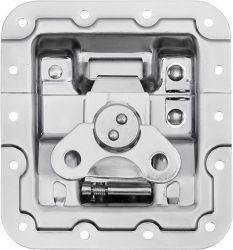
Case hardware

Case Building Materials – Your Foundation for Professional Flight Cases: Building custom flight cases demands precision, durability and the right components. LTT supplies everything You need to construct professional transport solutions for event technology, stage equipment and touring applications. From aluminium profiles and butterfly latches to multiplex plywood and shock-absorption foam, our comprehensive range of case building materials enables You to create bespoke protective enclosures that meet the...
Read more »
Case hardware
Close window
Case hardware

Case Building Materials – Your Foundation for Professional Flight Cases

Building custom flight cases demands precision, durability and the right components. LTT supplies everything You need to construct professional transport solutions for event technology, stage equipment and touring applications. From aluminium profiles and butterfly latches to multiplex plywood and shock-absorption foam, our comprehensive range of case building materials enables You to create bespoke protective enclosures that meet the demanding standards of professional event technicians, touring crews and stage builders. Whether You're fabricating a new case from scratch or repairing an existing road case, LTT delivers the quality components that ensure Your valuable equipment travels safely.

What Are Case Building Materials? The Fundamentals of Flight Case Construction

Case building materials comprise the structural components, hardware fittings and protective elements required to construct flight cases – robust transport containers designed to protect sensitive equipment during touring, shipping and storage. Unlike generic packaging, flight cases are engineered to withstand the rigours of professional event technology applications, where equipment faces repeated loading, transport vibrations, stacking loads and environmental exposure.

The core structural elements include aluminium extrusion profiles that form the protective frame around the case perimeter. These profiles – typically 30 mm or 35 mm face height – provide impact resistance and create mounting channels for hardware. Multiplex birch plywood panels (commonly 9 mm thickness) form the case walls, lid and base, offering an excellent strength-to-weight ratio. For lighter applications, honeycomb plastic panels such as Adam Hall SolidLite reduce weight while maintaining rigidity.

Hardware components include butterfly latches (available in small 80×78 mm, medium 108×103 mm and large 174×126 mm sizes), spring-loaded ball corners for impact protection, recessed handles for ergonomic carrying, and piano hinges or separate lid-stay hinges for controlled opening. Transport solutions range from light-duty 100 mm Blue Wheel castors to heavy-duty 160 mm braked castors rated to 350 kg load capacity, manufactured by specialists such as Riggatec, Guitel and Blickle.

Interior protection relies on shock-absorption foam – typically polyethylene or polyurethane foam in densities from 25 kg/m³ (soft padding) to 80 kg/m³ (firm structural support) – custom-cut to cradle equipment securely. For 19-inch rack integration, rack rails (483 mm width, 44 mm height unit spacing) with cage nuts and rack screws enable standardised mounting of amplifiers, lighting controllers and audio processors.

Compared to off-the-shelf cases, custom-built solutions using quality materials offer precise fitment, optimised weight distribution and the ability to integrate specific features such as cable pass-throughs, ventilation grilles or custom foam inserts that protect irregular equipment shapes.

Applications – Where Case Building Materials Deliver Professional Protection

Case building materials serve critical protective functions across the entire spectrum of event technology and touring applications. Touring musicians and bands construct custom cases for guitar amplifiers, drum hardware, keyboard rigs and monitor speakers, ensuring equipment survives the constant loading and unloading of tour schedules. Lighting technicians build cases for moving heads, LED panels, DMX controllers and cable looms, often integrating foam partitions to prevent fixture damage during transport.

Audio engineers fabricate rack cases for mixing consoles, wireless microphone systems, effects processors and amplifier racks, frequently incorporating 19-inch rack rails to standardise equipment mounting and simplify setup. Event production companies create bespoke cases for projectors, video switchers, camera equipment and broadcast technology, where precise internal dimensions and custom foam inserts protect high-value electronics.

Trade show and exhibition builders rely on case building materials to construct transport solutions for display systems, promotional materials and demonstration equipment that must arrive pristine at venues worldwide. Theatre and stage productions build cases for props, costume elements, rigging hardware and special effects equipment, often requiring custom internal layouts that accommodate irregular shapes.

The materials also serve industrial applications where sensitive measurement instruments, medical devices or scientific equipment require robust protection during field deployment. DJ and mobile entertainers construct cases for turntables, controllers, laptop stands and lighting effects, prioritising lightweight construction without sacrificing protection.

For professionals managing multiple equipment types, the ability to design cases with exact internal dimensions, optimised weight distribution and application-specific features – such as cable management channels, ventilation for heat-dissipating equipment or quick-access panels – represents a significant operational advantage over generic commercial cases.

Quality Standards and Professional Buying Criteria for Case Building Materials

Selecting appropriate case building materials requires understanding the technical specifications that determine durability, load capacity and long-term reliability in professional touring environments. Aluminium profiles should specify wall thickness (typically 1.2 mm to 2.0 mm) and alloy grade – 6063-T6 aluminium offers excellent strength-to-weight ratio and corrosion resistance. Profile face height (30 mm or 35 mm) determines impact protection depth and screw-mounting capacity.

Multiplex plywood panels must state layer count and wood species – birch multiplex with 7 to 9 cross-laminated layers provides superior screw-holding strength and impact resistance compared to softwood alternatives. Panel thickness ranges from 6 mm (lightweight applications) through 9 mm (standard touring cases) to 12 mm (heavy-duty transport). Phenolic resin coating on exterior surfaces enhances moisture resistance and surface durability.

For hardware components, material specifications matter significantly. Butterfly latches manufactured from 0.8 mm nickel-plated steel offer corrosion resistance and long-term spring tension retention. Cheaper zinc-plated variants may corrode in humid touring environments. Ball corners should specify steel gauge (typically 0.8 mm to 1.0 mm) and finish – powder-coated, chrome-plated or black-oxidised options suit different aesthetic and durability requirements.

Castor load ratings must exceed the total case weight plus equipment load with adequate safety margin. A case weighing 40 kg loaded with 60 kg equipment (100 kg total) requires castors rated minimum 125 kg per wheel (500 kg total for four-wheel configuration). Riggatec Blue Wheels 100 mm diameter castors handle 80 kg per wheel; heavy-duty 160 mm variants manage 200 kg per wheel. Braked castors prevent unwanted movement during loading.

Foam specifications include density (kg/m³), compression set resistance and cell structure. Polyethylene foam at 35 kg/m³ density suits general padding; 60 kg/m³ provides firm support for heavy equipment. Convoluted "egg-crate" foam increases surface contact area for delicate items.

Reputable manufacturers such as Penn Elcom, Adam Hall, Riggatec and Guitel publish detailed technical specifications, load ratings and material certifications. Price brackets vary significantly: budget aluminium profiles start around €3.50 per metre; premium extruded profiles reach €8.00 per metre. Butterfly latches range from €1.20 (small, basic finish) to €6.50 (large, stainless steel). Multiplex birch plywood 9 mm thickness typically costs €25–€45 per square metre depending on panel size and phenolic coating.

For professional applications subject to DGUV Vorschrift 17 (formerly BGV C1) regulations – particularly cases used in rigging or overhead suspension – materials must meet documented load ratings and manufacturers should provide technical data sheets confirming compliance with relevant EN standards.

Material Selection Guide – Choosing the Right Components for Your Case Project

Successful case construction begins with matching material specifications to the intended application, equipment weight and transport conditions. This section provides practical guidance for selecting components that deliver optimal protection without unnecessary weight or cost.

Structural Panel Selection

Multiplex birch plywood remains the industry standard for professional touring cases due to its excellent screw-holding capacity, impact resistance and predictable structural behaviour. For a standard DJ controller case (internal dimensions 600×400×150 mm, equipment weight 8 kg), 9 mm birch multiplex provides adequate strength with total case weight around 12 kg. Heavier equipment – such as a 4-channel amplifier rack weighing 35 kg – benefits from 12 mm panels, particularly for the base panel that bears stacking loads.

Honeycomb plastic panels such as Adam Hall SolidLite offer weight savings of 40–50% compared to equivalent plywood thickness. A lighting case built with 10 mm SolidLite panels instead of 9 mm plywood reduces total weight by approximately 3–4 kg, significant for air-freight touring where every kilogram incurs cost. However, plastic panels provide lower screw-holding strength, requiring more frequent hardware mounting points and reinforcement around high-stress areas such as handle attachments.

Hardware Dimensioning

Butterfly latch sizing depends on case dimensions and lid weight. Small butterflies (80×78 mm) suit cases up to 500 mm width; medium butterflies (108×103 mm) handle cases to 800 mm width; large butterflies (174×126 mm) secure cases exceeding 800 mm or lids heavier than 8 kg. As a rule, specify one butterfly per 400 mm of case perimeter for adequate closure security.

Ball corner selection follows case size: 30 mm radius corners suit compact cases (under 600 mm longest dimension); 40 mm radius corners fit medium cases (600–1000 mm); 60 mm radius corners reinforce large cases (over 1000 mm). Sunken ball corners create a flush surface for stacking; raised corners provide additional impact protection but increase overall case dimensions.

Castor Specification

Calculate required castor load rating by dividing total loaded case weight by number of wheels, then multiply by 1.5 safety factor. A case with 80 kg total weight on four castors requires: (80 kg ÷ 4) × 1.5 = 30 kg per wheel minimum rating. Riggatec Blue Wheel 100 mm castors (80 kg rating) provide adequate capacity; 125 mm castors (120 kg rating) offer additional safety margin.

For cases transported over rough surfaces or cobblestones, larger diameter wheels (160 mm or 200 mm) roll more easily and reduce vibration transmission to equipment. Braked castors should be fitted to at least two wheels (diagonal configuration) to prevent movement during loading.

Foam Interior Design

Foam selection balances protection against weight. Polyethylene foam at 25–35 kg/m³ density provides soft cushioning for lightweight, impact-sensitive items such as microphones or small controllers. Polyurethane foam at 50–60 kg/m³ density offers firmer support for heavier equipment such as amplifiers or lighting fixtures, preventing compression under load.

Convoluted "egg-crate" foam increases contact surface area by approximately 300% compared to flat foam, distributing pressure more evenly across delicate equipment surfaces. For equipment with protruding controls or connectors, custom-routed foam inserts (created using hot-wire cutting or CNC routing) provide precise fitment and prevent movement during transport.

A typical foam configuration uses 30 mm base layer (firm foam), equipment cavity (routed to exact dimensions with 5 mm clearance), and 20 mm lid layer (soft foam) – total foam thickness 50 mm plus equipment height determines minimum case internal depth.

Advanced Case Construction Techniques – Professional Tips for Superior Results

Mastering case building materials requires understanding not just component specifications but also assembly techniques that ensure structural integrity, longevity and professional finish quality. This section covers advanced methods that separate amateur projects from touring-grade professional cases.

Aluminium Profile Assembly

Precise mitred corners (45-degree cuts) create the cleanest profile joints, but require accurate cutting with a metal-cutting mitre saw or guided hand saw. For profiles with internal T-slot channels, corner blocks (aluminium or reinforced plastic) inserted into the profile channels provide additional joint strength and eliminate the need for perfect mitre accuracy – butt joints with corner blocks achieve equivalent strength to mitred joints.

When riveting profiles to panels, drill pilot holes 3.8 mm diameter for 4 mm rivets, maintaining 40 mm spacing along profile length. Closer spacing (30 mm) around high-stress areas such as handle mounting points prevents panel delamination under repeated loading. Always rivet through both profile flanges – single-flange riveting provides only 40% of the joint strength.

Panel Edge Treatment

Exposed plywood edges absorb moisture and delaminate over time. Professional edge treatment involves routing a 2 mm radius on all panel edges before profile installation, then sealing edges with PU-based edge sealant or thin aluminium edge trim. This simple step extends case life by 3–5 years in humid touring environments.

For cases subject to DGUV Vorschrift 17 regulations, panel joints must not rely solely on rivets – apply structural wood adhesive (PU or epoxy-based) to all profile-to-panel contact surfaces before riveting. Adhesive bonding increases joint strength by approximately 60% and prevents rivet loosening under vibration.

Hardware Mounting Precision

Butterfly latches require precise alignment between case body and lid – misalignment by just 2 mm prevents secure closure. Use a positioning jig (simple MDF template) to mark all butterfly locations before drilling. Mount butterflies with the spring-loaded keeper on the case body (not the lid) to prevent lid sagging over time.

Recessed handles must be mounted through reinforcement blocks (minimum 20 mm thick hardwood or aluminium) to distribute load across the panel. Mounting directly to 9 mm plywood will cause panel cracking after 50–100 lift cycles with a 30 kg case.

Foam Cutting and Installation

Hot-wire foam cutting produces cleaner edges and more precise cavities than knife cutting, particularly for complex equipment shapes. Create a cardboard template of the equipment profile first, then transfer to foam using a marker. Cut foam cavities 3–5 mm larger than equipment dimensions to allow easy insertion/removal while maintaining secure fit.

Adhesive-backed foam simplifies installation but reduces flexibility for future modifications. Professional approach: use spray contact adhesive only on the base foam layer; leave lid foam and partition foam removable with Velcro strips, enabling layout changes as equipment evolves.

Load Distribution for Heavy Equipment

Cases containing equipment exceeding 40 kg total weight require reinforced base construction. Install a secondary 6 mm plywood panel beneath the primary 9 mm base panel, creating a double-layer base with 15 mm total thickness. This prevents base panel flexing when the case is lifted, which would stress corner joints and potentially crack panels.

For rack cases with 19-inch equipment, mount rack rails to vertical reinforcement bars (20×40 mm hardwood or aluminium box section) rather than directly to side panels. This transfers equipment weight to the case frame structure rather than the panels, preventing panel bowing under load.

Weather Sealing

Professional touring cases incorporate weather sealing around lid perimeters using self-adhesive EPDM rubber gasket (typically 10×3 mm section). Position the gasket on the case body rim (not the lid) so lid weight compresses the gasket when closed, creating a water-resistant seal. This protects equipment during outdoor loading in rain or when cases are stored in unheated transport vehicles where condensation forms.

LTT – Your Specialist for Event Technology Case Building Materials

LTT supplies the complete range of professional case building materials You need to construct touring-grade flight cases that protect Your valuable event technology equipment. With over 25 years of experience in professional event technology and our own manufacturing facility in Germany, we understand the demanding requirements of touring crews, stage technicians and event production companies.

Our comprehensive inventory includes aluminium profiles from leading manufacturers, multiplex birch plywood panels in all standard thicknesses, butterfly latches and hardware from Penn Elcom and Adam Hall, heavy-duty Riggatec castors rated to 350 kg capacity, and professional-grade shock-absorption foams. Every component meets the quality standards required for professional touring applications, with technical specifications documented for compliance with DGUV Vorschrift 17 regulations where applicable.

As both retailer and manufacturer, LTT offers unique expertise in case construction techniques, material selection and structural engineering. Our technical team provides guidance on component sizing, load calculations and assembly methods that ensure Your custom cases deliver reliable protection throughout years of professional use. We ship worldwide from our facility in Bocholt, Germany, with express delivery options available and free shipping on orders over €69. Your investment is protected by our comprehensive 3-year warranty, backed by over 100,000 positive customer reviews from event technology professionals across Europe.

Whether You're building Your first custom case or fabricating complex multi-compartment transport solutions for touring productions, LTT delivers the quality materials, technical expertise and reliable service that professional event technology demands.

FAQ – Questions & Answers

What wood is used for flight cases?

Professional flight cases predominantly use birch multiplex plywood with 7 to 9 cross-laminated layers. Standard thicknesses are 6 mm for lightweight applications, 9 mm for general touring cases, and 12 mm for heavy-duty transport. Birch multiplex offers superior screw-holding strength, impact resistance and dimensional stability compared to softwood alternatives. Phenolic resin coating on exterior surfaces enhances moisture resistance and surface durability. For weight-critical applications, honeycomb plastic panels such as Adam Hall SolidLite provide 40–50% weight savings while maintaining adequate rigidity, though with lower screw-holding capacity requiring more frequent hardware mounting points.

What type of foam is used in flight cases?

Flight case interior protection typically uses polyethylene foam or polyurethane foam in densities ranging from 25 kg/m³ to 80 kg/m³. Soft polyethylene foam (25–35 kg/m³ density) provides cushioning for lightweight, impact-sensitive equipment such as microphones or controllers. Firm polyurethane foam (50–60 kg/m³ density) offers structural support for heavier equipment such as amplifiers or lighting fixtures, preventing compression under load. Convoluted "egg-crate" foam increases contact surface area by approximately 300% compared to flat foam, distributing pressure more evenly. Custom-routed foam inserts created using hot-wire cutting or CNC routing provide precise equipment fitment and prevent movement during transport.

What thickness plywood for road case?

Standard road case construction uses 9 mm birch multiplex plywood for walls, lid and base panels, providing an optimal balance between strength, weight and cost. Lightweight cases for equipment under 10 kg total weight may use 6 mm plywood to reduce case weight. Heavy-duty applications – particularly cases for equipment exceeding 40 kg or cases subject to stacking loads – benefit from 12 mm plywood for the base panel, with 9 mm panels for walls and lid. For maximum strength in professional touring environments, a double-layer base construction using 6 mm plywood beneath the primary 9 mm base panel creates 15 mm total thickness, preventing base flexing and stress on corner joints.

What material are flight cases made of?

Professional flight cases combine multiple materials engineered for durability and protection. Structural panels use birch multiplex plywood (typically 9 mm thickness) or honeycomb plastic panels for lighter weight. Aluminium extrusion profiles (30 mm or 35 mm face height, 1.2–2.0 mm wall thickness) form the protective frame around case perimeters. Hardware components include nickel-plated steel butterfly latches, ball corners, recessed handles and piano hinges. Transport solutions use heavy-duty castors with load ratings from 80 kg to 350 kg per wheel. Interior protection relies on polyethylene or polyurethane foam in various densities. 19-inch rack integration uses steel rack rails with cage nuts and mounting screws. All materials are selected for strength-to-weight ratio and resistance to touring environment stresses.

Can I use case building materials to repair existing flight cases?

Case building materials are ideal for repairing existing flight cases, as most professional manufacturers use standardised components from suppliers such as Penn Elcom, Adam Hall and Riggatec. Common repairs include replacing worn butterfly latches (measure existing latch dimensions to ensure correct size match), installing new castors (verify mounting plate dimensions and load rating requirements), replacing damaged ball corners (note corner radius – typically 30 mm, 40 mm or 60 mm), and renewing worn handles. Panel repairs may require matching plywood thickness and species – birch multiplex is standard. Foam inserts can be replaced with custom-cut foam to accommodate equipment changes. Always use equivalent or higher-specification replacement components to maintain case structural integrity and load capacity.

Are the latches and hinges rust-proof?

Quality case hardware uses corrosion-resistant finishes to withstand humid touring environments and outdoor exposure. Butterfly latches manufactured from 0.8 mm steel receive protective coatings including zinc plating (basic corrosion resistance), chrome plating (enhanced durability and aesthetic finish), nickel plating (superior corrosion resistance) or black oxidising (corrosion protection with matte appearance). Stainless steel variants offer maximum corrosion resistance for marine environments or permanent outdoor installations, though at higher cost. Piano hinges typically use zinc-plated or nickel-plated steel; continuous stainless steel hinges are available for critical applications. Cheaper uncoated or poorly plated hardware will corrode within 12–24 months in professional touring use. Always specify corrosion-resistant finishes – nickel-plated or stainless steel – for long-term reliability.

What load capacity do I need for case castors?

Calculate required castor load rating by dividing total loaded case weight (case plus equipment) by the number of wheels, then multiply by 1.5 safety factor to account for uneven load distribution and impact forces during transport. For example, a case with 80 kg total weight on four castors requires: (80 kg ÷ 4) × 1.5 = 30 kg per wheel minimum rating. Riggatec Blue Wheel 100 mm diameter castors rated to 80 kg per wheel provide adequate capacity; 160 mm diameter castors rated to 200 kg per wheel offer additional safety margin for heavier cases. Always specify braked castors on at least two wheels (diagonal configuration) to prevent unwanted movement during loading. For cases exceeding 150 kg total weight, heavy-duty castors with ball-bearing swivel mechanisms ensure smooth rolling and long service life.

How do I calculate material quantities for a custom case project?

Calculate material quantities by determining case external dimensions first, then working backwards to component requirements. For a case with 600×400×200 mm internal dimensions and 9 mm plywood with 30 mm aluminium profiles: Panels – base 618×418 mm, lid 618×418 mm, front/back 618×200 mm (×2), sides 400×200 mm (×2); total plywood area approximately 0.9 m². Aluminium profile – perimeter (600+400)×2 = 2000 mm, height 200 mm×4 corners = 800 mm; total profile length 2.8 m (order 3 m allowing cutting waste). Hardware – butterfly latches: one per 400 mm perimeter = 5 latches; ball corners: 8 pieces (4 base, 4 lid); handles: 2 recessed side handles; hinges: 600 mm piano hinge or 3 separate lid hinges. Foam – base layer 580×380 mm, lid layer 580×380 mm; order 1200×800 mm sheet. Always add 10–15% material allowance for cutting waste and measurement errors.

Categories
914 Articles
Close filters
 
  •  
  •  
  •  
  •  
  •  
  •  
  •  
  •  
  •  
  •  
  •  
  •  
  •  
  •  
  •  
  •  
  •  
  •  
  •  
  •  
  •  
  •  
from to
21 From 39 pages
No results were found for the filter!
Adam Hall Hardware 87981 Einbaubuchse für 87983 Spanngurt
Adam Hall Hardware 87981 - Recessed Cup for 87983 Lashing Strap
Recessed Cup for 87983 Lashing Strap Case Coupling System comprising recessed cups, which are mounted from the inside into the case wall and an adjustable strap with coupling hooks. A flexible...
€4.87 *
incl. tax, plus shipping costs
Availability:
Near-term available
Delivery time: approx. 1 week
Adam Hall Hardware 0191 Polyesterschaumstoff 25 mm
Adam Hall Hardware 0191 - Polyester Foam 25 mm
Polyester Foam 25 mm : Product type: Coverings and Foam Materials • Type: Foam Materials • Color: charcoal • Material: Polyester • Length: 2000 mm • Width: 1000 mm...
€29.23 *
incl. tax, plus shipping costs
Availability:
Near-term available
Delivery time: approx. 1 week
Adam Hall Hardware 019610 Plastazote (LD29) mit 4 mm Nuten 10 mm
Adam Hall Hardware 019610 - Plastazote (LD29) with 4 mm Grooves 10 mm
Plastazote (LD29) with 4 mm Grooves 10 mm PE foam "Plastazote" : Product type: Coverings and Foam Materials • Type: Foam Materials • Color: Black • Material: Plastazote...
€99.75 *
incl. tax, plus forwarding agency costs
Availability:
Near-term available
Delivery time: approx. 1 week

Bulky goods

Adam Hall Hardware 019740 Rasterschaumstoff 40 mm
Adam Hall Hardware 019740 - Pre-Cut Foam 40 mm
Pre-Cut Foam 40 mm Ether Puzzle Foam : Product type: Coverings and Foam Materials • Type: Foam Materials • Color: light grey • Material: polyether • Length: 1420 mm...
€34.99 *
incl. tax, plus shipping costs
Availability:
Near-term available
Delivery time: approx. 1 week
Adam Hall Hardware 1634 LKEEP Vorhängeschlossöse für 17343
Adam Hall Hardware 1634 LKEEP - Padlock Loop for 17343
Padlock Loop for 17343 : Product type: Catch Accessories • Material: Steel • Surface: galvanized • Mounting hole diameter: 5.1 mm • Material thickness: 1 mm • Width: 15 mm...
€0.86 *
incl. tax, plus shipping costs
Availability:
Delivery time: 1-3 days
Adam Hall Hardware 1656 Hebelverschluss Kunststoff schwarz
Adam Hall Hardware 1656 - Lever Latch plastic black
Lever Latch plastic black Recessed lever latch for service door. Black plastic (POM). Mounts into wood thickness from 7-13 mm. Stainless steel screws. : Product type: Catches • Type: Lever...
€14.51 *
incl. tax, plus shipping costs
Availability:
Delivery time: 1-3 days
Adam Hall Hardware 17302 Overlatch Butterfly Verschluss groß 14 mm tief
Adam Hall Hardware 17302 - Overlatch Butterfly Latch Large 14 mm Deep
Overlatch Butterfly Latch Large 14 mm Deep Overlatch butterfly large in dish. Compatible lock available: 1630KEEP : Product type: Catches • Type: Butterfly Latches • Material: Steel...
€11.90 *
incl. tax, plus shipping costs
Availability:
Near-term available
Delivery time: approx. 1 week
Adam Hall Hardware 17343 Overlatch Butterfly Verschluss klein 9 mm tief
Adam Hall Hardware 17343 - Overlatch Butterfly Latch Small 9 mm Deep
Overlatch Butterfly Latch Small 9 mm Deep Small overlatching butterfly catch in dish. Can be used with Hybrid locations with keep and with 6124 without keep. • Keep available: 1632KEEP :...
€7.78 *
incl. tax, plus shipping costs
Availability:
Delivery time: 1-3 days
Adam Hall Hardware 2508 Feststellscharnier mittel verchromt
Adam Hall Hardware 2508 - Stop Hinge medium chrome-plated
Stop Hinge medium chrome-plated Medium stop-hinge. Stops at 95°. : Product type: Hinges and Lidstays • Type: hinges • Material: Steel • Surface: chromium plated • Material...
€1.12 *
incl. tax, plus shipping costs
Availability:
Near-term available
Delivery time: approx. 1 week
Adam Hall Hardware 2527 Feststellscharnier mittel vernickelt
Adam Hall Hardware 2527 - Stop Hinge medium nickel-plated
Stop Hinge medium nickel-plated Medium strut hinge : Product type: Hinges and Lidstays • Type: hinges • Material: Steel • Surface: nickel plated • Material thickness: 0.6 mm...
€1.37 *
incl. tax, plus shipping costs
Availability:
Near-term available
Delivery time: approx. 1 week
Adam Hall Hardware 2528 Feststellscharnier mittel vernickelt
Adam Hall Hardware 2528 - Stop Hinge medium nickel-plated
Stop Hinge medium nickel-plated Medium strut hinge : Product type: Hinges and Lidstays • Type: hinges • Material: Steel • Surface: nickel plated • Material thickness: 1 mm...
€1.54 *
incl. tax, plus shipping costs
Availability:
Near-term available
Delivery time: approx. 1 week
Adam Hall Hardware 2601 Scharnier klein verzinkt
Adam Hall Hardware 2601 - Hinge Small Galvanized
Hinge Small Galvanized Hinge small Fits on lid location 6102. • : Product type: Hinges and Lidstays • Type: hinges • Material: Steel • Surface: galvanized • Material...
€1.11 *
incl. tax, plus shipping costs
Availability:
Near-term available
Delivery time: approx. 1 week
Adam Hall Hardware 2605 Klavierband Stahl vorgebohrt
Adam Hall Hardware 2605 - Piano Hinge steel pre-drilled
Piano Hinge steel pre-drilled Piano hinge - punched at 76 mm centres : Product type: Hinges and Lidstays • Type: hinges • Material: Steel • Surface: galvanized • Material...
€16.73 *
incl. tax, plus shipping costs
Availability:
Near-term available
Delivery time: approx. 1 week
Adam Hall Hardware 2701 Kofferdeckel Feststeller Stahl vernickelt
Adam Hall Hardware 2701 - Case Lid Stay steel nickel-plated
Case Lid Stay steel nickel-plated : Product type: Hinges and Lidstays • Type: lid stay • Material: Steel • Surface: nickel plated • Material thickness: 1.5 mm • Length: 74...
€2.25 *
incl. tax, plus shipping costs
Availability:
Delivery time: 1-3 days
Adam Hall Hardware 2808 Kofferinlett Netztasche
Adam Hall Hardware 2808 - Net Bag Case Insert
Net Bag Case Insert Net pocket with zip - Velcro (Hooks) on back enable removal of attachment from case lid. : Product type: Flightcase Accessories • Color: Black • Material: Synthetic...
€7.28 *
incl. tax, plus shipping costs
Availability:
Near-term available
Delivery time: approx. 1 week
Adam Hall Hardware 2890 Etikettenhalter verzinkt
Adam Hall Hardware 2890 - Label Holder with Insert for 108 x 60 mm Labels, Galvanized
Label Holder with Insert for 108 x 60 mm Labels, Galvanized Label holder with open top side for inserting labels / signs with a dimension of 108 mm x 60 mm : Material: Steel • Surface:...
€2.46 *
incl. tax, plus shipping costs
Availability:
Delivery time: 1-3 days
Adam Hall Hardware 34001 Schalengriff Stahl schwarz pulverbeschichtet
Adam Hall Hardware 34001 - Bar Handle steel black powder-coated
Bar Handle steel black powder-coated : Product type: Handles • Type: Insert Handles • Material: Steel • Surface: Powder coated • Color: Black • Material thickness: 1 mm...
€7.03 *
incl. tax, plus shipping costs
Availability:
Near-term available
Delivery time: approx. 1 week
Adam Hall Hardware 3403 Griffschale Kunststoff schwarz
Adam Hall Hardware 3403 - Insert Handle plastic black
Insert Handle plastic black Insert handle - in two parts Can be used to lift a box from all four directions • With holes for water drain. • : Product type: Handles • Type: Insert...
€6.24 *
incl. tax, plus shipping costs
Availability:
Delivery time: 1-3 days
Adam Hall Hardware 34030 Schale Kunstoff für Montage bei Griffausschnitten
Adam Hall Hardware 34030 - Plastic Dish for Mounting inside Handle Cutouts black
Plastic Dish for Mounting inside Handle Cutouts black Dish for mounting inside a loudspeaker cabinet to airseal routed handled cutout. : Product type: Handles • Type: Insert Handles...
€5.95 *
incl. tax, plus shipping costs
Availability:
Near-term available
Delivery time: approx. 1 week
Adam Hall Hardware 3405 Schalengriff für Kantenmontage schwarz
Adam Hall Hardware 3405 - Bar Handle for Edge Mounting black
Bar Handle for Edge Mounting black Recessed steel Bar Handle for top edge mounting. : Product type: Handles • Type: Insert Handles • Material: Steel • Surface: Powder coated...
€8.03 *
incl. tax, plus shipping costs
Availability:
Near-term available
Delivery time: approx. 1 week
Adam Hall Hardware 34062 Schalengriff Kunststoff schwarz
Adam Hall Hardware 34062 - Installation Shell Handle Round, Plastic
Installation Shell Handle Round, Plastic Bar Handle : Product type: Handles • Type: Insert Handles • Material: Plastic • Surface: nature • Color: Black • Handle height: 190...
€7.78 *
incl. tax, plus shipping costs
Availability:
Delivery time: 1-3 days
Adam Hall Hardware EVOLUTIVE HANDLE Ergonomischer Schalengriff, zweiteilig
Adam Hall Hardware EVOLUTIVE HANDLE - Ergonomic installation "Evolution" handle in set (2 pieces)".
Ergonomic installation "Evolution" handle in set (2 pieces)". Handle consisting of a black plastic dish and a sturdy ring handle made of black powder-coated die-cast zinc. By virtue...
€26.25 *
incl. tax, plus shipping costs
Availability:
Near-term available
Delivery time: approx. 1 week
Adam Hall Hardware 3407 Verstärkungsplatte für 34102 Klappgriff
Adam Hall Hardware 3407 - Back Plate for 34102 Recessed Sprung Handle
Back Plate for 34102 Recessed Sprung Handle Back plate for recessed handle 34102. : Product type: Handle Accessories • Material: Steel • Material thickness: 1 mm • Surface:...
€1.27 *
incl. tax, plus shipping costs
Availability:
Near-term available
Delivery time: approx. 1 week
Adam Hall Hardware 34081 Klappgriff mittel gefedert in Einbauschale 9 mm t
Adam Hall Hardware 34081 - Medium Spring Loaded Flip Handle
Medium Spring Loaded Flip Handle In 9 mm deep dish with rivet protection • Zinc plated steel, 5.1 mm mounting holes • : Product type: Handles • Type: Folding Handles • Dish...
€5.46 *
incl. tax, plus shipping costs
Availability:
Delivery time: 1-3 days
21 From 39 pages
Facts
Case Building Materials – Your Foundation for Professional Flight Cases: Building custom flight cases demands precision, durability and the right components. LTT supplies everything You need to construct professional transport solutions for event technology, stage equipment and touring applications. From aluminium profiles and butterfly latches to multiplex plywood and shock-absorption foam, our comprehensive range of case building... Read more »
Viewed
Facts

Case Building Materials – Your Foundation for Professional Flight Cases

Building custom flight cases demands precision, durability and the right components. LTT supplies everything You need to construct professional transport solutions for event technology, stage equipment and touring applications. From aluminium profiles and butterfly latches to multiplex plywood and shock-absorption foam, our comprehensive range of case building materials enables You to create bespoke protective enclosures that meet the demanding standards of professional event technicians, touring crews and stage builders. Whether You're fabricating a new case from scratch or repairing an existing road case, LTT delivers the quality components that ensure Your valuable equipment travels safely.

What Are Case Building Materials? The Fundamentals of Flight Case Construction

Case building materials comprise the structural components, hardware fittings and protective elements required to construct flight cases – robust transport containers designed to protect sensitive equipment during touring, shipping and storage. Unlike generic packaging, flight cases are engineered to withstand the rigours of professional event technology applications, where equipment faces repeated loading, transport vibrations, stacking loads and environmental exposure.

The core structural elements include aluminium extrusion profiles that form the protective frame around the case perimeter. These profiles – typically 30 mm or 35 mm face height – provide impact resistance and create mounting channels for hardware. Multiplex birch plywood panels (commonly 9 mm thickness) form the case walls, lid and base, offering an excellent strength-to-weight ratio. For lighter applications, honeycomb plastic panels such as Adam Hall SolidLite reduce weight while maintaining rigidity.

Hardware components include butterfly latches (available in small 80×78 mm, medium 108×103 mm and large 174×126 mm sizes), spring-loaded ball corners for impact protection, recessed handles for ergonomic carrying, and piano hinges or separate lid-stay hinges for controlled opening. Transport solutions range from light-duty 100 mm Blue Wheel castors to heavy-duty 160 mm braked castors rated to 350 kg load capacity, manufactured by specialists such as Riggatec, Guitel and Blickle.

Interior protection relies on shock-absorption foam – typically polyethylene or polyurethane foam in densities from 25 kg/m³ (soft padding) to 80 kg/m³ (firm structural support) – custom-cut to cradle equipment securely. For 19-inch rack integration, rack rails (483 mm width, 44 mm height unit spacing) with cage nuts and rack screws enable standardised mounting of amplifiers, lighting controllers and audio processors.

Compared to off-the-shelf cases, custom-built solutions using quality materials offer precise fitment, optimised weight distribution and the ability to integrate specific features such as cable pass-throughs, ventilation grilles or custom foam inserts that protect irregular equipment shapes.

Applications – Where Case Building Materials Deliver Professional Protection

Case building materials serve critical protective functions across the entire spectrum of event technology and touring applications. Touring musicians and bands construct custom cases for guitar amplifiers, drum hardware, keyboard rigs and monitor speakers, ensuring equipment survives the constant loading and unloading of tour schedules. Lighting technicians build cases for moving heads, LED panels, DMX controllers and cable looms, often integrating foam partitions to prevent fixture damage during transport.

Audio engineers fabricate rack cases for mixing consoles, wireless microphone systems, effects processors and amplifier racks, frequently incorporating 19-inch rack rails to standardise equipment mounting and simplify setup. Event production companies create bespoke cases for projectors, video switchers, camera equipment and broadcast technology, where precise internal dimensions and custom foam inserts protect high-value electronics.

Trade show and exhibition builders rely on case building materials to construct transport solutions for display systems, promotional materials and demonstration equipment that must arrive pristine at venues worldwide. Theatre and stage productions build cases for props, costume elements, rigging hardware and special effects equipment, often requiring custom internal layouts that accommodate irregular shapes.

The materials also serve industrial applications where sensitive measurement instruments, medical devices or scientific equipment require robust protection during field deployment. DJ and mobile entertainers construct cases for turntables, controllers, laptop stands and lighting effects, prioritising lightweight construction without sacrificing protection.

For professionals managing multiple equipment types, the ability to design cases with exact internal dimensions, optimised weight distribution and application-specific features – such as cable management channels, ventilation for heat-dissipating equipment or quick-access panels – represents a significant operational advantage over generic commercial cases.

Quality Standards and Professional Buying Criteria for Case Building Materials

Selecting appropriate case building materials requires understanding the technical specifications that determine durability, load capacity and long-term reliability in professional touring environments. Aluminium profiles should specify wall thickness (typically 1.2 mm to 2.0 mm) and alloy grade – 6063-T6 aluminium offers excellent strength-to-weight ratio and corrosion resistance. Profile face height (30 mm or 35 mm) determines impact protection depth and screw-mounting capacity.

Multiplex plywood panels must state layer count and wood species – birch multiplex with 7 to 9 cross-laminated layers provides superior screw-holding strength and impact resistance compared to softwood alternatives. Panel thickness ranges from 6 mm (lightweight applications) through 9 mm (standard touring cases) to 12 mm (heavy-duty transport). Phenolic resin coating on exterior surfaces enhances moisture resistance and surface durability.

For hardware components, material specifications matter significantly. Butterfly latches manufactured from 0.8 mm nickel-plated steel offer corrosion resistance and long-term spring tension retention. Cheaper zinc-plated variants may corrode in humid touring environments. Ball corners should specify steel gauge (typically 0.8 mm to 1.0 mm) and finish – powder-coated, chrome-plated or black-oxidised options suit different aesthetic and durability requirements.

Castor load ratings must exceed the total case weight plus equipment load with adequate safety margin. A case weighing 40 kg loaded with 60 kg equipment (100 kg total) requires castors rated minimum 125 kg per wheel (500 kg total for four-wheel configuration). Riggatec Blue Wheels 100 mm diameter castors handle 80 kg per wheel; heavy-duty 160 mm variants manage 200 kg per wheel. Braked castors prevent unwanted movement during loading.

Foam specifications include density (kg/m³), compression set resistance and cell structure. Polyethylene foam at 35 kg/m³ density suits general padding; 60 kg/m³ provides firm support for heavy equipment. Convoluted "egg-crate" foam increases surface contact area for delicate items.

Reputable manufacturers such as Penn Elcom, Adam Hall, Riggatec and Guitel publish detailed technical specifications, load ratings and material certifications. Price brackets vary significantly: budget aluminium profiles start around €3.50 per metre; premium extruded profiles reach €8.00 per metre. Butterfly latches range from €1.20 (small, basic finish) to €6.50 (large, stainless steel). Multiplex birch plywood 9 mm thickness typically costs €25–€45 per square metre depending on panel size and phenolic coating.

For professional applications subject to DGUV Vorschrift 17 (formerly BGV C1) regulations – particularly cases used in rigging or overhead suspension – materials must meet documented load ratings and manufacturers should provide technical data sheets confirming compliance with relevant EN standards.

Material Selection Guide – Choosing the Right Components for Your Case Project

Successful case construction begins with matching material specifications to the intended application, equipment weight and transport conditions. This section provides practical guidance for selecting components that deliver optimal protection without unnecessary weight or cost.

Structural Panel Selection

Multiplex birch plywood remains the industry standard for professional touring cases due to its excellent screw-holding capacity, impact resistance and predictable structural behaviour. For a standard DJ controller case (internal dimensions 600×400×150 mm, equipment weight 8 kg), 9 mm birch multiplex provides adequate strength with total case weight around 12 kg. Heavier equipment – such as a 4-channel amplifier rack weighing 35 kg – benefits from 12 mm panels, particularly for the base panel that bears stacking loads.

Honeycomb plastic panels such as Adam Hall SolidLite offer weight savings of 40–50% compared to equivalent plywood thickness. A lighting case built with 10 mm SolidLite panels instead of 9 mm plywood reduces total weight by approximately 3–4 kg, significant for air-freight touring where every kilogram incurs cost. However, plastic panels provide lower screw-holding strength, requiring more frequent hardware mounting points and reinforcement around high-stress areas such as handle attachments.

Hardware Dimensioning

Butterfly latch sizing depends on case dimensions and lid weight. Small butterflies (80×78 mm) suit cases up to 500 mm width; medium butterflies (108×103 mm) handle cases to 800 mm width; large butterflies (174×126 mm) secure cases exceeding 800 mm or lids heavier than 8 kg. As a rule, specify one butterfly per 400 mm of case perimeter for adequate closure security.

Ball corner selection follows case size: 30 mm radius corners suit compact cases (under 600 mm longest dimension); 40 mm radius corners fit medium cases (600–1000 mm); 60 mm radius corners reinforce large cases (over 1000 mm). Sunken ball corners create a flush surface for stacking; raised corners provide additional impact protection but increase overall case dimensions.

Castor Specification

Calculate required castor load rating by dividing total loaded case weight by number of wheels, then multiply by 1.5 safety factor. A case with 80 kg total weight on four castors requires: (80 kg ÷ 4) × 1.5 = 30 kg per wheel minimum rating. Riggatec Blue Wheel 100 mm castors (80 kg rating) provide adequate capacity; 125 mm castors (120 kg rating) offer additional safety margin.

For cases transported over rough surfaces or cobblestones, larger diameter wheels (160 mm or 200 mm) roll more easily and reduce vibration transmission to equipment. Braked castors should be fitted to at least two wheels (diagonal configuration) to prevent movement during loading.

Foam Interior Design

Foam selection balances protection against weight. Polyethylene foam at 25–35 kg/m³ density provides soft cushioning for lightweight, impact-sensitive items such as microphones or small controllers. Polyurethane foam at 50–60 kg/m³ density offers firmer support for heavier equipment such as amplifiers or lighting fixtures, preventing compression under load.

Convoluted "egg-crate" foam increases contact surface area by approximately 300% compared to flat foam, distributing pressure more evenly across delicate equipment surfaces. For equipment with protruding controls or connectors, custom-routed foam inserts (created using hot-wire cutting or CNC routing) provide precise fitment and prevent movement during transport.

A typical foam configuration uses 30 mm base layer (firm foam), equipment cavity (routed to exact dimensions with 5 mm clearance), and 20 mm lid layer (soft foam) – total foam thickness 50 mm plus equipment height determines minimum case internal depth.

Advanced Case Construction Techniques – Professional Tips for Superior Results

Mastering case building materials requires understanding not just component specifications but also assembly techniques that ensure structural integrity, longevity and professional finish quality. This section covers advanced methods that separate amateur projects from touring-grade professional cases.

Aluminium Profile Assembly

Precise mitred corners (45-degree cuts) create the cleanest profile joints, but require accurate cutting with a metal-cutting mitre saw or guided hand saw. For profiles with internal T-slot channels, corner blocks (aluminium or reinforced plastic) inserted into the profile channels provide additional joint strength and eliminate the need for perfect mitre accuracy – butt joints with corner blocks achieve equivalent strength to mitred joints.

When riveting profiles to panels, drill pilot holes 3.8 mm diameter for 4 mm rivets, maintaining 40 mm spacing along profile length. Closer spacing (30 mm) around high-stress areas such as handle mounting points prevents panel delamination under repeated loading. Always rivet through both profile flanges – single-flange riveting provides only 40% of the joint strength.

Panel Edge Treatment

Exposed plywood edges absorb moisture and delaminate over time. Professional edge treatment involves routing a 2 mm radius on all panel edges before profile installation, then sealing edges with PU-based edge sealant or thin aluminium edge trim. This simple step extends case life by 3–5 years in humid touring environments.

For cases subject to DGUV Vorschrift 17 regulations, panel joints must not rely solely on rivets – apply structural wood adhesive (PU or epoxy-based) to all profile-to-panel contact surfaces before riveting. Adhesive bonding increases joint strength by approximately 60% and prevents rivet loosening under vibration.

Hardware Mounting Precision

Butterfly latches require precise alignment between case body and lid – misalignment by just 2 mm prevents secure closure. Use a positioning jig (simple MDF template) to mark all butterfly locations before drilling. Mount butterflies with the spring-loaded keeper on the case body (not the lid) to prevent lid sagging over time.

Recessed handles must be mounted through reinforcement blocks (minimum 20 mm thick hardwood or aluminium) to distribute load across the panel. Mounting directly to 9 mm plywood will cause panel cracking after 50–100 lift cycles with a 30 kg case.

Foam Cutting and Installation

Hot-wire foam cutting produces cleaner edges and more precise cavities than knife cutting, particularly for complex equipment shapes. Create a cardboard template of the equipment profile first, then transfer to foam using a marker. Cut foam cavities 3–5 mm larger than equipment dimensions to allow easy insertion/removal while maintaining secure fit.

Adhesive-backed foam simplifies installation but reduces flexibility for future modifications. Professional approach: use spray contact adhesive only on the base foam layer; leave lid foam and partition foam removable with Velcro strips, enabling layout changes as equipment evolves.

Load Distribution for Heavy Equipment

Cases containing equipment exceeding 40 kg total weight require reinforced base construction. Install a secondary 6 mm plywood panel beneath the primary 9 mm base panel, creating a double-layer base with 15 mm total thickness. This prevents base panel flexing when the case is lifted, which would stress corner joints and potentially crack panels.

For rack cases with 19-inch equipment, mount rack rails to vertical reinforcement bars (20×40 mm hardwood or aluminium box section) rather than directly to side panels. This transfers equipment weight to the case frame structure rather than the panels, preventing panel bowing under load.

Weather Sealing

Professional touring cases incorporate weather sealing around lid perimeters using self-adhesive EPDM rubber gasket (typically 10×3 mm section). Position the gasket on the case body rim (not the lid) so lid weight compresses the gasket when closed, creating a water-resistant seal. This protects equipment during outdoor loading in rain or when cases are stored in unheated transport vehicles where condensation forms.

LTT – Your Specialist for Event Technology Case Building Materials

LTT supplies the complete range of professional case building materials You need to construct touring-grade flight cases that protect Your valuable event technology equipment. With over 25 years of experience in professional event technology and our own manufacturing facility in Germany, we understand the demanding requirements of touring crews, stage technicians and event production companies.

Our comprehensive inventory includes aluminium profiles from leading manufacturers, multiplex birch plywood panels in all standard thicknesses, butterfly latches and hardware from Penn Elcom and Adam Hall, heavy-duty Riggatec castors rated to 350 kg capacity, and professional-grade shock-absorption foams. Every component meets the quality standards required for professional touring applications, with technical specifications documented for compliance with DGUV Vorschrift 17 regulations where applicable.

As both retailer and manufacturer, LTT offers unique expertise in case construction techniques, material selection and structural engineering. Our technical team provides guidance on component sizing, load calculations and assembly methods that ensure Your custom cases deliver reliable protection throughout years of professional use. We ship worldwide from our facility in Bocholt, Germany, with express delivery options available and free shipping on orders over €69. Your investment is protected by our comprehensive 3-year warranty, backed by over 100,000 positive customer reviews from event technology professionals across Europe.

Whether You're building Your first custom case or fabricating complex multi-compartment transport solutions for touring productions, LTT delivers the quality materials, technical expertise and reliable service that professional event technology demands.

FAQ – Questions & Answers

What wood is used for flight cases?

Professional flight cases predominantly use birch multiplex plywood with 7 to 9 cross-laminated layers. Standard thicknesses are 6 mm for lightweight applications, 9 mm for general touring cases, and 12 mm for heavy-duty transport. Birch multiplex offers superior screw-holding strength, impact resistance and dimensional stability compared to softwood alternatives. Phenolic resin coating on exterior surfaces enhances moisture resistance and surface durability. For weight-critical applications, honeycomb plastic panels such as Adam Hall SolidLite provide 40–50% weight savings while maintaining adequate rigidity, though with lower screw-holding capacity requiring more frequent hardware mounting points.

What type of foam is used in flight cases?

Flight case interior protection typically uses polyethylene foam or polyurethane foam in densities ranging from 25 kg/m³ to 80 kg/m³. Soft polyethylene foam (25–35 kg/m³ density) provides cushioning for lightweight, impact-sensitive equipment such as microphones or controllers. Firm polyurethane foam (50–60 kg/m³ density) offers structural support for heavier equipment such as amplifiers or lighting fixtures, preventing compression under load. Convoluted "egg-crate" foam increases contact surface area by approximately 300% compared to flat foam, distributing pressure more evenly. Custom-routed foam inserts created using hot-wire cutting or CNC routing provide precise equipment fitment and prevent movement during transport.

What thickness plywood for road case?

Standard road case construction uses 9 mm birch multiplex plywood for walls, lid and base panels, providing an optimal balance between strength, weight and cost. Lightweight cases for equipment under 10 kg total weight may use 6 mm plywood to reduce case weight. Heavy-duty applications – particularly cases for equipment exceeding 40 kg or cases subject to stacking loads – benefit from 12 mm plywood for the base panel, with 9 mm panels for walls and lid. For maximum strength in professional touring environments, a double-layer base construction using 6 mm plywood beneath the primary 9 mm base panel creates 15 mm total thickness, preventing base flexing and stress on corner joints.

What material are flight cases made of?

Professional flight cases combine multiple materials engineered for durability and protection. Structural panels use birch multiplex plywood (typically 9 mm thickness) or honeycomb plastic panels for lighter weight. Aluminium extrusion profiles (30 mm or 35 mm face height, 1.2–2.0 mm wall thickness) form the protective frame around case perimeters. Hardware components include nickel-plated steel butterfly latches, ball corners, recessed handles and piano hinges. Transport solutions use heavy-duty castors with load ratings from 80 kg to 350 kg per wheel. Interior protection relies on polyethylene or polyurethane foam in various densities. 19-inch rack integration uses steel rack rails with cage nuts and mounting screws. All materials are selected for strength-to-weight ratio and resistance to touring environment stresses.

Can I use case building materials to repair existing flight cases?

Case building materials are ideal for repairing existing flight cases, as most professional manufacturers use standardised components from suppliers such as Penn Elcom, Adam Hall and Riggatec. Common repairs include replacing worn butterfly latches (measure existing latch dimensions to ensure correct size match), installing new castors (verify mounting plate dimensions and load rating requirements), replacing damaged ball corners (note corner radius – typically 30 mm, 40 mm or 60 mm), and renewing worn handles. Panel repairs may require matching plywood thickness and species – birch multiplex is standard. Foam inserts can be replaced with custom-cut foam to accommodate equipment changes. Always use equivalent or higher-specification replacement components to maintain case structural integrity and load capacity.

Are the latches and hinges rust-proof?

Quality case hardware uses corrosion-resistant finishes to withstand humid touring environments and outdoor exposure. Butterfly latches manufactured from 0.8 mm steel receive protective coatings including zinc plating (basic corrosion resistance), chrome plating (enhanced durability and aesthetic finish), nickel plating (superior corrosion resistance) or black oxidising (corrosion protection with matte appearance). Stainless steel variants offer maximum corrosion resistance for marine environments or permanent outdoor installations, though at higher cost. Piano hinges typically use zinc-plated or nickel-plated steel; continuous stainless steel hinges are available for critical applications. Cheaper uncoated or poorly plated hardware will corrode within 12–24 months in professional touring use. Always specify corrosion-resistant finishes – nickel-plated or stainless steel – for long-term reliability.

What load capacity do I need for case castors?

Calculate required castor load rating by dividing total loaded case weight (case plus equipment) by the number of wheels, then multiply by 1.5 safety factor to account for uneven load distribution and impact forces during transport. For example, a case with 80 kg total weight on four castors requires: (80 kg ÷ 4) × 1.5 = 30 kg per wheel minimum rating. Riggatec Blue Wheel 100 mm diameter castors rated to 80 kg per wheel provide adequate capacity; 160 mm diameter castors rated to 200 kg per wheel offer additional safety margin for heavier cases. Always specify braked castors on at least two wheels (diagonal configuration) to prevent unwanted movement during loading. For cases exceeding 150 kg total weight, heavy-duty castors with ball-bearing swivel mechanisms ensure smooth rolling and long service life.

How do I calculate material quantities for a custom case project?

Calculate material quantities by determining case external dimensions first, then working backwards to component requirements. For a case with 600×400×200 mm internal dimensions and 9 mm plywood with 30 mm aluminium profiles: Panels – base 618×418 mm, lid 618×418 mm, front/back 618×200 mm (×2), sides 400×200 mm (×2); total plywood area approximately 0.9 m². Aluminium profile – perimeter (600+400)×2 = 2000 mm, height 200 mm×4 corners = 800 mm; total profile length 2.8 m (order 3 m allowing cutting waste). Hardware – butterfly latches: one per 400 mm perimeter = 5 latches; ball corners: 8 pieces (4 base, 4 lid); handles: 2 recessed side handles; hinges: 600 mm piano hinge or 3 separate lid hinges. Foam – base layer 580×380 mm, lid layer 580×380 mm; order 1200×800 mm sheet. Always add 10–15% material allowance for cutting waste and measurement errors.

// Countdown for Black Deals