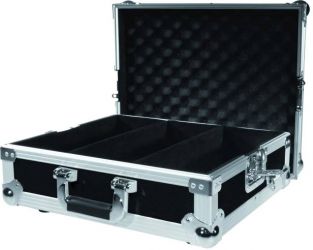
CD cases
CD-Cases – Professional Disc Storage for Stage, Studio & Touring
Whether you are a working DJ packing for a club night, a band selling merch at a gig, or a studio manager archiving hundreds of masters, the right CD case makes all the difference. LTT stocks a comprehensive range of CD-Cases — from classic jewel cases and slimline variants to shock-resistant DJ wallets and heavy-duty transport solutions built for the road. With over 25 years of experience in professional event technology, LTT is your specialist for disc storage that keeps up with the demands of live performance and studio work alike.
Types of CD Cases: Jewel, Slimline, Digipak & Wallets Explained
Understanding the different CD case formats helps you choose the right protection for your discs, whether you are archiving a library, duplicating promos or heading out on tour.
Standard Jewel Case
The jewel case has been the industry standard since the compact disc launched in 1982. It measures 142 × 125 × 10 mm and is constructed from three injection-moulded polystyrene parts: two hinged transparent halves and a media tray. The spring-loaded central hub grips the disc firmly by its centre hole, suspending the recording surface above the tray to prevent scratches. The front lid holds liner notes (typically a 120 × 120 mm booklet), and a back card sits beneath the tray, visible through the clear rear panel. The spine displays artist and title information for easy shelf identification. Trays are available in black or transparent — clear trays became the norm around 1993.
Slimline Jewel Case
The slimline variant reduces spine width to approximately 5 mm, roughly half that of a standard jewel case. This makes it ideal for single-disc releases, promotional CDs and high-density shelf storage where space is at a premium. The trade-off is a slightly less robust hinge mechanism, so slimline cases are best suited to archiving and retail rather than heavy road use.
Multi-Disc Jewel Cases
Double or multi-disc albums can be housed in chubby jewel cases — slightly thicker than two standard cases stacked — accommodating two to six discs via hinged inner trays (Smart Tray or Brilliant Box format). These are widely used for compilation releases and DJ reference sets.
CD Wallets
CD wallets use fabric or synthetic sleeves to store multiple discs in a compact, portable format. Capacities range from 12 discs up to 400+ discs in large binder-style wallets. For DJs and touring musicians, wallets with non-woven or fleece-lined pockets offer fast access and adequate scratch protection during transit.
Digipak & Alternative Formats
A Digipak uses a cardboard outer with one or more plastic trays glued inside. It is popular for retail releases and artist merchandise because it offers a large print surface for artwork. Digisleeves, paper sleeves and Tyvek sleeves are lightweight, eco-friendly alternatives suited to promotional distribution. Keep cases (the standard DVD box) and cardboard eco packs round out the format landscape for labels and event organisers seeking sustainable packaging.
Where CD-Cases Are Used: DJs, Touring Bands, Studios & Archives
CD-Cases serve a remarkably wide range of professional applications in the event and entertainment industry — and the right format depends entirely on the context.
DJs and Club Professionals
For DJs, a CD case is not just storage — it is a critical piece of working kit. A DJ arriving at a club with a cracked jewel case risks a scratched disc and a ruined set. High-capacity CD wallets with reinforced covers allow rapid cue-track access, while hard-shell DJ CD cases protect entire collections during transport in a vehicle or flight bag. If you are also looking for professional playback equipment to pair with your disc collection, explore our range of CD/DVD & MP3 players and DJ equipment.
Touring Bands and Live Acts
Bands selling CDs at merchandise tables need cases that look professional and survive the rigours of touring. Jewel cases with clear fronts display artwork cleanly, while bulk packs keep per-unit costs low. For transporting larger collections between venues, flight-case-style CD transport boxes — housed within standard cases, racks & bags — provide the shock resistance needed on the road.
Studios and Duplication Houses
Recording studios and CD duplication facilities rely on bulk jewel cases — typically in packs of 50, 100 or 200 — to deliver finished masters and client copies. Consistent case quality ensures that printed inlays and booklets fit correctly every time, avoiding costly reprints.
Archiving and Libraries
For long-term archiving, the polystyrene jewel case remains the gold standard. Unlike paper or cardboard sleeves, polystyrene does not absorb moisture or stick to the disc surface over time, making it suitable for decades of storage. Spine labels allow vertical shelf filing, and standard jewel cases are compatible with the vast majority of CD racks and storage furniture on the market.
Pack Sizes & Bulk Options for Studios, Touring and Events
Buying CD-Cases in the right quantity saves both money and time — particularly for studios, duplication houses, event organisers and bands preparing merchandise runs.
Available Pack Sizes
CD-Cases are typically available in the following quantities:
- Single / individual — for replacement or one-off use
- Packs of 5 or 10 — ideal for small studios and personal collections
- Packs of 20 or 25 — suited to small duplication runs and promo distributions
- Packs of 50 or 100 — the standard choice for professional studios and duplication facilities
- Packs of 200 — high-volume archiving and large-scale CD production
- Bulk spindles — cost-efficient storage for blank media archiving
Value Packs for Professional Use
For touring bands selling CDs at gigs, a pack of 50 clear jewel cases typically represents the best balance of cost and flexibility — enough to cover a full merchandise run without overstocking. Studios handling regular client deliveries benefit most from packs of 100 or 200, where the per-unit price drops significantly compared to smaller quantities.
Shelf Planning: How Many Cases Fit Per Metre?
A practical question that competitors rarely answer: a standard jewel case (10 mm spine) allows approximately 100 cases per linear metre of shelf space. Slimline cases (5 mm spine) double that to around 200 cases per metre. For a club or studio with 500 discs, that translates to 5 metres of standard shelving or just 2.5 metres with slimline cases — a meaningful difference when planning a dedicated media room or archive cabinet.
Choosing the Right CD Case: Buyer's Guide for DJ, Band, Archive or Retail
No single CD case format suits every situation. Use this structured comparison to identify the optimum solution for your specific use case.
For DJs and Live Performance
Recommended: High-capacity CD wallet (24–400 discs) with fleece-lined pockets, or a hard-shell DJ CD case for full collections.
Why: Fast disc access, scratch protection without rigid cases, and compact footprint in a DJ bag or flight case.
Avoid: Standard jewel cases for active performance use — the brittle hinge arms and hub teeth are vulnerable to the repeated opening and closing of a busy set.
For Touring Bands Selling Merchandise
Recommended: Standard clear jewel cases in packs of 50–100, or Digipaks for premium presentation.
Why: Clear jewel cases display artwork professionally at a merchandise table and are immediately recognisable to buyers. Digipaks add perceived value for higher-priced releases.
Avoid: Paper or Tyvek sleeves for retail — they offer insufficient protection and look unprofessional at point of sale.
For Studio Archiving and Duplication
Recommended: Standard jewel cases (black or clear tray) in packs of 100–200, or slimline cases where shelf space is limited.
Why: Polystyrene construction ensures long-term disc integrity. Spine labels enable systematic filing. Bulk pricing reduces per-unit cost to a minimum.
For Retail and Artist Releases
Recommended: Digipak or standard jewel case with full-colour inlay.
Why: Both formats are shelf-compatible with standard retail fixtures and support printed liner notes, lyrics and artwork — essential for physical music releases.
For Eco-Conscious Labels and Event Organisers
Recommended: Cardboard eco packs, Digisleeves or recycled-material wallets.
Why: Sustainability is an increasingly important consideration for labels, festivals and event agencies. Cardboard and paper-based formats are recyclable and carry a lower environmental footprint than standard polystyrene cases — without sacrificing the ability to display artwork.
Materials, Durability & When to Replace Your CD Cases
The material composition of a CD case directly affects how well it protects your discs over time — and knowing when to replace a damaged case is practical knowledge that most retailers never share.
Injection-Moulded Polystyrene
All standard jewel cases are manufactured from injection-moulded polystyrene, a rigid thermoplastic chosen for its optical clarity, dimensional stability and low cost. The spring-loaded centre hub uses a ring of flexible teeth to grip the disc by its centre hole, holding it firmly even when the case is inverted or shaken. This prevents the recording surface from contacting the tray, which is the primary cause of playback-affecting scratches.
Common Failure Points
Despite its strengths, polystyrene has well-known vulnerabilities:
- Hinge arms — the two small plastic arms connecting the front and back halves are the most common breakage point, particularly when cases are dropped or forced open at an angle.
- Hub teeth — repeated disc insertion and removal gradually fatigues the hub teeth, eventually reducing grip strength and allowing the disc to rattle or fall free.
- Liner note tabs — the small tabs holding booklets in place can crack or snap, especially with thicker booklets.
When to Replace a Case
For working DJs and studio professionals, a simple rule applies: replace a jewel case as soon as a hinge arm cracks or a hub tooth snaps. A loose disc inside a damaged case is far more likely to suffer surface scratches than a disc stored in a sleeve. Replacement jewel cases are available individually or in bulk packs, making it cost-effective to swap out damaged units regularly.
CD Wallets: Material Considerations
CD wallets use non-woven polypropylene or nylon fabric for the sleeve pockets. Higher-quality wallets line each pocket with a soft fleece or microfibre layer that minimises friction against the disc surface. For touring use, look for wallets with a reinforced outer shell or hard-sided cover to protect against compression damage inside a packed equipment bag.
LTT – Your Expert for Professional Event Technology
LTT has been a trusted partner for event professionals, DJs, touring musicians, studios and event agencies for over 25 years. As both a specialist retailer and manufacturer with its own production facility in Germany, LTT combines deep technical knowledge with a product range that covers every aspect of professional event technology — from CD-Cases and cases, racks & bags through to complete DJ equipment setups.
Every CD case in the LTT range is selected to meet the demands of professional application — whether that means bulk jewel cases for a duplication studio, high-capacity wallets for a touring DJ, or flight-ready transport solutions for a band on the road. Brands including Roadinger, Accu Case and Magma represent the kind of quality-focused manufacturers you will find throughout the LTT catalogue.
Orders ship from Bocholt, Germany, with express delivery options available and free standard shipping on orders over €69. Every purchase is backed by the 3-year LTT warranty, and wholesale conditions are available for resellers and B2B customers. With worldwide shipping and an international dealer network, LTT delivers professional disc storage solutions wherever your events take you.
Transport & Storage: Flight Cases, Wallets and Shelf Planning for Professionals
For event professionals, disc storage does not end at the shelf — it extends to safe transport between venues, studios and gigs. This is an area where most CD case retailers offer no guidance at all, and where the right choice can save a collection from costly damage.
DJ and Touring Transport Solutions
A standard jewel case offers adequate protection on a shelf but is poorly suited to the vibrations and impacts of road transport. For DJs and touring acts, the practical hierarchy runs as follows:
- CD wallet inside a padded DJ bag — sufficient for local gigs with a small collection (up to 200 discs).
- Hard-shell CD transport case — a rigid outer shell with internal wallet or tray organisation, suitable for regular gigging with collections of 100–500 discs.
- Flight case with internal CD storage — a full road case with foam-lined interior, appropriate for large collections or when CDs are transported alongside other equipment in a van or freight shipment.
Shelf Planning for Studios and Archives
As noted in the pack sizes section, a standard jewel case (10 mm spine) yields approximately 100 cases per linear metre of shelf space. For a studio archiving 1,000 masters, that requires 10 metres of shelving — or just 5 metres if slimline cases are used throughout. Planning shelf capacity before purchasing cases avoids the common problem of running out of storage space mid-project.
Labelling and Filing Systems
For large archives, a consistent labelling system on the jewel case spine is essential. Printed spine inserts (150 × 6 mm for a standard case) allow colour-coded cataloguing by artist, project or date. Combined with a spreadsheet or database index, this approach enables rapid retrieval even in collections of several thousand discs — a workflow used by radio stations, post-production studios and music libraries worldwide.
FAQ – Questions & Answers
The most common CD case is called a jewel case — a term that has been used since the compact disc launched in 1982. The name reportedly reflects the high quality of the original design. Other formats include the slimline case (a thinner single-disc variant), the Digipak (a cardboard outer with a plastic tray), the CD wallet (a multi-disc fabric or synthetic binder), and the Digisleeve or paper sleeve (lightweight, eco-friendly alternatives). Each format serves a different purpose, from retail presentation to touring and archiving.
The best way to store a CD collection long-term is in standard jewel cases, stored vertically on a shelf in a cool, dry environment away from direct sunlight. Polystyrene jewel cases prevent moisture and dust from reaching the disc surface, and the spring-loaded hub keeps the disc suspended above the tray to avoid scratches. Spine labels allow systematic filing. For very large collections, slimline cases double storage density — approximately 200 slimline cases fit per linear metre of shelf space, compared to 100 standard jewel cases.
Artists and bands typically use standard jewel cases for retail and merchandise releases, as the clear front panel displays artwork professionally and the format is immediately recognisable to buyers. For premium releases, many artists choose Digipaks, which offer a larger cardboard surface for artwork and a higher perceived value. Touring musicians who carry reference or performance CDs on the road often use high-capacity CD wallets or hard-shell DJ CD cases for fast access and compact transport during live shows.
For professional event use, CDs remain highly relevant. DJs using Pioneer DJ CDJ players rely on physical discs as a reliable backup to USB media. Studios maintain CD archives as a format-agnostic master copy that does not depend on proprietary software or cloud access. Bands selling physical merchandise at gigs find that CDs generate meaningful revenue and fan engagement that streaming cannot replicate. For archiving, a well-stored CD in a quality jewel case can preserve audio data reliably for several decades — making physical disc storage a sound long-term investment.
CD cases are available in a wide range of pack sizes to suit different professional needs. Standard options include packs of 5, 10, 20, 25, 50, 100 and 200 jewel cases. Individual replacement cases are also available for repairing damaged units. For studios and duplication facilities, packs of 100 or 200 offer the lowest per-unit cost. Touring bands selling merchandise typically find packs of 50 the most practical quantity. Bulk spindle packs are available for archiving blank media alongside finished disc storage.
A standard jewel case measures 142 × 125 × 10 mm and has a 10 mm spine, providing space for a full liner notes booklet, a back card and a robust dual-arm hinge. A slimline jewel case reduces the spine to approximately 5 mm, roughly halving the shelf footprint and allowing around 200 cases per linear metre of storage. The slimline format is best suited to single-disc releases, promotional CDs and high-density archives. For releases with thick booklets or heavy touring use, the standard jewel case offers superior durability.
For DJs and touring musicians, a high-capacity CD wallet with fleece-lined or non-woven polypropylene pockets is the most practical everyday solution, offering fast disc access and compact storage for 24 to 400+ discs. For larger collections or when CDs are transported alongside other equipment, a hard-shell DJ CD case or a flight case with internal CD storage provides the shock resistance needed on the road. Standard jewel cases are not recommended for active touring use, as their brittle hinge arms are vulnerable to repeated handling and impact.
Yes — several eco-friendly CD packaging formats are available for labels, festivals and event agencies with sustainability commitments. Cardboard eco packs and Digisleeves use recycled or FSC-certified board and are fully recyclable after use. Paper and Tyvek sleeves have a minimal material footprint and are suitable for promotional distribution where long-term storage is not required. These formats carry a lower environmental impact than standard polystyrene jewel cases and are increasingly requested by event organisers and independent labels seeking to reduce the carbon footprint of their physical releases.