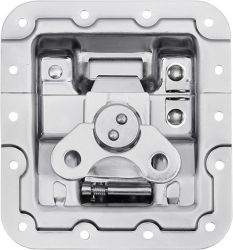
Locks

Locks for Flight Case and Case Construction – LTT, Your Specialist for Event Technology: Whether you are building a touring case for a lighting console or fitting out a rack case for the next tour, the right lock decides how securely your equipment travels. At LTT you find butterfly latches, snap locks, recessed builder locks and cylinder locks for professional flight case and case construction. As your specialist for event technology, we combine robust case hardware with hands-on advice — so your cases stay...
Read more »
Locks
Close window
Locks

Locks for Flight Case and Case Construction – LTT, Your Specialist for Event Technology

Whether you are building a touring case for a lighting console or fitting out a rack case for the next tour, the right lock decides how securely your equipment travels. At LTT you find butterfly latches, snap locks, recessed builder locks and cylinder locks for professional flight case and case construction. As your specialist for event technology, we combine robust case hardware with hands-on advice — so your cases stay closed exactly when they should and open easily when you need them.

What Are Locks for Case Construction? Fundamentals

Locks in case construction are the metal closures that hold the lid and base of a flight case, rack case or transport case firmly together during handling, stacking and transport. Unlike a household door lock, case hardware is designed for repeated rough use, vibration on the road and quick one-handed operation by touring crews.

In a professional flight case, the lock is only one part of a hardware ecosystem that also includes corner protectors, hinges, handles and stacking dishes. The lock's job is to create a tight, tension-loaded seal between the two case halves so the lid cannot lift under load or vibration.

How case locks differ from other closures

Case locks are distinct from cabinet locks, luggage zips or padlocks in three ways:

  • They are surface- or recess-mounted onto plywood or aluminium composite panels, usually with rivets.
  • They provide spring or cam tension that pulls the case halves together.
  • They are built from galvanised steel or zinc die-cast to survive years of touring.

This is why a lock chosen for case construction is not interchangeable with generic hardware — the mounting pattern, load direction and corner clearance all matter for a case that survives real-world event logistics.

Types and Variants of Case Locks Explained

Choosing the right lock starts with understanding the four main types used in flight case and case construction. Each variant solves a different mix of security, speed and stacking suitability.

Butterfly latch

The butterfly latch (also called a butterfly twist latch) has a folding wing that lies flat when closed. You flip the wing out, twist and it applies strong clamping tension. Butterfly latches are the classic workhorse of touring cases because they seal tightly, resist vibration and fold flush so cases stack cleanly.

Snap lock

The snap lock (draw latch) snaps shut with a spring-loaded hook and opens with a single pull. It is fast to operate and ideal for cases that are opened and closed many times per event, such as accessory cases or DJ cases.

Recessed builder lock

Recessed builder locks (surface-mounted twist or catch locks set into a dish) sit inside a recessed housing so nothing protrudes beyond the case surface. This protects the lock from knocks and keeps the profile clean for tight stacking in a truck.

Cylinder lock

Cylinder locks add key-lockable security. They are used where valuable or sensitive equipment must be protected against unauthorised access — for example in broadcast, BOS/radio applications or high-value rack cases. Many are supplied with euro-style or tubular keys.

Most professional cases combine types: butterfly latches for the main seal, recessed builder locks on the ends and a cylinder lock for security where it counts.

Comparison: Which Lock for Which Application

The following comparison shows the key differences between butterfly latches, snap locks and cylinder locks so you can match the lock to your case project. The main trade-off is always between clamping security, operating speed and lockable protection.

Criterion Butterfly latch Snap lock Cylinder lock
Primary strength High clamping tension, vibration-proof Fast one-hand operation Key-lockable security
Typical use case Touring cases, main case seal Accessory & DJ cases Rack cases, valuable gear
Stacking suitability Excellent (folds flush) Good Good (often recessed)
Operating speed Medium Very fast Slower (needs key)
Key-lockable No (unless combined) No Yes
Typical material Galvanised steel / zinc die-cast Galvanised steel Zinc die-cast with steel cam
Best for Heavy, road-toured cases Frequently opened cases Security-critical transport

As a rule of thumb: use butterfly latches for the tightest, most vibration-resistant main seal, snap locks where speed matters and cylinder locks wherever the contents must stay locked. Many professionals mix all three on a single case to get the optimal solution for each edge.

Technical Buying Criteria: Materials and Dimensions

For a durable flight case, the technical specification of the lock matters as much as its type. Pay attention to these concrete criteria when selecting case hardware.

Material

  • Galvanised steel — the standard for butterfly and snap locks; strong, corrosion-resistant and affordable.
  • Zinc die-cast — used for cylinder and recessed locks where a clean cast shape and moderate weight are wanted.
  • Black powder-coated finish — for stealth cases and stage-black builds where reflections must be avoided.

Finish

Choose between bright galvanised (silver) for a classic look and black for a discreet stage finish. The finish should match your corner protectors, handles and hinges for a consistent case.

Mounting dimensions

Every case lock has a defined bolt-hole pattern and a required corner clearance. Before you buy, check:

  • the overall footprint of the base plate,
  • the rivet-hole spacing and hole diameter (commonly for 4–5 mm blind rivets),
  • the panel thickness the lock is designed for (typically 7–10 mm plywood or composite),
  • the corner clearance so the lock does not clash with corners or ball-corners.

Load and clamping

Butterfly latches provide the highest clamping force and are the right choice when the case seal must hold under stacking load and truck vibration. For a matching set, plan lock, hinge and corner hardware together so tolerances add up correctly.

Applications: Where Case Locks Are Used in Event Technology

Locks are the closure at the heart of every transport case in the event, stage and show world. Understanding the application helps you pick the right lock for the job.

Touring cases for lighting and control

Heavy touring cases for lighting consoles, moving heads and effect devices are opened, closed and stacked dozens of times per tour. Here butterfly latches deliver the vibration-proof seal that keeps sensitive electronics safe on the road.

Rack cases

19" rack cases for amplifiers, matrix systems and network gear benefit from a mix of recessed builder locks and — where security matters — cylinder locks to protect valuable rack equipment.

DJ and accessory cases

DJ cases, cable cases and small accessory cases are opened constantly during setup, so snap locks and their fast one-hand operation shine here.

Stage and set transport

For stage equipment, podium parts and set pieces moved between venues, robust surface-mounted locks keep large transport cases sealed. If you build cases for your traversing and rigging kit, matching hardware keeps your whole inventory consistent. Explore related event gear such as truss systems and rigging accessories to complete your touring setup.

Installation and Mounting Tips for Case Hardware

Correct installation is what turns good hardware into a reliable case. These practical mounting tips help both DIY case builders and professionals.

Fixing method

Most case locks are fitted with blind rivets (typically 4–5 mm) for a permanent, vibration-proof hold. Screws are an option for hardware you may need to replace, but rivets are the touring standard.

Alignment

  1. Assemble the lid and base and hold them in the closed position.
  2. Mark the lock body on the base half first, then transfer the catch position to the lid so the two parts align under tension.
  3. Pre-drill the rivet holes through the panel and the base plate together.
  4. Set the rivets from the outside for a clean finish.

Corner clearance

Always keep enough distance from ball-corners and case corners so the lock can be operated fully and does not foul the corner when stacking. Leave a few millimetres of clearance on each side.

Tension check

After fitting, close the case and check that a butterfly latch or snap lock builds noticeable clamping tension. If the seal is loose, reposition the catch slightly closer; if it is too tight to close by hand, ease it outward. Getting this tension right is the difference between a case that survives a tour and one that pops open in the truck.

Buying Guide for Professionals and Beginners

Whether you build one case or a whole touring inventory, this buying guide helps you choose the right locks for case construction.

For beginners

If you are building your first flight case, start with a butterfly latch for the main seal and a snap lock for the lid you open most. Buy a small surplus of rivets and check the panel thickness of your case material before ordering. Keep the finish (silver or black) consistent across all hardware for a professional look.

For professionals

For repeat builds and tour-grade cases, standardise on a fixed set of hardware so every case in your fleet uses the same locks, hinges and corner protectors. This simplifies spare-part stocking and speeds up repairs on the road. Add cylinder locks on rack and value cases, and mix recessed builder locks where flush stacking is essential.

Quick decision help

  • Need maximum clamping and vibration resistance? → Butterfly latch
  • Need fast, frequent opening? → Snap lock
  • Need lockable security? → Cylinder lock
  • Need a flush, protected profile? → Recessed builder lock

Unsure which combination fits your project? We are happy to advise you as your specialist partner — from a single hobby case to a full touring fleet.

Brands and Manufacturers for Case Hardware

Choosing established brands gives you durability, consistent quality and hardware that stays compatible across builds. At LTT you find case locks and matching hardware from recognised names in event and case construction, including Riggatec, Roadinger, Adam Hall Hardware, Accu Case and Dimavery.

Riggatec, our own event-technology accessory brand, stands for robust, road-proven hardware that fits neatly into professional case builds. Roadinger and Accu Case are widely used for complete case ranges, while Adam Hall Hardware is a long-standing reference for flight case fittings. Sticking to established manufacturers means your locks, hinges, corner protectors and handles share compatible mounting patterns and finishes — so your cases look and perform like a coherent system rather than a mix of odd parts.

Accessories: Matching Case-Building Hardware

A lock rarely travels alone. To build a complete, tour-ready case you need matching accessories from the same hardware world.

  • Corner protectors and ball-corners — protect edges and enable stacking.
  • Hinges — pair with your locks on the opposite edge of the lid.
  • Handles — spring or strap handles for safe lifting.
  • Rivets — the standard fixing for permanent, vibration-proof mounting.
  • Stacking dishes and feet — keep cases secure when stacked in a truck.

Match the finish (galvanised silver or black) of your accessories to your locks for a clean, professional case. Browse the full case construction material range and related flight cases and racks to gather everything for your build in one place.

Care and Maintenance of Case Locks

Case locks are built to last, but a little maintenance keeps them working smoothly through years of touring.

  • Keep them clean — wipe away dust, sand and stage debris that can jam the spring mechanism after outdoor events.
  • Check the tension — periodically confirm that butterfly and snap locks still build firm clamping tension; readjust the catch if a seal has loosened.
  • Inspect the rivets — vibration can loosen fixings over time; replace any lock whose rivets have worked free before the next tour.
  • Lubricate cylinder locks — a small amount of graphite or dry lubricant keeps key-operated cylinders turning freely without attracting grime.

Replacing a single worn lock is quick and inexpensive, which is why standardising on one hardware set across your fleet pays off: you can swap in an identical part in minutes and keep every case road-ready.

LTT – Your Specialist for Event Technology

At LTT you buy your locks for flight case and case construction from a partner who lives and breathes event technology. With over 25 years of experience and more than 100,000 positive customer reviews, we know exactly which hardware survives real touring life — and we advise you personally to find the optimal solution for your build.

As a manufacturer with our own production in Germany, we ship your case hardware fast and reliably from Bocholt, with free shipping from €69 and express delivery on request. Reseller? Ask us about wholesale conditions for our brands. To complete your project, combine your locks with matching case construction material and browse our flight cases, racks and bags — everything you need to build cases that protect your gear and travel like a pro.

FAQ – Questions & Answers

What does Schlosser mean in German?

In German, "Schlosser" is a craftsman who works with metal — usually translated as locksmith, machinist or metal worker. The plural "Schlösser" additionally means locks (as in door and case locks) and, in another sense, castles. In the context of case construction at LTT, "Schlösser" refers to the metal locks and latches — butterfly latches, snap locks, recessed builder locks and cylinder locks — used to seal flight cases and transport cases.

What is the difference between butterfly latches, snap locks and cylinder locks?

Butterfly latches, snap locks and cylinder locks differ in security, speed and locking ability. A butterfly latch folds flat and applies strong, vibration-proof clamping tension, making it ideal for the main seal of touring cases. A snap lock snaps shut and opens with a single pull, so it is fastest for frequently opened cases. A cylinder lock adds key-lockable security for valuable or sensitive equipment. Many professional flight cases combine all three: butterfly latches for the seal, snap locks for quick access and cylinder locks where contents must stay locked.

Which locks are suitable for flight case and case construction?

For flight case and case construction, four lock types are suitable: butterfly latches for the tightest, vibration-resistant seal on touring cases; snap locks for fast one-hand opening on accessory and DJ cases; recessed builder locks that sit flush for protected, stackable profiles; and cylinder locks for key-lockable security on rack cases and valuable gear. At LTT all four types are available in galvanised steel and zinc die-cast, with silver or black finishes, so you can equip any professional case exactly as your project requires.

What material are case locks made of?

Case locks for flight case construction are typically made of galvanised steel or zinc die-cast. Galvanised steel is the standard for butterfly and snap latches because it is strong, corrosion-resistant and affordable. Zinc die-cast is used for cylinder and recessed locks where a precise cast shape is needed. Finishes come in bright galvanised silver for a classic look or black powder-coat for discreet stage-black builds. Choosing a consistent material and finish across your locks, hinges and corner protectors gives your case a professional, coherent result.

How do I install a lock on a flight case?

To install a lock on a flight case, first assemble the lid and base in the closed position and mark the lock body on the base half. Transfer the catch position to the lid so both parts align under tension, then pre-drill the rivet holes through the panel and base plate together. Most case locks are fixed with 4–5 mm blind rivets set from the outside for a clean, vibration-proof hold. Keep clearance from corners and ball-corners, then close the case to check that the lock builds firm clamping tension.

Which lock suits a rack case best?

For a rack case holding amplifiers, matrix systems or network gear, a combination of recessed builder locks and cylinder locks usually works best. Recessed builder locks sit flush so the case stacks cleanly in a truck and the lock is protected from knocks. Cylinder locks add key-lockable security to protect valuable rack equipment against unauthorised access — important for broadcast, BOS/radio and high-value installations. For heavy 19" rack cases moved frequently on tour, adding butterfly latches on the main seal gives extra vibration resistance.

What does a lock for case construction cost?

The price of a lock for case construction depends on the type, material and finish. Simple snap locks and small butterfly latches are the most affordable case hardware, while key-lockable cylinder locks and larger recessed builder locks cost more due to their added mechanism. At LTT you find case locks across a wide price range, and orders over €69 ship free within Germany. If you are building a whole case fleet, ask us about wholesale conditions — as your specialist we help you find the most cost-effective set for your project.

Which accessories do I need alongside case locks?

Alongside case locks you typically need corner protectors and ball-corners to shield edges and enable stacking, hinges to pair with the locks on the opposite lid edge, and handles for safe lifting. Blind rivets are the standard fixing, and stacking dishes or feet keep cases secure in a truck. For a professional result, match the finish — galvanised silver or black — across all hardware. At LTT you can source locks together with the full range of case construction material so every part of your flight case works as one coherent system.

Top seller
Adam Hall Hardware 17370 C Butterfly Verschluss klein ohne Schale ohne Sch
Adam Hall Hardware 17370 C - Butterfly Latch small without Dish without Keeper
€4.34 *
incl. tax, plus shipping costs
Availability:
Near-term available
Delivery time: approx. 1 week
99 Articles
Close filters
 
  •  
  •  
  •  
  •  
  •  
from to
1 From 5 pages
No results were found for the filter!
DAP Butterfly Schloß 80x72mm
SHOWGEAR Butterfly Lock small, Polished 80 x 72 mm
Polished : Height (mm): 80 mm • Width (mm): 72 mm • Length (mm): 15 mm • Weight: 0.1 kg • Material: Steel • Material Thickness: 1 mm • Colour: Silver • Latch...
€2.65 *
incl. tax, plus shipping costs
Availability:
Delivery time: 1-3 days
DAP Butterfly Schloß groß
SHOWGEAR Butterfly Lock Large, Polished 106 x 102 mm
Polished : Height (mm): 107 mm • Width (mm): 102 mm • Length (mm): 18 mm • Weight: 0.2 kg • Material: Steel • Material Thickness: 1 mm • Colour: Silver • Latch...
€5.95 *
incl. tax, plus shipping costs
Availability:
Delivery time: 1-3 days
Adam Hall Hardware 17295 S Butterfly Verschluss mittel gefedert ungekröpft
Adam Hall Hardware 17295 S - Butterfly Latch medium with Spring non cranked 9 mm deep
Butterfly Latch medium with Spring non cranked 9 mm deep The closing mechanism of the butterfly is equipped with a counter pressure spring to be automatically guided out at its opening position of...
€6.37 *
incl. tax, plus shipping costs
Availability:
Delivery time: 1-3 days
Adam Hall Hardware 1618 Aufbauschloss rostfrei Stahl
Adam Hall Hardware 1618 - Drawbolt Stainless steel
Drawbolt Stainless steel Small drawbolt : Product type: Catches • Type: Drawbolt catches • Material: stainless steel • Surface: nature • Mounting hole diameter: 3.2 mm...
€8.39 *
incl. tax, plus shipping costs
Availability:
Delivery time: 1-3 days
Adam Hall Hardware 1903 Aufbauschloss mittel verchromt abschließbar
Adam Hall Hardware 1903 - Drawbolt medium chrome-plated lockable
Drawbolt medium chrome-plated lockable Drawbolt medium, with key Replacement key has the part number 1903KEY : Product type: Catches • Type: Drawbolt catches • Material: Steel...
€3.69 *
incl. tax, plus shipping costs
Availability:
Near-term available
Delivery time: approx. 1 week
Adam Hall Hardware 16540 Riegelverschluss
Adam Hall Hardware 16540 - Sliding Latch
Sliding Latch System This sliding latch system was developed especially for small panels, doors or similar applications. In doing so, we emphasized minimising the installed height of the latch...
€5.58 *
incl. tax, plus shipping costs
Availability:
Near-term available
Delivery time: approx. 1 week
ROADINGER Butterfly-Schloss klein in Schale sil
ROADINGER Butterfly Lock small in Dish sil
Simmons butterfly lock in mounting dish Small version • Diameter mounting holes: Ø5,1mm • Material: Steel, zinc-plated • Dimensions: Width: 10,30 cm Depth: 1,60 cm Height:...
€4.62 *
incl. tax, plus shipping costs
Availability:
Delivery time: 3-5 days
DAP Flightcase Schloß klein
SHOWGEAR Flight Case Lock Small, Polished 67 x 67 mm
Polished : Height (mm): 67 mm • Width (mm): 67 mm • Length (mm): 17.7 mm • Weight: 0.1 kg • Material: Steel • Colour: Silver • Latch Type: Surface latch •
€2.85 *
incl. tax, plus shipping costs
Availability:
Delivery time: 1-3 days
Adam Hall Hardware 16021 Aufbauschloss groß mit Öse für Vorhängeschloss ve
Adam Hall Hardware 16021 - Drawbolt large padlockable zinc plated
Drawbolt large padlockable zinc plated Large padlocking drawbolt : Product type: Catches • Type: Drawbolt catches • Material: Steel • Surface: galvanized • Mounting hole...
€2.07 *
incl. tax, plus shipping costs
Availability:
Delivery time: 1-3 days
Adam Hall Hardware 17294 S Butterfly Verschluss mittel gefedert gekröpft 1
Adam Hall Hardware 17294 S - Butterfly Latch medium with Spring cranked 14 mm deep
Butterfly Latch medium with Spring cranked 14 mm deep The closing mechanism of the butterfly is equipped with a counter pressure spring to be automatically guided out at its opening position of...
€7.69 *
incl. tax, plus shipping costs
Availability:
Delivery time: 1-3 days
ROADINGER Schnappschloss 96x52
ROADINGER Spring Lock 96x52
Spring-lock - medium version Lock: With shut-off function • Diameter mounting holes: Ø4,9mm • Material: Steel, zinc-plated • Dimensions: Width: 5,20 cm Height: 9,60 cm...
€1.65 *
incl. tax, plus shipping costs
Availability:
Delivery time: 1-3 days
Adam Hall Accessories 1642 Zylinderschloss für Rackschubladen
Adam Hall 19" Parts 1642 - Cylinder Lock for Rack Drawers
Cylinder Lock for Rack Drawers 2 keys included Lock for Rack Drawers. : Product type: Catches • Type: Cylinder Locks • Mounting hole diameter: 19 mm • Material: Zinc alloy...
€7.87 *
incl. tax, plus shipping costs
Availability:
Near-term available
Delivery time: approx. 1 week
Adam Hall Hardware 17256 Butterfly Verschluss groß ungekröpft 14 mm tief m
Adam Hall Hardware 17256 - Butterfly Latch Large non Cranked 14 mm Padlockable
Butterfly Latch Large non Cranked 14 mm Padlockable Butterfly large, with eyelet for a padlock. The closing mechanism of the butterfly is equipped with a counter pressure spring to be automatically...
€10.63 *
incl. tax, plus shipping costs
Availability:
Near-term available
Delivery time: approx. 1 week
Adam Hall Hardware 17291 S Butterfly Verschluss mittel gefedert ungekröpft
Adam Hall Hardware 17291 S - Butterfly Latch medium with Spring non cranked 12 mm deep
Butterfly Latch medium with Spring non cranked 12 mm deep The closing mechanism of the butterfly is equipped with a counter pressure spring to be automatically guided out at its opening position of...
€6.91 *
incl. tax, plus shipping costs
Availability:
Delivery time: 1-3 days
Adam Hall Hardware 172511COMP Butterfly Verschluss groß gekröpft 14 mm
Adam Hall Hardware 172511 COMP - Butterfly Latch V3 large cranked 14 mm deep
Butterfly Latch V3 large cranked 14 mm deep Our V3, V4 and V5 Butterflies have a patented ´push-down` mechanism that lifts the hook out of the keeper plate on opening and leads it back into...
€12.71 *
incl. tax, plus shipping costs
Availability:
Near-term available
Delivery time: approx. 1 week
Adam Hall Hardware 1640 UKEEP Universal Schließe
Adam Hall Hardware 1640 UKEEP - Universal catch plate
Universal catch plate matching with 17290C, 17290CL, 17250C und 17250CL. : Product type: Catch Accessories • Material: Steel • Diameter of fixing holes: 5.1 mm • Surface: galvanized...
€0.69 *
incl. tax, plus shipping costs
Availability:
Delivery time: 1-3 days
Adam Hall Hardware 1608 Aufbauschloss groß mit Öse für Vorhängeschloss
Adam Hall Hardware 1608 - Drawbolt large padlockable
Drawbolt large padlockable Large padlocking drawbolt : Product type: Catches • Type: Drawbolt catches • Material: Steel • Surface: nickel plated • Mounting hole diameter: 4.9 mm...
€1.74 *
incl. tax, plus shipping costs
Availability:
Delivery time: 1-3 days
Adam Hall Hardware 1911 Aufbauschloss groß vernickelt abschließbar
Adam Hall Hardware 1911 - Drawbolt large nickel-plated lockable
Drawbolt large nickel-plated lockable : Product type: Catches • Type: Drawbolt catches • Material: Steel • Surface: nickel plated • Mounting hole diameter: 4.2 mm...
€7.41 *
incl. tax, plus shipping costs
Availability:
Delivery time: 1-3 days
Adam Hall Hardware 1604 Aufbauschloss klein vernickelt
Adam Hall Hardware 1604 - Drawbolt small nickel-plated
Drawbolt small nickel-plated Small drawbolt : Product type: Catches • Type: Drawbolt catches • Material: Steel • Surface: nickel plated • Mounting hole diameter: 3.5 mm...
€4.61 *
incl. tax, plus shipping costs
Availability:
Delivery time: 1-3 days
Adam Hall Hardware 1600 Aufbauschloss mittel verchromt
Adam Hall Hardware 1600 - Drawbolt medium chrome-plated
Drawbolt medium chrome-plated Medium drawbolt : Product type: Catches • Type: Drawbolt catches • Material: Steel • Surface: chromium plated • Mounting hole diameter: 4.2 mm...
€2.68 *
incl. tax, plus shipping costs
Availability:
Delivery time: 1-3 days
Adam Hall Hardware 1607 Aufbauschloss mittel vernickelt
Adam Hall Hardware 1607 - Drawbolt medium nickel-plated
Drawbolt medium nickel-plated Medium drawbolt : Product type: Catches • Type: Drawbolt catches • Material: Steel • Surface: nickel plated • Mounting hole diameter: 4.2 mm...
€1.79 *
incl. tax, plus shipping costs
Availability:
Near-term available
Delivery time: approx. 1 week
Adam Hall Hardware 17250 C Butterfly Verschluss groß ohne Schale ohne Hake
Adam Hall Hardware 17250 C - Butterfly Latch large without Dish without Keeper
Butterfly Latch large without Dish without Keeper : Product type: Catches • Type: Butterfly Latches • Material: Steel • Surface: galvanized • Mounting hole diameter: 5 mm...
€6.99 *
incl. tax, plus shipping costs
Availability:
Delivery time: 1-3 days
Adam Hall Hardware 17373 S - Butterfly Verschluss klein gefedert in kleine
Adam Hall Hardware 17373 S - Butterfly Latch Small with Spring in Small Dish 10 mm deep
Butterfly Latch Small with Spring in Small Dish 10 mm deep Small butterfly catch assembled into ultra compact dish. With spring • : Product type: Catches • Type: Butterfly Latches...
€5.96 *
incl. tax, plus shipping costs
Availability:
Near-term available
Delivery time: approx. 1 week
Adam Hall Hardware 17290 LS Butterfly Verschluss mittel gefedert abschließ
Adam Hall Hardware 17290 LS - Butterfly Latch Medium with Spring Lockable non Cranked 14 mm Deep
Butterfly Latch Medium with Spring Lockable non Cranked 14 mm Deep Medium butterfly catch mounted in dish. All medium and large Butterfly catches now stop at approximately > and can be fitted...
€17.62 *
incl. tax, plus shipping costs
Availability:
Near-term available
Delivery time: approx. 1 week
1 From 5 pages
Facts
Locks for Flight Case and Case Construction – LTT, Your Specialist for Event Technology: Whether you are building a touring case for a lighting console or fitting out a rack case for the next tour, the right lock decides how securely your equipment travels. At LTT you find butterfly latches, snap locks, recessed builder locks and cylinder locks for professional flight case and case construction. As your specialist for event technology, we... Read more »
Viewed
Facts

Locks for Flight Case and Case Construction – LTT, Your Specialist for Event Technology

Whether you are building a touring case for a lighting console or fitting out a rack case for the next tour, the right lock decides how securely your equipment travels. At LTT you find butterfly latches, snap locks, recessed builder locks and cylinder locks for professional flight case and case construction. As your specialist for event technology, we combine robust case hardware with hands-on advice — so your cases stay closed exactly when they should and open easily when you need them.

What Are Locks for Case Construction? Fundamentals

Locks in case construction are the metal closures that hold the lid and base of a flight case, rack case or transport case firmly together during handling, stacking and transport. Unlike a household door lock, case hardware is designed for repeated rough use, vibration on the road and quick one-handed operation by touring crews.

In a professional flight case, the lock is only one part of a hardware ecosystem that also includes corner protectors, hinges, handles and stacking dishes. The lock's job is to create a tight, tension-loaded seal between the two case halves so the lid cannot lift under load or vibration.

How case locks differ from other closures

Case locks are distinct from cabinet locks, luggage zips or padlocks in three ways:

  • They are surface- or recess-mounted onto plywood or aluminium composite panels, usually with rivets.
  • They provide spring or cam tension that pulls the case halves together.
  • They are built from galvanised steel or zinc die-cast to survive years of touring.

This is why a lock chosen for case construction is not interchangeable with generic hardware — the mounting pattern, load direction and corner clearance all matter for a case that survives real-world event logistics.

Types and Variants of Case Locks Explained

Choosing the right lock starts with understanding the four main types used in flight case and case construction. Each variant solves a different mix of security, speed and stacking suitability.

Butterfly latch

The butterfly latch (also called a butterfly twist latch) has a folding wing that lies flat when closed. You flip the wing out, twist and it applies strong clamping tension. Butterfly latches are the classic workhorse of touring cases because they seal tightly, resist vibration and fold flush so cases stack cleanly.

Snap lock

The snap lock (draw latch) snaps shut with a spring-loaded hook and opens with a single pull. It is fast to operate and ideal for cases that are opened and closed many times per event, such as accessory cases or DJ cases.

Recessed builder lock

Recessed builder locks (surface-mounted twist or catch locks set into a dish) sit inside a recessed housing so nothing protrudes beyond the case surface. This protects the lock from knocks and keeps the profile clean for tight stacking in a truck.

Cylinder lock

Cylinder locks add key-lockable security. They are used where valuable or sensitive equipment must be protected against unauthorised access — for example in broadcast, BOS/radio applications or high-value rack cases. Many are supplied with euro-style or tubular keys.

Most professional cases combine types: butterfly latches for the main seal, recessed builder locks on the ends and a cylinder lock for security where it counts.

Comparison: Which Lock for Which Application

The following comparison shows the key differences between butterfly latches, snap locks and cylinder locks so you can match the lock to your case project. The main trade-off is always between clamping security, operating speed and lockable protection.

Criterion Butterfly latch Snap lock Cylinder lock
Primary strength High clamping tension, vibration-proof Fast one-hand operation Key-lockable security
Typical use case Touring cases, main case seal Accessory & DJ cases Rack cases, valuable gear
Stacking suitability Excellent (folds flush) Good Good (often recessed)
Operating speed Medium Very fast Slower (needs key)
Key-lockable No (unless combined) No Yes
Typical material Galvanised steel / zinc die-cast Galvanised steel Zinc die-cast with steel cam
Best for Heavy, road-toured cases Frequently opened cases Security-critical transport

As a rule of thumb: use butterfly latches for the tightest, most vibration-resistant main seal, snap locks where speed matters and cylinder locks wherever the contents must stay locked. Many professionals mix all three on a single case to get the optimal solution for each edge.

Technical Buying Criteria: Materials and Dimensions

For a durable flight case, the technical specification of the lock matters as much as its type. Pay attention to these concrete criteria when selecting case hardware.

Material

  • Galvanised steel — the standard for butterfly and snap locks; strong, corrosion-resistant and affordable.
  • Zinc die-cast — used for cylinder and recessed locks where a clean cast shape and moderate weight are wanted.
  • Black powder-coated finish — for stealth cases and stage-black builds where reflections must be avoided.

Finish

Choose between bright galvanised (silver) for a classic look and black for a discreet stage finish. The finish should match your corner protectors, handles and hinges for a consistent case.

Mounting dimensions

Every case lock has a defined bolt-hole pattern and a required corner clearance. Before you buy, check:

  • the overall footprint of the base plate,
  • the rivet-hole spacing and hole diameter (commonly for 4–5 mm blind rivets),
  • the panel thickness the lock is designed for (typically 7–10 mm plywood or composite),
  • the corner clearance so the lock does not clash with corners or ball-corners.

Load and clamping

Butterfly latches provide the highest clamping force and are the right choice when the case seal must hold under stacking load and truck vibration. For a matching set, plan lock, hinge and corner hardware together so tolerances add up correctly.

Applications: Where Case Locks Are Used in Event Technology

Locks are the closure at the heart of every transport case in the event, stage and show world. Understanding the application helps you pick the right lock for the job.

Touring cases for lighting and control

Heavy touring cases for lighting consoles, moving heads and effect devices are opened, closed and stacked dozens of times per tour. Here butterfly latches deliver the vibration-proof seal that keeps sensitive electronics safe on the road.

Rack cases

19" rack cases for amplifiers, matrix systems and network gear benefit from a mix of recessed builder locks and — where security matters — cylinder locks to protect valuable rack equipment.

DJ and accessory cases

DJ cases, cable cases and small accessory cases are opened constantly during setup, so snap locks and their fast one-hand operation shine here.

Stage and set transport

For stage equipment, podium parts and set pieces moved between venues, robust surface-mounted locks keep large transport cases sealed. If you build cases for your traversing and rigging kit, matching hardware keeps your whole inventory consistent. Explore related event gear such as truss systems and rigging accessories to complete your touring setup.

Installation and Mounting Tips for Case Hardware

Correct installation is what turns good hardware into a reliable case. These practical mounting tips help both DIY case builders and professionals.

Fixing method

Most case locks are fitted with blind rivets (typically 4–5 mm) for a permanent, vibration-proof hold. Screws are an option for hardware you may need to replace, but rivets are the touring standard.

Alignment

  1. Assemble the lid and base and hold them in the closed position.
  2. Mark the lock body on the base half first, then transfer the catch position to the lid so the two parts align under tension.
  3. Pre-drill the rivet holes through the panel and the base plate together.
  4. Set the rivets from the outside for a clean finish.

Corner clearance

Always keep enough distance from ball-corners and case corners so the lock can be operated fully and does not foul the corner when stacking. Leave a few millimetres of clearance on each side.

Tension check

After fitting, close the case and check that a butterfly latch or snap lock builds noticeable clamping tension. If the seal is loose, reposition the catch slightly closer; if it is too tight to close by hand, ease it outward. Getting this tension right is the difference between a case that survives a tour and one that pops open in the truck.

Buying Guide for Professionals and Beginners

Whether you build one case or a whole touring inventory, this buying guide helps you choose the right locks for case construction.

For beginners

If you are building your first flight case, start with a butterfly latch for the main seal and a snap lock for the lid you open most. Buy a small surplus of rivets and check the panel thickness of your case material before ordering. Keep the finish (silver or black) consistent across all hardware for a professional look.

For professionals

For repeat builds and tour-grade cases, standardise on a fixed set of hardware so every case in your fleet uses the same locks, hinges and corner protectors. This simplifies spare-part stocking and speeds up repairs on the road. Add cylinder locks on rack and value cases, and mix recessed builder locks where flush stacking is essential.

Quick decision help

  • Need maximum clamping and vibration resistance? → Butterfly latch
  • Need fast, frequent opening? → Snap lock
  • Need lockable security? → Cylinder lock
  • Need a flush, protected profile? → Recessed builder lock

Unsure which combination fits your project? We are happy to advise you as your specialist partner — from a single hobby case to a full touring fleet.

Brands and Manufacturers for Case Hardware

Choosing established brands gives you durability, consistent quality and hardware that stays compatible across builds. At LTT you find case locks and matching hardware from recognised names in event and case construction, including Riggatec, Roadinger, Adam Hall Hardware, Accu Case and Dimavery.

Riggatec, our own event-technology accessory brand, stands for robust, road-proven hardware that fits neatly into professional case builds. Roadinger and Accu Case are widely used for complete case ranges, while Adam Hall Hardware is a long-standing reference for flight case fittings. Sticking to established manufacturers means your locks, hinges, corner protectors and handles share compatible mounting patterns and finishes — so your cases look and perform like a coherent system rather than a mix of odd parts.

Accessories: Matching Case-Building Hardware

A lock rarely travels alone. To build a complete, tour-ready case you need matching accessories from the same hardware world.

  • Corner protectors and ball-corners — protect edges and enable stacking.
  • Hinges — pair with your locks on the opposite edge of the lid.
  • Handles — spring or strap handles for safe lifting.
  • Rivets — the standard fixing for permanent, vibration-proof mounting.
  • Stacking dishes and feet — keep cases secure when stacked in a truck.

Match the finish (galvanised silver or black) of your accessories to your locks for a clean, professional case. Browse the full case construction material range and related flight cases and racks to gather everything for your build in one place.

Care and Maintenance of Case Locks

Case locks are built to last, but a little maintenance keeps them working smoothly through years of touring.

  • Keep them clean — wipe away dust, sand and stage debris that can jam the spring mechanism after outdoor events.
  • Check the tension — periodically confirm that butterfly and snap locks still build firm clamping tension; readjust the catch if a seal has loosened.
  • Inspect the rivets — vibration can loosen fixings over time; replace any lock whose rivets have worked free before the next tour.
  • Lubricate cylinder locks — a small amount of graphite or dry lubricant keeps key-operated cylinders turning freely without attracting grime.

Replacing a single worn lock is quick and inexpensive, which is why standardising on one hardware set across your fleet pays off: you can swap in an identical part in minutes and keep every case road-ready.

LTT – Your Specialist for Event Technology

At LTT you buy your locks for flight case and case construction from a partner who lives and breathes event technology. With over 25 years of experience and more than 100,000 positive customer reviews, we know exactly which hardware survives real touring life — and we advise you personally to find the optimal solution for your build.

As a manufacturer with our own production in Germany, we ship your case hardware fast and reliably from Bocholt, with free shipping from €69 and express delivery on request. Reseller? Ask us about wholesale conditions for our brands. To complete your project, combine your locks with matching case construction material and browse our flight cases, racks and bags — everything you need to build cases that protect your gear and travel like a pro.

FAQ – Questions & Answers

What does Schlosser mean in German?

In German, "Schlosser" is a craftsman who works with metal — usually translated as locksmith, machinist or metal worker. The plural "Schlösser" additionally means locks (as in door and case locks) and, in another sense, castles. In the context of case construction at LTT, "Schlösser" refers to the metal locks and latches — butterfly latches, snap locks, recessed builder locks and cylinder locks — used to seal flight cases and transport cases.

What is the difference between butterfly latches, snap locks and cylinder locks?

Butterfly latches, snap locks and cylinder locks differ in security, speed and locking ability. A butterfly latch folds flat and applies strong, vibration-proof clamping tension, making it ideal for the main seal of touring cases. A snap lock snaps shut and opens with a single pull, so it is fastest for frequently opened cases. A cylinder lock adds key-lockable security for valuable or sensitive equipment. Many professional flight cases combine all three: butterfly latches for the seal, snap locks for quick access and cylinder locks where contents must stay locked.

Which locks are suitable for flight case and case construction?

For flight case and case construction, four lock types are suitable: butterfly latches for the tightest, vibration-resistant seal on touring cases; snap locks for fast one-hand opening on accessory and DJ cases; recessed builder locks that sit flush for protected, stackable profiles; and cylinder locks for key-lockable security on rack cases and valuable gear. At LTT all four types are available in galvanised steel and zinc die-cast, with silver or black finishes, so you can equip any professional case exactly as your project requires.

What material are case locks made of?

Case locks for flight case construction are typically made of galvanised steel or zinc die-cast. Galvanised steel is the standard for butterfly and snap latches because it is strong, corrosion-resistant and affordable. Zinc die-cast is used for cylinder and recessed locks where a precise cast shape is needed. Finishes come in bright galvanised silver for a classic look or black powder-coat for discreet stage-black builds. Choosing a consistent material and finish across your locks, hinges and corner protectors gives your case a professional, coherent result.

How do I install a lock on a flight case?

To install a lock on a flight case, first assemble the lid and base in the closed position and mark the lock body on the base half. Transfer the catch position to the lid so both parts align under tension, then pre-drill the rivet holes through the panel and base plate together. Most case locks are fixed with 4–5 mm blind rivets set from the outside for a clean, vibration-proof hold. Keep clearance from corners and ball-corners, then close the case to check that the lock builds firm clamping tension.

Which lock suits a rack case best?

For a rack case holding amplifiers, matrix systems or network gear, a combination of recessed builder locks and cylinder locks usually works best. Recessed builder locks sit flush so the case stacks cleanly in a truck and the lock is protected from knocks. Cylinder locks add key-lockable security to protect valuable rack equipment against unauthorised access — important for broadcast, BOS/radio and high-value installations. For heavy 19" rack cases moved frequently on tour, adding butterfly latches on the main seal gives extra vibration resistance.

What does a lock for case construction cost?

The price of a lock for case construction depends on the type, material and finish. Simple snap locks and small butterfly latches are the most affordable case hardware, while key-lockable cylinder locks and larger recessed builder locks cost more due to their added mechanism. At LTT you find case locks across a wide price range, and orders over €69 ship free within Germany. If you are building a whole case fleet, ask us about wholesale conditions — as your specialist we help you find the most cost-effective set for your project.

Which accessories do I need alongside case locks?

Alongside case locks you typically need corner protectors and ball-corners to shield edges and enable stacking, hinges to pair with the locks on the opposite lid edge, and handles for safe lifting. Blind rivets are the standard fixing, and stacking dishes or feet keep cases secure in a truck. For a professional result, match the finish — galvanised silver or black — across all hardware. At LTT you can source locks together with the full range of case construction material so every part of your flight case works as one coherent system.