Plasma effects
Plasma Effects – Captivating Visual Magic for Your Events
Plasma effects create mesmerising visual displays that captivate audiences and set your stage productions apart. These innovative lighting fixtures harness ionised gas to produce stunning electrical discharges, colour-shifting patterns, and atmospheric glows that transform any venue into an immersive experience. Whether you're designing a concert stage, club installation, or theatrical production, plasma effects deliver the "wow factor" that makes your event unforgettable. At LTT, you'll find a carefully curated selection of plasma globes and specialised plasma lighting effects from leading manufacturers, backed by expert advice from our team with over 25 years of experience in professional event technology.
What Are Plasma Effects and How Do They Work?
Plasma is often called the fourth state of matter, distinct from solid, liquid, and gas. It consists of ionised gas containing charged particles – electrons and ions – that respond to electromagnetic fields. In plasma effect devices, an electric field is applied to a gas-filled chamber, typically containing noble gases like neon, argon, or xenon. The high-voltage electrical discharge ionises the gas molecules, creating visible streams of light that dance and move in response to the electrical field.
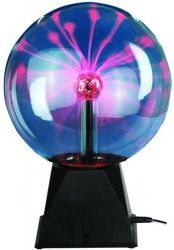
Plasma globes, the most recognisable type of plasma effect, feature a central electrode surrounded by a glass sphere filled with low-pressure gas. When high-frequency alternating current is applied to the central electrode, it creates branching tendrils of coloured light that reach towards the outer glass surface. These tendrils respond to touch, sound, and movement, creating an interactive visual experience.
More advanced plasma lighting effects for professional stage use employ sophisticated control systems to manipulate the plasma discharge patterns. Mathematical algorithms control sine waves and colour cycling routines, producing dynamic animations that can be synchronised with music or programmed into lighting sequences. The plasma generates UV radiation as electrons collide with gas molecules, which contributes to the distinctive glow and colour characteristics of the effect.
Unlike traditional lighting that relies on filaments, LEDs, or gas discharge lamps, plasma effects create light through continuous electrical discharge. The colour of the plasma depends on the gas mixture used – neon produces orange-red hues, argon creates blue-purple tones, and xenon generates white light. Professional plasma effect fixtures often combine multiple gases to achieve a broader colour spectrum and more complex visual patterns.
Applications of Plasma Effects in Professional Event Technology
Plasma effects excel in creating atmospheric ambience and visual focal points across diverse event scenarios. In nightclub installations, plasma globes serve as eye-catching decorative elements that respond to bass frequencies, creating an organic connection between the music and visual display. The interactive nature of plasma effects makes them particularly popular in lounge areas and VIP sections, where guests can engage directly with the installation.
Theatrical productions and concert stages utilise plasma effects to establish otherworldly atmospheres, science-fiction settings, or supernatural moods. The electrical discharge patterns evoke associations with energy, power, and transformation, making them ideal for dramatic moments or transitions. Stage designers often position plasma fixtures as accent lighting alongside conventional stage lighting to add depth and visual interest to the overall design.
Corporate events and product launches benefit from plasma effects when showcasing technology products, innovation themes, or futuristic concepts. The high-tech aesthetic of plasma lighting reinforces messaging around cutting-edge development and forward-thinking brands. Exhibition stands and trade show booths employ plasma effects as attention-grabbing elements that draw visitors from across the exhibition floor.
In permanent installations such as museums, science centres, and themed entertainment venues, plasma effects serve both decorative and educational purposes. Interactive plasma globes demonstrate principles of electricity and physics while providing engaging visual entertainment. Architectural lighting designers integrate plasma effects into feature walls, reception areas, and experiential spaces where memorable visual impact is paramount.
Professional Quality Standards and Brand Selection
When selecting plasma effects for professional applications, several technical specifications determine performance quality and suitability. Power consumption typically ranges from 15 watts for small decorative plasma globes to 100 watts or more for large-scale stage fixtures. The voltage applied to the central electrode usually operates between 2,000 and 15,000 volts at high frequency (20–50 kHz), creating the characteristic plasma discharge without generating excessive heat.
The quality of the glass sphere and electrode construction directly impacts longevity and visual performance. Professional-grade plasma globes feature borosilicate glass that withstands thermal stress and provides optical clarity. The central electrode design influences the branching pattern and density of the plasma tendrils – more sophisticated electrode geometries produce richer, more complex visual effects.
Leading manufacturers in the plasma effect category include Eurolite, which offers a range of plasma globes and effect fixtures designed for stage and event use. Their products typically feature robust construction suitable for touring applications and rental inventory. Showtec provides plasma effects with enhanced control options, including sound-activation modes and DMX compatibility for integration into larger lighting systems. BeamZ delivers cost-effective plasma solutions that balance performance with accessibility for smaller productions and fixed installations.
Price points for professional plasma effects range from approximately €50 for basic 20 cm plasma globes to €300 or more for large-format fixtures with advanced control features. When evaluating options, consider the viewing distance – smaller globes work well for close-range applications and decorative purposes, while larger units (30–40 cm diameter) provide visibility in larger venues. Professional fixtures should include safety features such as automatic shut-off mechanisms and proper electrical isolation to meet venue safety requirements.
DMX Control and Integration into Lighting Systems
Advanced plasma effect fixtures designed for professional stage use incorporate DMX512 control protocols, enabling seamless integration into comprehensive lighting systems. DMX control typically governs parameters such as intensity, colour cycling speed, and pattern selection. A standard plasma effect fixture may occupy one to four DMX channels, depending on the complexity of its control features.
The intensity channel controls the voltage applied to the plasma discharge, effectively dimming or brightening the effect. Lower intensity settings produce fewer, thinner plasma tendrils, while maximum intensity generates dense, branching patterns that fill the entire globe. Colour cycling channels adjust the rate at which the plasma shifts through its colour spectrum, allowing synchronisation with musical tempo or programmed lighting cues.
Some advanced plasma fixtures offer pattern selection channels that switch between different discharge modes – from gentle, flowing movements to rapid, energetic bursts. These patterns are generated by varying the frequency and waveform of the electrical signal applied to the electrode. Programming plasma effects into a lighting console follows the same principles as other intelligent fixtures, with the ability to create scenes, chases, and dynamic sequences.
For installations requiring multiple plasma effects, DMX addressing allows individual control of each fixture or grouping of units for coordinated displays. When designing lighting plots that incorporate plasma effects, consider their unique visual characteristics – they work best as accent elements rather than primary light sources. Position plasma fixtures where their distinctive glow and movement patterns complement rather than compete with conventional stage lighting. The organic, unpredictable nature of plasma discharge creates visual interest that contrasts effectively with the precise control of LED and moving-head fixtures.
Installation, Safety, and Technical Considerations
Proper installation of plasma effects requires attention to electrical safety and mechanical mounting considerations. All plasma fixtures operate on mains voltage (230V AC in Europe) and contain high-voltage transformers that step up the voltage to the levels required for plasma generation. Ensure that all electrical connections are made by qualified personnel and that appropriate circuit protection is in place.
When mounting plasma globes for stage or installation use, consider the weight and fragility of the glass sphere. Most professional plasma effects include mounting brackets or base plates designed for secure attachment to truss systems, floor stands, or architectural surfaces. If rigging plasma fixtures overhead, always use appropriate safety cables as secondary attachment, following DGUV Vorschrift 17 guidelines for suspended loads. The glass components make plasma effects more vulnerable to impact damage than conventional lighting fixtures, so adequate protection during transport and storage is essential.
Ventilation requirements for plasma effects are generally minimal, as they generate relatively little heat compared to traditional discharge lamps or high-power LED fixtures. However, ensure adequate airflow around the fixture housing to prevent transformer overheating during extended operation. Most professional plasma effects are rated for continuous operation but benefit from periodic rest periods during all-day events.
Electromagnetic interference (EMI) is a consideration when positioning plasma effects near sensitive audio or control equipment. The high-frequency electrical discharge can potentially cause interference with wireless microphone systems or DMX signals if fixtures are placed in close proximity to receivers or data lines. Maintain appropriate separation distances and use shielded DMX cabling when integrating plasma effects into larger systems. The UV radiation generated by plasma discharge is contained within the glass sphere and does not present exposure risks at normal viewing distances, but avoid prolonged direct eye contact with the plasma discharge at close range.
LTT – Your Specialist for Event Technology
At LTT, you'll find everything you need to set your events in the perfect light – from innovative plasma effects to comprehensive lighting systems and professional rigging solutions. Our team brings over 25 years of experience in event technology, supporting you with expert advice and high-quality branded products that deliver reliable performance in demanding professional applications.
We ship plasma effects and all event technology equipment worldwide from our facility in Bocholt, Germany, with free shipping on orders over €69 within Germany. Express delivery options ensure you receive your equipment when you need it, and our 3-year LTT warranty provides peace of mind for your investment. Whether you're a touring production company, fixed installation venue, or event agency, our B2B wholesale terms for resellers make LTT your reliable partner for professional event technology solutions.
Discover our complete range of atmospheric effects and lighting technology to create impressive results that captivate your audiences and elevate your productions to the next level.
FAQ – Questions & Answers
The plasma effect is a visual lighting phenomenon created by ionising gas within a sealed chamber using high-voltage electrical discharge. In plasma effect devices, an electric field excites gas molecules (typically noble gases like neon, argon, or xenon), causing them to emit light in distinctive branching patterns. These colourful electrical tendrils respond to touch, sound, and electromagnetic fields, creating dynamic, organic-looking displays. Plasma effects are popular in stage lighting, club installations, and decorative applications because they produce unique visual characteristics that cannot be replicated by conventional lighting technologies. The effect harnesses the fourth state of matter – plasma – which consists of charged particles that conduct electricity and respond to electromagnetic forces.
Plasma is the fourth state of matter, distinct from solid, liquid, and gas. It consists of ionised gas containing a significant proportion of charged particles – both positive ions and free electrons. When sufficient energy is applied to a gas (through heat, electrical discharge, or electromagnetic radiation), electrons are stripped from atoms, creating this ionised state. Plasma is electrically conductive and responds strongly to electromagnetic fields, which gives it unique properties. Although rarely encountered in everyday life on Earth, plasma makes up an estimated 99.9% of the visible universe – stars are essentially massive balls of plasma. Common examples include lightning, the aurora borealis, fluorescent lights, and neon signs. In plasma effect devices for stage lighting, controlled electrical discharge creates localised plasma within a sealed glass sphere.
Plasma lighting works by applying a high-frequency, high-voltage electrical field to a gas-filled chamber, typically a glass sphere containing noble gases at low pressure. A central electrode receives alternating current at voltages between 2,000 and 15,000 volts, oscillating at frequencies of 20–50 kHz. This electrical field ionises the surrounding gas molecules, stripping electrons and creating plasma. The ionised gas conducts electricity, forming visible pathways of light that branch from the central electrode toward the outer glass surface. As electrons recombine with ions and excited atoms return to lower energy states, they emit photons of light in colours determined by the specific gas mixture used. The plasma tendrils constantly move and reform in response to the alternating electrical field, creating the characteristic dynamic, organic appearance of plasma effects.
Five common examples of plasma include: (1) The Sun and stars – massive celestial bodies composed almost entirely of plasma at extremely high temperatures; (2) Lightning – atmospheric electrical discharge that ionises air molecules, creating a plasma channel through which current flows; (3) Aurora borealis and aurora australis – natural light displays caused by solar wind particles interacting with Earth's magnetosphere, ionising atmospheric gases; (4) Fluorescent lights and neon signs – artificial lighting that uses electrical discharge to create plasma within gas-filled tubes, producing light efficiently; and (5) Plasma globes – decorative and stage effect devices featuring a glass sphere filled with noble gases, where high-voltage discharge creates colourful branching plasma tendrils. All these examples demonstrate plasma's characteristic properties: electrical conductivity, light emission, and response to electromagnetic fields.
Plasma effects designed for professional stage use are safe when properly installed and operated according to manufacturer specifications. The plasma itself is contained within a sealed glass sphere, preventing direct contact with the ionised gas. The glass acts as an electrical insulator, so touching the outer surface of a plasma globe during operation poses no shock hazard – you'll only feel slight warmth from the transformer. However, the internal components operate at high voltages (2,000–15,000 volts), so never attempt to open or modify a plasma fixture while powered. Professional plasma effects include proper electrical isolation and safety features such as automatic shut-off mechanisms. The UV radiation generated by the plasma discharge is minimal and contained within the glass, presenting no exposure risk at normal viewing distances. Follow standard electrical safety practices, ensure qualified installation, and use appropriate rigging techniques when suspending plasma fixtures overhead.
Plasma effects and LED effects represent fundamentally different lighting technologies with distinct visual characteristics. Plasma effects create light through electrical discharge in ionised gas, producing organic, branching patterns that move unpredictably and respond to external influences like touch and sound. The light generation is continuous and analogue, creating soft, glowing tendrils with natural colour gradients. LED effects, in contrast, use solid-state semiconductor devices that emit light when electrical current passes through them, offering precise digital control over colour, intensity, and pattern. LEDs provide higher energy efficiency, longer lifespan (typically 50,000+ hours versus 5,000–10,000 hours for plasma globes), and more versatile programming options. Plasma effects excel at creating atmospheric, mysterious, or science-fiction aesthetics with their distinctive electrical discharge appearance, while LED effects deliver brighter output, sharper patterns, and greater flexibility for dynamic colour-changing sequences. Many professional lighting designs combine both technologies to achieve diverse visual textures.
Professional plasma effects range in price from approximately €50 to €300 or more, depending on size, features, and control capabilities. Basic decorative plasma globes with 15–20 cm diameter spheres suitable for close-range viewing and ambient lighting typically cost €50–€100. Mid-range plasma fixtures with 25–30 cm globes, sound-activation features, and enhanced visual intensity fall in the €100–€180 range. Large-format professional plasma effects with 35–40 cm spheres, DMX512 control, multiple pattern modes, and robust construction for touring applications command prices of €200–€300 or higher. Specialised plasma fixtures with unique electrode designs or advanced control features may exceed these ranges. When budgeting for plasma effects, consider not only the initial purchase price but also operational costs (power consumption of 15–100 watts) and replacement considerations, as plasma globes have finite lifespans of approximately 5,000–10,000 operating hours before the gas mixture degrades or the electrode deteriorates.
Selecting the appropriate plasma effect depends on your venue size, viewing distance, and intended visual impact. For intimate settings such as lounge areas, bars, or small club installations where viewers are within 2–5 metres, compact 15–20 cm plasma globes provide sufficient visual presence and allow guests to appreciate the detailed tendril patterns. Medium-sized venues including theatrical stages, mid-capacity clubs, and corporate event spaces benefit from 25–30 cm plasma fixtures that remain visible from 5–15 metres while offering enhanced brightness and pattern complexity. Large concert stages, festival installations, and major event productions require 35–40 cm or larger plasma effects to maintain visual impact at greater distances. Consider DMX-controllable fixtures if you need to integrate plasma effects into programmed lighting sequences or synchronise them with music. For interactive installations where audience engagement is desired, choose plasma globes with sensitive touch-response characteristics. Budget-conscious applications can utilise basic sound-activated plasma globes, while professional touring productions should invest in robust fixtures with replaceable components and road-worthy construction.



 Express delivery possible