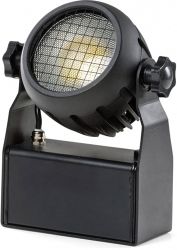
LED blinders
LED Blinder – Professional Stage Lighting for Stunning Visual Effects
LED Blinder systems have become essential tools in modern event technology, delivering powerful visual impact at concerts, festivals, clubs and corporate events. These high-output lighting fixtures create dramatic blinding effects that energise audiences and add professional production value to any performance. At LTT, You will find a comprehensive range of LED Blinder units from leading manufacturers, combining cutting-edge COB LED technology with robust construction and flexible control options. Whether You are lighting a touring concert stage, equipping a permanent installation or creating memorable moments at live events, our LED Blinder selection delivers the intensity and reliability professional technicians demand.
What Are LED Blinders – Professional Stage Lighting Explained
LED Blinder lights are high-intensity lighting fixtures specifically designed to create powerful bursts of light directed toward audiences or performers. Unlike conventional wash lights or spotlights, LED Blinders produce extremely bright, focused beams that create a temporary "blinding" effect – a dramatic visual moment that punctuates musical climaxes, transitions or special moments during live performances.
Modern LED Blinder systems utilise COB (Chip-on-Board) LED technology, which integrates multiple LED chips into a single, high-density module. This design delivers significantly higher luminous output than traditional SMD LEDs whilst maintaining compact fixture dimensions. A typical professional LED Blinder features 100W to 200W COB LED modules, producing luminous flux values between 5,000 and 8,000 lumens per unit. The most common colour temperature for stage blinders is warm white at 3000K, which mimics the traditional tungsten halogen look that lighting designers have relied on for decades.
LED Blinder fixtures differ fundamentally from strobe lights, though both create intense light bursts. Whilst strobes produce rapid, repetitive flashes at frequencies up to 20Hz, blinders typically operate as sustained high-intensity washes or slower, more deliberate pulses. Many modern LED Blinder units combine both functions, offering strobe capabilities alongside traditional blinder operation. This versatility makes them indispensable tools in contemporary lighting design, capable of creating everything from subtle audience illumination to dramatic, show-stopping visual moments.
The beam angle of LED Blinder systems typically ranges from 25° to 45°, providing sufficient spread to cover audience sections or stage areas effectively. Professional models feature CRI (Colour Rendering Index) values above 92, ensuring that colours appear natural and vibrant even under intense illumination. With LED lifespans exceeding 100,000 hours and silent convection cooling systems, modern LED Blinders deliver reliable performance throughout demanding touring schedules and permanent installations.
How LED Blinder Lights Work – Technology and Features
The core technology behind LED Blinder systems centres on high-power COB LED modules that concentrate multiple LED chips onto a single circuit board. This configuration creates a uniform, intense light source without the visible individual points characteristic of traditional LED arrays. The result is a smooth, powerful beam that closely replicates the quality of conventional tungsten blinders whilst consuming a fraction of the power.
Professional LED Blinder fixtures typically operate on 100-240V AC power supplies with automatic voltage detection, making them suitable for international touring applications. Power consumption ranges from 50W for compact dual-cell units to 200W for high-output single-module designs. Despite their impressive output, LED Blinders generate significantly less heat than halogen equivalents, with most professional models employing silent convection cooling rather than noisy fans. This thermal efficiency makes LED Blinders ideal for noise-sensitive environments such as theatres, broadcast studios and corporate events.
Many advanced LED Blinder systems incorporate additional LED arrays to expand creative possibilities. RGB LED strips or pixels surrounding the main COB module create "blaze" effects – colourful halos or accents that add visual interest beyond pure white output. Amber LED arrays enable authentic tungsten dimming simulation, where the colour temperature shifts warmer as intensity decreases, perfectly replicating the behaviour of traditional incandescent fixtures. This feature proves invaluable when LED Blinders must integrate seamlessly with conventional tungsten lighting rigs.
Control Modes and Operation
LED Blinder fixtures offer multiple control modes to suit different applications. Standalone operation includes automatic programmes that cycle through preset patterns, ideal for mobile DJs or smaller venues without DMX infrastructure. Sound-activated modes respond to music, creating dynamic effects that synchronise with audio peaks. Master/slave configurations allow multiple units to operate in perfect synchronisation without requiring a DMX controller.
For professional applications, DMX512 control provides precise, repeatable programming. LED Blinders typically offer between 1 and 14 DMX channels, with simpler modes controlling overall dimming and more complex modes providing independent control over white, amber and RGB elements, plus strobe functions and dimmer curves. RDM (Remote Device Management) support on premium models enables remote addressing, fixture identification and parameter adjustment without physical access to the unit – a significant advantage when fixtures are rigged at height or in difficult-to-reach positions.
Applications and Use Cases for LED Blinder Systems
LED Blinder fixtures have become indispensable across virtually every sector of the live events industry. In concert touring, blinders create dramatic audience illumination moments during musical climaxes, transforming passive spectators into active participants in the visual experience. Positioned on downstage truss or integrated into upstage lighting rigs, LED Blinders deliver the intense bursts that punctuate rock concerts, electronic music performances and theatrical productions.
Festival stages rely heavily on LED Blinder systems to create visual impact across large outdoor audiences. IP65-rated weatherproof models withstand rain, dust and temperature extremes whilst maintaining full functionality. These ruggedised fixtures mount on truss systems, ground support structures and delay towers, ensuring consistent visual coverage from front-of-house positions to the furthest audience areas. The low power consumption of LED technology proves particularly valuable in festival environments where generator capacity and cable runs present logistical challenges.
In permanent installations such as nightclubs, theatres and houses of worship, LED Blinder fixtures provide reliable, maintenance-free operation over many years. The 100,000-hour LED lifespan eliminates the constant lamp replacement cycles that plagued traditional halogen blinders. Silent operation makes LED Blinders suitable for theatrical applications where even minimal fan noise would prove unacceptable. Churches and corporate venues appreciate the ability to create dramatic moments without the heat output and power demands of conventional fixtures.
Broadcast and television studios increasingly specify LED Blinder systems for audience lighting and special effects. The flicker-free operation at high frame rates ensures clean video capture, whilst the instant on/off response enables precise timing for live broadcasts. Corporate events, product launches and award ceremonies utilise LED Blinders to create memorable visual moments that enhance brand messaging and audience engagement.
Mobile entertainers and rental companies value the compact dimensions, light weight and robust construction of modern LED Blinder units. A typical 200W LED Blinder weighs approximately 7kg – significantly lighter than equivalent halogen fixtures – reducing transportation costs and simplifying rigging procedures. Quick-lock mounting brackets enable rapid installation and strike times, maximising efficiency on tight production schedules.
Top LED Blinder Brands and Professional Standards
The professional LED Blinder market features several manufacturers who have established reputations for quality, reliability and innovation. Chauvet Professional leads the sector with their STRIKE series, which has become the de facto standard for touring productions worldwide. The STRIKE Array systems offer modular configurations from two to four COB LED pods, with individual units delivering 100W of warm white output. IP65 weatherproof ratings and robust aluminium die-cast housings ensure these fixtures withstand the rigours of international touring. Chauvet's implementation of RDM protocol and multiple DMX channel modes provides the flexibility professional lighting designers require.
Showtec has earned recognition for their Shocker series, which combines powerful COB LED technology with innovative RGB blaze effects. Models like the Shocker 2 feature dual 85W warm white COB LEDs complemented by RGB LED arrays that create colourful accent effects. The integration of amber LEDs enables authentic tungsten dimming simulation, where colour temperature shifts naturally as intensity decreases. Showtec fixtures typically offer extensive DMX channel options – from simple single-channel dimming to 14-channel modes providing granular control over every parameter.
Eurolite and BeamZ serve the mid-market segment with reliable, cost-effective LED Blinder solutions that deliver professional performance at accessible price points. BeamZ SB-series fixtures combine 50W COB LED modules with straightforward DMX control and robust construction. These units prove particularly popular with rental companies, mobile entertainers and venue installations where budget constraints must be balanced against performance requirements. Despite their competitive pricing, these manufacturers maintain professional standards including proper thermal management, quality optics and reliable electronics.
Technical Specifications and Buying Criteria
When specifying LED Blinder systems, several technical parameters determine suitability for specific applications. Luminous flux – measured in lumens – indicates total light output; professional touring fixtures typically deliver 6,000-8,000 lumens per 100W module. Beam angle affects coverage area, with 25° providing concentrated punch for long-throw applications and 45° offering broader wash coverage. CRI values above 90 ensure accurate colour rendering, crucial when LED Blinders must integrate with conventional tungsten or discharge lighting.
IP ratings prove critical for outdoor applications and permanent installations. IP65-rated fixtures provide complete dust protection and resistance to water jets from any direction, enabling reliable operation in festival environments and architectural installations. Indoor-only fixtures without IP ratings cost less but lack the environmental protection necessary for challenging conditions.
Power consumption and thermal management directly impact running costs and rigging requirements. A 200W LED Blinder delivers output equivalent to a 1000W halogen unit whilst consuming 80% less power and generating minimal heat. This efficiency reduces generator requirements, simplifies cable specifications and eliminates the need for extensive ventilation systems. Professional fixtures employ silent convection cooling or low-noise fans, maintaining acoustic standards in noise-sensitive environments.
Price ranges for professional LED Blinder systems typically span from £150 for basic dual-cell units to £2,000+ for premium four-cell IP65 touring fixtures with advanced features. Investment decisions should consider total cost of ownership – including power consumption, lamp replacement (eliminated with LED), and maintenance requirements – rather than initial purchase price alone.
DMX Control and Channel Modes for LED Blinders
DMX512 control forms the backbone of professional LED Blinder operation, enabling precise, repeatable programming and integration with comprehensive lighting systems. The DMX protocol transmits 512 individual control channels along a single cable, with each LED Blinder fixture consuming between 1 and 14 channels depending on its feature set and selected operating mode.
Basic single-channel DMX mode provides straightforward dimming control, ideal for applications where LED Blinders serve as simple audience wash fixtures. The lighting console sends a single DMX value (0-255) that controls overall intensity, with the fixture's internal electronics managing LED drive currents. This mode proves popular in architectural installations and simpler venue systems where complex colour mixing is unnecessary.
Four-channel and five-channel modes represent the most common configuration for professional applications. These modes typically allocate separate channels for master dimming, strobe function, strobe speed and dimmer curves. Some implementations dedicate a channel to amber LED control, enabling tungsten simulation effects. This channel allocation provides comprehensive control whilst maintaining reasonable DMX footprint – crucial when managing large fixture counts on complex productions.
Advanced 10-channel and 14-channel modes unlock the full creative potential of sophisticated LED Blinder systems. Individual channels control white COB LED intensity, amber LED intensity, red/green/blue components of blaze effects, strobe functions, dimmer curves and special effects programmes. This granular control enables lighting designers to craft nuanced looks that would be impossible with simpler channel modes. For example, separate control over white and amber elements allows precise colour temperature adjustment, whilst independent RGB channels create custom blaze colours that complement specific design palettes.
DMX Infrastructure and Connections
Professional LED Blinder fixtures feature both 3-pin and 5-pin XLR connectors for DMX input and output. Whilst the DMX512 protocol technically requires only three pins (ground, data+, data-), 5-pin connectors provide additional pins for future protocol expansions and improved electrical isolation. Quality fixtures include both input and output connectors, enabling daisy-chain wiring where DMX signal passes through multiple fixtures sequentially.
RDM (Remote Device Management) support on premium LED Blinder models revolutionises system setup and maintenance. This bi-directional communication protocol enables lighting consoles to automatically discover fixtures, assign DMX addresses remotely, adjust fixture parameters and retrieve status information including lamp hours, temperature and error codes. For touring productions and permanent installations with fixtures rigged at height, RDM eliminates the need for physical access during addressing and troubleshooting – saving significant time and reducing safety risks.
Master/slave operation provides synchronised control without requiring DMX infrastructure. One fixture operates as the master, running internal programmes or responding to sound activation, whilst slave units receive control signals via DMX cables and replicate the master's behaviour. This mode suits mobile entertainers and smaller venues where full lighting console control is unnecessary, yet synchronised operation across multiple fixtures remains essential.
Professional Mounting and Rigging Solutions for LED Blinders
Proper rigging and mounting of LED Blinder fixtures ensures both safety and optimal performance. Professional LED Blinders include quick-lock mounting brackets that attach securely to the fixture housing whilst enabling rapid installation and adjustment. These brackets typically feature M10 or M12 threaded mounting points compatible with standard lighting clamps, allowing attachment to truss systems, lighting bars and architectural structures.
When integrating LED Blinders with aluminium truss systems, proper load calculations prove essential. A typical 200W LED Blinder weighs approximately 7kg; when combined with mounting hardware, total suspended weight reaches 8-9kg per fixture. Truss specifications must account for cumulative loads, with safety factors applied according to DGUV Vorschrift 17 (formerly BGV C1) regulations governing temporary structures in Germany and broader European safety standards. Naxpro-Truss systems, manufactured by LTT, provide certified load capacities with comprehensive technical documentation, enabling compliant rigging designs.
Riggatec mounting accessories expand installation possibilities beyond standard clamp attachments. Adjustable spigots enable precise positioning and angle adjustment, whilst safety bonds provide secondary attachment points as required by professional rigging standards. For permanent installations, dedicated wall-mount brackets and ceiling plates offer secure, vibration-resistant mounting that maintains alignment over years of operation.
IP65 Models and Outdoor Installation
Weatherproof LED Blinder fixtures rated IP65 require additional rigging considerations. Whilst the fixture itself resists water ingress, power and DMX connections must receive equal protection. Professional installations employ IP-rated cable glands, waterproof connectors and protective housings for any exposed connection points. Power connections should utilise locking connectors such as powerCON TRUE1 or equivalent systems that prevent accidental disconnection whilst maintaining weatherproof integrity.
Cable management for outdoor LED Blinder installations must account for thermal expansion, wind loading and water drainage. DMX cables should follow routes that prevent water pooling at connection points, with drip loops positioned to direct moisture away from connectors. Power cables require appropriate strain relief and protection from UV degradation when exposed to direct sunlight over extended periods.
For festival and touring applications, ground-support structures and truss towers provide flexible LED Blinder positioning without requiring permanent rigging points. These systems must be engineered to withstand wind loading, with base plates sized appropriately for soil conditions and ballast weights calculated according to fixture positions and environmental exposure. Professional rigging companies typically apply safety factors of 5:1 or greater, ensuring structures remain stable under worst-case loading scenarios including maximum wind speeds and full equipment loads.
LTT – Your Specialist for Professional Event Technology
At LTT, You will find everything You need to create impressive lighting designs with LED Blinder systems. Our extensive range includes models from leading manufacturers, covering applications from compact mobile setups to large-scale touring productions. With over 25 years of experience in professional event technology, we understand the demands of modern lighting design and provide expert guidance to help You select the optimal solution for Your specific requirements.
Our team combines deep technical knowledge with practical experience from countless installations and productions. Whether You are specifying LED Blinders for a permanent theatre installation, equipping a touring production or expanding a rental inventory, we provide detailed technical consultation covering DMX integration, power requirements, rigging specifications and control programming. We ship worldwide from our facility in Bocholt, Germany, with express delivery options available for time-critical productions.
Beyond LED Blinder fixtures, LTT supplies complete lighting systems including truss structures from our own Naxpro-Truss manufacturing, Riggatec rigging accessories, DMX controllers, power distribution and all necessary cabling. This comprehensive approach ensures perfect compatibility across all system components, eliminating the integration challenges that arise when sourcing from multiple suppliers. Our three-year warranty on LED Blinder systems provides additional confidence in the quality and reliability of the products we supply.
Discover how professional LED Blinder technology can transform Your productions. Contact our technical team for personalised advice, or explore our complete range online to find the perfect fixtures for Your next project.
FAQ – Questions & Answers
Blinder lights serve to create intense bursts of illumination directed toward audiences or performers during live events. LED Blinder fixtures produce powerful, focused beams that create dramatic visual moments, particularly during musical climaxes, transitions or special effects sequences. Unlike standard wash lights, blinders deliver extremely high luminous output designed to create a temporary "blinding" effect that energises audiences and adds professional production value. Modern LED Blinder systems combine this traditional function with additional capabilities including strobe effects, colour mixing and programmable patterns, making them versatile tools for concerts, festivals, theatrical productions and corporate events.
LED Blinder lights work by concentrating multiple high-power LED chips onto single COB (Chip-on-Board) modules that produce intense, uniform light output. Professional LED Blinders typically feature 100W to 200W COB LED modules operating at warm white colour temperatures around 3000K, delivering 6,000-8,000 lumens per unit. The fixtures employ precision optics to shape beam angles between 25° and 45°, providing either concentrated punch or broader wash coverage. Advanced models incorporate additional amber LEDs for tungsten dimming simulation and RGB LED arrays for colourful blaze effects. Control systems range from simple standalone operation to sophisticated DMX512 programming with up to 14 channels, enabling precise intensity control, strobe functions and colour mixing.
The Chauvet STRIKE series represents professional-grade LED Blinder systems widely adopted in touring productions worldwide. STRIKE Array fixtures feature modular configurations with two to four independent 100W warm white COB LED pods, each delivering approximately 7,000 lumens. These IP65-rated fixtures employ robust aluminium die-cast housings that withstand demanding touring environments and outdoor installations. STRIKE systems offer multiple DMX channel modes from basic dimming to advanced control, with RDM (Remote Device Management) support enabling remote addressing and parameter adjustment. The series includes both standard and colour-mixing variants, with some models incorporating RGBA colour systems alongside warm white output. Quick-lock mounting brackets facilitate rapid installation on truss systems and lighting bars.
Leading LED Blinder manufacturers include Chauvet Professional, whose STRIKE series has become the touring industry standard for reliability and performance. Showtec produces the acclaimed Shocker series, combining powerful COB LED technology with innovative RGB blaze effects and authentic tungsten dimming simulation. Eurolite and BeamZ serve the professional mid-market with reliable, cost-effective solutions popular among rental companies and venue installations. Premium brands like Elation and Martin by Harman offer high-specification models for demanding applications. When selecting LED Blinder brands, consider factors including luminous output (typically 6,000-8,000 lumens for professional models), IP ratings for environmental protection, DMX channel modes, build quality and manufacturer support networks.
LED Blinder lights can be used outdoors when specified with appropriate IP (Ingress Protection) ratings. IP65-rated fixtures provide complete dust protection and resistance to water jets from any direction, making them suitable for festival stages, outdoor concerts and permanent architectural installations. These weatherproof models feature sealed housings, protected connectors and robust construction that withstands rain, humidity and temperature extremes. However, all power and DMX connections must receive equal protection through IP-rated cable glands and waterproof connectors. Standard indoor-rated LED Blinders without IP certification should never be used in outdoor environments, as moisture ingress will damage electronics and create safety hazards. When planning outdoor installations, verify both fixture IP ratings and proper cable management practices.
LED Blinder lights produce extremely high luminous output that can cause temporary visual discomfort or after-images when viewed directly, but they do not emit harmful UV radiation or infrared energy that damages eye tissue. Professional LED Blinders operate at safe colour temperatures (typically 3000K warm white) and do not exceed photobiological safety limits established by international standards. However, operators should never stare directly into LED Blinder beams at close range, and fixtures should be positioned to avoid sustained direct exposure to performers' eyes. Proper fixture positioning, appropriate intensity levels and responsible programming ensure LED Blinders create dramatic visual effects without compromising safety. Professional lighting designers follow established guidelines for maximum permissible exposure based on fixture output and audience distance.
DMX control is not strictly necessary for LED Blinder operation, as most fixtures offer standalone modes including automatic programmes, sound activation and master/slave configurations. However, DMX512 control provides significant advantages for professional applications, enabling precise, repeatable programming and integration with comprehensive lighting systems. DMX allows lighting designers to control intensity, strobe functions, colour mixing and special effects with frame-accurate timing synchronised to music or other production elements. For touring productions, theatrical installations and complex events, DMX control proves essential for achieving professional results. Simple applications such as mobile DJ setups or small venue installations may operate satisfactorily using standalone modes, but any production requiring coordinated lighting effects benefits substantially from DMX infrastructure.
LED Blinder lights and strobe lights serve different purposes despite both producing intense light bursts. LED Blinders create sustained high-intensity washes or slower, deliberate pulses designed to illuminate audiences dramatically, typically operating at warm white colour temperatures that replicate traditional tungsten fixtures. Strobe lights produce rapid, repetitive flashes at frequencies up to 20Hz, creating the characteristic stroboscopic effect that freezes motion. Many modern LED Blinder fixtures incorporate strobe functionality alongside traditional blinder operation, offering versatility for different creative applications. LED Blinders typically feature higher-power COB LED modules (100-200W) optimised for luminous output, whilst dedicated strobe fixtures may use arrays of smaller LEDs optimised for rapid on-off cycling. Professional productions often deploy both fixture types to achieve the full range of visual effects.