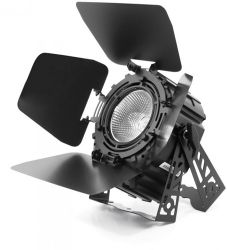
LED PAR spotlights
LED PAR Spotlights – Versatile Stage Lighting for Every Event
LED PAR spotlights are the backbone of modern stage and event lighting. Whether you're illuminating a concert stage, creating atmospheric uplighting at a corporate event, or setting the scene in a theatre production, LED PAR cans deliver powerful, colour-rich light in a robust, energy-efficient package. At LTT, you'll find a comprehensive range of LED PAR spotlights from leading manufacturers such as Cameo, Eurolite, Showtec and beamZ — all designed to meet the demands of professional event technicians, DJs, bands and production companies.
What Are LED PAR Spotlights?
LED PAR spotlights are stage lighting fixtures that combine the classic PAR (Parabolic Aluminized Reflector) form factor with modern LED technology. The term "PAR" originally described the parabolic reflector shape used in traditional halogen lamps to focus light into a controlled beam. Today's LED PAR spotlights retain that iconic cylindrical "can" housing but replace power-hungry halogen bulbs with energy-efficient light-emitting diodes.
Inside a typical LED PAR spotlight, multiple RGB, RGBW, RGBWA or RGBALC LEDs work together to produce a wide spectrum of colours without the need for physical colour filters. This internal colour mixing allows you to dial in any hue — from deep saturated blues and reds to warm whites and pastels — directly from a DMX controller or the fixture's built-in control panel. The parabolic reflector geometry ensures even light distribution across the beam, while interchangeable lenses or diffusion filters let you adjust the beam angle from narrow spot (around 10–25°) to wide flood (60° and beyond).
LED PAR spotlights are available in a range of sizes, commonly designated by the reflector diameter in eighths of an inch: PAR16 (approximately 50 mm), PAR20 (63 mm), PAR38 (120 mm), PAR56 (178 mm) and PAR64 (203 mm). Larger sizes deliver greater light output and are suited to medium and large stages, while compact models like PAR16 and PAR20 are ideal for intimate venues, uplighting and architectural accent work.
Because LED PAR spotlights generate minimal heat compared to halogen equivalents, they can be mounted close to performers, scenery and temperature-sensitive materials without risk of burns or fire. Their solid-state construction also makes them highly resistant to vibration and shock, a critical advantage during transport and rigging.
LED PAR Spotlights vs Traditional Halogen PAR Cans
Traditional halogen PAR cans have been a staple of stage lighting since the 1950s, valued for their intense, warm white light and simple operation. However, LED PAR spotlights offer a host of advantages that have made them the preferred choice for modern event production.
Energy consumption: A conventional PAR64 halogen lamp typically draws 500–1000 watts, whereas an LED PAR64 consumes just 50–180 watts for comparable or even superior light output. This 80–90% reduction in power consumption translates directly into lower electricity bills, reduced generator capacity requirements for outdoor events, and fewer circuit breaker trips when running large rigs.
Heat output: Halogen PAR cans become extremely hot during operation — surface temperatures can exceed 300°C — making them uncomfortable for performers and risky to handle during teardown. LED PAR spotlights remain cool to the touch even after hours of continuous use, improving on-stage comfort and safety.
Lifespan: Halogen lamps last around 300–2000 hours before burning out, requiring frequent and costly replacements. LED modules, by contrast, offer lifespans of 50,000 hours or more, drastically reducing maintenance downtime and consumable costs over the fixture's lifetime.
Colour flexibility: Traditional PAR cans require physical gel filters to produce coloured light. Changing colours mid-show means manually swapping gels or using bulky colour scrollers. LED PAR spotlights integrate RGB, RGBW or multi-chip LED arrays that allow instant, flicker-free colour changes via DMX, with millions of hues available at the touch of a fader.
Dimming behaviour: Halogen lamps dim smoothly but shift towards warmer colour temperatures as they are dimmed, which can be undesirable in video production. Modern LED PAR spotlights offer linear, flicker-free dimming with stable colour temperature, and many models include tungsten-emulation modes that replicate the warm-dim curve of halogen for theatrical authenticity.
Environmental impact: Lower power consumption, longer lifespan and the absence of toxic materials (halogen lamps contain trace halogens and require careful disposal) make LED PAR spotlights a more sustainable choice for environmentally conscious event professionals.
Applications: Where LED PAR Spotlights Shine
LED PAR spotlights are exceptionally versatile and find application across virtually every sector of the event and entertainment industry.
Stage Wash and Front Lighting
LED PAR cans are the workhorse fixtures for creating even, coloured washes across stages of all sizes. Mounted on overhead trusses or floor-standing T-bars, arrays of PAR spotlights bathe performers in rich, saturated colour or crisp white light. Their wide beam angles and high output make them ideal for illuminating large areas uniformly, while their DMX control allows lighting designers to create dynamic colour shifts and chases that respond to the music or narrative.
Uplighting and Architectural Accent
Compact LED PAR spotlights are widely used for uplighting — placing fixtures on the floor to wash walls, columns or drapes with colour. This technique is popular at weddings, corporate events and gala dinners, where it transforms plain venues into vibrant, atmospheric spaces. Battery-powered LED PAR models offer the additional advantage of wireless operation, eliminating trip hazards and simplifying setup in historic buildings or outdoor locations where mains power is limited.
Theatrical and Broadcast Production
In theatre, LED PAR spotlights serve as versatile side, back and top lights, adding depth and dimension to the stage picture. Their flicker-free output and high colour rendering index (CRI >90 in professional models) make them suitable for video recording and broadcast, where traditional discharge lamps can cause strobing artefacts on camera. Tuneable white LED PAR fixtures allow lighting directors to match colour temperature precisely to other sources or to simulate natural daylight and tungsten lighting.
DJ and Mobile Entertainment
For mobile DJs, bands and small-scale event providers, LED PAR spotlights offer an unbeatable combination of portability, ease of use and visual impact. Lightweight aluminium housings, integrated hanging brackets and simple DMX or standalone operation mean that a single technician can set up an impressive light show in minutes. Sound-activated and master-slave modes allow fixtures to respond to music without the need for a dedicated lighting console.
Outdoor Events and Festivals
Weather-resistant LED PAR spotlights with IP65 or IP67 ratings are designed for outdoor use, withstanding rain, dust and temperature extremes. These ruggedised fixtures are essential for festival stages, outdoor concerts and architectural installations, where reliability in harsh conditions is non-negotiable.
Choosing the Right LED PAR Spotlight: Quality, Specifications and Brands
Selecting the right LED PAR spotlight for your application requires careful consideration of technical specifications, build quality and manufacturer reputation.
Light Output and Beam Angle
Light output is typically measured in lumens or lux at a given distance. For stage wash applications, look for fixtures delivering at least 1500–3000 lumens per unit. Beam angle determines coverage: narrow spot beams (10–25°) are ideal for highlighting specific areas or creating tight colour pools, while medium flood (30–45°) and wide flood (50–70°) beams provide broad, even washes. Many professional models offer interchangeable lenses or motorised zoom functions to adjust beam width on the fly.
LED Configuration: RGB, RGBW, RGBWA and Beyond
RGB (red, green, blue) LED PAR spotlights can mix a wide range of colours but struggle to produce pure white light, often resulting in a slightly tinted output. RGBW models add a dedicated white LED chip, enabling crisp, neutral whites alongside full-colour mixing. RGBWA configurations include an additional amber chip for warmer tones and improved skin-tone rendering, while RGBALC (red, green, blue, amber, lime, cyan) fixtures offer the widest colour gamut and highest CRI values, making them suitable for broadcast and high-end theatrical work.
Power Consumption and Electrical Planning
When designing a lighting rig, calculate the total wattage of all fixtures to ensure your power supply and distribution can handle the load. A typical 12×10 W RGBW LED PAR spotlight draws around 120 watts at full white output, but only 30–40 watts when displaying single colours. For large installations, this difference can significantly reduce the required circuit capacity and allow more fixtures per breaker. Always consult the manufacturer's technical data sheet for accurate power consumption figures.
DMX Control and Compatibility
Most professional LED PAR spotlights support DMX512 control, with channel modes ranging from simple 3-channel RGB to advanced 8- or 12-channel configurations that include individual colour control, dimmer curves, strobe effects and colour macros. Wireless DMX systems (such as LumenRadio CRMX or W-DMX) eliminate the need for long cable runs and simplify setup in complex or temporary installations. Ensure your lighting console or controller supports the channel modes and protocols used by your fixtures.
Build Quality and IP Rating
Professional-grade LED PAR spotlights feature die-cast aluminium or steel housings, powder-coated finishes and robust yoke brackets that withstand the rigours of touring and rental use. For outdoor applications, choose fixtures with an IP rating of at least IP65 (dust-tight and protected against water jets) or IP67 (dust-tight and protected against temporary immersion). Indoor fixtures typically carry an IP20 rating, which is sufficient for dry, controlled environments.
Trusted Manufacturers
At LTT, we stock LED PAR spotlights from leading brands known for their reliability and performance. Cameo offers a comprehensive range from compact battery-powered models to high-output IP-rated fixtures with advanced colour mixing. Eurolite and Showtec provide excellent value for money with robust construction and wide feature sets, while beamZ delivers budget-friendly options ideal for mobile entertainers and small venues. For broadcast and high-end theatre, consider models from Chauvet DJ, Elation and American DJ, which offer superior CRI values, flicker-free dimming and precise colour calibration.
Price Brackets and Value Considerations
Entry-level LED PAR spotlights start at around €30–50 for compact 3×3 W RGB models suitable for small mobile setups. Mid-range fixtures (€80–200) typically feature 7×10 W or 12×10 W RGBW LED arrays, DMX control and sturdy metal housings. Professional-grade units with IP65 rating, RGBWA or RGBALC colour mixing, wireless DMX and advanced control features range from €250 to €600 or more. When evaluating price, consider total cost of ownership: higher-quality fixtures with longer lifespans and lower power consumption often deliver better value over time than cheaper alternatives that require frequent replacement.
IP Ratings, Rigging and Safety Standards for LED PAR Spotlights
Professional event production demands strict adherence to safety standards and best practices, particularly when rigging lighting fixtures overhead or deploying them in outdoor environments.
Understanding IP Ratings for Outdoor Use
The Ingress Protection (IP) rating system classifies the degree of protection provided by an enclosure against solid objects and liquids. The first digit (0–6) indicates protection against dust and solid particles; the second digit (0–9) indicates protection against water. For outdoor LED PAR spotlights, an IP65 rating is the minimum recommended standard: the "6" confirms the fixture is dust-tight, while the "5" means it can withstand water jets from any direction. IP67-rated fixtures offer even greater protection, remaining functional after temporary immersion in water up to 1 metre deep — ideal for festival stages exposed to heavy rain or ground-level installations near water features.
Indoor fixtures typically carry an IP20 rating, which provides basic protection against accidental contact with internal components but offers no water resistance. Never use IP20-rated fixtures outdoors or in damp environments, as moisture ingress can cause electrical faults, corrosion and safety hazards.
Rigging Hardware and Load Calculations
When mounting LED PAR spotlights on overhead trusses, always use certified rigging hardware that meets or exceeds the fixture's weight. Most LED PAR cans weigh between 2 and 8 kg and are supplied with an omega or C-clamp bracket. Ensure clamps are tightened securely and fitted with a secondary safety bond (wire rope or chain) that independently supports the fixture in case the primary attachment fails.
German event safety regulations, particularly DGUV Vorschrift 17 (formerly BGV C1), mandate that all suspended loads must be secured with redundant attachment points. Truss structures must be designed and installed by qualified riggers, with load calculations verified to ensure the Working Load Limit (WLL) is never exceeded. LTT's range of Naxpro-Truss aluminium truss systems and Riggatec rigging accessories are engineered to meet these stringent standards, with TÜV SÜD certification and full compliance with EN 1090 structural steelwork regulations.
Electrical Safety and Circuit Planning
Always connect LED PAR spotlights to appropriately rated power distribution systems. Use professional-grade power cables (such as Titanex H07RN-F rubber cable) and CEE connectors for outdoor applications, and ensure all circuits are protected by residual current devices (RCDs) with a tripping threshold of 30 mA or less. When running multiple fixtures from a single circuit, calculate the total current draw and leave a safety margin of at least 20% below the circuit breaker rating.
For touring and rental applications, consider using power distribution boxes with built-in RCD protection and individual circuit monitoring. This simplifies troubleshooting and ensures compliance with local electrical codes.
Heat Management and Ventilation
Although LED PAR spotlights generate far less heat than halogen equivalents, high-power models still require adequate ventilation to maintain optimal LED junction temperatures and maximise lifespan. Ensure cooling vents are not obstructed by cables, drapes or other fixtures, and avoid mounting LED PAR cans in enclosed spaces without airflow. Passive convection cooling is standard on most models, but some high-output fixtures incorporate quiet fans to improve thermal performance.
LTT – Your Specialist for Event Technology
At LTT, we combine over 25 years of experience in professional event technology with the expertise of a manufacturer and the service of a trusted partner. Our comprehensive range of LED PAR spotlights includes models for every application and budget, from compact battery-powered uplighters to high-output IP65-rated stage wash fixtures. We stock leading brands such as Cameo, Eurolite, Showtec, beamZ and Chauvet DJ, alongside our own premium labels Naxpro-Truss, Riggatec and Litetruss, ensuring you have access to innovative solutions for every lighting challenge.
Every LED PAR spotlight we supply is backed by our 3-year LTT warranty, giving you peace of mind and long-term reliability. Orders over €69 ship free of charge within Germany, and we offer express delivery options for time-critical projects. Our international shipping network ensures fast, reliable delivery to the UK, Ireland and beyond, supported by wholesale terms for resellers and a global dealer network for our own brands.
Whether you're planning a festival stage, equipping a theatre, or building a mobile DJ rig, our team of lighting specialists is here to help you find the optimal solution. Explore our full range of LED PAR spotlights today and discover why event professionals across Europe trust LTT as their reliable partner for high-quality event technology.
FAQ – Questions & Answers
PAR stands for Parabolic Aluminized Reflector, referring to the parabolic-shaped reflector with an aluminium coating used inside the lamp to focus and direct light into a controlled beam. This reflector design was originally developed for sealed-beam automotive headlamps in the 1950s and was later adapted for stage and theatrical lighting. The parabolic geometry ensures that light from the source is reflected in parallel rays, creating an even, powerful beam with minimal spill. Modern LED PAR spotlights retain this classic reflector shape but replace traditional halogen bulbs with energy-efficient LED arrays, combining the proven optical performance of the PAR design with the advantages of solid-state lighting technology.
LED PAR lights are used for a wide range of stage, event and architectural lighting applications. Common uses include stage wash lighting (illuminating performers and sets with coloured or white light), uplighting (washing walls, drapes and architectural features with colour from floor level), theatrical side and back lighting (adding depth and dimension to the stage picture), DJ and mobile entertainment lighting (creating dynamic colour effects and atmosphere), outdoor event and festival lighting (IP-rated models for weather-resistant installations), broadcast and video production lighting (flicker-free output with high colour rendering), and architectural accent lighting (highlighting building facades, columns and interior features). Their versatility, energy efficiency and ease of control make LED PAR lights the workhorse fixture in modern event production.
The term "PAR light" traditionally refers to any spotlight using a Parabolic Aluminized Reflector, which can be either a halogen lamp or an LED fixture. An "LED PAR light" specifically uses light-emitting diodes as the light source instead of a halogen bulb. The key differences are that LED PAR lights consume 80–90% less power, generate minimal heat, offer lifespans of 50,000 hours or more (compared to 300–2000 hours for halogen), provide built-in colour mixing without the need for gel filters, and deliver flicker-free dimming suitable for video recording. Traditional halogen PAR lights produce a warm, intense white light and are valued for their high output and simple operation, but they require frequent lamp replacement, consume significant power and become extremely hot during use. LED PAR lights have largely replaced halogen models in professional event production due to their superior efficiency, versatility and lower operating costs.
While LED PAR lights offer many advantages, they do have some limitations. Fixed beam angle models cannot adjust their beam width without physically changing lenses or diffusion filters, making them less flexible than moving heads or profile spotlights with motorised zoom. The cylindrical housing and simple optics mean PAR lights produce a relatively soft-edged beam with some spill, which may not be suitable for applications requiring hard-edged projections or precise gobo patterns. Entry-level LED PAR fixtures may exhibit colour shift or inconsistency between units, particularly when dimmed, and lower-quality models can suffer from visible flicker on camera. Additionally, while LED PAR lights are far cooler than halogen equivalents, high-power models still require adequate ventilation to maintain optimal performance and lifespan. Finally, the initial purchase cost of professional-grade LED PAR lights is higher than basic halogen cans, although this is offset by lower running costs and longer lifespan over time.
For a small stage (approximately 4–6 metres wide), a typical lighting setup might include 4–8 LED PAR lights for front wash, 2–4 units for side or back lighting, and an additional 2–4 for uplighting or special effects, totalling 8–16 fixtures. The exact number depends on the desired light levels, beam angles and colour mixing requirements. For example, if you are using PAR64-sized fixtures with wide flood lenses (60° beam angle), four units mounted on a front truss can provide even coverage across a small stage. Narrower beam angles or higher output requirements may necessitate additional fixtures. It is also common to use multiple colours or zones, with separate sets of PAR lights assigned to different DMX channels for dynamic colour changes and chases. For mobile DJ setups or small club stages, a basic rig of 8–12 LED PAR lights is often sufficient to create an engaging, colourful light show.
LED PAR lights are suitable for outdoor use provided they carry an appropriate Ingress Protection (IP) rating. For outdoor events, choose fixtures rated IP65 or higher. An IP65 rating confirms the fixture is dust-tight and protected against water jets from any direction, making it suitable for use in rain, wind and dusty environments. IP67-rated models offer even greater protection and can withstand temporary immersion in water up to 1 metre deep, ideal for ground-level installations or festival stages exposed to extreme weather. Indoor-rated LED PAR lights (typically IP20) must never be used outdoors, as moisture ingress can cause electrical faults and safety hazards. When deploying outdoor LED PAR lights, always use weather-resistant power cables, connectors and distribution systems, and ensure all rigging hardware is corrosion-resistant and securely fastened to withstand wind loads.
RGB LED PAR lights use red, green and blue LED chips to mix a wide range of colours through additive colour mixing. However, when all three colours are combined at full intensity, the result is often a slightly tinted or bluish white rather than a pure, neutral white. RGBW LED PAR lights add a fourth, dedicated white LED chip (typically warm white or cool white) to the array, enabling the fixture to produce crisp, clean white light alongside full-colour mixing. This makes RGBW models more versatile for applications that require both vibrant colours and high-quality white illumination, such as theatre productions, corporate events and architectural lighting. RGBW fixtures also tend to offer better colour rendering and more accurate pastel tones. For applications where pure white light is essential, RGBW or RGBWA (which adds amber for warmer tones) configurations are the preferred choice.
To control LED PAR lights with DMX, you need a DMX512 lighting console or controller, DMX cables (typically 3-pin or 5-pin XLR), and LED PAR fixtures that support DMX control. Connect the DMX output of your console to the DMX input of the first fixture using a DMX cable, then daisy-chain subsequent fixtures by connecting the DMX output of each unit to the DMX input of the next. Set each fixture to a unique DMX start address using the onboard control panel or DIP switches, ensuring addresses do not overlap (for example, if a fixture uses 7 DMX channels, the next fixture should start at address 8 or higher). On your console, assign faders or channels to control parameters such as red, green, blue and white intensity, master dimmer, strobe speed and colour macros. Most LED PAR lights offer multiple DMX channel modes (e.g. 3-channel RGB, 4-channel RGBW, 7-channel with dimmer and strobe), so consult the fixture's user manual to select the appropriate mode and configure your console accordingly. For wireless control, consider using a wireless DMX transmitter and receiver system to eliminate cable runs.