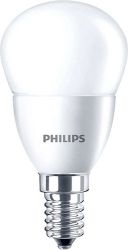
LED Lamps socket E14

E14 LED illuminants: Together with E27, the E14 lamp socket is one of the most commonly used sockets for light illuminants. The name is derived from the diameter of the thread, which is 14 millimetres. Countless threads of sockets in working and living areas are equipped with this thread. E14 LEDs are available in a wide variety of shapes such as tube shape, candle shape, bulb shape, with flame optics or as reflectors. Use of E14 sockets: In contrast to the conventional light bulb, the power in watts is...
Read more »
LED Lamps socket E14
Close window
LED Lamps socket E14

E14 LED illuminants

Together with E27, the E14 lamp socket is one of the most commonly used sockets for light illuminants. The name is derived from the diameter of the thread, which is 14 millimetres. Countless threads of sockets in working and living areas are equipped with this thread. E14 LEDs are available in a wide variety of shapes such as tube shape, candle shape, bulb shape, with flame optics or as reflectors.

Use of E14 sockets

In contrast to the conventional light bulb, the power in watts is no longer directly proportionate to the brightness. As a result, one major advantage of LEDs over energy-saving lamps is that they provide full brightness as soon as they are switched on. Some E14 LEDs come with built-in dimming that can be controlled by switching them on and off without the need for an external dimmer. Otherwise, make sure that the lamp in question is suitable for dimmers. Not every LED lamp can be used with a dimmer. E14 LEDs can also be used in smart home systems because they have a high switching resistance.

Wattage specifications for E14 LED lamps

In the case of LED illuminants with E14 sockets, the lumen value is specified to determine the brightness, and there is also always a watt specification. But this only indicates the consumption of a lamp and does not stand in (equal) proportion to the brightness (lumen). It was different with incandescent lamps: a 25 watt bulb always had around 200 lumen, 40 watts corresponded to around 400, 60 watts corresponded to around 700 and you could expect over 1,300 lumen from a 100 watt bulb. Use these values or the comparative value as a guide when buying a new LED lamp E14.

Top seller
Osram LED STAR CL B  FR 25 non-dim  3,3W/827 E14
Osram LED STAR CL B FR 25 non-dim 3,3W/827 E14
€1.81 *
incl. tax, plus shipping costs
Availability:
Delivery time: approx. 2-3 weeks
PHILIPS CorePro Lustre ND 5-40W E14 827 P45 FR
PHILIPS CorePro lustre ND 5-40W E14 827 P45 FR
€2.02 *
incl. tax, plus shipping costs
Availability:
Delivery time: approx. 2-3 weeks
315 Articles
Close filters
 
  •  
  •  
  •  
from to
from to
from to
from to
  •  
  •  
  •  
 
  •  
  •  
  •  
  •  
  •  
  •  
from to
  •  
14 From 14 pages
No results were found for the filter!
LEDVANCE LED SPECIAL T26 P 1.3W 827 Klar E14
LEDVANCE LED SPECIAL T26 P 1.3W 827 Clear E14
Special LED lamps for refrigerators. Product features: LED alternative to conventional high voltage lamps • Good quality of light; color rendering index Ra: = 80; constant chromaticity...
€3.05 *
incl. tax, plus shipping costs
Availability:
Not in stock
Delivery time: approx. 2 weeks
LEDVANCE LED SPEZIAL T26 P 4.2W 827 E14
LEDVANCE LED SPECIAL T26 P 4.2W 827 E14
Special LED lamps for refrigerators. Product features: LED alternative to conventional high voltage lamps • Good quality of light; color rendering index Ra: = 80; constant chromaticity...
€4.20 *
incl. tax, plus shipping costs
Availability:
Not in stock
Delivery time: approx. 2 weeks
LEDVANCE LED Classic P 25 Filament Energy efficiency class A S 1.2W 827 Frosted E14
LEDVANCE LED PAR30 75 36° DIM P 10W 927 E27
Product advantages Lamps with innovative LED "filament" technology • Low energy consumption • Design, dimensions, luminous flux comparable to a halogen lamp • Instant 100 %...
€8.95 *
incl. tax, plus shipping costs
Availability:
Not in stock
Delivery time: approx. 2 weeks
14 From 14 pages
Facts
E14 LED illuminants: Together with E27, the E14 lamp socket is one of the most commonly used sockets for light illuminants. The name is derived from the diameter of the thread, which is 14 millimetres. Countless threads of sockets in working and living areas are equipped with this thread. E14 LEDs are available in a wide variety of shapes such as tube shape, candle shape, bulb shape, with flame optics or as reflectors. Use of E14 sockets:... Read more »
Viewed
Facts

E14 LED illuminants

Together with E27, the E14 lamp socket is one of the most commonly used sockets for light illuminants. The name is derived from the diameter of the thread, which is 14 millimetres. Countless threads of sockets in working and living areas are equipped with this thread. E14 LEDs are available in a wide variety of shapes such as tube shape, candle shape, bulb shape, with flame optics or as reflectors.

Use of E14 sockets

In contrast to the conventional light bulb, the power in watts is no longer directly proportionate to the brightness. As a result, one major advantage of LEDs over energy-saving lamps is that they provide full brightness as soon as they are switched on. Some E14 LEDs come with built-in dimming that can be controlled by switching them on and off without the need for an external dimmer. Otherwise, make sure that the lamp in question is suitable for dimmers. Not every LED lamp can be used with a dimmer. E14 LEDs can also be used in smart home systems because they have a high switching resistance.

Wattage specifications for E14 LED lamps

In the case of LED illuminants with E14 sockets, the lumen value is specified to determine the brightness, and there is also always a watt specification. But this only indicates the consumption of a lamp and does not stand in (equal) proportion to the brightness (lumen). It was different with incandescent lamps: a 25 watt bulb always had around 200 lumen, 40 watts corresponded to around 400, 60 watts corresponded to around 700 and you could expect over 1,300 lumen from a 100 watt bulb. Use these values or the comparative value as a guide when buying a new LED lamp E14.

// Countdown for Black Deals