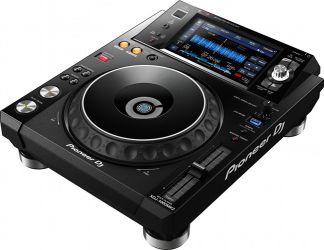
DJ players, CD | DVD | MP3

Professional DJ CD Players for Events and Venues: At LTT you'll find both DJ single players and DJ dual players designed for professional event applications. These media players support CDs, DVDs and MP3 files depending on the model, delivering reliable playback for mobile DJs, club installations and live event setups. Modern DJ CD players combine traditional disc playback with USB and SD card connectivity, giving you flexible media management without relying on a laptop. Whether you're building a fixed club...
Read more »
DJ players, CD | DVD | MP3
Close window
DJ players, CD | DVD | MP3

Professional DJ CD Players for Events and Venues

At LTT you'll find both DJ single players and DJ dual players designed for professional event applications. These media players support CDs, DVDs and MP3 files depending on the model, delivering reliable playback for mobile DJs, club installations and live event setups. Modern DJ CD players combine traditional disc playback with USB and SD card connectivity, giving you flexible media management without relying on a laptop. Whether you're building a fixed club installation or a portable mobile DJ rig, our range covers entry-level units through to professional club-standard players from Pioneer DJ, Denon DJ and Omnitronic. We're happy to advise you on the right solution for your specific requirements.

What Is a DJ CD Player and How Does It Work?

A DJ CD player is a specialised media playback device designed for live performance and mixing applications. Unlike consumer CD players, DJ models feature precision jog wheels, pitch control (typically ±4%, ±8% and ±16% range), cue functions, beat matching capabilities and anti-shock memory buffers — usually 40 seconds or more — to prevent skipping during transport or vibration.

Modern DJ CD players are more accurately described as media players because they support multiple formats beyond standard audio CDs. Most units read CD-R, CD-RW, DVD, MP3, WAV and AAC files from optical discs, USB flash drives, USB hard drives and SD/MMC cards. This multi-format capability allows DJs to carry thousands of tracks on a single USB stick rather than a heavy CD wallet.

Single Player vs Dual Player

A single CD player contains one playback mechanism and is typically rack-mounted (1U or 2U height) for fixed installations in clubs, studios or broadcast environments. A dual CD player integrates two independent playback decks into one chassis, often including a basic mixer section with crossfader, EQ controls and headphone cueing. Dual players are popular with mobile DJs because they offer a complete two-deck setup in a compact, portable package.

Key differences from DJ controllers: CD players operate as standalone hardware without requiring a computer or DJ software, though many models offer MIDI or HID control for integration with software like Rekordbox or Serato when desired.

Applications and Typical Use Cases

DJ CD and media players are deployed across a wide range of professional event and entertainment scenarios:

Mobile DJs use dual CD players for weddings, corporate events and private parties. The integrated mixer and compact form factor make setup and teardown fast, while USB playback eliminates the need for a laptop and reduces points of failure.

Club installations typically feature two or more single players networked together, allowing DJs to share a single USB drive across multiple decks. Pioneer DJ's Link function and Denon DJ's Engine Connect enable this workflow, streamlining media management in busy club environments.

Event production companies specify rack-mounted single players for fixed stage setups, theatre productions and touring rigs. The 19-inch rack format integrates cleanly with amplifiers, effects processors and other professional audio equipment.

Bars, restaurants and retail spaces deploy single CD players for background music playback, often with programmable playlists and repeat functions. The anti-shock buffer ensures uninterrupted playback even in high-traffic areas.

Radio and broadcast studios use media players for jingle playback, sound effects and pre-recorded segments, valuing the instant cue and loop functions for live-to-air production.

Whether you're setting up a permanent club installation or a portable mobile rig, the right DJ CD player delivers reliable performance night after night.

Quality Standards and Professional Buying Criteria

When specifying a DJ CD player for professional use, several technical and build-quality factors determine long-term reliability and performance:

Build Quality and Durability

Professional units from Pioneer DJ, Denon DJ and Omnitronic feature metal chassis construction, reinforced jog wheels and shock-mounted drive mechanisms. Entry-level players (€200–€500) typically use plastic housings suitable for bedroom practice or occasional mobile gigs. Mid-range models (€500–€1,200) offer metal construction, larger jog wheels (200 mm diameter or more) and better tactile feedback. Club-standard players like the Pioneer DJ CDJ-3000 (€2,300+) deliver broadcast-grade reliability, capacitive touch jog wheels and advanced performance features.

Technical Specifications

Key specs to compare:

  • Frequency response: Professional units deliver 20 Hz–20 kHz (±1 dB) across the full audio spectrum.
  • Total harmonic distortion (THD): Look for <0.005% on quality models; lower THD means cleaner, more transparent sound reproduction.
  • Signal-to-noise ratio (SNR): Professional players achieve >100 dB SNR, ensuring low background noise even at high output levels.
  • Output level: Standard line outputs deliver +4 dBu or 2 V RMS; check compatibility with your mixer or amplifier input sensitivity.
  • Anti-shock buffer: 40 seconds is standard; some models offer up to 60 seconds for extreme mobile applications.
  • Bit depth and sample rate: CD playback is 16-bit/44.1 kHz; USB playback often supports 24-bit/48 kHz or higher for studio-quality files.

Connectivity and Integration

Professional installations require balanced XLR outputs for long cable runs and noise immunity. Mobile setups typically use RCA line outputs. Network connectivity (Ethernet or proprietary Link protocols) allows multiple players to share a single USB drive and sync BPM information. MIDI or HID output enables integration with DJ software for hybrid setups.

Price Brackets and Value

Entry-level dual players (€250–€400) suit beginners and occasional mobile work. Mid-range single players (€600–€1,000) offer professional build quality and club-ready features. High-end models (€1,200–€2,500) deliver the tactile feel, reliability and advanced functions demanded by touring professionals and top-tier club installations.

Media Formats and Playback Options Explained

Understanding the range of supported media formats helps you choose a player that matches your music library and workflow:

Optical Disc Formats

Audio CD (CD-DA) remains the gold standard for sound quality, delivering uncompressed 16-bit/44.1 kHz stereo audio. CD-R and CD-RW discs allow you to burn custom mixes and playlists; most DJ players read these formats without issue, though older drives may struggle with certain dye types or high-speed burns. MP3 CDs store compressed audio files, allowing 100+ tracks per disc depending on bitrate. DVD playback is less common but supported on some models, useful for video DJ applications or high-capacity audio storage.

Digital Storage Media

USB flash drives are the most popular format for modern DJs. Capacities from 16 GB to 256 GB hold thousands of tracks, and USB 3.0 drives offer fast track loading and database scanning. USB hard drives (2.5-inch portable models) suit DJs with massive libraries; look for players that supply sufficient bus power (500 mA or more) to avoid external power adapters. SD and MMC cards provide an alternative to USB, though fewer current models include card slots.

File Format Support

Most DJ media players decode MP3 (up to 320 kbps), WAV (uncompressed), AAC (M4A) and AIFF files. High-end models add FLAC (lossless compression) for audiophile-quality playback. Check the maximum bitrate and sample rate supported; professional units handle 24-bit/96 kHz files, while entry-level players may be limited to 16-bit/48 kHz.

Metadata and Track Management

ID3 tag support displays artist, title, album and BPM information on the player's screen. Advanced models analyse tracks on-the-fly, detecting BPM, key signature and beat grid for seamless mixing. Rekordbox and Engine Prime software allow you to prepare USB drives with cue points, loops and hot cues that transfer directly to compatible players, streamlining your workflow and reducing setup time during live performance.

Essential DJ Features and Performance Controls

Professional DJ CD players offer a suite of performance features that transform simple playback into creative mixing and live remixing:

Jog Wheel and Touch Sensitivity

The jog wheel is the primary control interface. Diameter ranges from 100 mm on compact models to 206 mm on club-standard units; larger wheels provide finer control and more natural scratching feel. Capacitive touch detection (found on Pioneer DJ CDJ-2000NXS2 and CDJ-3000) senses when your hand is on the wheel, automatically switching between pitch bend and scratch modes. Mechanical jog wheels use physical contact switches; they're more robust but less responsive than capacitive designs.

Pitch Control and Tempo Adjustment

Pitch faders allow tempo adjustment without changing the track's key (or with key lock disabled, creating the classic "chipmunk" effect). Standard range is ±8%; wider ranges (±16%, ±50% or even ±100%) enable extreme tempo matching and creative effects. High-resolution pitch adjustment (0.02% increments) ensures precise beatmatching. Master Tempo (key lock) maintains the original musical key across the full pitch range using time-stretching algorithms; quality varies by manufacturer, with Pioneer DJ and Denon DJ offering the most transparent processing.

Cue Points and Hot Cues

A cue point marks a position in the track for instant return; press Cue to jump back and preview the point through headphones. Hot cues (typically 4–8 per track) allow you to store multiple jump points, enabling live remixing, loop triggering and creative performance techniques. Stored hot cues remain available when you reload the track from a prepared USB drive.

Loop Functions

Seamless loops repeat a section of the track indefinitely. Auto loops snap to beat boundaries (1, 2, 4, 8 or 16 beats); manual loops let you define custom in and out points. Loop halve/double buttons adjust loop length on-the-fly. Advanced players offer Beat Jump (skip forward or backward by a set number of beats), Slip Mode (continue playback in the background while looping or scratching) and Quantize (auto-correct cue and loop points to the beat grid).

Effects and Sound Processing

Built-in effects vary by model. Common options include echo, flanger, filter (high-pass/low-pass), reverb and roll (stutter effect). High-end units offer multiple simultaneous effects with adjustable parameters. Some players include a sampler for triggering one-shot sounds or loops over the main track.

Waveform Display and Visual Feedback

Colour LCD or OLED screens display track waveforms, making it easy to identify breaks, drops and vocal sections. Dual-layer waveforms show both the zoomed-in playback position and the full track overview. Beat grid overlays confirm that your tracks are properly analysed and quantized. Needle-search strips (touch-sensitive position bars) allow instant jumps to any point in the track.

Installation, Connectivity and Stage Integration

Professional DJ CD players integrate seamlessly into fixed club installations, touring rig racks and portable mobile setups when you understand the connectivity and mounting options:

Rack Mounting and Physical Installation

Single CD players are typically 19-inch rack-mountable, occupying 1U or 2U of height. Dual players may be 2U or 3U depending on the mixer section. Use standard rack rails and cage nuts; ensure adequate ventilation (minimum 1U spacing above and below) to prevent overheating during extended operation. For permanent installations, consider shock-mount racks or isolation platforms to reduce vibration transmission from nearby subwoofers or stage movement.

Tabletop mounting is common for mobile DJs. Pioneer DJ and Denon DJ offer optional stands and cases that angle the player for ergonomic access. Secure units with non-slip mats or Velcro strips to prevent movement during transport or energetic performance.

Audio Connections

Most DJ CD players provide RCA line outputs (unbalanced, -10 dBV nominal level) suitable for connection to DJ mixers or powered speakers. Professional models add balanced XLR outputs (+4 dBu nominal level) for long cable runs in large venues; XLR connections reject electromagnetic interference and ground loop hum. Always match output level to your mixer's input sensitivity to avoid distortion or weak signal.

Digital outputs (S/PDIF coaxial or optical) bypass the player's internal DAC, sending bit-perfect audio to an external converter or digital mixer. This is useful in studio recording scenarios or when integrating with digital audio workstations.

Network and Control Integration

Professional players support Ethernet networking via Link protocols (Pioneer DJ Pro DJ Link, Denon DJ Engine Connect). Connect multiple players and a laptop to a network switch; all units can then access a single USB drive, share track information and sync BPM. This eliminates the need for multiple USB sticks and ensures all DJs in a club have access to the same library.

MIDI output allows the player to control DJ software (Traktor, Ableton Live) or lighting systems. HID mode (Human Interface Device) provides tighter integration with Rekordbox or Serato, enabling waveform display on the player's screen and bi-directional control.

Power and Transport Considerations

DJ CD players typically draw 15–30 watts during operation. Use a power conditioner or UPS (uninterruptible power supply) in critical applications to protect against mains voltage fluctuations and brief outages. For touring rigs, specify flight cases with foam inserts cut to the player's exact dimensions. Rack-mount cases should include front and rear lids, shock-absorbing corners and recessed handles. Always remove discs and secure USB drives before transport to prevent damage to the laser mechanism and data loss.

LTT – Your Specialist for Event Technology

At LTT you'll find professional DJ CD players from leading manufacturers alongside the complete range of event technology equipment. With over 25 years of experience in stage, lighting and sound technology, we understand the demands of mobile DJs, club installations and touring production companies. Our team provides expert advice on player selection, connectivity and integration with your existing setup.

We ship worldwide from our warehouse in Bocholt, Germany, with free delivery on orders over €69 within the UK and express shipping available when you need equipment fast. Every DJ CD player is backed by our 3-year LTT warranty, giving you confidence in your investment. As both a specialist retailer and manufacturer of event technology equipment, we offer trade pricing for resellers and support an international dealer network.

Whether you're specifying a fixed club installation or building a portable mobile DJ rig, LTT delivers the professional equipment, technical expertise and reliable service you need to set your events in motion.

FAQ – Questions & Answers

Do DJ CD players need an amplifier to operate?

DJ CD players do not require an amplifier to function as playback devices; they need only mains power and a storage medium (CD, USB, SD card). However, to hear the audio output, you must connect the player to either an active (powered) speaker system or a passive speaker system via an external amplifier. Most DJ CD players provide line-level outputs (RCA or XLR) designed to feed a DJ mixer, which then connects to the amplification chain. Some dual CD players include a built-in mixer and headphone output, allowing silent cueing and practice without external speakers, but live performance still requires amplification for audience playback.

What is the difference between a single DJ CD player and a dual DJ CD player?

A single DJ CD player contains one playback mechanism and is typically rack-mounted (1U or 2U height) for fixed installations in clubs, studios or broadcast environments. It requires an external DJ mixer to blend tracks. A dual DJ CD player integrates two independent playback decks and a basic mixer section (crossfader, EQ, headphone cueing) into one chassis, providing a complete two-deck DJ setup in a compact unit. Dual players are popular with mobile DJs because they reduce equipment count and setup time, while single players offer modular flexibility and are preferred in professional club installations where multiple DJs share a common mixer.

Do CDs sound better than MP3 files on a DJ CD player?

Audio CDs deliver uncompressed 16-bit/44.1 kHz stereo audio, which is technically superior to standard MP3 files compressed at 128 or 192 kbps. However, high-bitrate MP3 files (320 kbps) or lossless formats (WAV, FLAC) played from USB are virtually indistinguishable from CD audio in typical club and event environments. The difference becomes noticeable only on high-resolution sound systems in quiet listening conditions. For professional DJ applications, the convenience of USB playback (thousands of tracks on a single drive, instant access, no disc swapping) generally outweighs the marginal quality difference, especially when using 320 kbps MP3 or lossless files.

Which DJ CD player should I buy for mobile DJ work?

For mobile DJ applications, a dual CD player with integrated mixer offers the best balance of portability, functionality and value. Look for models from Omnitronic, Denon DJ or Pioneer DJ in the €400–€800 range that include USB and SD card playback, 40-second anti-shock memory, pitch control (±8% minimum), cue functions and a built-in crossfader. Ensure the unit provides both RCA line outputs (for connection to active speakers or an external amplifier) and a headphone output for cueing. If you plan to expand your setup later, consider a single player that integrates with DJ software via MIDI or HID, allowing you to add a controller or second player as your needs grow.

What media formats do modern DJ CD players support?

Modern DJ CD players support audio CDs (CD-DA), CD-R, CD-RW and MP3 CDs on optical media. Most models also read digital files from USB flash drives, USB hard drives and SD/MMC cards, supporting MP3 (up to 320 kbps), WAV (uncompressed), AAC (M4A) and AIFF formats. High-end players from Pioneer DJ and Denon DJ add FLAC (lossless compression) and support 24-bit/96 kHz files for studio-quality playback. Always check the maximum supported bitrate and sample rate in the player's specifications; entry-level models may be limited to 16-bit/48 kHz, while professional units handle high-resolution audio files without issue.

Can I connect multiple DJ CD players to share one USB drive?

Yes, professional DJ CD players from Pioneer DJ (Pro DJ Link) and Denon DJ (Engine Connect) support network connectivity that allows multiple players to access a single USB drive simultaneously. Connect the players and optionally a laptop to an Ethernet switch; all units can then browse the shared library, load tracks and sync BPM information. This eliminates the need for multiple USB sticks in club installations and ensures all DJs have access to the same music collection. Entry-level and older models typically do not support this feature and require each player to have its own USB drive or CD.

How do I choose between a DJ CD player and a DJ controller?

A DJ CD player operates as standalone hardware, playing music directly from CDs, USB drives or SD cards without requiring a computer or DJ software. This makes it ideal for club installations, mobile DJs who value reliability and simplicity, and situations where laptop failure is unacceptable. A DJ controller requires a laptop running DJ software (Rekordbox, Serato, Traktor) and acts as a control surface for that software. Controllers offer more flexibility, extensive effects, larger track libraries and visual waveform editing, but introduce a dependency on computer stability. Choose a CD player for standalone reliability and traditional DJ workflow; choose a controller if you prefer software-based preparation, extensive effects and don't mind carrying a laptop.

What technical specifications should I compare when buying a DJ CD player?

Key technical specifications include frequency response (look for 20 Hz–20 kHz ±1 dB), total harmonic distortion or THD (professional units achieve <0.005%), signal-to-noise ratio or SNR (>100 dB is professional standard), output level (standard line outputs deliver +4 dBu or 2 V RMS), anti-shock buffer duration (40 seconds minimum, 60 seconds for mobile applications), bit depth and sample rate for USB playback (24-bit/48 kHz or higher for studio-quality files), jog wheel diameter (200 mm or larger for better tactile control), pitch control range (±8% minimum, ±16% for wider tempo matching) and connectivity options (balanced XLR outputs for professional installations, Ethernet for networked setups, MIDI or HID for software integration).

Categories
9 Articles
Close filters
 
  •  
  •  
  •  
  •  
  •  
from to
No results were found for the filter!
Pioneer DJ XDJ-700 DJ Media USB Player
Pioneer DJ XDJ-700 DJ Controller
The XDJ-700 comes with a large touchscreen, a familiar club layout and it inherits a host of features from its big brother, the XDJ-1000. Its compact size and removable stand offer great set-up...
€789.00 *
incl. tax, free shipping to Germany
[International shipping costs]
Availability:
Low stock; Delivery time: 1-3 days
Delivery time: 1-3 days
OMNITRONIC XCP-2800 Dual-CD-Player
OMNITRONIC XCP-2800 Dual CD Player
Dual CD player for DJs 2 x 40 seconds anti-shock protection • Easy-turning jog dial with mode selector (fast or frame search) and Pitch bend function function • Comfortable track...
€299.00 *
incl. tax, free shipping to Germany
[International shipping costs]
Availability:
Delivery time: 3-5 days
Pioneer DJ XDJ-1000MK2 digitales DJ-Deck
Pioneer DJ XDJ-1000MK2 rekordbox-ready digital deck
Digitally refocused Based on its predecessor, the XDJ-1000MK2 improves usability through enhanced track browsing and support for high-resolution FLAC and ALAC audio files. It inherits the large jog...
€1,499.00 *
incl. tax, free shipping to Germany
[International shipping costs]
Availability:
Low stock; Delivery time: 1-3 days
Delivery time: 1-3 days
Vonyx CDJ450 Doppelter CD/MP3/USB-Player/Mixer mit BT
Vonyx CDJ450 Twin Top CD/MP3/USB player/mixer with BT
Playing MP3 files has never been easier! This dual compact media player with 2-channel mixer allows you to play files directly from CD, USB stick, external hard disk or via BT. With the Auto...
€399.00 *
incl. tax, free shipping to Germany
[International shipping costs]
Availability:
Delivery time: 1-3 days
Vonyx CDJ500 Verstärkter Doppelspieler CD/MP3/USB/BT
Vonyx CDJ500 Amplified Double Player CD/MP3/USB/BT
The CDJ500 is an impressive combination of a dual media player with built-in amplifier (2 x 100W) and mixer with the ability to play and mix tracks from CD, USB stick or via BT. Equipped with two...
€399.00 *
incl. tax, free shipping to Germany
[International shipping costs]
Availability:
Delivery time: 3-5 days
OMNITRONIC XMT-1400 MK2 Tabletop-CD-Player
OMNITRONIC XMT-1400 MK2 Tabletop CD Player
DJ player for CD, USB and SD USB port for storage media and portable players • SD(HC) card slot • Anti-shock RAM buffer memory • Text display supports CD text and ID3 tags (artist...
€279.00 *
incl. tax, free shipping to Germany
[International shipping costs]
Availability:
Delivery time: 3-5 days
AlphaTheta CDJ-3000X Multimedia Player
AlphaTheta CDJ-3000X – The new era of professional DJ performance The CDJ-3000X is the new flagship among AlphaTheta's professional DJ players and marks a turning point in club DJ...
€2,759.00 *
incl. tax, free shipping to Germany
[International shipping costs]
Availability:
Low stock; Delivery time: 1-3 days
Delivery time: 1-3 days
IMG STAGE LINE CD-230USB Dual-CD-Spieler
IMG STAGELINE CD-230USB Dual DJ CD and MP3 player
Dual DJ CD and MP3 player, with USB 2.0 interface and SD/MMC card slot. USB flash drives can be connected directly • For SD/MMC cards up to 32 GB (FAT16/FAT32), available at option...
€299.00 *
incl. tax, free shipping to Germany
[International shipping costs]
Availability:
Currently not available
Denon DJ SC6000 Prime
Professional DJ media player with 10.1-inch touchscreen and WiFi music streaming The Denon DJ SC6000 PRIME is a standalone, dual-deck DJ media player with impressive features for professional DJ...
€1,799.00 *
incl. tax, free shipping to Germany
[International shipping costs]
Availability:
Currently not available
Facts
Professional DJ CD Players for Events and Venues: At LTT you'll find both DJ single players and DJ dual players designed for professional event applications. These media players support CDs, DVDs and MP3 files depending on the model, delivering reliable playback for mobile DJs, club installations and live event setups. Modern DJ CD players combine traditional disc playback with USB and SD card connectivity, giving you flexible media... Read more »
Viewed
Facts

Professional DJ CD Players for Events and Venues

At LTT you'll find both DJ single players and DJ dual players designed for professional event applications. These media players support CDs, DVDs and MP3 files depending on the model, delivering reliable playback for mobile DJs, club installations and live event setups. Modern DJ CD players combine traditional disc playback with USB and SD card connectivity, giving you flexible media management without relying on a laptop. Whether you're building a fixed club installation or a portable mobile DJ rig, our range covers entry-level units through to professional club-standard players from Pioneer DJ, Denon DJ and Omnitronic. We're happy to advise you on the right solution for your specific requirements.

What Is a DJ CD Player and How Does It Work?

A DJ CD player is a specialised media playback device designed for live performance and mixing applications. Unlike consumer CD players, DJ models feature precision jog wheels, pitch control (typically ±4%, ±8% and ±16% range), cue functions, beat matching capabilities and anti-shock memory buffers — usually 40 seconds or more — to prevent skipping during transport or vibration.

Modern DJ CD players are more accurately described as media players because they support multiple formats beyond standard audio CDs. Most units read CD-R, CD-RW, DVD, MP3, WAV and AAC files from optical discs, USB flash drives, USB hard drives and SD/MMC cards. This multi-format capability allows DJs to carry thousands of tracks on a single USB stick rather than a heavy CD wallet.

Single Player vs Dual Player

A single CD player contains one playback mechanism and is typically rack-mounted (1U or 2U height) for fixed installations in clubs, studios or broadcast environments. A dual CD player integrates two independent playback decks into one chassis, often including a basic mixer section with crossfader, EQ controls and headphone cueing. Dual players are popular with mobile DJs because they offer a complete two-deck setup in a compact, portable package.

Key differences from DJ controllers: CD players operate as standalone hardware without requiring a computer or DJ software, though many models offer MIDI or HID control for integration with software like Rekordbox or Serato when desired.

Applications and Typical Use Cases

DJ CD and media players are deployed across a wide range of professional event and entertainment scenarios:

Mobile DJs use dual CD players for weddings, corporate events and private parties. The integrated mixer and compact form factor make setup and teardown fast, while USB playback eliminates the need for a laptop and reduces points of failure.

Club installations typically feature two or more single players networked together, allowing DJs to share a single USB drive across multiple decks. Pioneer DJ's Link function and Denon DJ's Engine Connect enable this workflow, streamlining media management in busy club environments.

Event production companies specify rack-mounted single players for fixed stage setups, theatre productions and touring rigs. The 19-inch rack format integrates cleanly with amplifiers, effects processors and other professional audio equipment.

Bars, restaurants and retail spaces deploy single CD players for background music playback, often with programmable playlists and repeat functions. The anti-shock buffer ensures uninterrupted playback even in high-traffic areas.

Radio and broadcast studios use media players for jingle playback, sound effects and pre-recorded segments, valuing the instant cue and loop functions for live-to-air production.

Whether you're setting up a permanent club installation or a portable mobile rig, the right DJ CD player delivers reliable performance night after night.

Quality Standards and Professional Buying Criteria

When specifying a DJ CD player for professional use, several technical and build-quality factors determine long-term reliability and performance:

Build Quality and Durability

Professional units from Pioneer DJ, Denon DJ and Omnitronic feature metal chassis construction, reinforced jog wheels and shock-mounted drive mechanisms. Entry-level players (€200–€500) typically use plastic housings suitable for bedroom practice or occasional mobile gigs. Mid-range models (€500–€1,200) offer metal construction, larger jog wheels (200 mm diameter or more) and better tactile feedback. Club-standard players like the Pioneer DJ CDJ-3000 (€2,300+) deliver broadcast-grade reliability, capacitive touch jog wheels and advanced performance features.

Technical Specifications

Key specs to compare:

  • Frequency response: Professional units deliver 20 Hz–20 kHz (±1 dB) across the full audio spectrum.
  • Total harmonic distortion (THD): Look for <0.005% on quality models; lower THD means cleaner, more transparent sound reproduction.
  • Signal-to-noise ratio (SNR): Professional players achieve >100 dB SNR, ensuring low background noise even at high output levels.
  • Output level: Standard line outputs deliver +4 dBu or 2 V RMS; check compatibility with your mixer or amplifier input sensitivity.
  • Anti-shock buffer: 40 seconds is standard; some models offer up to 60 seconds for extreme mobile applications.
  • Bit depth and sample rate: CD playback is 16-bit/44.1 kHz; USB playback often supports 24-bit/48 kHz or higher for studio-quality files.

Connectivity and Integration

Professional installations require balanced XLR outputs for long cable runs and noise immunity. Mobile setups typically use RCA line outputs. Network connectivity (Ethernet or proprietary Link protocols) allows multiple players to share a single USB drive and sync BPM information. MIDI or HID output enables integration with DJ software for hybrid setups.

Price Brackets and Value

Entry-level dual players (€250–€400) suit beginners and occasional mobile work. Mid-range single players (€600–€1,000) offer professional build quality and club-ready features. High-end models (€1,200–€2,500) deliver the tactile feel, reliability and advanced functions demanded by touring professionals and top-tier club installations.

Media Formats and Playback Options Explained

Understanding the range of supported media formats helps you choose a player that matches your music library and workflow:

Optical Disc Formats

Audio CD (CD-DA) remains the gold standard for sound quality, delivering uncompressed 16-bit/44.1 kHz stereo audio. CD-R and CD-RW discs allow you to burn custom mixes and playlists; most DJ players read these formats without issue, though older drives may struggle with certain dye types or high-speed burns. MP3 CDs store compressed audio files, allowing 100+ tracks per disc depending on bitrate. DVD playback is less common but supported on some models, useful for video DJ applications or high-capacity audio storage.

Digital Storage Media

USB flash drives are the most popular format for modern DJs. Capacities from 16 GB to 256 GB hold thousands of tracks, and USB 3.0 drives offer fast track loading and database scanning. USB hard drives (2.5-inch portable models) suit DJs with massive libraries; look for players that supply sufficient bus power (500 mA or more) to avoid external power adapters. SD and MMC cards provide an alternative to USB, though fewer current models include card slots.

File Format Support

Most DJ media players decode MP3 (up to 320 kbps), WAV (uncompressed), AAC (M4A) and AIFF files. High-end models add FLAC (lossless compression) for audiophile-quality playback. Check the maximum bitrate and sample rate supported; professional units handle 24-bit/96 kHz files, while entry-level players may be limited to 16-bit/48 kHz.

Metadata and Track Management

ID3 tag support displays artist, title, album and BPM information on the player's screen. Advanced models analyse tracks on-the-fly, detecting BPM, key signature and beat grid for seamless mixing. Rekordbox and Engine Prime software allow you to prepare USB drives with cue points, loops and hot cues that transfer directly to compatible players, streamlining your workflow and reducing setup time during live performance.

Essential DJ Features and Performance Controls

Professional DJ CD players offer a suite of performance features that transform simple playback into creative mixing and live remixing:

Jog Wheel and Touch Sensitivity

The jog wheel is the primary control interface. Diameter ranges from 100 mm on compact models to 206 mm on club-standard units; larger wheels provide finer control and more natural scratching feel. Capacitive touch detection (found on Pioneer DJ CDJ-2000NXS2 and CDJ-3000) senses when your hand is on the wheel, automatically switching between pitch bend and scratch modes. Mechanical jog wheels use physical contact switches; they're more robust but less responsive than capacitive designs.

Pitch Control and Tempo Adjustment

Pitch faders allow tempo adjustment without changing the track's key (or with key lock disabled, creating the classic "chipmunk" effect). Standard range is ±8%; wider ranges (±16%, ±50% or even ±100%) enable extreme tempo matching and creative effects. High-resolution pitch adjustment (0.02% increments) ensures precise beatmatching. Master Tempo (key lock) maintains the original musical key across the full pitch range using time-stretching algorithms; quality varies by manufacturer, with Pioneer DJ and Denon DJ offering the most transparent processing.

Cue Points and Hot Cues

A cue point marks a position in the track for instant return; press Cue to jump back and preview the point through headphones. Hot cues (typically 4–8 per track) allow you to store multiple jump points, enabling live remixing, loop triggering and creative performance techniques. Stored hot cues remain available when you reload the track from a prepared USB drive.

Loop Functions

Seamless loops repeat a section of the track indefinitely. Auto loops snap to beat boundaries (1, 2, 4, 8 or 16 beats); manual loops let you define custom in and out points. Loop halve/double buttons adjust loop length on-the-fly. Advanced players offer Beat Jump (skip forward or backward by a set number of beats), Slip Mode (continue playback in the background while looping or scratching) and Quantize (auto-correct cue and loop points to the beat grid).

Effects and Sound Processing

Built-in effects vary by model. Common options include echo, flanger, filter (high-pass/low-pass), reverb and roll (stutter effect). High-end units offer multiple simultaneous effects with adjustable parameters. Some players include a sampler for triggering one-shot sounds or loops over the main track.

Waveform Display and Visual Feedback

Colour LCD or OLED screens display track waveforms, making it easy to identify breaks, drops and vocal sections. Dual-layer waveforms show both the zoomed-in playback position and the full track overview. Beat grid overlays confirm that your tracks are properly analysed and quantized. Needle-search strips (touch-sensitive position bars) allow instant jumps to any point in the track.

Installation, Connectivity and Stage Integration

Professional DJ CD players integrate seamlessly into fixed club installations, touring rig racks and portable mobile setups when you understand the connectivity and mounting options:

Rack Mounting and Physical Installation

Single CD players are typically 19-inch rack-mountable, occupying 1U or 2U of height. Dual players may be 2U or 3U depending on the mixer section. Use standard rack rails and cage nuts; ensure adequate ventilation (minimum 1U spacing above and below) to prevent overheating during extended operation. For permanent installations, consider shock-mount racks or isolation platforms to reduce vibration transmission from nearby subwoofers or stage movement.

Tabletop mounting is common for mobile DJs. Pioneer DJ and Denon DJ offer optional stands and cases that angle the player for ergonomic access. Secure units with non-slip mats or Velcro strips to prevent movement during transport or energetic performance.

Audio Connections

Most DJ CD players provide RCA line outputs (unbalanced, -10 dBV nominal level) suitable for connection to DJ mixers or powered speakers. Professional models add balanced XLR outputs (+4 dBu nominal level) for long cable runs in large venues; XLR connections reject electromagnetic interference and ground loop hum. Always match output level to your mixer's input sensitivity to avoid distortion or weak signal.

Digital outputs (S/PDIF coaxial or optical) bypass the player's internal DAC, sending bit-perfect audio to an external converter or digital mixer. This is useful in studio recording scenarios or when integrating with digital audio workstations.

Network and Control Integration

Professional players support Ethernet networking via Link protocols (Pioneer DJ Pro DJ Link, Denon DJ Engine Connect). Connect multiple players and a laptop to a network switch; all units can then access a single USB drive, share track information and sync BPM. This eliminates the need for multiple USB sticks and ensures all DJs in a club have access to the same library.

MIDI output allows the player to control DJ software (Traktor, Ableton Live) or lighting systems. HID mode (Human Interface Device) provides tighter integration with Rekordbox or Serato, enabling waveform display on the player's screen and bi-directional control.

Power and Transport Considerations

DJ CD players typically draw 15–30 watts during operation. Use a power conditioner or UPS (uninterruptible power supply) in critical applications to protect against mains voltage fluctuations and brief outages. For touring rigs, specify flight cases with foam inserts cut to the player's exact dimensions. Rack-mount cases should include front and rear lids, shock-absorbing corners and recessed handles. Always remove discs and secure USB drives before transport to prevent damage to the laser mechanism and data loss.

LTT – Your Specialist for Event Technology

At LTT you'll find professional DJ CD players from leading manufacturers alongside the complete range of event technology equipment. With over 25 years of experience in stage, lighting and sound technology, we understand the demands of mobile DJs, club installations and touring production companies. Our team provides expert advice on player selection, connectivity and integration with your existing setup.

We ship worldwide from our warehouse in Bocholt, Germany, with free delivery on orders over €69 within the UK and express shipping available when you need equipment fast. Every DJ CD player is backed by our 3-year LTT warranty, giving you confidence in your investment. As both a specialist retailer and manufacturer of event technology equipment, we offer trade pricing for resellers and support an international dealer network.

Whether you're specifying a fixed club installation or building a portable mobile DJ rig, LTT delivers the professional equipment, technical expertise and reliable service you need to set your events in motion.

FAQ – Questions & Answers

Do DJ CD players need an amplifier to operate?

DJ CD players do not require an amplifier to function as playback devices; they need only mains power and a storage medium (CD, USB, SD card). However, to hear the audio output, you must connect the player to either an active (powered) speaker system or a passive speaker system via an external amplifier. Most DJ CD players provide line-level outputs (RCA or XLR) designed to feed a DJ mixer, which then connects to the amplification chain. Some dual CD players include a built-in mixer and headphone output, allowing silent cueing and practice without external speakers, but live performance still requires amplification for audience playback.

What is the difference between a single DJ CD player and a dual DJ CD player?

A single DJ CD player contains one playback mechanism and is typically rack-mounted (1U or 2U height) for fixed installations in clubs, studios or broadcast environments. It requires an external DJ mixer to blend tracks. A dual DJ CD player integrates two independent playback decks and a basic mixer section (crossfader, EQ, headphone cueing) into one chassis, providing a complete two-deck DJ setup in a compact unit. Dual players are popular with mobile DJs because they reduce equipment count and setup time, while single players offer modular flexibility and are preferred in professional club installations where multiple DJs share a common mixer.

Do CDs sound better than MP3 files on a DJ CD player?

Audio CDs deliver uncompressed 16-bit/44.1 kHz stereo audio, which is technically superior to standard MP3 files compressed at 128 or 192 kbps. However, high-bitrate MP3 files (320 kbps) or lossless formats (WAV, FLAC) played from USB are virtually indistinguishable from CD audio in typical club and event environments. The difference becomes noticeable only on high-resolution sound systems in quiet listening conditions. For professional DJ applications, the convenience of USB playback (thousands of tracks on a single drive, instant access, no disc swapping) generally outweighs the marginal quality difference, especially when using 320 kbps MP3 or lossless files.

Which DJ CD player should I buy for mobile DJ work?

For mobile DJ applications, a dual CD player with integrated mixer offers the best balance of portability, functionality and value. Look for models from Omnitronic, Denon DJ or Pioneer DJ in the €400–€800 range that include USB and SD card playback, 40-second anti-shock memory, pitch control (±8% minimum), cue functions and a built-in crossfader. Ensure the unit provides both RCA line outputs (for connection to active speakers or an external amplifier) and a headphone output for cueing. If you plan to expand your setup later, consider a single player that integrates with DJ software via MIDI or HID, allowing you to add a controller or second player as your needs grow.

What media formats do modern DJ CD players support?

Modern DJ CD players support audio CDs (CD-DA), CD-R, CD-RW and MP3 CDs on optical media. Most models also read digital files from USB flash drives, USB hard drives and SD/MMC cards, supporting MP3 (up to 320 kbps), WAV (uncompressed), AAC (M4A) and AIFF formats. High-end players from Pioneer DJ and Denon DJ add FLAC (lossless compression) and support 24-bit/96 kHz files for studio-quality playback. Always check the maximum supported bitrate and sample rate in the player's specifications; entry-level models may be limited to 16-bit/48 kHz, while professional units handle high-resolution audio files without issue.

Can I connect multiple DJ CD players to share one USB drive?

Yes, professional DJ CD players from Pioneer DJ (Pro DJ Link) and Denon DJ (Engine Connect) support network connectivity that allows multiple players to access a single USB drive simultaneously. Connect the players and optionally a laptop to an Ethernet switch; all units can then browse the shared library, load tracks and sync BPM information. This eliminates the need for multiple USB sticks in club installations and ensures all DJs have access to the same music collection. Entry-level and older models typically do not support this feature and require each player to have its own USB drive or CD.

How do I choose between a DJ CD player and a DJ controller?

A DJ CD player operates as standalone hardware, playing music directly from CDs, USB drives or SD cards without requiring a computer or DJ software. This makes it ideal for club installations, mobile DJs who value reliability and simplicity, and situations where laptop failure is unacceptable. A DJ controller requires a laptop running DJ software (Rekordbox, Serato, Traktor) and acts as a control surface for that software. Controllers offer more flexibility, extensive effects, larger track libraries and visual waveform editing, but introduce a dependency on computer stability. Choose a CD player for standalone reliability and traditional DJ workflow; choose a controller if you prefer software-based preparation, extensive effects and don't mind carrying a laptop.

What technical specifications should I compare when buying a DJ CD player?

Key technical specifications include frequency response (look for 20 Hz–20 kHz ±1 dB), total harmonic distortion or THD (professional units achieve <0.005%), signal-to-noise ratio or SNR (>100 dB is professional standard), output level (standard line outputs deliver +4 dBu or 2 V RMS), anti-shock buffer duration (40 seconds minimum, 60 seconds for mobile applications), bit depth and sample rate for USB playback (24-bit/48 kHz or higher for studio-quality files), jog wheel diameter (200 mm or larger for better tactile control), pitch control range (±8% minimum, ±16% for wider tempo matching) and connectivity options (balanced XLR outputs for professional installations, Ethernet for networked setups, MIDI or HID for software integration).