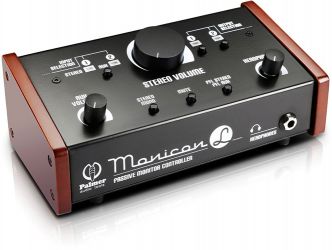
Headphone amplifiers
Professional Headphone Amplifiers for Event Technology – Precision Monitoring for Stage and Studio
When you're mixing a live show, monitoring a recording session or coordinating a complex event production, reliable headphone amplification is not a luxury — it's essential. Professional headphone amplifiers deliver the clean, powerful signal your high-impedance studio headphones or stage monitoring cans demand, ensuring every detail is audible even in demanding environments. Whether you're a sound engineer, touring technician, DJ or event production specialist, the right headphone amp transforms your workflow by providing distortion-free, dynamic sound reproduction that consumer-grade outputs simply cannot match. At LTT, we supply the amplification solutions that professionals trust for critical listening applications across live events, broadcast, theatre and touring productions.
What Is a Headphone Amplifier and Why Does Professional Event Technology Require One?
A headphone amplifier is a dedicated audio device designed to drive headphone transducers with sufficient voltage and current to achieve optimal sound quality and volume. While every device with a headphone socket — from smartphones to mixing consoles — contains a rudimentary amplifier circuit, professional headphone amplifiers are purpose-built to handle the specific demands of high-impedance, high-fidelity headphones commonly used in event technology and studio environments.
The Technical Challenge: Impedance and Power
Professional studio and monitoring headphones typically exhibit impedances ranging from 80 Ohm to 600 Ohm, far higher than the 16–32 Ohm consumer models. High-impedance designs offer superior transient response, lower distortion and better damping control, but they require substantially more voltage to reach adequate listening levels. A typical laptop or mobile device headphone output struggles to deliver clean power above 32 Ohm, resulting in thin, underpowered sound that masks critical mix details.
Dedicated headphone amplifiers provide the necessary gain and current drive to unlock the full dynamic range of professional headphones. Key specifications include output power (measured in milliwatts per channel at a given impedance), total harmonic distortion plus noise (THD+N, ideally below 0.01%), signal-to-noise ratio (SNR, typically 100 dB or higher) and frequency response (20 Hz–20 kHz, ±0.5 dB).
Headphone Amplifiers vs. Mixing Console Outputs
Many mixing consoles feature multiple headphone outputs, but these are often secondary considerations in the overall design, sharing a single amplifier stage across multiple outputs or relying on cost-optimised operational amplifier chips. Standalone headphone amplifiers, by contrast, dedicate discrete circuitry to each channel, ensuring consistent performance regardless of load and preventing the common issue of volume drop when multiple headphones are connected simultaneously. For critical applications — such as front-of-house monitoring, broadcast mixing or multitrack recording — this distinction is vital.
Applications in Live Events, Staging and Professional Audio Production
Professional headphone amplifiers serve a wide range of applications across the event technology sector, each with distinct requirements and operational contexts.
Stage Monitoring and In-Ear Systems: During live performances, musicians and vocalists rely on headphone or in-ear monitor feeds to hear themselves and the backing tracks clearly. Headphone amplifiers with multiple outputs allow each performer to receive an independent mix, often via wireless belt-pack systems that integrate headphone amplification. Rack-mount units with four, six or eight discrete amplifier channels are standard in touring rigs, providing reliable, low-latency monitoring even in electrically noisy stage environments.
Front-of-House and Broadcast Mixing: Sound engineers at live events and broadcast studios depend on accurate headphone monitoring to make critical mix decisions. A dedicated headphone amplifier ensures that what the engineer hears through their reference headphones is a true representation of the signal chain, free from the colouration or noise introduced by console auxiliary outputs. Balanced XLR or TRS inputs are common, allowing direct connection to professional audio interfaces and mixing consoles.
Recording and Post-Production: In studio environments, headphone amplifiers enable multiple musicians to monitor playback simultaneously during tracking sessions. Cue mixing features allow each performer to adjust their own monitor balance without affecting others, streamlining the recording workflow and reducing the need for complex auxiliary send configurations on the mixing console.
Event Production and Coordination: Technical directors, stage managers and production coordinators often use headphone amplifiers to monitor programme audio, intercom feeds or ambient sound during complex events. Portable, battery-powered models are particularly valuable in outdoor or temporary installations where mains power is limited.
Quality Standards, Technical Specifications and Professional Brands
Selecting a professional headphone amplifier requires careful consideration of technical specifications, build quality and compatibility with your existing audio infrastructure.
Key Technical Parameters
Output Power: Measured in milliwatts (mW) per channel at a specified impedance. For 250 Ohm studio headphones, look for at least 100 mW per channel; for 600 Ohm models, 200 mW or more ensures adequate headroom. Insufficient power results in compressed dynamics and listener fatigue.
Total Harmonic Distortion (THD+N): Professional units should achieve THD+N figures below 0.01% at nominal output levels. Lower distortion preserves the integrity of the audio signal, particularly important when monitoring subtle mix details or identifying technical faults in a live production.
Signal-to-Noise Ratio (SNR): A minimum of 100 dB SNR is expected in professional applications. Higher SNR ensures that background noise does not obscure quiet passages or low-level detail, critical for accurate monitoring in both live and studio contexts.
Frequency Response: A flat response from 20 Hz to 20 kHz (±0.5 dB) ensures that the amplifier does not colour the sound. Some models offer subtle tonal shaping options, but transparency is generally preferred in professional monitoring applications.
Connection Options: Professional headphone amplifiers typically feature balanced XLR or TRS inputs, ensuring compatibility with mixing consoles, audio interfaces and professional signal routing systems. Multiple headphone outputs — often a combination of 6.3 mm TRS and 3.5 mm stereo jacks — accommodate different headphone types. Some models include stereo/mono switching, phase inversion and individual level controls for each output.
Trusted Brands in Event Technology
LTT stocks headphone amplifiers from manufacturers renowned for reliability and performance in professional environments. Behringer offers cost-effective multi-channel rack-mount units widely used in touring and installation contexts. Presonus and Focusrite provide studio-grade amplifiers with integrated DAC functionality, ideal for digital audio workstations. Shure, Sennheiser and AKG — established names in professional audio — manufacture headphone amplifiers designed to pair seamlessly with their reference headphone ranges. For high-end applications, brands such as SPL and Grace Design deliver audiophile-grade amplification with exceptional transparency and power reserves.
Safety and Compliance
Professional audio equipment used in event technology must comply with relevant safety standards. Look for CE marking, indicating conformity with EU directives on electromagnetic compatibility (EMC) and low-voltage equipment safety. Rack-mount units should be constructed from robust steel or aluminium, with adequate ventilation to prevent overheating during extended operation. Mains-powered models must include appropriate fusing and earth connections to meet electrical safety regulations.
System Integration: Connecting Headphone Amplifiers to Professional Audio Infrastructure
Integrating a headphone amplifier into a professional audio system requires attention to signal routing, impedance matching and grounding practices to achieve optimal performance and avoid common pitfalls such as ground loops and RF interference.
Balanced vs. Unbalanced Connections
Professional headphone amplifiers typically accept balanced line-level signals via XLR or TRS connectors. Balanced connections reject common-mode noise — electromagnetic interference picked up along cable runs — making them essential in electrically noisy environments such as live stages, broadcast studios and outdoor events. When connecting to a mixing console, use the direct outputs, auxiliary sends or monitor matrix rather than unbalanced tape or record outputs, which may lack the necessary signal level and introduce additional noise.
Impedance Matching and Load Considerations
While modern headphone amplifiers are designed to drive a wide range of impedances, optimal performance is achieved when the amplifier's output impedance is significantly lower than the headphone impedance — ideally one-eighth or less. For example, a headphone amplifier with an output impedance of 10 Ohm will comfortably drive headphones rated at 80 Ohm or higher, ensuring proper damping and frequency response. Consult the amplifier's specifications and match them to your headphone models to avoid underdamping (which causes boomy bass) or overdamping (which results in rolled-off low frequencies).
Multi-Channel Distribution and Cue Systems
In applications requiring multiple headphone feeds — such as recording sessions, live broadcast or stage monitoring — rack-mount headphone amplifiers with four, six or eight independent channels are standard. Each channel should offer individual level control, and ideally stereo/mono switching and phase inversion. Some models include built-in cue mixing, allowing performers to blend their own monitor mix from multiple sources without requiring additional hardware.
For larger installations, consider headphone distribution amplifiers that accept a single stereo input and distribute it to multiple outputs with consistent gain and minimal crosstalk. These are particularly useful in theatre productions, where multiple crew members need to monitor the same programme feed.
Phantom Power and Active Headphones
Certain specialist headphones, particularly electrostatic models and some planar magnetic designs, require external bias voltage or phantom power to operate. If your application involves such headphones, ensure that your amplifier provides the necessary voltage — typically 48 V for phantom-powered models or dedicated high-voltage supplies for electrostatics. Standard dynamic headphones do not require phantom power and may be damaged if inadvertently connected to an active output.
Grounding and Noise Management
Ground loops — caused by multiple earth paths in an audio system — are a common source of hum and buzz in headphone monitoring. To minimise this, ensure that all equipment shares a common star ground point, and avoid connecting mains earth to both the mixing console and the headphone amplifier if they are already linked via audio cables. In persistent cases, a ground-lift adapter or an isolation transformer may be necessary, though these should be used with caution and in compliance with electrical safety regulations.
Portable and Desktop Models: Flexibility for Mobile Event Production
While rack-mount headphone amplifiers dominate fixed installations and touring rigs, portable and desktop models offer valuable flexibility for mobile event production, location recording and smaller-scale applications.
Battery-Powered Amplifiers for Outdoor and Remote Events
Battery-powered headphone amplifiers are indispensable for outdoor events, documentary production and other scenarios where mains power is unavailable or impractical. Modern lithium-ion battery technology provides several hours of operation in a compact form factor, and many models include USB charging for convenient recharging between events. Look for units with low-battery indicators and automatic shutdown to prevent unexpected interruptions during critical monitoring tasks.
Portable amplifiers typically accept line-level input via 3.5 mm stereo jack or USB, making them compatible with smartphones, tablets, portable recorders and laptop-based digital audio workstations. Some models include Bluetooth connectivity, though be aware that wireless transmission introduces latency (typically 30–200 milliseconds), which is unacceptable for live monitoring applications but may be tolerable for casual listening or non-critical playback.
Desktop Amplifiers for Studio and Broadcast Environments
Desktop headphone amplifiers are designed for permanent installation on mixing desks, edit suites and broadcast studios. These units prioritise sound quality and connectivity over portability, often incorporating high-performance DACs (digital-to-analogue converters) to accept digital audio directly from computers via USB, optical or coaxial inputs. This eliminates the need for a separate audio interface and reduces the number of components in the signal chain, minimising potential sources of noise and distortion.
Desktop models frequently include multiple headphone outputs with independent volume controls, allowing an engineer and an assistant or client to monitor simultaneously. Some designs offer selectable gain settings to accommodate both high-impedance studio headphones and low-impedance consumer models, ensuring optimal performance across a wide range of transducers.
Hybrid Solutions: DAC/Amplifier Combinations
For digital audio workstation users and broadcast professionals, headphone amplifiers with integrated DACs offer a streamlined solution. These devices accept digital audio via USB, optical (TOSLINK) or coaxial (S/PDIF) connections, perform high-resolution digital-to-analogue conversion (typically 24-bit/192 kHz or higher), and provide clean, powerful headphone amplification — all in a single unit. This approach reduces cable clutter, simplifies setup and often delivers superior sound quality compared to the built-in audio outputs of computers and consumer electronics.
When evaluating DAC/amplifier combinations, pay attention to the supported sample rates and bit depths, driver compatibility (ASIO, Core Audio, ALSA), and latency performance. Professional models should support sample rates up to 192 kHz and offer low-latency monitoring modes for real-time recording applications.
LTT – Your Specialist for Event Technology and Professional Audio Solutions
For over 25 years, LTT has been the trusted partner for event technicians, production companies, broadcast studios and touring professionals across the UK, Ireland and international markets. Our comprehensive range of professional headphone amplifiers reflects our commitment to providing innovative solutions that meet the demanding requirements of modern event technology.
We stock models from the industry's most respected manufacturers, ensuring that whether you need a compact desktop amplifier for a studio edit suite, a multi-channel rack-mount unit for a touring production or a portable battery-powered model for location work, you'll find the right solution in our catalogue. Every product we supply is backed by our 3-year warranty, giving you confidence in the reliability and longevity of your investment.
With free shipping on orders over €69 and express delivery options available, we make it easy to equip your production with the professional audio tools you need, when you need them. Our experienced team understands the technical challenges of live event production and is ready to provide expert advice on selecting and integrating headphone amplifiers into your existing audio infrastructure. As both a specialist retailer and a manufacturer with our own production facilities in Germany, we combine deep product knowledge with a practical understanding of the real-world demands of event technology. Trust LTT to deliver the professional audio solutions that keep your productions running smoothly.
FAQ – Questions & Answers
Yes, a dedicated headphone amplifier is essential for professional event technology applications. Consumer-grade headphone outputs in mixing consoles, laptops and mobile devices typically cannot deliver sufficient power or maintain low distortion when driving high-impedance studio and monitoring headphones (80–600 Ohm). Professional headphone amplifiers provide the voltage and current necessary to achieve full dynamic range, accurate frequency response and low noise floor, ensuring that sound engineers, musicians and production staff can make critical monitoring decisions with confidence. In live event contexts, where multiple headphone feeds are required simultaneously, dedicated amplifiers prevent volume drop and maintain consistent performance across all outputs.
The best headphone amplifier for stage monitoring and live events depends on your specific requirements, but key features to prioritise include multiple independent outputs (typically four to eight channels), balanced XLR or TRS inputs for professional signal routing, robust rack-mount construction for touring durability, and individual level controls for each output. Brands such as Behringer, Presonus and Shure offer reliable multi-channel rack-mount units widely used in professional touring and installation contexts. For wireless in-ear monitoring systems, ensure compatibility with your belt-pack transmitters. LTT stocks a comprehensive range of professional headphone amplifiers suitable for stage monitoring, front-of-house mixing and broadcast applications.
In a professional audio system, a headphone amplifier is typically connected to the direct outputs, auxiliary sends or monitor matrix of a mixing console using balanced XLR or TRS cables. This ensures that the amplifier receives a clean, line-level signal with minimal noise and interference. For studio applications, connect the headphone amplifier to the monitor outputs of your audio interface or DAW controller. In broadcast environments, the amplifier may be connected to the programme output or a dedicated monitoring bus. Always use balanced connections where possible to reject electromagnetic interference, particularly in live stage environments. Ensure that the signal level sent to the amplifier matches its input sensitivity to avoid distortion or insufficient gain.
To increase headphone volume without distortion in live production, use a dedicated professional headphone amplifier designed to drive your specific headphone impedance. Ensure that the amplifier provides adequate output power — at least 100 mW per channel for 250 Ohm headphones, and 200 mW or more for 600 Ohm models. Check that the input signal level to the amplifier is sufficient (typically +4 dBu line level) and that gain staging throughout the signal chain is optimised to avoid clipping or excessive noise. If volume remains insufficient, verify that your headphones are not faulty and that their impedance matches the amplifier's capabilities. Avoid simply turning up the console output, as this may introduce distortion earlier in the signal path.
Headphones with impedances above 80 Ohm typically require a dedicated amplifier to achieve optimal performance in professional applications. Studio reference headphones commonly range from 80 Ohm to 600 Ohm, and these high-impedance designs demand significantly more voltage than consumer models (16–32 Ohm) to reach adequate listening levels. While lower-impedance headphones can be driven by standard console outputs, they may still benefit from a dedicated amplifier's superior power delivery, lower distortion and better damping control. Professional headphone amplifiers are designed to handle a wide impedance range, ensuring consistent performance whether you are using 80 Ohm, 250 Ohm or 600 Ohm models.
A dedicated headphone amplifier provides superior power delivery, lower distortion and more consistent performance compared to the built-in headphone outputs found on most mixing consoles. Console headphone outputs are often secondary design considerations, sharing a single amplifier stage across multiple outputs or relying on cost-optimised operational amplifier chips that may struggle with high-impedance headphones. Dedicated headphone amplifiers use discrete circuitry for each channel, ensuring that performance does not degrade when multiple headphones are connected simultaneously. They also offer better signal-to-noise ratios, lower total harmonic distortion and more precise impedance matching, all of which are critical for accurate monitoring in professional event technology and studio applications.
Yes, headphone amplifiers can be integrated with wireless in-ear monitoring systems, though the specific configuration depends on your system architecture. In most professional setups, the headphone amplifier drives wired monitoring headphones at the mixing position or in the studio, while wireless belt-pack transmitters provide in-ear feeds to performers on stage. Some wireless systems include built-in headphone amplification in the receiver pack, but for critical monitoring applications, a dedicated headphone amplifier at the transmitter end ensures that the signal sent wirelessly is clean, powerful and free from distortion. Always verify compatibility between your headphone amplifier outputs and the input requirements of your wireless transmitter to avoid impedance mismatches or signal level issues.
When selecting a professional headphone amplifier, prioritise the following technical specifications: output power (at least 100 mW per channel at your headphone impedance), total harmonic distortion plus noise (THD+N below 0.01%), signal-to-noise ratio (SNR of 100 dB or higher), frequency response (20 Hz–20 kHz, ±0.5 dB), and input/output connectivity (balanced XLR or TRS inputs, multiple 6.3 mm and 3.5 mm headphone outputs). For multi-channel applications, ensure individual level controls for each output and consider models with stereo/mono switching and phase inversion. Rack-mount construction is preferred for touring and fixed installations, while desktop models suit studio and broadcast environments. Always verify that the amplifier's output impedance is significantly lower than your headphone impedance to ensure proper damping and frequency response.