

Top seller

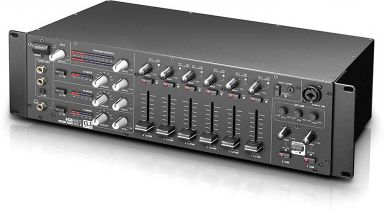
OMNITRONIC EM-312 Entertainment Mixer
€159.00
*
Availability:
Delivery time: 3-5 days
Delivery time: 3-5 days

MONACOR VMX-440/SW 4-channel microphone line mixer
€117.00
*
Availability:
Delivery time: 3-5 days
Delivery time: 3-5 days

OMNITRONIC RM-1422FX USB Rack Mixer
€269.00
*
Availability:
Delivery time: 3-5 days
Delivery time: 3-5 days

Skytec STM-3007 6-Channel Mixer SD/USB/MP3/LED/BT 19"
€249.00
*
Availability:
Delivery time: 3-5 days
Delivery time: 3-5 days

Vonyx STM3030 4-Channel Mixer USB/MP3/BT/REC
€85.00
*
 Express delivery possible
Availability:
Delivery time: 1-3 days
Delivery time: 1-3 days

LD Systems ZONE 624 - 19" 4-Zone Mixer 3U
€439.00
*
Availability:
Near-term available
Delivery time: approx. 1 week
Delivery time: approx. 1 week
Delivery time: approx. 1 week

Vonyx STM2500 5-Channel Mixer USB/MP3 with BT
€129.90
*
Availability:
Delivery time: 3-5 days
Delivery time: 3-5 days

Vonyx STM3025 7-Channel Mixer USB/MP3/BT
€76.00
*
Availability:
Delivery time: 3-5 days
Delivery time: 3-5 days
40
Articles
No results were found for the filter!
OMNITRONIC RM-1422FX USB Rack Mixer
OMNITRONIC RM-1422FX USB Rack Mixer
Compact all-rounderWhether it is used as small live mixer, recording studios or permanent installations-the RM--1422FX is the right answer for your 19" rack. Along with a full-fledge audio...
€269.00
*
Availability:
Delivery time: 3-5 days
Delivery time: 3-5 days

MONACOR MPX-4PA 3-zone mixer
MONACOR MPX-4PA 3-zone mixer
3-zone mixer 3 zones with user-defined routing of all input channels • XLR and RCA zone outputs • 6 input channels (4 stereo ways, 2 microphone ways) • Both microphone ways can only...
€299.00
*
Availability:
Delivery time: 3-5 days
Delivery time: 3-5 days
LD Systems ZONE 624 - 19" 4-Zone Mixer 3U
LD Systems ZONE 624 - 19" 4-Zone Mixer 3U
19" 4-Zone Mixer 3U LD Systems ZONE 624 4-Zone Mixer The ZONE 624 is a fully-equipped zone mixer with 6 line and 2 microphone channels, that can be assigned to a stereo or a mono master...
€439.00
*
Availability:
Near-term available
Delivery time: approx. 1 week
Delivery time: approx. 1 week
Delivery time: approx. 1 week

DAP-Audio IMIX-5.3 5-channel 4U install mixer - 3 zones
DAP-Audio IMIX-5.3 5-channel 4U install mixer - 3 zones
Master outputs with 3-way tone control • Special front input for phone/MP3 devices • Zone control for 3 balanced outputs • 1 Mic, 7 Line, 2 Phono inputs • The DAP IMIX-5.3 is a...
€295.00
*
Availability:
Delivery time: 3-5 days
Delivery time: 3-5 days

IMG STAGELINE MPX-622/SW 6-channel stereo audio mixer
IMG STAGELINE MPX-622/SW 6-channel stereo audio mixer
6-channel stereo audio mixer, particularly suitable for PA and DJ applications. 2 mono microphone channels with talkover switch and 2-way tone control • 4 stereo input channels, switchable...
€299.00
*
Availability:
Delivery time: 3-5 days
Delivery time: 3-5 days

IMG STAGELINE MPX-44/SW 6-channel stereo DJ mixer
IMG STAGELINE MPX-44/SW 6-channel stereo DJ mixer
6-channel stereo DJ mixer, with black brushed aluminium front panel. 6 input channels (4 stereo ways, 2 microphone ways) • Stereo input channels, switchable 2 x phono/line and 2 x line/line,...
€298.00
*
Availability:
Delivery time: 3-5 days
Delivery time: 3-5 days

DAP-Audio IMIX-7.3 7-channel 2U install mixer - 3 zones
DAP-Audio IMIX-7.3 7-channel 2U install mixer - 3 zones
Gain settings at backside • Special front input for phone/MP3 devices • Zone control for 3 balanced outputs • 2 Mic, 11 Line inputs • The DAP IMIX-7.3 is a compact installation...
€335.00
*
Availability:
Delivery time: 3-5 days
Delivery time: 3-5 days
MONACOR VMX-440/SW 4-channel microphone line mixer
MONACOR VMX-440/SW 4-channel microphone line mixer
4-channel microphone line mixer Mixing made easy! An easy-to-use operating concept and clearly arranged features. Two stereo line sources and two mono microphone sources can be mixed together...
€117.00
*
Availability:
Delivery time: 3-5 days
Delivery time: 3-5 days

DAP-Audio IMIX-7.1 7-channel 2U install mixer - 3 zones
DAP-Audio IMIX-7.1 7-channel 2U install mixer - 3 zones
19"/2U installation mixer • Suitable for restaurants, retail, public places and nightlife • 2x mic input with volume and EQ control • 5x line input with individual volume...
€319.00
*
Availability:
Delivery time: 3-5 days
Delivery time: 3-5 days

OMNITRONIC EM-260 Entertainment Mixer
OMNITRONIC EM-260 Entertainment Mixer
OMNITRONIC Entertainment Mixer SeriesThe modern entertainment industry, especially hotels, bars or theme parks, requires very high standards in quality and features for sound devices.The OMNITRONIC...
€149.79
*
Availability:
Delivery time: 3-5 days
Delivery time: 3-5 days

OMNITRONIC CM-5300 Club Mixer
OMNITRONIC CM-5300 Club Mixer
The CM-5300 is a high-grade stereo mixer with an extensive feature set for clubs and numerous mobile PA applications. The 3 microphone channels have a one-knob compressor, adjustable talkover...
€469.00
*
Availability:
Delivery time: 3-5 days
Delivery time: 3-5 days
OMNITRONIC EM-312 Entertainment Mixer
OMNITRONIC EM-312 Entertainment Mixer
The EM-312 is a slim rack-mounted 12-channel mixer with 6 mic/line combo inputs and 6 additional line inputs. It has XLR outputs, a 6.3 mm mono output, a stereo RCA recording output, and a 6.3 mm...
€159.00
*
Availability:
Delivery time: 3-5 days
Delivery time: 3-5 days

DAP-Audio IMIX-7.2 USB 7-channel 6U install mixer USB - 2 zones
DAP-Audio IMIX-7.2 USB 7-channel 6U install mixer USB - 2 zones
Channel displays that show the input source • 2 built-in USB-Audio interfaces • VCA controlLED faders • Reverb & talk-over on microphone channels • Individual in- and output...
€1,006.25
*
Availability:
Delivery time: 3-5 days
Delivery time: 3-5 days

MONACOR MXT-52MP3 Mixer with integrated MP3 player
MONACOR MXT-52MP3 Mixer with integrated MP3 player
Mixer with integrated MP3 player, for flush-mounting into walls. 2 balanced microphone/line inputs (XLR), each with gain control and selectable phantom power • 2 line inputs (RCA L/R) • 1...
€248.00
*
Availability:
Delivery time: 3-5 days
Delivery time: 3-5 days

OMNITRONIC RM-1422FXA USB Rack Power Mixer
OMNITRONIC RM-1422FXA USB Rack Power Mixer
19" powered mixer, 2 x 400 W, with 12 channels, DSP FX unit and MP3 player Audio mixer and digital amplifier in a 19" housing • Built-in USB audio interface allows recordings and...
€359.00
*
Availability:
Delivery time: 3-5 days
Delivery time: 3-5 days
Skytec STM-3007 6-Channel Mixer SD/USB/MP3/LED/BT 19"
Skytec STM-3007 6-Channel Mixer SD/USB/MP3/LED/BT 19"
A full featured 6-channel 19" professional mixer coming with MP3 player with BT for streaming your audio to the mixer. Featuring also illuminated channelfaders, 10-Band graphic stereo EQ,...
€249.00
*
Availability:
Delivery time: 3-5 days
Delivery time: 3-5 days
Vonyx STM2500 5-Channel Mixer USB/MP3 with BT
Vonyx STM2500 5-Channel Mixer USB/MP3 with BT
A 5-Channel mixer for the starting DJ. Featuring a USB input to play MP3's directly from a USB stick. The mixer also has a BT receiver so you can stream music directly from your smartphone or other...
€129.90
*
Availability:
Delivery time: 3-5 days
Delivery time: 3-5 days
Vonyx STM3025 7-Channel Mixer USB/MP3/BT
Vonyx STM3025 7-Channel Mixer USB/MP3/BT
The Vonyx STM3025 BT Compact DJ Mixer will help ensure that your performances sound great every time. This mixer offers different line channels, two of which can be switched on to Phone channels....
€76.00
*
Availability:
Delivery time: 3-5 days
Delivery time: 3-5 days

Vonyx STM-2211B 4-Channel Mixer Black
Vonyx STM-2211B 4-Channel Mixer Black
4-channel mixer for the starting DJ. Ideal for karaoke applications, sound amateurs and mixing of video sound tracks. 3 Switchable mono / stereo channels • 2 Switchable phono / line channels...
€49.90
*
incl. tax,
plus shipping costs
Availability:
Delivery time: 3-5 days
Delivery time: 3-5 days

Skytec STM-3020B 6-Channel Mixer USB/MP3 - Black
Skytec STM-3020B 6-Channel Mixer USB/MP3 - Black
6-Channel mixer with USB/MP3 for the starting DJ. Ideal for karaoke applications, sound amateurs and mixing of video sound tracks. 6-Channel mixer (2x phono, 3x line, 1x MP3) • MP3 player with...
€59.90
*
incl. tax,
plus shipping costs
Availability:
Delivery time: 1-3 days
Delivery time: 1-3 days
Vonyx STM3030 4-Channel Mixer USB/MP3/BT/REC
Vonyx STM3030 4-Channel Mixer USB/MP3/BT/REC
A 4-channel mixer for the starting DJ. Featuring a USB and SD input to play MP3s directly from a USB stick or SD-card. The mixer also has a BT receiver so you can stream music directly from your...
€85.00
*
Availability:
Delivery time: 1-3 days
Delivery time: 1-3 days

OMNITRONIC PM-444Pi 4-Channel DJ Mixer with Player & USB Interface
OMNITRONIC PM-444Pi 4-Channel DJ Mixer with Player & USB Interface
4-channel DJ mixer with Bluetooth, MP3 player and USB interface 4 input channels with gain control, LED level meter, 3-band equalizer, cue button and channel fader • 1 DJ microphone channel...
€225.00
*
Availability:
Delivery time: 3-5 days
Delivery time: 3-5 days

OMNITRONIC EM-280 Entertainment Mixer
OMNITRONIC EM-280 Entertainment Mixer
8-channel stereo mixer with 2 adjustable zone outputs, 19" 1 additional XLR microphone input in channel 1 • Nominal input level switchable between +4dBu and -10 dBV • Signal and...
€260.51
*
Availability:
Delivery time: 3-5 days
Delivery time: 3-5 days

OMNITRONIC EM-550B MK2 Entertainment Mixer
OMNITRONIC EM-550B MK2 Entertainment Mixer
Multifunctional 5+2-channel installation mixer, black 5 input channels with recessed gain controls on the rear panel, signal LED and smooth channel faders • Prefader listening to input...
€310.89
*
Availability:
Delivery time: 3-5 days
Delivery time: 3-5 days