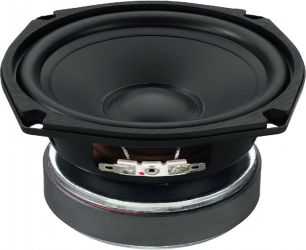
HiFi bass-midrange speakers

HiFi Bass-Midrange Drivers – Professional Speaker Components for Event Technology: HiFi bass-midrange drivers are the workhorses of professional sound systems, delivering the critical frequency range where vocals, instruments and fundamental tones reside. Whether you're building custom PA cabinets for live events, upgrading existing speaker systems or creating high-fidelity installations for theatres and clubs, these precision-engineered chassis provide the foundation for outstanding audio reproduction. At...
Read more »
HiFi bass-midrange speakers
Close window
HiFi bass-midrange speakers

HiFi Bass-Midrange Drivers – Professional Speaker Components for Event Technology

HiFi bass-midrange drivers are the workhorses of professional sound systems, delivering the critical frequency range where vocals, instruments and fundamental tones reside. Whether you're building custom PA cabinets for live events, upgrading existing speaker systems or creating high-fidelity installations for theatres and clubs, these precision-engineered chassis provide the foundation for outstanding audio reproduction. At LTT, you'll find a comprehensive selection of bass-midrange drivers from leading manufacturers, designed to meet the demanding requirements of professional event technology and mobile sound reinforcement.

What Are HiFi Bass-Midrange Drivers?

HiFi bass-midrange drivers are specialized loudspeaker chassis designed to reproduce the frequency range between approximately 100 Hz and 2,000 Hz – the critical midrange and upper-bass spectrum that carries most musical content and vocal intelligibility. Unlike full-range drivers or dedicated subwoofers, bass-midrange units are optimized for clarity, low distortion and accurate transient response across this specific band.

These drivers typically feature cone diameters ranging from 10 cm (4 inches) to 20 cm (8 inches), with larger models extending deeper into bass territory while smaller units reach higher into the midrange. The construction combines a precisely formed cone membrane – made from materials such as treated paper, polypropylene, Kevlar or aluminum – with a voice coil wound on Kapton or aluminum formers, suspended in a powerful magnetic field generated by ferrite or neodymium magnets.

The key distinction between HiFi bass-midrange drivers and standard PA midrange units lies in their design priorities. HiFi models emphasize linearity, minimal coloration and extended frequency response, making them ideal for applications where sound quality is paramount – such as premium installed sound systems, studio monitors and high-end mobile DJ setups. Professional PA variants, by contrast, prioritize high SPL capability and rugged construction for touring applications, though modern designs increasingly bridge both worlds.

In multi-way speaker systems, bass-midrange drivers work in conjunction with dedicated tweeters (handling frequencies above 2 kHz) and subwoofers (below 100 Hz), with electronic crossovers or passive networks dividing the signal appropriately. This division of labor allows each driver to operate within its optimal range, delivering superior overall performance compared to single full-range solutions.

Applications in Professional Event Technology

HiFi bass-midrange drivers serve diverse roles across the event technology landscape. In live sound reinforcement, they form the heart of main PA systems and stage monitors, reproducing vocals and instruments with the clarity essential for intelligible speech and musical accuracy. Event technicians rely on these drivers for corporate presentations, conferences and theatrical productions where every word must be understood clearly, even in acoustically challenging venues.

For mobile DJs and bands, bass-midrange drivers are critical components in custom-built speaker cabinets and upgraded commercial systems. The 13 cm to 16.5 cm (5.25-inch to 6.5-inch) size range offers an ideal balance between bass extension and compact enclosure dimensions, making them perfect for portable setups that must deliver impressive sound without excessive weight or bulk. Many professionals build dedicated vocal PA systems around quality 20 cm (8-inch) bass-midrange drivers, paired with horn-loaded compression tweeters for maximum projection and feedback resistance.

In fixed installations – clubs, houses of worship, theatres and multi-purpose halls – bass-midrange drivers provide the foundation for distributed sound systems and main arrays. Their ability to handle sustained high SPL levels while maintaining low distortion makes them suitable for demanding applications where system reliability is non-negotiable. Installation specialists often specify models with weather-resistant coatings and UV-stable surrounds for outdoor festival stages and permanent open-air venues.

The automotive audio market represents another significant application, where space constraints and mounting challenges demand drivers with shallow mounting depths and flexible impedance options. Enthusiasts building custom car audio systems choose HiFi bass-midrange drivers for door installations, creating impressive soundstages without the bulk of traditional component systems.

Quality Criteria and Professional Standards

Selecting the right bass-midrange driver requires understanding several critical specifications. Power handling is typically expressed as both RMS (continuous) and maximum (peak) ratings – professional models range from 30W RMS for compact units to 600W RMS for high-output PA drivers. For event technology applications, always specify based on RMS values; a quality 140W RMS driver will outperform a cheap 480W "max" unit in real-world conditions.

Sensitivity ratings, measured in dB SPL at 1 meter with 1 watt input, typically range from 88 dB for audiophile HiFi models to 125 dB for high-efficiency PA drivers. Each 3 dB increase represents a doubling of perceived loudness, so a 94 dB driver requires half the amplifier power of a 91 dB model to achieve the same volume. For mobile applications where amplifier weight matters, high-sensitivity drivers (96 dB and above) offer significant practical advantages.

Impedance standardizes at 4 Ohm or 8 Ohm, with implications for amplifier matching and system design. Lower impedance drivers draw more current and can deliver higher SPL from a given amplifier, but require careful attention to cable gauge and amplifier stability. Professional installations typically favor 8 Ohm models for their flexibility in series-parallel wiring configurations.

Leading manufacturers in the professional segment include Eminence, renowned for their robust American-made drivers with exceptional power handling; Celestion, offering legendary tone for musical applications; BMS, specializing in high-SPL pro audio components; and Beyma, providing European-engineered drivers with outstanding linearity. Each brand brings distinct sonic characteristics – Eminence drivers deliver punchy, forward midrange ideal for vocal reinforcement, while Celestion models offer smoother, more musical reproduction suited to high-fidelity applications.

Construction quality manifests in details: die-cast aluminum frames resist deformation under stress, copper voice coils on Kapton formers handle high temperatures without power compression, and progressive spiders provide linear excursion control. Premium models incorporate features like shorting rings to reduce inductance modulation and vented pole pieces for improved thermal management – refinements that separate professional-grade components from consumer products.

Cone Materials and Acoustic Performance

The membrane material fundamentally shapes a bass-midrange driver's sonic character and application suitability. Treated paper cones remain the gold standard for natural, uncolored reproduction – their inherent damping characteristics suppress breakup modes that create harshness, while their light weight enables excellent transient response. Professional paper cones receive specialized coatings to resist moisture and extend service life in demanding environments, making them suitable for touring applications despite their organic composition.

Polypropylene membranes offer superior weather resistance and consistency, making them the preferred choice for permanent outdoor installations and marine applications. While slightly less transparent than paper in the critical midrange, modern polypropylene formulations incorporate mineral fillers and surface treatments that narrow the performance gap. Their exceptional durability and resistance to humidity fluctuations make them ideal for festival stages and outdoor event venues where environmental exposure is unavoidable.

Kevlar and aramid fiber cones combine light weight with extraordinary stiffness, pushing the first breakup mode well beyond the driver's operating range. This results in extended, linear frequency response ideal for high-fidelity applications and studio monitors. The material's inherent damping also contributes to low distortion, though Kevlar drivers typically command premium pricing reflecting their advanced construction.

Aluminum and metal-matrix membranes deliver maximum rigidity for high-SPL applications, with the stiffness enabling precise pistonic motion at high excursion levels. However, metal cones exhibit higher mass than paper or Kevlar, requiring more powerful motors to achieve comparable efficiency. They excel in professional PA systems where maximum output and durability outweigh ultimate transparency.

The surround material – the flexible ring connecting cone to basket – equally impacts performance. Rubber surrounds provide excellent durability and consistent compliance across temperature ranges, while foam surrounds (though less common in professional drivers) offer lower mass for extended high-frequency response. Cloth surrounds, treated with specialized coatings, combine durability with minimal resonance, making them popular in high-end HiFi applications.

Voice coil design completes the picture: larger diameter coils (50 mm to 75 mm) handle more power and provide better heat dissipation, while copper-clad aluminum wire reduces moving mass without sacrificing conductivity. Kapton formers withstand temperatures exceeding 300°C, essential for drivers subjected to sustained high-power operation in live sound applications.

System Integration and Crossover Considerations

Successful deployment of bass-midrange drivers requires careful attention to crossover design and system integration. In professional multi-way systems, active electronic crossovers using DSP (Digital Signal Processing) offer superior control compared to passive networks, enabling precise frequency division, phase alignment and driver protection through limiters. For event technology applications, DSP-based systems provide the flexibility to optimize performance for different venues and applications without physical component changes.

Crossover frequencies typically place the low-pass point between 80 Hz and 150 Hz when transitioning to subwoofers, and the high-pass between 1.8 kHz and 2.5 kHz when handing off to tweeters or compression drivers. The exact frequencies depend on driver capabilities and acoustic requirements – larger 20 cm bass-midrange units may cross lower to subwoofers (around 100 Hz) while smaller 10 cm models require higher crossover points (150 Hz or above) to avoid excessive excursion.

Slope selection impacts both acoustic performance and driver protection. Fourth-order Linkwitz-Riley alignments (24 dB/octave) provide flat summed response and excellent driver protection, making them the professional standard for touring systems. Shallower slopes (12 dB or 18 dB/octave) may offer smoother phase response but require careful driver selection to avoid damage from out-of-band content.

Enclosure design profoundly affects bass-midrange driver performance. Sealed (closed-box) alignments provide the tightest, most controlled bass response with excellent transient accuracy, ideal for studio monitors and high-fidelity applications. Vented (bass-reflex) designs extend low-frequency response and increase efficiency, making them popular for PA systems where maximum output matters. Professional cabinet builders use Thiele-Small parameters – including resonant frequency (Fs), total Q (Qts) and equivalent volume (Vas) – to model enclosure performance and optimize tuning.

For mobile event setups, mounting hardware and quick-release systems enable rapid deployment and reconfiguration. Professional drivers with standardized mounting patterns simplify replacement and upgrades, while threaded inserts in die-cast frames accept secure fastening without risk of stripped holes. Flight-case compatibility ensures safe transport between venues, protecting precision components from the rigors of touring.

LTT – Your Specialist for Event Technology

As Germany's leading full-service supplier for professional event technology, LTT brings over 25 years of expertise to every component we offer. Our comprehensive selection of HiFi bass-midrange drivers includes models from the industry's most respected manufacturers, carefully chosen to meet the demanding requirements of professional applications. Whether you're building custom PA systems, upgrading existing installations or sourcing replacement drivers for touring rigs, our technical team provides expert guidance to ensure optimal component selection.

Every bass-midrange driver at LTT is backed by our 3-year warranty, reflecting our confidence in the professional-grade products we supply. We ship worldwide from our facility in Bocholt, Germany, with free shipping on orders over €69 and express delivery options for time-critical projects. Our international dealer network supports professionals across Europe and beyond, while B2B customers benefit from wholesale pricing and dedicated account management.

Beyond speaker components, LTT manufactures premium event technology equipment under our own brands – Naxpro-Truss aluminum truss systems, Riggatec rigging hardware and Bullstage modular stage platforms – all produced in Germany to the highest standards. This combination of manufacturing expertise and comprehensive product knowledge makes LTT your reliable partner for complete event technology solutions, from individual components to turnkey systems.

FAQ – Questions & Answers

What are HiFi bass-midrange drivers?

HiFi bass-midrange drivers are specialized loudspeaker chassis designed to reproduce frequencies between approximately 100 Hz and 2,000 Hz – the critical range containing most vocal and instrumental content. These drivers feature precision-engineered cone membranes (paper, Kevlar, polypropylene or aluminum), powerful magnetic assemblies and carefully tuned suspension systems. Unlike full-range speakers or dedicated subwoofers, bass-midrange drivers optimize clarity, low distortion and accurate transient response across the midrange spectrum. They're essential components in multi-way PA systems, studio monitors, high-fidelity home audio and professional event technology installations where sound quality and intelligibility are paramount.

What's the best midrange driver for HiFi applications?

The best midrange driver for HiFi applications depends on your specific requirements, but professional models from Eminence, Celestion, BMS and Beyma consistently deliver exceptional performance. For natural, uncolored reproduction, paper-cone drivers with sensitivity ratings between 90 dB and 94 dB offer excellent transparency. Kevlar-membrane models provide extended linear response ideal for studio monitors, while aluminum cones excel in high-SPL applications. Key specifications include RMS power handling (typically 100W to 300W for HiFi use), impedance (4 Ohm or 8 Ohm) and frequency response matching your crossover design. Consider mounting depth, basket diameter and Thiele-Small parameters when selecting drivers for custom enclosures.

What impedance should I choose – 4 Ohm or 8 Ohm?

Impedance selection between 4 Ohm and 8 Ohm bass-midrange drivers depends on your amplifier specifications and system design. Four-Ohm drivers draw more current from amplifiers, potentially delivering higher SPL levels but requiring careful attention to cable gauge and amplifier stability. Eight-Ohm models offer greater flexibility for series-parallel wiring in multi-driver arrays and reduce stress on amplifiers, making them the professional standard for fixed installations. For mobile DJ systems with single-driver-per-channel configurations, 4 Ohm models maximize output from compact amplifiers. Always verify your amplifier's minimum stable impedance rating before selecting drivers, and calculate total system impedance when wiring multiple drivers per channel.

What size midrange driver do I need – 10 cm or larger?

Bass-midrange driver size selection depends on your application requirements and enclosure constraints. Ten-centimeter (4-inch) drivers suit compact installations like car audio door mounts and small studio monitors, typically crossing to subwoofers around 150 Hz due to limited excursion capability. Thirteen to 16.5 cm (5.25-inch to 6.5-inch) models offer the best balance for portable PA systems, providing adequate bass extension (down to 100 Hz) while maintaining manageable cabinet dimensions. Twenty-centimeter (8-inch) drivers deliver maximum output and deepest bass response, ideal for main PA systems and large venue installations where cabinet size isn't constrained. Larger drivers generally provide higher sensitivity and greater power handling, but require correspondingly larger enclosures to achieve optimal performance.

Do I need a separate midrange driver in my system?

Whether you need a dedicated midrange driver depends on your system design and performance requirements. Three-way systems with separate bass-midrange drivers, tweeters and subwoofers offer superior performance compared to two-way designs, as each driver operates within its optimal frequency range without compromise. For professional PA applications, high-fidelity installations and studio monitors, dedicated midrange drivers deliver clearer vocals, better transient response and lower distortion. However, quality two-way systems using tiefmitteltöner (bass-midrange) drivers that extend into both bass and midrange territories can provide excellent results in space-constrained applications. The decision hinges on your SPL requirements, frequency response goals, budget and available cabinet volume.

How do midrange drivers differ from woofers?

Midrange drivers and woofers differ fundamentally in their frequency range, construction and application. Woofers (tieftöner) reproduce bass frequencies from approximately 40 Hz to 400 Hz, featuring large cone diameters (25 cm to 46 cm), long-excursion suspension systems and powerful motors optimized for moving substantial air volumes. Bass-midrange drivers cover 100 Hz to 2,000 Hz with smaller diameters (10 cm to 20 cm), lighter moving assemblies and construction emphasizing linearity over maximum excursion. Midrange drivers prioritize clarity and low distortion for vocal intelligibility, while woofers focus on impact and extension. In professional multi-way systems, woofers handle bass fundamentals while bass-midrange drivers reproduce the critical vocal and instrumental range where most musical energy resides.

What does a professional bass-midrange driver cost?

Professional bass-midrange drivers range from approximately €30 for entry-level models to €250 or more for premium high-output units. Quality 13 cm to 16.5 cm drivers suitable for mobile DJ systems and small PA applications typically cost €50 to €120, offering RMS power handling of 80W to 200W and sensitivity ratings around 92 dB to 96 dB. High-end 20 cm models from manufacturers like Eminence, BMS and Beyma, featuring neodymium magnets, advanced voice coil designs and 300W to 600W RMS capability, command €150 to €250. For event technology applications, investing in quality drivers ensures reliable performance, lower distortion and extended service life compared to budget alternatives. Consider total system cost including enclosures, crossovers and amplification when budgeting speaker projects.

Which bass-midrange driver suits touring PA systems?

Touring PA systems demand bass-midrange drivers combining high power handling, exceptional reliability and consistent performance under demanding conditions. Look for models with die-cast aluminum frames (resisting deformation from transport stress), progressive spiders providing linear excursion control, and voice coils on Kapton formers withstanding sustained high temperatures. Sensitivity ratings above 96 dB maximize output while minimizing amplifier requirements, critical for mobile applications where weight matters. Brands like Eminence, Beyma and BMS offer proven touring-grade drivers with RMS ratings from 200W to 600W, suitable for main PA systems and stage monitors. Weather-resistant cone treatments and UV-stable surrounds extend service life in outdoor festival environments. Standardized mounting patterns simplify field replacement, while comprehensive Thiele-Small parameter documentation enables precise enclosure design for optimal acoustic performance.

Top seller
NUMBER ONE SPH-170 HiFi-Lautsprecher
MONACOR SPH-170 Hi-fi bass-midrange speaker, 50 W, 8 O
€96.00 *
incl. tax, free shipping to Germany
[International shipping costs]
Availability:
Delivery time: 3-5 days
Monacor SPH-130 HiFi-Basslautsprecher
SPH-130 HiFi bass-midrange speaker, 80WMAX, 8Ω
€47.00 *
incl. tax, plus shipping costs
Availability:
Currently not available
5 Articles
Close filters
  •  
from to
No results were found for the filter!
MONACOR SP-60/4 Mini-Basslautsprecher
MONACOR SP-60/4 Hi-fi bass-midrange speakers, 30 W, 8 O (/8) and 4 O (/4)
Hi-fi bass-midrange speakers, 30 W, 8 O (/8) and 4 O (/4) Drilled pole core • Good frequency response linearity • For small speaker systems in the hi-fi range • : Impedance (Z): 4 O...
€21.00 *
incl. tax, plus shipping costs
Availability:
Delivery time: 3-5 days
MONACOR SP-45/8 Miniatur-Lautsprecher
MONACOR SP-45/8 Bass-midrange speakers, 20 W, 8 O (/8) and 4 O (/4)
Bass-midrange speakers, 20 W, 8 O (/8) and 4 O (/4) Particularly suitable for mini speaker systems and column speakers. : Impedance (Z): 8 O • Frequency range: f3-16,000 Hz • Resonant...
€19.00 *
incl. tax, plus shipping costs
Availability:
Delivery time: 3-5 days
NUMBER ONE SPH-170 HiFi-Lautsprecher
MONACOR SPH-170 Hi-fi bass-midrange speaker, 50 W, 8 O
Hi-fi bass-midrange speaker, 50 W, 8 O Speaker of very high quality with extensive equipment • Round aluminium diecast basket with recessed screw head holes • Inverse rubber surround...
€96.00 *
incl. tax, free shipping to Germany
[International shipping costs]
Availability:
Delivery time: 3-5 days
MONACOR SP-45/4 Miniatur-Lautsprecher
MONACOR SP-45/4 Bass-midrange speakers, 20 W, 8 O (/8) and 4 O (/4)
Bass-midrange speakers, 20 W, 8 O (/8) and 4 O (/4) Particularly suitable for mini speaker systems and column speakers. : Impedance (Z): 4 O • Frequency range: f3-16,000 Hz • Resonant...
€19.00 *
incl. tax, plus shipping costs
Availability:
Delivery time: 3-5 days
Monacor SPH-130 HiFi-Basslautsprecher
SPH-130 HiFi bass-midrange speaker, 80WMAX, 8Ω
HiFi bass-midrange speaker, 80W MAX , 8Ω Paper cone with special coating, rubber surround with optimised profile, extra wide bandwidth radiation with a great linearity and free of resonance,...
€47.00 *
incl. tax, plus shipping costs
Availability:
Currently not available
Facts
HiFi Bass-Midrange Drivers – Professional Speaker Components for Event Technology: HiFi bass-midrange drivers are the workhorses of professional sound systems, delivering the critical frequency range where vocals, instruments and fundamental tones reside. Whether you're building custom PA cabinets for live events, upgrading existing speaker systems or creating high-fidelity installations for theatres and clubs, these precision-engineered... Read more »
Viewed
Facts

HiFi Bass-Midrange Drivers – Professional Speaker Components for Event Technology

HiFi bass-midrange drivers are the workhorses of professional sound systems, delivering the critical frequency range where vocals, instruments and fundamental tones reside. Whether you're building custom PA cabinets for live events, upgrading existing speaker systems or creating high-fidelity installations for theatres and clubs, these precision-engineered chassis provide the foundation for outstanding audio reproduction. At LTT, you'll find a comprehensive selection of bass-midrange drivers from leading manufacturers, designed to meet the demanding requirements of professional event technology and mobile sound reinforcement.

What Are HiFi Bass-Midrange Drivers?

HiFi bass-midrange drivers are specialized loudspeaker chassis designed to reproduce the frequency range between approximately 100 Hz and 2,000 Hz – the critical midrange and upper-bass spectrum that carries most musical content and vocal intelligibility. Unlike full-range drivers or dedicated subwoofers, bass-midrange units are optimized for clarity, low distortion and accurate transient response across this specific band.

These drivers typically feature cone diameters ranging from 10 cm (4 inches) to 20 cm (8 inches), with larger models extending deeper into bass territory while smaller units reach higher into the midrange. The construction combines a precisely formed cone membrane – made from materials such as treated paper, polypropylene, Kevlar or aluminum – with a voice coil wound on Kapton or aluminum formers, suspended in a powerful magnetic field generated by ferrite or neodymium magnets.

The key distinction between HiFi bass-midrange drivers and standard PA midrange units lies in their design priorities. HiFi models emphasize linearity, minimal coloration and extended frequency response, making them ideal for applications where sound quality is paramount – such as premium installed sound systems, studio monitors and high-end mobile DJ setups. Professional PA variants, by contrast, prioritize high SPL capability and rugged construction for touring applications, though modern designs increasingly bridge both worlds.

In multi-way speaker systems, bass-midrange drivers work in conjunction with dedicated tweeters (handling frequencies above 2 kHz) and subwoofers (below 100 Hz), with electronic crossovers or passive networks dividing the signal appropriately. This division of labor allows each driver to operate within its optimal range, delivering superior overall performance compared to single full-range solutions.

Applications in Professional Event Technology

HiFi bass-midrange drivers serve diverse roles across the event technology landscape. In live sound reinforcement, they form the heart of main PA systems and stage monitors, reproducing vocals and instruments with the clarity essential for intelligible speech and musical accuracy. Event technicians rely on these drivers for corporate presentations, conferences and theatrical productions where every word must be understood clearly, even in acoustically challenging venues.

For mobile DJs and bands, bass-midrange drivers are critical components in custom-built speaker cabinets and upgraded commercial systems. The 13 cm to 16.5 cm (5.25-inch to 6.5-inch) size range offers an ideal balance between bass extension and compact enclosure dimensions, making them perfect for portable setups that must deliver impressive sound without excessive weight or bulk. Many professionals build dedicated vocal PA systems around quality 20 cm (8-inch) bass-midrange drivers, paired with horn-loaded compression tweeters for maximum projection and feedback resistance.

In fixed installations – clubs, houses of worship, theatres and multi-purpose halls – bass-midrange drivers provide the foundation for distributed sound systems and main arrays. Their ability to handle sustained high SPL levels while maintaining low distortion makes them suitable for demanding applications where system reliability is non-negotiable. Installation specialists often specify models with weather-resistant coatings and UV-stable surrounds for outdoor festival stages and permanent open-air venues.

The automotive audio market represents another significant application, where space constraints and mounting challenges demand drivers with shallow mounting depths and flexible impedance options. Enthusiasts building custom car audio systems choose HiFi bass-midrange drivers for door installations, creating impressive soundstages without the bulk of traditional component systems.

Quality Criteria and Professional Standards

Selecting the right bass-midrange driver requires understanding several critical specifications. Power handling is typically expressed as both RMS (continuous) and maximum (peak) ratings – professional models range from 30W RMS for compact units to 600W RMS for high-output PA drivers. For event technology applications, always specify based on RMS values; a quality 140W RMS driver will outperform a cheap 480W "max" unit in real-world conditions.

Sensitivity ratings, measured in dB SPL at 1 meter with 1 watt input, typically range from 88 dB for audiophile HiFi models to 125 dB for high-efficiency PA drivers. Each 3 dB increase represents a doubling of perceived loudness, so a 94 dB driver requires half the amplifier power of a 91 dB model to achieve the same volume. For mobile applications where amplifier weight matters, high-sensitivity drivers (96 dB and above) offer significant practical advantages.

Impedance standardizes at 4 Ohm or 8 Ohm, with implications for amplifier matching and system design. Lower impedance drivers draw more current and can deliver higher SPL from a given amplifier, but require careful attention to cable gauge and amplifier stability. Professional installations typically favor 8 Ohm models for their flexibility in series-parallel wiring configurations.

Leading manufacturers in the professional segment include Eminence, renowned for their robust American-made drivers with exceptional power handling; Celestion, offering legendary tone for musical applications; BMS, specializing in high-SPL pro audio components; and Beyma, providing European-engineered drivers with outstanding linearity. Each brand brings distinct sonic characteristics – Eminence drivers deliver punchy, forward midrange ideal for vocal reinforcement, while Celestion models offer smoother, more musical reproduction suited to high-fidelity applications.

Construction quality manifests in details: die-cast aluminum frames resist deformation under stress, copper voice coils on Kapton formers handle high temperatures without power compression, and progressive spiders provide linear excursion control. Premium models incorporate features like shorting rings to reduce inductance modulation and vented pole pieces for improved thermal management – refinements that separate professional-grade components from consumer products.

Cone Materials and Acoustic Performance

The membrane material fundamentally shapes a bass-midrange driver's sonic character and application suitability. Treated paper cones remain the gold standard for natural, uncolored reproduction – their inherent damping characteristics suppress breakup modes that create harshness, while their light weight enables excellent transient response. Professional paper cones receive specialized coatings to resist moisture and extend service life in demanding environments, making them suitable for touring applications despite their organic composition.

Polypropylene membranes offer superior weather resistance and consistency, making them the preferred choice for permanent outdoor installations and marine applications. While slightly less transparent than paper in the critical midrange, modern polypropylene formulations incorporate mineral fillers and surface treatments that narrow the performance gap. Their exceptional durability and resistance to humidity fluctuations make them ideal for festival stages and outdoor event venues where environmental exposure is unavoidable.

Kevlar and aramid fiber cones combine light weight with extraordinary stiffness, pushing the first breakup mode well beyond the driver's operating range. This results in extended, linear frequency response ideal for high-fidelity applications and studio monitors. The material's inherent damping also contributes to low distortion, though Kevlar drivers typically command premium pricing reflecting their advanced construction.

Aluminum and metal-matrix membranes deliver maximum rigidity for high-SPL applications, with the stiffness enabling precise pistonic motion at high excursion levels. However, metal cones exhibit higher mass than paper or Kevlar, requiring more powerful motors to achieve comparable efficiency. They excel in professional PA systems where maximum output and durability outweigh ultimate transparency.

The surround material – the flexible ring connecting cone to basket – equally impacts performance. Rubber surrounds provide excellent durability and consistent compliance across temperature ranges, while foam surrounds (though less common in professional drivers) offer lower mass for extended high-frequency response. Cloth surrounds, treated with specialized coatings, combine durability with minimal resonance, making them popular in high-end HiFi applications.

Voice coil design completes the picture: larger diameter coils (50 mm to 75 mm) handle more power and provide better heat dissipation, while copper-clad aluminum wire reduces moving mass without sacrificing conductivity. Kapton formers withstand temperatures exceeding 300°C, essential for drivers subjected to sustained high-power operation in live sound applications.

System Integration and Crossover Considerations

Successful deployment of bass-midrange drivers requires careful attention to crossover design and system integration. In professional multi-way systems, active electronic crossovers using DSP (Digital Signal Processing) offer superior control compared to passive networks, enabling precise frequency division, phase alignment and driver protection through limiters. For event technology applications, DSP-based systems provide the flexibility to optimize performance for different venues and applications without physical component changes.

Crossover frequencies typically place the low-pass point between 80 Hz and 150 Hz when transitioning to subwoofers, and the high-pass between 1.8 kHz and 2.5 kHz when handing off to tweeters or compression drivers. The exact frequencies depend on driver capabilities and acoustic requirements – larger 20 cm bass-midrange units may cross lower to subwoofers (around 100 Hz) while smaller 10 cm models require higher crossover points (150 Hz or above) to avoid excessive excursion.

Slope selection impacts both acoustic performance and driver protection. Fourth-order Linkwitz-Riley alignments (24 dB/octave) provide flat summed response and excellent driver protection, making them the professional standard for touring systems. Shallower slopes (12 dB or 18 dB/octave) may offer smoother phase response but require careful driver selection to avoid damage from out-of-band content.

Enclosure design profoundly affects bass-midrange driver performance. Sealed (closed-box) alignments provide the tightest, most controlled bass response with excellent transient accuracy, ideal for studio monitors and high-fidelity applications. Vented (bass-reflex) designs extend low-frequency response and increase efficiency, making them popular for PA systems where maximum output matters. Professional cabinet builders use Thiele-Small parameters – including resonant frequency (Fs), total Q (Qts) and equivalent volume (Vas) – to model enclosure performance and optimize tuning.

For mobile event setups, mounting hardware and quick-release systems enable rapid deployment and reconfiguration. Professional drivers with standardized mounting patterns simplify replacement and upgrades, while threaded inserts in die-cast frames accept secure fastening without risk of stripped holes. Flight-case compatibility ensures safe transport between venues, protecting precision components from the rigors of touring.

LTT – Your Specialist for Event Technology

As Germany's leading full-service supplier for professional event technology, LTT brings over 25 years of expertise to every component we offer. Our comprehensive selection of HiFi bass-midrange drivers includes models from the industry's most respected manufacturers, carefully chosen to meet the demanding requirements of professional applications. Whether you're building custom PA systems, upgrading existing installations or sourcing replacement drivers for touring rigs, our technical team provides expert guidance to ensure optimal component selection.

Every bass-midrange driver at LTT is backed by our 3-year warranty, reflecting our confidence in the professional-grade products we supply. We ship worldwide from our facility in Bocholt, Germany, with free shipping on orders over €69 and express delivery options for time-critical projects. Our international dealer network supports professionals across Europe and beyond, while B2B customers benefit from wholesale pricing and dedicated account management.

Beyond speaker components, LTT manufactures premium event technology equipment under our own brands – Naxpro-Truss aluminum truss systems, Riggatec rigging hardware and Bullstage modular stage platforms – all produced in Germany to the highest standards. This combination of manufacturing expertise and comprehensive product knowledge makes LTT your reliable partner for complete event technology solutions, from individual components to turnkey systems.

FAQ – Questions & Answers

What are HiFi bass-midrange drivers?

HiFi bass-midrange drivers are specialized loudspeaker chassis designed to reproduce frequencies between approximately 100 Hz and 2,000 Hz – the critical range containing most vocal and instrumental content. These drivers feature precision-engineered cone membranes (paper, Kevlar, polypropylene or aluminum), powerful magnetic assemblies and carefully tuned suspension systems. Unlike full-range speakers or dedicated subwoofers, bass-midrange drivers optimize clarity, low distortion and accurate transient response across the midrange spectrum. They're essential components in multi-way PA systems, studio monitors, high-fidelity home audio and professional event technology installations where sound quality and intelligibility are paramount.

What's the best midrange driver for HiFi applications?

The best midrange driver for HiFi applications depends on your specific requirements, but professional models from Eminence, Celestion, BMS and Beyma consistently deliver exceptional performance. For natural, uncolored reproduction, paper-cone drivers with sensitivity ratings between 90 dB and 94 dB offer excellent transparency. Kevlar-membrane models provide extended linear response ideal for studio monitors, while aluminum cones excel in high-SPL applications. Key specifications include RMS power handling (typically 100W to 300W for HiFi use), impedance (4 Ohm or 8 Ohm) and frequency response matching your crossover design. Consider mounting depth, basket diameter and Thiele-Small parameters when selecting drivers for custom enclosures.

What impedance should I choose – 4 Ohm or 8 Ohm?

Impedance selection between 4 Ohm and 8 Ohm bass-midrange drivers depends on your amplifier specifications and system design. Four-Ohm drivers draw more current from amplifiers, potentially delivering higher SPL levels but requiring careful attention to cable gauge and amplifier stability. Eight-Ohm models offer greater flexibility for series-parallel wiring in multi-driver arrays and reduce stress on amplifiers, making them the professional standard for fixed installations. For mobile DJ systems with single-driver-per-channel configurations, 4 Ohm models maximize output from compact amplifiers. Always verify your amplifier's minimum stable impedance rating before selecting drivers, and calculate total system impedance when wiring multiple drivers per channel.

What size midrange driver do I need – 10 cm or larger?

Bass-midrange driver size selection depends on your application requirements and enclosure constraints. Ten-centimeter (4-inch) drivers suit compact installations like car audio door mounts and small studio monitors, typically crossing to subwoofers around 150 Hz due to limited excursion capability. Thirteen to 16.5 cm (5.25-inch to 6.5-inch) models offer the best balance for portable PA systems, providing adequate bass extension (down to 100 Hz) while maintaining manageable cabinet dimensions. Twenty-centimeter (8-inch) drivers deliver maximum output and deepest bass response, ideal for main PA systems and large venue installations where cabinet size isn't constrained. Larger drivers generally provide higher sensitivity and greater power handling, but require correspondingly larger enclosures to achieve optimal performance.

Do I need a separate midrange driver in my system?

Whether you need a dedicated midrange driver depends on your system design and performance requirements. Three-way systems with separate bass-midrange drivers, tweeters and subwoofers offer superior performance compared to two-way designs, as each driver operates within its optimal frequency range without compromise. For professional PA applications, high-fidelity installations and studio monitors, dedicated midrange drivers deliver clearer vocals, better transient response and lower distortion. However, quality two-way systems using tiefmitteltöner (bass-midrange) drivers that extend into both bass and midrange territories can provide excellent results in space-constrained applications. The decision hinges on your SPL requirements, frequency response goals, budget and available cabinet volume.

How do midrange drivers differ from woofers?

Midrange drivers and woofers differ fundamentally in their frequency range, construction and application. Woofers (tieftöner) reproduce bass frequencies from approximately 40 Hz to 400 Hz, featuring large cone diameters (25 cm to 46 cm), long-excursion suspension systems and powerful motors optimized for moving substantial air volumes. Bass-midrange drivers cover 100 Hz to 2,000 Hz with smaller diameters (10 cm to 20 cm), lighter moving assemblies and construction emphasizing linearity over maximum excursion. Midrange drivers prioritize clarity and low distortion for vocal intelligibility, while woofers focus on impact and extension. In professional multi-way systems, woofers handle bass fundamentals while bass-midrange drivers reproduce the critical vocal and instrumental range where most musical energy resides.

What does a professional bass-midrange driver cost?

Professional bass-midrange drivers range from approximately €30 for entry-level models to €250 or more for premium high-output units. Quality 13 cm to 16.5 cm drivers suitable for mobile DJ systems and small PA applications typically cost €50 to €120, offering RMS power handling of 80W to 200W and sensitivity ratings around 92 dB to 96 dB. High-end 20 cm models from manufacturers like Eminence, BMS and Beyma, featuring neodymium magnets, advanced voice coil designs and 300W to 600W RMS capability, command €150 to €250. For event technology applications, investing in quality drivers ensures reliable performance, lower distortion and extended service life compared to budget alternatives. Consider total system cost including enclosures, crossovers and amplification when budgeting speaker projects.

Which bass-midrange driver suits touring PA systems?

Touring PA systems demand bass-midrange drivers combining high power handling, exceptional reliability and consistent performance under demanding conditions. Look for models with die-cast aluminum frames (resisting deformation from transport stress), progressive spiders providing linear excursion control, and voice coils on Kapton formers withstanding sustained high temperatures. Sensitivity ratings above 96 dB maximize output while minimizing amplifier requirements, critical for mobile applications where weight matters. Brands like Eminence, Beyma and BMS offer proven touring-grade drivers with RMS ratings from 200W to 600W, suitable for main PA systems and stage monitors. Weather-resistant cone treatments and UV-stable surrounds extend service life in outdoor festival environments. Standardized mounting patterns simplify field replacement, while comprehensive Thiele-Small parameter documentation enables precise enclosure design for optimal acoustic performance.