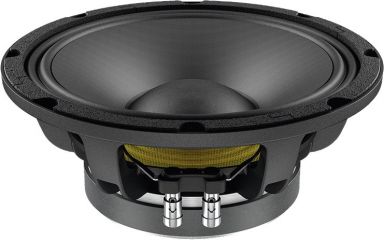
PA woofers

Professional PA Woofers for Your Sound System: PA woofers are the heart of every professional sound reinforcement system. These bass drivers deliver the powerful low-frequency reproduction that makes live performances, club installations and touring systems truly impressive. Whether You're building custom speaker cabinets, upgrading existing PA boxes or replacing worn-out drivers – choosing the right PA woofer determines the sonic foundation of Your entire system. At LTT, You'll find professional bass...
Read more »
PA woofers
Close window
PA woofers

Professional PA Woofers for Your Sound System

PA woofers are the heart of every professional sound reinforcement system. These bass drivers deliver the powerful low-frequency reproduction that makes live performances, club installations and touring systems truly impressive. Whether You're building custom speaker cabinets, upgrading existing PA boxes or replacing worn-out drivers – choosing the right PA woofer determines the sonic foundation of Your entire system.

At LTT, You'll find professional bass drivers from leading manufacturers including JBL, Eminence, Celestion, BMS and IMG Stage Line. Our range covers sizes from compact 8-inch drivers for portable systems through to massive 18-inch subwoofer chassis for large-scale venue installations. Each driver is engineered for professional applications where reliability, power handling and accurate bass reproduction are non-negotiable.

With over 25 years of experience in professional event technology, LTT is Your specialist partner for PA woofers and complete sound reinforcement solutions. We understand the technical demands of live sound applications and provide expert guidance to help You select the optimal driver for Your specific cabinet design and performance requirements.

Understanding PA Woofer Specifications

PA woofers are low-frequency transducers specifically designed for professional sound reinforcement applications. Unlike hi-fi bass drivers, PA woofers prioritise high power handling, robust construction and consistent performance under demanding conditions. The key specifications that define a PA woofer's performance include driver diameter, power rating, impedance, sensitivity and the Thiele-Small parameters that determine cabinet compatibility.

Driver diameter is the most visible specification, typically ranging from 8 inches (20 cm) through 10, 12, 15 to 18 inches (46 cm). Larger diameters generally produce deeper bass extension and higher sound pressure levels, but require correspondingly larger cabinet volumes. An 8-inch woofer suits compact stage monitors and portable systems, whilst 15-inch and 18-inch drivers are the standard choice for main PA systems and dedicated subwoofers.

Power handling specifications include RMS (continuous) power, program power and peak power ratings. A typical professional 12-inch PA woofer might be rated at 300W RMS, 600W program and 1200W peak. The RMS rating indicates the continuous thermal power the voice coil can dissipate without damage – this is the most conservative and reliable figure for amplifier matching. Program power assumes music signals with typical dynamics, whilst peak power represents very short-term transient capability.

Impedance is standardised at either 4 ohms or 8 ohms for PA applications. This specification directly affects amplifier loading and system wiring configurations. When wiring multiple drivers, 8-ohm woofers offer more flexibility for series-parallel combinations, whilst 4-ohm drivers extract maximum power from most professional amplifiers when used individually. The impedance remains relatively constant across the driver's frequency range, unlike hi-fi woofers which may exhibit significant impedance variations.

Sensitivity indicates how efficiently the driver converts electrical power into acoustic output, measured in dB SPL at 1 watt input at 1 metre distance. Professional PA woofers typically achieve 95–100 dB sensitivity, significantly higher than domestic speakers. A 3 dB sensitivity increase effectively doubles the acoustic output for the same input power – this efficiency advantage is crucial for achieving high sound pressure levels in live applications without excessive amplifier power.

The Thiele-Small parameters – including resonant frequency (Fs), total Q (Qts) and equivalent volume (Vas) – determine the driver's behaviour in different enclosure types. These parameters guide cabinet design decisions: sealed boxes, ported enclosures or horn-loaded configurations. Understanding these specifications ensures optimal bass response and prevents common installation mistakes that compromise performance.

Applications in Professional Venues and Live Sound

PA woofers serve diverse applications across the professional audio spectrum. In main PA systems, 12-inch and 15-inch woofers form the bass section of full-range speaker cabinets, typically crossed over to horn-loaded compression drivers at 1.2–2 kHz. These drivers must reproduce bass guitar, kick drum and synthesiser fundamentals with clarity and impact whilst maintaining intelligibility throughout large venues. The power handling and sensitivity requirements are substantial – a typical club installation might deploy four 15-inch woofers per side to achieve adequate coverage.

Dedicated subwoofer systems utilise 15-inch and 18-inch drivers in optimised enclosures designed for maximum low-frequency extension. These systems reproduce the 30–100 Hz octave that defines the physical impact of modern music. Subwoofer arrays for touring productions often employ dozens of 18-inch drivers in carefully configured arrangements to achieve even bass coverage across the audience area. The drivers must withstand sustained high-power operation without thermal compression or mechanical failure.

Stage monitor systems typically use 10-inch or 12-inch woofers in compact wedge enclosures. These drivers must deliver sufficient bass response for musicians to hear their performance clearly whilst maintaining a compact footprint on crowded stages. The power handling requirements are moderate compared to main PA systems, but the drivers must tolerate close-proximity high sound pressure levels and the physical rigours of touring.

Installation sound systems in theatres, churches and conference facilities often specify 8-inch or 10-inch woofers for distributed ceiling speakers or wall-mounted cabinets. These applications prioritise speech intelligibility and moderate music reproduction rather than maximum output. The drivers must integrate seamlessly with architectural elements whilst providing reliable performance over decades of continuous operation.

Replacement and upgrade projects represent a significant application category. When original drivers fail or performance requirements change, selecting compatible replacement woofers requires careful attention to mounting dimensions, impedance and sensitivity matching. Upgrading to higher-specification drivers can dramatically improve system performance, but cabinet modifications may be necessary to accommodate different Thiele-Small parameters and achieve optimal results.

Quality Standards and Professional Brands

Professional PA woofers distinguish themselves through robust construction, consistent manufacturing tolerances and reliable long-term performance. The voice coil former material – typically aluminium or Kapton – must withstand continuous temperatures exceeding 200°C without deformation. High-temperature adhesives bond the voice coil windings and prevent thermal failure. The spider and surround materials resist UV degradation, humidity and the mechanical stresses of high-excursion operation.

JBL represents the industry standard for professional PA woofers, with models like the 2226H (15-inch, 600W) and 2206H (12-inch, 400W) serving as reference designs for countless touring and installation systems. JBL's Differential Drive technology and advanced motor structures deliver exceptional linearity and power handling. These drivers typically cost between €200 and €600 depending on size and specification, reflecting their professional-grade construction and performance consistency.

Eminence offers comprehensive ranges spanning budget-conscious solutions through to premium neodymium-magnet designs. The Kappa and Delta series provide excellent value for fixed installations and regional touring, with typical prices from €80 to €250. Eminence's extensive documentation and consistent availability make them popular choices for custom cabinet builders and system integrators who require reliable specifications and predictable performance.

Celestion brings decades of experience from the musical instrument amplification sector to their PA woofer ranges. Models like the BL15-400X (15-inch, 400W RMS) combine robust construction with musical voicing characteristics that suit live music applications. Celestion drivers typically occupy the mid-price segment at €150–€350, offering proven reliability for club installations and touring systems.

BMS specialises in high-performance neodymium drivers that deliver exceptional power-to-weight ratios. Their 15-inch models achieve 1000W continuous power handling whilst weighing significantly less than equivalent ferrite-magnet designs – a crucial advantage for touring applications where transport costs and rigging loads matter. BMS drivers command premium pricing from €400 to €800, justified by their advanced engineering and weight savings.

IMG Stage Line and Monacor provide cost-effective solutions for budget-conscious applications, with 12-inch drivers available from €60 to €120. Whilst these drivers may not match the ultimate performance of premium brands, they offer adequate specifications for smaller venues, rehearsal spaces and entry-level PA systems where budget constraints are paramount.

When evaluating PA woofers, examine the published specifications critically. Reputable manufacturers provide comprehensive Thiele-Small parameters, impedance curves and power handling test conditions. Beware of inflated peak power ratings without corresponding RMS specifications – these often indicate consumer-grade rather than professional products. The magnet assembly weight provides a useful indicator of quality: a professional 15-inch woofer typically weighs 8–12 kg, with the substantial magnet structure necessary for high sensitivity and power handling.

Power Amplifier Matching and System Design

Matching PA woofers to appropriate power amplifiers requires understanding both continuous power requirements and dynamic headroom needs. The conventional guideline suggests amplifier power ratings of 1.5–2 times the driver's RMS power handling for music applications. This apparent over-specification accounts for the high crest factor of music signals – the ratio between peak and average levels typically reaches 10–15 dB, meaning brief transients demand far more power than sustained passages.

For a 12-inch woofer rated at 300W RMS, a professional installation would specify a 500–600W amplifier channel. This combination ensures the amplifier operates comfortably within its linear range during normal programme material, avoiding clipping distortion that generates harmonics outside the woofer's intended frequency range. Clipped signals contain sustained high-frequency energy that can destroy voice coils despite the amplifier's rated power being within the driver's specification.

Impedance considerations directly affect power delivery. A 4-ohm woofer extracts approximately 1.4 times more power from a given amplifier than an 8-ohm driver, assuming the amplifier can deliver stable output into the lower impedance. When designing systems with multiple woofers, series-parallel wiring configurations allow flexible impedance matching. Two 8-ohm drivers wired in parallel present 4 ohms to the amplifier; wired in series they present 16 ohms. Four 8-ohm drivers can be configured as 2 ohms (all parallel), 8 ohms (series-parallel) or 32 ohms (all series).

Crossover frequency selection determines how much of the audio spectrum the woofer must reproduce. A typical full-range PA cabinet crosses the woofer to a compression driver at 1.5–2 kHz using 24 dB/octave slopes. This crossover point lies well within the woofer's capability whilst protecting it from excessive high-frequency content. Subwoofer systems employ much lower crossover points – typically 80–120 Hz – allowing the woofer to concentrate its excursion capability on deep bass reproduction.

Enclosure volume calculations based on Thiele-Small parameters determine optimal cabinet size for the desired bass response. A sealed enclosure typically requires 60–80% of the driver's Vas (equivalent volume) to achieve a Qtc (total system Q) around 0.7, providing maximally flat frequency response. Ported enclosures can be tuned for extended low-frequency response or increased efficiency, but require larger cabinet volumes and careful port design to avoid turbulence noise.

Professional system design software such as Hornresp or WinISD allows precise modelling of driver-cabinet combinations before construction begins. These tools predict frequency response, impedance curves, port dimensions and power handling based on the driver's published parameters. Investing time in proper design prevents costly mistakes and ensures the completed system meets performance expectations.

The thermal power compression phenomenon affects all PA woofers during sustained high-power operation. As the voice coil temperature increases, its electrical resistance rises, reducing the current flow and consequently the acoustic output. Professional drivers minimise this effect through efficient heat dissipation, but sensitivity typically decreases by 1–3 dB after 30 seconds of continuous full-power operation. System designs must account for this behaviour when calculating required driver quantities for sustained high-output applications.

Installation Guidelines and Wiring Configurations

Installing PA woofers correctly ensures optimal performance and longevity. The mounting baffle must provide rigid support around the entire driver frame perimeter – any flexibility in the baffle absorbs energy that should radiate as sound, reducing efficiency and causing unwanted resonances. Professional cabinet construction employs 18–25 mm birch plywood or equivalent materials, with internal bracing to eliminate panel vibration.

Gasket sealing between the driver frame and baffle prevents air leaks that compromise bass response. Professional installations use closed-cell foam tape or silicone gasket material to create an airtight seal. Even small leaks significantly reduce output at low frequencies where the pressure differential between the cabinet interior and exterior is greatest. The mounting bolts – typically M6 or M8 – must be tightened evenly in a star pattern to prevent frame distortion.

Wiring polarity must be consistent across all drivers in a system. The positive terminal (typically marked red or with a "+" symbol) connects to the amplifier's positive output. Reversed polarity causes phase cancellation when multiple cabinets operate together, dramatically reducing bass output. Professional practice marks polarity clearly on all connectors and verifies correct wiring with test signals before deployment.

Series wiring connects the positive terminal of the first driver to the negative terminal of the second driver, with the amplifier connecting to the remaining terminals. This configuration doubles the total impedance: two 8-ohm drivers in series present 16 ohms. Series wiring suits applications where higher impedance is beneficial, but the drivers must have identical specifications to ensure even power distribution.

Parallel wiring connects all positive terminals together and all negative terminals together. This configuration halves the total impedance: two 8-ohm drivers in parallel present 4 ohms. Parallel wiring extracts maximum power from the amplifier but requires careful attention to amplifier stability into low impedances. Again, identical driver specifications ensure even power distribution and prevent one driver from overloading whilst others remain underutilised.

Series-parallel combinations allow four or more drivers to be configured for optimal impedance matching. Four 8-ohm drivers can be wired as two series pairs in parallel, presenting 8 ohms total – an ideal match for most professional amplifiers. This configuration distributes power evenly whilst maintaining manageable impedance.

The connection hardware must handle the current levels involved in high-power PA systems. Speakon connectors have become the professional standard, offering secure locking connections and separate contact pairs for bi-amplified systems. The cable gauge must be adequate for the power levels and cable length: 2.5 mm² cable suits runs up to 10 metres for 500W systems, whilst longer runs or higher power levels require 4 mm² or larger conductors to minimise resistive losses.

Cabinet damping material – typically acoustic foam or long-fibre wool – absorbs internal standing waves and reduces cabinet colouration. The material should fill 30–50% of the internal volume without blocking ports or touching the driver cone. Excessive damping reduces efficiency, whilst insufficient damping allows internal resonances to colour the sound. Professional designs balance these factors through careful material selection and placement.

LTT – Your Specialist for Professional Event Technology

LTT has been Your reliable partner for professional event technology for over 25 years. As both retailer and manufacturer with our own production facilities in Germany, we understand the technical demands of professional sound reinforcement from both theoretical and practical perspectives. Our expertise extends from individual component selection through to complete system design and integration.

Our PA woofer range encompasses leading professional brands alongside cost-effective solutions for every application and budget. Whether You're building custom speaker cabinets for a touring production, upgrading an existing installation or replacing failed drivers, our technical team provides expert guidance to ensure optimal component selection. We stock the drivers we recommend, ensuring immediate availability for urgent projects.

All PA woofers ship from our logistics centre in Bocholt, Germany, with free shipping on orders over €69. Express delivery options ensure critical replacement drivers reach You when downtime costs matter. Our 3-year LTT guarantee provides peace of mind for professional applications where reliability is non-negotiable. International shipping serves our worldwide customer base, with established distribution networks supporting our house brands Naxpro-Truss, Riggatec and Bullstage across multiple continents.

As a B2B specialist, we offer wholesale terms for resellers and system integrators who require consistent supply and technical support. Our product range extends far beyond PA woofers to encompass complete event technology solutions: truss systems, rigging hardware, lighting, effects equipment, cables and flight cases. This comprehensive offering allows You to source complete projects from a single trusted supplier, streamlining procurement and ensuring compatibility across system components.

With over 100,000 positive customer reviews, LTT has earned its reputation as a specialist partner for professional event technology. Contact our technical team to discuss Your PA woofer requirements – we're here to help You achieve impressive results in every application.

FAQ – Questions & Answers

What frequency range do PA woofers reproduce?

PA woofers typically reproduce frequencies from approximately 40–50 Hz up to 2–4 kHz, depending on driver size and cabinet design. Larger 15-inch and 18-inch drivers extend deeper into the bass region, reaching down to 35–40 Hz in optimised enclosures, whilst smaller 8-inch and 10-inch drivers may roll off below 60–80 Hz. In full-range PA cabinets, the woofer is crossed over to a compression driver at 1.2–2 kHz, limiting its high-frequency reproduction. Dedicated subwoofer applications cross over much lower, typically at 80–120 Hz, allowing the woofer to concentrate its excursion capability on deep bass reproduction. The usable frequency range depends on the driver's Thiele-Small parameters, cabinet design and crossover implementation.

What impedance should I choose for PA woofers?

PA woofers are standardised at either 4 ohms or 8 ohms impedance. Choose 8-ohm drivers for maximum wiring flexibility – they can be configured in series-parallel combinations to match various amplifier requirements and allow multiple drivers per amplifier channel. Select 4-ohm drivers when You need to extract maximum power from an amplifier driving a single driver, as most professional amplifiers deliver approximately 1.4 times more power into 4 ohms compared to 8 ohms. For systems with multiple cabinets, 8-ohm drivers offer more configuration options without presenting excessively low impedances that might compromise amplifier stability. Always verify Your amplifier's minimum stable impedance specification before finalising the driver impedance choice.

What is the difference between RMS and peak power ratings?

RMS (Root Mean Square) power indicates the continuous thermal power a PA woofer can handle indefinitely without damage – this is the most conservative and reliable specification for amplifier matching. Program power assumes music signals with typical dynamics and is usually double the RMS rating, accounting for the fact that music contains brief peaks and sustained lower-level passages. Peak power represents very short-term transient capability, typically four times the RMS rating, indicating the maximum instantaneous power the driver can withstand for milliseconds. For professional applications, always base amplifier selection on the RMS rating, typically choosing amplifiers rated at 1.5–2 times the driver's RMS power handling to provide adequate headroom for dynamic programme material without risk of clipping distortion.

Can I replace a PA woofer with a different brand?

Replacing a PA woofer with a different brand is possible but requires careful attention to several specifications. The mounting diameter and bolt pattern must match exactly – an 8-hole 12-inch driver cannot directly replace a 4-hole design without cabinet modification. The impedance should match the original to maintain correct amplifier loading and crossover behaviour. Sensitivity differences of more than 2–3 dB will create level imbalances in multi-driver systems. The depth dimension must fit within the available cabinet space. Most critically, the Thiele-Small parameters should be similar to maintain the intended frequency response – a driver with significantly different Qts or Fs values will alter the cabinet tuning. Professional practice involves modelling the replacement driver in the existing cabinet design before purchase to verify compatibility.

Which PA woofer size suits club installations?

Club installations typically specify 12-inch or 15-inch PA woofers depending on venue size and music genre. A 12-inch driver in a well-designed cabinet provides adequate bass impact for venues up to 200 capacity with electronic music or rock genres, offering a good balance between output capability and cabinet size. Larger clubs or bass-heavy music genres benefit from 15-inch drivers, which deliver deeper bass extension and higher sound pressure levels. Many professional club systems employ 15-inch woofers in the main PA cabinets supplemented by dedicated 18-inch subwoofers for the lowest octave. The total number of drivers matters more than individual size – four 12-inch drivers often outperform two 15-inch drivers in terms of total output and coverage uniformity. Consider the available rigging points, transport logistics and amplifier inventory when selecting driver size.

How do I calculate the correct cabinet volume for a PA woofer?

Calculating correct cabinet volume requires the driver's Thiele-Small parameters, specifically Vas (equivalent volume), Qts (total Q) and Fs (resonant frequency). For sealed enclosures, target a cabinet volume of 60–80% of the Vas value to achieve a system Qtc around 0.7, providing maximally flat frequency response. Ported enclosures require larger volumes – typically 1.5–2 times the sealed box requirement – plus careful port tuning to achieve the desired bass extension or efficiency. Professional system design software such as WinISD or Hornresp models the driver-cabinet combination precisely, predicting frequency response, port dimensions and power handling. These tools are essential for optimising performance before construction begins. The manufacturer's datasheet often includes recommended enclosure designs that eliminate calculation requirements for standard applications.

What causes PA woofer failure and how can I prevent it?

PA woofer failure typically results from thermal overload, mechanical over-excursion or amplifier clipping. Thermal failure occurs when sustained high power operation exceeds the voice coil's heat dissipation capability, causing the coil former to deform or adhesives to fail. Prevention requires matching amplifier power appropriately and avoiding sustained full-power operation beyond the driver's continuous rating. Mechanical failure happens when excessive signal levels drive the cone beyond its linear excursion limits, potentially separating the voice coil from the former or tearing the suspension. High-pass filtering below the driver's usable range prevents infrasonic content from wasting excursion capability. Amplifier clipping generates sustained high-frequency harmonics that overheat voice coils despite moderate average power levels – proper gain structure and limiting prevents this common failure mode. Regular inspection of surrounds and spiders identifies deterioration before catastrophic failure occurs.

Do PA woofers require a break-in period?

PA woofers benefit from a brief break-in period during which the suspension components – spider and surround – become more compliant through initial flexing. This mechanical settling typically requires 10–20 hours of moderate-level operation, after which the driver reaches its final performance characteristics. The changes are subtle: slightly increased excursion capability and marginally reduced resonant frequency as the suspension loosens. Professional practice involves running new drivers at moderate levels for the first few sessions before demanding full performance. Avoid sustained high-power operation during the initial break-in period, as the suspension adhesives may not have fully cured despite the driver leaving the factory. The break-in process occurs naturally during normal use – dedicated break-in signals are unnecessary for PA applications. After break-in, the driver's parameters remain stable throughout its service life under normal operating conditions.

Top seller
MONACOR SP-300P Hochleistungs-Basslautsprecher
MONACOR SP-300P Bass speaker, 100 W, 8 O
€109.00 *
incl. tax, free shipping to Germany
[International shipping costs]
Availability:
Delivery time: 3-5 days
LAVOCE WAF153.02 15" Woofer, Ferrit, Alukorb
LAVOCE WAF153.02 15" Woofer Ferrite Magnet Aluminium Basket Driver
€189.00 *
incl. tax, free shipping to Germany
[International shipping costs]
Availability:
Delivery time: 3-5 days
LAVOCE WAF102.50 10" Woofer, Ferrit, Alukorb
LAVOCE WAF102.50 10" Woofer Ferrite Magnet Aluminium Basket Driver
€109.00 *
incl. tax, free shipping to Germany
[International shipping costs]
Availability:
Delivery time: 3-5 days
Power Dynamics PD18C Tieftöner Ferrit 18" 2000W
Power Dynamics PD18C Woofer Ferrite 18” 2000W
€259.00 *
incl. tax, free shipping to Germany
[International shipping costs]
Availability:
Delivery time: 3-5 days
IMG STAGE LINE SP-12A/302PA PA-Basslautsprecher
MONACOR SP-12A/302PA PA bass-midrange speaker, 300 W, 8 O
€144.00 *
incl. tax, free shipping to Germany
[International shipping costs]
Availability:
Delivery time: 3-5 days
85 Articles
Close filters
 
  •  
  •  
  •  
  •  
  •  
  •  
  •  
from to
1 From 4 pages
No results were found for the filter!
IMG STAGE LINE SP-8/150PRO PA-Basslautsprecher
MONACOR SP-8/150PRO Compact PA bass speaker, subwoofer, 150 W, 8 O
Compact PA bass speaker, subwoofer, 150 W, 8 O 20 cm (8") bass speaker and subwoofer of high power capability • Heat-resistant voice coil and ventilated drive system • Extra long...
€70.00 *
incl. tax, free shipping to Germany
[International shipping costs]
Availability:
Delivery time: 3-5 days
MONACOR SP-382PA Basslautsprecher
MONACOR SP-382PA Universal bass speaker, 150 W, 8 O
Universal bass speaker, 150 W, 8 O For bass applications, also in power speaker systems. : Impedance (Z): 8 O • Frequency range: f3-4,000 Hz • Resonant frequency (fs): 25 Hz • Power...
€111.00 *
incl. tax, free shipping to Germany
[International shipping costs]
Availability:
Delivery time: 3-5 days
MONACOR SP-300P Hochleistungs-Basslautsprecher
MONACOR SP-300P Bass speaker, 100 W, 8 O
Bass speaker, 100 W, 8 O With drilled pole core • Robust paper cone for bass reproduction of high power rating • : Impedance (Z): 8 O • Frequency range: f3-4,000 Hz • Resonant...
€109.00 *
incl. tax, free shipping to Germany
[International shipping costs]
Availability:
Delivery time: 3-5 days
IMG STAGE LINE SP-12A/302PA PA-Basslautsprecher
MONACOR SP-12A/302PA PA bass-midrange speaker, 300 W, 8 O
PA bass-midrange speaker, 300 W, 8 O Of very high power capability • 30 cm (12") professional speaker of long excursion • Diecast basket • Cone with water-repellent coating...
€144.00 *
incl. tax, free shipping to Germany
[International shipping costs]
Availability:
Delivery time: 3-5 days
IMG STAGE LINE SP-10A/302PA PA-Basslautsprecher
MONACOR SP-10A/302PA PA bass-midrange speaker, 300 W, 8 O
PA bass-midrange speaker, 300 W, 8 O Of very high power capability • 25 cm (10") professional speaker of long excursion • Diecast basket • Cone with water-repellent coating...
€159.00 * €119.99 *
incl. tax, free shipping to Germany
[International shipping costs]
Availability:
Delivery time: 1-3 days
MONACOR SP-302PA Basslautsprecher
MONACOR SP-302PA Universal bass speaker, 100 W, 8 O
Universal bass speaker, 100 W, 8 O For bass applications, also in power speaker systems. : Impedance (Z): 8 O • Frequency range: f3-4,000 Hz • Resonant frequency (fs): 45 Hz • Power...
€58.00 *
incl. tax, plus shipping costs
Availability:
Delivery time: 3-5 days
IMG STAGE LINE SP-15A/402PA PA-Basslautsprecher
MONACOR SP-15A/402PA PA bass speaker, 400 W, 8 O
PA bass speaker, 400 W, 8 O Of very high power capability • 38 cm (15") professional bass speaker of long excursion • Diecast basket • Cone with water-repellent coating...
€250.00 *
incl. tax, free shipping to Germany
[International shipping costs]
Availability:
Delivery time: 3-5 days
LAVOCE WSF102.00 10" Woofer, Ferrit, Stahlkorb
LAVOCE WSF102.00 10" Woofer Ferrite Magnet Steel Basket Driver
175 W AES, 8 ohms, 97 dB, 60 - 4000 Hz For further information about this product, please refer to the Data Sheet under "Downloads" • Power: Program: 350W Rated: 175W AES...
€72.90 *
incl. tax, free shipping to Germany
[International shipping costs]
Availability:
Delivery time: 1-3 days
LAVOCE SSF102.40 10" Woofer, Ferrit, Stahlkorb
LAVOCE SSF102.40 10" Subwoofer Ferrite Magnet Steel Basket Driver
250 W AES, 8 ohms, 92 dB, 40 - 500 Hz For further information about this product, please refer to the Data Sheet under "Downloads" • Power: Program: 500W Rated: 250W AES...
€89.90 *
incl. tax, free shipping to Germany
[International shipping costs]
Availability:
Delivery time: 3-5 days
LAVOCE WAF102.50 10" Woofer, Ferrit, Alukorb
LAVOCE WAF102.50 10" Woofer Ferrite Magnet Aluminium Basket Driver
250 W AES, 8 ohms, 97 dB, 70 - 4000 Hz For further information about this product, please refer to the Data Sheet under "Downloads" • Power: Program: 500W Rated: 250W AES...
€109.00 *
incl. tax, free shipping to Germany
[International shipping costs]
Availability:
Delivery time: 3-5 days
LAVOCE SSF102.50L 10" Subwoofer, Ferrit, Stahlkorb
LAVOCE SSF102.50L 10" Subwoofer Ferrite Magnet Steel Basket Driver
400 W AES, 8 ohms, 91,5 dB, 50 - 500 Hz For further information about this product, please refer to the Data Sheet under "Downloads" • Package contents 1 x device • Power:...
€125.00 *
incl. tax, free shipping to Germany
[International shipping costs]
Availability:
Delivery time: 3-5 days
LAVOCE WSF122.50 12" Woofer, Ferrit, Stahlkorb
LAVOCE WSF122.50 12" Woofer Ferrite Magnet Steel Basket Driver
250 W AES, 8 ohms, 97,5 dB, 50 - 3000 Hz For further information about this product, please refer to the Data Sheet under "Downloads" • Package contents 1 x device • Power:...
€95.90 *
incl. tax, free shipping to Germany
[International shipping costs]
Availability:
Delivery time: 3-5 days
LAVOCE WAF122.50 12" Woofer, Ferrit, Alukorb
LAVOCE WAF122.50 12" Woofer Ferrite Magnet Aluminium Basket Driver
350 W AES, 8 ohms, 97 dB, 60 - 3000 Hz For further information about this product, please refer to the Data Sheet under "Downloads" • Power: Program: 700W Rated: 350W AES...
€145.00 *
incl. tax, free shipping to Germany
[International shipping costs]
Availability:
Delivery time: 3-5 days
LAVOCE WAF123.01 12" Woofer, Ferrit, Alukorb
LAVOCE WAF123.01 12" Woofer Ferrite Magnet Aluminium Basket Driver
500 W AES, 8 ohms, 99 dB, 65 - 3000 Hz For further information about this product, please refer to the Data Sheet under "Downloads" • Power: Program: 1000W Rated: 500W AES...
€169.00 *
incl. tax, free shipping to Germany
[International shipping costs]
Availability:
Delivery time: 3-5 days
LAVOCE WAF123.00 12" Woofer, Ferrit, Alukorb
LAVOCE WAF123.00 12" Woofer Ferrite Magnet Aluminium Basket Driver
500 W AES, 8 ohms, 99 dB, 50 - 3000 Hz For further information about this product, please refer to the Data Sheet under "Downloads" • Power: Program: 1000W Rated: 500W AES...
€165.00 *
incl. tax, free shipping to Germany
[International shipping costs]
Availability:
Delivery time: 3-5 days
LAVOCE WSF152.50 15" Woofer, Ferrit, Stahlkorb
LAVOCE WSF152.50 15" Woofer Ferrite Magnet Steel Basket Driver
250 W AES, 8 ohms, 97,5 dB, 45 - 3000 Hz For further information about this product, please refer to the Data Sheet under "Downloads" • Package contents 1 x device • Power:...
€115.00 *
incl. tax, free shipping to Germany
[International shipping costs]
Availability:
Delivery time: 3-5 days
LAVOCE SSF153.00 15" Subwoofer, Ferrit, Stahlkorb
LAVOCE SSF153.00 15" Subwoofer Ferrite Magnet Steel Basket Driver
400 W AES, 8 ohms, 98 dB, 45 - 2000 Hz For further information about this product, please refer to the Data Sheet under "Downloads" • Power: Program: 800W Rated: 400W AES...
€155.00 *
incl. tax, free shipping to Germany
[International shipping costs]
Availability:
Delivery time: 3-5 days
LAVOCE WAF153.00 15" Woofer, Ferrit, Alukorb
LAVOCE WAF153.00 15" Woofer Ferrite Magnet Aluminium Basket Driver
500 W AES, 8 ohms, 99 dB, 45 - 3000 Hz For further information about this product, please refer to the Data Sheet under "Downloads" • Power: Program: 1000W Rated: 500W AES...
€189.00 *
incl. tax, free shipping to Germany
[International shipping costs]
Availability:
Delivery time: 3-5 days
LAVOCE WAF154.02 15" Subwoofer, Ferrit, Alukorb
LAVOCE WAF154.02 15" Subwoofer Ferrite Magnet Aluminium Basket Driver
800 W AES, 8 ohms, 96 dB, 40 - 1000 Hz For further information about this product, please refer to the Data Sheet under "Downloads" • Package contents 1 x device • Power:...
€245.00 *
incl. tax, free shipping to Germany
[International shipping costs]
Availability:
Delivery time: 3-5 days
LAVOCE WAF154.01 15" Subwoofer, Ferrit, Alukorb
LAVOCE WAF154.01 15" Subwoofer Ferrite Magnet Aluminium Basket Driver
1000 W AES, 8 ohms, 97 dB, 40 - 1000 Hz For further information about this product, please refer to the Data Sheet under "Downloads" • Package contents 1 x device • Power:...
€255.00 *
incl. tax, free shipping to Germany
[International shipping costs]
Availability:
Delivery time: 3-5 days
LAVOCE WAF154.00 15" Subwoofer, Ferrit, Alukorb
LAVOCE WAF154.00 15" Subwoofer Ferrite Magnet Aluminium Basket Driver
1500 W AES, 8 ohms, 96 dB, 40 - 1000 Hz For further information about this product, please refer to the Data Sheet under "Downloads" • Power: Program: 3000W Rated: 1500W AES...
€275.00 *
incl. tax, free shipping to Germany
[International shipping costs]
Availability:
Delivery time: 3-5 days
LAVOCE SAF184.01 18" Subwoofer, Ferrit, Alukorb
LAVOCE SAF184.01 18" Subwoofer Ferrite Magnet Aluminium Basket Driver
700 W AES, 8 ohms, 98 dB, 30 - 1500 Hz For further information about this product, please refer to the Data Sheet under "Downloads" • Power: Program: 1400W Rated: 700W AES...
€279.00 *
incl. tax, free shipping to Germany
[International shipping costs]
Availability:
Delivery time: 3-5 days
LAVOCE SAF184.02 18" Subwoofer, Ferrit, Alukorb
LAVOCE SAF184.02 18" Subwoofer Ferrite Magnet Aluminium Basket Driver
1200 W AES, 8 ohms, 97 dB, 40 - 1000 Hz For further information about this product, please refer to the Data Sheet under "Downloads" • Power: Program: 2400W Rated: 1200W AES...
€309.00 *
incl. tax, free shipping to Germany
[International shipping costs]
Availability:
Delivery time: 3-5 days
LAVOCE SAF184.03 18" Subwoofer, Ferrit, Alukorb
LAVOCE SAF184.03 18" Subwoofer Ferrite Magnet Aluminium Basket Driver
1500 W AES, 8 ohms, 96 dB, 30 - 1000 Hz For further information about this product, please refer to the Data Sheet under "Downloads" • Power: Program: 3000W Rated: 1500W AES...
€339.00 *
incl. tax, free shipping to Germany
[International shipping costs]
Availability:
Delivery time: 3-5 days
1 From 4 pages
Facts
Professional PA Woofers for Your Sound System: PA woofers are the heart of every professional sound reinforcement system. These bass drivers deliver the powerful low-frequency reproduction that makes live performances, club installations and touring systems truly impressive. Whether You're building custom speaker cabinets, upgrading existing PA boxes or replacing worn-out drivers – choosing the right PA woofer determines the sonic... Read more »
Viewed
Facts

Professional PA Woofers for Your Sound System

PA woofers are the heart of every professional sound reinforcement system. These bass drivers deliver the powerful low-frequency reproduction that makes live performances, club installations and touring systems truly impressive. Whether You're building custom speaker cabinets, upgrading existing PA boxes or replacing worn-out drivers – choosing the right PA woofer determines the sonic foundation of Your entire system.

At LTT, You'll find professional bass drivers from leading manufacturers including JBL, Eminence, Celestion, BMS and IMG Stage Line. Our range covers sizes from compact 8-inch drivers for portable systems through to massive 18-inch subwoofer chassis for large-scale venue installations. Each driver is engineered for professional applications where reliability, power handling and accurate bass reproduction are non-negotiable.

With over 25 years of experience in professional event technology, LTT is Your specialist partner for PA woofers and complete sound reinforcement solutions. We understand the technical demands of live sound applications and provide expert guidance to help You select the optimal driver for Your specific cabinet design and performance requirements.

Understanding PA Woofer Specifications

PA woofers are low-frequency transducers specifically designed for professional sound reinforcement applications. Unlike hi-fi bass drivers, PA woofers prioritise high power handling, robust construction and consistent performance under demanding conditions. The key specifications that define a PA woofer's performance include driver diameter, power rating, impedance, sensitivity and the Thiele-Small parameters that determine cabinet compatibility.

Driver diameter is the most visible specification, typically ranging from 8 inches (20 cm) through 10, 12, 15 to 18 inches (46 cm). Larger diameters generally produce deeper bass extension and higher sound pressure levels, but require correspondingly larger cabinet volumes. An 8-inch woofer suits compact stage monitors and portable systems, whilst 15-inch and 18-inch drivers are the standard choice for main PA systems and dedicated subwoofers.

Power handling specifications include RMS (continuous) power, program power and peak power ratings. A typical professional 12-inch PA woofer might be rated at 300W RMS, 600W program and 1200W peak. The RMS rating indicates the continuous thermal power the voice coil can dissipate without damage – this is the most conservative and reliable figure for amplifier matching. Program power assumes music signals with typical dynamics, whilst peak power represents very short-term transient capability.

Impedance is standardised at either 4 ohms or 8 ohms for PA applications. This specification directly affects amplifier loading and system wiring configurations. When wiring multiple drivers, 8-ohm woofers offer more flexibility for series-parallel combinations, whilst 4-ohm drivers extract maximum power from most professional amplifiers when used individually. The impedance remains relatively constant across the driver's frequency range, unlike hi-fi woofers which may exhibit significant impedance variations.

Sensitivity indicates how efficiently the driver converts electrical power into acoustic output, measured in dB SPL at 1 watt input at 1 metre distance. Professional PA woofers typically achieve 95–100 dB sensitivity, significantly higher than domestic speakers. A 3 dB sensitivity increase effectively doubles the acoustic output for the same input power – this efficiency advantage is crucial for achieving high sound pressure levels in live applications without excessive amplifier power.

The Thiele-Small parameters – including resonant frequency (Fs), total Q (Qts) and equivalent volume (Vas) – determine the driver's behaviour in different enclosure types. These parameters guide cabinet design decisions: sealed boxes, ported enclosures or horn-loaded configurations. Understanding these specifications ensures optimal bass response and prevents common installation mistakes that compromise performance.

Applications in Professional Venues and Live Sound

PA woofers serve diverse applications across the professional audio spectrum. In main PA systems, 12-inch and 15-inch woofers form the bass section of full-range speaker cabinets, typically crossed over to horn-loaded compression drivers at 1.2–2 kHz. These drivers must reproduce bass guitar, kick drum and synthesiser fundamentals with clarity and impact whilst maintaining intelligibility throughout large venues. The power handling and sensitivity requirements are substantial – a typical club installation might deploy four 15-inch woofers per side to achieve adequate coverage.

Dedicated subwoofer systems utilise 15-inch and 18-inch drivers in optimised enclosures designed for maximum low-frequency extension. These systems reproduce the 30–100 Hz octave that defines the physical impact of modern music. Subwoofer arrays for touring productions often employ dozens of 18-inch drivers in carefully configured arrangements to achieve even bass coverage across the audience area. The drivers must withstand sustained high-power operation without thermal compression or mechanical failure.

Stage monitor systems typically use 10-inch or 12-inch woofers in compact wedge enclosures. These drivers must deliver sufficient bass response for musicians to hear their performance clearly whilst maintaining a compact footprint on crowded stages. The power handling requirements are moderate compared to main PA systems, but the drivers must tolerate close-proximity high sound pressure levels and the physical rigours of touring.

Installation sound systems in theatres, churches and conference facilities often specify 8-inch or 10-inch woofers for distributed ceiling speakers or wall-mounted cabinets. These applications prioritise speech intelligibility and moderate music reproduction rather than maximum output. The drivers must integrate seamlessly with architectural elements whilst providing reliable performance over decades of continuous operation.

Replacement and upgrade projects represent a significant application category. When original drivers fail or performance requirements change, selecting compatible replacement woofers requires careful attention to mounting dimensions, impedance and sensitivity matching. Upgrading to higher-specification drivers can dramatically improve system performance, but cabinet modifications may be necessary to accommodate different Thiele-Small parameters and achieve optimal results.

Quality Standards and Professional Brands

Professional PA woofers distinguish themselves through robust construction, consistent manufacturing tolerances and reliable long-term performance. The voice coil former material – typically aluminium or Kapton – must withstand continuous temperatures exceeding 200°C without deformation. High-temperature adhesives bond the voice coil windings and prevent thermal failure. The spider and surround materials resist UV degradation, humidity and the mechanical stresses of high-excursion operation.

JBL represents the industry standard for professional PA woofers, with models like the 2226H (15-inch, 600W) and 2206H (12-inch, 400W) serving as reference designs for countless touring and installation systems. JBL's Differential Drive technology and advanced motor structures deliver exceptional linearity and power handling. These drivers typically cost between €200 and €600 depending on size and specification, reflecting their professional-grade construction and performance consistency.

Eminence offers comprehensive ranges spanning budget-conscious solutions through to premium neodymium-magnet designs. The Kappa and Delta series provide excellent value for fixed installations and regional touring, with typical prices from €80 to €250. Eminence's extensive documentation and consistent availability make them popular choices for custom cabinet builders and system integrators who require reliable specifications and predictable performance.

Celestion brings decades of experience from the musical instrument amplification sector to their PA woofer ranges. Models like the BL15-400X (15-inch, 400W RMS) combine robust construction with musical voicing characteristics that suit live music applications. Celestion drivers typically occupy the mid-price segment at €150–€350, offering proven reliability for club installations and touring systems.

BMS specialises in high-performance neodymium drivers that deliver exceptional power-to-weight ratios. Their 15-inch models achieve 1000W continuous power handling whilst weighing significantly less than equivalent ferrite-magnet designs – a crucial advantage for touring applications where transport costs and rigging loads matter. BMS drivers command premium pricing from €400 to €800, justified by their advanced engineering and weight savings.

IMG Stage Line and Monacor provide cost-effective solutions for budget-conscious applications, with 12-inch drivers available from €60 to €120. Whilst these drivers may not match the ultimate performance of premium brands, they offer adequate specifications for smaller venues, rehearsal spaces and entry-level PA systems where budget constraints are paramount.

When evaluating PA woofers, examine the published specifications critically. Reputable manufacturers provide comprehensive Thiele-Small parameters, impedance curves and power handling test conditions. Beware of inflated peak power ratings without corresponding RMS specifications – these often indicate consumer-grade rather than professional products. The magnet assembly weight provides a useful indicator of quality: a professional 15-inch woofer typically weighs 8–12 kg, with the substantial magnet structure necessary for high sensitivity and power handling.

Power Amplifier Matching and System Design

Matching PA woofers to appropriate power amplifiers requires understanding both continuous power requirements and dynamic headroom needs. The conventional guideline suggests amplifier power ratings of 1.5–2 times the driver's RMS power handling for music applications. This apparent over-specification accounts for the high crest factor of music signals – the ratio between peak and average levels typically reaches 10–15 dB, meaning brief transients demand far more power than sustained passages.

For a 12-inch woofer rated at 300W RMS, a professional installation would specify a 500–600W amplifier channel. This combination ensures the amplifier operates comfortably within its linear range during normal programme material, avoiding clipping distortion that generates harmonics outside the woofer's intended frequency range. Clipped signals contain sustained high-frequency energy that can destroy voice coils despite the amplifier's rated power being within the driver's specification.

Impedance considerations directly affect power delivery. A 4-ohm woofer extracts approximately 1.4 times more power from a given amplifier than an 8-ohm driver, assuming the amplifier can deliver stable output into the lower impedance. When designing systems with multiple woofers, series-parallel wiring configurations allow flexible impedance matching. Two 8-ohm drivers wired in parallel present 4 ohms to the amplifier; wired in series they present 16 ohms. Four 8-ohm drivers can be configured as 2 ohms (all parallel), 8 ohms (series-parallel) or 32 ohms (all series).

Crossover frequency selection determines how much of the audio spectrum the woofer must reproduce. A typical full-range PA cabinet crosses the woofer to a compression driver at 1.5–2 kHz using 24 dB/octave slopes. This crossover point lies well within the woofer's capability whilst protecting it from excessive high-frequency content. Subwoofer systems employ much lower crossover points – typically 80–120 Hz – allowing the woofer to concentrate its excursion capability on deep bass reproduction.

Enclosure volume calculations based on Thiele-Small parameters determine optimal cabinet size for the desired bass response. A sealed enclosure typically requires 60–80% of the driver's Vas (equivalent volume) to achieve a Qtc (total system Q) around 0.7, providing maximally flat frequency response. Ported enclosures can be tuned for extended low-frequency response or increased efficiency, but require larger cabinet volumes and careful port design to avoid turbulence noise.

Professional system design software such as Hornresp or WinISD allows precise modelling of driver-cabinet combinations before construction begins. These tools predict frequency response, impedance curves, port dimensions and power handling based on the driver's published parameters. Investing time in proper design prevents costly mistakes and ensures the completed system meets performance expectations.

The thermal power compression phenomenon affects all PA woofers during sustained high-power operation. As the voice coil temperature increases, its electrical resistance rises, reducing the current flow and consequently the acoustic output. Professional drivers minimise this effect through efficient heat dissipation, but sensitivity typically decreases by 1–3 dB after 30 seconds of continuous full-power operation. System designs must account for this behaviour when calculating required driver quantities for sustained high-output applications.

Installation Guidelines and Wiring Configurations

Installing PA woofers correctly ensures optimal performance and longevity. The mounting baffle must provide rigid support around the entire driver frame perimeter – any flexibility in the baffle absorbs energy that should radiate as sound, reducing efficiency and causing unwanted resonances. Professional cabinet construction employs 18–25 mm birch plywood or equivalent materials, with internal bracing to eliminate panel vibration.

Gasket sealing between the driver frame and baffle prevents air leaks that compromise bass response. Professional installations use closed-cell foam tape or silicone gasket material to create an airtight seal. Even small leaks significantly reduce output at low frequencies where the pressure differential between the cabinet interior and exterior is greatest. The mounting bolts – typically M6 or M8 – must be tightened evenly in a star pattern to prevent frame distortion.

Wiring polarity must be consistent across all drivers in a system. The positive terminal (typically marked red or with a "+" symbol) connects to the amplifier's positive output. Reversed polarity causes phase cancellation when multiple cabinets operate together, dramatically reducing bass output. Professional practice marks polarity clearly on all connectors and verifies correct wiring with test signals before deployment.

Series wiring connects the positive terminal of the first driver to the negative terminal of the second driver, with the amplifier connecting to the remaining terminals. This configuration doubles the total impedance: two 8-ohm drivers in series present 16 ohms. Series wiring suits applications where higher impedance is beneficial, but the drivers must have identical specifications to ensure even power distribution.

Parallel wiring connects all positive terminals together and all negative terminals together. This configuration halves the total impedance: two 8-ohm drivers in parallel present 4 ohms. Parallel wiring extracts maximum power from the amplifier but requires careful attention to amplifier stability into low impedances. Again, identical driver specifications ensure even power distribution and prevent one driver from overloading whilst others remain underutilised.

Series-parallel combinations allow four or more drivers to be configured for optimal impedance matching. Four 8-ohm drivers can be wired as two series pairs in parallel, presenting 8 ohms total – an ideal match for most professional amplifiers. This configuration distributes power evenly whilst maintaining manageable impedance.

The connection hardware must handle the current levels involved in high-power PA systems. Speakon connectors have become the professional standard, offering secure locking connections and separate contact pairs for bi-amplified systems. The cable gauge must be adequate for the power levels and cable length: 2.5 mm² cable suits runs up to 10 metres for 500W systems, whilst longer runs or higher power levels require 4 mm² or larger conductors to minimise resistive losses.

Cabinet damping material – typically acoustic foam or long-fibre wool – absorbs internal standing waves and reduces cabinet colouration. The material should fill 30–50% of the internal volume without blocking ports or touching the driver cone. Excessive damping reduces efficiency, whilst insufficient damping allows internal resonances to colour the sound. Professional designs balance these factors through careful material selection and placement.

LTT – Your Specialist for Professional Event Technology

LTT has been Your reliable partner for professional event technology for over 25 years. As both retailer and manufacturer with our own production facilities in Germany, we understand the technical demands of professional sound reinforcement from both theoretical and practical perspectives. Our expertise extends from individual component selection through to complete system design and integration.

Our PA woofer range encompasses leading professional brands alongside cost-effective solutions for every application and budget. Whether You're building custom speaker cabinets for a touring production, upgrading an existing installation or replacing failed drivers, our technical team provides expert guidance to ensure optimal component selection. We stock the drivers we recommend, ensuring immediate availability for urgent projects.

All PA woofers ship from our logistics centre in Bocholt, Germany, with free shipping on orders over €69. Express delivery options ensure critical replacement drivers reach You when downtime costs matter. Our 3-year LTT guarantee provides peace of mind for professional applications where reliability is non-negotiable. International shipping serves our worldwide customer base, with established distribution networks supporting our house brands Naxpro-Truss, Riggatec and Bullstage across multiple continents.

As a B2B specialist, we offer wholesale terms for resellers and system integrators who require consistent supply and technical support. Our product range extends far beyond PA woofers to encompass complete event technology solutions: truss systems, rigging hardware, lighting, effects equipment, cables and flight cases. This comprehensive offering allows You to source complete projects from a single trusted supplier, streamlining procurement and ensuring compatibility across system components.

With over 100,000 positive customer reviews, LTT has earned its reputation as a specialist partner for professional event technology. Contact our technical team to discuss Your PA woofer requirements – we're here to help You achieve impressive results in every application.

FAQ – Questions & Answers

What frequency range do PA woofers reproduce?

PA woofers typically reproduce frequencies from approximately 40–50 Hz up to 2–4 kHz, depending on driver size and cabinet design. Larger 15-inch and 18-inch drivers extend deeper into the bass region, reaching down to 35–40 Hz in optimised enclosures, whilst smaller 8-inch and 10-inch drivers may roll off below 60–80 Hz. In full-range PA cabinets, the woofer is crossed over to a compression driver at 1.2–2 kHz, limiting its high-frequency reproduction. Dedicated subwoofer applications cross over much lower, typically at 80–120 Hz, allowing the woofer to concentrate its excursion capability on deep bass reproduction. The usable frequency range depends on the driver's Thiele-Small parameters, cabinet design and crossover implementation.

What impedance should I choose for PA woofers?

PA woofers are standardised at either 4 ohms or 8 ohms impedance. Choose 8-ohm drivers for maximum wiring flexibility – they can be configured in series-parallel combinations to match various amplifier requirements and allow multiple drivers per amplifier channel. Select 4-ohm drivers when You need to extract maximum power from an amplifier driving a single driver, as most professional amplifiers deliver approximately 1.4 times more power into 4 ohms compared to 8 ohms. For systems with multiple cabinets, 8-ohm drivers offer more configuration options without presenting excessively low impedances that might compromise amplifier stability. Always verify Your amplifier's minimum stable impedance specification before finalising the driver impedance choice.

What is the difference between RMS and peak power ratings?

RMS (Root Mean Square) power indicates the continuous thermal power a PA woofer can handle indefinitely without damage – this is the most conservative and reliable specification for amplifier matching. Program power assumes music signals with typical dynamics and is usually double the RMS rating, accounting for the fact that music contains brief peaks and sustained lower-level passages. Peak power represents very short-term transient capability, typically four times the RMS rating, indicating the maximum instantaneous power the driver can withstand for milliseconds. For professional applications, always base amplifier selection on the RMS rating, typically choosing amplifiers rated at 1.5–2 times the driver's RMS power handling to provide adequate headroom for dynamic programme material without risk of clipping distortion.

Can I replace a PA woofer with a different brand?

Replacing a PA woofer with a different brand is possible but requires careful attention to several specifications. The mounting diameter and bolt pattern must match exactly – an 8-hole 12-inch driver cannot directly replace a 4-hole design without cabinet modification. The impedance should match the original to maintain correct amplifier loading and crossover behaviour. Sensitivity differences of more than 2–3 dB will create level imbalances in multi-driver systems. The depth dimension must fit within the available cabinet space. Most critically, the Thiele-Small parameters should be similar to maintain the intended frequency response – a driver with significantly different Qts or Fs values will alter the cabinet tuning. Professional practice involves modelling the replacement driver in the existing cabinet design before purchase to verify compatibility.

Which PA woofer size suits club installations?

Club installations typically specify 12-inch or 15-inch PA woofers depending on venue size and music genre. A 12-inch driver in a well-designed cabinet provides adequate bass impact for venues up to 200 capacity with electronic music or rock genres, offering a good balance between output capability and cabinet size. Larger clubs or bass-heavy music genres benefit from 15-inch drivers, which deliver deeper bass extension and higher sound pressure levels. Many professional club systems employ 15-inch woofers in the main PA cabinets supplemented by dedicated 18-inch subwoofers for the lowest octave. The total number of drivers matters more than individual size – four 12-inch drivers often outperform two 15-inch drivers in terms of total output and coverage uniformity. Consider the available rigging points, transport logistics and amplifier inventory when selecting driver size.

How do I calculate the correct cabinet volume for a PA woofer?

Calculating correct cabinet volume requires the driver's Thiele-Small parameters, specifically Vas (equivalent volume), Qts (total Q) and Fs (resonant frequency). For sealed enclosures, target a cabinet volume of 60–80% of the Vas value to achieve a system Qtc around 0.7, providing maximally flat frequency response. Ported enclosures require larger volumes – typically 1.5–2 times the sealed box requirement – plus careful port tuning to achieve the desired bass extension or efficiency. Professional system design software such as WinISD or Hornresp models the driver-cabinet combination precisely, predicting frequency response, port dimensions and power handling. These tools are essential for optimising performance before construction begins. The manufacturer's datasheet often includes recommended enclosure designs that eliminate calculation requirements for standard applications.

What causes PA woofer failure and how can I prevent it?

PA woofer failure typically results from thermal overload, mechanical over-excursion or amplifier clipping. Thermal failure occurs when sustained high power operation exceeds the voice coil's heat dissipation capability, causing the coil former to deform or adhesives to fail. Prevention requires matching amplifier power appropriately and avoiding sustained full-power operation beyond the driver's continuous rating. Mechanical failure happens when excessive signal levels drive the cone beyond its linear excursion limits, potentially separating the voice coil from the former or tearing the suspension. High-pass filtering below the driver's usable range prevents infrasonic content from wasting excursion capability. Amplifier clipping generates sustained high-frequency harmonics that overheat voice coils despite moderate average power levels – proper gain structure and limiting prevents this common failure mode. Regular inspection of surrounds and spiders identifies deterioration before catastrophic failure occurs.

Do PA woofers require a break-in period?

PA woofers benefit from a brief break-in period during which the suspension components – spider and surround – become more compliant through initial flexing. This mechanical settling typically requires 10–20 hours of moderate-level operation, after which the driver reaches its final performance characteristics. The changes are subtle: slightly increased excursion capability and marginally reduced resonant frequency as the suspension loosens. Professional practice involves running new drivers at moderate levels for the first few sessions before demanding full performance. Avoid sustained high-power operation during the initial break-in period, as the suspension adhesives may not have fully cured despite the driver leaving the factory. The break-in process occurs naturally during normal use – dedicated break-in signals are unnecessary for PA applications. After break-in, the driver's parameters remain stable throughout its service life under normal operating conditions.

// Countdown for Black Deals