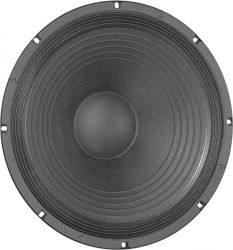
PA midrange tweeters
PA Midrange Drivers – The Heart of Professional Sound Systems
PA midrange drivers are essential components for professional sound reinforcement systems, delivering the critical frequency range where vocals and most instruments reside. At LTT, you'll find a comprehensive selection of high-quality midrange chassis from leading manufacturers such as MONACOR, JBL, Celestion, and Faital Pro. Whether you're building a custom three-way PA system, replacing worn drivers in existing cabinets, or designing a line array configuration, our range covers power ratings from 50 watts to 350 watts and sizes from 6 inches to 12 inches. These professional-grade components ensure clear, detailed reproduction of the midrange frequencies that define speech intelligibility and musical presence in demanding live sound applications.
What Are PA Midrange Drivers and How Do They Work?
PA midrange drivers are specialised loudspeaker components designed to reproduce the middle frequency range, typically between 200 Hz and 5,000 Hz, in professional audio systems. This frequency band is crucial because it contains the fundamental frequencies of human speech and the majority of musical instruments. Unlike full-range drivers or woofers, midrange speakers are optimised specifically for this narrow but critical bandwidth, allowing them to deliver exceptional clarity and detail.
The construction of a PA midrange driver differs significantly from bass or treble components. Most professional midrange chassis feature either pressed paper cones reinforced with Kevlar fibres, aluminium membranes, or composite materials that provide the ideal balance between stiffness and damping. The voice coil diameter typically ranges from 38 mm to 75 mm, wound with copper or aluminium wire on a polyimide former for heat resistance. High-quality models incorporate ferrite or neodymium magnets weighing between 0.5 kg and 2 kg, providing the magnetic field strength necessary for efficient transduction.
The impedance of PA midrange drivers is standardised at either 4 ohms or 8 ohms, allowing for flexible system design and parallel or series wiring configurations. Power handling capabilities range from 50 watts RMS for smaller 6-inch models up to 350 watts AES for professional 10-inch and 12-inch drivers. The sensitivity rating, measured in dB/W/m, typically falls between 95 dB and 102 dB for PA applications, ensuring sufficient output levels without excessive amplifier power.
Compared to woofers, midrange drivers have lighter moving masses and higher resonance frequencies (typically between 90 Hz and 550 Hz), enabling them to respond quickly to transient signals. Unlike compression drivers used for high-frequency horns, cone-type midrange speakers offer wider dispersion patterns and smoother off-axis response, making them ideal for the critical midrange band where directional hearing is most sensitive.
Applications and System Integration for PA Midrange Drivers
PA midrange drivers find their primary application in three-way loudspeaker systems, where they bridge the gap between subwoofers or woofers handling low frequencies and compression drivers or dome tweeters reproducing high frequencies. This configuration is the standard for professional concert sound systems, installed venue speakers, and high-output stage monitors. In a typical three-way design, the midrange driver operates between crossover points of approximately 400 Hz to 800 Hz on the low end and 2,500 Hz to 4,000 Hz on the high end, though these values vary based on the specific drivers and cabinet design.
Live sound reinforcement represents the most demanding application for PA midrange drivers. In concert touring systems, arrays of midrange-equipped cabinets deliver vocal clarity and instrumental definition to audiences ranging from small club crowds to festival attendees. The drivers must withstand continuous high-power operation, resist feedback, and maintain consistent performance across varying environmental conditions. Stage monitors rely heavily on midrange drivers to provide performers with clear reproduction of vocals and lead instruments, often operating at extreme sound pressure levels in close proximity to microphones.
Fixed installation venues such as theatres, houses of worship, conference centres, and sports arenas depend on PA midrange drivers for speech intelligibility and musical reproduction. In these applications, the drivers are typically mounted in multi-way cabinets designed for specific coverage patterns, ensuring even sound distribution throughout the listening area. The ability to handle sustained programme material without compression or distortion makes quality midrange drivers essential for these professional installations.
Replacement and upgrade scenarios also represent significant use cases. Many PA cabinets from manufacturers such as JBL, RCF, and dB Technologies use standard-sized midrange drivers that can be replaced when worn or upgraded for improved performance. When selecting replacement drivers, matching the impedance, sensitivity, and frequency response characteristics of the original component ensures system compatibility and maintains the intended crossover behaviour.
Quality Criteria and Professional Standards for PA Midrange Drivers
Selecting the right PA midrange driver requires understanding the technical specifications that define professional-grade performance. Power handling is the first critical parameter, expressed in both RMS (continuous) and AES (programme) ratings. For professional applications, midrange drivers should offer minimum RMS ratings of 100 watts for small to medium systems, with high-output concert systems requiring 200 watts to 350 watts AES. These ratings must reflect genuine thermal and mechanical limits, not marketing figures, as underpowered drivers will compress, distort, or fail under real-world conditions.
Sensitivity, measured in dB at 1 watt input at 1 metre distance, directly impacts system efficiency and amplifier requirements. Professional PA midrange drivers typically achieve sensitivities between 96 dB and 102 dB, with higher values reducing amplifier power needs and improving headroom. However, sensitivity alone doesn't guarantee quality—the frequency response must remain smooth across the driver's operating range, without significant peaks or dips that would require excessive equalisation.
Impedance matching ensures proper system integration and maximum power transfer. Standard impedances of 4 ohms and 8 ohms allow for series or parallel wiring to achieve target system impedances. The DC resistance (Re) should be approximately 75% to 85% of the nominal impedance, indicating proper voice coil design. Voice coil inductance (Le) affects high-frequency response within the midrange band, with lower values (typically 0.2 mH to 0.8 mH) providing extended upper-frequency capability.
Manufacturer reputation and build quality separate professional components from consumer-grade alternatives. Established brands such as MONACOR, JBL Professional, Celestion, Faital Pro, and Eminence maintain rigorous quality control and provide reliable specifications. Professional drivers feature die-cast aluminium baskets for dimensional stability, high-temperature voice coil formers, and carefully engineered suspension systems with treated cloth or rubber surrounds. The magnet assembly should be substantial—lightweight magnets indicate compromised performance.
Price positioning reflects quality tiers: entry-level professional drivers from MONACOR or IMG Stageline range from €50 to €120, mid-tier options from Celestion or Eminence cost €120 to €250, while premium drivers from Faital Pro, B&C, or 18Sound command €250 to €500 per unit. These price brackets correspond to measurable differences in power handling, thermal management, and long-term reliability under professional use conditions.
Crossover Design and Frequency Integration for Optimal Performance
The performance of PA midrange drivers depends critically on proper crossover design and frequency integration with adjacent drivers. A crossover network divides the audio spectrum, directing appropriate frequency bands to each driver while protecting components from out-of-band signals that could cause damage or distortion. For midrange drivers in three-way systems, both high-pass and low-pass filters are required, creating a bandpass characteristic that defines the driver's operating range.
The lower crossover point, typically between 400 Hz and 800 Hz, must be selected based on the woofer's upper-frequency capability and the midrange driver's low-frequency extension. Crossing too low forces the midrange driver to handle excessive excursion, leading to distortion and potential mechanical failure. Crossing too high wastes the midrange driver's low-frequency capability and may create a gap in system response. Professional practice recommends crossing at least one octave above the midrange driver's resonance frequency (fs) to ensure adequate control and linearity. For a midrange driver with fs of 90 Hz, a crossover point of 400 Hz to 500 Hz provides appropriate safety margin.
The upper crossover point, generally between 2,500 Hz and 4,000 Hz, depends on the midrange driver's high-frequency extension and the tweeter or compression driver's lower limit. Cone-type midrange drivers exhibit increasing directivity as frequency rises, with narrowing dispersion patterns above 2 kHz. Crossing to a compression driver with a horn provides controlled directivity matching and maintains consistent coverage. The crossover slope—typically 12 dB/octave or 18 dB/octave for professional systems—determines how sharply the frequency division occurs and affects phase relationships between drivers.
Acoustic crossover alignment requires consideration of driver positioning and time alignment. In vertical arrays, mounting the midrange driver and tweeter on the same vertical axis minimises path-length differences and simplifies phase integration. Physical offset between drivers creates frequency-dependent interference patterns that must be addressed through crossover design or electronic delay. Professional system designers use measurement tools to verify in-phase summation at crossover frequencies, ensuring smooth transitions without peaks or nulls.
Active crossover systems, using electronic filtering before power amplification, offer advantages for professional PA applications. Digital signal processors allow precise filter implementation, time alignment correction, and driver protection limiting. Each driver receives its own amplifier channel, eliminating passive component losses and providing independent level control. This approach is standard in line array systems and high-end concert sound reinforcement, where the flexibility and control justify the additional complexity and cost.
LTT – Your Specialist for Event Technology
At LTT, we combine over 25 years of experience in professional event technology with comprehensive expertise in PA system components. Our selection of PA midrange drivers represents carefully chosen products from manufacturers we trust for professional applications. Whether you're building a custom sound system, maintaining existing equipment, or upgrading your PA capabilities, our team provides the technical guidance you need to make informed decisions.
We ship worldwide from our facility in Bocholt, Germany, with free shipping on orders over €69 within Germany and competitive international rates. Every PA midrange driver we supply is backed by our 3-year LTT warranty, reflecting our confidence in the quality of the components we offer. For urgent projects, express shipping options ensure you receive critical components when you need them. Our B2B customers benefit from wholesale pricing and dedicated account management, supporting professional installers, rental companies, and system integrators across Europe and beyond.
Beyond PA components, LTT serves as your complete source for event technology, from our own Naxpro-Truss aluminium truss systems and Riggatec rigging hardware to lighting, effects, and control systems. This comprehensive approach means you can source complete system solutions from a single trusted partner, streamlining procurement and ensuring component compatibility across your entire event technology infrastructure.
Installation Considerations and Cabinet Design for Midrange Drivers
Proper installation of PA midrange drivers requires attention to cabinet design, mounting techniques, and acoustic considerations that significantly impact performance. The cabinet volume and internal treatment affect the driver's low-frequency response and overall tonal balance. While midrange drivers operate in a bandpass configuration with crossover filtering, the cabinet still influences behaviour near the lower crossover frequency.
Sealed cabinet designs offer the simplest implementation for midrange drivers, providing predictable response and good transient behaviour. The cabinet volume should be sufficient to avoid excessive air-spring stiffness that would raise the system resonance frequency. For typical 6-inch to 10-inch midrange drivers, internal volumes between 10 litres and 40 litres provide appropriate loading. Internal damping material—acoustic foam or long-fibre wool—absorbs standing waves and reduces internal reflections, smoothing the frequency response and reducing colouration.
Vented or ported designs are less common for dedicated midrange cabinets but appear in some three-way systems where the midrange driver shares a chamber with the woofer. In these configurations, the port tuning primarily serves the woofer's low-frequency extension, while the midrange driver operates above the port's influence due to crossover filtering. Care must be taken to avoid port resonances within the midrange operating band, as these can cause audible colouration.
Mounting depth and baffle considerations affect installation planning. PA midrange drivers typically require mounting depths between 70 mm and 120 mm, with professional models at the deeper end of this range due to larger magnet assemblies. The baffle cutout diameter must match the driver's specifications precisely—too large and the driver won't mount securely, too small and the basket won't fit. Most professional drivers provide mounting holes on a standard bolt circle, requiring appropriate fastener selection (typically M4 or M5 screws) with adequate engagement depth.
Baffle step response, the acoustic phenomenon where cabinet diffraction affects frequency response, becomes relevant for midrange drivers mounted on finite baffles. As frequency decreases and wavelength approaches the baffle dimensions, the driver transitions from 4π (full-space) to 2π (half-space) radiation, causing a response rise of up to 6 dB. Professional cabinet designs account for this through baffle size selection and crossover compensation, ensuring flat system response. Horn-loaded midrange configurations, while less common than direct-radiating designs, provide increased sensitivity and controlled directivity for specialised applications such as long-throw systems or constant-directivity designs.
FAQ – Questions & Answers
The best PA midrange driver depends on your specific application and system requirements. For professional three-way systems, models from MONACOR (such as the SP-6/100PA), JBL Professional, Celestion, and Faital Pro offer excellent performance. Key selection criteria include power handling (100–350 watts AES for professional use), sensitivity (96–102 dB), and impedance matching (4 or 8 ohms). For touring applications requiring maximum reliability, premium brands like B&C and 18Sound provide exceptional build quality and consistent performance. Mid-tier options from Eminence and Celestion deliver professional results at more accessible price points. Always match the driver's specifications to your crossover design, cabinet volume, and power amplifier capabilities to ensure optimal system integration and long-term reliability.
PA midrange drivers are standardised at either 4 ohms or 8 ohms impedance, with 8 ohms being the most common choice for professional applications. The impedance selection affects system wiring options and amplifier matching. Eight-ohm drivers allow for series wiring of pairs to achieve 16 ohms or parallel wiring to 4 ohms, providing flexibility in multi-driver arrays. Four-ohm drivers deliver more power from a given amplifier but limit wiring options and may stress amplifiers when multiple drivers are paralleled. When replacing existing drivers, always match the original impedance to maintain proper crossover function and power distribution. The DC resistance of the voice coil should measure approximately 75–85% of the nominal impedance, so an 8-ohm driver typically shows 6–7 ohms on a multimeter.
PA woofers and midrange drivers serve different frequency ranges and feature distinct design characteristics. Woofers handle low frequencies from approximately 40 Hz to 500 Hz, featuring large cone diameters (10 to 18 inches), heavy moving masses, long voice coils, and substantial excursion capability (often 10–20 mm Xmax). Midrange drivers reproduce middle frequencies from 200 Hz to 5,000 Hz, using smaller diameters (6 to 12 inches), lighter cones, shorter voice coils, and limited excursion (typically 3–8 mm Xmax). The resonance frequency differs significantly—woofers exhibit fs between 30 Hz and 60 Hz, while midrange drivers show fs between 90 Hz and 550 Hz. Midrange drivers prioritise transient response and extended upper-frequency capability, while woofers emphasise low-frequency extension and high excursion capacity. In three-way PA systems, both types work together with a tweeter or compression driver to cover the complete audio spectrum.
Professional PA midrange drivers should handle minimum power ratings of 100 watts RMS for small to medium systems, with high-output concert applications requiring 200 to 350 watts AES (Audio Engineering Society standard for programme material). The power rating must match your amplifier output and intended use—underpowered drivers will compress or fail under sustained high-level operation, while excessive power handling adds unnecessary cost. For club installations and mobile DJ systems, 100–150 watt drivers provide adequate capability. Concert touring systems and large venue installations benefit from 200–350 watt models that withstand continuous high-power operation. Always consider the complete system context: a sensitive driver (100 dB/W/m) with 150 watts produces the same output as a less sensitive driver (97 dB/W/m) with 300 watts. Match power handling to amplifier capability, crossover design, and expected operating levels for optimal performance and reliability.
Leading manufacturers of professional PA midrange speakers include MONACOR, JBL Professional, Celestion, Faital Pro, B&C Speakers, Eminence, and 18Sound. MONACOR offers excellent value with reliable performance for installed sound and mobile applications. JBL Professional provides industry-standard components used in countless commercial systems worldwide. Celestion brings decades of experience from musical instrument and professional audio applications. Faital Pro and B&C Speakers represent premium Italian manufacturing with exceptional power handling and build quality for demanding touring applications. Eminence delivers American-made drivers with comprehensive specifications and broad model ranges. 18Sound focuses on high-end professional components for line arrays and concert systems. Each manufacturer offers distinct advantages—MONACOR and Eminence for cost-effective professional solutions, Celestion for balanced performance, and Faital Pro, B&C, and 18Sound for maximum capability in demanding applications.
PA midrange driver size selection depends on your system's frequency range, power requirements, and cabinet design. Six-inch (150 mm) drivers suit compact three-way systems and stage monitors, operating effectively from 500 Hz to 4,000 Hz with power handling of 50–150 watts. Eight-inch (200 mm) midrange drivers provide the most versatile option, covering 400 Hz to 3,500 Hz with 100–250 watts capability, making them ideal for general-purpose PA systems. Ten-inch (250 mm) and twelve-inch (300 mm) midrange drivers handle lower crossover frequencies (300–400 Hz) and higher power levels (200–350 watts), suited for large-format concert systems and high-output applications. Larger drivers offer greater sensitivity and power handling but exhibit narrower dispersion at upper frequencies, requiring lower crossover points to compression drivers. Match the driver size to your woofer and tweeter capabilities, ensuring smooth frequency transitions and adequate power handling throughout the system.
PA midrange driver cone materials each offer distinct performance characteristics. Pressed paper cones, often reinforced with Kevlar fibres, provide excellent damping, smooth frequency response, and natural tonal balance, making them the most common choice for professional applications. Aluminium cones offer high stiffness-to-weight ratios, extended high-frequency response, and excellent power handling, though they may exhibit resonances requiring careful crossover design. Composite materials combining paper, carbon fibre, or synthetic fibres deliver balanced performance with controlled breakup behaviour and good environmental resistance. Titanium and other exotic materials appear in premium drivers, offering extreme stiffness and extended bandwidth. For general PA applications, Kevlar-reinforced paper cones from manufacturers like MONACOR and Celestion provide the best combination of smooth response, reliability, and cost-effectiveness. High-output touring systems benefit from aluminium or advanced composite cones that withstand sustained high-power operation and environmental extremes.
Replacing PA midrange drivers with different brands is possible but requires careful specification matching to maintain system performance. The replacement driver must match the original's impedance (4 or 8 ohms) exactly to preserve crossover function and power distribution. Sensitivity should be within 2 dB of the original to maintain tonal balance with other drivers—significant sensitivity differences create level mismatches requiring crossover modification. The frequency response, particularly resonance frequency and upper-frequency extension, should align with the original driver's characteristics. Mounting dimensions including diameter, depth, and bolt-circle pattern must match the cabinet cutout. When upgrading rather than replacing, select drivers with similar or better specifications—higher power handling, lower distortion, or extended frequency response—while maintaining impedance and sensitivity compatibility. Professional system designers often measure the complete system response after driver replacement to verify proper integration and may adjust crossover components to optimise performance with the new driver.