

Top seller

Adam Hall Hardware 4124 - Ball Corner Medium Three-Leg Cranked 30 mm
€1.24
*
incl. tax,
plus shipping costs
 Express delivery possible
Availability:
Delivery time: 1-3 days
Delivery time: 1-3 days

Adam Hall Hardware 4146 - Case Corner three-leg cranked for 6145 Aluminium Top Edge Capping
€1.24
*
incl. tax,
plus shipping costs
Availability:
Delivery time: 1-3 days
Delivery time: 1-3 days

Adam Hall Hardware 4001 - Square Case Corner
€0.82
*
incl. tax,
plus shipping costs
Availability:
Delivery time: 1-3 days
Delivery time: 1-3 days

Adam Hall Hardware 40002 - Ball Corner Square with Stacking Dimple
€1.04
*
incl. tax,
plus shipping costs
Availability:
Currently not available
Currently not available

Adam Hall Hardware 4113 - Ball Corner small three-leg cranked 22 mm
€0.63
*
incl. tax,
plus shipping costs
Availability:
Delivery time: 1-3 days
Delivery time: 1-3 days

Adam Hall Hardware 4058 - Case Corner cranked for 20 mm Case Angle chrome-plated
€1.52
*
incl. tax,
plus shipping costs
Availability:
Delivery time: 1-3 days
Delivery time: 1-3 days

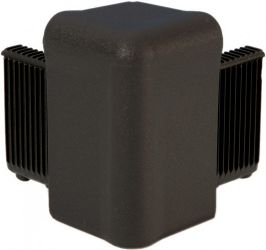
Adam Hall Hardware Q 4506 BLK - Corner for Casemaker black
€1.11
*
incl. tax,
plus shipping costs
Availability:
Near-term available
Delivery time: approx. 1 week
Delivery time: approx. 1 week
Delivery time: approx. 1 week

Adam Hall Hardware 4111 - Ball Corner small three-leg 3 holes
€0.67
*
incl. tax,
plus shipping costs
Availability:
Near-term available
Delivery time: approx. 1 week
Delivery time: approx. 1 week
Delivery time: approx. 1 week
105
Articles
No results were found for the filter!

ROADINGER Steel Ball Corner, 3 legs 64mm
ROADINGER Steel Ball Corner, 3 legs 64mm
Ball corner, three-leg Steel ball corner • Diameter mounting holes: Ø5,1mm • Material: Steel, 1 mm • Color: Silver, zinc-plated • Dimensions: Width: 6,40 cm Depth: 6,40...
€1.50
*
incl. tax,
plus shipping costs
Availability:
Delivery time: 3-5 days
Delivery time: 3-5 days
Adam Hall Hardware 4146 - Case Corner three-leg cranked for 6145 Aluminium Top Edge Capping
Adam Hall Hardware 4146 - Case Corner three-leg cranked for 6145 Aluminium Top Edge Capping
Case Corner three-leg cranked for 6145 Aluminium Top Edge Capping : Product type: Corners • Type: flat corner • Material: Steel • Surface: galvanized • Color: silver...
€1.24
*
incl. tax,
plus shipping costs
Availability:
Delivery time: 1-3 days
Delivery time: 1-3 days
Adam Hall Hardware 4124 - Ball Corner Medium Three-Leg Cranked 30 mm
Adam Hall Hardware 4124 - Ball Corner Medium Three-Leg Cranked 30 mm
Ball Corner Medium Three-Leg Cranked 30 mm Ball Corner three-leg : Product type: Corners • Type: Ball corner • Material: Steel • Surface: galvanized • Color: silver...
€1.24
*
incl. tax,
plus shipping costs
Availability:
Delivery time: 1-3 days
Delivery time: 1-3 days

MONACOR MZF-8502 Metal case corner
MONACOR MZF-8502 Metal case corner
Metal case corner Silver • 41 x 41 x 41 mm • : Description: case corner • Colour: silver • Material: metal • Admiss. ambient temp.: 0-40 °C • Dimensions: 39 x 39 x...
€2.28
*
incl. tax,
plus shipping costs
Availability:
Delivery time: 1-3 days
Delivery time: 1-3 days
Adam Hall Hardware Q 4506 BLK - Corner for Casemaker black
Adam Hall Hardware Q 4506 BLK - Corner for Casemaker black
Corner for Casemaker black The EasyCase System of aluminium extrusions and interlocking plastic corners allow fast assembly of cases without the need for rivets. Corners, extrusions and 7mm wood or...
€1.11
*
incl. tax,
plus shipping costs
Availability:
Near-term available
Delivery time: approx. 1 week
Delivery time: approx. 1 week
Delivery time: approx. 1 week

ACCESSORY Steel Ball Corner, 3 legs, 39mm
ACCESSORY Steel Ball Corner, 3 legs, 39mm
Ball corner, three-leg Two boreholes per leg • Steel ball corner • Diameter mounting holes: Ø4,2mm • Material: Steel, 1,2 mm • Color: Silver, zinc-plated...
€1.50
*
€1.00
*
incl. tax,
plus shipping costs
Availability:
Delivery time: 1-3 days
Delivery time: 1-3 days

MONACOR MZF-8502/SW Metal case corner
MONACOR MZF-8502/SW Metal case corner
Metal case corner Black • 41 x 41 x 41 mm • : Description: case corner • Colour: black • Material: metal • Admiss. ambient temp.: 0-40 °C • Dimensions: 39 x 39 x...
€2.33
*
incl. tax,
plus shipping costs
Availability:
Delivery time: 3-5 days
Delivery time: 3-5 days

Adam Hall Hardware 4145 - Case Corner two-leg cranked for 6145 Aluminium Top Edge Capping
Adam Hall Hardware 4145 - Case Corner two-leg cranked for 6145 Aluminium Top Edge Capping
Case Corner two-leg cranked for 6145 Aluminium Top Edge Capping : Product type: Corners • Type: flat corner • Material: Steel • Surface: galvanized • Color: silver...
€1.23
*
incl. tax,
plus shipping costs
Availability:
Delivery time: 1-3 days
Delivery time: 1-3 days
Adam Hall Hardware 4058 - Case Corner cranked for 20 mm Case Angle chrome-plated
Adam Hall Hardware 4058 - Case Corner cranked for 20 mm Case Angle chrome-plated
Case Corner cranked for 20 mm Case Angle chrome-plated : Product type: Corners • Type: flat corner • Material: Steel • Surface: chromium plated • Color: silver • Material...
€1.52
*
incl. tax,
plus shipping costs
Availability:
Delivery time: 1-3 days
Delivery time: 1-3 days

Adam Hall Hardware 4150 - Case Corner large three-leg
Adam Hall Hardware 4150 - Case Corner large three-leg
Case Corner large three-leg Case Corner three-leg : Product type: Corners • Type: flat corner • Material: Steel • Surface: galvanized • Color: silver • Material thickness:...
€1.56
*
incl. tax,
plus shipping costs
Availability:
Delivery time: 1-3 days
Delivery time: 1-3 days

Adam Hall Hardware 4122 - Ball Corner Medium Three-Leg with Stacking Dimple
Adam Hall Hardware 4122 - Ball Corner Medium Three-Leg with Stacking Dimple
Ball Corner Medium Three-Leg with Stacking Dimple Ball Corner three-leg stackable : Product type: Corners • Type: Ball corner • Material: Steel • Surface: galvanized • Color:...
€1.20
*
incl. tax,
plus shipping costs
Availability:
Near-term available
Delivery time: approx. 1 week
Delivery time: approx. 1 week
Delivery time: approx. 1 week

Adam Hall Hardware 4000 - Square Case Corner small
Adam Hall Hardware 4000 - Square Case Corner small
Square Case Corner small : Product type: Corners • Type: flat corner • Material: Steel • Surface: galvanized • Color: silver • Material thickness: 1 mm • Mounting hole...
€0.86
*
incl. tax,
plus shipping costs
Availability:
Delivery time: 1-3 days
Delivery time: 1-3 days

Adam Hall Hardware Q 4506 MG - Corner for Casemaker medium grey
Adam Hall Hardware Q 4506 MG - Corner for Casemaker medium grey
Corner for Casemaker medium grey The EasyCase System of aluminium extrusions and interlocking plastic corners allow fast assembly of cases without the need for rivets. Corners, extrusions and 7mm...
€1.05
*
incl. tax,
plus shipping costs
Availability:
Delivery time: 1-3 days
Delivery time: 1-3 days

ACCESSORY Steel Ball Corner 2 legs 64mm
ACCESSORY Steel Ball Corner 2 legs 64mm
Ball corner, two-leg Steel ball corner • Diameter mounting holes: Ø5,1mm • Material: Steel, 1,5 mm • Color: Silver, zinc-plated • Dimensions: Width: 6,40 cm Depth: 6,40...
€1.58
*
€1.03
*
incl. tax,
plus shipping costs
Availability:
Low stock; Delivery time: 1-3 days
Delivery time: 1-3 days

Adam Hall Hardware 4023 BLK - Case Corner two-leg black
Adam Hall Hardware 4023 BLK - Case Corner two-leg black
Case Corner two-leg black : Product type: Corners • Type: Ball corner • Material: Steel • Surface: Powder coated • Color: Black • Material thickness: 1 mm • Mounting...
€1.15
*
incl. tax,
plus shipping costs
Availability:
Near-term available
Delivery time: approx. 1 week
Delivery time: approx. 1 week
Delivery time: approx. 1 week

Adam Hall Hardware 4008 - Case Corner small nickel-plated
Adam Hall Hardware 4008 - Case Corner small nickel-plated
Case Corner small nickel-plated Case Corner three-leg : Product type: Corners • Type: flat corner • Material: Steel • Surface: nickel plated • Color: silver • Material...
€0.82
*
incl. tax,
plus shipping costs
Availability:
Near-term available
Delivery time: approx. 1 week
Delivery time: approx. 1 week
Delivery time: approx. 1 week

ROADINGER Steel Ball, 3 legs 64mm
ROADINGER Steel Ball, 3 legs 64mm
Ball corner, three-leg, stackable Steel ball corner • Diameter mounting holes: Ø5,1mm • Color: Silver, zinc-plated • Material thickness: 1 mm • Dimensions: Width: 6,40 cm...
€1.50
*
incl. tax,
plus shipping costs
Availability:
Delivery time: 3-5 days
Delivery time: 3-5 days

Adam Hall Hardware 41141 - Ball Corner small cranked 22 mm with integrated Corner Brace 39 mm
Adam Hall Hardware 41141 - Ball Corner small cranked 22 mm with integrated Corner Brace 39 mm
Ball Corner small cranked 22 mm with integrated Corner Brace 39 mm : Product type: Corners • Type: Ball corner • Material: Steel • Surface: galvanized • Color: silver...
€0.75
*
incl. tax,
plus shipping costs
Availability:
Near-term available
Delivery time: approx. 1 week
Delivery time: approx. 1 week
Delivery time: approx. 1 week
Adam Hall Hardware 4111 - Ball Corner small three-leg 3 holes
Adam Hall Hardware 4111 - Ball Corner small three-leg 3 holes
Ball Corner small three-leg 3 holes Ball Corner three-leg : Product type: Corners • Type: Ball corner • Material: Steel • Surface: galvanized • Color: silver • Material...
€0.67
*
incl. tax,
plus shipping costs
Availability:
Near-term available
Delivery time: approx. 1 week
Delivery time: approx. 1 week
Delivery time: approx. 1 week

Adam Hall Hardware 4104 - Ball Corner large three-leg cranked 35 mm 3 holes
Adam Hall Hardware 4104 - Ball Corner large three-leg cranked 35 mm 3 holes
Ball Corner large three-leg cranked 35 mm 3 holes Ball Corner three-leg : Product type: Corners • Type: Ball corner • Material: Steel • Surface: galvanized • Color: silver...
€1.54
*
incl. tax,
plus shipping costs
Availability:
Near-term available
Delivery time: approx. 1 week
Delivery time: approx. 1 week
Delivery time: approx. 1 week

Adam Hall Hardware 4101 - Ball Corner Large Three-leg Galvanized
Adam Hall Hardware 4101 - Ball Corner Large Three-leg Galvanized
Ball Corner Large Three-leg Galvanized Ball Corner three-leg : Product type: Corners • Type: Ball corner • Material: Steel • Surface: galvanized • Color: silver • Material...
€1.26
*
incl. tax,
plus shipping costs
Availability:
Near-term available
Delivery time: approx. 1 week
Delivery time: approx. 1 week
Delivery time: approx. 1 week

ROADINGER Steel Ball Corner, 3 legs 48mm
ROADINGER Steel Ball Corner, 3 legs 48mm
Ball corner, three-leg Steel ball corner • Diameter mounting holes: Ø4,5mm • Material: Steel, 1,2 mm • Color: Silver, zinc-plated • Dimensions: Width: 4,80 cm Depth: 4,80...
€1.30
*
incl. tax,
plus shipping costs
Availability:
Delivery time: 3-5 days
Delivery time: 3-5 days

ACCESSORY Steel Ball Corner, 64mm cranked
ACCESSORY Steel Ball Corner, 64mm cranked
Ball corner Cranked for 30 mm edge protection and casemaker • Steel ball corner • Diameter mounting holes: Ø5,1mm • Material: Steel, 1,5 mm • Color: Silver, zinc-plated...
€2.90
*
€2.17
*
incl. tax,
plus shipping costs
Availability:
Delivery time: 1-3 days
Delivery time: 1-3 days

ACCESSORY Plastic Corner, 50mm legs, stackable
ACCESSORY Plastic Corner, 50mm legs, stackable
Plastic corner, stackable Inside radius 10 mm • Recessed mounting holes • Plastic corner • Diameter mounting holes: Ø3,5mm • Material: Plastic • Color: Black...
€2.63
*
incl. tax,
plus shipping costs
Availability:
Delivery time: 3-5 days
Delivery time: 3-5 days